Hillary Clinton’s Campaign Manager is a Longtime Corporate Education Reformer

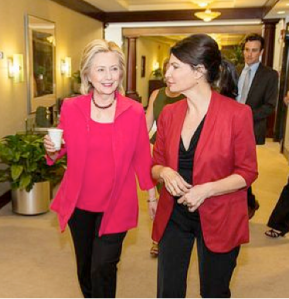
Clinton Gives Speech On American Global Leadership At Washington Conference


Meet John Podesta.


He’s a Washington lobbyist working hard to support high stakes tests, Common Core and charter schools.


He’s also Hillary Clinton’s campaign manager.


That’s right – the 2016 Democratic Presidential candidate who has been endorsed by the leaders of the national teachers unions has a corporate education reformer running her campaign.


Here are a few choice quotes from a speech Podesta gave in 2012 to the Foundation for Excellence in Education, a corporate education reform think tank established by Jeb Bush.


On Competition in Education:


“I think this emphasis that President Obama and Secretary Duncan have placed on competition – not just Race to the Top but competition throughout the system of education – is quite a good one, and I think the federal resources can be used to both support the development of new models and can force state experimentation in a way that’s quite healthy.”


On Using Student Test Scores to Evaluate teachers:


“In my view, [education] requires an accountability system that ensures students achieve at the highest levels… It requires a teacher and principal workforce that are rigorously trained, highly skilled and comprehensively evaluated.”


On Teachers Unions’ Resistance to Corporate Education Reform:


“I would argue that while there are clearly still strong rejectionist voices in unions, national union leadership has come a fair distance in recognizing that teacher effectiveness matters, and that evaluation systems need to include student outcomes… The majority of teachers have less than 10 years experience, and younger teachers know what counts. They’re more reform minded… So the question I think for reformers is how do you keep the pressure on unions to change, how do you keep the pressure on to put kids first without demonizing teachers in the process?”


On School Vouchers and charter schools:


“I think vouchers are an unneeded distraction. We should concentrate on PUBLIC school choice.”


On the Bipartisanship of Corporate Education Reform:


“In my opinion, the Obama administration has made its key priorities clear. The Republicans are pretty much in the same place…”


On the new frontier for Corporate Education Reform:


“Early childhood education is ripe for investment and reform.”


It’s all there on video. I strongly recommend you put aside 42 minutes and watch Podesta cozy up to Bush and Chester E. Finn, President of the ultra-reformy Thomas B. Fordham Institute.


Podesta is probably the single most effective person at destroying public education of which you’ve never heard.


You know Arne Duncan – the worst U. S. Secretary of Education of modern times. But did you know that Arne wasn’t President Barack Obama’s first choice?


Obama almost picked Linda Darling-Hammond – his education advisor during his 2007 campaign. Hammond is a former teacher turned Stanford education professor. She is also a vocal critic of Teach for America.


However, Podesta oversaw the transition committee that helped Obama make cabinet choices. Ultimately, the responsibility rests with the President, but it was Podesta who suggested and lobbied for Duncan, the know-nothing Chicago Schools CEO for U.S. Education Secretary. In fact, Duncan’s selection is an achievement of which Podesta is given gleeful responsibility by the privatization and standardization crowd.


And now guess whose ear he is whispering into?


Podesta has a long history with the Clintons. He was Bill’s Chief of Staff for three years during which time the President pushed hard for voluntary national standards – a school policy that has become known by another name – Common Core State Standards.


Podesta also founded the reform think tank Center for American Progress, a bastion for neoliberal thought. The organization routinely hires the crème de la crème of corporate education reformers who then push for test and punish policies in the media and on Capital Hill.


Podesta has already helped push Hillary closer to the dark side.


Remember when she shocked the neoliberal establishment by suggesting that some charter schools game the system by refusing to accept the most challenging students? (Which, by the way, is 100% factual.)


This really turned off some super-wealthy donors. According to the Wall Street Journal, after hearing the comment, one of Clinton’s longtime supporters, Eli Broad, turned off the money faucet.


Broad allegedly refused requests for contributions to a Clinton-friendly super PAC until Podesta personally assured him Hillary supports charter schools.


Also running interference on this issue was Clinton’s education adviser Ann O’Leary.


She wrote an op-ed calming charter fans because Hillary does, in fact, support charter schools – if they’re equitable and accountable.


Unfortunately, O’Leary has a strong corporate education reform streak, herself.


While an aide to Clinton in the Senate in 2001, O’Leary pushed Hillary to support No Child Left Behind (NCLB).


This was the bill that changed the federal role in education from ensuring equity to enacting an endless series of high stakes tests and expanded school privatization more than ever before. By it’s own measures of success, it was a terrible failure.


But O’Leary sees it differently.


“It was a really important moment,” O’Leary says. “When you look back at what happened, this was serious, bipartisan, constructive work. We were committed to high standards and helping states get there.”


O’Leary has somewhat stepped back her support of this bill. However, she blames the problems on implementation and not on the basic idea of high stakes testing.


She takes the same tack with Common Core. Implementation is the problem, not the policy.


And THIS is the woman advising Clinton on education!


By the way, she served with Podesta on the same Obama-Biden transition team that helped create our current disastrous U.S. Department of Education, though her focus was early childhood.


If Hillary Clinton really wants to forge a new path for U. S. schools, it’s surprising she’s surrounding herself with the same people responsible for the status quo.


Funded by wealthy privatizers, advised by standardization true believers, it is difficult to accept a second Clinton Administration would be anything more than a seamless continuation of the Testocracy.


Special thanks to Jake Jacobs who brought much of this to my attention.


United Opt Out Conference Highlights Dual Role of Technology in Education

FullSizeRender


Technology is the most powerful weapon we have against corporate education reform.


It is also our greatest foe.


Such were the remarks of Dr. Stephen Krashen at the United Opt Out Conference on Friday.


The linguist, educational researcher and activist gave the opening keynote address to hundreds of people who traveled to Philadelphia for the conference.


Krashen, who is known for his work on second language acquisition and bilingual education, has been a strong critic of the test and punish policies of the Barack Obama administration.


He warned the assembly of parents, students, teachers, professors and activists about the dangers of Competency Based Education (CBE), the next big thing in the movement to dumb down public schools.


CBE is touted as a way to reduce high stakes standardized testing by allowing students to work at their own pace while on various computer programs. However, Krashen sees this is an increase in testing.


In effect, it’s testing everyday. The computer programs used in CBE are little more than the same kinds of questions you’d see on a standardized test. An emphasis on CBE would replace a robust school curriculum with never-ending test preparation and multiple-choice assessment.


In the hands of a classroom teacher, technology can be an excellent tool to help kids learn. However, top-down policies like CBE only take away educators’ autonomy and turn them into mere facilitators of prepackaged materials of dubious quality.


He noted that the National Governors Association – an organization promoting CBE and Common Core State Standards – admits that there is no research supporting this new policy. But they’re suggesting we do it anyway. In fact, provisions to increase CBE are embedded in the new federal education law – the Every Child Succeeds Act (ESSA).


He sees this as a massive boondoggle to swipe the $600 billion we spend on technology in schools. After all, CBE will require increasingly newer computers at every school that will need to be constantly replaced as they become obsolete.


Krashen quoted Gerald Bracey: “There’s a growing technology of testing that permits us now to do in nanoseconds things we shouldn’t be doing at all.”


There is light at the end of the tunnel though.


The same technology that is being used to pervert the education system can be used to help save it.


Krashen advised activists to use the power of social media to spread the word about CBE and other Trojan Horse reforms – policies that look like they’re helping children while actually hurting them.


“The Internet is our underground,” he said, “Facebook and Twitter are our weapons.”


Though policymakers and journalists rarely listen to experts like classroom teachers, the Internet allows us to spread our message. We don’t need anyone’s permission to speak up. We are all free to do so and should do it more often.


I know many people are scared to speak up, he said, but we can all educate ourselves about what’s happening and then share it and retweet it. We need to do more of this. We need to reach a critical mass. We need to show the world the truth and that it can’t be ignored and buried under the dominant media and political narrative being sold to the public as if it were truth.


These policies, while dangerous in and of themselves, also overshadow the real needs of our school children – namely devastating, generational poverty.


When Congress passes No Child Left Unfed, No Child Without Healthcare, and No Child Left Homeless, then when can talk about No Child Left Behind and Every Child Succeeds, he said.


Dr. Martin Luther King spoke about this issue, claiming that solving poverty would in turn solve any problems with education.


Krashen’s keynote was an exciting beginning to a conference that promises to be eye-opening, exciting and energizing to the community of people fighting to take back our schools from the oligarchy.


Photo Gallery:


Judging the Judge: What Antonin Scalia’s Death Means to the People I Love

antonin-scalia-26

I am not sad Antonin Scalia is dead.

Wow! It feels so good to say that out loud!

Come on. Admit it. You probably feel the same way.

I know. I know. Everywhere you turn, people are going out of their way to talk about the ramifications of the 79-year-old Supreme Court Justice’s death without passing judgement on him.

“Let’s keep it classy,” they say.

Oh. Stop it.

In his 30 years on the bench, Scalia hurt an awful lot of people. And I mean real, live people – not ideological constructs, not hypotheticals – but moms, dads, husbands, wives, daughters, and sons.

The aggregate amount of misery in the world was drastically increased by his being in it. And now that he’s gone, much of that misery may be relieved.

So please curb any shock you may feel at my thesis. And spare me the false praise of a truly reprehensible human being.

He was against women controlling their own bodies, efforts to desegregate our schools, an individual’s right to love whomever they choose, refraining from executing mentally disabled or teenage prisoners. Heck! He was even against police reading suspects their Miranda Rights!

This was a person who said black people should go to “slower” colleges, homosexuality was the same as murder or bestiality, sex discrimination is constitutional, and maybe we have a right to all carry around rocket launchers in public.

If it is outrageous to feel relief at the death of this man, you may call me outrageous.

I’m not usually the kind of person who celebrates someone else’s death. Not even a famous person.

But you have to admit that the people we love are a lot better off without Scalia in the world.

It’s not like he kept all this to himself. He wasn’t some lone drunkard in the back of the bar mumbling sexist, racist views. He wasn’t your ancient uncle who you only see twice a year making people uncomfortable at the dinner table. He was a judge in the highest court in the land, and his demented and warped world view drove public policy impacting… well… everyone.

He was the deciding vote in several 5-4 decisions that – if they had gone differently – would have greatly benefited every person in this country.

You can thank him for the Presidency of George W. Bush and Citizens United. Let that sink in for a moment.

Imagine all the horrific blunders of the Bush Presidency – easily the worst administration in my lifetime. If the Supreme Court hadn’t given the highest office in the land to Dubya, arguably we wouldn’t have had the Irag War, the Great Recession, No Child Left Behind, the slow response to Hurricane Katrina – maybe even 9-11.

And if you hate what our elections have become, imagine if we didn’t have the Citizens United verdict. Campaign donations would have to be made in public with some limits on how much individuals and corporations can contribute.

How much better the world would have been without these terrible decisions!

I’m not saying Scalia wasn’t a good man in his personal life. I have no idea what he was like to the people he loved. For all I know he may have been a good friend, a loving husband, father and grandfather. He probably had people he cared about and who cared about him. And to those people I send my condolences.

However, he did great harm to just about everyone else. And for that I feel nothing but relief at his death.

Who am I to bask in such schadenfreude?

I am a father and public school teacher.

I have a seven-year-old daughter and several classes full of mostly impoverished and minority students.

And Scalia’s death is good for everyone I care about.

If he were still alive, there was so much more damage he could have done. Take the Friedrichs case, an important one for teachers like me.

The case is an attempt to strip teachers unions of the right to charge members for their services. If the court rules in favor of Friedrichs, it would overturn decades of established law against free riders. People would be allowed to be in a union, enjoy higher salary and benefits negotiated by that union, but not pay dues. It would be absurd. Yet with Scalia still on the bench, most court watchers seem to think we would have had another terrible 5-4 decision.

However, with Scalia’s death, the best anti-union forces would probably receive is a 4-4 decision – not enough to overturn established law. True the case has already been heard by the justices, but a ruling has not yet been handed down. According to the Supreme Court blog, even if Scalia had already written a ruling on this matter, it would be void. Any rulings he wrote that have not yet been made public don’t count.

So the most likely outcome now is that millions of people will continue to be protected from unfair labor practices. And you expect me not to have a big ‘ol smile on my face!?

So where do we go from here?

President Barack Obama will select who is to succeed Scalia. Numerous excellent choices have been floated. If Obama chooses any one of them, he would probably tilt the court fractionally to the left.

Before the body was even cold, Republicans vowed to block any nominee Obama makes until the next President is sworn in. Some are trying out the talking point that Supreme Court Justices have never been sworn in during an election year. But if that were true, we wouldn’t have Justice Anthony Kennedy who was confirmed during the last year of Reagan’s presidency.

Funny. The U.S. Constitution clearly states that the President has the right to nominate Supreme Court Justices with the advice of Congress. Yet so many of these right leaning partisans who considered themselves Constitutionalists last week suddenly find themselves against that revered document today.

I wonder how Scalia would have argued such a situation.

Not really. He was the one who taught the rest of his party how to twist the words of the founding fathers to mean whatever the far right favors this week.

Obama still has more than 300 days in office. If Republicans try to block his nomination until a new face tops the Executive, it would be the longest such obstruction in a century. Of sitting justices, the longest confirmation period was for Clarence Thomas who took 106 days to be approved by Congress.

And that brings us to the 2016 Presidential race.

Scalia’s death is likely to have a huge impact on whom becomes our next President.

If Republicans block Obama’s Supreme Court nominee, it would probably increase voter turnout. Whenever that happens, it favors Democrats since they have more registered members than the GOP.

Either way, Scalia’s death is probably beneficial to whomever the Democratic nominee will be. If either Hillary Clinton or Bernie Sanders get the nomination, supporters of the defeated candidate are more likely to support the reigning Democrat.

Even if voters don’t like the winner’s policies as much as their preferred candidate, they’re likely to support the nominee in order to continue tipping the Supreme Court to the left. After all, three additional justices are 70 or older. Stephen Breyer is 77, Anthony Kennedy is 79, and Ruth Bader Ginsburg is 82.

We have had a long haul these last 15 years. Much social progress has been stalled.

But now that Scalia is out of the picture, the future looks bright.

Maybe things really will turn out alright. Maybe we’ll actually have a chance to build that better world we’ve all been dreaming about.

Rest in Peace, Scalia. The nation can’t wait to move on without you.

What Antonin Scalia’s Death Means to the People I Love

antonin-scalia-26

I’m not sad Antonin Scalia is dead.

Wow! It feels so good to say that aloud!

Come on. Admit it. You feel exactly the same way.

I know. I know. Everywhere you turn, people are going out of their way to talk about the ramifications of the 79-year-old Supreme Court Justice’s death without passing judgement on him.

“Let’s keep it classy,” they say.

Oh. Stop it.

In his 30 years on the bench, Scalia hurt an awful lot of people. And I mean real, live people – not ideological constructs, not hypotheticals – but moms, dads, husbands, wives, daughters, and sons.

The aggregate amount of misery in the world was drastically increased by his being in it. And now that he’s gone, much of that misery may be relieved.

So spare me any shock at my thesis. Spare me the false praise of a truly reprehensible human being.

He was against women controlling their own bodies, efforts to desegregate our schools, an individual’s right to love whomever they choose, refraining from executing mentally disabled or teenage prisoners. Heck! He was even against police reading suspects their Miranda Rights!

This was a person who said black people should go to “slower” colleges, homosexuality was the same as murder or bestiality, sex discrimination is constitutional, and maybe we have a right to all carry around rocket launchers in public.

If it is outrageous to feel relief at the death of this man, you may call me outrageous.

I’m not usually the kind of person who celebrates someone else’s death. Not even a famous person.

But you have to admit that the people we love are a lot better off without Scalia in the world.

It’s not like he kept all this to himself. He wasn’t some lone drunkard in the back of the bar mumbling sexist, racist views. He wasn’t your ancient uncle who you only see twice a year making people uncomfortable at the dinner table. He was a judge in the highest court in the land, and his demented and warped world view drove public policy impacting… well… everyone.

He was the deciding vote in several 5-4 decisions that – if they had gone differently – would have greatly benefited every person in this country.

You can thank him for the Presidency of George W. Bush and Citizens United. Let that sink in for a moment.

Imagine all the horrific blunders of the Bush Presidency – easily the worst administration in my lifetime. If the Supreme Court hadn’t given the highest office in the land to Dubya, arguably we wouldn’t have had the Iraq War, the Great Recession, No Child Left Behind, the slow response to Hurricane Katrina – maybe even 9-11.

And if you hate what our elections have become, imagine if we didn’t have the Citizens United verdict. Campaign donations would have to be made in public with some limits on how much individuals and corporations can contribute.

How much better the world would have been without these terrible decisions!

I’m not saying Scalia wasn’t a good man in his personal life. I have no idea what he was like to the people he loved. For all I know he may have been a good friend, a loving husband, father and grandfather. He probably had people he cared about and who cared about him. And to those people I send my condolences.

However, he royally screwed just about everyone else. And for that I feel nothing but relief at his death. If only it had come sooner.

Who am I to bask in such schadenfreude?

I am a father and public school teacher.

I have a seven-year-old daughter and several classes full of mostly impoverished and minority students.

And Scalia’s death is good for everyone I care about.

If he were still alive, there was so much more damage he could have done. Take the Friedrichs case, an important one for teachers like me.

The case is an attempt to strip teachers unions of the right to charge members for their services. If the court rules in favor of Friedrichs, it would overturn decades of established law against free riders. People would be allowed to be in a union, enjoy higher salary and benefits negotiated by that union, but not pay dues. It would be absurd. Yet with Scalia still on the bench, most court watchers seem to think we would have had another terrible 5-4 decision.

However, with Scalia’s death, the best anti-union forces would probably receive is a 4-4 decision – not enough to overturn established law. True the case has already been heard by the justices, but a ruling has not yet been handed down. According to the Supreme Court blog, even if Scalia had already written a ruling on this matter, it would be void. Any rulings he wrote that have not yet been made public don’t count.

So the most likely outcome now is that millions of people will continue to be protected from unfair labor practices. And you expect me not to have a big ‘ol smile on my face!?

So where do we go from here?

President Barack Obama will select who is to succeed Scalia. Numerous excellent choices have been floated. If Obama chooses any one of them, he would probably tilt the court fractionally to the left.

Before the body was even cold, Republicans vowed to block any nominee Obama makes until the next President is sworn in. Some are trying out the talking point that Supreme Court Justices have never been sworn in during an election year. But if that were true, we wouldn’t have Justice Anthony Kennedy who was confirmed during the last year of Reagan’s presidency.

Funny. The U.S. Constitution clearly states that the President has the right to nominate Supreme Court Justices with the advice of Congress. Yet so many of these right leaning partisans who considered themselves Constitutionalists last week suddenly find themselves against that revered document today.

I wonder how Scalia would have argued such a situation.

Not really. He was the one who taught the rest of his party how to twist the words of the founding fathers to mean whatever the far right favors this week.

Obama still has more than 300 days in office. If Republicans try to block his nomination until a new face tops the Executive, it would be the longest such obstruction in a century. Of sitting justices, the longest confirmation period was for Clarence Thomas who took 106 days to be approved by Congress.

And that brings us to the 2016 Presidential race.

Scalia’s death is likely to have a huge impact on whom becomes our next President.

If Republicans block Obama’s Supreme Court nominee, it would probably increase voter turnout. Whenever that happens, it favors Democrats since they have more registered members than the GOP.

Either way, Scalia’s death is probably beneficial to whomever the Democratic nominee will be. If either Hillary Clinton or Bernie Sanders get the nomination, supporters of the defeated candidate are more likely to support the reigning Democrat.

Even if voters don’t like the winner’s policies as much as their preferred candidate, they’re likely to support the nominee in order to continue tipping the Supreme Court to the left. After all, three additional justices are 70 or older. Stephen Breyer is 77, Anthony Kennedy is 79, and Ruth Bader Ginsburg is 82.

We have had a long haul these last 15 years. Much social progress has been stalled.

But now that Scalia is out of the picture, the future looks bright.

Maybe things really will turn out alright. Maybe we’ll actually have a chance to build that better world we’ve all been dreaming about.

Rest in Peace, Scalia. The nation can’t wait to move on without you.

High Stakes Testing Doesn’t Protect Civil Rights – It Violates Them

martin-luther-king-jr-small

“Daddy, I know who that is!”

“Who is it?”

“That’s Martin Luther King.”

“That’s right, Baby! Who was he?”

“We saw a movie about him today in school. He had a dream.”

Thus began a fascinating conversation I had with my seven-year-old daughter a few days ago.

I had been going through her book bag and found a picture of Dr. King blazoned above an article about his life.

“He wanted everyone to be nice to each other,” she said.

I laughed. My first grade scholar isn’t that far off.

“He’s one of my heroes,” I said. “He means a lot to me.”

“That’s silly,” she said. “He doesn’t have any super powers.”

Before I could reply, her attention shifted to her stuffed Yoshi doll. She began to play.

One of the best things about being a parent is getting to see the world anew through the eyes of your children. My little girl offers me this vantage point everyday.

Dr. King can’t be a hero. He had no super powers.

Or did he?

“I have a dream,” he famously said, “that my four little children will one day live in a nation where they will not be judged by the color of their skin but by the content of their character.”

It’s a simple wish. A simple insight.

Or is it?

Do we do that today? Do our schools?

As a middle school teacher, I’m well aware how our public schools judge our children, and it’s not by the content of their character. It’s by their standardized test scores.

High scores mean you’re learning. Low scores mean you’re not. And if you’re not learning, that’s your teachers fault and we’re going to close your school or turn it into a charter.

What’s worse, we’re going to do it because that ensures your civil rights.

That’s the story anyway.

Ever since rewriting the federal law governing K-12 schools began to be debated in earnest by Congress, the tale was told that high stakes testing is good for minorities. It makes sure schools aren’t neglecting them.

And now that the Every Student Succeeds Act (ESSA) has been passed, well-meaning people everywhere are wondering if we’re looking out for our black and brown brothers and sister enough – do we have enough federally mandated high stakes tests? Is there enough accountability?

After all, the new law potentially returns much of the power for education policy to the states. What if states don’t give as many tests? How will state legislatures ensure black students aren’t being neglected? Why would schools actually teach black kids if we don’t threaten to close them based on test scores?

These would be laughable questions if they weren’t asked in earnest. With such frequency. Even from some civil rights organizations.

Some things to consider:

1) The ESSA does absolutely nothing to limit standardized testing.

When Congress was rewriting federal education policy, parents, educators, students and experts of every stripe asked for a reduction in testing. It didn’t happen. Exactly the same number of tests are required under the ESSA as there were before it was passed – once a year in grades 3-8 and once in high school.

2) Punishing schools doesn’t help kids learn.

Once upon a time, it was the government’s job to provide schools with adequate resources to help kids master their lessons. Now it has become the government’s job to raise an arbitrary standard and shutter or privatize schools that fall below that mark.

This may come as a surprise, but no school has ever been improved by being closed. Students who are forced to relocate don’t suddenly do better. In fact, they usually do worse academically. Moreover, there is exactly zero evidence that charter schools do better than traditional public schools. In fact, the evidence points in exactly the opposite direction.

3) Standardized tests are poor assessments to judge learning.

Standardized testing has never been shown to adequately gauge what students know, especially if the skills being assessed are complex. The only correlation that has been demonstrated consistently is between high test scores and parental wealth. In general, rich kids score well on standardized tests. Poor kids do not.

Therefore, it is absurd to demand high stakes standardized testing as a means of ensuring students’ civil rights.

Judging kids based on these sorts of assessments is not the utopia of which Dr. King dreamed. We are not judging them by the content of their character. We’re judging them by the contents of their parents bank accounts.

There are real things we could be doing to realize racial and economic equality. We could do something about crippling generational poverty that grips more than half of public school students throughout the country. We could be taking steps to stop the worsening segregation of our schools that allows the effects of test-based accountability to disproportionately strike schools serving mostly students of color. We could invest in our neediest children (many of whom are minorities) to provide nutrition, tutoring, counseling, wrap around services, smaller class sizes, and a diverse curriculum including arts and humanities.

But we’re not doing any of that.

Why?

Because we’re too concerned about continuing the policies of test and punish. We’re too concerned about making sure huge corporations continue to profit off creating, grading and providing materials to prepare for annual standardized testing.

Dr. King may not have had super powers. But from his vantage point almost 50 years in the past, he saw through the lies of today’s education reform movement.

Standardized testing doesn’t protect civil rights. It violates them.

Our school policies for the past few decades have been about denying the right to an equitable education to our poor and minority students. Though the ESSA holds promise to limit federal meddling, it does nothing to change that. And all these people who cry foul at a potential loss of federal power are either ignorant or crying crocodile tears.

It’s no wonder that hundreds of civil rights organizations oppose high stakes testing. Nor is it surprising that the media rarely reports it. And it shouldn’t be a shock to learn that the overwhelming majority of civil rights organizations who have suddenly began championing testing are those who get big donations from the philanthro-capitalists pushing this agenda.

High stakes testing is a racist and classist policy. Period.


NOTE: This article was given a shout out on Diane Ravitch’s blog and published in the Badass Teachers blog.

Bernie Sanders is Right: We Should Federalize Public School Funding

Bernie_Sanders_by_Gage_Skidmore

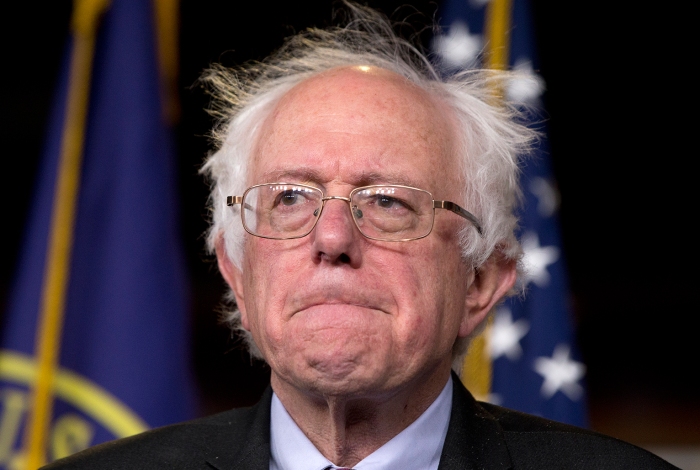
Bernie Sanders just dropped a massive dose of truth on us Monday night.

No politician in my lifetime has ever said anything so dangerous, fraught with problems, unlikely, impractical, and absolutely on the nose right!

The Presidential candidate running for the Democratic nomination wants to make the federal government largely responsible for funding public schools. Right now districts are supported mostly by local and state taxes.

This is what he said:

“One of the things that I have always believed is that, in terms of education, we have to break our dependency on the property tax, because what happens is the wealthiest suburbs can in fact have great schools but poor, inner-city schools cannot. So I think we need equality in terms of how we fund education, and to make sure the federal government plays an active role to make sure that those schools who need it the most get the funds that they deserve.”


https://www.youtube.com/watch?v=vt3n7ugOj80&feature=youtu.be

(Find the quote above 17 minutes into this video.)


Wow! What a statement!

Don’t tell me that was focused grouped. Don’t tell me his campaign did a poll first. Don’t tell me he ran that by any big donors for approval.

Whether you agree with it or not, such an audacious remark has to come from a genuine belief. This is really what Bernie thinks, and it’s entirely consistent with the Democratic Socialism of his whole political career.

I don’t think his rival for the party’s nomination, Hillary Clinton, will be parroting THIS stance! If anything, she might criticize him for it. And she’d have a multitude of practical reasons to do so.

Lots of folks on both sides of the aisle are sick of federal intervention in our schools. No Child Left Behind was a disaster. Race to the Top was worse. And the just passed Every Student Succeeds Act (ESSA) amounts to a massive giveback of power to the states. Under the most popular interpretation, the reauthorization of the federal law governing K-12 schools makes the states responsible for filling in the details of education policy while limiting federal interventions.

And now Bernie is suggesting the Fed foot the bill!?

That is going against the political tide. Who would vote for such a thing? Probably not Hillary. Or any of the Republican candidates. Or more than a handful in Congress, either.

But it’s exactly the right thing to do.

The reason?

The biggest problem with America’s public school system isn’t test scores, lazy students, or teachers unions. It’s poverty, segregation and inequitable funding.

We have separate schools for the rich and separate schools for the poor. We have schools serving mostly black and brown populations and schools serving mostly whites. And the way we allocate money and resources to these schools both allows and perpetuates this system.

Nationwide, state and local governments spend 15 percent less per pupil on poor school districts. I see this first hand. My home state of Pennsylvania is the worst offender, providing the poorest districts an embarrassing 33.5 percent less per student. This means higher class sizes, less teachers, less arts and humanities, less electives, less nurses, guidance councilors and wrap around services. This is the reality in 23 states.

An additional 23 states do buck this trend with more progressive funding formulas. States like California and Florida actually provide MORE spending to poor districts. This helps heal the wounds of malnutrition, violence, family instability and a host of other problems that go hand-in-hand with generational poverty. It also offset the costs of greater numbers of special education students and English Language Learners you typically find in these districts.

You might say, then, that the states where poor children get shafted could simply follow the lead of their more enlightened neighbors. Good luck with that! Rich folks rarely volunteer to subsidize the poor. They got theirs, and they vote and donate more regularly to local politicians than their indigent brethren can afford to do.

The result is a funding system based on local wealth. Rich areas have Cadillac education systems. Poor areas have dilapidated ones. That’s demonstrably unfair and leads to worse academic outcomes for needy kids.

What’s worse, no one else runs their schools this way. The U.S. is one of the only countries in the world – if not probably the ONLY country – that funds schools based largely on local taxes. Other developed nations either equalize funding or provide extra money for kids in need. In the Netherlands, for example, national funding is provided to all schools based on the number of pupils enrolled. But for every guilder allocated to a middle-class Dutch child, 1.25 guilders are allocated for a lower-class child and 1.9 guilders for a minority child – exactly the opposite of the situation in the U.S.

Federalizing education funding could solve all these problems. It could set the groundwork for an even playing field. All students could get a fair start in life! That’s a goal worth shooting for! And that’s what Bernie is suggesting.

But it’s an incredibly dangerous proposal.

Our school system still suffers nationwide from the effects of corporate education reform. National policy has been and continues to be one of high stakes standardized testing, poorly conceived and untested academic standards, and a push to privatize struggling schools. Corporatists call this “Accountability.”

It goes something like this: raise your test scores or we’re closing your school and turning it into a for-profit charter. Adopt these academic standards written by the testing companies and we’ll give you a couple extra bucks. De-professionalize teachers with junk science evaluations and hiring under-trained Teach for America temps or else we’ll cut your funding.

THIS is the federal legacy in education, and Bernie is suggesting we give them MORE POWER!?

Yes, and no. I can’t speak for Bernie, but that’s certainly not how this has to go. We can increase the Fed’s responsibility for funding schools without increasing its power over education policy. In my view, education decisions should be made locally, and I don’t mean at the state legislature. Decisions about how best to run schools should be made at the district level by the experts – the teachers and parents.

Certainly there will be those who call for more federal power over policy as a condition of federalized funding. But that has to be a deal breaker. Equitable funding with inequitable policy would just be plugging one hole while making another.

In my view, equitable funding IS the role of the federal government in public education. When the Elementary and Secondary Education Act (ESEA) was first passed in 1965, it’s purpose was to make sure all schools were getting adequate resources. Under Bush and Obama, that became perverted to mean more standardized tests and philanthro-capitalist interventions. Bernie’s suggestion could be a step in returning to the original intent of the law.

Yes, the Fed should be engaged in accountability. It should make sure it’s funding schools properly. Maybe it should even be responsible to make sure those funds are being spent on things that broadly can be construed as education. I don’t mean that the fed should be able to withhold monies from districts with low test scores. But maybe it can prosecute administrators who use funding to lavishly redecorate their offices or who neglect the needs of students in their districts.

However, even if you agree – as I do – that this is a lofty goal, it is almost impossible to achieve. It’s like single-payer healthcare was in the ‘80s and ‘90s. This is what most of the world is doing but it was completely out of reach here politically. In fact, we still don’t have it, but look at how the landscape has changed. Obamacare is not-single payer, but it is a step in that direction. Bernie is even championing going that extra step and providing a medicare like system for all.

What seemed impossible decades ago, now seems within reach. The same may be true one day with federalized education funding.

To be honest, I doubt fixing our school funding system is high on Bernie’s list of things to do. Breaking up the big banks, overturning Citizens United, free college tuition, even healthcare probably come first. And maybe that’s not a bad thing. If any or all of these goals were realized, it would help the more than half of our public school children living in poverty. Moreover, just having equitable funding on the list with these other worthy goals puts it on the national agenda.

Right now, no one else is talking about this. It isn’t even a recognizable goal for most progressives. Frankly, I doubt many people have even thought about it. By bringing this up, Bernie is forcing us to do so.

When I first became an education activist, I thought I was doing it for my students. Then we had a daughter, and I thought I was doing it for her, too. But as the years have gone by, the landscape has changed only slightly. We’re still reaching a level of critical mass when the culture demands a major shift. We’re not there yet. So now I wonder if the people I’m really doing this for are my grandchildren.

One day we may have the courage to change the course of our education system. We may gain the nerve to actually accomplish our convictions. We might actually try to have a nation with liberty and justice for all.

That’s what I’m fighting to achieve. I think many of us are doing the same. But do we have the bravery to take Bernie at his word, to push this topic onto the national stage?

A Bernie Sanders presidency would do that. It might not achieve this lofty goal. Not now. The political winds aren’t favorable. But we can try, knowing full well the dangers and the improbability.

I wish Bernie would flesh out the details of his plan. I wish he’d exorcise the devil from the details. But the very fact that he has the intrepidity to offer this as a solution fills me with hope.

Is it hot in here or am I starting to Feel the Bern?

Who’s Your Favorite Gadfly? Top 10 Blog Posts (By Me) That Enlightened, Entertained and Enraged in 2015

Screen shot 2015-12-30 at 12.57.49 AM

“Pennsylvania educator and public school advocate Steven Singer is one of the most powerful voices in the nation when it comes to speaking out for students, parents, teachers and our public schools.”
Jonathan Pelto, founder of the Education Bloggers Network


“Steven Singer wrote these five terrific posts last year. I didn’t see them when they appeared. Probably you didn’t either. You should.”
Diane Ravitch, education historian


“Your name should be Sweet Steven Singer. You are a delight.”
Karen Lewis, President of the Chicago Teachers Union

11206058_10152940020833860_7943827034975790194_n


Hello. My name is Steven Singer, and I am a gadfly.

I make no apologies for that. It’s what I set out to do when I started this blog in July of 2014.

I told myself that people were too complacent. There was no curiosity. People were too darn sure about things – especially education policy and social issues.

They knew, for instance, that standardized testing was good for children. Why? Because Obama said so. And he’s such a nice man. It’s too bad all those mean Republicans keep making him do all this bad stuff.

They also knew racism was over. After all… Obama! Right? Black President, therefore, the hundreds of years of struggle – finished! Move along. Nothing to see here.

Yet all this “knowledge” went against everything I saw daily as a public school teacher.

Standardized tests are good for children? Tell that to more than half of public school kids now living below the poverty line who don’t have the same resources as middle class or wealthy kids yet are expected to magically ace their assessments. Tell that to the kids who get hives, get sick, or throw up on test day. Tell it to the black and brown students who for some unexplainable reason almost always score lower than their white peers.

Racism is over? Tell that to all my minority students who are afraid to walk home from school because they might get followed, jumped, beaten or killed… by the police! Tell it to their parents who can’t get a home loan and have to move from one rental property to another. Tell it to the advertising executives and marketing gurus who shower my kids with images of successful white people and only represent them as criminals, thugs, athletes or rappers.

So when I started this blog, I consciously set out to piss people off. But with a purpose. To quote the original historical gadfly, Socrates, my role is, “to sting people and whip them into a fury, all in the service of truth.” It seems well suited to a school teacher. After all, Socrates was accused of “corruption of the youth.”

It’s been quite a year. When I went to the Network for Public Education conference in Chicago last April, some folks actually seemed to know who I was. “Don’t you write that Gadfly blog?” was a common question.

When I met NEA President Lily Eskelsen Garcia and AFT President Randi Weingarten, they both said, “I read your blog.” And then they looked me up and down suspiciously as if they were thinking, “THIS is the guy who writes all that stuff!? THIS is the guy giving me such a hard time!?”

Of course, I am human, too. One can’t sting and bite every day. Sometimes the things I write are met with love and approbation. Some weeks even Lily and Randi like me. Sometimes.

Education historian Diane Ravitch has given me tremendous moral support. I can’t tell you how gratifying it is to have one of your heroes appreciate your work! Her book “The Death and Life of the Great American School System” really woke me up as a new teacher. I’m also on the steering committee of the Badass Teachers Association, an organization that has changed my life for the better. The more than 56,000 people  there are my support. I would never have had the courage to start a blog or do half of the crazy things I do without their love and encouragement.

And there are so many more people I could thank: my fellow bloggers Jonathan Pelto, Peter Greene, Russ Walsh, Nancy Flanagan, Mitchell Robinson, and Yohuru Williams. Also the good people at the LA Progressive and Commondreams.org. The incredible and tireless radio host Rick Smith.

There are just too many to name. But no list of acknowledgment would be even close to completion without mentioning my most important supporter – you, my readers. Whether you’re one of the 9,190 people who get every new post delivered by email or if you otherwise contribute to the 486,000 hits my site has received so far, THANK YOU.

So in celebration of my first full year of blogging, I present to you an end of the year tradition – a Top 10 list. Out of the 90 posts I wrote in 2015, these are the ones that got the most attention. Often they incensed people into a fury. Sometimes they melted hearts. I just hope – whether you ended up agreeing with me or not – these posts made you think.

Feel free to share with family, friends, co-workers, etc. After all, I’m an equal opportunity gadfly. I always cherish the chance to buzz around a few new heads!


10) The Democrats May Have Just Aligned Themselves With Test and Punish – We Are Doomed

sanders_warren-620x412

Published: July 17, 2015
Views: 7,122

Description: It hit me like a slap in the face that almost all Senate Democrats voted to make the reauthorization of the federal law governing K-12 public schools a direct continuation of the same failing policies of the Bush and Obama years. Heroes like Bernie Sanders and Elizabeth Warren seemed to be turning their back on teachers, parents and school children. And they were stopped in their efforts by… Republicans!

Fun Fact: This story had some legs. It inspired a bunch of education advocates like myself who are also Bernie Sanders supporters to write the candidate an open letter asking him to explain his vote. His campaign eventually responded that it was about accountability!?


9) Punching Teachers in the Face – New Low in Presidential Politics

cc-600x400

Published: Aug. 3
Views: 14,735

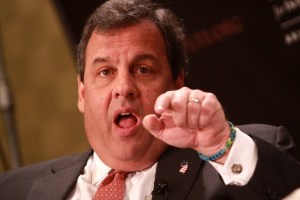
Description: New Jersey Governor Chris Christie thought he’d run for the Republican nomination for President. He thought threatening to metaphorically punch teachers unions in the face would get him votes. It didn’t.

Fun Fact: This new low in Presidential politics came just after Donald Trump had announced he was running. Christie’s new low now seems almost quaint after Trump’s calls to tag all Muslims and monitor their Mosques. How innocent we were back in… August.


8) This Article May Be Illegal – Lifting the Veil of Silence on Standardized Testing

whistle
Published: April 18
Views: 15,818

Description: Teachers and students may be legally restrained from telling you what’s on federally mandated standardized tests, but we’re not restrained from telling you THAT we’re restrained. Is this just protecting intellectual property or direct legal intimidation of educators and children?

Fun Fact: I have not yet been arrested for writing this piece.


7) Stories about Teachers Union Endorsements of Hillary Clinton

Did the AFT Rank and File REALLY Endorse Hillary Clinton for President? If So, Release the Raw Data

(July 12 – 4,448 hits)


The NEA May Be About to Endorse Hillary Clinton Without Input From Majority of Members

(Sept. 21 – 3,873 hits)

A Handful of NEA Leaders Have Taken Another Step Toward Endorsing Hillary Clinton Despite Member Outcry

(Oct. 2 – 739 hits)

Teachers Told They’re Endorsing Hillary Clinton by NEA Leadership, Member Opinions Unnecessary

(Oct. 4 – 7,074 hits)

Screen shot 2015-09-21 at 12.23.19 AM

Published: July 12 – Oct. 4
Views: 16,134 TOTAL

Description: You expect your union to have your back. Unfortunately it seems our teachers unions were more interested in telling us who we’d be endorsing than asking us who the organizations representing us should endorse.

Fun Fact: I broke this story pretty much nationwide. News organizations like Politico were calling me to find out the scoop.


6) Why We Should Have ZERO Standardized Tests in Public Schools

Screen shot 2015-01-30 at 4.35.10 PM

Published: Jan. 30
Views: 16,443

Description: Someone had to say it. We don’t need any standardized tests. We need teacher-created tests. And that’s not nearly as crazy as some people think.

Fun Fact: This was written back when the Elementary and Secondary Education Act (ESEA) was being rewritten and naïve fools like me thought we might actually get a reduction in high stakes testing. Spoiler alert: we didn’t.


5) Atlanta Teacher RICO Conviction is Blood Sacrifice to the Testocracy

aztecshumansacrifice

Published: April 3
Views: 18,187

Description: There is something terribly wrong when we’re using laws created to stop organized crime as a means to convict  teachers cheating on standardized tests. I’m not saying cheating is right, but the mafia kills people. These were just teachers trying to keep their jobs in a system that rewards results and refuses to balance the scales, listen to research or the opinions of anyone not in the pockets of the testing and privatization industries.

Fun Fact: Watching all those seasons of “The Wire” finally came in handy.


4) Not My Daughter – One Dad’s Journey to Protect His Little Girl From Toxic Testing

FATHERS-AND-DAUGHTERS
Published: March 20
Views: 26,420

Description: How I went to my daughter’s school and demanded she not be subjected to high stakes testing in Kindergarten.

Fun Fact: They were very nice and did everything I asked. If you haven’t already, you should try it!


3) I Am Racist and (If You’re White) You Probably Are, Too

Screen shot 2015-06-02 at 1.42.34 PM

Published: June 2
Views: 28,906

Description: White folks often can’t see white privilege. This is my attempt to slap some sense into all of us. If you benefit from the system, you’re responsible to change it.

Fun Fact: Oh! The hate mail! I still get it almost every day! But I regret nothing! A black friend told me I was brave to write this. I disagreed. Anytime I want I can hide behind my complexion. She can’t.


2) I Am A Public School Teacher. Give Me All the Refugees You’ve Got

syrian_refugee_schools

Published: Nov. 19
Views: 45,196

Description: Our public schools are already places of refuge for our nation’s school children. Send me more. I’ll take them all. I’d rather they end up in my classroom than drowned by the side of a river.

Fun Fact: I got equal love and hate for this one. Some folks were afraid of terrorists. Others didn’t think we could afford it. But many told me my heart was in the right place. Lily and the folks at the NEA were especially supportive.


1) White People Need to Stop Snickering at Black Names

baby-and-parents

Published: Sept. 6
Views: 96,351

Description: Maybe we should stop laughing at black people’s names. Maybe we should try to understand why they are sometimes different.

Fun Fact: You’d have thought I threatened some people’s lives with this one! How dare I suggest people should stop mocking other people’s names! If you want to know how strong white fragility is in our country, read some of the comments! But many people thanked me for bringing up something that had bothered them for years but that they had been too polite to talk about, themselves. This is easily my most popular piece yet.


Does Bernie Sanders Offer Education Advocates Enough? Are We Feelin’ the Bern or Just Feelin’ Burned?

150430-berniesanders-editorial

You probably didn’t hear about this on the news.

To my knowledge no one covered it on TV, the newspaper or even on the blogosphere.

But Bernie Sanders may have made a reply to his Democratic Primary rival Hillary Clinton’s gaffe about closing public schools.

“I wouldn’t keep any school open that wasn’t doing a better than average job,” Clinton said at a campaign stop in Iowa on Dec. 22.

The media took this to mean Clinton is in favor of closing half the schools in the country. The comment has been much debated with calls for context and explanation by the Clinton campaign.

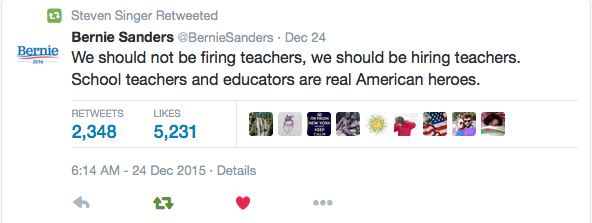
However, very quietly on Dec. 24, Sanders tweeted, “We should not be firing teachers. We should be hiring teachers. School teachers and educators are real American heroes.”

Screen shot 2015-12-26 at 8.06.51 PM

The @BernieSanders twitter account has more than 1 million followers, a little less than the @SenSanders account. But it does appear to be affiliated with the Bernie Sanders presidential campaign. If Sanders, himself, posted the tweet is unclear. The candidate used the same account to live tweet the Republican debates so he – at least sometimes – is personally responsible for the material that comes out of there.

Moreover, the comment can be connected directly to something he said on C-SPAN at a campaign stop in Cleveland, OH, on Nov. 16 – before Clinton’s gaffe. In a larger speech that touched on numerous issues he said, “We should not be firing teachers and childcare workers, we should be hiring teachers.” The line about teachers being American heroes is new.

Start the speech 56 minutes in to hear the comment.

So I think it’s fair to say that the sentiment is, in fact, Bernie’s. It’s only the timing that is in question.

Is this tweet an attempt to distinguish himself from Clinton? Is this his way of saying that he’s NOT interested in closing schools and firing teachers – instead he wants to invest in education and hire more educators?

Maybe.

It sure would be nice if he’d come out and tell us. Frankly, I’m getting tired of having to read the tea leaves to get a glimpse of Bernie’s K-12 education policy.

Don’t get me wrong. I love the guy.

He’s been one of my favorite politicians for years. As a U.S. Senator, he’s consistently worked against economic and social inequality for decades. He’s been a fearless critic of Wall Street and privatization, an advocate for single payer healthcare and fighting global climate change.

He champions historic investments in preschool and college – even vowing to make post secondary tuition free. But somehow when it comes to K-12 schools, he’s got very little to say.

Most notably, he voted against No Child Left Behind (NCLB) – the devastating schools bill passed with bipartisan support during the George W. Bush years. However, he also voted in favor of the Charter School Expansion Act of 1998 which further opened the nation’s piggy bank to for-profit school privatizers. He also opposed a bill in early 2015 that would have prohibited the federal government from imposing the terrible Common Core standards on the nation’s schools.

On the campaign trail, when asked about his stance on K-12 schools, Sanders has boasted he would end NCLB. That was just accomplished by Congress through a reauthorization of the bill now called the Every Student Succeeds Act (ESSA). As a member of the Health, Education, Labor and Pensions (HELP) Committee, Sanders was an active participant in that process.

When this legislation was still in the Senate, he – along with almost all Democrats – voted for a failed amendment that would have continued most of the worst aspects of NCLB. The bill eventually passed the chamber in a potentially more palatable form. Sanders eventually voted for that Senate version but was conspicuously absent from the final vote.

Though keeping a busy campaign schedule, Sanders is known for returning to Washington to vote for important legislation. He does this much more than most of the other sitting Congressional Presidential candidates.

So why was he absent for the final vote on the ESSA? Was that done on purpose, and if so why? Could it be an attempt to distance himself from this legislation? Or is it an attempt at plausible deniability – a way of justifying both his approval and disapproval of the same legislation?

Sanders hasn’t said much.

This puts would-be-supporters in an uncomfortable position. We like what Sanders has to say about the economy and poverty, but we have little to go on when it comes to K-12 education. Certainly if Sanders was elected President and came through with all of his other promises, that would help our public schools tremendously. And since Sanders has been fighting for these things his entire lengthy political career, it’s hard to doubt his sincerity. But why not include education as part of this platform? It seems to fit perfectly with everything else he believes.

On the other hand, there’s Clinton. She is making a real effort to clarify her education positions. In fact, last week’s gaffe was part of a much larger policy speech on K-12 schools. Sander’s reply – though better stated – was a one off. It was a sound-byte. It was an applause line. It didn’t have much substance behind it.

How are we to take it? Would Sanders hire more teachers as part of a nationwide education equity policy? If so, what exactly is that policy? Or is he – like Clinton – in favor of closing some struggling schools?

Certainly Clinton has a credibility problem. One of her first actions on the public scene as the First Lady of Arkansas in 1983 was to fight against the state teachers union to enact accountability-based school reform. Many of the billionaires and shady think tanks that are working so hard to destroy public schools have donated heavily to her campaign. Her endorsement by both major teachers unions – the National Education Association and American Federation of Teachers – were allegedly the result of leadership and not rank and file members.

But unlike Sanders, Clinton actually seems to care about getting the education vote. She is actively fighting for our advocacy. Bernie doesn’t seem to think he needs us.

The Democratic Primaries are about two months away. If Sanders is going to make a play for teachers, parents, students and education advocates, he still has a chance. But time is running out.

Personally I’d rather vote for him, and maybe I will. But if he finally came out swinging, if he actually made me feel like he’d strip away the high stakes testing, unproven or failing policies and put teachers in the drivers seat – he could get so much more.

There are tens of thousands of teachers and advocates standing on the sidelines looking to Bernie. If he gave us a major policy speech, he’d find his campaign offices flooded with new volunteers. Educators would take to the streets and phone banks. We’d lead the charge. We could help turn the tide in a Democratic primary where the margin of victory could well be razor thin.

We’re out there, Bernie. Just say the word and we’ll come running.

We want to Feel the Bern, but you’ve got to turn up the heat!


NOTE: This article also was published in Commondreams.org and the LA Progressive.


Much Ado About an Enigma – No One Really Knows What Impact the ESSA Will Have on Public Schools

ESSA-Obama

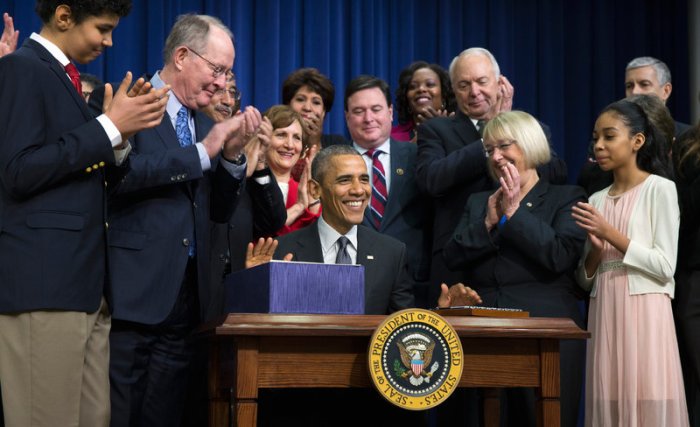
President Barack Obama signed the Every Student Succeeds Act (ESSA) this week.

The new legislation reauthorizes federal law governing K-12 public education.

In 1965 we called it the Elementary and Secondary Education Act (ESEA). Until today we called it No Child Left Behind (NCLB). And now after a much-hyped signing ceremony, the most definitive thing we can say about it is this: federal education policy has a new name.

Seriously. That’s about it.

Does it reduce the federal role in public schools? Maybe.

Does it destroy Common Core State Standards? Possibly.

Is it an improvement on previous policies? Potentially.

Will it enable an expansion of wretched charter schools and unqualified Teach for America recruits? Likely.

The problem is this – it’s an over 1,000 page document that’s been open to public review for only two weeks. Though it was publicly debated and passed in the House and Senate, it was finalized behind closed doors and altered according to secure hurried Congressional votes. As such, the final version is full of legal jargon, hidden compromise, new definitions and verbiage that is open to multiple meanings.

How one reader interprets the law may be exactly the opposite of how another construes it.

Take the much-touted contention that the ESSA reduces the federal role in public schools. Even under the most positive reading, there are limits to this freedom.

The document continues to mandate testing children each year in grades 3-8 and once in high school. It also mandates academic standards and accountability systems. However, what these look like is apparently open to the states.

For instance:

The Secretary [of Education] shall not have the authority to mandate, direct, control, coerce, or exercise any direction or supervision over any of the challenging State academic standards adopted or implemented by a State.

That seems pretty clear. The federal government will not be able to tell states what academic standards to adopt or how student test scores should be used in teacher evaluations.

But it also says that states will have to submit accountability plans to the Department of Education for approval. It says these accountability plans will have to weigh test scores more than any other factor. It says states will have to use “evidence-based interventions” in the schools where students get the lowest test scores.

That sounds an awful lot like the test-and-punish system we have now.

What if your state decides to take a different road and reject the high stakes bludgeon approach to accountability? In that case, some readers argue schools could lose Title I funds – money set aside to help educational institutions serving impoverished populations.

Will that actually happen? No one knows.

It may depend on who will be President in 2017 and whom that person picks as Secretary of Education. And even if the Feds try to take advantage of these potential loopholes, the matter could end up being decided by the U.S. Supreme Court.

What about Common Core?

Some readers interpret the new law as destroying forever the possibility of national academic standards. If states are allowed to pick their own standards, it is highly unlikely they’ll all pick the ones found in the deeply unpopular Common Core. However, the law does force each state to have academic standards of some kind, and it defines what those standards must look like. One interpretation of this is that they must look a lot like the Common Core.

They must be “state-developed college- and career-ready standards.” You read that right – “College and career ready.” That’s the Common Core catchphrase. If someone says they want to eat lunch at “the golden arches,” they haven’t said McDonalds, but you know they’re craving a Big Mac.

Will the Fed allow states to choose standards radically different than the Core? Again only time and – possibly – the courts can tell.

This same problem occurs throughout the document. As the public painstakingly combs through it, new legal wiggle room may be found. And I am not so naive as to suppose we’ve found all of the loopholes yet. Some of these may be the result of poorly chosen wording. Others may be purposefully hidden time bombs waiting for opportunists to exploit.

This uncertainty about exactly what the ESSA will eventually mean for our public schools may help explain the range of reactions to the formative law – from ecstasy to despair to shrugs and snores.

I’m not sure what to think of the thing, myself. I started the whole process disgusted but came around to accepting it if the final result was any kind of improvement over previous legislation. And now that it’s the law of the land, I look at this Frankenstein’s monster of a bill – stitched together pieces of mystery meat – and I don’t know whether to laugh or cry.

I still hope it will live up to the limited promise it holds to bring us some relief from NCLB. But I admit this thing could go sour. Anyone’s guess is as good as mine.

Which brings me to perhaps the biggest problem with this law that no one seems to be talking about.

Education needs reformed. We need to repeal the bogus policies that have been championed by the 1% and their lapdog lawmakers. We need to get rid of test-based accountability. We need to trash high stakes testing, Common Core, value added measures, charter schools and a host of other pernicious policies. We need to initiate a real anti-poverty program dedicated to attacking the actual problem with our schools – inequality of resources.

But more than any of that, we need to reform our government.

We need to find a better way to make our laws. The process that shat out this ESSA must go.

Think about it. No Child Left Behind was an abject failure by any metric you want to use. It didn’t close achievement gaps – it increased them. And the major policy of this law – annual standardized testing – remains intact in the reauthorization!

There has been massive public outcry against annual testing. Parents are leading an exponentially growing civil disobedience movement shielding their children from even taking these assessments. Everyone seems to agree that we test kids too much – even President “I’ll-veto-any-bill-that-deletes-testing” Obama.

Yet our legislators did next to nothing to fix this problem.
Instead preference was given to lobbyists and corporatists interested in making a buck off funding set aside to educate children. The focus was on smaller government – not better government. These aren’t mutually exclusive, but they aren’t exactly one-and-the-same, either.

This can’t continue if we are to keep pretending we have a representative Democracy. The voice of lobbyists must not be louder than voters. Money must be barred from the legislative process. Demagoguery must not overshadow the public good. We need transparency and accountability for those making our laws.

Until that happens, we will never have a sound and just education policy, because we don’t have a sound and just government.

Unfortunately, that is the biggest lesson of the ESSA.


NOTE: This article also was published in the LA Progressive, Badass Teachers Association Blog and quoted extensively on Diane Ravitch’s blog.


A Real Solution to the Infinitesimal Cases of Child Predators in Our Schools

110401_toomey_ap_605

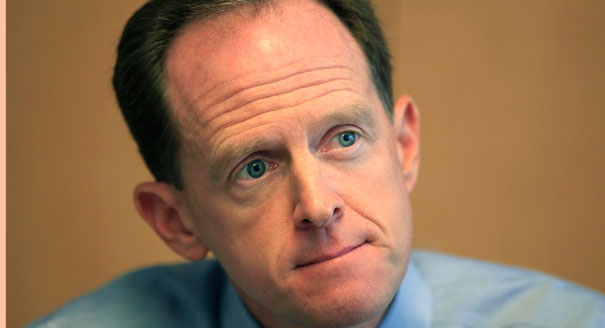
Pat Toomey is obsessed with child predators in our public schools.

When I came to Washington, D.C., this summer to visit 
the U.S. Senator from Pennsylvania, he was lobbying to get his “Passing the Trash” bill included in the Elementary and Secondary Education Act (ESEA).

His proposed legislation – now part of the Senate version of the ESEA – would ban school districts from helping known pedophiles from finding teaching jobs at different schools. Toomey is hopeful the provision will remain in the final version of the law that eventually will reach President Obama’s desk.

I met with his education aide who cheerily told me her job was to comb through the nation’s newspapers everyday and count the number of teachers accused of acting inappropriately with children. I’d mention issues like inequitable funding, standardized testing and Common Core. She’d solemnly quote back the number she’d found in her research.

There was definitely a disconnect between our priorities. After all, I’m a public school teacher. I work in our school system everyday. She and her boss only know about our schools through what they read in the newspaper. And according to the media every school in American houses child predators. They lurk behind every corner protected by administrators, superintendents and unions.

However, the facts do not back this up.

The Associated Press held a landmark investigation in 2007 to discover the extent of the problem. Reporters sought disciplinary records in all 50 states and the District of Columbia over a 5 year period. The investigation found 2,570 educators whose teaching credentials were revoked, denied, surrendered or sanctioned following allegations of sexual misconduct. About 70% of those cases involved children being victimized.

There is no glossing over it. The number is disgusting and startling. However, it is far from the national epidemic the media and Toomey are touting.

There are more than 3 million teachers in this country. This report found that 1 in 800,000 may be a child predator. That’s .00083%.

In other words, your child is more likely to be struck by lightning than be the victim of a child predator at school (1 in 134,906).

Other things more likely to happen include dying in an airplane crash (1 in 7,178), death on the job (1 in 48,000), and being murdered (1 in 18,000).

I don’t mean to be glib. One teacher betraying a young person’s trust in this way is one too many.

I’m glad Toomey is pursuing this legislation. I even support it.

However, I don’t like the slander and libel against the great majority of teachers. I don’t like how we’re all being painted with the same brush – even when it is done in the cause of making it more difficult for child predators.

I’ve been a public school teacher for almost 15 years. In that time, I have never met a single teacher who I would be uncomfortable letting babysit my 6-year-old daughter. Even when I was a student, myself, back in the 1980s and 90s, I never had a teacher who I was afraid would molest me or my classmates.

Compare this to the sex scandals in the Roman Catholic Church. A review by American Catholic bishops found about 4,400 of 110,000 priests were accused of molesting minors from 1950 through 2002. That’s .04% or 1 in 400. Sure the timescale involved is much longer than the AP study of educators, but the pool of priests is also much smaller. It would seem children are more in danger in houses of worship than houses of learning.

However, none of this helps people like Toomey pass legislation. You can’t say this doesn’t happen much, but we need to stop it. No one would vote for it. There would be no sense of urgency.

It’s just that in dramatizing the situation the Senator and his ilk are defaming the majority of teachers who would never even consider hurting a child.

The truth is not politically expedient. Child predation in schools is not a quantitative issue. It’s a qualitative one.

You don’t need large numbers of children to be hurt in this way for us to take the problem seriously. Even a small number, even a single instance, is enough to require action. No child should ever feel unsafe in school. No child should ever be victimized in these hallowed halls – especially by the very people who have devoted their lives to help them.

So I think Toomey’s right. We should pass his legislation. We should take steps to stop this kind of thing from ever happening in our schools.

And if we’re really serious, I have a solution that no one seems to be talking about: Let’s hire more teachers.

Stay with me here. Child predators almost always act alone. This sort of crime requires the perpetrator to have time undisturbed with the victim. Yet what do we have in our public schools? We’ve slashed and burned school budgets until there are fewer teachers and more students than ever. Class sizes have ballooned. It’s not uncommon for teachers to have upwards of 20, 30 even 40 children in one classroom.

This is the perfect breeding ground for child predators. They are more unsupervised than ever. They can do as they please and no one will catch them until it’s too late. Even principals and other administrators have less time to observe what goes on in the classroom because they’re unduly burdened with ridiculous amounts of paper work required to ensure every teacher gets a junk science value-added evaluation.

But if we hired more teachers, we could reduce this problem. We could even take the majority of these new teachers and put them together in the classroom. We could initiate a nationwide co-teaching initiative.

There would be challenges. You’d have to be careful to pair educators together that are compatible and can work well together. However, it would be worth it.

Few teachers would be alone with a class of students. There would almost always be another adult in the room. If another teacher was doing something fishy, it would be observed and probably reported. Moreover, the mere presence of another educator would be a huge deterrent to even trying something funny.

And this would solve our class size conundrum. You might still have larger classes, but the ratio between teacher and student would be halved. Educational outcomes would increase. Students would get more individual attention. They’d learn more. Teachers would be less stressed having someone else to shoulder the burden. And having an influx of new middle class jobs would boost our flagging economy.

This is a win-win.

Of course, it would cost some major bucks. It would require a lot of work from our nations lawmakers and policy wonks. But how could they really say ‘no’? After all, it’s being done to protect children!

From an economic standpoint, we already spend 54% of our federal budget on wars and the military. Only 6% is spent on education. It seems astoundingly unlikely that we can’t afford adding these jobs, increasing children’s educational outcomes, boosting the economy and protecting children – all in one sweep!

So, Senator Toomey, after your measure gets adopted in the final ESEA, I suggest you spearhead this new mission. After all, your bill will help, but co-teaching will almost eliminate the problem. Even if we had all children take classes exclusively on-line, it wouldn’t stop child predators from getting to them. (Heck! Predators thrive on the Web!) But co-teaching could make a real appreciative difference.

If we really want to stop students from being victimized in school, we need more teachers.


NOTE: This article was also published in the LA Progressive.