Don’t Be Fooled: Betsy DeVos Still Loves Common Core

screen-shot-2016-12-13-at-8-00-56-pm

Poor Betsy DeVos.

President-elect Donald Trump’s pick for Education Secretary has spent her entire adult life advocating for Common Core, but now she has to pretend like she doesn’t like it.

In fact, if you point out any of the multiple projects that she supports boosting Common Core, the multi-billionaire Republican mega-donor will probably say you’re promoting “fake news.”

But facts are facts.

She’s a board member of Jeb Bush’s pro-Common Core think tank, Foundation for Excellence in Education, where she hangs out with prominent Democratic education reformers like Bill Gates and Eli Broad. But she says that somehow doesn’t mean she likes it.

She founded, funds and serves on the board of the Great Lakes Education Project (GLEP), an organization dedicated to the implementation and maintenance of Common Core. But somehow that doesn’t mean she’s for the standards.

She’s even spent millions lobbying politicians in her home state of Michigan asking them NOT to repeal Common Core. But somehow that doesn’t mean she’s in favor of it.

It must be a hard position to be in.

Her entire nomination for Trump’s cabinet is contingent on convincing the public that she hates this thing that he explicitly campaigned against but she favored.

Rarely has an education policy been such a political hot potato as Common Core. Typically Republicans hate it and Democrats love it. However, little of this has to with its actual merits – or lack thereof.

Common Core is a set of academic standards saying what students should know in each grade. Nonetheless, these standards are deeply unpopular with teachers, students, parents and the general public. Part of this stems from the undemocratic way state legislatures were bribed to enact them by the Obama administration in many cases before they were even done being written and often circumventing the voting process altogether. Other criticisms come from the way the standards were devised almost entirely by standardized test corporations without input from experts in the field like child psychologists and classroom teachers. Finally, the standards get condemnation for what they do to actual classrooms – narrowing the curriculum, promoting excessive test prep, increased paperwork, the purchase of new text and work books and requiring new and more unfair standardized assessments.

As a Republican, DeVos must do everything she can to distance herself from this policy.

It’s just that her history of advocating for it gets in the way.

She even acknowledges it.

When she was nominated by Trump, one of the first things she did was publish a statement on her Website explaining how very much she hates Common Core – despite appearances to the contrary.
“Have organizations that I have been a part of supported Common Core? Of course. But that’s not my position,” she says on her Website.

And it makes perfect sense. How many times have you, yourself, given millions of dollars to a cause that you don’t support? Who hasn’t founded an organization called “I Love Apples” because of your deep hatred for the fruits?

It’s kind of like Colonel Sanders admitting that he doesn’t actually approve of people eating fried chicken. Or maybe Milton Hershey supporting a ban on chocolate.

Yeah… That’s not going to convince anybody.

What DeVos needs is a new narrative, a new story to tell people to convince them that she’s really and truly against Common Core. And at Trump’s victory rally in Grand Rapids, Michigan, on Dec. 9, she tried it out on the crowd.

“It’s time to make education great again in this country…” she told the crowd. “This means letting states set their own high standards and finally putting an end to the federalized Common Core.”

Ah! So it’s not Common Core, per se, that she’s against. She’s against FEDERALIZED Common Core.

Shoddy academic standards designed by non-educators are just fine so long as they don’t come from the federal government? Academic standards that are developmentally inappropriate are okay if Big Brother didn’t force you to adopt them?

Well, apparently.

DeVos doesn’t want a world without Common Core. She wants one where the Core isn’t tainted with federalism. If the states somehow magically decided all by themselves that these exact standards were just peachy, that would be fine with her. It’s just that we can’t let the Feds tell us what to do.

In my book, that’s still being in favor of Common Core.

Moreover, it’s terribly disingenuous because not so long ago, DeVos’ organization, GLEP, was trying to convince people that Common Core actually wasn’t federal at all. In fact, that’s why the organization favors it.

According to GLEP’s Mission statement, one of its priorities is:

Implementing the Common Core State Standards (CCSS)
This is a state-driven effort to create a strong and consistent framework which will make our students internationally competitive. 45 states (including Michigan) have adopted the CCSS.”

Which begs the question – if Common Core isn’t federal, what does DeVos think is wrong with it?

Answer: Nothing!

This is the kind of wordplay you expect from Democratic apologists. You hear the similar things from Gates, David Coleman or even Hillary Clinton. It’s political rebranding: We don’t support Common Core so much. We support “high academic standards” that will ensure kids are “college and career ready.”

It’s all just double speak and spin.

In reality, establishment Democrats AND Republicans support Common Core. It’s just regular folks like you and me who hate it.

You don’t believe me? Then ask yourself this: in the more than 30 state legislatures controlled by Republicans, why haven’t they repealed Common Core already?

Seriously. They could legally get rid of Common Core in more than half of the country tomorrow, but they don’t. Why? Answer: People like DeVos.

In Michigan, Republicans control the legislature. When lawmakers were debating if they should implement Common Core in the first place, DeVos and GLEP lobbied to move forward and won. Then in Spring of 2015, lawmakers considered two bills to repeal and replace Common Core. DeVos partnered with Governor Rick Snyder (a Republican) and the Michigan Coalition for Higher Standards to oppose both bills.

If that’s not being in favor of Common Core, I don’t know what is.

From my point of view, the rest of her educational ideas are little better. She supports school vouchers and increasing charter schools.

These are terrible ideas for reasons I have enumerated here and here. But even if you’re in favor of them, imagine what a pro-Common Core Education Secretary could do with a national school choice program.

If federal tax dollars are going to follow students to parochial and private schools, DeVos could make adopting Common Core a prerequisite to getting those monies.

Certainly she’ll call it something else, but it will be almost the same academic standards, freely chosen, because if you don’t, you won’t get any of this delicious tax money. Don’t forget, this is similar to why we have Common Core in the public schools – we were bribed.

That’s what the Department of Education has done for the last few decades. It tries to encourage education policy at the state level by offering tax money if you do its bidding.

If the federal government was offering money to do things everyone supports like expanding pre-K programs or after school tutoring, that would be fine. But the federal government has been pushing an agenda on our schools – I think that’s bad no matter which political party does it.

Common Core is big business. It has generated obscene profits for the testing and publishing industry. Likewise, school privatization is a great way to get rich – reducing regulations and offering free tax money to any private or charter school operator! It’s manna from heaven for every flim-flam man and con artist from here to Syria.

Trump knows something about defrauding students. He ran his own fake business school, Trump University. Just imagine how much money he and DeVos can make for themselves and their billionaire buddies with the education reforms being proposed!

And worst of all, at the end of the day we still won’t be rid of Common Core. It will just expand into new markets – I mean, schools.

So if you support DeVos, fine. But don’t delude yourself into thinking she’s against Common Core. She still loves it just as much as she ever did.


screen-shot-2016-12-11-at-8-25-59-pm

Does Eating a Free School Lunch Give Kids “an Empty Soul?”

children-eating-school-lunch

Just about everyone admits the importance of eating lunch – especially for growing kids in school.

But if you get that lunch for free, does it leave you with “a full stomach and an empty soul”?

Speaker of the U.S. House of Representatives Paul Ryan thinks so.

He famously made these remarks at the 2014 Conservative Political Action Conference:

“Take Obamacare—not literally, but figuratively here OK? We now know that this law will discourage millions of people from working. The Left thinks this is a good thing. They say, ‘hey, this is a new freedom—the freedom not to work.’ But I don’t think the problem is too many people are working — I think the problem is not enough people can find work. And if people leave the workforce, our economy will shrink—there will be less opportunity, not more. So the Left is making a big mistake here. What they’re offering people is a full stomach—and an empty soul. The American people want more than that.”

So, for Ryan, having affordable healthcare somehow has discouraged people from working. He seems to think there are millions of poor people out there who could get a job but have decided not to because their medical bills are too low.

It’s preposterous. Most poor people are working several minimum wage jobs just to get by. Very few people are sitting at home on the public dole, and those that are need help to find jobs, as he admits. They need help finding better jobs that pay higher wages. They need help getting the skills and training necessary to get those jobs. And they need for those jobs to actually exist! They don’t need condemnation or starvation to motivate them.

If Republicans like Ryan had offered a single jobs bill, perhaps such remarks would be excusable. If they had offered an alternative to Obamacare, likewise it might be excusable. In the absence of those things, his comments seem to be nothing more than a thinly veiled excuse for doing nothing to help the less fortunate.

But Ryan goes on:

“This reminds me of a story I heard from Eloise Anderson. She serves in the cabinet of my friend Governor Scott Walker. She once met a young boy from a poor family. And every day at school, he would get a free lunch from a government program. But he told Eloise he didn’t want a free lunch. He wanted his own lunch—one in a brown-paper bag just like the other kids’. He wanted one, he said, because he knew a kid with a brown-paper bag had someone who cared for him.”

There are several problems with these remarks. First of all, Anderson later admitted that it never happened. She never met a boy who said this. She got the whole thing from “The Invisible Thread,” by Laura Schroff, either from the book, itself, or a TV interview about the book.

Second, Anderson’s cherry picking this example from the book goes completely against what the author was trying to say. The book is the true story of a business executive and an 11-year-old homeless boy who partnered together with an organization called No Kid Hungry to fight child hunger. One key part of the program is connecting hungry kids with federal programs such as school lunches and food stamps. The group also opposed Ryan’s 2013 budget for its proposed reductions in the food stamp program. In short, Schroff was trying to show how important it was to provide free lunches to students – not that we should let them go hungry. Using Schroff’s book to justify cutting school lunch programs is like using Nelson Mandela’s autobiography as a justification for apartheid.

Getting a free lunch doesn’t mean no one cares for you. On the contrary, it means that everyone does, that your community has pitched in to make sure you are fed.

Many politicians and media talking heads refuse to see the realities of modern American life. Deregulation of the banking and corporate sector along with outsourcing and rampant union busting have resulted in an economy where most of the good paying jobs are gone. This puts a tremendous strain on our education system. As a result, more than half of public school students live below the poverty line. But how to meet their needs without stigmatizing kids for circumstances beyond their control?

Many communities around the country including my own, have stepped up with a solution. For the last two years, hundreds of districts throughout my state of Pennsylvania and throughout the nation have offered free lunches to all of their students regardless of family income. Rich kids, poor kids, all kids eat for free. Though students can still bring a lunch from home, having the option to eat at school removes the dichotomy of brown bags vs. cafeteria lunches. All are the same.

The program, called the Community Eligibility Provision, is available nationwide as part of the Healthy, Hunger-Free Kids Act passed in 2010. Its goal is to provide healthy lunches and breakfasts to millions of students nationwide, according to the U.S. Department of Agriculture.

Previously only low-income students or students from families receiving federal assistance received free breakfasts and lunches.

Now, only 40 percent of a single school or an entire district’s population must come from families receiving federal assistance through the Supplemental Nutrition Assistance Program (SNAP) and/or Temporary Assistance for Needy Families (TANF). They may also be homeless or come from foster homes. Once that 40 percent threshold is reached, all students receive free lunch and breakfast. Districts are compensated by the state and federal government.

Before this program, providing school lunches, even at cost, was a losing proposition. Most districts end the year with students owing them large sums for lunches. For instance, two years ago, $25,000 of debt remained with Pittsburgh schools because some students didn’t pay for their meals.

Districts could stop letting these children eat the school lunch, but no one wants to refuse a child a meal. Under the previous system, the extra cost for unpaid lunches and the cost to complete mountains of paperwork involved in collecting the money was put on the backs of local taxpayers. Under this new program, all of this disappears. Moreover, we create a community of children who are better fed and thus better ready for the demands of school.

And mark my words, this IS helping kids become better prepared for class.

As a teacher, I used to have to buy snacks and meals for my students. I had a drawer full of Ramen noodles for children who came to me hungry. Many kids suffer from food insecurity but don’t qualify for SNAP. This program solves that problem.

My own second grade daughter has never known anything else but this system. Though I can afford to pay or pack her a lunch, she prefers to eat what her friends are eating. My wife and I are often baffled that she’ll try new foods at school that she would never give a chance had we made them at home.

And the food is actually pretty good. It’s not gourmet, but it’s better than what you’d get at most fast food restaurants. I even eat it, myself, from time-to-time. I have to pay two bucks, but it’s still a bargain. I particularly like the baked chicken.

People complain about new federal guidelines that have made school lunches healthier, but what they’ve really done is made them better. Whole grain bread and buns taste pretty much the same and are better for you. Using less salt and grease is better all around.

I’ve even noticed the kids learning new things about food from the increased menu. When all this began, I remember many of the middle schoolers expressing disgust at the chicken because it was in whole pieces. They had only seen chicken in nugget form.

Now kids will walk up to the cafeteria ladies and ask to try this or that. Many times they discover something new that they like. It’s really cool to see. Even their manners have improved.

Just today little 5th graders were remarking at how soft and delicious the croissant was on the breakfast sandwich. They had never seen a bun like that before. I literally heard comments like “delicious” and “mouth-watering.”

That’s incredibly high praise for children. Sure some of them still find the food is disgusting, but they are in the minority.

Do the kids who eat these lunches have “an empty soul”?

No, that’s just Paul Ryan.

What Diane Ravitch Means To Me

img_6050

Am I crazy?

That’s what many of us had been wondering before we read Diane Ravitch.

As teachers, parents and students, we noticed there was something terribly wrong with our national education policy. The Emperor has no clothes, but no one dared speak up.

Until Diane Ravitch.

We were told our public schools are failing – yet we could see they had never done better than they were doing now.

We were told we should individualize our lessons – but standardize our tests!? We were told teachers are the most important factor in a child’s education – so we need to fire more of them!? We were told the best way to save a struggling school – was to close it!? We were told every child has a right to a quality education – yet we should run our schools like businesses with winners and losers!?

It was absurd, and the first person to question it was Diane Ravitch.

In doing so, she saved many people’s sanity, she saved a generation of students and educators, gave parents clarity and direction, and she started a social movement fighting against the preposterous policies being handed down from clueless businessmen and bureaucrats.

This weekend the Network for Public Education will honor Dr. Ravitch at a dinner on Long Island for her tireless work fighting against this corporate school reform.

I wish I could be there in person to tell her what she means to me and others like me. Instead I offer this modest tribute to a person who changed my life and the lives of so many others.

I was a different person when I read “Life and Death of the American School System” back in 2010.

I had been in the classroom for about seven years, but I was just starting to feel like a real teacher.

I had just completed my National Boards Certification and felt like I wasn’t just surviving with my students anymore but could actually make intelligent decisions about how best to educate them.

And a big part of that was Dr. Ravitch’s book.

For a long time I had noticed that things weren’t as they should be in public schools.

I had put in a great deal of work to get my masters in teaching, to engage in hundreds of hours of professional development, not to mention three to four extra hours every day at the school passed dismissal time doing tutoring, leading extracurricular activities, grading and planning for the next day. I spent hundreds of dollars every month buying books, pencils, erasers, even snacks and meals for my students. Yet the school still treated me – it treated all of us – like greeters at WalMart.

We were highly educated, highly dedicated professionals but our opinions were rarely sought on policy matters. We were the experts in our fields and in our students who we saw everyday more than many of their own parents. Yet we were told where to be and when, what to teach and how long to teach it. We were told how to assess the success of our students and ourselves. And we were told how to best remediate and what else we should be doing that we never had time to do.

Was I really such a failure, I remember thinking. I work hard with my students everyday, see them make tremendous strides and still the standardized tests say it isn’t enough. What was I doing wrong?

Then I read Diane’s book and saw the whole thing from a different perspective.

It wasn’t me that was wrong. It was the system.

It wasn’t the students that were failing. It was the tests that didn’t assess fairly.

It wasn’t the schools that were deficient. It was the way they were resourced, valued and set up to fail by government and industry.

That book and its 2013 sequel, “Reign of Error,” really opened my eyes. They did for many people. Without them, I’m not sure I would still be a teacher today. I’m not sure I could have kept at it thinking that my best efforts could never be enough, that my exhaustion, my fire, my skills would never bridge the gap.

Diane Ravitch put it all in context of the social and historical struggle I had learned about, myself, in high school. I was engaged in the good fight for the civil rights of my students. Brown vs. Board wasn’t just a story in some textbook. I could see how the outmoded excuse of “separate but equal” was still being given today in my own increasingly segregated school and segregated workplace. Why was it that most of my academic students were poor and black? Why was it that the honors kids were mostly upper middle class and white? Why was it that my school situated in a poorer neighborhood was crumbling and the school a few blocks over in the richer neighborhood looked like the Taj Mahal by comparison? And why was it that teachers in my district got $10-20,000 less in their paychecks with the same experience than those in the wealthier community?

Dr. Ravitch made sense of all of that for me. And it made me very angry.

When colleagues came to me to discuss how they wished we had merit pay, I could turn to her books and see how it was a trap. When students came into my classroom after being kicked out of the local charter school, I had an explanation for why they were so academically behind their peers. And when contrarians complained about our union dues and wondered what they were getting in return for their money, I could give them an intelligent answer.

Diane Ravitch gave me the light that made sense of my whole professional world. I had been living and working in it for years, but I never really understood it before. And that gave me the courage to act.

When my state legislature cut almost $1 billion from K-12 education, armed with her books and blogs, I volunteered to lead educators in social actions against them. I sat down with legislators asking them to help. And when they refused, I knew we could protest outside their offices, make noise and the story would get to the media.

Ultimately it didn’t convince the legislature to heal all the cuts, but it helped minimize them, and when the next election cycle came around, we sent the governor packing.

I read Diane’s blog religiously and through her found so many other teachers, professors, parents, and students whose stories weren’t being told by the mainstream media. In fact, whenever so-called journalists deigned to talk about education at all, they rarely even included us in the conversation. So I started my own blog to give voice to what I was seeing.

Through Diane I found a community of likeminded people. I found other teachers on social media who were standing up for their students and communities. I found the Badass Teachers Association and joined and acted and was invited into leadership. We all loved Diane Ravitch and apparently she loved us, too. She became a member, herself, and encouraged us to keep fighting.

Then with Anthony Cody she started the Network for Public Education where even more educators from around the country joined forces. I went to the second annual conference in Chicago and got to meet her in person.

I’ll never forget it. There were hundreds of people gathered together, and she was just standing in the hall talking with a small group. I said to myself, “Oh my God! That’s Diane Ravitch! She’s right there! I could go up and talk to her!”

I looked around and everyone else standing with me had the same look like we’d all been thinking the same thing. Somehow I mustered the courage to walk up to her.

They say you should never meet your idols, but I’m infinitely thankful I didn’t listen to that advice. Diane was eminently approachable. Here I found that same voice I had read so many times, but also a generosity and a goodwill you couldn’t get from the page alone.

She knew who I was, had read my blog and asked me to send her more of my writing. I couldn’t believe it. I thought she was just being polite, but she gave me her email address. I sent her a few articles and she published them on her own site.

Since that day I’ve talked with Diane a few times and she’s always the same. Her intelligence is combined with a boundless empathy and insatiable curiosity about people and ideas. She really cares to know you, to hear your story and to help if she can.

When I had a heart attack about a month ago, she sent me an email telling me to take care of myself. She suggested I change my diet and exercise before confiding that she was having trouble doing this, herself.

Who does that? I’ve never experienced anything like it. I’ve read authors before and maybe written to them, maybe even had them write back. But I’ve never met someone like her who’s actually cared enough to relate to me as an equal, as someone who is important enough to be taken seriously.

In the media, talking heads will sometimes criticize her for changing her mind, because she did do an about face. She had once been Assistance Secretary of Education under President George H. W. Bush where she advocated for standardized testing and the corporate model in education. But when she saw what that really meant, she changed her mind.

To the media, that’s a defect, but to me, it’s a strength. It’s how we learn. We come up with a theory, we test it and if it doesn’t work, we come up with another one. Her philosophy of education is a response to the real world.

That’s what teachers do everyday. We try to reach our students one way and if that doesn’t work, we try something else.

Perhaps that’s really why so many educators have embraced her. She’s like us – a passionate, compassionate empiricist.

I can’t say enough good things about her. I can’t put into words how important Diane Ravitch is to my life. Her ideas changed me. Her ethics invigorated me. Her friendship humbles me.

I’d love to be there this weekend to say all this to her, but I really don’t need to make the trip. Diane Ravitch is always with me. She is in my heart every day.

I love you, Diane.

Truth Bomb: Democrats Need to Embrace Progressivism or Else Move Out of the Way

screen-shot-2016-12-03-at-12-15-35-am

“Democrats: Are we the party of the donor class or the working class? This is value clarification time. It’s now or never!”

Nina Turner, former OH State Senator

Democrats, liberals and progressives of every stripe – you’re not going to want to hear this, but hear it you must.

We’ve gone around for too long thinking we’ve got all the answers, but obviously we don’t.

Hillary Clinton lost. Donald Trump won. There’s something seriously wrong with what we’ve been doing to get that kind of result.

There are some hard truths we’ve got to understand, that we’ve got to learn from. Hearing them may be painful. Many of us will fight against it. But we can’t keep fooling ourselves anymore. All that “hope” and “change” we’ve been waiting for – it has to start with us, first.
We’re stuck in a loop and we’ve got to break ourselves out of it. And the only way to get there is to break the track wide open.

It’s time to stop mourning.

Trump is President-elect.

Yeah, that sucks. Hard.

He’s going to protect us by enacting policies to hurt brown people. He’s going to make it harder to get healthcare. He’s going to trample the Constitution. He’s going to offer up our schools to private companies to do with as they please in secret using our tax dollars. He’s going to legitimize white nationalism and embolden racists, bigots, sexist, xenophobes, homophobes and every kind of hate group imaginable. He’s going to hand out tax cuts to his megarich campaign contributors and tax us with the loss of government services. He’s going to use the office as an opportunity to enrich himself and his billionaire buddies and then go on social media and tweet about how he’s fighting for working people.

I don’t like it any better than you. But it’s time to face it.

Sure, Clinton won the popular vote. Sure, there’s a recount going on in Michigan, Pennsylvania and Wisconsin. I’d love for it to overturn Trump’s victory. But I have zero confidence that it will. And I refuse to let it blind me to the urgent need for change.

The first thing we have to do is own up to one essential thing: Hillary Clinton was a bad candidate.

The people were crying out for a populist champion. We had one in Bernie Sanders. He would have destroyed Trump, but we blew it.

I’m not going to rehash it all again, but there’s no way you can honestly say the Democratic primary process was fair. Party leaders were clearly in the bag for Clinton. They ignored her negatives and what their constituency were trying to tell them.

This loss belongs squarely on the shoulders of establishment Democrats. It’s not the fault of the electorate. It was the party’s job to convince people to vote for their candidate. They didn’t do that. Instead they told people who to vote for – or more accurately who NOT to vote for. It was clearly a losing strategy. It lost us the Presidency, Congress and the Supreme Court. Own it.

Next we have to acknowledge that this problem is not new. The Democrats haven’t been what they were or what they could be for a long time.

Since at least President Bill Clinton, many Democrats have traded in their progressive principles for neoliberal ones. They have sold out their concern for social justice, labor and equity in favor of slavish devotion to the same market-driven principles that used to characterize the other side.

Bill Clinton approved NAFTA. He deregulated Wall Street paving the way for the economic implosion. He expanded the failing war on drugs, increased the use of the death penalty, used the Lincoln bedroom as a fundraising condo, ignored the genocide in Rwanda while escalating conflicts abroad in Russia and the middle east. He dramatically and unfairly increased the prison population. He pushed poor families off welfare and into permanent minimum wage jobs. And when people had clearly had enough of it and wanted a change, we gave them Al Gore a.k.a. Bill Clinton part 2.

THAT’S why an idiot like George W. Bush won in 2000. It wasn’t because of Green Party challenger Ralph Nader. It was because people were sick of the Democrats not being real progressives.

But we clearly didn’t learn that lesson, because we did the same damn thing in 2016.

President Barack Obama is just as neoliberal as Bill. He gets credit for bringing back 16 million jobs lost under Bush. But we haven’t forgotten that they’re mostly minimum wage jobs. He gets credit for reducing unemployment to only 4.7%. But we haven’t forgotten that nearly 50 million Americans aren’t included in those statistics because they haven’t been able to find a job in two years and have given up even looking for one.

Obama rolled back legal protections that used to stop the government from spying on civilians, that used to stop the military from being used as a police force against civilians, that used to stop the military from assassinating U.S. citizens, that used to protect whisteblowers, that guaranteed free speech everywhere in the country not just in designated “free speech zones.” Not only did he fail to close Guantanamo Bay, his administration opened new black sites inside the U.S. to torture citizens.

Obama continued the endless wars in the middle east. Sure, he had fewer boots on the ground, but infinite drone strikes are still a continuation of Bush’s counterproductive and unethical War on Terror.

And when it comes to our schools, Obama continued the same corporate education reform policies of Bush – even increasing them. He pushed for more standardized testing, more Common Core, more privatization, more attacks on unions, more hiring unqualified Teach for America temps instead of authentic educators.

Voters clearly wanted a change. We wanted a real progressive champion who would roll back these neoliberal policies. Instead we got Hillary Clinton a.k.a. Obama part 2.

The Democrats didn’t learn a thing from 2000. We just repeated the same damn mistake. And some of us still want to blame third party candidates like Jill Stein.

It wasn’t her fault, and it wasn’t voters faults. It was the Democratic establishment that refused to listen to their constituency.

So here’s the question: will we do it again? Will we let party insiders continue in the same neoliberal direction or will we change course?

Re-electing Nancy Pelosi to House Democratic leadership isn’t a good sign. She represents the same failed administration. But we’ve kept her in place for another term, repeating our mistakes.

Maybe we’ll make a change with U.S. Rep Keith Ellison as DNC chair. It would certainly be a good start to put a real progressive in charge of the party. What better way to challenge Trump’s anti-Muslim propaganda than by promoting the only Muslim representative in the House to the head of our movement! That’s a sure way of showing that Democrats include all peoples, creeds and religions in contrast to the Republicans insularity. But there’s no guarantee we’re going to do it, and even if we did, it would only be a start.

It’s time to clean house.

We need to take back what it means to be a Democrat. We can’t have organizations funded by hedge fund managers and the wealthy elite pretending to be in our camp while espousing all the beliefs of Republicans. We can’t have Democrats for Education Reform, a group promoting the policies of George W. Bush, the economics of Milton Friedman and prescribing laws crafted by the American Legislative Exchange council. We don’t need Cory Booker going on Meet the Press to defend Mitt Romney against income inequality and then pretending to champion working people while taking in contributions from the financial sector. The brand needs to mean something again.

The party needs to move in an authentic progressive direction. So we need to get rid of all the neoliberals. They can go become Republicans. All it would take is exchanging in their blue ties for red ones. They’re functional Republicans already.

We’ve got leaders who can take their place. We’ve got longtime progressives like Bernie and sometime progressives like Elizabeth Warren. We’ve got younger statesmen like Nina Turner, Tulsi Gabbard, Jeff Merkley, John Fetterman, and Jesus “Chuy” Garcia, to name a few. But we need new blood.

Of course none of this matters if we don’t take steps to secure the validity of our elections in the first place.

We need to reform our entire electoral process. Ancient and hackable voting machines, voter suppression laws and efforts, rampant gerrymandering and, yes, that stupid relic of the slave states, the Electoral College – all of it must go. We’ve got to ensure that people can vote, people do vote and it actually counts. And if something goes wrong, we need a way to double check. Recounts in close races should be standard and automatic.

We’ve got to fight Citizens United and other Supreme Court rulings equating money with speech. We’ve got to run people-powered campaigns like Sanders did so our politicians aren’t so beholden to corporate and wealthy interests. We’ve got to make it easier for third parties to be part of the process, to include their candidates in debates, etc.

These are some of the many challenges ahead.

Sure, we have to fight Trump. But the best way to do that is to reinvent ourselves.

If the Democrats aren’t willing to do that, many of us will go elsewhere. The party cannot continue to exists if it continually ignores its base. It’s not enough to give us a charismatic leader to latch onto – we need real progressive policies.

The next four years are going to be hard. Trump is going to make things very difficult for the people we love. But in a way that’s a blessing.

We have a real opportunity to create an authentic resistance. People will be untied in their dissatisfaction and anger at what Trump is doing to the country. They’ll be looking for somewhere to turn, for a revolutionary movement to lead them through it.

We can give them another fake insurgency as we did against Bush. Or we can learn the lessons of history.

We can move forward. We can change. We can become a party of real progressives.

Or if we need – we can start a new one from the ground up.

The Essential Selfishness of School Choice

img_5992

Say your friend Sheila invites you over to her house.

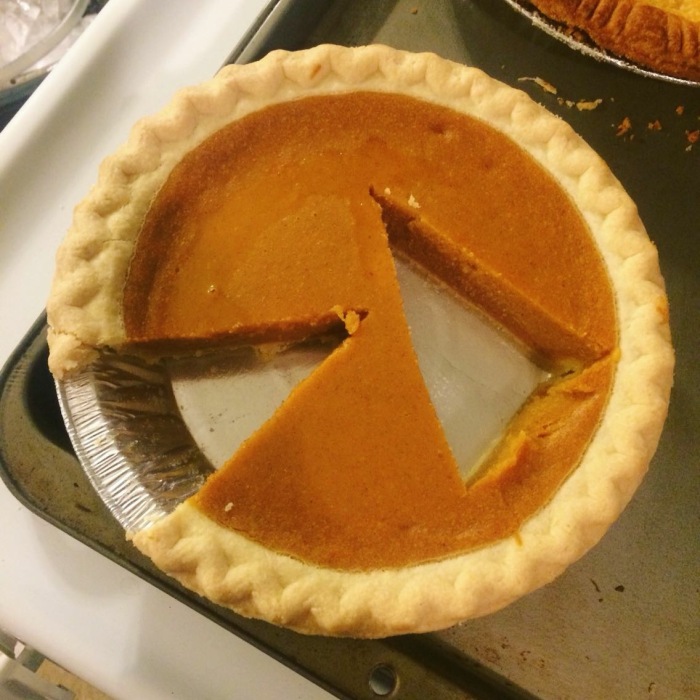
Sheila has just made a fresh pumpkin pie.

She offers you a slice.

You politely refuse, but she insists. She hands you the knife so you can take as big a piece as you like.

You start to cut and then ask, “Does it matter where I cut from?”

Sheila says, “No. Take whatever you want.”

You don’t like crust, so you cut a perfect triangle piece from the middle of the pie.

Sheila’s face reddens.

This wasn’t exactly what she meant, but what is she going to do? You took your slice, and now the rest of the pie is ruined. No one else can take a whole piece. Your choice has limited everyone else’s.

That’s what school choice does to public education.

It privileges the choice of some and limits the choices of others.

Advocates say parents should be able to choose the school their children attend.

And parents today do have many choices. About 90% send their kids to traditional public schools. Others home school, pay for private schools or opt for charter or voucher schools.

The problem comes with these last two options. In both cases, tax money meant to help all children is siphoned off for just one child. In the case of vouchers, tax money goes to pay part of the tuition at a private or parochial school. In the case of charters, we’re diverting tax money to a school that’s public in name but privately run.

That means less money for traditional public schools and more money for privately run institutions. That’s really what school choice is – a way to further privatize public schools.

Why is that bad?

3075829749_0ef3a3692c_z

First, it increases the cost and reduces the services for everyone.


Public schools pool all the funding for a given community in one place. By doing so, they can reduce the cost and maximize the services provided. One building costs less than two. The same goes for one staff, one electric bill, one infrastructure, etc.

When you start adding additional layers of parallel schools, you increase the costs even if you somehow divided the children evenly between the two systems (which hardly ever happens). You buy less with the same money. That translates to fewer services for the same kids, larger class sizes, narrowed curriculum, etc. Why? So that parents could choose School A or School B. So that privatizers get a bigger slice of the pie – right from the middle.

3075829749_0ef3a3692c_z
Second, each type of school has different goals.


Public schools are designed to educate. Corporate schools are designed to profit. Those are their very reasons for existing. It’s built into their DNA and is reflected in the way they’re administrated.

By law, public schools are not for-profit. They pay for goods and services, but at the end of the day, they aren’t beholden to shareholders or investors. They don’t need to bring in more money than they spend. All they have to do is educate children, and if they somehow end up with extra money at the end of that process, that money is bound by law to be reinvested as savings for next year.

Charter and voucher schools are not so constrained. Their reason for being is not education – it is profit. Where they can, they will cut services for children and reduce quality so that they can increase the bottom line. Even a casual glance at the news will show you a plethora of charter and voucher school scandals where privateers have stolen millions of dollars of taxpayer money instead of educating. To return to the dessert metaphor, they don’t care what their slice does to everyone else – they only care about the size of the slice.

3075829749_0ef3a3692c_z

Third, charter and voucher schools aren’t as accountable as traditional public schools.


Each type of school is supported by tax money. Therefore, each school should be held accountable for spending that money wisely. But the rules are radically different for public schools vs. choice schools.

Public schools have elected school boards made up of taxpayers from the community. Choice schools often do not. They are run by appointed boards who are only accountable to investors. Public schools are required to be transparent. Their documentation, budgets and meetings must be available to the media and community for review. This is not true of privatized choice schools.

If taxpayers are unhappy with the way a traditional public school is being run, they have multiple options for changing it. With choice schools, their only option is to withdraw their child. And in the case of taxpayers who do not have children in the system at all, they have no recourse at all. This is fiscally irresponsible and amounts to taxation without representation. This alone should be enough to make any true conservative withdraw support – however ideology has trumped logic and reason. Not only do they ruin the pie, they get to do so in secret.

3075829749_0ef3a3692c_z

Fourth, school vouchers rarely cover the entire cost of attending private schools.


They end up subsidizing costs for rich and upper middle class students while keeping away the poor. As such they create a system of cultural and racial education segregation. They create tiers of schools – the public schools being only for the poor, cheaper private schools for the middle class and expensive private schools for the rich.

This is not the best way to educate children. It is not the best way to organize a society. It entrenches social and class differences and builds in entitlements and racism for the wealthy. Surely our public schools have become more segregated even without vouchers, but that is no reason to make the situation exponentially worse. The size and placement of one’s slice shouldn’t depend on the color of your skin or the size of your bank account.

3075829749_0ef3a3692c_z

Fifth, all schools are not equally successful.


Though the media would have you believe otherwise, traditional public schools do a much better job of educating children than charter or voucher schools. Some choice schools have better outcomes, but the majority do no better and often much worse than traditional public schools. Moreover, children who continually move from school-to-school regardless of its type almost always suffer academically.

So when parents engage in these choice schemes, they often end up hurting their own children. The chances of children benefiting from charter or voucher schools is minimal. You can cut a slice from the center of the pie, but it’s likely to fall apart before you get it on a plate.

our-best-traditional-pumpkin-pie-ss

So in summary, school choice is essentially selfish. Even in cases where kids do benefit from choice, they have weakened the chances of everyone else in the public school system. They have increased the expense and lowered the services of children at both types of school. They have allowed unscrupulous profiteers to make away with taxpayer money while taxpayers and fiscal watchdogs are blindfolded. And when students return to their traditional public school after having lost years of academic progress at a substandard privatized institution, it is up to the taxpayers to pay for remediation to get these kids back up to speed.

Choice advocates talk about children being trapped in failing schools, but they never examine what it is about them that is failing.

Almost all public schools that are struggling serve impoverished students. That’s not a coincidence. It’s the cause. Schools have difficulty educating the poorest children. Impoverished children have greater needs. We should be adding tutoring, counseling and mentor programs. We should be helping their parents find jobs, providing daycare, healthcare and giving these struggling people a helping hand to get them back on their feet.

But instead we’re abandoning them. Most impoverished schools serving poor children receive less funding than those serving middle class or wealthy populations. In other western countries, it’s just the opposite. They provide more funding and resources for poor students to meet their greater needs.

School choice ignores all of this. If I may momentarily switch metaphors, instead of fixing the leak in our public school system, advocates prescribe running for the lifeboats. We could all be sailing on a strong central cruise-liner able to meet the demands of a sometimes harsh and uncaring ocean together. Instead we’re told to get into often leaky escape craft that even under the best of circumstances aren’t as strong as the system we’re abandoning.

And the reason is profits.

Have you ever noticed that the overwhelming majority of school choice proponents are rich white people?

Many of them own charter school companies or otherwise invest in the field. They aren’t advocating a policy to help children learn. They’re enriching themselves at public expense. Sure they point their fingers at union teachers making a middle class wage. Meanwhile these choice advocates rake in public money to buy yachts, condos and jewelry.

Make no mistake – school choice is essentially about selfishness. At every level it’s about securing something for yourself at the expense of others. Advocates call that competition, but it’s really just grift.

Public education is essentially the opposite. It’s about ensuring that every child gets the best education possible. Yes, it’s not perfect, and there are things we could be doing to improve it. But it is inherently an altruistic endeavor coming from the best of what it means to be an American.

We’ve all got choices in life. The question is what kind of person do you want to be? A person who takes only for his or herself? Or someone who tries to find an option that helps everyone?

pumpkin-pie

MythBuster: Do We Have a “Government-Run Education Monopoly”?

screen-shot-2016-11-22-at-11-48-57-pm


“There’s no failed policy more in need of change than our government-run education monopoly, and you know that’s exactly what it is.”

With these words, candidate Donald Trump unleashed his K-12 education policy at a campaign stop in September, two months before winning the general election.

In the speech, the former reality TV star and current President-elect vowed to spend $20 billion in federal tax dollars to encourage more charter and voucher schools nationwide.

It remains his most concrete executive policy offering to date. Yet it’s based on this characterization of public schools as a “government-run education monopoly.”

One wonders – is it true? Do we really have such a thing here in the U.S. or is it just propaganda to boost an unpopular education scheme?

The devil, it seems, is in the details.

The answer is both yes and no: Yes, public schools are government-run. No, they’re not a monopoly.

First, let’s consider “government-run.” Everything the government does from paving the roads, to delivering mail, to protecting us from invaders is “government-run.” The military is government-run. Would you rather a foreign power tell our soldiers what to do? Congress is government run. Would you rather big business come in and decide all our laws?

In that same spirit, yes, our public schools are indeed government run. But who else should run them? Russia!? The Mafia!? A media cabal?

In emphasizing the role of government in education, Trump appears to be trying to stoke the fires of anti-government sentiment. There is certainly a lot of that going around, deservedly so given the way the federal government has encroached on the states, the states have encroached on local government, etc.

However, public schools are not essentially federally-run schools, nor are they state-run schools. They are subject to federal and state mandates, but the major decisions about what happens in your neighborhood schools are made by your duly elected school board. They are not controlled by some nameless, faceless government bureaucracy. They’re controlled by you, your friends and neighbors – people you voted for and who are held accountable every few weeks at open meetings.

That, too, is government.

It’s not Big Brother. It’s Howdy Neighbor.

Let’s turn now to the “Monopoly” part.

A monopoly is the complete control of the supply or trade in a commodity or service. To put it in terms of the titular Parker Brothers board game, you have a monopoly when you own both Boardwalk and Park Place – you’re in control of what happens to all the dark blue properties. However, if you don’t have titles to BOTH, you don’t have a monopoly, and therefore can’t buy houses, hotels or charge double the normal rent.

Therefore, there is no education monopoly – no one has complete control of all the various kinds of schools. There are private schools, home schools, magnet schools, charter schools, even voucher schools. No one owns them all, no one tells them all what to do.

Yes, you could say that the overwhelming majority of them are public schools, but so what? That’s not a monopoly. There are far more personal computers out there than Macs. That doesn’t mean PCs have a monopoly on the field.

Once again, the term “monopoly” is meant to stir anti-government sentiment. We are meant to balk at the degree to which government – local government – is in control of our education system.
I’m sorry, but there is nothing objectionable about schools being controlled at the local level.

Are you upset by federal intrusions in school policy? Me, too.

Are you reeling about unfunded federal mandates? Me, too.

Are you angry about states sweeping in and stealing local control from impoverished inner city parents? Me, too.

But I’m just not one bit upset about being allowed a say in how my tax dollars are spent at my community school district. If you ask me, that how things SHOULD BE.

But Trump is proposing we change it. He’s proposing exactly the same kind of federal intrusion that drove many of us up the wall when it was done by President Barack Obama.

Obama used the Department of Education to bribe cash-strapped states into adopting Common Core. And now Trump wants to do the same thing with charters and voucher schools.

Excuse me, but it’s not the federal government’s job to dangle money in front of state legislatures with strings attached. The Department of Education is supposed to ensure all schools have adequate funding. It’s not supposed to tell us how we should be running our schools unless we’re breaking the law or violating students civil rights.

But what about parental rights? Shouldn’t parents be allowed to choose a school for their own children?

Heck no.

Hear me out. When you fall down the steps in your home alone, do you get to choose which governmental service comes to help you, or do you just call 9-1-1? When you need the police, do you get to choose officers from halfway across the state or make do with your local boys in blue? When your house catches on fire, do you shop around or call the nearest fire station?

It’s called a community for a reason. You’re a part of it, for better or for worse.

Our grandparents never thought they were so entitled they could pick and choose what governmental service should meet their needs. They joined the army, not Blackwater. They called the fire department where they volunteered. And they sent their kids to the local public school.

Yes, some public schools are better than others – which is just another way of saying that some are better funded. THAT is a problem we need to fix at the local, state and federal level. That’s something the President and Congress and our Governors and our state legislatures should actually be working on. But instead of meeting the real needs of their constituents, they’re too busy with all this choice nonsense.

Why? It’s a scam.

We’re talking Donald Trump here – founder of Trump University. He just settled out of court for $25 million for a fake business school that defrauded students out of hundreds of millions of dollars. If there’s one thing he knows, it’s a good scam.

Think about it.

Expanding charter and voucher schools, reduces accountability to taxpayers. These “choice” schools rarely are governed by elected school boards. They don’t have to abide by the same kinds of transparency standards as traditional public schools. They can spend our tax dollars in almost anyway they want behind closed doors, and there’s nothing we can do about it. In fact, there have been a rash of high profile scandals where charter and voucher operators have defrauded the public out of millions of dollars.

Who wants to expand that? Criminals!

Not me. I’m a taxpayer. I want a full account of how my money is spent, and most voters are with me.

We didn’t just vote for President a few weeks ago. Many states held referendums on whether to expand charter schools or not. In every case, voters decided against it.

But does Trump care? No way. This proposed school choice policy is yet another example of the federal government ignoring the will of the people in favor of wealthy donors hoping to further enrich themselves at public expense. It opens the door for profiteers to keep stealing our money.

And they justify it by offering a false choice:

Hey parents, they say. Want to enroll your children in a school with little to no accountability, a school you may not be able to afford unless you spend some of your own money in addition to the tuition you get from the state, a school that can turn you down for whatever reason including race, religion or nationality, a school that may very well be no better and often much worse than a traditional public school?

But they spin it, offering slick commercials and preying on the ignorant and hopeless. That weakens the traditional public schools because it means a loss in revenues. Therefore, the public schools get worse, which is a reason for more parents to try the ‘choice’ schools, etc. It’s an endless cycle where students lose but investors in for-profit schools win.

Invariably, it leads to a further social stratification of schools. The rich go to the best schools, the middle class to the middling schools and the poor to the substandard ones. You think we’ve got segregated schools now, wait until Trump’s school choice policies! It’ll benefit the Nazis of the alt-right who want more white flight, but most kids will lose.

Such a policy does not represent the best of America. This country was founded on the principles of working together. We haven’t always lived up to it, but our ideals are ones of shared sacrifice, community and brotherhood. Trump’s education policy is about selfishness and greed.

That’s your real choice. Which will it be?

Democrats Warned Not to Help Trump Enact Their Own Damn School Policies

screen-shot-2016-11-18-at-1-01-18-am

It must be hard to be a neoliberal Democrat in Donald Trump’s America.

Almost every policy decision you favor is also on the Republican President-elect’s to-do list. But if you work with him, you’ll ruin the illusion that there’s a difference between the two of you.

Take yesterday’s statement by Democrats for Education Reform (DFER) warning any Democrat not to accept Trump’s offer to be U.S. Secretary of Education.

DFER is a hedge fund managers’ pro-charter advocacy group. Despite it’s name, one would think the organization would be a natural ally for pro-school-choice Trump.

But, wait a minute.

I thought one of the first things Trump promised to do once he took the Oval Office was close the Department of Education.

Weeeeeelllllllll…. That’s so November 10th.

He’s already walking back that whooper just like he’ll soon have to admit that the Every Student Succeeds Act (ESSA) doesn’t allow him to end Common Core – another one of his campaign promises. Ending the Core is up to the states (has been for months, yet most Republican controlled legislatures just can’t bring themselves to do it for some reason).

It’s easy to see why Trump has had a Come To Jesus moment about the Department of Education. If he really wants to add $20 billion in school-choice programs, as he promised on the campaign trail, a big government office that hands out bundles of cash in return for states enacting his personal policy desires sure would come in handy!

This is where it gets really sticky.

Both Democrats and Republicans love school choice! Typically GOP politicians love all flavors of privatization – charter schools AND giving away vouchers to attend private schools with public tax dollars. Democrats usually are more finicky preferring just charter schools – though you don’t have to search long to find a neoliberal willing to embrace all things school choice. Many of them are members of DFER.

In fact, the leading voices of school privatization for the last 15 years have been Democrats. So it’s no wonder that faux progressives like Michelle Rhee and Eva Moskowitz made Trump’s short list to head the Department of Education.

Moskowitz, who has since turned down the offer, is founder of Success Academy Charter Schools, a chain of privatized institutions emphasizing endless test preparation and systematically weeding out struggling or special-needs students.

Rhee, who is still a contender, was chancellor of Washington, D.C., schools where she was given leeway to do almost whatever she wanted and boasted of high test scores. However, widespread cheating on the tests and public unrest at her tactics shot down her ascending star. She then started StudentsFirst, an organization using rich folks’ money to help elect Tea Party candidates who were in favor of both charter and voucher schools. As the organization faltered, she stepped out of the limelight.

One could think of few people more suited to Trump’s education agenda than Rhee.

But NO! Rhee – or another faux progressive – can’t do that, warns DFER President Shavier Jeffries. That goes against everything Democrats stand for – somehow.

Jeffries writes:

“It is, generally speaking, an honor for any person of any political persuasion to be asked by the President of the United States to consider a Cabinet-level appointment, but in the case of President-elect Trump, DFER encourages no Democrat to accept an appointment to serve as Secretary of Education in this new administration. In so doing, that individual would become an agent for an agenda that both contradicts progressive values and threatens grave harm to our nation’s most vulnerable kids.

“Foundational education reform principles – from raising standards and strengthening accountability, to expanding public-school choice, to furthering innovations in teacher preparation and support, and advancing resource equity – all find their roots in a progressive commitment to ensuring that all children, particularly our most vulnerable, have access to schools that enable them to fulfill their potential.”

Jeffries is worried about “raising standards?” Am I the only person here who read the ESSA? Common Core and academic standards aren’t the federal government’s business.

He’s worried about “strengthening accountability?” The ESSA already requires annual standardized testing in grades 3-8 and once in high school – same as it has since the George W. Bush administration.

“Expanding school choice?” You guys love school choice.

“Further innovations in teacher preparation and support?” That sounds like code for Teach for America and Value Added Measures – policies that Republicans love as much as you so-called Democrats.

“Advancing resource equity?” Now who are you kidding? DFER hasn’t done a thing to help poor schools get equitable resources. In fact, you’ve supported pulling the rug out from under poor schools based on those same standardized test scores you love so much.

So when it comes to policy, Jeffries and DFER are almost completely in synch with Trump. What’s the problem?

He goes on:

“This progressive commitment to equitable education policy also goes hand-in-hand with intersectional issues that affect our kids. While effective school policies are vitally important, so too are the environmental conditions affecting children and families.”

This is a shock to me. Jeffries and DFER support “no excuses” charter schools like Moskowitz’s. These are privately run schools that don’t accept a student’s poverty or abuse or health or anything to be used as an excuse not to get high scores on standardized tests. In fact, if any impoverished, underprivileged child can’t somehow pull himself up by his bootstraps, he’s often kicked out of these “no excuses” charter schools and sent back to a traditional public school.

But NOW Jeffries is complaining about “vitally important” “environmental conditions”!? You’ve got to be kidding me! That sounds like something under any other circumstances you’d call an excuse.

On any other day, DFER does nothing to help kids overcome their environmental factors. Jeffries claims we should ignore environmental factors, that focusing on them is the “soft bigotry of low expectations.” But NOW he’s suddenly seen the light!?

Sorry. I’m not buying it.

He goes on:

“A child who is homeless; a child without access to food or healthcare; a child whose parent cannot find steady work; a child whose dad is locked up for years on low-level drug offenses—each of these situations dramatically compromise the life chances of our children.”

Well, Hallelujah! Jeffries has seen the mountain top! Paying attention to the out of school factors is exactly what teachers, parents and students have been crying out for he and his neoliberal buddies to do for 15 years! Of course, doing so would invalidate the same policies he and Trump propose, but you can’t ask a neoliberal to be consistent. Baby steps.

He goes on:

“The policies and rhetoric of President-elect Trump run contrary to the most fundamental values of what it means to be a progressive committed to educating our kids and strengthening our families and communities. He proposes to eliminate accountability standards, cut Title I funding, and to gut support for vital social services that maximize our students’ ability to reach their potential. And, most pernicious, Trump gives both tacit and express endorsement to a dangerous set of racial, ethnic, religious, and gender stereotypes that assault the basic dignity of our children, causing incalculable harm not only to their sense of self, but also to their sense of belonging as accepted members of school communities and neighborhoods.

“For these reasons, no Democrat should accept appointment as Secretary of Education, unless and until President-elect Trump disavows his prior statements and commits to educating the whole child and supporting the communities and families they depend on.”

So what Jeffries really takes exception to here is Trump’s rhetoric.

Trump and DFER don’t have many policy differences. It’s just how they’re packaged.

Both Trump and Jeffries wants to give poor black and brown kids a substandard education. They both want to destroy the public school system and replace it with a privatized one. Both want to give endless standardized tests. But the real difference is that Jeffries wants to do this for the expressed purpose of protecting kids’ civil rights. Trump, apparently, wants to do it to violate them, or at least he’s indifferent to the civil rights implications.

Does that really constitute a significant difference between DFER and Trump?

No. It’s just branding.

Jeffries doesn’t want someone like Moskawitz or Rhee to be the face of Trump’s corporate education reform policies because he’s betting Trump will fail. And when that happens, he wants to be there when the next Democratic administration takes over – so he can enact the same damn policies all over again!

My Election Day Heart Attack: Lessons for Moving Forward

img_5937

I had a heart attack on Election Day.

This is not hyperbole.

I literally went to the polls, went to my doctor and then went to the hospital.

I didn’t know Donald Trump would win. Like most of us, I thought the nation would heave a big sigh, eat its vegetables and vote for Hillary Clinton.

But the election had been weighing on my mind (and apparently my body) for a long time.

How can we have narrowed it down to these two candidates nobody wants? How can these really be the only choices we get here in America? If either one of them wins, we all lose just in different ways.

So as I write this from my hospital bed, I’m left pondering lifestyle changes. I’ve got to start eating healthy. I need to exercise. I need to start taking care of myself.

But this kind of introspection is also what we need as a nation. After a disastrous election like the one we just had, the country is at least as sick as my ailing heart. We need to sit down with each other and decide how we’re going to move forward, how we’re going to prevent a national disaster like this from ever happening again.

Here’s what I’ve come up with so far:

1) Admit Who’s to Blame

Donald Trump was just elected President of the United States. That is unbelievable! This clown, this buffoon is now the “leader of the free world.” How did this happen?

There are many factors leading up to this, but politically the blame must be placed with the Democratic Party.

They put up a candidate – Hillary Clinton – who could not beat someone as odious as Trump. The people made it clear during the primary that they wanted a populous candidate, someone who wasn’t part of the establishment, yet the DNC ignored them. In fact, party elites did everything they could to tip the scales in Clinton’s favor.

We must always remember this lesson: when you rig the primary, you lose the general.

Bernie Sanders packed stadiums while Clinton could barely pull together rallies. He polled double digits ahead of Trump while Clinton was much less competitive. He would have beaten Trump in a landslide.

So if you want someone to blame, blame the DNC. Every party leader should immediately be fired. We must regain control of the party. If the Democrats refuse to be a real progressive institution, they will continue to lose and we will have to look elsewhere for political affiliation.

So admit the truth, it wasn’t third party voters with 3-4% of the vote, it wasn’t 45% of registered voters who didn’t show up at the polls because we gave them no one to vote for. It was the DNC. Period.

2) Understand the relationship between Race and Class

There are lots of folks out there blaming the election results on the racism of Trump voters. There are lots of folks blaming it on working class people choosing Trump over Hillary.

They’re both right.

Racism has always been a tool of the rich in this country. It’s a way of throwing a bone to poor whites so they will support the 1%.

Don’t go after us as we cheat you out of a living wage, they say. We’ll give you whole swaths of people you can lord it over.

White privilege is the grease that keeps our economy running. Without it, poor whites might look to the rich and see how much they’re being swindled.

Heck yeah Trump ran as a racist. Heck yeah he ran as a populist. But the only thing poor whites will get from him is a license to be racist.  No jobs. No better wages. No better education. Just go ahead and subjugate brown people.

We must understand this relationship. As anti-racists we must also fight for the middle class. As activists for the middle class we must also fight racism. These are two sides of the same coin, and we must address both if we are ever to achieve real positive change.

3) Acknowledge Sexism

That a nation of grown adults would pick a boorish misogynist against an educated, intelligent woman speaks wonders. Hillary Clinton was far from my first choice,  but compared to Trump she was obviously less odious.

There is no doubt that sexism played a part in this. Even white women chose Trump over Clinton. So many of Trump’s policies were anti-woman. He was an admitted serial groper. He’s on trial for child rape!

And if that’s not enough, I can’t even recall how many times I heard women tell me that a person of their gender doesn’t belong in the Oval Office.

This is something we have to overcome, and frankly I think we are. Millennials are not nearly as sexist as the rest of us. As the population ages and today’s kids become tomorrow’s adults, I think sexism will be left behind. Trump’s election is the last gasp of this antiquated prejudice. But we must recognize it for what it is.

4) Unions need to represent the rank and file

I’m a big supporter of labor unions, but in many cases they let us down in this election. Trump was no champion of the working stiff, but he got an awful lot of union votes. Why?

Many of our unions prematurely endorsed Clinton even though she has a spotty relationship with them and didn’t support many natural union initiatives like the fight for 15.

On the other hand, Sanders was the union candidate. He was the natural fit, yet union leadership like the American Federation of Teacher’s Randi Weingarten offered to attack other unions that didn’t fall in line behind Clinton. Both big teachers unions, the AFT and the National Education Association endorsed Clinton early in the primary without truly democratically polling membership. It doesn’t matter if they broke by-laws or not. If unions really represent the rank and file, these leaders should be held responsible.

In short, we should fire leaders like Weingarten and the NEA’s Lily Eskelsen Garcia immediately. Our union leaders must show a healthier respect for the rank and file or else they jeopardize the entire enterprise of workers’ rights.


These are just some of the ways we can move forward in the days and weeks ahead. It will be a rough road  but I’m sure we can come out of it together.

Just like my aging body, our nation is ill. For me, the result was a heart attack. For us, the result is President Trump.

Will we turn it around?

I’m sure going to try.

*****************

FULL DISCLOSURE: I didn’t vote for either Clinton or Trump. I happily voted for Jill Stein.


Why Teaching to the Test is Educational Malpractice

thumbnail_screen-shot-2016-11-03-at-12-20-50-pm

Malpractice is defined as “careless, wrong, or illegal actions by someone (such as a doctor) who is performing a professional duty.”

In some fields it can get you arrested. In most it’s at least frowned upon.
In education, however, it’s encouraged.

In fact, as a teacher, you can be singled out, written up or even fired for refusing to engage in malpractice. You are bullied, cajoled and threatened into going along with practices that have been debunked by decades of research and innumerable case studies.

Take the all-too-common practice of teaching to the test.

Not only do students and teachers hate it, but the practice has been shown to actually harm student learning. Yet it is the number one prescription handed down from administrators and policymakers to bring up failing scores on high stakes standardized tests.

Never mind that those same test scores have likewise been proven to be invalid, racially and culturally biased and inextricably linked with parental income. When the only goal is raising student test scores, what’s a little malpractice between friends?

In this article, I will explain the top five reasons why this policy is harmful. But first, we need to define our terms. There is a multitude of practices that are sometimes called teaching to the test. What exactly are we talking about here?

Assessment expert W. James Popham provides a helpful distinction: “curriculum teaching” vs. “item teaching.” Curriculum teachers focus on the full body of knowledge and skills represented by test questions. For instance, if the test is expected to include questions about decimals, the teacher will cover the full range of knowledge and skills related to decimals so students understand what they are, know how to manipulate them, understand how to use them to solve more complex problems, and are able to communicate about them.

By contrast, item teaching involves narrowing instruction, organizing lessons around look-a-like questions that are taken directly from the test or represent the kinds of questions most likely to be found on the test. In this way, the teacher only provides the chunks of knowledge students are most likely to encounter on exams. For instance, item teachers might drill students on a certain set of vocabulary words that are expected to be assessed rather than employing instructional strategies that help students build a rich vocabulary that best contributes to strong reading comprehension.

To be clear, when we talk about teaching to the test, we’re talking about item teaching. I maintain that there is nothing wrong with curriculum teaching. In fact, that is the preferred method of educating. It is a best practice. The problem is when we resort to endless drills and give students innumerable questions of the exact type we expect to be on the test.

Here’s why item teaching is to be avoided:

1) It Makes the Tests Even More Invalid

As noted, standardized tests are terrible assessments. They do not properly or fairly assess intelligence or academics. However, whatever validity they have is further eroded when schools teach to the test.

The problem is this: if all you want to do is artificially raise test scores, teaching to the test is effective. It works. This is why middle class or wealthier families often pay to enroll their children in a test-prep course before their kids take or retake the SAT exam. It most likely will boost their children’s scores. However, it defeats the purpose of the test, which is to predict academic success in college. All it shows definitively is that these children come from families wealthy enough to provide private tutoring.

I say it “artificially” raises test scores because it is not connected with a similar increase in learning. Students don’t learn more about reading or math from test prep. They learn how to take the standardized math and/or reading tests.

There is even evidence suggesting that real, authentic learning may suffer under these circumstances. But more on that later.

2) It Steals Instruction Time

There are only so many days in the school year. Taking away class time to focus on test prep reduces the amount of time where students are authentically learning. We already take away weeks of class time for the actual assessments. Then many schools take additional time for practice tests. Now we’re losing even more time to teach students how to take the tests.

How much time is lost? According to a report by the American Federation of Teachers, public schools spend an average of 19 days to a month and a half on testing and test prep combined. However, some districts spend much more time on teaching to the test than the average. One school included in the study spent an average of 20 to 40 minutes a day on testing. Moreover, this time increases dramatically in the most highly tested grades and poorest schools.

Taxpayers compensate teachers to teach – not game the system. Students want to learn real skills, not advanced ways to jump through hoops. It can be argued that teaching to the test robs everyone of time that can be better spent.

3) It Dumbs Down the Curriculum

Teaching to the test is not real teaching. Students are not being taught authentic skills. Researchers Lauren Resnick and Chris Zurawsky call it a recipe for bad teaching. “When teachers match their teaching to what they expect to appear on state tests of this sort,” they write, “students are likely to experience far more facts and routines than conceptual understanding and problem-solving in their curriculum…. Narrow tests…can become the de facto curriculum.”

The modern economy is not crying out for the next generation of test-takers. Economists Frank Levy and Richard Murnane warn that all kinds of jobs, but particularly higher paying jobs, increasingly require more complex critical thinking skills and much fewer rote and routine skills. Their 30-year analysis shows a steadily declining demand for workers who are able to do rote tasks and a skyrocketing demand for “expert thinking” skills. Employers want prospective employees with the ability to solve problems that require more than simply following rules or applying old knowledge to new situations. They need workers with complex thinking and communication skills.

In short, teaching to the test greatly reduces the depth of study and turns it into the same kind of mechanical process employers aren’t looking for at the expense of the kinds of skills they demand.

But that’s not all. An over-emphasis on the subjects tested, inevitably narrows the curriculum. Non-tested disciplines receive less attention during the school day. Time is diverted from subjects like physical education, music, and drama so that teachers can provide more instructional time on commonly tested areas like reading, writing and math.

The result is far less well-rounded students who are instilled with the false assumption that certain vital endeavors are meaningless or certainly subordinate to basic skills.

4) It Actually Hurts Learning

Not only does item teaching dumb down what’s being taught, it actually erodes basic skill development even in tested subjects. Explicit instruction in test taking strategies is not educationally neutral. It’s harmful.

For instance, researcher Monty Neill explained how test-taking strategies can erode authentic reading comprehension skills. Standardized reading tests often present students with a long passage followed by several multiple choice questions. One of the most common strategies is for students to read the questions first before reading the passage. In many cases you don’t have to read the passage to answer the question. Even if you do need to read it, the question provides students with a clue that they can look for when skimming the passage for the right answer. However, independent evaluators found that over-reliance on this strategy can lead to children who can find the correct answer on the test but cannot explain what the passage is about. The implication is that there may be a significant number of test wise students who lack the basic skills needed to be successful in higher education.

Additionally, even where tested subjects like reading and math are emphasized, the non-tested areas of these disciplines are underutilized. Reading, for example, isn’t just about passage comprehension. It includes listening and speaking skills that are not assessed on high stakes tests. So students can get advanced scores without having the requisite skills for mastery of the subject.

This is especially important for students going on to college. They will be expected to do many things they were not tested on such as making an oral presentation, conducting a science experiment, or writing a research report. For all the talk of Common Core aligned tests making students “college and career ready,” teaching to the test undermines this goal.

5) It Hurts Morale of Students and Teachers

And then we come to perhaps the worst part: motivation. Young children don’t need a reason to learn. They’re naturally curious and soak up knowledge like a sponge. However, as children mature and enter the higher grades, that natural curiosity can be damaged, dampened and even destroyed with long-lasting effects.

Teaching to the test turns school into a completely extrinsic exercise. It’s a game. Learn how to take the test so you can get a good score – don’t work hard to learn things you really care about. It should come as no surprise then that such emphasis has a negative impact on intrinsic motivation according to Edward Miller and Roberta Tovey’s Motivation, Achievement and Testing. In fact, though test prep gives students the tools to artificially raise their scores, it also can remove the motivation to get good scores in the first place. In short, it undermines the reason kids come to school at all: to learn and self-actualize.

And the damage isn’t limited to students. Item teaching also removes the joy of teaching for the teacher. It exacerbates feelings of frustration and disillusionment with the entire testing process. Wayne E. Wright (2002) documented the effects of high-stakes testing and the increased prevalence of teaching to the test in an inner-city California school. One teacher summarized her frustration with the schools test driven agenda by commenting:

“The most pathetic thing is that up until two years ago, I counseled young people, “Come into teaching. It is a wonderful profession.” Now I counsel them to find something else because this is not the profession I would choose for myself.”

(Wright, 2002, p. 28).

Recommendations and Conclusions

We’ve seen how damaging test prep can be. But does that mean it should never be utilized?

I don’t think there is definitive evidence to make that conclusion. Item teaching is not necessarily bad if done to best effect, under strict control and as minimally as possible. Doing this once or twice probably won’t poison the entire act of teaching, but it also won’t have a dramatic effect on the scores. Perhaps we should adopt a policy of cautious moderation and tread carefully.

However, it is clear that teachers should emphasize curriculum teaching over teaching to the test. Focus on student development of real critical thinking skills and the higher levels of Bloom’s taxonomy. In this way students will be more likely to apply their new cognitive abilities and content knowledge in areas that extend beyond the confines of a particular test. In short, they’ll actually learn stuff – the important stuff – not just how to take a standardized test.

Unfortunately, it’s not that simple. Administrators and policymakers often direct teachers to spend increasing amounts of class time doing item teaching. Almost every state includes hundreds of released test questions for just this purpose. An entire publishing industry exists to create and distribute item teaching materials. This is, in fact, one of the major ways the test companies make their money – make tests so hard kids fail and then sell schools the test prep materials to get students to pass.

What’s needed more than anything is to educate the educators – or at least their bosses. Teachers need to understand how harmful the policies are they’re being directed to undertake. Administrators need to understand that teaching to the test has diminishing returns in the long run. And our policymakers need to wake up and smell the coffee.

Test scores are neither adequate nor sufficient indicators of school success. Students cannot be reduced to numbers and evaluated as if they were produce.

Until we realize that as a bone-deep truth, we will continue to fail students as they continue to fail us. And our teachers will be continually forced to violate their deepest principles in order to stay in the classroom.


ENDNOTES:

Levy, F., & Murnane, R. J. (2004). The new division of labor: How computers are creating the next job market. Princeton, NJ: Princeton University Press.

Miller, E., & Tovey, R. (Eds.). (1996). Motivation, achievement, and testing. Boston: Harvard Education Press.
Neil, M. (2003b). The dangers of testing. Educational Leadership, 60(5), 43-46.
Popham, W. J. (2001, March). Teaching to the test? Educational Leadership, 58(6), 16’20.

Resnick, L., & Zurawsky, C. (2005, spring). Getting back on course: Standards-based reform and accountability. American Educator. Retrieved June 30, 2006, from http://www.aft.org/pubs-reports/american_educator/issues/spring05/resnick.htm

Wright, W. E. (2002). The effects of high stakes testing in an inner city elementary school: The curriculum, the teachers, and the English language learners. Current Issues in Education, 5(5). Online at http://cie.ed.asu.edu/volume5/number5.

Standardizing Whiteness: the Essential Racism of Standardized Testing

cookie_cutter_s

“As a method of social production, as well as social reproduction, standardized testing has had serious cultural implications, not the least of which has been the eternal question of American identity. Consistent with notions of American identity, standardized testing, as an opposition to a cultural other, represents the normalization of whiteness, richness, and maleness.”
-Andrew Hartman

“In this country American means white. Everybody else has to hyphenate.”
-Toni Morrison

We talk about standardized testing as if we don’t really understand what it is.

We say we want No child left behind!

And then we pass a law named after that very sentiment that ensures some students MUST be left behind.

We say we want Every student to succeed!

And then we pass a law named after that very sentiment that ensures every student will NOT succeed.

It would be absurd if not for the millions of children being forced to endure the harsh reality behind our pretty words.

It’s not these ideals that are the problem. It’s standardized testing.

Researchers, statisticians, and academics of every stripe have called for an end to high stakes testing in education policy. Parents, students and teachers have written letters, testified before congressional committees, protested in the streets, even refused to take or give the tests. All to deaf ears.

The federal government still requires all students in 3-8th grade and once in high school to take standardized tests.

But these assessments are graded on a curve. A certain amount of students are at the bottom, a certain amount are at the top, and most are clustered in the middle. This would be true if you were testing all geniuses or all people with traumatic brain injuries.

It doesn’t matter how smart your test takers are. There will always be this bell curve distribution. That’s how the tests are designed. So to talk about raising test scores is nonsensical. You can raise scores at school A or School B, but the total set of all test takers will always be the same. And some students will always fail.

But that isn’t even the worst part.

Standardization, itself, has certain consequences. We seem to have forgotten what the term even means. It’s defined as the act of evaluating someone or something by reference to a standard.

This socket wrench is a good socket wrench because it most closely resembles some ideal socket wrench. This McDonald’s Big Mac is good because it resembles the ideal McDonald’s Big Mac.

That’s what we’re doing to people – children in fact. We’re evaluating them based on their resemblance to some ideal definition of what a child should know and what a child should be.

But children are not socket wrenches nor are they Big Macs. It is not so easy to reduce them to their component parts and say this is good and that is bad.

When you try to abstract them to that point, it is impossible to remove various essential factors of their identity – race, gender, socio-economic status, etc. Nor would it be admirable if you could, because you would have abstracted to the point where the individual is no longer visible or valued. A child raised in poverty is simply not the same as a child from a privileged upbringing. A child from a culture that values cooperation is not the same as a child from a culture that values individual achievement. And that’s often a good thing.

But when you define a standard, an ideal, you make certain choices – you privilege some attributes and denigrate others. Since the people creating the tests are almost exclusively upper middle class white people, it should come as no surprise that that is the measure by which they assess success.

Is it any wonder then that poor kids and children of color don’t score as well on these tests? Is it any wonder that upper middle class white kids score so well?

We’ve known this for almost a century. Standardized tests do a poor job of assessing intelligence or knowledge. Those things are too complex and the tests are too simple. If you’re evaluating something equally simple like basic addition and subtraction, these tests can work alright. But if you’re trying to get at something complex like critical thinking or creativity, they end up doing little more than prizing the way some people think and not others. In short, they elevate the thought processes most associated with rich white kids.

It doesn’t mean poor and/or black children are any less intelligent. It just means rich white kids have the things for which the test designers are looking. Some of this is due to economic factors like greater access to private tutoring, books in the home, parents with more time to read to their kids, coming to school healthy and more focused. However, a large portion is due to the very act of taking tests that are created to reflect white upper class values and norms.

Think about it. Almost all the questions are field tested before they become a permanent part of the exam. Students are given a question that doesn’t count to their final score, but test makers tabulate how many kids get it right or wrong. So when most white kids answer a field tested question correctly and most black kids get it wrong, it still becomes a permanent test question because there are so few blacks relative to whites. Maybe it’s a question that references sun tan lotion, something with which darker skinned people don’t have as much experience. Imagine if a question referencing the hair care practices of  black people became a test item. White people would have difficulty with it because they can’t easily relate. But the field testing process doesn’t allow that because it normalizes whiteness.

So black kids stumble while white kids have an easier time. We even have a name for it: the racial proficiency gap.

Many well-intentioned progressive voices have bemoaned this problem and wondered how to solve it. But it’s not the scores that are the problem. It’s the assessments. They are doing exactly what they were designed to do.

That’s right. You cannot have such obvious, historical problems perpetuated year-after-year, decade-after-decade, and still think they are mere unintended consequences.

This is how the system was designed to work. This is how it’s always been designed to work.

If you were going to create a racist and classist school system from scratch, what would you do? How would you go about it?

You’d need the lower classes to have SOME mediocre education so they are able to do the menial work that keeps society running. But only so much. Education as a social ladder is all well and good as propaganda. But you don’t want that ladder to lead out of the basement for more than a few.

You need something that will create a hierarchy with people of color at the bottom and poor whites only slightly better off so they can feel ennobled compared to their darker subordinates.

You need a biased sorting mechanism – something that allows you to put students into privileged and unprivileged categories but that will look to all the world like it was doing so fairly. It would have to appear like you were choosing students based on merit.

You’d need something like standardized test scores.

This is how these assessments have functioned from their very beginnings.

When Carl Brigham and Robert Yerkes, U.S. Army psychologists during WWI, designed the alpha and beta intelligence tests to determine which soldiers deserved to be officers, they were creating a pseudoscientific justification for white privilege. They used biased and unfair assessments to “prove” that rich white folks were best suited to give orders, and the rest of us belonged in the trenches.

Brigham and Yerkes were drawing upon eugenics, also called “racial hygiene” or “scientific racism.” This was a radical misreading of Gregor Mendel and Charles Darwin. Eugenicists thought positive traits such as intelligence were widespread in Northwestern European races and almost nonexistent in others. Moreover, negative traits such as laziness and criminality were common in nonwhites and almost absent in those same Northwestern Europeans.

“We should not work primarily for the exclusion of intellectual defectives but rather for the classification of men in order that they may be properly placed,” wrote Yerkes.

THIS is the basis of standardized testing.

After the war, Brigham took the same principles to create the Scholastic Aptitude Test or S.A.T. – in principle the same exam still taken by 2.1 million teenagers every year to ensure they get into their chosen college.

The test was further refined by fellow eugenicist Lewis Terman, Professor of Education at Stanford University and originator of the Stanford-Binet intelligence test. Together these three men created the foundations for the modern field of standardized testing. And make no mistake – its axiomatic principle is still that some races are genetically superior and others are inferior.

Or as Terman put it:

“A low level of intelligence is very common among Spanish-Indian and Mexican families of the Southwest and also among Negroes. Their dullness seems to be racial, or at least inherent in the family stocks from which they come… They constitute a grave problem because of their unusually prolific breeding.”

After WWII, the eugenicist brand suffered from comparison to the Nazis who had been inspired by the findings of Brigham, Yerkes and Terman among others. In the post war years, we’ve discarded the overtly racist language but kept the assessments. Yet they still function the same way – sorting out blacks and the poor while prizing the rich and white.

This information is not secret. It is not kept under lock and key in some hidden military base somewhere. It’s accessible to anyone with Internet access or a library card.
We ignore it, because otherwise it would destabilize the current power structure – the corporate education policies that drive school practices in our country. We close our eyes and pretend it isn’t happening.

But it is.

“Standardized tests are the last form of legalized discrimination in the US,” said Education and Psychology Prof. Phil Harris.

With them you can give rich and middle class whites every advantage while withholding the same from students of color. And we don’t call it racism or classism because we pretend the whites earned their privileges by their test scores.

“We are using the testocracy as a proxy for privilege,” said civil rights theorist Lanni Guinier. Test scores are the excuse for prejudicial and unjust practices that would be impossible without them.

For instance, if you really wanted to help someone who’s struggling, you might offer extra help. But low test scores are used as the reason for withholding that help. We actually use these invalid scores as a means of demeaning and firing poor black kids’ teachers – as if anything they could do could completely overcome biased assessments and poverty. In this way, we not only remove those already in place to help these kids, we ensure few people will volunteer to take their place.

And when you have a teacher shortage in these poor urban neighborhoods, you can use that to justify further deprivations. Instead of teachers with 4-year education degrees, you can hire lightly trained Teach for America temps – college grads who’ve taken no coursework in education beyond a six weeks cram session.

And if the parents of these children complain, you can open charter schools to pull a quick bait and switch. Make them feel like they have a choice when really you’re pulling the rug out from under them. You provide them with a school with none of the safeguards of a traditional public institution – no elected school board, no transparency on how tax dollars are spent, little oversight, a right to refuse any student they wish, etc. And when the school goes belly up, these kids will be pushed back to their former traditional public school that has had to make due with less funding and now can provide even fewer  services than it could before students jumped ship.

Using standardized test scores to judge not just students but whole schools, you can destabilize the entire system of public education. Charter schools and traditional public schools fight over ever-dwindling funding, one required to prove everything it does, the other able to do whatever it wants until it closes with little to no consequences for charter operators who take the money and run.

The US Supreme Court ruled in Brown vs Board that we can’t have “separate but equal” schools because when they’re separate, they’re rarely equal. But somehow that doesn’t apply to charter schools.

Somehow we’ve stopped caring about integration – one of the central victories of the Civil Rights movement! This plays right into the hands of the corporate education reformers. They have done everything they can to increase segregation because it makes it so much easier to privilege rich white kids and crush poor black ones.

They don’t want an equal mix of black and white, rich and poor in our schools. That would make it much harder to select against one class of student while boosting another.

They need to keep the races and classes as separate as possible. Charter schools help in this regard, but they would be insufficient without the help from many white families who flee from these “other” darker complected kids. It’s just another way to send more funding to white kids and less to poor black kids. They say it’s based on local property taxes. That way they can pretend it’s all fair and above board. Rich folks have a right to be able to give their kids the best, and if poor folks can’t afford to do the same, who do you expect to pick up the tab?

Oh! And let’s not forget setting “high academic standards” while all this is going on. They throw out everything that’s been working and come up with a Common Core of knowledge that all kids need to learn. Don’t include black and brown history, culture or the arts – just the stuff the business community thinks is valuable because they know so much about what’s really important in life. And have the whole thing written up by non-educators and non-psychologists and don’t bother testing it out to make sure it works.

Your rich white kids will have no problem jumping through these hoops. But your poor black and brown kids will stumble and fall – just as planned.

This is what has become of our public schools.

This is corporate education reform.

This is our racist, classist school system.

And it’s all based on standardized testing – a perfectly legal system of normalizing rich whiteness.