Dr. Jill Stein is the Best 2016 Presidential Candidate, But Can She Win?


GetAttachmentThumbnail

In 2008, I shook Barack Obama’s hand.


Yesterday Dr. Jill Stein gave me a hug.


Eight years ago, I was so inspired by Obama’s campaign speech in my hometown of Pittsburgh that I rushed forward along with the crowd to grab his hand. It was soft but firm with a tinge of moisturizer. Now I look at his incredibly regressive education policies and feel the need to scrub my palm.


This weekend in Philadelphia, I was at the United Opt Out Conference and saw Stein sitting in the audience.


I walked past the Green Party Presidential candidate the first time thinking I must be mistaken. Then her name tag removed all doubt.


“You’re Jill Stein!” I stuttered.


She smiled warmly, stood up and said, “You’re Steven Singer!”


I want to believe she knew who I was, but I was wearing a name tag, too.


We talked for a moment about what most of us were here for – education policy. She reaffirmed that she wanted to end all high stakes testing and school privatization.


Think of it – a presidential candidate speaking in specifics. Not “We test too much.” Not “Some charter schools are bad.” But I want to end these two perverse school policies!


And to top it all off, before she hurried off to tidy up as the time approached for her campaign speech, she game me a warm, tight hug.


Compare that to Hillary Clinton or Bernie Sanders.


As part of the Badass Teachers Association, we reached out to all the Democratic and Republican candidates on these exact same issues. The Republicans ignored us entirely, but both Democrats gave us phone calls by campaign aides.


Even then, the Democratic response was far from convivial. It mostly came down to something like “Education is important.” Well, duh.


In Sanders’ case, we had to conduct an impromptu sit-in at the Senator’s Washington office before anyone would talk to us about policy. And Hillary only started to speak in measured tones about public schools after our national teachers unions voted to endorse her – well, the leaders of those unions voted. No one ever really asked us, rank-and-file.


Moreover, when Sanders voted for the horrible Murphy Amendment of what became the Every Child Succeeds Act, several teachers including myself wrote him an open letter asking him to explain his apparent support for a Test and Punish education provision. One of his aides sent us a replysome nonsense about accountability.


And Jill Stein just gave me a hug.

The difference is huge!


When activists were holding this conference centering on the movement to Opt Out of Standardized testing, Sanders and Clinton didn’t even send campaign literature. Stein came in person and even gave a keynote address!


Don’t get me wrong. Hillary is far preferable to any Republican candidate seeking the office. I just wish her Presidential bid wasn’t funded by the very people we’re fighting against.


I love Bernie, too. I’ve even got the t-shirt to prove it. I just wish he loved us as much by throwing out a few more specifics. The general thrust of his campaign seems tailor-made to support test resistance and a fight against corporate education reform, but he rarely connects the dots with anything that we could hold him accountable for saying.


And then you have Stein, perhaps the most human politician I’ve ever met.


One look at her platform and it’s obvious she’s the best candidate for President in 2016. But is she electable?


Think about that for a moment.


What does it say about our country?


Design an excellent platform that benefits the most people, organize a movement to get your message out there, draw on the experience of experts in various fields… and you’re an incredible long shot to win the office.


The media says the same thing about Sanders as he speaks to overcapacity crowds and struggles against party politics seemingly written to hobble any populist campaign like his.


Yet Stein has no giant crowds. She has no adoring fans, no comedian on Saturday Night Live giving her friendly jibes.


She’s almost completely ignored by the media. Yet her actual policies make even a progressive like Sanders look like… well… Hillary Clinton!


For instance, Sanders wants to make college free to everyone. Stein wants to do that, too, AND erase all existing student debt.


Sanders is (kind of) against for-profit charter schools but has been vaguely supportive of Test and Punish school accountability practices. Stein is unequivocally against all forms of school privatization and high stakes standardized testing.


Sanders wants single-payer healthcare paid for by raising taxes (but net savings over all). Stein wants single-payer healthcare paid for by cutting our bloated military budget with no raise in taxes.


In fact, while Sanders is against unnecessary military action and an increase in military spending, he is in favor of keeping the $1 trillion military budget mostly intact. Stein wants to cut it by 50%, stop selling weapons to Saudi Arabia, stop giving weapons to Israel, freeze terrorist-funder’s bank accounts, end the War on Terror and engage in a policy of peace.


Moreover, Stein wants the savings from slashing our biggest federal expenditure to be used to fund a New Green Deal, creating full employment and a living wage all while transitioning to 100% clean energy by 2030!


Correct me if I’m wrong, but all of Stein’s policies sound rather sane and measured. Yet she is the one the media labels a radical and out-of-touch – if they talk about her at all.


It’s a testament to how perverted our politics have become: Sanity looks like the exact opposite. Logic and intelligence are revolutionary concepts.


And only the activists and intellectuals seem to know this is happening.


When Stein was done speaking, someone asked her the inevitable question about Ralph Nader. Wouldn’t casting a ballot for her just divide the Democratic vote and give the race to the Republicans as it did in 2000?


Her response was a bit evasive – the only time, in fact, where she seemed a bit uncomfortable.


She said that Nader wasn’t a member of the Green Party, where she is. She is engaged in building the party and the movement even beyond 2016.


On the one hand, it sounded like she was suggesting that even if she loses, it will bring real progressive issues into the limelight. However, this is not what happened when Nader lost as a third party candidate against Bush and Gore.


On the other hand, she stressed that she actually could win. About 43 million people are trapped by student debt, which she wants to unilaterally eliminate, she said. That’s a large enough chunk of the population that if they all voted for her, she would win.


It’s time for a Hail Mary moment, she said. We have to take a chance to vote for the best policies and not continue to compromise by supporting the lesser evil. Concession is the road to what we have now – continued oligarchy and global hegemony.


We need a functioning world for our children. If we don’t do something about Climate Change, the Earth may not be habitable in as little as five decades.


It’s now or never, she said.


I offer all this not as an endorsement of Stein. Nor of Sanders or Clinton (though seriously stay away from the Republicans, they’re freaking crazy).


I offer this only as food for thought.


Stein is offering us the best platform, bar none. But can we afford to vote for her? Can we afford not to?
How Radical Must We Be To Get the Schools Our Children Deserve? United Opt Out Musings

GetAttachmentThumbnail-3

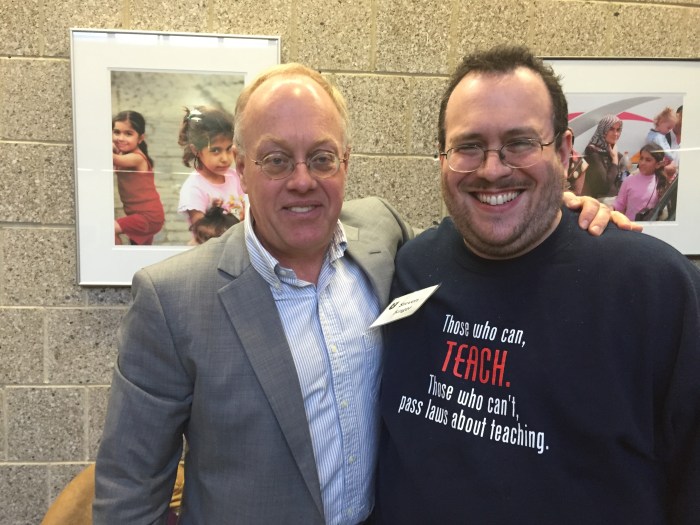
There was a point during Chris Hedges keynote address today when I could barely catch my breath.


My chest was heaving, tears were leaking from my eyes and I wasn’t sure I would be able to stop.


The Pulitzer Prize winning journalist had his audience enraptured at the United Opt Out Conference in Philadelphia Saturday morning.


I’ve read Chris before. We’ve all read Chris before. But I had never seen or heard him speak.


It was kind of like hearing a good sermon by a pastor who felt every word he said. And that really was it – Chris FELT every word.


When I’ve read Hedges’ articles on Truthdig, I’ve found myself getting angry. He stirs me up. He disturbs me, makes me feel uncomfortable. And when I heard him speak today I was surprised that he seemed to be reacting the same way to his own words.


When he talked about teaching teenage prisoners, he was emotionally invested in the story he was telling. When he criticized American neoliberal policies, he was just as angry as his audience.


The only difference was that his sorrow and rage somehow became transformed in his throat into something akin to poetry.


He turned the struggle of the oppressed into something beautiful. He transformed the hurt in my chest into something profound. He mutated my disturbance into a sense of actions-to-be.


I won’t repeat the words he said. I’d never be able to reproduce them with anything resembling his eloquence. But I will remark on one of his closing remarks because it hit me like a splash of cold water.


Rebellion, he said, is not about changing the world. It’s about changing yourself.


When you stand up for what is right, you become a better person – whether you achieve your goal or not. In a sense, it doesn’t matter if we destroy the testocracy. But in trying, we transmute ourselves into something better.


I don’t know if that’s true, but I’d like to think so.


I don’t know if we will ever destroy the system of Test and Punish, but I know I can try. I know I can put myself on the line and damn the consequences.


All weekend at the United Opt Out Conference we’ve been talking about rebellion and revolution. There’s no weak tea here in the City of Brotherly Love. No half measures. We’ve been discussing tearing the system down piece-by-piece.


A timid voice speaks up in the back of mind, “Do we really need to do all that? Do we really need revolution just to keep our public schools and make them into something worthy of our children?”


I think I’ve been trying to answer that question for a while now. Maybe a lot of us have.


In a rational country, our demands wouldn’t be so radical.


We want public schools centered on the good of all, not the profit of some. We want educationally valid curricula for our children. We want some control over the school system – both as parents and teachers.


Is that so much to ask? Is that such a lunatic request?


And as I listened to Hedges and Dr. Antonia Darder, Dave Green, Jonathan Pelto, Dr. Denisha Jones, Ceresta Smith, Yohuru Williams, Aixa Rodriguez and many, many others, I heard another timid voice begin to answer the first.


“Yes.”


The system of standardization and privatization of public education confronts students of color and impoverished students head on. They are in the front lines. Yet few people outside of activists seem willing to admit it.


Perhaps the most impressive thing about this conference has been its ability to put issues of human rights at the center of the argument. That’s the essential concept. We’re not just talking about bad education policies. We’re not just talking about schemes for billionaires to make more money. We’re talking about the systematic oppression of a group of people and the widespread complacency and complicity of the majority of the populace.


How do you combat such a monster without being revolutionary? How do you fight for your child without being a rebel?


More has happened at this conference than I can adequately put into words. I’ve met so many incredible people. Some of them I knew, some I had met before, some had only been names I had seen on my computer screen.


I will leave here Sunday feeling refreshed and energized, ready for the battles ahead.


Am I a radical?


Am I becoming a better person?


I don’t know.


But I will keep fighting.


Because I love my daughter, I love my students and I love all children everywhere.


Photo Gallery:


NOTE: This article was given a shout out on Diane Ravitch’s and Jonathan Pelto’s blogs.


How to Get Rich From Public Schools (Without Actually Educating)

Get-Rich


Gold!


There’s gold in them thar schools!


Don’t believe me?


When you drive by an inner city school, it doesn’t exactly look like the Taj Mahal. Does it? Even relatively upscale suburban schools wouldn’t be mistaken for a house on MTV Cribs. And some of those fly-by night charter schools look more like prisons than Shangri-La.


But I’ve got it on good authority that there’s $1.3 trillion available for someone who knows how to take it.


That someone is Harold Levy, an expert on how to get rich through school privatization.


The former chancellor of the New York City School System has begun a second career managing an investment company.


“For-profit education is one of the largest U.S. investment markets, currently topping $1.3 trillion in value,” according to the Website for one of his master classes for rich investors.


Wooo-weee! That’s a lot of money!


To put it in context, that’s more than 10 times the amount the federal government spends on education per year. And it’s all yummy profit!


So how do you get your hands on some of those delicious taxpayer greenbacks?


You gotta’ invest.


No! I don’t mean increase education budgets for traditional public schools that can barely make ends meet! I mean invest in shiny new charter schools.


Here’s how it works.


Lend money to a for-profit company to build a new charter school. If you do it just right, you’re almost guaranteed to double or triple your money in seven years.


You’ll want to take advantage of the New Markets Tax Credit (NMTC), which began in 2000 at the end of President Bill Clinton’s administration. This will give you a whooping 39 percent tax credit. But here’s the best part, since it’s money you’re lending, you also get interest on it! And if that weren’t enough, you can piggyback all kinds of additional federal tax credits on top of that – things like historic preservation or job creation or Brownfield’s credits.


That doesn’t sound legal, does it? But it is!


In case that has you feeling queasy, you can hide what you’re doing by funneling the whole thing through a large non-profit organization like the Gates Foundation. They’ll be more than happy to help. They’ve done it for so many before you anyway.


However, make sure you whisk this money through something called a Community Development Entity (CDE). The federal website explains this can be either a “domestic corporation or partnership.” And it must have “a primary mission of serving LICs [Low Income Communities].” (Snicker!)


Here’s the best part. A CDE isn’t required to release information about who its donors are or how much they’re spending. So on paper the CDE – not you – gives the money to the non-profit, which, in turn, loans the money to a charter management organization. It’s like money laundering. No one can tell where the funds came from and thus it’s easy to escape from federal regulations or any appearance of wrongdoing.


There is a catch, however. You’re probably going to need a substantial amount of capital to put forward – at least a million bucks or so. No bank’s going to waste its time with only a few hundred thou.


This method is perfect for those who are already wealthy and want to increase their wealth or hedge fund managers out to boost their clients’ portfolios.


But maybe you just aren’t into the whole hedge fund game. Maybe you’re not the banking and investing type.


You can still make oodles of cash off public schools through real estate.


Here’s what you do – buy up cheap inner city properties that can be renovated or repurposed for charter schools. Then when a school privatization firm wants to set up shop in an impoverished city like Philadelphia, Chicago or Detroit, it needs someone like you to open the door.


You’ll get to charge the charter corporation rent and – get this – that’s not price capped! You can charge whatever you want! As long as you’ve got a good spot and no one else is trying to beat you to it, charter corporations are willing to pay bookoo bucks to get their money-making enterprises rolling!


A good rule of thumb comes from privatization expert Charter Schools USA, which recommends rental costs not exceed 20 percent of a school’s budget. However, there are plenty of examples of charter schools paying 25, 30 even up to 43 percent of their money just on rental costs! Ca-Ching!


And if you really want to boost the bottom line, open a charter school, yourself! That way you can both rent out the real estate and pay for it!


Think about it. Who sets the rental price? You do. Who pays the rental price? You do. So you can pay yourself WHATEVER YOU WANT! And where does the money come from? The taxpayers!


Doesn’t sound legal does it? But it is!


According to the Miami Herald, which conducted an in-depth investigation into these practices, many of the highest rents are charged by landlords with ties to the management companies running the schools. Property records show at least 56 charter schools in Miami-Dade and Broward counties sitting on land whose owners are tied to management companies.


Of course there are so many other ways to set things up like this with a charter school. Unlike most traditional public schools, charters contract with for-profit companies for everything from curriculum development to construction. So there are many opportunities for creative investors to figure out how to both set the price and pay it TO THEMSELVES!


Moreover, every state has different laws about charter schools so check for loopholes. You’ll find ‘em!


Just don’t forget to set up that CDE to hide your shady dealings from the public. After all, if taxpayers could easily see how you’re sucking up their hard-earned money that they thought was going to help school children (Tee-hee!) they wouldn’t be happy.


And if you’re reading this from somewhere outside of the USA, don’t despair. You, too, can make a ton of money off school privatization in the United States. It’s like the Statue of Liberty says – wealthy foreign nationals welcome! (Or something like that.)


Since the Immigration Act of 1990, investors have been allowed to purchase visas for their families by investing in U.S. corporations. Just stash some cash into a hotel, ski resort or charter school and – voilà! – Move directly to GO and collect way more than $200!


It’s called the EB-5 visa for Immigrant Investors. For the low price of at least $1 million -or $500,000 to a rural or high unemployment neighborhood — you can get visas for the whole family.


Sounds like some crazy new loophole – right? It isn’t. It’s been around for decades. Every year, the federal government hands out 10,000 of these visas. So while Syrian refugee children drown seeking asylum, wealthy foreign nationals get an express ticket to the US of A.


You might be thinking, ‘That gets me into the country, but where do I cash in?’ Easy. You now have a stake in a U.S. charter school and have access to all the same easy money as native-born investors.


It’s an incredibly lucrative model even for those more interested in the Prophet than profit.


Just look at Gulen charter schools. It’s the largest single charter school network in the country. More than 150 schools in Texas, Ohio, Illinois and other cities are funded by Turkish investors following an Islamic nationalist named Fetullaf Gülen. These schools are part of a “worldwide religious, social and nationalistic movement in his name,” according to the New York Times.


Be warned. Many of these schools are under investigation for using U.S. taxpayer dollars meant to educate U.S. children in non-educational or otherwise shady ways. Some of this tax revenue has allegedly been spent on political and religious causes championed by the Prophet Gülen. Other funds have gone to controversial educational practices. For instance, instead of hiring local teachers, the chain is infamous for shipping in Turkish educators to the United States. As if it wouldn’t be cheaper to hire locals! And guess where the money comes from to pay for these Turkish teachers’ visas? That’s right – from the charter school’s funding!


Still. Even with a few setbacks, there’s never been a better time to invest in the privatization of public education. Sure there are financial, behavioral and educational scandals at charter schools throughout the country being discovered everyday. But fortune favors the brave!


Money is just hanging on the tree waiting to be plucked. It’s hard to walk into a charter school and not come out with pockets fit to bursting with cold, hard cash.


In fact, the only folks not making bank in this whole scheme are the teachers!


Don’t be one of them.


Teachers at charter schools – where unionizing is often prohibited – take home even less than those working at traditional public schools. And those traditional educators aren’t getting rich, either.


A new report by the Center for American Progress argues that U.S. teachers usually have bad starting pay and are unlikely to see major salary gains even after several years of teaching.


Growth in teacher salaries is especially bad when comparing the U.S. to other developed countries:

Screen Shot 2016-02-23 at 7.48.08 AM

“The bottom line is that mid- and late-career teachers are not earning what they deserve, nor are they able to gain the salaries that support a middle-class existence,” the report concluded.


There appears to be a golden rule in education: the less you actually help students learn, the more money you get to take home.


Perhaps if public schools were kept out of private hands where profit is the overwhelming motivation for everything you do, things would be different. But thank goodness that isn’t happening!


Someday people may wake up and demand more for their tax dollars and for their children. But until then…


There’s gold in them thar schools!


Don’t be a sap. Don’t be a teacher. Don’t help children. Invest in a fly-by-night charter school and get rich!


NOTE: This article also was published in Commondreams.org.


‘We’re Sorry Teachers are Unfairly Blamed’ says John King – Man Responsible for Unfairly Blaming Teachers

John King AP

Sometimes the messenger matters.

You wouldn’t expect Native Americans to believe an apology from Christopher Columbus.

You wouldn’t expect African Americans to believe an apology from David Duke.

So why the heck do the Democrats expect teachers to believe an apology from John King!?

The acting U.S. Secretary of Education is – himself – responsible for more attacks on public educators than almost anyone else.

In his former role as New York Chancellor of Education, he refused to fix a school system he was responsible for destroying all the while pointing his finger at teachers.

However, late last month in his new federal position, King gave a speech at a Philadelphia high school acknowledging the mistakes of the Obama administration in tying teachers’ evaluations to student test scores – a practice he was guilty of in New York.

“I think there’s just such an urgency around making sure that teachers feel valued in our society,” King said in an interview with the Washington Post in January.

“It’s one of the things I worry a lot about. I want young people to see a future for themselves as teachers.”

Seriously!?

Were you worried about teachers in New York when you tied their evaluations to unproven and inferior Common Core tests? Were you worried about students when you approved an obviously fraudulent charter school run by an obviously fraudulent con man? Were you worried about the profession when you ignored and dismissed parents at various education forums? Were you worried about public schools when you sparked the largest opt out movement in the country?

I’m sorry, but this apology rings hollow to most educators. We know you. We know that your biggest qualification for your position in charge of the nation’s public school system is a three year stint teaching in a “no excuses” charter school with a high suspension rate.

It’s kind of hard to believe you mean a thing you say. And by extension, it’s hard to believe a thing President Barack Obama says about education, either. He was the dunderhead who picked Arne Duncan to be his first Secretary of Education and then you to succeed him.

It must be an election year.

Since a few months before the Presidential Primaries, the Democrats have been apologizing for the damage they’ve done to public education.

Obama says he wants to reduce standardized tests. That’s great – with less than one year left in his second term! After increasing it beyond even the wildest dreams of his predecessor George W. Bush!

But since we’re talking apologies here, are you, Mr. King, willing to actually do anything to make things better for the nation’s teachers?

For instance, do you think the U.S. Department of Education should be exempt from regulatory capture? In other words, should a regulatory agency like the Department of Ed advance the commercial or political interests of special interests that dominate the industry it is charged with regulating?

In other words, should any employee of the department or their immediate family be permitted to collude with the corporate interests seeking special favor in the field of education? Should a prominent member of the department also be allowed to work for an industry seeking to profit off our public schools? Should his wife?

No? Then perhaps your wife Melissa Steele King shouldn’t be accepting a position at Bellwether Consultants, a leading corporate education reform organization. They represent The New Teachers Project, New School Venture Fund, KIPP, IDEA Charter Schools, Gulen Charter Schools, Rocketship Charters and many others.

So while classroom teachers will only be able to communicate with you through official correspondence, a representative of the standardization and privatization movement will be right across from you at the dinner table every night!

If you really wanted us to take you seriously, your family wouldn’t be pulling this crap.

Your latest apology is just an attempt to smooth over your own Senate education committee confirmation hearing on Thursday, Feb. 25. You want to show how much bipartisan support you have so you can become the official Education Secretary and not just acting Education Secretary.

Look, you might say. I just threw a bone to teachers. They love me!

What a steaming pile of bullshit!

Does that offend you? Oh. Then please accept my most heartfelt apology.


NOTE: Diane Ravitch also posted about this article on her blog.


Charter School Champion Hates Bernie Sanders, Prefers Hillary Clinton

Screen shot 2016-02-20 at 12.36.03 AM

Bernie Sanders doesn’t like charter schools enough.

To me that’s an endorsement.

But to Shavar Jeffries, it’s a condemnation.

Jeffries took to the pages of the New York Daily News to decry Sanders position and champion Hillary Clinton’s.

Jeffries is the executive director of Democrats for Education Reform (DFER), a hedge fund front promoting the privatization of public education.

Despite its name, the group doesn’t represent the views of most Democrats. It represents the neoliberal branch of the party that has heavily influenced the education policy of Barack Obama, Arne Duncan, Cory Booker, Bill Gates and other prominent so-called liberals.

One can see why Jeffries isn’t Feeling The Bern. Sanders famously said THIS in January about the industry DFER promotes:

I’m not in favor of privately run charter schools. If we are going to have a strong democracy and be competitive globally, we need the best educated people in the world. I believe in public education; I went to public schools my whole life, so I think rather than give tax breaks to billionaires, I think we invest in teachers and we invest in public education. I really do.

More to Jeffries’ taste is Hillary Clinton who he says backed off on her own charter school criticism.

Back in November, Clinton correctly condemned most charter schools for not enrolling the most challenging students.

She said:

Most charter schools — I don’t want to say every one — but most charter schools, they don’t take the hardest-to-teach kids, or, if they do, they don’t keep them. And so the public schools are often in a no-win situation, because they do, thankfully, take everybody, and then they don’t get the resources or the help and support that they need to be able to take care of every child’s education.

Anne O-Leary, a Clinton aide, eventually clarified these comments saying Clinton supports those charters that are both equitable and accountable.

Neither candidate for the Democratic nomination for President has given an in-depth policy speech on K-12 education.

These statements on charter schools are some of the most substantial made by either candidate on the issue.

Clinton has been lambasted in the media for her comments. Many publications – leaning both left and right – complained that she was caving in to powerful teachers unions like the National Education Association (NEA) and the American Federation of Teachers (AFT) both of which endorsed her in the primaries. On the other hand, Clinton also has been criticized for not going far enough against the school privatization industry. Some observers highlight her continuing ties to Wall Street and many of the same neoliberal figures responsible for our disastrous corporate education reform policies.

By contrast, Bernie’s comments have been met with mostly praise from his base and shrugs from his opponents.

Both candidates views on the subject have evolved over the years. Sanders has gone from being pro- to anti-charter. Clinton has gone from being pro-charter to pro-charter with some provisos.

Back in 1998, Congressman Sanders voted in favor of the Charter School Expansion Act. Now he’s against the industry. Meanwhile, Clinton has long been a champion of charter schools. Her criticism of some of these schools is a new wrinkle.

It’s nice to see the issue getting some attention.

Charter schools have increased exponentially across the country in the last two decades, but they have little transparency or accountability. As a result, monetary scandals have exploded like wildfire from state-to-state. Millions of public dollars have disappeared into private corporations’ bank accounts leaving little to show for it.

Nationally, research shows that charter schools do no better at educating children than public schools. In fact, in many cases they do a much worse job. And when it comes to cyber charter schools, the situation is even more unevenly stacked in traditional public school’s favor.

Scandals also are surfacing about how charters treat their students. Stories of harsh discipline policies and violating students rights are emerging everyday. Moreover, there are countless accusations that – as Clinton points out – many charters select only the easiest students to educate and sometimes expel struggling students before state-mandated standardized tests.

Finally, charters increase the cost of educating children in a particular district by adding another parallel school system. However, these extra costs are taken out of the traditional public school’s budget thereby further destabilizing it and forcing less services and higher class sizes for students who don’t enroll in new charters.

I’m glad both Democratic candidates are critical of this status quo.

However, Jeffries denunciation of Sanders and defense of Clinton may backfire.

If an odious organization like DFER is in favor of Clinton, shouldn’t the rest of us back Sanders?


NOTE: This article also was published on the Badass Teachers Association blog.


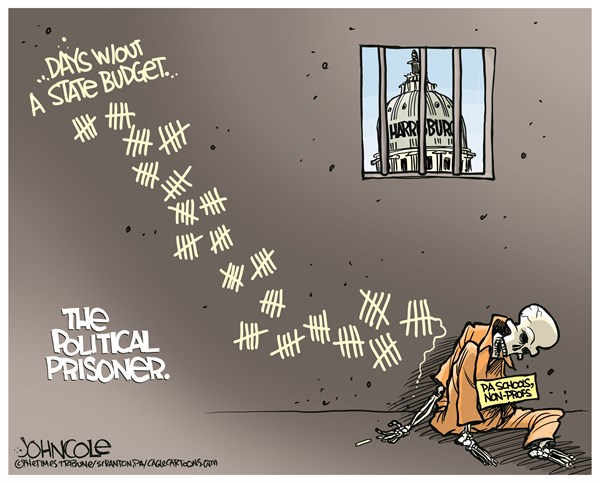
Entire State of Pennsylvania Held Hostage by Handful of Ideologues Refusing Budget Compromise

169807_600

Pennsylvania’s hostage crisis goes into Day 258 Saturday.

Republican lawmakers continue to block the passage of a state budget that was required by law at the end of June 2015.

In fact, Gov. Tom Wolf – a Democrat – released his spending plan this week for the fiscal year 2016-17 – yet the previous year’s budget still has not been approved!

Even after numerous difficult concessions made by Democrats, Republicans still decline approval of any spending plan but their own.

I call this a “hostage crisis” because their actions are not supported by the majority of Pennsylvanians.

The overwhelming majority of residents want a budget. The overwhelming majority of voters cast ballots for Democrats in the last election, but the GOP remains in control of the legislature purely because of gerrymandering. That’s why the majority of residents booted out the former Republican Governor and overwhelmingly approved Democrat Wolf to replace him.

Meanwhile, legislative Democrats lead by Gov. Wolf have made numerous concessions to the opposition. For instance, the Keystone state is one of the richest in the nation in shale deposits yet it is the ONLY one not to tax the industry. That’s right: Ohio, Wyoming, North Dakota, West Virginia, Colorado, Alaska, Louisiana, New Mexico, Kansas, Arkansas, California, Oklahoma, Utah and Alabama all have a severance tax. Only Pennsylvania does not.

GOP legislators receive massive donations from the energy industry and have demanded gas drilling remain untaxed. Though Wolf promised to make shale drillers pay their fair share, the Democrats have conceded the issue in the name of compromise.

Our posterity will look back at us and wonder why we let gas drillers poison our environment. But we aren’t even asking questions about the industry’s impact on our water and soil. Instead, we’re fighting over whether to tax them or not! And still there is no budget!

Additionally, Republicans demand we further dismantle our urban school districts like Philadelphia City Schools. The GOP insists on accountability from the district while making sure no one actually responsible for the schools’ hardships will ever actually be held accountable. The district has been systematically underfunded. Administrative decisions have been taken over mostly by the state. Yet somehow the solution is further privatizing the poorest buildings without any transparency from the for-profit companies that will take over.

Democrats have given in to this outrageous ultimatum. And still we have no budget!

No amount of public bloodletting has been enough for Republicans. As each demand has been met, a new one is leveled. The latest example is a GOP commandment to shortchange state workers pensions.

Republicans insist the Democrats allow them to reduce pension payments to new and current employees. Never mind that this is illegal. Pensions are bills for services rendered. You can’t sign a contract promising to pay X and then years later decide to give less. Pensions are part of a trade off state workers make when they take the job. In essence, state workers agree to lower wages than they would receive in the private sector in exchange for a safe, reliable pension when they retire. You can’t renege on that.

A tentative agreement was reached to reduce benefits for only new state employees, but it failed. Never mind that this measure would achieve no cost savings for a generation. Never mind that it would reduce the quality of employee who would even apply to work for the state. Never mind that just last year Republicans – who controlled both the executive and legislative branches – could have enacted any bill they wanted. But they are only pushing the issue this year to force Democrats to take partial responsibility for legislation they didn’t have the courage to enact alone.

This is not partisanship. These are facts.

On the local scene, there are lawmakers on both sides of the aisle that are willing to put party aside and work for the common good. But at the state level, Republicans almost exclusively are destroying the value of our government. It shouldn’t exactly be surprising that people who got into office campaigning that we don’t need government turn out to do a bad job of running it.

The national banking and investing world have made it quite clear. Standard & Poor’s cited the state’s budget impasse as the reason it withdrew an A rating from the Commonwealth’s public school system. Moody’s Investors Service likewise downgraded the state’s general obligation rating. The legislature’s actions are destroying our national reputation and ability to get things done.

The major sticking point is that Wolf and the Democrats are asking Republicans to restore the almost $1 billion in budget cuts made to education for the last 4 years and continuing through this year’s budget temper tantrum. The GOP had no problem robbing public schools of this money when they also controlled the Governor’s mansion. They are just now adamantly opposed to returning it.

Make no mistake. This has nothing to do with protecting residents’ taxes. Blocking the passage of a budget forces local municipalities and school districts to do state legislator’s dirty work for them and raise local taxes. Legislative Republicans are shirking their duties and pointing fingers elsewhere.

After even worse actions by Republicans in Michigan, it’s hard not to wonder what has become of the GOP? Poisoning the town of Flint? Systematically disinvesting in Detroit Schools? And now in Pennsylvania refusing to pass a fiscal budget!? This isn’t your father’s GOP!

Are state Republicans even a political organization anymore? With actions like these, don’t they more resemble home-grown terrorists? If ISIL took over Harrisburg and shut down the state budget, it would be an act of war. They are spreading chaos for chaos’ sake.

If it weren’t for Gov. Wolf releasing emergency funds through an executive order, many schools would already be closed. Many public services would be shut down. But this can’t last much longer. The Governor can’t govern alone indefinitely.

It is time for the hostage crisis to end. If you live in a Republican-controlled legislative district, you need to let your representative know that you want compromise. Send your legislator back to Harrisburg. Don’t let any of them return to their home districts until the impasse is over. Heck! Thousands should march outside of the capital building keeping a quorum present until the matter is resolved. None of them should get to leave until they DO. THEIR. JOBS.

Until then, all of us in Pennsylvania remain at the mercy of a handful of ideological cowards while our schools go wanting and public services rot on the vine.

Most Charter Schools are Public Schools in Name ONLY

charterart

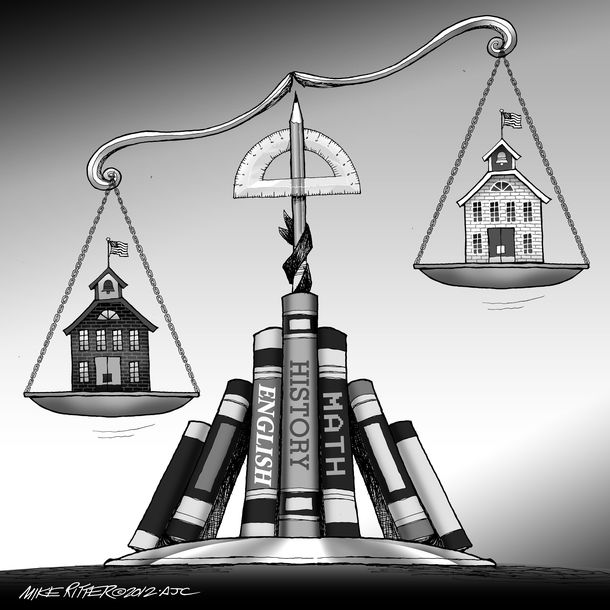
Charter schools are public schools.

But are they?

Really?

They don’t look like a duck. They don’t quack like a duck. Do you really want to serve them confit with a nice orange sauce?

Sure, charters are funded by tax dollars. However, that’s usually where the similarities end.

They don’t teach like public schools, they don’t spend their money like public schools, they don’t treat students or parents like public schools – in fact, that’s the very reason they exist – to be as unlike public schools as possible.

Advocates claim charters exist as laboratory schools. They are free to experiment and find new, better ways of doing things. Once they’ve proven their successes, these improved practices will eventually trickle down to our more traditional houses of learning.

At least, that’s the ideal behind them. But to my knowledge it’s never happened.

As a public school teacher, I can never recall being at a training where charter operators taught us how to do things better with these time-tested strategies. I do, however, recall watching excellent co-workers furloughed because my district had to meet the rising costs of payments to our local charters.

Moreover, if the freedom to experiment is so important, why not give that privilege to all public schools, not just a subset?

The reality is much different than the ideal. In the overwhelming majority of cases, charter schools are vastly inferior to their more traditional brethren. To understand why, we need to see the differences between these two kinds of learning institutions and why in every case the advantage goes to our much-maligned, long suffering traditional public schools:

1) Charters Don’t Accept all Students

Charter schools are choosey. They don’t take just any old students. They only accept the ones they want. And the ones they want are usually easy and less expensive to teach.

The process is called “Creaming” because they only pick the cream of the crop. Then when these students who are already doing well continue to do well at a charter, the administrators take all the credit. It’s as if they were saying – Look how well we teach. All these former A-students continue to get A’s here at our school. It’s really quite an achievement. (Not.)

However, sometimes the bait-and-switch isn’t so obvious. Occasionally, charters actually do accept special needs and/or difficult students – for a few months. Then when the big standardized test is coming up, they quietly give these kids the boot. That way they can claim they accept everyone but still get excellent standardized test scores.

Ironically, that’s what they mean by “School Choice.” It’s usually touted as a way of giving alternatives to parents and students. In reality, the choice only goes to administrators. Not “Which school do YOU want to attend?” but “Which students do WE want to accept to make our charter look good?”

Keep in mind, this situation is allowed by law. Charters are legally permitted to discriminate against whichever students they want.

By contrast, traditional public schools accept all students who live within the district. It doesn’t matter if children have special needs and therefore cost more to educate. If a child lives within district boarders, your neighborhood public school will take him or her in and provide the best experience possible.

Bean counters complain about poor test scores, but traditional public schools aren’t gaming the system. They aren’t weeding out difficult students. They take everyone. Administrators have no choice. This is dictated by law. Public schools are equal opportunity educators.

2) Charters Have No Transparency

Have you ever been to a school board meeting? Ever listened to school directors debate the merits of one course of action versus another? Ever looked over public documents detailing district finances and how money is spent? Ever read over bids vendors provide for services? Ever spoken at a public meeting to school directors about what you think is the best way to proceed in a given situation? Ever had a school director or two disappoint and then worked to vote him or her out of office?

At traditional public schools, you can do all of this – even if you don’t have any children in the school system! At a charter school, you’re out of luck.

Charters rarely have to tell you how they spend their money, rarely debate management decisions in public, rarely invite or even permit you a seat in the audience. Heck! They don’t have to!

Charters survive on public money, but once that money goes in those charter doors, the public never sees it again. If you don’t like how the charter is treating your child, you can remove the little dear from the school. But if a non-parent doesn’t like how they suspect the charter is spending his or her tax money, there is absolutely no recourse. You are taxed without any representation. Wars have been fought over such things. It’s hard to imagine how that can be Constitutional.

In sum, traditional public schools are like most other government organizations. They are required by law to be transparent to the public. Charter schools, however, are money pits and what goes down those gaping holes is lost forever from public view.

3) Charters Advertise

Have you ever seen those huge billboards by the side of the road trying to convince motorists to send their children to a charter chain? Ever hear a radio advertisement about how happy little kiddos are at Brand X Charter School?

Those advertisements cost money. Your money, to be exact. You paid for those commercials. And what’s more, every penny spent on those glossy advertisements is one less that actually goes to educate your child.

By contrast, traditional public schools are not allowed to advertise. All their budget dollars have to be spent on things broadly educational. They have to spend on books, teachers, building upkeep, etc.

Not only are charters allowed to keep quiet about how they spend their money, even if they told you, it doesn’t all have to be spent on the children in their care. What could possibly go wrong with that?

4) Charters Defraud the Public

Despite all their best efforts at secrecy, charter school operators have been caught in countless financial scandals in recent years. According to Integrity in Education$200 million in taxpayer money was lost, misused, or wasted in just 15 of the 42 states that have charter schools.

These aren’t mere allegations. These abuses are well documented. The report states: “Charter operators have used school funds illegally to buy personal luxuries for themselves, support their other businesses, and more.”

Mountains of evidence demonstrate fraud throughout the country: Schoolchildren defrauded in Pennsylvania; “out-of-control” charters in Michigan and Florida; rampant misspending in Ohio; bribes and kickbacks, also in Ohio; revenues directed to a for-profit company in Buffalo, NY; subpoenas for mismanaged charters in Connecticut. Heck! In California alone, $100 million in fraud losses were expected just last year.

And that’s just the fraud we can see!

I’m not saying our traditional public schools are scandal free, but nothing like this level of malfeasance has been revealed. Traditional schools are under much stricter regulations. People are actually watching to make sure nothing like these charter scandals happen at our time-tested neighborhood schools. They are much better value for your money.

5) Charters Often Get Worse Results

It all comes down to teaching and learning. When we compare the results at charters versus traditional public schools, who does better?

Bottom line: the research shows that the overwhelming majority of charter schools are no better – and often much worse than traditional public schools. This is true even of studies backed by the charter school industry, itself!

For example, a recent study by charter-friendly CREDO found that in comparison to traditional public schools “students in Ohio charter schools perform worse in both reading and mathematics.”

In a study of Chicago’s public schools, the University of Minnesota Law School found that “Sadly the charter schools, which on average score lower that the Chicago public schools, have not improved the Chicago school system, but perhaps made it even weaker.”

Another report from Data First – part of the Center for Public Education – says, “the majority of charter schools do no better or worse than traditional public schools.”

However, there is plenty of evidence of charter schools producing dismal academic results for students. For instance, a Brookings report showed low performance in Arizona’s charter schools. A District of Columbia researcher for In the Public Interest group, “could not provide a single instance in which its strategy of transferring a low-performing school to a charter management organization had resulted in academic gains for the students.” The Minnesota Star Tribune reported that “Students in most Minnesota charter schools are failing to hit learning targets and are not achieving adequate academic growth.” Over 85 percent of Ohio’s charter students were in schools graded D or F in 2012–2013. In the celebrated New Orleans charter experiment, the Investigative Fund found that “eight years after Hurricane Katrina…seventy-nine percent of RSD charters are still rated D or F by the Louisiana Department of Education.”

That’s not exactly a record of success!

Meanwhile, our traditional public schools often do a much better job.

The National Assessment of Educational Progress (NAEP) reports that U.S. math and reading skills have improved for all levels of public school students since the 1970s, with the greatest gains among minority and disadvantaged students. Other results indicate that our schools achieve even greater success when properly funded.

The facts seem pretty clear. Charter schools are not like traditional public schools at all.

Most charter schools are a losing prospect for our children and our Democracy. Yet well-funded corporate lobbying interests continue to push charters as a public policy solution while instigating the closure of an increasing number of traditional public schools.

This is like closing hospitals and opening clinics on the power of crystals, snake oil and phrenology.

We need a national moratorium on new charter schools. We need to investigate every existent charter to determine if each are providing a quality service to students and not just the charter’s corporate share holders.

We know what works, and it isn’t charter schools. Support your friendly, neighborhood, traditional public school.

Why Aren’t Public Schools Too Big To Fail?

CafptbBUEAAEKKW.jpg_large

There’s a new fad sweeping the nation.

It’s called “Educational Accountability.” Here’s how it works.

If your neighborhood school can’t afford to pay its bills, just close it.

That’s right. Don’t help. Don’t look for ways to save money. Don’t look for new revenue. Just lock the doors.

It’s fun! And everyone in the federal and state government is doing it!
It’s the saggy pants of United States education policy. It’s the virtual pet of pedagogical economics. It’s the cinnamon challenge of learning-centered legislating.

Sorry, poor urban folks. We’re closing your kids’ school. What? Your little tots are entitled to an education!? Fine! Take them to some fly-by-night charter or else they can get stuffed into a larger class at a traditional school miles away. It’s really none of my business.

Meanwhile, as government functionaries pat themselves on the back and give high fives all around, academic outcomes for these children are plummeting.

Moving to another school rarely helps kids learn. They lose all their support systems, social networks, community identity, and self esteem while spreading resources even thinner at their new location often putting it on the chopping block for the next round of closings. Or worse they’re subject to the unregulated whims of a for-profit company devoted to cutting student services in the name of increasing shareholders profits until some charter CEO shutters the building, himself, and sneaks away like a thief in the night.

But what else can we do? If a school can’t pay its bills, it’s got to go. Right?

Wrong.

Is it really so surprising that poor schools can’t pay their bills? We force them to make ends meet by relying heavily on taxes from local residents – most of whom are dead broke!

How is someone who can’t feed himself going to support a robust school system? How is someone working three minimum wage jobs going to have enough left over at the end of the week to fund a broad liberal arts education? How is someone with the wrong skin color who can’t get a home loan or a well-paying job going to provide the capitol necessary for a 21st century learning experience?

But whatever. Close the poor schools and blame it on the poor.

Tee-Hee!

Chicago, Detroit, Philadelphia, Puerto Rico – You have to admit, there’s a kind of glee about the whole prospect. It’s one of the few things that both Democrats and Republicans agree on.

In fact, they love it so much they’ve found all kinds of excuses for shuttering schools that aren’t even so obviously based on their budgets.

Look at how we evaluate schools effectiveness.

Does your school serve a mostly poor, undernourished, minority population who start kindergarten already years behind grade level? Those kids need help. They need extra assistance, tutoring, counseling, health screenings, and a whole host of wraparound services. But instead of providing any of that, we demand one factor – the school – provide everything without providing them any resources.

That’s like judging a soup kitchen by weighing its customers before you give them any soup!

My God, Man! This poor fellow is malnourished!

Yes, he came in that way.

What are you putting in that soup!?

It doesn’t matter. He hasn’t had any yet. Besides. He needs more than just soup.

Enough of your excuses! I’m closing you down!

Moreover, we use the worst possible measurements of student achievement – standardized test scores – to tell if our schools are doing a good job. Never mind that these sorts of assessments repeatedly have been shown to demonstrate parental income more than academic achievement. And surprise! Surprise! They show our poor kids have poor scores!

And just in case a few kids somehow manage to overcome the odds, we sabotage the learning they might otherwise get from their schools with top down policies like Common Core State Standards.

How does this cripple educational outcomes? By hobbling the one group most in a position to actually make a difference – teachers.

Instructional autonomy? Bye! Bye! After all, who wants to hear from the people on the ground who can empirically judge the situation, determine what needs to be done and how best to do it? Instead, we give the power to think tanks and the testing industry to decide what is taught, when and how.

Common Core has never been proven to help kids learn. In fact, most teachers despise it, saying the standards are developmentally inappropriate, ill-conceived and unwieldy. Even under the best of circumstances, why would you take someone who barely has the resources to get by and then make things MORE difficult? That’s like taking an 80-pound starving child and forcing him to lift a 200 pound barbell over his head in order to qualify for his dinner.

Put your back into it, youngster!

I’m trying, Sir, but I’m so hungry.

Just use your grit!

Grits! Yes, please. I’m famished.

So what do we do? We close their schools! That’ll show ‘em!

And somehow we call this accountability.

Would you solve a measles outbreak by closing the hospital? Would you solve a burning building by closing the fire department? Would you solve an asteroid hurtling toward Earth by closing NASA!?

NO! OF COURSE YOU WOULDN’T!

In fact, when the wealthy are at a disadvantage, we do just the opposite.
Take the banking industry.

When Wall Street crashed the economy with risky speculation and absurdly short-sighted practices, did we close the banks?

No way! We bailed them out.

Why? They were too big to fail.

If we had let them spiral into insolvency – which everyone agrees they deserved to do – it would have had too large an impact on the country. Middle class folks would have lost their savings. Retirees would have lost their pensions. Businesses throughout the nation would have closed. The economy would have come to a grinding halt.

So the federal government saved the banks.

Now clearly there should have been strings attached to this bail out. Those responsible for the crash should have been prosecuted and forced out. At very least, the banks should have had to make concessions such as more regulation and stopping the risky practices that crashed the economy in the first place. (SPOILER ALERT: That didn’t happen.)

However, the idea was sound.

But why does it only apply to the big banks? Aren’t there other areas of public life that are too big to fail? And isn’t public education one of them – perhaps the biggest one?

Heck! Unlike the banks, our schools did nothing to deserve these wholesale closures. In fact, they’ve done an amazing job with the few crumbs we force them to subsist on.

Moreover, the result of letting them shut down would be just as catastrophic for our nation as a banking collapse. Maybe more so.

If our schools fail, we won’t have educated citizens. Future generations won’t be qualified for any but the most menial of jobs. They won’t be able to navigate the media, commerce, politics, science or any domain of civic responsibility.

Without our schools, we’ll calcify the economic structure. The rich will stay rich, the poor will stay poor and there will be next to no social mobility. Our country will exist as a neo-feudal state and most of us will be relegated to little more than serfs.

Is it too cynical to suggest that this is exactly why we haven’t bailed out our schools? The overwhelming majority of our nation’s wealth is held by only 1% of the population. Disinvesting in public education is exactly the kind of thing that would ensure the status quo is maintained or perhaps even tilted further in the favor of the super rich.

Any sane society, wouldn’t let this happen. If we don’t want this nightmare scenario, it’s time to bail out our schools.

Seriously. The federal government should step in.

Provide a huge influx of cash to the poorest schools so every institution of learning can count on adequate, equitable, sustainable funding. Stop judging them based on high stakes test scores. Stop sabotaging them with social schemes like Common Core. Let the experts – the teachers – actually run their own buildings.

This is what almost every other major country in the world does. Funding is federal. Policy is local. Get with the times, America!

And you can pay for it by enacting a fair tax plan. Worldwide, American companies keep 60 percent of their cash overseas and untaxed. That’s about $1.7 trillion annually. Imagine what that kind of revenue could do for our public schools!

Imagine if we taxed risky Wall Street speculation. Imagine if we made the super rich pay their fair share with tax rates similar to those we had when our national economy was at its best – the 1950s and ‘60s.

You want to make America great again? This would do it? You champion personal responsibility? This is what responsible government would do.

After all, what’s the purpose of government if not to create a level playing field for the next generation?

Call it a bail out, if you want. Or more accurately call it being answerable to the future, taking charge, rising to meet our duties, true accountability.

Stop closing public schools. Save them.


NOTE: This article also was published in the LA Progressive.


Unions Can’t Just Be About What We’re Allowed to Do: Social Justice Unionism

7983807401_6b0075f742_b.sm_a

If labor unions were an animal, they’d be an old hound dog napping on the porch.

They’re slow to get up and chase away burglars but they do like to howl at night.

Most of the time you don’t even know they’re around until the dinner bell rings. Then that ancient mutt is first to bolt into the kitchen to find a place at the table.

It’s kind of sad really. That faithful old dog used to be really something in his youth.

He was fierce! He’d bark at trespassers even tearing them apart if they threatened his patch of land.

Old Uncle Sam used to yell at him and even threaten the pooch with a rolled up newspaper, but that dog didn’t care. He had a sense of right and wrong, and he didn’t mind getting into deep trouble fighting for what he thought was fair.

Today, however, the only thing that really riles him is if you threaten to take away his ratty old bone.

Let’s face it. Unions have become kind of tame. They’re housebroken and not much of a threat to those people waiting in the shadows to rob us blind.

Some people say we’d be better off without them. But I don’t agree. Even a decrepit canine can act as a deterrent, and thieves sure are frightened of dogs.

Think about all unions have given us: the weekend, child labor laws, vacation time, pensions, lunch breaks, healthcare, the 8-hour day, maternity leave, safety measures, due process, sick leave and free speech protections on the job!

They didn’t get us all that by sitting politely at the table with their hands crossed. They didn’t do all that by contributing modest sums to political campaigns. They didn’t do it by obsessively protecting collective bargaining at the expense of all else.

Unions used to take to the streets. They took over the job site. They marched with signs and placards. They exercised people power.

And the government was scared of them. The President called out the army to get them back to work. Lawmakers hired mercenaries to break strikes with clubs and guns. But eventually Congress passed laws to placate them.

Unfortunately, That was a long time ago.

For decades the pendulum has been swinging against us. Federal and state laws have become increasingly restrictive. They want to tell us when we can strike and how long. They want to tell us when and if we can collect dues. And – frankly – they want to tell us to just disperse and do whatever the bosses want – because the business class has already bought and paid for our politicians.

For decades we’ve heard to their propaganda on TV, the radio and the print media. Well-paid shills have poured their poison in our ears about the evils of the labor movement. They’ve spoken these lies so often lots of people believe them.

Workers used to fight to make sure everyone got a fair deal. Now the working man has been brainwashed to focus instead on making sure no one else gets more than him. And the bosses are laughing all the way to the bank.

Union membership is at the lowest it’s been in a century. So are wages adjusted for inflation. A family of four used to be able to get by comfortably on one salary. Now it can barely make ends meet with two.

Yes. There’s no doubt about it. We need unions today more than ever.

But for unions to survive, they must change. They have to become a reflection of the membership and not just of the leaders.

During this presidential election cycle, we’ve seen our largest national unions – the National Education Association (NEA) and American Federation of Teachers (AFT) endorsing a candidate without bothering to actively poll their members. We’ve seen them speak for us on policy decisions without asking our opinions. We’ve seen them act just like the corrupt politicians who we should be fighting against.

Yes, it is time for a change. No longer can our unions be run from the top down. They must be run from the bottom up. They shouldn’t tell us what to do. We, the membership, should be giving orders to them.

Moreover, we need to stop obsessing about collective bargaining. I’m not saying that’s unimportant. But it can’t be the only thing we do.

Our unions used to be in the midst of larger social movements. We were part of the Civil Rights movement. We were part of the push for desegragation. We were part of the fight to protect children and provide them a decent education.

We need to continue that today. And in some places we are already doing that! Look to Chicago, Detroit and Philadelphia. Teachers unions in those urban areas are fighting not just for better pay and benefits but for the communities they serve. Detroit teachers en mass are calling off sick to protest horrible conditions in the schools. Chicago teachers are marching in the streets with the community to demand indictments for police murdering their black and brown students. Philadelphia teachers are supporting students who walk out of class to protest state disinvestment and toxic testing.

THIS is what unions should be doing. We should be fighting for social justice. We should be a central part of the struggle to turn the tide against corporatization, privatization and standardization of our country’s public goods. We should be marching hand-in-hand with BlackLivesMatter activists. We should be in the front lines of the fight to save our environment and replace fossil fuels with renewable energy.

We must be part of the community and not apart from it. We must share in the struggles and goals of those we serve. We must be an example of the old truism that a rising tide raises all ships. After all, the word “union” literally means together. By definition we must all be in this together or else we’re not even really a union.

And to do this we have to stop being so concerned with what they tell us we can do.

We live in a democratic society. The government gets its power from us, from our consent. That means that if there are enough of us, we trump their corrupt laws. They only get to make those laws because we say so. And court decisions – even Supreme Court decisions – mean nothing next to the court of public opinion.

The bosses buy the politicians and tell them to legislate us into a box. It’s time to break out of that box. We can’t be afraid to take our power back. We shouldn’t be afraid of our government. Our government should be afraid of us.

How do we do it? Organize.

If you belong to a union, roll up your sleeves and get active. Run for office. Convince like-minded folks to join you. Take over your local. Spread to your national.

If you don’t belong to a union, start one at your job. Talk to your co-workers. Talk about the benefits for each of you and your neighborhoods. Fight for your rights.

I know. It’s a whole lot easier to complain. Real change, though, takes real work.

We used to know these things. Somewhere along the line we forgot.

So wake up, you yeller cur dog, and get off the porch. Take to the streets.

Because the surest way to take back our country is to take back our unions.

Top 10 Reasons School Choice is No Choice

LittleKidThumbsDown

On the surface of it, school choice sounds like a great idea.

Parents will get to shop for schools and pick the one that best suits their children.

Oh! Look, Honey! This one has an exceptional music program! That one excels in math and science! The drama program at this one is first in the state!

But that’s not at all what school choice actually is.

In reality, it’s just a scam to make private schools cheaper for rich people, further erode the public school system and allow for-profit corporations to gobble up education dollars meant to help children succeed.

Here’s why:

1) Voucher programs almost never provide students with full tuition.

Voucher programs are all the rage especially among conservatives. Legislation has been proposed throughout the country taking a portion of tax dollars that would normally go to a public school and allowing parents to put it toward tuition at a private or parochial school. However, the cost of going to these schools is much higher than going to public schools. So even with your tax dollars in hand, you don’t have the money to go to these schools. For the majority of impoverished students attending public schools, vouchers don’t help. Parents still have to find more money somewhere to make this happen. Poor folks just can’t afford it. But rich folks can so let’s reduce their bill!? They thank you for letting them buy another Ferrari with money that should have gone to give poor and middle class kids get an education.

2) Charter and voucher schools don’t have to accept everyone

When you choose to go to one of these schools, they don’t have to choose to accept you. In fact, the choice is really all up to them. Does your child make good grades? Is he or she well-behaved, in the special education program, learning disabled, etc.? If they don’t like your answers, they won’t accept you. They have all the power. It has nothing to do with providing a good education for your child. It’s all about whether your child will make them look good. By contrast, public schools take everyone and often achieve amazing results with the resources they have.

3) Charter Schools are notorious for kicking out hard to teach students

Charter schools like to tout how well they help kids learn. But they also like to brag that they accept diverse students. So they end up accepting lots of children with special needs at the beginning of the year and then giving them the boot before standardized test season. That way, these students’ low scores won’t count against the charter school’s record. They can keep bragging about their high test scores without actually having to expend all the time and energy of actually teaching difficult students. Only public schools take everyone and give everyone their all.

4) Voucher and charter schools actually give parents less choice than traditional public schools

Public schools are governed by different rules than charter and voucher schools. Most public schools are run by a school board made up of duly-elected members from the community. The school board is accountable to that community. Residents have the right to be present at votes and debates, have a right to access public documents about how tax money is being spent, etc. None of this is true at most charter or voucher schools. They are run by executive boards or committees that are not accountable to parents. If you don’t like what your public school is doing, you can organize, vote for new leadership or even take a leadership role, yourself. If you don’t like what your charter or voucher school is doing, your only choice is to withdraw your child. See ya.

5) Charter Schools do no better and often much worse than traditional public schools

Pundits and profiteers love to spout euphoric about how well charter schools teach kids. But there is zero evidence behind it. That is nothing but a marketing ploy. It’s like when you’re in a bad neighborhood and walk past a dive that claims to have the best cup of coffee in the city. Yuck. Surely, some charter schools do exceptionally well. However, most charters and almost all cyber charters do worse than their public school counterparts. Fact.

6) Charters and voucher schools increase segregation

Since the 1950s and ’60s, we used to understand there was no such thing as separate but equal education. Before then we had Cadillac schools for white kids and broken down schools for black kids. The Supreme Court ruled that unconstitutional. But today we have Cadillac schools for rich and middle class kids (most of whom are white) and broken down schools for the poor (most of whom are black or brown.) After making tremendous strides to integrate schools and provide an excellent education for everyone, our public schools have been resegregated. Charter and voucher schools only make this problem worse. They either aid in white flight or leach away minority students. This just makes it easier to give some kids a leg up while keeping others down.

7) Charter and voucher schools take away funding at traditional public schools

It costs almost the same amount of money to run a school building of a given size regardless of the number of kids in it. When students leave the public schools for charter or voucher schools, the public school loses valuable resources. It now has less revenue but the same overhead. So even if you found an excellent charter or voucher school to send your child, you would be hurting the chances of every other student in the public school of having their own excellent education. This is what happens when you make schools compete for resources. Someone ends up losing out on an education.

8) Properly funding parallel school systems would be incredibly wasteful and expensive

We could fix this problem by providing adequate funding for all levels of the school system – traditional public schools, charters, voucher schools, etc. However, this would be exorbitantly expensive. We don’t adequately fund our schools now. Adding additional layers like this would mean increasing national spending exponentially – maybe by three or four times the current level. And much of that money would go to waste. Why have three fully stocked school buildings in one community when one fully stocked building would do the job? I don’t imagine residents would relish the tax hike this would require.

9) School choice takes away attention from the real problems in our public schools – poverty and funding equity

We have real problems. More than half of public school students live below the poverty line. They are already several grade levels behind their non-impoverished peers before they even enter kindergarten. They need help – tutoring, counseling, wraparound services, nutrition, etc. The predicament is even more complicated by the way we fund our schools. Throughout the country, poor districts get less money than wealthy or middle class ones. The students who go to these schools are systematically being cheated out of resources and opportunities. And instead of helping them, we’re playing a shell game with charter and voucher schools. The problem isn’t that parents don’t have several excellent choices. If they’re poor, they often don’t have one.

10) School choice is not supported by a grass roots movement. It is supported by billionaires.

The proponents of school choice will tell you that they are only doing the will of the people. This is what parents want, they say. Baloney. While there are individuals who support school choice, the overwhelming majority of money behind this movement comes from conservative billionaires actively trying to dismantle the public education system. They want to steal the public system and replace it with a private one. They don’t care about your child. They just want to steal the hundreds of billions of tax dollars we pay to educate our children. This is not philanthropy. It is a business transaction meant to screw you and your child out of your rights.

If we really want to ensure every child in this country gets an excellent education, the answer isn’t school choice. Instead, we need to commit to supporting our public school system. We all need to be in this together. Yes, our schools should look at the needs of each child and tailor education to fit appropriately. But that shouldn’t be done in parallel school systems. It should be done under the same umbrella. That way, you can’t defund and defraud one without hurting all. It can’t just be about your child. It has to be about all children.

That’s the only choice worth making.


NOTE: This article was given a shout out on Diane Ravitch’s blog and published on the Badass Teachers Association blog.