School Privatization Turns Business Into Predator and Students Into Prey

screen-shot-2017-01-09-at-3-37-08-pm

The mother sea turtle struggles to shore to lay her eggs.


A typical clutch includes anywhere from 50–350 eggs, which the mother hides under the sand. Her sole contribution to their future complete, she swims away.


They incubate underground for 50-60 days. Then just at dusk, the tiny sea turtle hatchlings emerge and struggle their way to the waiting sea and surf.


Well they try to get to the sea. Most of them don’t make it.


Predators are always lurking in the shadows to pluck up these movable hors d’oeuvres. Sea gulls, crabs, small fish – all are waiting to enjoy a meal of fresh baby sea turtle.


It’s estimated that only 1 in 1,000 hatchlings survive into adulthood.


Is that really the model we should be using for our public schools?


Because – make no mistake – it is exactly the kind of thing the market-driven model of education is based on.


The idea goes something like this: schools should be run like a business. Parents and students should choose between educational institutions, which would then compete for their budget allotments.


Some schools would thrive but most would fail – just like in business, athletics or other competitive pursuits. And while these fledgling schools struggle to make ends meet, predators will be waiting in the wings to benefit from their failure and perfidy.


To be fair, it’s a model that works well in many circumstances. In business, it ensures that only the best enterprises stay open. In sports, it translates to athletes striving to give there all to prove superiority over competitors.


But if we look at it through clear eyes, it’s obvious that this is really just the same as baby sea turtles struggling to get to the ocean. Many will compete. Few will win.


That’s a terrible way to run a school. Think about it.


We don’t want only our best students to get an education. Nor do we want only our best schools to provide one. We want all schools to provide the best education possible to the highest number possible. Clearly some schools will be better than others. That can’t be helped. However, we can maximize the quality of the education each provides. We can ensure that none fail.


That isn’t what the market-driven approach does. It forces schools to compete for their very existence. They have to spend a considerable amount of time and money attracting students to enroll. That’s time and money that doesn’t go to education. It goes to advertising.


Moreover, any school that attracts a surplus of students can choose which ones its wants to enroll. The choice becomes the school’s – not the parents’ or students’. In fact, administrators can turn away students for any reason – race, religion, behavior, special needs, how difficult it would be to teach him or her. This is much different from traditional public schools. There, any student who lives in the district may attend regardless of factors such as how easy or difficult he or she is to educate.


Another major change with this approach is how these schools will be run. Many of these institutions will be operated privately without the input of a duly-elected school board, without transparency for how they spend tax dollars, without even the guide rails of most regulations.


Like in the charter school sector, these schools will get almost free reign to do whatever they want. And we can see the results of this bold experiment already. The predators are lining up to make a meal of their students.


Corporate interests offer to run charter schools while cutting services and increasing profits. In fact, administrative costs at charter schools are much higher than at traditional public schools. Students lose, the market wins.


Moreover, many charter schools provide a sub-par education. To put it more bluntly, they do things that would be impossible for public schools to do. One in Philadelphia literally transformed into a nightclub after dark. Another funneled profits into the CEO’s personal bank account to be used as a slush fund to buy gifts and pay for rent at an apartment for his girlfriend. Another CEO used tax dollars to buy a yacht cheekily called “Fishin’ 4 Schools.” A study found that cyber-charters provide almost less education than not going to school at all. Even brick and mortar charter schools can close on a moments notice leaving students in the lurch.


It’s a Darwinian model made to benefit the predators, not the prey. It’s a boon for any unselfconscious businessman who doesn’t mind getting rich stealing an education from children.


By contrast, our traditional public schools are modeled after something else entirely. Instead of offering various kinds of school competing with each other, they provide one basic type that is shielded from predation.


In short, public schools are modeled after primate childcare practices – not the egg-laying habits of reptiles. Primates usually have a very limited number of offspring per pregnancy – often just one. Unlike sea turtles, they don’t just lay their eggs and leave their offspring to their own devices. Primates provide excellent care and nurture for their child making sure it is safe from those that would hurt it.


This is exactly what public schools do. They provide one basic kind of school. The public gathers twice a month with an elected school board to decide how the school should be run. Most functions of the school are open to public view as are expenditures, documents, etc. And there are regulations that stop the most extreme practices that put students at risk.


Public schools aren’t perfect. Neither are primate parents. But the model is child-centered where the goal is all about what’s best for the next generation – every member of that generation.


In short, the entire debate about school choice really has little to do with choosing this or that school. It’s about choosing a style of education – public or private, primate or reptilian, one that favors prey or predator.


Deep down, the public knows this. That’s why school vouchers have never passed a public referendum despite obscene spending from advocates. That’s why the money behind school choice is almost entirely from the same would-be predators who would benefit from opening our tax dollars and our children to such harm.


The media churns out the myth of failing schools and this has had a damaging effect on public perception of public education in general. However, when you ask people about their neighborhood school, opinion is generally high. People like their schools the way they are. Ninety percent of American students attend public school and that’s just the way we like it.


We aren’t about to take a chance on a system that instinctually reminds us of neglect. For school choice advocates, it really comes down to ideology. They hate anything public. They hate government in all its forms and wish for the freedom to do as they wish.


They wish for the freedom to be a predator – a predator of children.

Why Schools Should NOT Be Run Like Businesses

school-closures

America loves business.


We worship the free market. Nothing is more infallible – not reason, not morals, not even God.


Money is the true measure of success – the more you have, the better a person you are.


This perverted ideology has taken over much of American life. Where we once cared about our country, justice and fair play, today it has all been reduced to dollars and cents.


Every problem can be answered by business. Every endeavor should be made more business-like. Every interaction should be modeled on the corporate contract, and every individual should try to maximize the outcome in his or her favor. Doing so is not just good for you, personally, but it’s what’s best for everyone involved. And this dogma is preached by the high priests of the market who claim that as they, themselves, get wealthier, one day we too will reap the same rewards – but that day never seems to come.


These principles are articles of faith so deeply ingrained that some folks can’t see past them. They have become the driving force behind our country and much of the world. Meanwhile, most people get ever poorer, our environment gets increasingly polluted and everything is up for sale.


One of the last holdouts against this market-driven nightmare is the public school system.


We still have widespread educational institutions run democratically at public expense dedicated to providing every child with the tools and opportunities to learn.


They’re not perfect. Far from it. But they enshrine one of the last vestiges of the America of our grandparents. Democracy and justice are the system’s core values – not profit, expansion and market share.


However, our schools suffer from disinvestment. Since we’ve segregated the rich from the poor into privileged and impoverished neighborhoods, it’s easy to provide more funding and resources to wealthy children and less to poor ones. That’s the main reason why some schools struggle – they haven’t the resources of the Cadillac institutions. Whenever we look at school spending, we look at an average allotment never bothering to consider that most of that money goes to children of the wealthy and much less to poor kids. Nor do we consider that more than half of our public school students live below the poverty line. Public schools strive to overcome the barriers of poverty, but the way we fund them ensures many of them are burdened by these same factors.


To make matters worse, our federal and state governments have allowed huge corporations to profit off our schools through an industry based on constant standardized testing and then selling schools the remediation materials to pass the tests. That’s all Common Core is – a more efficient way to market text books and test prep materials regardless of their inherent value (or lack thereof) to students. The same people criticizing public schools for being untouched by a business ethic often ignore how much they have already been brutalized by free market capitalism and the profit motive.


In any case, despite all these encumbrances, these problems are all surmountable. Doing so only requires us to go in the opposite direction away from the boardroom and the Wall Street subprime bubble. We need to work intrinsically for the good of each student. We need to see them as ends in themselves and not just incidentally for how much profit they can generate.


Unfortunately, such a solution is inconceivable to those in power. It goes against everything in which they believe. Too many Americans have been converted to the cult of the market so that the only solution they can support is to double down on what’s not working – to turn public schools even further into a business.


It’s absurd. Not everything benefits from being sold for a profit. Imagine if your spouse suggested running your marriage that way. It would turn you both into prostitutes selling yourselves at ever cheaper rates while any self respect, dignity and love disappeared.


Some things just are not for sale. Would you give up your deepest held convictions because doing so might help you turn a profit? Today I’m not a Christian, I believe in Baal because he’s got a bigger market share. Today I’m skeptical about gravity because the Acme Parachute Company is offering a bonus to jump out of the tenth floor naked.


Only fools let themselves be manipulated in this way. And that’s exactly what corporations and big business are trying to do with our public schools. Make no mistake. These are our institutions – they belong to us – yet privateers see a way to gobble up tax dollars while downgrading the services provided. They want to play us all for suckers even if it means leaving the next generation of poor and middle class children in the lurch. The only thing that matters to them is making bank.


They say we should run schools like a business? What kind of business exactly?


There are many different kinds of free enterprise. A coal company runs much differently from a restaurant, for example.


Public schools are nothing like any for-profit business. Sure, historically we’ve had a small percentage of private schools, but our country has never survived on an education system that is wholly private. By definition, the model does not work for everyone. That’s what the term “private” means – belonging to one person or group and not another. Our schools traditionally serve everyone. No single business in the country does that day-in-day-out. Perhaps we could find some new paradigm that would fit public schools, but let’s not pretend we can take some business model that already exists and apply it willy nilly. At the start, this mindset is naive at best.


Second, most businesses fail.


Most public schools succeed. They have a proven track record. Why are we going to jump to a model that builds its success on the failure of competitors?


Competition means there will be winners and losers. That’s fine in sports. It’s even fine in most goods and services. There’s not so much at stake. If I go to a bad restaurant, I have a bad meal. No big deal. I just go somewhere else tomorrow. If I get a bad education, there is no do over. I’m screwed.


That’s just not acceptable. Would you bet your life on opening a new restaurant? Would you bet your child’s education? Schools might not live up to your expectations, but the system isn’t set up from the outset so that some of them will eventually crash and burn.


Third, businesses get to choose their raw materials. If you’re making pizzas, you buy the best grains, cheese, tomatoes, etc. But public schools don’t get to choose their students. They have to teach even those who are more difficult to instruct. They accept kids with special needs, kids who’ve been abused, who live in poverty, who are undernourished, etc. And that’s how it needs to be.


If we were to follow the typical business model where the goal is merely profit, we would try to find ways to weed out these difficult students and make them someone else’s problem. In fact, that’s exactly what many privately-run charter schools and vouchers schools do. If they want our tax dollars, they shouldn’t be allowed to discriminate against our children. We should be seeking to stop such nefarious practices, not universalize them.

 

Finally, businesses are not essentially democratic. Corporations are beholden to their shareholders and businesses are beholden to their founders. Who, exactly, fits that role if we model our school after a business?


Public schools are run by democratically elected school boards. Privately run charter and voucher schools often are run by appointees. They aren’t beholden to the public who provide the tax dollars they need to operate. They are beholden to the limited group of people who would profit from them economically.


This is a terrible model for public schools. It gives very little back to the taxpayer. It gives less value to the student.


Should we run our schools like businesses? Not if we value students and taxpayers more than the handful of investors looking to profit off our dime.

Worse Than Fake News – Ignored News. Top 5 Education Stories You May Have Missed in 2016

ignoring-wisdom

Fake news!

Watch out for fake news!

In the wake of the disastrous 2016 election cycle that left us with a conman turned reality TV star as President, the media has suddenly decided the whole thing can be blamed on too much fake news.

How else to explain the words “President” and “Donald Trump” combined together in one sentence without adding “will never be” between them?

Voters must have been swayed by fake news not to select saintly Hillary Clinton against Trump. Oh! What a spotless angel she was that everyone loved without reservation and there was never any warning that trouble might be brewing so it must be that those regular folks were swayed by false stories, otherwise… I mean why wouldn’t they vote for Clinton? She was just so great and we were paid to say that, but whatever.

Sure Trump won with an unheard of 60% unfavorability rating on election day. Sure even 17% of his own voters said he was unqualified for the job on election day! Sure millions of Democrats in the primary who supported Bernie Sanders were turned away from the polls, had their party affiliation mysteriously changed, and/or had to wait in ridiculously long lines while the news media called the race for Hillary before polls even opened! That certainly wouldn’t have had any impact on the general election! Sure voters everywhere made it clear the last thing they wanted was an establishment candidate and the Democrats ran the most establishment candidate of all time but it couldn’t be that the Democrats did anything wrong! No! IT. HAD. TO. BE. FAKE! NEEEEWWWWWWWSSSSSSS!!!!!!!!!!!!!!

And the Russians!

But mostly fake news…

Okay.

Deep breaths.

I’d like to postulate a theory – it wasn’t that too many people paid attention to stories that weren’t true. (Those email leaks from the DNC may or may not have been hacked by the Russians, but they were written by actual Democratic party operatives and proved the party to be just as corrupt as cynics claimed.) Maybe the problem wasn’t what people read – it’s what they didn’t read. It’s not the falsities that were out there but the truths that we refused to acknowledge.

We ignored the deep truths about Hillary’s unfavorables.

We ignored the deep truths that the Democrats haven’t done much for working people in years. That Democrats rely on minority votes to get into office, but once they get there, they pass few policies to actually improve the lives of people of color. That Democrats like Obama and Clinton support almost the same damn corporate education reform policies of the Bushes, the Waltons, and the Kochs.

As a public school teacher, the father of a school-age child and an education blogger, that last point is the most obvious to me.

There is so little daylight between Democrats and Republicans when it comes to public schools. Teachers and working people used to be a key constituency for Democrats. More than 90 percent of all US children go to public schools. Listening to the needs of teachers, students, parents and communities would seem to be a winning strategy. But instead – here as almost everywhere else – the Democrats continue to be the party of the donor class and not the working class. And for this remarkable sell-out, they get only a fraction of the campaign contributions of the Republicans. They’re weak, spineless and cheaply bought.

If only someone had warned us.

Wait a minute. Someone did. Many someones.

People like me wrote our fingers to the bone explicating the wrongs being done to our children, the civil rights violations being ignored and the errors of progressive party policy.

In that spirit, I’d like to offer a countdown of five stories from my own blog this year that I thought were pretty important but only got limited attention. To repeat, these aren’t my most popular stories. I provided a countdown of my ten most read articles of 2016 a few days ago. Instead, these are pieces that were read but not as much as they should have been.

I’m used to being a Cassandra, and nothing can be done but to cement that role in the history of the year that was. But the New Year beckons. With it comes new opportunities, new hopes.

The Trump administration will be easily defeated. They are greedy fools who are taking office with the highest unfavorability ratings in history. And given their stated plans to enrich themselves at taxpayer expense, that’s only likely to get worse for them.

What concerns me is the progressive response. We will get a chance to challenge Trump. But who will we be – the second choice to do the one percenters bidding? Or an authentic movement of people-powered progress?
I offer these articles in the hopes that they may finally pierce public perception and we will give up our excuses about fake news and instead start paying attention to what really matters:


5) Stories About the Racist Roots of Standardized Testing:

Blinded by Pseudoscience: Standardized Testing is Modern Day Eugenics

(March, 3,655 hits)

Standardized Tests Have Always Been About Keeping People in Their Place

Screen shot 2016-04-04 at 8.25.53 PM
(April, 3,412)
Published: March, April

Views: 7,067 TOTAL

Description: Standardized testing is the keystone of modern education policy. High test scores are how we determine if students, their schools and their teachers are a success. However, these tests are based on racist eugenics theories about human biology and have been used throughout our history to enforce the existing social structure. They were literally an inspiration to the Nazis and though terms have changed post-Nuremberg Trials, our modern tests rely on the same implicit social and economic biases. Yet no one dares discontinue them. In fact, they are held up as being necessary to ensure civil rights when they actually ensure that students rights will continue to be violated.

Fun Fact: When I wrote the first article, readers were shocked by the connection I researched between the creation of American tests like the SAT and Nazi Germany. Some simply refused to accept it because it was too in your face. I wrote the second article to make a similar point more gently. The facts presented here should be common knowledge and spark protests nationwide. Instead, they are treated like secrets when all that is needed to uncover them is a library card, internet connection and a critical mind.


4) The DNC is Giving Trump the Greatest Gift of All – a Weak OpponentDonald-Trump-Hillary-Clinton

Published: July

Views: 4,779

Description: It was obvious to many campaign watchers that the Democrats were all but giving up the general election to the Republicans. If you only paid attention to the media talking heads, Hillary Clinton’s candidacy seemed like a slam dunk. But if you looked at the facts, the truth was laid bare. The disaster that will be the Trump administration could have been avoided. I called it here.

Fun Fact: It’s hard to think of anything fun with inauguration day coming so soon. I wish I had been wrong. But even more I wish that progressives will learn their lesson from this travesty and become all the stronger for it. Only time will tell.


3) How to Get Rich From Public Schools (Without Actually Educating)

Get-Rich
Published: February

Views: 4,483

Description: Public Schools are big business, and that’s the first problem with them. Schools should never be about making a profit. They should be about educating children, first, second and third. However, lawmakers on both sides of the aisle think it’s just perfect to use them as a vehicle for personal economic gain. Charter schools, in particular, are a super easy way to generate tons of cash at taxpayer expense without having to put hardly any effort into the act of educating. This article can be used as a blueprint to get rich or a vomit bag for anyone disgusted at what we’ve allowed happen to our system of public education.

Fun Fact: I’m hoping for vomit and outrage. Still waiting. And hoping for the best.


2) New PAC Descends on Pittsburgh Public Schools to Charterize and Take Over School Board

Published: April Screen Shot 2016-04-11 at 11.39.31 AM

Views: 3,891

Description: Pittsburgh, the town of my birth. This one hits close to home but is indicative of what’s going on across the nation. Wealthy elites are using our perverted tax and campaign finance laws to attempt to steal control of our duly-elected school boards. Public schools are some of the last truly democratic institutions left in this country. That’s why the rich are funding attacks against them. They don’t want Joe and Jane taxpayer to have any say in their kids’ schools. So they gather money, meet at private fundraisers and draw their plans against us. Pittsburgh voters have turned away from the plutocrats plans of late and that’s something the upper crust simply will not accept.

Fun Fact: So far we’ve been winning this battle along the three rivers. Fingers crossed that votes will continue to triumph over cash.


1) My Daughter is Not a Widget

Published: January Father Holding Daughter's Hand

Views: 2,860

Description: It’s all about the children. That’s what everyone says as they pass laws to pull the rug out from under them. Take Exxon CEO and soon-to-be Secretary of State Rex Tillerson. Last year, he had the gall to complain about struggling students in impoverished public schools. He called them “defective products” as if they were irregular widgets stamped out in a factory. I wasn’t having it. However, this attitude shows exactly how the powerful view our children. They have no intrinsic value. They only matter if they meet the needs of business – society has no responsibility to meet their needs, only that of the corporations and CEOs.
Fun Fact: The media turned this story into a case of a famous man misspeaking. But he didn’t misspeak. This is a rare case of someone saying what he actually thinks. No one held him accountable and now he will reap the rewards of the in-crowd – power in the Trump administration. When will we hold cowards like this accountable? When will we rise up and throw them out of the corridors of power? Perhaps on the same day that we stop harping about “fake news” and start paying attention to what’s actually going on around us.


NOTE: Special thanks to my fellow education blogger, Russ Walsh, who originally gave me the idea to write a countdown of under-read articles. He does it, himself, every year at his own excellent blog. If you’re new to the fight against corporate education reform, Russ has written an excellent primer on the subject – A Parent’s Guide to Public Education in the 21st Century: Navigating Education Reform to Get the Best Education for My Child.

Goodbye, 2016, and Good Riddance – Top 10 Blog Post by Me From a Crappy Year

screen-shot-2016-12-27-at-3-29-49-am

Is it just me or did 2016 really stink?

Both personally and publicly, it was a year I’d rather not revisit. I lost family. I lost idols (RIP, David Bowie and Prince). And we lost a horrible, protracted Presidential election.

But as has become a tradition, I find myself in front of the computer compelled to compile this list of the best of my own writings.

It would be easy to just say nothing much of value happened in 2016 so let’s just move on. But that wouldn’t be true.

There were good things. I’m just stumped to remember many of them right now. Perhaps as time goes on we’ll look back fondly on a smattering of events from this year that was. Bob Dylan won the Nobel Prize for Literature. That was kinda cool. There were some decent movies and a heck of a lot of good TV shows. The Arrival, Star Trek Beyond, Deadpool… Game of Thrones, American Horror Story, two excellent series about O. J. Simpson. We got a Harry Potter sequel of sorts – and another movie! I thought “Underground Airlines” by Ben H. Winters was quite good. We got an amazing musical in Lin-Manuel Miranda’s “Hamilton.” Technically it opened in 2015, but it swept the Tonys this year. And hey! We stopped the Dakota Access Pipeline – for now.

It was certainly a productive year for blogging.

There was so much to write about.

This little education and civil rights blog went into overtime. I almost doubled traffic to the Website and got 2,145 more followers for a total of 11,335.

Gadflyonthewallblog, or if you prefer Gadfly on the Wall Blog, has been going strong since July 2014. In those two and a half years, I’ve gotten 849,000 hits – 363,000 just this year, alone. I also increased the number of posts I write a year. Last year, I only managed about 90 posts. This year it was 120 posts – a full 30 additional articles.

I hope you’ve enjoyed them. I hope you’ve found them valuable.

Sometimes readers send me a note saying that they’re going to share this post or that post with their school board or their representative in the House or Senate. I’m always very flattered to hear that something I wrote is helping someone else fight for what’s right. Of course, I do get a lot of hate mail, too. No death threats yet, but it’s getting awfully close. Readers have wished I was dead, but no one has offered to give me that little push to the other side.

I hope that no matter what your reaction, you’ll remember these are just the writings of a humble public school teacher and father. No one pays me, though sometimes I do get donations for the right to reprint something elsewhere. I write all this stuff because I have to. So few people seem to care what people like me have to say – even in my own profession. Like many others, I’ve stopped waiting to be asked.

So for your end of the year amusement, I offer this top ten list of my most popular writing from 2016. And here’s to a better 2017.


10) F is for Friedrichs… and Freeloader: A Supreme Court NightmareScreen shot 2016-01-11 at 9.50.07 PM

Published: January

Views: 5,550

Description: Some crazy lady didn’t want to pay the union for benefits that she got as a member and didn’t want to give them up. And rich folks everywhere had her back. They slobbered all over and pushed forward a bull crap case through the Supreme Court that probably would have made it much more difficult for labor unions everywhere had not Justice Antonin Scalia died deadlocking the vote. This article was my attempt to show how absolutely absurd the argument was against being forced to pay for something that benefits you.

Fun Fact: Now that Congress blocked President Obama’s Constitutional right to appoint a replacement for Scalia, and Donald Trump will probably get to pick a replacement, look for a similar case to come down the pike and win! Oh, 2016, will you ever truly leave?


9) The Charter School Swindle – Selling Segregation to Blacks and LatinosScreen Shot 2016-05-31 at 4.22.46 PM

Published: June

Views: 6,489

Description: Charter school promoters often sell these institutions to minorities as being “Separate but Equal.” Hm. Didn’t Brown v. Board outlaw that kind of practice because if schools were separate, they usually were anything but equal? This article is my attempt to explain how charter marketers are really selling minorities on segregation and trying to talk them out of their own civil rights.

Fun Fact: During the Obama years, it was common practice to sell corporate education reform as a way of increasing civil rights while it actually violated them. It will be interesting to see if that rhetoric gets left behind in the Trump years when lawmakers already seem to have little interest in them at all.


8) ‘We’re Sorry Teachers are Unfairly Blamed’ says John King – Man Responsible for Unfairly Blaming Teachers

Published: February John King AP

Views: 6,832

Description: When John King became temporary Secretary of Education, he went on an apology tour telling educators that the federal government was sorry for how terribly it had treated teachers. In particular, he was sorry the department had blamed educators for societal problems that our schools need to fix without giving them the resources necessary to actually correct them. However, King was personally guilty of many of these same practices in his old job in New York. It was typical disingenuousness from the Obama administration and the Democrats – ignore and abuse their key constituents until election time and then make positive noises in their general direction hoping we’d support them at the polls.

Fun Fact: It didn’t work.


7) Bernie Sanders is Right: We Should Federalize Public School FundingBernie_Sanders_by_Gage_Skidmore

Published: January

Views: 6,947

Description: The way we fund public schools in this country is messed up. In many states, we rely heavily on local property taxes which result in poor communities being substantially underfunded and rich ones having more than enough of everything. In most of the world, funding is done much differently – the burden is handled mostly by the federal government who then distributes it equitably from place-to-place. Bernie Sanders proved he was the real deal by suggesting we do the same thing here in the US, a suggestion that no one in either party was ready for.

Fun Fact: Even some of my readers were uncomfortable with this one. They feared that if the federal government took responsibility for funding, it would increase their ability to micromanage local school districts. This is a fair concern, but there is a way to do this without increasing federal control of education policy, just funding. In any case, funding disparity is an issue that hardly ever even gets acknowledged less than discussed. Thank you, Bernie!


6) Summer Break – the Least Understood and Most Maligned Aspect of a Teacher’s Life

Published: June Screen shot 2016-06-20 at 4.18.07 PM

Views: 7,429

Description: Just about every teacher gets crap from non-educators about summer break. Everyone thinks they know what it’s like to be a teacher and how easy we’ve got it. This post was my way of shutting up the ignorant. It explains why educators aren’t teaching in summer, what they’re actually doing and how the public benefits from giving teachers this time. Share it with someone you love.

Fun Fact: Or just shut someone up with it.


5) Hillary Clinton’s Campaign Manager is a Longtime Corporate Education Reformer

Clinton Gives Speech On American Global Leadership At Washington Conference

Published: March

Views: 9,268

Description: Hillary Clinton’s campaign manager, John Podesta, is not a nice man. I unearthed a speech he gave to corporate school reformers including Jeb Bush in 2012 where he pledges his allegiance to conservative, market-driven school policies. And THIS is the guy who was influencing Hillary’s approach just like he influenced Obama’s when he worked on that campaign. Legend has it, Podesta is responsible for giving us Arne Duncan. He suggested Duncan over Obama’s campaign education advisor Linda Darling Hammond, a critic of high stakes testing. These were truths that needed to be told and tell them I did.

Fun Fact: That this came out was a huge embarrassment to the Clinton campaign. All they could do was suppress it. Even dedicated supporters who read the article had to admit that she would probably not be very good for education – but she’d be better than Trump. It’s these kinds of Faustian bargains that derailed her campaign. How much better off we would have been had we had a real progressive to vote for than just another Democrat in Name Only!


4) What Antonin Scalia’s Death Means to the People I Loveantonin-scalia-26

Published: February

Views: 14,001

Description: Scalia was a terrible Supreme Court judge who used his position to justify hurting a lot of people. While others tried to hide their excitement at his passing, I let mine show. It might not be nice to say, but the world is a better place without him in it. I had hoped my honesty would make it harder for anyone like him to ever reach that office again. Unfortunately, weak Democrats and an incoming Republican President mean his replacement will probably be just as bad as he was.

Fun Fact: Originally my title was much more provocative – something like “Antonin Scalia was a Terrible Person and I’m Glad He is Dead.” It got over 10,000 hits in a few hours, but then I reconsidered and changed the title. People almost immediately stopped reading it.


3) Without Black Culture There Would Be No American CultureScreen shot 2016-06-28 at 12.10.37 AM

Published: June

Views: 15,519

Description: We often talk about black people as victims. Police brutality, civil rights violations, economic disparities – but this is only half of the story. There is a buried history of success that rarely gets mentioned. Think of what American culture would look like without black people. It would be something completely different. This was my attempt to tip my hat at the incredible ways black Americans have made their mark on our society especially in the field of music.

Fun Fact: Black Twitter really liked this article. It was especially gratifying to see how appreciative people were. Of course, at the same time, some folks’ white fragility couldn’t handle it, either. Some readers tried to bully me into making changes here or there for no reason other than that it made black people look too good. Sorry, folks, no one determines what I put on this blog but me.


2) The Essential Selfishness of School Choice

Published: November img_5992

Views: 40,268

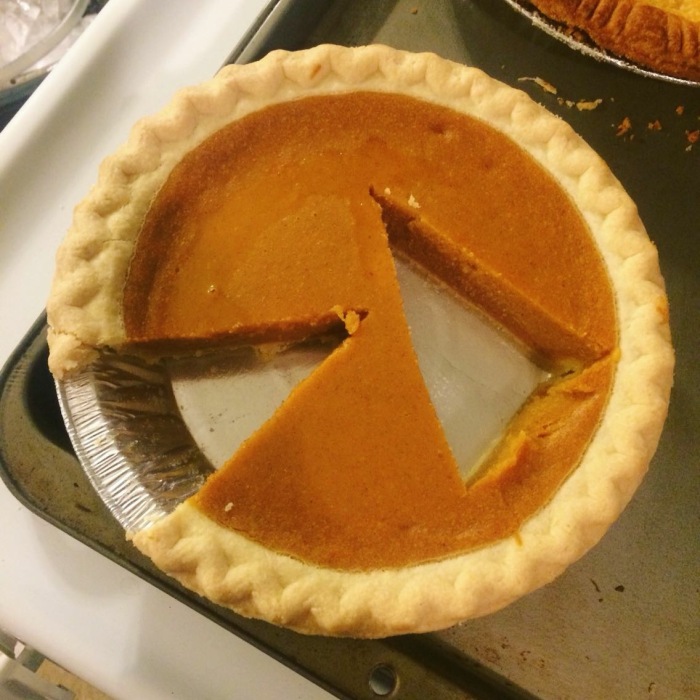
Description: School choice is less an education policy than a propaganda effort. Most people don’t understand what it really is. They don’t understand how essentially selfish it is like cutting a piece of pie from the middle of the dish so no one else can get a whole slice. I tried here in the most simple, direct language I could to explain why.

Fun Fact: With the nomination of Betsy DeVos for Education Secretary and Trumps’ promise to spread school choice across the land like a Trump University franchise, the article remains popular. A lot of readers told me that it helped make sense of the issue for them for the first time. No doubt it’s been sent to policymakers across the nation. And it all started when I saw that picture of a ruined pumpkin pie on Reddit. I started to think – isn’t that a lot like school choice?


1) Top 10 Reasons School Choice is No Choice

Published: JanuaryLittleKidThumbsDown

Views: 77,139

Description: Both Democrats and Republicans love school choice. So I thought that real education advocates needed a quick list of the main reasons why it is bad policy. There’s nothing really new or amazing here. We’ve known this for decades, but this keeps getting brought up again and again like zombie legislation. The wealthy will push this forward whether we want it or not. There’s just too much money they can make if it passes. That’s why it’s good to know why what they’re peddling is so harmful to students, parents and communities. Consider it ammunition for quick come backs.

Fun Fact: I wrote this long before the Trump administration was a prospect to be taken seriously. This was long before DeVos or the Donald pledged to bring this to the national stage. It has continuously gotten a steady flow of hits since it was published. If my goal as a blogger is to be useful, I think this post more than any other written this year fits the bill. You can quibble with one or two points here, but all ten are enough to show any rational person why school choice is no choice.

The Ongoing Resistance to Trump, Neoliberals & Anyone Else Trying to Destroy Our Schools

screen-shot-2016-12-21-at-2-12-26-pm 


“Most of the important things in the world have been accomplished by people who have kept on trying when there seemed to be no help at all.” —Dale Carnegie


“It always seems impossible until it’s done.”

-Nelson Mandela


Buck up, Education Activists.


I see that hopeless look on your faces. I see it because it’s the same look reflected back at me in the mirror every morning.


Donald Trump will be our next President, and he’s filling his cabinet with people who are determined to destroy the very offices where he’s putting them in charge.


His Education Secretary doesn’t believe in public schools. His Labor Secretary doesn’t believe in worker’s rights. His Housing chief doesn’t believe in public housing. His head of Environmental Protection doesn’t believe in protecting the environment. Heck! You pick a department and he’s found someone to lead it who doesn’t believe in doing that job!


And to top it all off, he’s got a literal white supremacist as his chief strategist.


But you know what? I’m not scared.


You know why? Because I’m still here.


Seriously.


The forces of greed and ignorance have been salivating all over the prospect of destroying public education for decades, and they haven’t been able to do it.


We’re still here. In almost every municipality, district or borough, our public schools remain open.


Sure, they’re a bit worse for wear in some neighborhoods. But despite billions of dollars being spent to crush them under foot, we survive to fight another day.


And that day is today.


Why should we despair when we behold the glass menagerie of fools Trump has assembled to populate his administration? Glass breaks.


Why despair when hearing the tired rhetoric of Nazi Germany and the Jim Crow South coming out of his mouth? We defeated both! We can do so again.


Take Betsy DeVos, Trump’s pick for Education Secretary. She’s a religious fanatic who’s dedicated her life to destroying public schools.


I’m not scared of her. We just fought off Arne Duncan and John Kingtwo of the Democrats Ivy League privateers who actually knew what they were doing! If we can stop those jackholes from giving away community schools to rich corporations, we can take this rich Republican lady who never held down a real job and only knows how to get her way by bribing people to do her bidding.


Sorry, Miss Betsy, but your school vouchers aren’t driving my family out of our neighborhood school so my kid can be taken advantage of by multinational corporations and Christian Cult madrasas. We’re wise to your B.S. “School Choice” fantasies.


Then there’s Rex Tillerson, another corporate vampire who’d like to suck our classrooms dry. The Exxon CEO and Trump’s pick for Secretary of State is a climate denying gasoline peddler who’s dimwitted enough to think he knows everything. Drawing on his zero years of experience with children, he actually said aloud that struggling students were “defective products” as if they were irregular widgets being pressed out on the assembly line and unfit for service at his service stations.


I’m not worried about that gashole. He’ll be too busy enriching himself in backroom deals with foreign leaders to pay much attention to our schools. He’s no threat.


Okay. I’ll admit Steve Bannon makes my skin crawl. Trump’s picked a literal neo-Nazi propagandist as chief strategist, an alleged wife beater who apparently thinks black people don’t necessarily deserve the right to vote. Well, my grandfathers taught me how to deal with jackbooted Eurocentric thugs. Bannon can goosestep his way back to Brietbart and take his orange-faced Reality TV star Commander in Chief with him.


Look, Trump is a monster and he’s assembling a cabinet of monstrosities to back him up. But that doesn’t make him scary. The best way to fight monsters is to turn on the light. And we have the brightest light of all – the light of knowledge, experience, and wisdom.


We’ve been doing it for the past 8 years with the Democrats, people who were supposed to be our friends and allies. You think it’ll be harder with GOP nitwits declaring themselves our enemies!?


For all the cosmetic ways the Obama Administration was better, they were almost as enthusiastic about boosting privatization and making sure every child had a standardized test that was written above their level and biased towards rich white kids. All their talk about championing civil rights didn’t stop them from closing poor black kids schools and forcing them into unaccountable charter operations that often provided fewer services, achieved dismal academic results and boosted racial segregation. All their talk about equity didn’t result in any more funding for minority children – only more Common Core, unqualified Teach for America temps and testing, testing, testing. Yet their donors in the standardized testing, publishing and privatization industry raked in obscene profits.


I’m sorry if this hurts some people’s rosy-eyed view of politics, but Obama was no friend to education. Plutocracy isn’t just a practice on the other side of the aisle. The Democrats are almost as beholden to their corporate masters, and like good servants, they do what their rich donors tell them to do.


This isn’t news to us. We’ve been on the outs before. In fact, we’ve never been on the ins.


Donald Trump? Shit! We lived through an administration that wanted to destroy us and actually knew how to do it! We can take Tiny Hands, the Bankruptcy King any day! This is a guy who couldn’t make a profit running casinos – you know, a business where the house always wins! You expect us to cower in fear that he’s going to take away our schools. Son, we’ve fought better than you!


We just need to stop, take a deep breath and re-energize ourselves.


We need a moment of rededication, time to size up our newest antagonists, and prepare for the battles ahead.


Yes, we’re surrounded on all sides. But it’s never been any different.


Yes, we don’t have any political party that supports us. So we’ll either take over the Democrats or build our own legislative network.


I don’t mean to minimize the threat. Trump represents a clear and present danger to our nation, our people and our schools. But we represent a clear and present danger to him. He hasn’t even been sworn in yet and the clock is already ticking. He’ll be lucky to last four years in the ring with us.


So in that spirit, I offer the following advice. And not just to you, my brothers and sisters at arms. I’m speaking to that broken down father, teacher and activist in myself, too.


Chin up, Bucko. We aren’t done yet. Not even close.


Together we can win this fight. We’ve been doing just that for years.


We have nothing to fear from Trump. He and the neoliberals have much to fear from us.


“Fate whispers to the warrior ‘You cannot withstand the storm.’ The warrior whispers back ‘I am the storm.’ ”

– unknown


“If you want to make a permanent change, stop focusing on the size of your problems and start focusing on the size of you!”

T. Harv Eker

Don’t Be Fooled: Betsy DeVos Still Loves Common Core

screen-shot-2016-12-13-at-8-00-56-pm

Poor Betsy DeVos.

President-elect Donald Trump’s pick for Education Secretary has spent her entire adult life advocating for Common Core, but now she has to pretend like she doesn’t like it.

In fact, if you point out any of the multiple projects that she supports boosting Common Core, the multi-billionaire Republican mega-donor will probably say you’re promoting “fake news.”

But facts are facts.

She’s a board member of Jeb Bush’s pro-Common Core think tank, Foundation for Excellence in Education, where she hangs out with prominent Democratic education reformers like Bill Gates and Eli Broad. But she says that somehow doesn’t mean she likes it.

She founded, funds and serves on the board of the Great Lakes Education Project (GLEP), an organization dedicated to the implementation and maintenance of Common Core. But somehow that doesn’t mean she’s for the standards.

She’s even spent millions lobbying politicians in her home state of Michigan asking them NOT to repeal Common Core. But somehow that doesn’t mean she’s in favor of it.

It must be a hard position to be in.

Her entire nomination for Trump’s cabinet is contingent on convincing the public that she hates this thing that he explicitly campaigned against but she favored.

Rarely has an education policy been such a political hot potato as Common Core. Typically Republicans hate it and Democrats love it. However, little of this has to with its actual merits – or lack thereof.

Common Core is a set of academic standards saying what students should know in each grade. Nonetheless, these standards are deeply unpopular with teachers, students, parents and the general public. Part of this stems from the undemocratic way state legislatures were bribed to enact them by the Obama administration in many cases before they were even done being written and often circumventing the voting process altogether. Other criticisms come from the way the standards were devised almost entirely by standardized test corporations without input from experts in the field like child psychologists and classroom teachers. Finally, the standards get condemnation for what they do to actual classrooms – narrowing the curriculum, promoting excessive test prep, increased paperwork, the purchase of new text and work books and requiring new and more unfair standardized assessments.

As a Republican, DeVos must do everything she can to distance herself from this policy.

It’s just that her history of advocating for it gets in the way.

She even acknowledges it.

When she was nominated by Trump, one of the first things she did was publish a statement on her Website explaining how very much she hates Common Core – despite appearances to the contrary.
“Have organizations that I have been a part of supported Common Core? Of course. But that’s not my position,” she says on her Website.

And it makes perfect sense. How many times have you, yourself, given millions of dollars to a cause that you don’t support? Who hasn’t founded an organization called “I Love Apples” because of your deep hatred for the fruits?

It’s kind of like Colonel Sanders admitting that he doesn’t actually approve of people eating fried chicken. Or maybe Milton Hershey supporting a ban on chocolate.

Yeah… That’s not going to convince anybody.

What DeVos needs is a new narrative, a new story to tell people to convince them that she’s really and truly against Common Core. And at Trump’s victory rally in Grand Rapids, Michigan, on Dec. 9, she tried it out on the crowd.

“It’s time to make education great again in this country…” she told the crowd. “This means letting states set their own high standards and finally putting an end to the federalized Common Core.”

Ah! So it’s not Common Core, per se, that she’s against. She’s against FEDERALIZED Common Core.

Shoddy academic standards designed by non-educators are just fine so long as they don’t come from the federal government? Academic standards that are developmentally inappropriate are okay if Big Brother didn’t force you to adopt them?

Well, apparently.

DeVos doesn’t want a world without Common Core. She wants one where the Core isn’t tainted with federalism. If the states somehow magically decided all by themselves that these exact standards were just peachy, that would be fine with her. It’s just that we can’t let the Feds tell us what to do.

In my book, that’s still being in favor of Common Core.

Moreover, it’s terribly disingenuous because not so long ago, DeVos’ organization, GLEP, was trying to convince people that Common Core actually wasn’t federal at all. In fact, that’s why the organization favors it.

According to GLEP’s Mission statement, one of its priorities is:

Implementing the Common Core State Standards (CCSS)
This is a state-driven effort to create a strong and consistent framework which will make our students internationally competitive. 45 states (including Michigan) have adopted the CCSS.”

Which begs the question – if Common Core isn’t federal, what does DeVos think is wrong with it?

Answer: Nothing!

This is the kind of wordplay you expect from Democratic apologists. You hear the similar things from Gates, David Coleman or even Hillary Clinton. It’s political rebranding: We don’t support Common Core so much. We support “high academic standards” that will ensure kids are “college and career ready.”

It’s all just double speak and spin.

In reality, establishment Democrats AND Republicans support Common Core. It’s just regular folks like you and me who hate it.

You don’t believe me? Then ask yourself this: in the more than 30 state legislatures controlled by Republicans, why haven’t they repealed Common Core already?

Seriously. They could legally get rid of Common Core in more than half of the country tomorrow, but they don’t. Why? Answer: People like DeVos.

In Michigan, Republicans control the legislature. When lawmakers were debating if they should implement Common Core in the first place, DeVos and GLEP lobbied to move forward and won. Then in Spring of 2015, lawmakers considered two bills to repeal and replace Common Core. DeVos partnered with Governor Rick Snyder (a Republican) and the Michigan Coalition for Higher Standards to oppose both bills.

If that’s not being in favor of Common Core, I don’t know what is.

From my point of view, the rest of her educational ideas are little better. She supports school vouchers and increasing charter schools.

These are terrible ideas for reasons I have enumerated here and here. But even if you’re in favor of them, imagine what a pro-Common Core Education Secretary could do with a national school choice program.

If federal tax dollars are going to follow students to parochial and private schools, DeVos could make adopting Common Core a prerequisite to getting those monies.

Certainly she’ll call it something else, but it will be almost the same academic standards, freely chosen, because if you don’t, you won’t get any of this delicious tax money. Don’t forget, this is similar to why we have Common Core in the public schools – we were bribed.

That’s what the Department of Education has done for the last few decades. It tries to encourage education policy at the state level by offering tax money if you do its bidding.

If the federal government was offering money to do things everyone supports like expanding pre-K programs or after school tutoring, that would be fine. But the federal government has been pushing an agenda on our schools – I think that’s bad no matter which political party does it.

Common Core is big business. It has generated obscene profits for the testing and publishing industry. Likewise, school privatization is a great way to get rich – reducing regulations and offering free tax money to any private or charter school operator! It’s manna from heaven for every flim-flam man and con artist from here to Syria.

Trump knows something about defrauding students. He ran his own fake business school, Trump University. Just imagine how much money he and DeVos can make for themselves and their billionaire buddies with the education reforms being proposed!

And worst of all, at the end of the day we still won’t be rid of Common Core. It will just expand into new markets – I mean, schools.

So if you support DeVos, fine. But don’t delude yourself into thinking she’s against Common Core. She still loves it just as much as she ever did.


screen-shot-2016-12-11-at-8-25-59-pm

What Diane Ravitch Means To Me

img_6050

Am I crazy?

That’s what many of us had been wondering before we read Diane Ravitch.

As teachers, parents and students, we noticed there was something terribly wrong with our national education policy. The Emperor has no clothes, but no one dared speak up.

Until Diane Ravitch.

We were told our public schools are failing – yet we could see they had never done better than they were doing now.

We were told we should individualize our lessons – but standardize our tests!? We were told teachers are the most important factor in a child’s education – so we need to fire more of them!? We were told the best way to save a struggling school – was to close it!? We were told every child has a right to a quality education – yet we should run our schools like businesses with winners and losers!?

It was absurd, and the first person to question it was Diane Ravitch.

In doing so, she saved many people’s sanity, she saved a generation of students and educators, gave parents clarity and direction, and she started a social movement fighting against the preposterous policies being handed down from clueless businessmen and bureaucrats.

This weekend the Network for Public Education will honor Dr. Ravitch at a dinner on Long Island for her tireless work fighting against this corporate school reform.

I wish I could be there in person to tell her what she means to me and others like me. Instead I offer this modest tribute to a person who changed my life and the lives of so many others.

I was a different person when I read “Life and Death of the American School System” back in 2010.

I had been in the classroom for about seven years, but I was just starting to feel like a real teacher.

I had just completed my National Boards Certification and felt like I wasn’t just surviving with my students anymore but could actually make intelligent decisions about how best to educate them.

And a big part of that was Dr. Ravitch’s book.

For a long time I had noticed that things weren’t as they should be in public schools.

I had put in a great deal of work to get my masters in teaching, to engage in hundreds of hours of professional development, not to mention three to four extra hours every day at the school passed dismissal time doing tutoring, leading extracurricular activities, grading and planning for the next day. I spent hundreds of dollars every month buying books, pencils, erasers, even snacks and meals for my students. Yet the school still treated me – it treated all of us – like greeters at WalMart.

We were highly educated, highly dedicated professionals but our opinions were rarely sought on policy matters. We were the experts in our fields and in our students who we saw everyday more than many of their own parents. Yet we were told where to be and when, what to teach and how long to teach it. We were told how to assess the success of our students and ourselves. And we were told how to best remediate and what else we should be doing that we never had time to do.

Was I really such a failure, I remember thinking. I work hard with my students everyday, see them make tremendous strides and still the standardized tests say it isn’t enough. What was I doing wrong?

Then I read Diane’s book and saw the whole thing from a different perspective.

It wasn’t me that was wrong. It was the system.

It wasn’t the students that were failing. It was the tests that didn’t assess fairly.

It wasn’t the schools that were deficient. It was the way they were resourced, valued and set up to fail by government and industry.

That book and its 2013 sequel, “Reign of Error,” really opened my eyes. They did for many people. Without them, I’m not sure I would still be a teacher today. I’m not sure I could have kept at it thinking that my best efforts could never be enough, that my exhaustion, my fire, my skills would never bridge the gap.

Diane Ravitch put it all in context of the social and historical struggle I had learned about, myself, in high school. I was engaged in the good fight for the civil rights of my students. Brown vs. Board wasn’t just a story in some textbook. I could see how the outmoded excuse of “separate but equal” was still being given today in my own increasingly segregated school and segregated workplace. Why was it that most of my academic students were poor and black? Why was it that the honors kids were mostly upper middle class and white? Why was it that my school situated in a poorer neighborhood was crumbling and the school a few blocks over in the richer neighborhood looked like the Taj Mahal by comparison? And why was it that teachers in my district got $10-20,000 less in their paychecks with the same experience than those in the wealthier community?

Dr. Ravitch made sense of all of that for me. And it made me very angry.

When colleagues came to me to discuss how they wished we had merit pay, I could turn to her books and see how it was a trap. When students came into my classroom after being kicked out of the local charter school, I had an explanation for why they were so academically behind their peers. And when contrarians complained about our union dues and wondered what they were getting in return for their money, I could give them an intelligent answer.

Diane Ravitch gave me the light that made sense of my whole professional world. I had been living and working in it for years, but I never really understood it before. And that gave me the courage to act.

When my state legislature cut almost $1 billion from K-12 education, armed with her books and blogs, I volunteered to lead educators in social actions against them. I sat down with legislators asking them to help. And when they refused, I knew we could protest outside their offices, make noise and the story would get to the media.

Ultimately it didn’t convince the legislature to heal all the cuts, but it helped minimize them, and when the next election cycle came around, we sent the governor packing.

I read Diane’s blog religiously and through her found so many other teachers, professors, parents, and students whose stories weren’t being told by the mainstream media. In fact, whenever so-called journalists deigned to talk about education at all, they rarely even included us in the conversation. So I started my own blog to give voice to what I was seeing.

Through Diane I found a community of likeminded people. I found other teachers on social media who were standing up for their students and communities. I found the Badass Teachers Association and joined and acted and was invited into leadership. We all loved Diane Ravitch and apparently she loved us, too. She became a member, herself, and encouraged us to keep fighting.

Then with Anthony Cody she started the Network for Public Education where even more educators from around the country joined forces. I went to the second annual conference in Chicago and got to meet her in person.

I’ll never forget it. There were hundreds of people gathered together, and she was just standing in the hall talking with a small group. I said to myself, “Oh my God! That’s Diane Ravitch! She’s right there! I could go up and talk to her!”

I looked around and everyone else standing with me had the same look like we’d all been thinking the same thing. Somehow I mustered the courage to walk up to her.

They say you should never meet your idols, but I’m infinitely thankful I didn’t listen to that advice. Diane was eminently approachable. Here I found that same voice I had read so many times, but also a generosity and a goodwill you couldn’t get from the page alone.

She knew who I was, had read my blog and asked me to send her more of my writing. I couldn’t believe it. I thought she was just being polite, but she gave me her email address. I sent her a few articles and she published them on her own site.

Since that day I’ve talked with Diane a few times and she’s always the same. Her intelligence is combined with a boundless empathy and insatiable curiosity about people and ideas. She really cares to know you, to hear your story and to help if she can.

When I had a heart attack about a month ago, she sent me an email telling me to take care of myself. She suggested I change my diet and exercise before confiding that she was having trouble doing this, herself.

Who does that? I’ve never experienced anything like it. I’ve read authors before and maybe written to them, maybe even had them write back. But I’ve never met someone like her who’s actually cared enough to relate to me as an equal, as someone who is important enough to be taken seriously.

In the media, talking heads will sometimes criticize her for changing her mind, because she did do an about face. She had once been Assistance Secretary of Education under President George H. W. Bush where she advocated for standardized testing and the corporate model in education. But when she saw what that really meant, she changed her mind.

To the media, that’s a defect, but to me, it’s a strength. It’s how we learn. We come up with a theory, we test it and if it doesn’t work, we come up with another one. Her philosophy of education is a response to the real world.

That’s what teachers do everyday. We try to reach our students one way and if that doesn’t work, we try something else.

Perhaps that’s really why so many educators have embraced her. She’s like us – a passionate, compassionate empiricist.

I can’t say enough good things about her. I can’t put into words how important Diane Ravitch is to my life. Her ideas changed me. Her ethics invigorated me. Her friendship humbles me.

I’d love to be there this weekend to say all this to her, but I really don’t need to make the trip. Diane Ravitch is always with me. She is in my heart every day.

I love you, Diane.

The Essential Selfishness of School Choice

img_5992

Say your friend Sheila invites you over to her house.

Sheila has just made a fresh pumpkin pie.

She offers you a slice.

You politely refuse, but she insists. She hands you the knife so you can take as big a piece as you like.

You start to cut and then ask, “Does it matter where I cut from?”

Sheila says, “No. Take whatever you want.”

You don’t like crust, so you cut a perfect triangle piece from the middle of the pie.

Sheila’s face reddens.

This wasn’t exactly what she meant, but what is she going to do? You took your slice, and now the rest of the pie is ruined. No one else can take a whole piece. Your choice has limited everyone else’s.

That’s what school choice does to public education.

It privileges the choice of some and limits the choices of others.

Advocates say parents should be able to choose the school their children attend.

And parents today do have many choices. About 90% send their kids to traditional public schools. Others home school, pay for private schools or opt for charter or voucher schools.

The problem comes with these last two options. In both cases, tax money meant to help all children is siphoned off for just one child. In the case of vouchers, tax money goes to pay part of the tuition at a private or parochial school. In the case of charters, we’re diverting tax money to a school that’s public in name but privately run.

That means less money for traditional public schools and more money for privately run institutions. That’s really what school choice is – a way to further privatize public schools.

Why is that bad?

3075829749_0ef3a3692c_z

First, it increases the cost and reduces the services for everyone.


Public schools pool all the funding for a given community in one place. By doing so, they can reduce the cost and maximize the services provided. One building costs less than two. The same goes for one staff, one electric bill, one infrastructure, etc.

When you start adding additional layers of parallel schools, you increase the costs even if you somehow divided the children evenly between the two systems (which hardly ever happens). You buy less with the same money. That translates to fewer services for the same kids, larger class sizes, narrowed curriculum, etc. Why? So that parents could choose School A or School B. So that privatizers get a bigger slice of the pie – right from the middle.

3075829749_0ef3a3692c_z
Second, each type of school has different goals.


Public schools are designed to educate. Corporate schools are designed to profit. Those are their very reasons for existing. It’s built into their DNA and is reflected in the way they’re administrated.

By law, public schools are not for-profit. They pay for goods and services, but at the end of the day, they aren’t beholden to shareholders or investors. They don’t need to bring in more money than they spend. All they have to do is educate children, and if they somehow end up with extra money at the end of that process, that money is bound by law to be reinvested as savings for next year.

Charter and voucher schools are not so constrained. Their reason for being is not education – it is profit. Where they can, they will cut services for children and reduce quality so that they can increase the bottom line. Even a casual glance at the news will show you a plethora of charter and voucher school scandals where privateers have stolen millions of dollars of taxpayer money instead of educating. To return to the dessert metaphor, they don’t care what their slice does to everyone else – they only care about the size of the slice.

3075829749_0ef3a3692c_z

Third, charter and voucher schools aren’t as accountable as traditional public schools.


Each type of school is supported by tax money. Therefore, each school should be held accountable for spending that money wisely. But the rules are radically different for public schools vs. choice schools.

Public schools have elected school boards made up of taxpayers from the community. Choice schools often do not. They are run by appointed boards who are only accountable to investors. Public schools are required to be transparent. Their documentation, budgets and meetings must be available to the media and community for review. This is not true of privatized choice schools.

If taxpayers are unhappy with the way a traditional public school is being run, they have multiple options for changing it. With choice schools, their only option is to withdraw their child. And in the case of taxpayers who do not have children in the system at all, they have no recourse at all. This is fiscally irresponsible and amounts to taxation without representation. This alone should be enough to make any true conservative withdraw support – however ideology has trumped logic and reason. Not only do they ruin the pie, they get to do so in secret.

3075829749_0ef3a3692c_z

Fourth, school vouchers rarely cover the entire cost of attending private schools.


They end up subsidizing costs for rich and upper middle class students while keeping away the poor. As such they create a system of cultural and racial education segregation. They create tiers of schools – the public schools being only for the poor, cheaper private schools for the middle class and expensive private schools for the rich.

This is not the best way to educate children. It is not the best way to organize a society. It entrenches social and class differences and builds in entitlements and racism for the wealthy. Surely our public schools have become more segregated even without vouchers, but that is no reason to make the situation exponentially worse. The size and placement of one’s slice shouldn’t depend on the color of your skin or the size of your bank account.

3075829749_0ef3a3692c_z

Fifth, all schools are not equally successful.


Though the media would have you believe otherwise, traditional public schools do a much better job of educating children than charter or voucher schools. Some choice schools have better outcomes, but the majority do no better and often much worse than traditional public schools. Moreover, children who continually move from school-to-school regardless of its type almost always suffer academically.

So when parents engage in these choice schemes, they often end up hurting their own children. The chances of children benefiting from charter or voucher schools is minimal. You can cut a slice from the center of the pie, but it’s likely to fall apart before you get it on a plate.

our-best-traditional-pumpkin-pie-ss

So in summary, school choice is essentially selfish. Even in cases where kids do benefit from choice, they have weakened the chances of everyone else in the public school system. They have increased the expense and lowered the services of children at both types of school. They have allowed unscrupulous profiteers to make away with taxpayer money while taxpayers and fiscal watchdogs are blindfolded. And when students return to their traditional public school after having lost years of academic progress at a substandard privatized institution, it is up to the taxpayers to pay for remediation to get these kids back up to speed.

Choice advocates talk about children being trapped in failing schools, but they never examine what it is about them that is failing.

Almost all public schools that are struggling serve impoverished students. That’s not a coincidence. It’s the cause. Schools have difficulty educating the poorest children. Impoverished children have greater needs. We should be adding tutoring, counseling and mentor programs. We should be helping their parents find jobs, providing daycare, healthcare and giving these struggling people a helping hand to get them back on their feet.

But instead we’re abandoning them. Most impoverished schools serving poor children receive less funding than those serving middle class or wealthy populations. In other western countries, it’s just the opposite. They provide more funding and resources for poor students to meet their greater needs.

School choice ignores all of this. If I may momentarily switch metaphors, instead of fixing the leak in our public school system, advocates prescribe running for the lifeboats. We could all be sailing on a strong central cruise-liner able to meet the demands of a sometimes harsh and uncaring ocean together. Instead we’re told to get into often leaky escape craft that even under the best of circumstances aren’t as strong as the system we’re abandoning.

And the reason is profits.

Have you ever noticed that the overwhelming majority of school choice proponents are rich white people?

Many of them own charter school companies or otherwise invest in the field. They aren’t advocating a policy to help children learn. They’re enriching themselves at public expense. Sure they point their fingers at union teachers making a middle class wage. Meanwhile these choice advocates rake in public money to buy yachts, condos and jewelry.

Make no mistake – school choice is essentially about selfishness. At every level it’s about securing something for yourself at the expense of others. Advocates call that competition, but it’s really just grift.

Public education is essentially the opposite. It’s about ensuring that every child gets the best education possible. Yes, it’s not perfect, and there are things we could be doing to improve it. But it is inherently an altruistic endeavor coming from the best of what it means to be an American.

We’ve all got choices in life. The question is what kind of person do you want to be? A person who takes only for his or herself? Or someone who tries to find an option that helps everyone?

pumpkin-pie

MythBuster: Do We Have a “Government-Run Education Monopoly”?

screen-shot-2016-11-22-at-11-48-57-pm


“There’s no failed policy more in need of change than our government-run education monopoly, and you know that’s exactly what it is.”

With these words, candidate Donald Trump unleashed his K-12 education policy at a campaign stop in September, two months before winning the general election.

In the speech, the former reality TV star and current President-elect vowed to spend $20 billion in federal tax dollars to encourage more charter and voucher schools nationwide.

It remains his most concrete executive policy offering to date. Yet it’s based on this characterization of public schools as a “government-run education monopoly.”

One wonders – is it true? Do we really have such a thing here in the U.S. or is it just propaganda to boost an unpopular education scheme?

The devil, it seems, is in the details.

The answer is both yes and no: Yes, public schools are government-run. No, they’re not a monopoly.

First, let’s consider “government-run.” Everything the government does from paving the roads, to delivering mail, to protecting us from invaders is “government-run.” The military is government-run. Would you rather a foreign power tell our soldiers what to do? Congress is government run. Would you rather big business come in and decide all our laws?

In that same spirit, yes, our public schools are indeed government run. But who else should run them? Russia!? The Mafia!? A media cabal?

In emphasizing the role of government in education, Trump appears to be trying to stoke the fires of anti-government sentiment. There is certainly a lot of that going around, deservedly so given the way the federal government has encroached on the states, the states have encroached on local government, etc.

However, public schools are not essentially federally-run schools, nor are they state-run schools. They are subject to federal and state mandates, but the major decisions about what happens in your neighborhood schools are made by your duly elected school board. They are not controlled by some nameless, faceless government bureaucracy. They’re controlled by you, your friends and neighbors – people you voted for and who are held accountable every few weeks at open meetings.

That, too, is government.

It’s not Big Brother. It’s Howdy Neighbor.

Let’s turn now to the “Monopoly” part.

A monopoly is the complete control of the supply or trade in a commodity or service. To put it in terms of the titular Parker Brothers board game, you have a monopoly when you own both Boardwalk and Park Place – you’re in control of what happens to all the dark blue properties. However, if you don’t have titles to BOTH, you don’t have a monopoly, and therefore can’t buy houses, hotels or charge double the normal rent.

Therefore, there is no education monopoly – no one has complete control of all the various kinds of schools. There are private schools, home schools, magnet schools, charter schools, even voucher schools. No one owns them all, no one tells them all what to do.

Yes, you could say that the overwhelming majority of them are public schools, but so what? That’s not a monopoly. There are far more personal computers out there than Macs. That doesn’t mean PCs have a monopoly on the field.

Once again, the term “monopoly” is meant to stir anti-government sentiment. We are meant to balk at the degree to which government – local government – is in control of our education system.
I’m sorry, but there is nothing objectionable about schools being controlled at the local level.

Are you upset by federal intrusions in school policy? Me, too.

Are you reeling about unfunded federal mandates? Me, too.

Are you angry about states sweeping in and stealing local control from impoverished inner city parents? Me, too.

But I’m just not one bit upset about being allowed a say in how my tax dollars are spent at my community school district. If you ask me, that how things SHOULD BE.

But Trump is proposing we change it. He’s proposing exactly the same kind of federal intrusion that drove many of us up the wall when it was done by President Barack Obama.

Obama used the Department of Education to bribe cash-strapped states into adopting Common Core. And now Trump wants to do the same thing with charters and voucher schools.

Excuse me, but it’s not the federal government’s job to dangle money in front of state legislatures with strings attached. The Department of Education is supposed to ensure all schools have adequate funding. It’s not supposed to tell us how we should be running our schools unless we’re breaking the law or violating students civil rights.

But what about parental rights? Shouldn’t parents be allowed to choose a school for their own children?

Heck no.

Hear me out. When you fall down the steps in your home alone, do you get to choose which governmental service comes to help you, or do you just call 9-1-1? When you need the police, do you get to choose officers from halfway across the state or make do with your local boys in blue? When your house catches on fire, do you shop around or call the nearest fire station?

It’s called a community for a reason. You’re a part of it, for better or for worse.

Our grandparents never thought they were so entitled they could pick and choose what governmental service should meet their needs. They joined the army, not Blackwater. They called the fire department where they volunteered. And they sent their kids to the local public school.

Yes, some public schools are better than others – which is just another way of saying that some are better funded. THAT is a problem we need to fix at the local, state and federal level. That’s something the President and Congress and our Governors and our state legislatures should actually be working on. But instead of meeting the real needs of their constituents, they’re too busy with all this choice nonsense.

Why? It’s a scam.

We’re talking Donald Trump here – founder of Trump University. He just settled out of court for $25 million for a fake business school that defrauded students out of hundreds of millions of dollars. If there’s one thing he knows, it’s a good scam.

Think about it.

Expanding charter and voucher schools, reduces accountability to taxpayers. These “choice” schools rarely are governed by elected school boards. They don’t have to abide by the same kinds of transparency standards as traditional public schools. They can spend our tax dollars in almost anyway they want behind closed doors, and there’s nothing we can do about it. In fact, there have been a rash of high profile scandals where charter and voucher operators have defrauded the public out of millions of dollars.

Who wants to expand that? Criminals!

Not me. I’m a taxpayer. I want a full account of how my money is spent, and most voters are with me.

We didn’t just vote for President a few weeks ago. Many states held referendums on whether to expand charter schools or not. In every case, voters decided against it.

But does Trump care? No way. This proposed school choice policy is yet another example of the federal government ignoring the will of the people in favor of wealthy donors hoping to further enrich themselves at public expense. It opens the door for profiteers to keep stealing our money.

And they justify it by offering a false choice:

Hey parents, they say. Want to enroll your children in a school with little to no accountability, a school you may not be able to afford unless you spend some of your own money in addition to the tuition you get from the state, a school that can turn you down for whatever reason including race, religion or nationality, a school that may very well be no better and often much worse than a traditional public school?

But they spin it, offering slick commercials and preying on the ignorant and hopeless. That weakens the traditional public schools because it means a loss in revenues. Therefore, the public schools get worse, which is a reason for more parents to try the ‘choice’ schools, etc. It’s an endless cycle where students lose but investors in for-profit schools win.

Invariably, it leads to a further social stratification of schools. The rich go to the best schools, the middle class to the middling schools and the poor to the substandard ones. You think we’ve got segregated schools now, wait until Trump’s school choice policies! It’ll benefit the Nazis of the alt-right who want more white flight, but most kids will lose.

Such a policy does not represent the best of America. This country was founded on the principles of working together. We haven’t always lived up to it, but our ideals are ones of shared sacrifice, community and brotherhood. Trump’s education policy is about selfishness and greed.

That’s your real choice. Which will it be?

Why Teaching to the Test is Educational Malpractice

thumbnail_screen-shot-2016-11-03-at-12-20-50-pm

Malpractice is defined as “careless, wrong, or illegal actions by someone (such as a doctor) who is performing a professional duty.”

In some fields it can get you arrested. In most it’s at least frowned upon.
In education, however, it’s encouraged.

In fact, as a teacher, you can be singled out, written up or even fired for refusing to engage in malpractice. You are bullied, cajoled and threatened into going along with practices that have been debunked by decades of research and innumerable case studies.

Take the all-too-common practice of teaching to the test.

Not only do students and teachers hate it, but the practice has been shown to actually harm student learning. Yet it is the number one prescription handed down from administrators and policymakers to bring up failing scores on high stakes standardized tests.

Never mind that those same test scores have likewise been proven to be invalid, racially and culturally biased and inextricably linked with parental income. When the only goal is raising student test scores, what’s a little malpractice between friends?

In this article, I will explain the top five reasons why this policy is harmful. But first, we need to define our terms. There is a multitude of practices that are sometimes called teaching to the test. What exactly are we talking about here?

Assessment expert W. James Popham provides a helpful distinction: “curriculum teaching” vs. “item teaching.” Curriculum teachers focus on the full body of knowledge and skills represented by test questions. For instance, if the test is expected to include questions about decimals, the teacher will cover the full range of knowledge and skills related to decimals so students understand what they are, know how to manipulate them, understand how to use them to solve more complex problems, and are able to communicate about them.

By contrast, item teaching involves narrowing instruction, organizing lessons around look-a-like questions that are taken directly from the test or represent the kinds of questions most likely to be found on the test. In this way, the teacher only provides the chunks of knowledge students are most likely to encounter on exams. For instance, item teachers might drill students on a certain set of vocabulary words that are expected to be assessed rather than employing instructional strategies that help students build a rich vocabulary that best contributes to strong reading comprehension.

To be clear, when we talk about teaching to the test, we’re talking about item teaching. I maintain that there is nothing wrong with curriculum teaching. In fact, that is the preferred method of educating. It is a best practice. The problem is when we resort to endless drills and give students innumerable questions of the exact type we expect to be on the test.

Here’s why item teaching is to be avoided:

1) It Makes the Tests Even More Invalid

As noted, standardized tests are terrible assessments. They do not properly or fairly assess intelligence or academics. However, whatever validity they have is further eroded when schools teach to the test.

The problem is this: if all you want to do is artificially raise test scores, teaching to the test is effective. It works. This is why middle class or wealthier families often pay to enroll their children in a test-prep course before their kids take or retake the SAT exam. It most likely will boost their children’s scores. However, it defeats the purpose of the test, which is to predict academic success in college. All it shows definitively is that these children come from families wealthy enough to provide private tutoring.

I say it “artificially” raises test scores because it is not connected with a similar increase in learning. Students don’t learn more about reading or math from test prep. They learn how to take the standardized math and/or reading tests.

There is even evidence suggesting that real, authentic learning may suffer under these circumstances. But more on that later.

2) It Steals Instruction Time

There are only so many days in the school year. Taking away class time to focus on test prep reduces the amount of time where students are authentically learning. We already take away weeks of class time for the actual assessments. Then many schools take additional time for practice tests. Now we’re losing even more time to teach students how to take the tests.

How much time is lost? According to a report by the American Federation of Teachers, public schools spend an average of 19 days to a month and a half on testing and test prep combined. However, some districts spend much more time on teaching to the test than the average. One school included in the study spent an average of 20 to 40 minutes a day on testing. Moreover, this time increases dramatically in the most highly tested grades and poorest schools.

Taxpayers compensate teachers to teach – not game the system. Students want to learn real skills, not advanced ways to jump through hoops. It can be argued that teaching to the test robs everyone of time that can be better spent.

3) It Dumbs Down the Curriculum

Teaching to the test is not real teaching. Students are not being taught authentic skills. Researchers Lauren Resnick and Chris Zurawsky call it a recipe for bad teaching. “When teachers match their teaching to what they expect to appear on state tests of this sort,” they write, “students are likely to experience far more facts and routines than conceptual understanding and problem-solving in their curriculum…. Narrow tests…can become the de facto curriculum.”

The modern economy is not crying out for the next generation of test-takers. Economists Frank Levy and Richard Murnane warn that all kinds of jobs, but particularly higher paying jobs, increasingly require more complex critical thinking skills and much fewer rote and routine skills. Their 30-year analysis shows a steadily declining demand for workers who are able to do rote tasks and a skyrocketing demand for “expert thinking” skills. Employers want prospective employees with the ability to solve problems that require more than simply following rules or applying old knowledge to new situations. They need workers with complex thinking and communication skills.

In short, teaching to the test greatly reduces the depth of study and turns it into the same kind of mechanical process employers aren’t looking for at the expense of the kinds of skills they demand.

But that’s not all. An over-emphasis on the subjects tested, inevitably narrows the curriculum. Non-tested disciplines receive less attention during the school day. Time is diverted from subjects like physical education, music, and drama so that teachers can provide more instructional time on commonly tested areas like reading, writing and math.

The result is far less well-rounded students who are instilled with the false assumption that certain vital endeavors are meaningless or certainly subordinate to basic skills.

4) It Actually Hurts Learning

Not only does item teaching dumb down what’s being taught, it actually erodes basic skill development even in tested subjects. Explicit instruction in test taking strategies is not educationally neutral. It’s harmful.

For instance, researcher Monty Neill explained how test-taking strategies can erode authentic reading comprehension skills. Standardized reading tests often present students with a long passage followed by several multiple choice questions. One of the most common strategies is for students to read the questions first before reading the passage. In many cases you don’t have to read the passage to answer the question. Even if you do need to read it, the question provides students with a clue that they can look for when skimming the passage for the right answer. However, independent evaluators found that over-reliance on this strategy can lead to children who can find the correct answer on the test but cannot explain what the passage is about. The implication is that there may be a significant number of test wise students who lack the basic skills needed to be successful in higher education.

Additionally, even where tested subjects like reading and math are emphasized, the non-tested areas of these disciplines are underutilized. Reading, for example, isn’t just about passage comprehension. It includes listening and speaking skills that are not assessed on high stakes tests. So students can get advanced scores without having the requisite skills for mastery of the subject.

This is especially important for students going on to college. They will be expected to do many things they were not tested on such as making an oral presentation, conducting a science experiment, or writing a research report. For all the talk of Common Core aligned tests making students “college and career ready,” teaching to the test undermines this goal.

5) It Hurts Morale of Students and Teachers

And then we come to perhaps the worst part: motivation. Young children don’t need a reason to learn. They’re naturally curious and soak up knowledge like a sponge. However, as children mature and enter the higher grades, that natural curiosity can be damaged, dampened and even destroyed with long-lasting effects.

Teaching to the test turns school into a completely extrinsic exercise. It’s a game. Learn how to take the test so you can get a good score – don’t work hard to learn things you really care about. It should come as no surprise then that such emphasis has a negative impact on intrinsic motivation according to Edward Miller and Roberta Tovey’s Motivation, Achievement and Testing. In fact, though test prep gives students the tools to artificially raise their scores, it also can remove the motivation to get good scores in the first place. In short, it undermines the reason kids come to school at all: to learn and self-actualize.

And the damage isn’t limited to students. Item teaching also removes the joy of teaching for the teacher. It exacerbates feelings of frustration and disillusionment with the entire testing process. Wayne E. Wright (2002) documented the effects of high-stakes testing and the increased prevalence of teaching to the test in an inner-city California school. One teacher summarized her frustration with the schools test driven agenda by commenting:

“The most pathetic thing is that up until two years ago, I counseled young people, “Come into teaching. It is a wonderful profession.” Now I counsel them to find something else because this is not the profession I would choose for myself.”

(Wright, 2002, p. 28).

Recommendations and Conclusions

We’ve seen how damaging test prep can be. But does that mean it should never be utilized?

I don’t think there is definitive evidence to make that conclusion. Item teaching is not necessarily bad if done to best effect, under strict control and as minimally as possible. Doing this once or twice probably won’t poison the entire act of teaching, but it also won’t have a dramatic effect on the scores. Perhaps we should adopt a policy of cautious moderation and tread carefully.

However, it is clear that teachers should emphasize curriculum teaching over teaching to the test. Focus on student development of real critical thinking skills and the higher levels of Bloom’s taxonomy. In this way students will be more likely to apply their new cognitive abilities and content knowledge in areas that extend beyond the confines of a particular test. In short, they’ll actually learn stuff – the important stuff – not just how to take a standardized test.

Unfortunately, it’s not that simple. Administrators and policymakers often direct teachers to spend increasing amounts of class time doing item teaching. Almost every state includes hundreds of released test questions for just this purpose. An entire publishing industry exists to create and distribute item teaching materials. This is, in fact, one of the major ways the test companies make their money – make tests so hard kids fail and then sell schools the test prep materials to get students to pass.

What’s needed more than anything is to educate the educators – or at least their bosses. Teachers need to understand how harmful the policies are they’re being directed to undertake. Administrators need to understand that teaching to the test has diminishing returns in the long run. And our policymakers need to wake up and smell the coffee.

Test scores are neither adequate nor sufficient indicators of school success. Students cannot be reduced to numbers and evaluated as if they were produce.

Until we realize that as a bone-deep truth, we will continue to fail students as they continue to fail us. And our teachers will be continually forced to violate their deepest principles in order to stay in the classroom.


ENDNOTES:

Levy, F., & Murnane, R. J. (2004). The new division of labor: How computers are creating the next job market. Princeton, NJ: Princeton University Press.

Miller, E., & Tovey, R. (Eds.). (1996). Motivation, achievement, and testing. Boston: Harvard Education Press.
Neil, M. (2003b). The dangers of testing. Educational Leadership, 60(5), 43-46.
Popham, W. J. (2001, March). Teaching to the test? Educational Leadership, 58(6), 16’20.

Resnick, L., & Zurawsky, C. (2005, spring). Getting back on course: Standards-based reform and accountability. American Educator. Retrieved June 30, 2006, from http://www.aft.org/pubs-reports/american_educator/issues/spring05/resnick.htm

Wright, W. E. (2002). The effects of high stakes testing in an inner city elementary school: The curriculum, the teachers, and the English language learners. Current Issues in Education, 5(5). Online at http://cie.ed.asu.edu/volume5/number5.