Why Care About Other People’s Children

health-kids-smiling

As a vocal critic of charter and voucher schools, one of the most frequent questions I get from readers is this:

“Why should I care about other people’s children?”

One reader put it this way:

“Why should my child’s education and safety have to suffer because of difficult and violent students? …it isn’t my responsibility to pay for a miscreant’s education.”

The question says more than any answer could.

It shows quite clearly that school choice is an essentially selfish position.

That’s why some folks champion privatized education – they only care about their own children. In effect, when a parent sends their children to a charter or voucher school, they are telling the community that they don’t care what happens to any one else’s kids so long as their kids are properly cared for and educated.

It is the root cause of most of our problems in education today and has nothing to do with children. It’s all about adults – adults lacking empathy.

On the one hand, I get it. As a parent, you can’t help but love your child more than anyone else’s. You would beg, cheat and steal to make sure your child has enough to eat, is clothed and sheltered, has everything she needs to succeed in this world.

That’s a position for which few would show any embarrassment. It’s just being human.

But it shouldn’t also mean that you don’t care at all for other children.

I’d like to pose a radical thought – loving my child does not mean I’m indifferent to yours.

Children are innocent. They haven’t done anything to earn the hate or enmity of the world. They see everything with fresh eyes. Many of them haven’t even learned the prejudices and ignorance of their parents. And even where they have, it is so new it can be changed.

When you look at a babe in arms do you feel the same indifference? I don’t.

Perhaps it’s just the way we’re built. I feel an immediate nurturing instinct. I want to protect and provide for children – any children – even if they’re not mine.

If you saw a baby all alone crying on the side of the road, would you stop to help her? I would. I couldn’t help it. I can do no other.

If I saw a toddler in distress, a tween, even an unruly teenager in need, I would try to help. And I think most of us would do the same.

Doing so wouldn’t hurt my child. In fact, it would show her how a decent person acts towards others. It would teach her empathy, kindness, caring. It would demonstrate the values I try to instill in her – that we’re all in this together and we owe certain things to the other beings with which we share this world.

Why would you not want to do that?

We do not live in a world where you have to choose between your child and all others. There is a middle course. We can do for all society’s children without unduly sacrificing our own.

And if we can, why wouldn’t we?

Public school is essentially a community endeavor. It is an attempt to give everyone in your neighborhood the same start, the same opportunity, the same advantages.

It means allowing all children who live in the community the ability to attend the community school. That’s better than selecting the best and brightest and to Hell with the rest.

It means the community pooling its wealth to help all students. That’s better than dividing that pool up and pitting one group against another so that some get what they need and others don’t.

It means having an elected school board who holds public meetings, deliberates in the open and has to offer almost all documents to the light of day. That’s just better than an appointed board of directors who hold private meetings behind closed doors and who aren’t compelled to show any documentation for how they’re spending public tax money.

When you send your child to school – any school – she will have to deal with other students. She will meet children who are mean, unkind, unruly and a bad influence. But this is true at all schools – public and private, voucher or charter, secular or parochial. The biggest difference is racial and economic.

Our educational institutions today have become so segregated by class and race that even our public schools offer white middle class and wealthy students the opportunity to learn in an environment nearly devoid of children of color or children who live in poverty. This divide is drastically widened by charter, private and parochial schools.

So when people complain about the class of children they want to keep separate from their progeny, it is always imbued with a racist and classist subtext.

What they mean is: I don’t want my child to have to put up with all those black students, all those brown children, all those unwashed masses of impoverished humanity.

I proudly send my daughter to public school for the same reasons that many withhold their children from it. I want her to experience a wide variety of humanity. I want her to know people unlike her, and to realize that they aren’t as different as they might first appear. I want her to know the full range of what it means to be human. I want her to be exposed to different cultures, religions, nationalities, world views, thoughts and ideas.

And I want it not just because it’s better for my community – I want it because it’s better for her, too.

I want my daughter and I to both live in a world populated by educated citizens. I want us both to live in a society that treats people fairly, and where people of all types can come together and talk and reason and enjoy each other’s company.

Only under the most extreme circumstances would I ever subject her to charter, private or parochial schooling. And things would have to come to a pretty pass for me to home school her.

Imagine! Thinking I could offer my child all the richness of a public school experience, all the knowledge of a district’s worth of teachers, all the variety of social contact – how vain I would need to be to think I could do all that, myself!

Some people want their children to become little versions of themselves. They want to create a generation of mini-me’s who’ll carry on their way of thinking into the future.

That’s not my goal at all.

I want my daughter to share my core values, I want her to learn from my experiences, but I don’t want her to think like me at all. I want her to be a new person, special and unique.

I want her to be her.

If you stop and think about it, that’s what most of us want for our children.

It’s a common goal that can be achieved with a common mechanism.

So why should we care about other people’s children?

Because it’s better for ours. Because doing so makes us better people. Because all children are ends in themselves. Because they’re beautiful, unique sparks of light in a dark universe.

If those aren’t reasons enough, I can’t help you.

Hero of New CW Action Series to be a Charter School Principal

black-lightning-in-costume-in-first-look-of-the-cw-s-new-series


Charter schools are incredibly contentious.


They serve about 7% of American students, but siphon away funding from traditional public schools serving the majority of the population.


They are rife with scandals: Many close suddenly without warning. They often hire teachers without certifications from accredited universities. Administrators have been known to buy yachts and expensive gifts with tax dollars meant to educate children. They cherry pick the easiest students to educate and kick out the most difficult.


And that just scratches the surface!


Why would you want to purposefully set your action adventure series there!?


That’s exactly what the CW has done with its new series Black Lightning.


The network released an extended description for the show today in an announcement for its fall schedule:


“Jefferson Pierce (Cress Williams) is a man wrestling with a secret. As the father of two daughters and principal of a charter high school that also serves as a safe haven for young people in a New Orleans neighborhood overrun by gang violence, he is a hero to his community…”


To which I can’t help but wonder, “WHY!?


Why, CW!? Why put your hero at the head of a charter school?


In the original DC comic book on which this television series is based, Pierce is a principal at Garfield High School in the fictional city of Metropolis.


When the writers moved the setting to New Orleans and made the hero a charter school principal, they were making purposeful changes to the mythology.


Why?


What does it add to the series with the inclusion of this extra detail?


Yes, Jefferson Pierce is African American. It’s about time we have more black super heroes. Marvel did an amazing job with its Netflix show based on Luke Cage, a character also created by writer Tony Isabella.


But charter schools are not uniquely black. The National Association for the Advancement of Colored People (NAACP) issued a moratorium on charter school expansion just last year. The national civil rights organization has been publically critical of charter schools’ impact on children of color since 2010.


Specifically, the resolution states:


“…the NAACP opposes the privatization of public schools and/or public subsidizing or funding of for-profit or charter schools…”


“…the NAACP calls for full funding and support of high quality free public education for all children…”


The resolution goes on to oppose tax breaks to support charter schools and calls for new legislation to increase charter school transparency. Moreover, charters should not be allowed to kick students out for disciplinary reasons.


Yet THIS is where the CW decides to set its Sci Fi/Fantasy series!?


Perhaps the writers wanted to place the action in historic New Orleans, a city that has had almost nothing but charter schools since Hurricane Katrina.


But this is far from a success story.


After one of the worst natural disasters to hit the US in decades, the state fired almost all of its public school teachers, disbanded almost all local public school districts and reopened them as charter schools. New Orleans is now the only nearly all charter school city in the country.


Though supporters claim that this has resulted in increased test scores and graduation rates, the city’s schools cannot honestly be described as having turned around.


The district is still the fourth lowest performing educational institution in the country. Moreover, when compared with traditional public school districts in the state and controlling for factors like race, ethnicity, and poverty, New Orleans charter school students do much worse academically. For instance, on eighth-grade reading and math tests, charter-school students performed worse than their public-school counterparts by enormous margins—2 to 3 standard deviations.


These are the largest gaps between public and charter schools in the nation!


And that’s not all! Before becoming an all-charter district, the city had a substantial amount of teachers of color. Now they’re mostly gone.


This is where your escapist superhero fantasy is taking place?


New Orleans charter schools are notorious for strict discipline policies where students describe feeling like they’re in prison.


You want your hero to be a principal HERE!?


Teachers and parents describe feeling demoralized and ignored. They filed a federal civil rights complaint in 2014 and still pine for the community schools they experienced when they were children.


And this is where you’re shooting your action adventure series?


I can’t help but wonder why the CW would greenlight such an irresponsible drama.


Perhaps Black Lightning will fight to turn his nefarious charter school back into a traditional public institution with an elected school board, public meetings and sensible regulations.


Other than that, I cannot imagine why any sane television network would actively decide to champion school privatization.


In the original comic book, Pierce eventually was made Secretary of Education by President Lex Luthor. Perhaps the CW is drawing a parallel between their hero and our current Education Secretary Betsy DeVos.


President Donald Trump certainly brings to mind the super-villain Luthor – except that Luthor is known for being an evil genius and Trump is only known for one of those things…


But why would you want to associate your superhero with the most unpopular Education Secretary in history. DeVos only got her position after a split Senate confirmation and a tie-breaking vote by Vice President Mike Pence. She has been publicly booed at a graduation ceremony at an all black college where she spoke. Parents and protesters have physically stopped her from entering several schools.


You want us to associate your hero with THAT!?


Full disclosure, I love CW’s superhero line-up. The Flash is delightful Sci-Fi fun. Arrow is escapist vigilante justice. Supergirl is girl power drama. Legends of Tomorrow is time travel fun.


But what the heck will Black Lightning be!?


Moreover, I loved Netflix’s Luke Cage. I think it was one of the best Marvel superhero series – something that transcended the genre and seemed to be addressing authentic social issues like the Black Lives Matter movement, police brutality, etc.


I can’t imagine how Black Lightning would do any of that.


Having a political subtext can elevate a TV show and put it in the center of the cultural zeitgeist. But it has to be done with sensitivity and intelligence.


Having CW’s hero be a charter school principal is a ham-handed nod to school privatizers and equity managers. Audiences want someone who fights for the underdog – not investment bankers.


I just don’t get it, CW.

Tax Cuts Are Theft.

TAX


Ben Franklin famously said that nothing is certain in this world except death and taxes.


But in our modern age, that might have to be amended to read, “death and tax cuts.”


These days, lawmakers on both sides of the aisle can’t figure out how to govern without continually cutting taxes – and invariably the beneficiaries of such largess are the rich.


No one likes paying taxes.


You do a job, earn money and have to give a portion of it to the government.


But no one likes going to the dentist, either. Yet it’s something most adults do because we understand its necessity. We know that ignoring basic dental hygiene and avoiding regular dental check-ups will most likely result in halitosis, mouth pain and the eventual decay of our teeth.


There are similar societal problems with tax avoidance, but we’ve been tricked into willful ignorance.


The rich have paid for an army of economists, libertarians and other would-be thinkers to come up with justifications for avoiding taxation as much as possible.


It’s completely disingenuous. This is prostitution as philosophy. It’s whoring out one’s mental faculties to come up with a smoke screen behind which the wealthy can get away without paying their fair share.


The idea basically comes down to this: taxation is theft.


The government has no right to tax its citizens because it only gets rights from the consent of the governed. People can only give the government rights they already posses. Since they don’t already have the right to tax each other, they can’t give that right to the government.


It’s pure sophistry.


It imagines a mythical world without government and then tells a story about how that government got its power. But few of us have ever lived in a world without government. Neither did our parents or grandparents back through the mists of prehistory. In fact, it is hard to conceive of a time when people existed with no social structure at all from which individuals could then cede rights to a collective group.


And once government exists, each individual citizen owes it a debt. We owe it for all the public institutions from which we benefit. If we went to public school, for instance, we owe it for our education. Even if we were educated privately, we owe it for being able to live in a society where most people are educated since the great majority of those people received that education from public school.


It only takes a moment of reflection to see the complex web of benefits every person receives from society that come from some public services. Think of the inventions funded at least in part by government investment. Think of the safety we enjoy due to law enforcement and the military. Think of the roads and infrastructure that allow us to live at a high standard.


These are all provided by government, and no matter how rich or poor you are, you have benefited tremendously from being a part of it.


As such, you owe that society a certain portion of your income to help support this system.


It’s not exactly complicated. But certain economists make it complicated in a cynical shell game while their masters getaway without paying their debts.


And when they do, who has to make up the difference? You do!


It’s not taxation that’s theft. It’s tax avoidance and – often – tax cuts.


No one gets rich because they’re inherently better than others.


A person worth $500 million is not 500 million times better than a person worth $1. They are both people and equally as valuable. Nor does income equate to how hard someone works. Many billionaires spend their days lounging around the pool drinking piña coladas. Many poor people spend their days scrubbing floors and toilets. The biggest difference between the two is luck.


The wealthy most often are rich merely because they won the lottery of birth or their business ventures succeeded due to pure chance. And even in the rare instances when people made a lot of money because of their intelligence or savvy, that doesn’t justify them being so unequally rewarded by our society compared to those of us without such talents.


If you judge a person solely on his/her bank account, you misjudge the majority of the population.


Some policymakers will acknowledge these points but still insist on tax cuts based on misconceptions and/or lies about how economies work.


They’ll say the United States already has some of the highest taxes in the world. We need to cut taxes to be competitive.


However, this is not true.


In 2014, total US tax revenue equaled 26 percent of gross domestic product (GDP) – well below the 34 percent average for developed countries, according to the Organization for Economic Co-operation and Development (OECD).


Screen Shot 2017-05-12 at 10.08.40 AM


Of all OECD countries, only Korea, Chile and Mexico collected less than the United States as a percentage of GDP. In many European countries, taxes exceeded 40 percent of GDP. But those countries generally provide more extensive government services than the United States.


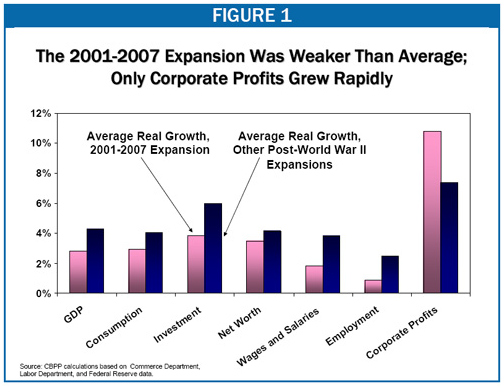
Some will argue that tax cuts are necessary to boost the economy. However, we have countless counterexamples to this popular fabrication. For instance, when President George W. Bush cut taxes from 2001 – 2007, the average annual growth rate was far below the average growth rate for any other period after World War II. In fact, only corporate profits experienced rapid growth. Over all, this expansion was among the weakest since World War II.


Screen Shot 2017-05-12 at 4.11.54 PM


In short, the US is doing a terrible job providing every citizen with the benefits of our society. We are disproportionately rewarding the rich while forcing the rest of us to pay for the services from which we all gain. Moreover, other countries provide even more bang for that buck.


Now this doesn’t mean that the government should tax us all into the ground.

Nor does it mean that the government should spend our tax dollars willy-nilly.


Taxation needs to be fair and spending needs to be regulated.


But constantly cutting rich people’s taxes is immoral. It is unfair to the majority of people making up the difference and struggling to survive when government services lag behind need.


Screen Shot 2017-05-12 at 10.34.01 AM


Our public schools are suffering under strategic disinvestment. Especially in poor neighborhoods that often disproportionately serve people of color, public schools cannot keep up with children’s needs. They aren’t providing an equitable level of service with those schools in richer, whiter neighborhoods.


Our policymakers try to solve the problem with charter schools, vouchers, standardized tests and Common Core. And the results have only been a worsening situation.


The real solution is simple – increased funding through fair increases in taxes on the wealthy.


Tax cuts are popular, but every time we let the rich get away with paying less, we have to either take more from the poor or take the knife to public services.


This affects the poor immediately in the form of reduced services, but it affects the rich, too. They have to live in a world where the majority has less – this means increased crime, increased drug abuse, increased ignorance, etc.


As a society, we must get beyond the selfish urge to look out only for what seems best for ourselves and our immediate friends and families. We must look out for our entire society. We must look out for the needs of everyone in it.


Otherwise, when we fall for these economic fallacies, we’re only stealing from ourselves.

Don’t Trash the Department of Education. Fix It.

thumbnail_Screen Shot 2017-04-26 at 2.52.28 PM

How do you get people to refuse a helping hand?

Answer: Prove to them that it’s not helping.

That’s the strategy of the Trump administration in regard to his cabinet of billionaires. The Reality TV star turned President has nominated a series of out-of-touch and unqualified one percenters to head various federal government agencies.

Rex Tillerson, Rick Perry, Ben Carson – Each of these silver spooned numbskulls was put in place to “prove” to the American public how inane and useless the federal government is – by making the federal government inane and useless.

Nowhere is this more obvious than the Department of Education with its Republican mega-donor turned Education Secretary, Betsy DeVos.

DeVos has spent her entire adult life buying off mostly Republican lawmakers throughout the country to destroy public schools and replace them with charter, private and parochial schools.

She is a self-inflicted cancer on the system, a know-nothing religious zealot who spouts more factually challenged whoopers than Sean Spicer and Donald Trump combined.

But the endgame for putting a person who barely ever walked into a public school in charge of nationwide public school policy is clear – she’s there to demonstrate why the department should be disbanded.

With every idiotic statement, every Unconstitutional policy suggestion – she’s a corporate sponsored demo of why we need to trash this cabinet position altogether.

This has been the conservative dream since President Ronald Reagan. How dare his Democratic predecessor Jimmy Carter create a Department of Education, in the first place! Not only did Ronnie, the B-movie actor turned chief executive, have to defeat Carter, he needed to erase all of his predecessor’s policies. (Sound familiar? [Cough!] [Obamacare!] [Cough!])

And with Betsy DeVos’ help, Trump may finally get to realize Reagan’s dream.

To be fair, President George W. Bush did his fair share to make the department unpalatable. And so did Barack Obama!

Under Carter, the department was an extension of the Elementary and Secondary Education Act (ESEA) of 1965, which tried to bring equity to America’s public schools. However, Bush transformed it into No Child Left Behind, a blatant federal power grab changing the focus to high stakes standardized testing and punishing schools that taught poor children.

Obama took this terrible legislation to its inevitable conclusion and transformed the Department of Education into a bribe factory, dangling federal help before impoverished schools only if these schools would spend it on test prep, edutech software and Common Core. Never mind that these “reforms” don’t actually help children. It was all about helping the corporations behind them.

Much of the modern zeitgeist behind the continued movement to disband the department comes from authentic bipartisan opposition to these changes. The modern Department of Education hasn’t been much of a helping hand for almost two decades. It’s been a cruel taskmaster and a money laundering service for the publishing and testing industry. And it’s overstepped its federal authority coercing states to do as Washington bureaucrats (or at least their wealthy donors) demand.

Add to that the new wrinkle of DeVos – a representative who is all of those things but also transparently self-serving and – frankly – stupid.

No wonder people want to disband the department!

It’s a rallying cry that’s not hard to get behind. Unless you think about it for two minutes.

Because it’s not the Department of Education that’s the problem. It’s what we’ve done to it.

The department has a vital and important role to play in making sure our system of public education serves everyone. Speaking in broad terms, the department should be dedicated to these three things: ensuring public schools are being properly funded, student and parent civil rights are not being violated and to be a repository for national data and research.

These are incredibly important. Right now we have one of the most inequitable school funding systems in the world. The majority of public education funding comes not from the federal government or the states, but from individual communities. If you live in a poor neighborhood, your kids get less education funding. If you live in a rich neighborhood, your kids get more. This is why the nearly 50% of all public school children living in poverty are struggling academically – we aren’t providing them with the resources to succeed.

The state and federal government could be doing something about that. At the federal level, the department of education oversees billions of dollars in grants to poor schools. Admittedly much of that money is tied to standardized testing and other corporate education reforms. We should cut those ties. We should provide help for proven, authentic education practices freely chosen by these districts. That’s something that could have a huge impact on student success. And it’s a project we should expand, not destroy under draconian budget cuts or the closure of the department.

Second, we have to admit that parents’ and students’ civil rights are often in jeopardy. This means special education students seeking an appropriate learning environment and modifications. This means students being discriminated against because of their religious beliefs or lack thereof. This means minority students facing disproportionate discipline policies, unfair grading and/or lack of opportunities offered to other racial or ethnic groups. This means women and transgender students suffering discriminatory dress codes or bathroom policies. In short, it means that someone needs to be the moderator and protector of student and parent rights.

And finally, there needs to be a repository of national student data. This has gotten a negative connotation lately because of Bush and Obama’s incredibly permissive policies allowing edutech companies to collect a horde of student data for economic purposes. Let me be clear: The department shouldn’t be doing that at all. Student privacy should be respected. Computer programs and apps should not collect sensitive information about individual students to be sold to advertisers or used to market products to them.

But there is an incredible amount of aggregate information about student groups collected by the federal government that could be used to help improve the lives of students. This includes information on the racial proficiency gap and the amount of resources provided by states and municipalities. Moreover, we need an impartial entity to fund educational research about which reforms actually help students learn. Relying on corporations to fund research that “proves” the efficacy of their own products is not good science.

In short, disbanding the Department of Education would be a disaster. What would happen to Pell Grants, for instance? What would happen to the bundles of federal money that boost our public schools? Who would make sure states are doing their jobs? Where could we go to find accurate data about how our schools are doing nationally and not just state-by-state?

If we got rid of the department, at best these jobs would fall back on other government agencies that haven’t the funding, staff or ability to accomplish them. More likely, it would result in the elimination of billions of education dollars that the states simply couldn’t (or wouldn’t) replace. Abuses against students on the grounds of civil rights, gender, special education, etc. would skyrocket with little to no recourse. And we would be in the dark about how well we were educating our nation’s children.

I sympathize with those who wish to make government more efficient, but the Department of Education is not a place to make cuts. If you really wanted to close an unnecessary federal department, start with the most recent one – the Department of Homeland Security. Nowhere else is there a more obvious duplication of services and waste of tax dollars to provide a service that was already being provided. But you never hear anyone suggest we close this department because (1) it was proposed by a Republican, and (2) as a nation, we have a broad, bipartisan priority on the safety of our citizens.

If only we had the same for public education!

But we don’t. In fact, many conservatives scoff at the very idea of public schools on the grounds that it’s “socialism” – as if social security, Medicare and a standing military were not!

Too many people have bought into the lie that there is something unAmerican about public school. On the contrary, our system is implicit in our very form of government and the flower of our founding fathers’ thoughts.

The rich and powerful don’t want a robust system of public education because it goes against their interests. An informed, thinking public is harder to control. They especially don’t want minorities or the poor to be well-educated because once people realize how much they’re being exploited, they won’t continue to submit to the status quo.

In short, the Department of Education needs to change. It needs to be revitalized from the ground up. And DeVos is not the person to do it.

However, we shouldn’t let her incompetence make us throw it all away. We need to find ways to agitate, resist and survive the Trump administration while preserving as much as we can of our Democracy – and our sanity – in the process. We need to find and support prospective lawmakers and public servants who will actually represent us, the people, instead of Trump’s billionaire buddies. We need a robust, grassroots movement to take back our government.

And then we can begin the hard work of making our government work for us again. Part of that will involve the Department of Education.

Let’s Hear It For Black Girls!

Natural-Hair-600x398


“Sisters are more than the sum of their relative disadvantages: they are active agents who craft meaning out of their circumstances and do so in complicated and diverse ways.”

-Melissa Harris-Perry, Sister Citizen (2011)


Let’s hear it for black girls!


They are beautiful, bold, irrepressible and – above all – so incredibly strong.


Black girls will outlast any struggle, face down any adversary, and – more often than not – triumph in the face of adversity.


I know. I’m a public school teacher, and many of my best students are black and female.


That doesn’t necessarily mean they get the best grades. Some earn A’s and some don’t. But when it comes to pure willpower and the courage to stand up for themselves, no one beats a black girl.


Those are rare qualities nowadays. Sometimes it doesn’t make these girls easy to have in class. But think about how important they are.


As a teacher, it sure makes your life easier when students do whatever they’re told. But in life, we don’t want citizens who simply follow orders. We want people who think for themselves, people who question directives and do only what they think is right.


In short, we need people who act more like black girls.


As a white male, it’s taken me some time to come to an appreciation of black womanhood. But after about 15 years teaching in public schools serving mostly poor, minority students, appreciate them I do.


Think of the challenges they face and often overcome. Not only are they subject to the same racism as black males, they also have to function under the burden of male patriarchy and the quiet sexism that pervades American society.


According to a study entitled Unlocking Opportunity for African American Girls by the NAACP and the National Women’s Law Center, African-American girls suffer from higher rates of sexual violence and intimate partner violence than white women, high rates of sexual harassment in school, and they are more vulnerable to sex trafficking than any other group.


In addition, more than one-third of black female students did not graduate on time in 2010, compared to 19 percent of white female students. However, there has been progress. Despite a lingering graduation gap, black girls have actually increased their graduation rate by 63% in the past 50 years, according to the National Coalition on Black Civic Participation. Unfortunately, this hasn’t meant they’ve built up more wealth. In 2010, single black women’s median wealth was just $100 compared to single white women’s wealth, which was $41, 500.


And it only gets worse the closer we look at it. Black women are the only group whose unemployment rate remained stagnant at 10.6%, while the overall rate for workers in the United States dropped from 7.2% to 6.1% between August 2013 and August 2014, according to a National Women’s Law Center report on jobs data. More than a quarter of black women live in poverty, according to the Center for American Progress, despite making up a larger portion of the workforce than white and Latina women.


Despite such problems, black women start businesses at six times the national average, according to the Center for American Progress. And this is even more startling when you realize they are also more likely to be denied small business loans and federal contracts.


It’s one of the reasons black girls are so special. Those who somehow survive the incredible pressures society puts them under often become super achievers. They can do almost anything.


Perhaps it’s an internalization of the advice black women often get from their mothers. They’re frequently told they have to work harder and do more just to be noticed, and they often do. In my classes, I’ve had more black girls achieve grades over the 100% mark than any other group. And that’s not easy to do. But it’s typical black girl power – they try to be more than perfect.


However, it takes a toll.


They are more likely to die of breast cancer than any other racial group, according to the Centers for Disease Control and Prevention. The reasons are complex, but include the fact that black women experience delays in diagnosis and treatment. Like many oppressed people, they often internalize that oppression – they don’t take care of themselves and the stress can be a killer.


And for those who can’t overcome the unfair pressures we place them under, the results are even worse. In school, I’ve seen precious and valuable girls thrown into a sometimes cruel and uncaring disciplinary system – a system from which it can be hard to extract yourself.


Some teachers and schools when faced with the independence and forthrightness of black girls don’t know how to handle them. In such cases, these girls are often disciplined out of all proportion to their population size in school districts. For example, in New York City, black girls made up only 28% of the student body during the 2011-2012 school year, but were 90% of all girls expelled that year from the city’s schools, according to the “Black Girls Matter” report by the African American Policy Forum. Similarly, black girls made up only 35% of the Boston public school population that same year, but accounted for 63% of all girls expelled.


In short, we’ve got a lot of work to do to dismantle a national system of racism and white privilege. But even beyond that, as a society we need to recognize and appreciate black girls. A little bit would go a long way.


We need to acknowledge the unique talents and skills of these amazing young women. And so much of it starts with a matter of conceptualization in the white adult mind.


Instead of seeing them as defiant, we need to recognize their independence. Instead of seeing them as challenging your authority, you need to see them as asserting themselves and standing up for their beliefs.


Those are all such positive qualities. How many times do adults complain that kids today don’t care enough about things – their apathy, their entitlement, their indifference. As a group, black girls are nothing like that! They are exactly the opposite! But instead of praising them for it, instead of valuing them, white adults often feel threatened and respond by trying to crush what they perceive as a rebellious and disruptive element in their classrooms or in society.


That’s why I love the Black Girl Magic movement.


It was created by CaShawn Thompson to celebrate the beauty, power and resilience of black women. It started as a simple social media hashtag – #BlackGirlMagic.


It embodies a theme I’ve already touched on – the irrepressible spirit of black women, how they are faced with an overwhelming mountain of challenges but somehow manage to overcome them and become tremendous overachievers! It’s a celebration of everything good and positive about the black female experience.


I think it’s just wonderful.


How can you not look at someone like Misty Copeland and not appreciate her success? She’s the first ever black principal at the American Ballet Theatre. She has shot to the top of one of the whitest, wealthiest and most elitist arts you can pursue.


Or how about Gabby Douglas? You can’t watch videos of the amazing Olympic gymnast, who at only 17, absolutely wowed the world with gold medals despite internet trolls hating on her hair.


And if we’re talking undue hate and criticism, no woman in recent memory has suffered as much as Michelle Obama. Whatever you think of her husband’s Presidency, you have to admit Michelle was a model of grace under pressure. How many times did haters pick apart her appearance while she just got on with the business of making school lunches healthier and being a tremendous role model for children of color and women of all races and creeds.


Or Ava DuVernay, the amazing director snubbed at the Oscars for her film “Selma.” What did she do? She made another amazing film “13th” about how the 13th Amendment ended slavery but opened the door to the prison industrial complex.


That’s Black Girl Magic. And it’s actually pretty common.


So come on, fellow white people. Let’s celebrate black girls.


Stop trying to touch their hair or compare them with Eurocentric standards of beauty. Stop, pause and actually see them. See them for who and what they are.


Black girls are amazing and make the world a better place.


Here’s to all the incredible and irreplaceable black girls in my classes and in my life!


You go, girls!

Dept of Ed Hires Anti-Civil Rights Crusader to Protect Student’s Nonexistent Civil Rights

Screen shot 2017-04-16 at 1.27.11 AM

Candice Jackson is a victim of oppression.

When she was attending Stanford University in the mid-1990s, a minority calculus tutoring group refused to help her because she was white.

Sure she could probably afford to pay for private tutoring, but it was the point of the  thing.

She came from a family where both parents ran medical practices. Her dad, Dr. Rick Jackson, even unsuccessfully ran for Congress. You know – just like black families redlined into the ghetto and struggling to find work because of their African-sounding names.

Why shouldn’t the limited amount of tutoring spaces serve her as well as people from traditionally less privileged backgrounds? White lives matter, ya’ll.

“I am especially disappointed that the University encourages these and other discriminatory programs,” she wrote in the Stanford Review. “We need to allow each person to define his or her own achievements instead of assuming competence or incompetence based on race.”

With that kind of empathy and innate understanding of social justice, I – for one – am overjoyed that U.S. Education Secretary Betsy DeVos has hired Jackson to run the department’s Office for Civil Rights.

Well, she’s acting assistant secretary for the office. Technically she was hired as deputy assistant secretary, because that doesn’t require a confirmation hearing. A permanent assistant secretary will have to be approved by Congress – if DeVos ever gets around to nominating one.

I’m sure she’ll do that soon. There’s no way she’d sneak in someone who doesn’t believe in civil rights whose main job is to protect civil rights! That would be like hiring a Secretary of Education who doesn’t believe in the mission of public education tasked with protecting public schools!

That’s unpossible!

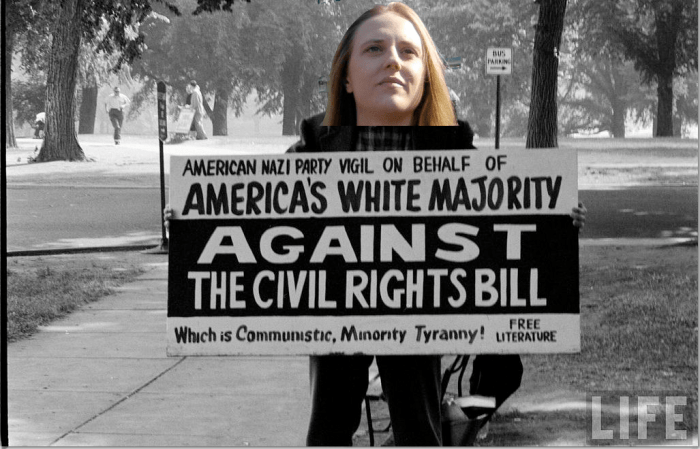
And Jackson is all about civil rights. The 39-year-old attorney is anti-women’s rights, anti-distributive justice and possibly even anti-compulsory education and anti-Civil Rights Act of 1964!

Just perfect!

I mean what does the Department of Education have to do with civil rights anyway?

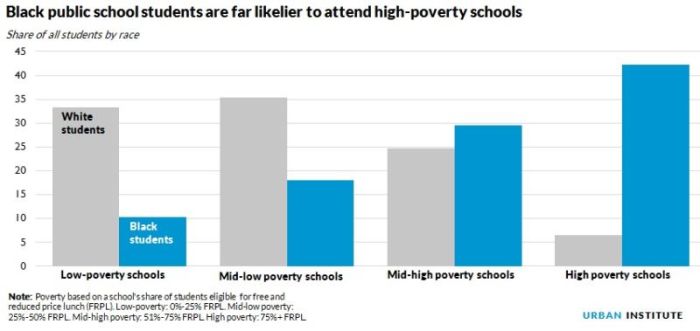
According to the department’s own statistics, black students are at least six times more likely than white students to attend poor schools. These schools have smaller budgets, fewer resources, a crumbling infrastructure, larger classes and higher student needs based on the trauma of living in poverty – worse nutrition, lack of books in the home, exposure to violence and abuse, etc. Meanwhile, white students are three times more likely than blacks to attend rich schools overflowing with resources, pristine infrastructures, small class sizes, and fewer needs.

k2sij4hm9oqedzpfqslp

j1wqdpqnvg4fuwjx7opd

Is that fair? Should the government do anything about ensuring all students receive the same opportunities?

Heck no!

That’s up to… I don’t know… somebody else. And what about all those poor white kids trapped in poor schools with a majority of students of color!? Who’s going to help the six percent of white kids in mostly black schools escape?

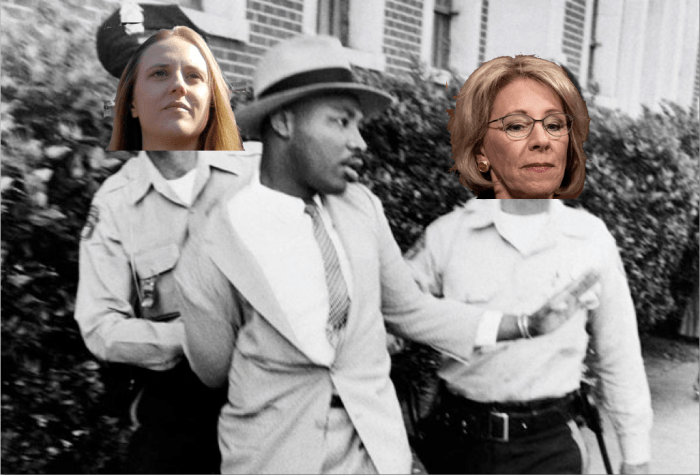
Betsy DeVos – that’s who! Donald Trump – who is really indistinguishable from Dr. Martin Luther King, Jr., and her are proposing a school voucher program so that these white kids can go to a charter, private or religious school.

The black kids? Maybe the choice schools will accept some of them, I mean if the appointed boards and CEOs who run them want to take these kids, it’s really all up to them. We aren’t going to force them to do anything. We’re all libertarians here in Washington now. You wouldn’t want us to trample on the civil rights of charter and private school operators, would you?

Of course not!

And we’re certainly not going to do anything to help these impoverished public schools succeed. No additional funding. No preferential treatment! The free market will sort things out – it always does.

And people wonder why DeVos needs to be protected by U.S. Marshals at a cost of $1 million a month.

Her department is doing away with services the public has come to rely on: protecting special needs students, protecting college students from predatory loans, and now prosecuting civil rights violations.

The liberal snowflakes! Pull yourselves up by your bootstraps! Why are you demanding the government provide you with actual services in return for your tax dollars? You should be demanding tax cuts. That way you can just buy everything you need, yourselves, like the billionaire DeVos family and even the well to do Jacksons.

It’s a wonder why DeVos doesn’t pay for her own security detail – or why President Trump demands we pay for the extra security for all his trips to Mar-a-Lago.

But in any case, the extra security is clearly necessary for DeVos. Every other Education Secretary in history has been able to make due with protection from the Secret Service – from agents already on the payroll and in fact still on the payroll now. But when you’re striping the public of services and enacting programs like school vouchers that Americans angrily don’t want, you need the extra protections.

It’s like Saddam Hussein and Kim Jong Un. They didn’t and don’t have Royal Guards just because they love/loved pageantry. They need/needed protection from the people. That’s how you know you’re best serving the people. You need protected from them.

This is the conservative dream – federal employees appointed by bureaucrats instead of voted on by representatives, public servants who don’t believe in public service, and a military machine protecting them from the taxpayers.

This is the kind of administration that will finally ensure that never again will any white person ever be inconvenienced by people of color and all their needs! Never will the poor or minorities ever receive any federal help that could be perceived by white people as extra help – if we forget about all that we have helping us.

Finally we’ll all be equal. And some of us will be even more equal than others!

Screen shot 2017-04-16 at 1.30.48 AM

The Joy of Opting Out of Standardized Testing

o-KIDS-ARTS-facebook

Testing season is a gray period in my classroom.


But it’s a joy in my house.


As a classroom teacher with a daughter in the public school system, I’m always struck by the difference.


In school I have to proctor the federally mandated standardized tests. But I’ve opted my own daughter out. She doesn’t take them.


So at home, I get to see all the imaginative projects she’s created in her class while the other kids had to trudge away at the exam.


“Daddy, daddy, look!” she squeals.


And I’m bombarded by an entire Picasso blue period.


Or “Daddy, will you staple these?”


And I’m besieged by a series of her creative writing.


My daughter is only in second grade and she loves standardized test time.


It’s when she gets to engage in whatever self-directed study strikes her fancy.


Back in kindergarten I missed the boat.


Even as an educator, myself, I had no idea the district would be subjecting her to standardized tests at an age when she should be doing nothing more strenuous than learning how to share and stack blocks.


But when I found out she had taken the GRADE Test, a Pearson assessment not mandated by the state but required by my home district in order the receive state grant funding, I hit the roof.


I know the GRADE test. I’m forced to give a version of it to my own 8th grade students at a nearby district where I work. It stinks.


Ask any classroom teacher and they’ll tell you how useless it is. Giving it is at best a waste of class time. At worst it demoralizes children and teaches them that the right answer is arbitrary – like trying to guess what the teacher is thinking.


Then I found out my daughter was also taking the DIBELS, a test where she reads a passage aloud and is given a score based on how quickly she reads without regard to its meaning. In fact, some of the passages test takers are forced to read are pure nonsense. It’s all about how readers pronounce words and whether they persevere through the passage. It’s not so much about reading. It’s about grit.


No. My precious little one won’t be doing that.


I talked candidly to her kindergarten teacher about it. I trust her judgment, so I wanted to know what she thought. And she agreed that these tests were far from necessary. So I set up a meeting with the principal.


The meeting lasted about an hour. Sure, it was a little scary. No one wants to rock the boat. But even he agreed with most of what I had to say. He didn’t feel as strongly about it as I did, but he respected my wishes and that was that.


Ever since, my daughter hasn’t taken a single standardized test.


For me, it was a political statement as well as a parental one. I wanted to do my part to chip away at the corporate school reform movement. I know how much they rely on these test scores to justify closing poor schools like mine. I don’t want to give them a chance.


But little did I know what bliss I would be providing for my little one.


Beyond politics, I thought I was just protecting her from a prolonged period of boredom, unfair assessments and cognitively invalid measurements.


I wanted to shield her from adult woes. What I didn’t realize was I was opening a door for her creativity.


It’s amazing. All the other poor children sit there dutifully filling in bubbles while she pours her heart out onto the page.


She loves creating these illustrated books telling the wildest narratives: Colorful superheroes blast bad guys into oblivion. Game show hosts get lost in other dimensions. Even her Mommy and Daddy get in on the action riding Yoshi through Super Mario land.


Often she adds text to these adventures. Her spelling could use some work, but I’m impressed that an 8-year-old even attempts some of these words. Sometimes she writes more in her adventure books than my 8th graders do on their assigned homework.


I’ve even noticed a marked improvement in her abilities during this time. Her handwriting, sentence construction, word choice and spelling have taken a leap to the next level. While her classmates are wasting time on the assessments, she’s actually learning something!


I wish I could provide the same opportunities for my students that I have for my daughter.


It’s strange.


As a parent, I have the power to make educational decisions on behalf of my child. But as a trained education professional, I’m not allowed the same privilege.


Don’t teachers stand in loco parentis? Well this is loco, so let me parent this. Let me at least talk to their parents about it – but if I do that on school time, in my professional capacity, I’m liable to be reprimanded.


I have studied standardized testing. It was part of my training to become a teacher. And the evidence is in. The academic world knows all this stuff is bunk, but the huge corporations that profit off of these tests and the associated test-prep material have silenced them.


I have a masters in my field. I’m a nationally board certified teacher. I have more than a decade of successful experience in the classroom. But I am not trusted enough to decide whether my students should take these tests.


It’s not like we’re even asking the parents. We start from the assumption that children will take the tests, but if the parents complain about it, we’ll give in to their wishes.


It’s insanity.


We should start from the assumption the kids won’t take the test. If parents want their kids to be cogs in the corporate machine, they should have to opt IN.


As a teacher, I can try to inform my students’ parents about all this, but at my own peril. If the administration found me talking about this with parents, I could be subject to a reprimand. Giving my honest educational opinion could result in me losing my job.


As you can see, it hasn’t stopped me. But I teach in a high poverty, mostly minority district. My kids’ parents often don’t have the time to come up to the school or even return phone calls. They’re working two or three jobs. They’re struggling just to put food on the table. They don’t have time for standardized tests!


So every test season I sadly watch my students trudge away at their federally mandated bubbles. I see their anxiety, their frustration, their sad, sad faces.


And it breaks my heart.


But then I come home to my daughter’s exuberant creations!


You would not believe the joy of opting out!

I’m a Public School teacher. Hands Off My Trans Students!

ct-transgender-students-met-20150425

I’m a public school teacher.

I have a lot of different girls and boys in my classes.

In fact, some of them are neither girls nor boys.

Does that mean they should be discriminated against? Does it mean we should judge them, tell them they’re somehow less valuable than the other kids? Tell them who they are by telling them where to pee?

Heck, No!

Some kids don’t feel comfortable with a traditional gender identity. And it’s more common than you’d think.

It’s certainly more widespread than I ever would have thought until a little girl taught me a lesson… well, not a little girl, really.

A few months ago, I would have said she’s the cutest little girl in the lunch line.

Bright, vivacious, always a friendly smile and a kind word.

But she’s not a little girl.

And I didn’t know until she told me.

As a teacher given the unenviable role of line monitor, I have to find the bright spots where I can.

Letting only two hungry 5th graders in to get their lunch at a time and making the rest wait does not make you popular.

“Aaaargh! Why you always stopping me!?” They often say.

“Because you were third,” I reply.

“But why?” They often insist.

“It’s not personal. It’s numerical.”

And I let them through to continue the game tomorrow.

It goes on like that for about a half hour with little variation – until she gets to the front of the line.

“Hey, Mr. Singer!” Big smile and a wave.

And we’d be off on a conversation. She’d ask me how my day was, what I was teaching my students, how my daughter was. I’d ask how her day was so far, about pets, homework.

She’s actually not in my class. I only see her at lunch, but she always brightens my day.

For months, it went like clockwork. Until a few weeks ago when she appeared at the front of the line with her long hair chopped off into a bob.

“Nice haircut,” I said encouragingly.

“Thanks,” she replied. “You want to know why I got it?”

“Sure. Why?”

“I’m agender.”

“Oh,” I responded cluelessly. “What’s that?”

And she proceeded to explain that she didn’t feel comfortable identifying as male or female.

I nodded and then it was time to let her get her lunch.

I’ll admit it was unsettling. Here was this cute little thing and I didn’t even know what to call her now.

But the next day things progressed as usual. Ze came through the line with the same big smile. We had the same innocuous conversation and ze went to eat.

It made me think.

I’ve been teaching for more than a decade. Ze was probably not the first transgender student I’ve met. And when I thought back to all the children who’ve come through my classes over the years, faces started to pop up and hit me.

Gender is not black and white. (Come to think of it, neither is race.) No one is 100% male or female. I mean, sure people have a fixed range of sexual parts, but gender identity is more than that.

We each feel comfortable acting and identifying certain ways, and if you think about it, some of those ways don’t always line up with our cultural gender designation.

For instance, I cry my eyes out at certain movies. My daughter – who’s 8 – heard the song “Boys Don’t Cry,” the other day and said, “Well that isn’t true. Daddy cries all the time.”

Moreover, my wife loves football, basketball and hockey. Me? I could take them or leave them. If she wants me to watch the game with her, she’s got to beg or promise or put out the right snacks.

Wouldn’t it just make sense that some people are much further to one side or other of the gender spectrum than others? Wouldn’t it just make sense that sometimes your identity and your physical parts don’t match? Or maybe you’re so in the middle that it makes no sense to take a side?

I say again, I teach in a public school. We don’t push any kids away. We take everyone. And that means taking those kids who aren’t so easy to label.

I teach middle school. Transgenderism doesn’t come up too often.

Last year when bathroom bills were all the rage, some of my 8th graders brought it up during our Socratic Seminar discussion groups. And I let them talk about it.

We talked about why some people might think this is a good idea, why some might oppose it, etc. There were some boys who were hysterically against trans students using the bathroom with them, but most of my kids had zero problem with it. In fact, they knew that it had already happened.

Trans students are everywhere. You just rarely hear about them.

I don’t know which bathroom my lunchline buddy uses. I wouldn’t presume to ask. But it hurts me that there are people out there who want to limit hir.

These children have rights. They are little sweethearts. They’re full of life and joy. We should respect their humanity.

And to those who say letting them use a bathroom that corresponds with their identity will lead to kids being molested, let me ask – has that ever really happened?

The way I see it, the problem is people – any people – molesting others, no matter what room they do it in, no matter if they’re transgender or not.

Frankly, it doesn’t happen a lot at school, nor is it more pronounced with trans kids.

This has nothing to do with children. It has to do with old men and women who refuse to broaden their views about the world. It’s about the ancient making the young do as they say regardless of how doing so may trample on their right to be themselves.

Well, I won’t be a part of it.

You want to attack my trans students? You’ll have to do it through me.

I’m a guardian of kid’s rights. I’m a defender of children from whoever wants to do them harm.

I’m a public school teacher. That’s just what we do.

U.S. Public Schools Are NOT Failing. They’re Among the Best in the World

surprised-kid-investor-050213

Everyone knows U.S. public schools are failing.

Just like everyone knows you should never wake sleepwalkers, bulls hate red and Napoleon was short.

Wrong on all counts. Waking sleepwalkers will cause them no harm – in fact, they’re more likely to harm themselves while sleepwalking. Bulls are colorblind; they’re attracted to movement. And Napoleon was 5’7”, which was above average height for Frenchman during his lifetime.

So why do we believe that American public schools are doing such a terrible job?

Because far right policymakers have convinced us all that it’s true.

It’s not.

Let me repeat that in no uncertain terms – America’s public schools are NOT failing. They are among the best in the world. Really!

Here’s why: the United States educates everyone. Most other countries do not.

We have made a commitment to every single child regardless of what their parents can afford to pay, regardless of their access to transportation, regardless of whether they can afford uniforms, lunch or even if they have a home. Heck! We even provide education to children who are here illegally.

That can’t be said of many countries with which we’re often compared – especially countries comparable to the U.S. in size or diversity. So from the get-go, we have an advantage over most of the world.

We define education differently. Though our laws are woefully backward, in practice we look at it as a right, not a privilege. And for a full 13 years (counting kindergarten) it’s a right for every child, not just some.

But that’s not all! We also provide some of the highest quality education you can get in the world! We teach more, help more, achieve more and yet we are criticized more than any system in any country in the world.

TEST SCORES

Critics argue that our scores on international tests don’t justify such a claim. But they’re wrong before you even look at the numbers. They’re comparing apples to pears. You simply can’t compare the United States to countries that leave hundreds of thousands of rural and poor children without any education whatsoever. The Bates Motel may have the softest pillows in town, but it’s immediately disqualified because of the high chance of being murdered in the shower.

No school system of this size anywhere in the world exceeds the United States in providing free access to education for everyone. And that, alone, makes us one of the best.

It doesn’t mean our system is problem free. There are plenty of ways we could improve. We’re still incredibly segregated by race and class. Our funding formulas are often regressive and inadequate. Schools serving mostly poor students don’t have nearly the resources of those serving rich students. But at least at the very outset what we’re trying to do is better than what most of the world takes on. You can’t achieve equity if it isn’t even on the menu.

However, for some people, this will not be enough. They’ll say that despite our high ideals, the quality of what we actually provide our students is low. After all, those international test scores are so low.

First point: it depends on the scores you’re looking at. American elementary and middle school students have improved on the Trends in International Mathematics and Science Study every four years since the tests began in 1995. They are above the international average in all categories and within a few percentage points of the global leaders (something rarely mentioned on the nightly news).

Even on the PISA test administered by the Organization for Economic Cooperation and Development to 15-year-olds in about 60 countries, US children are far from the bottom of the scale. We’re somewhere in the middle. We’ve always been in the middle for all the decades since they’ve been making these comparisons. Our schools have not gotten worse. They have stayed the same.

IDEALS AND POVERTY

To some this just demonstrates that our schools have always been mediocre. But again you’re overlooking the consequences of our ideals.

The broader the spectrum of children who take a test, the lower the average score will be. In other words, if only your top students take the test, your average score will be very high. If only your top and middle students take the test, your average score will still be quite high. But if ALL of your students take the test, your average score will be lower.

Now add in poverty. Living in poverty reduces your access to health care, books, early childhood education and many other factors that increase learning throughout your life. Children from poor families are already more than a year behind those of rich parents on the first day of kindergarten. If you only test the wealthiest students, the average test score will probably be quite high. The average score will drop dramatically if you test all of your students.

That’s why many of these countries where the poorest children do not have access to education have higher test scores than the United States. You’re not comparing equals. The United States has the highest child poverty rate in the Western World. And we don’t hide them away. We include them on our tests. That has a major impact on our scores. But talking heads on TV almost always ignore it. They pretend it doesn’t exist. It’s the only way they can use these test scores to “prove” to a gullible audience that America’s schools are failing.

But if you fairly compare education systems and factor in the equal access we provide for all children to an education, our system comes out way on top. We have one of the best systems in the world.

But wait! There’s more!

SPECIAL EDUCATION

Not only does the United States serve all children regardless of academic achievement or poverty. We also serve far more students with disabilities.

Why are there so many special education children in the USA? Because we have a higher standard of living.

A standard pregnancy lasts about 280 days or 40 weeks. However, some mothers give birth to children after only 28 weeks. Two decades ago, these babies would not have survived. Today, they often do. Five years later that child will enter kindergarten and our school system will be responsible for teaching that student to read, write and learn math. In other countries, premature babies have a much lower chance of survival. They don’t survive to become the special education population. So things as diverse as the live-birth rate actually affect average test scores.

Another counterintuitive factor is the suicide rate. In many countries where pressure to perform at the highest levels on standardized tests is extreme, many children are actually driven to suicide. This is especially true in numerous Asian countries with a record of high scores on these international tests. So a higher suicide rate actually increases test scores.

Would you say this makes other countries superior to the United States? Heck no! In fact, just the opposite. I certainly wouldn’t wish more underperforming U.S. students were ending their lives so we could do better on international tests. Nor would I wish that more premature babies died to improve our international standing.

We have developed a special education system to help children at the edges that many other countries just can’t touch. In some countries these students are simply excluded. In others they are institutionalized. In some countries it’s up to parents to find ways to pay for special services. The United States is one of the only countries where these children are not only included and offered full and free access, but the schools go above and beyond to teach these children well beyond their 12th academic year.

In every public school in the United States these students are included. In math, reading, science and social studies, they are there benefiting from instruction with the rest of the class. And this, in turn, benefits even our non-special education students who gain lessons in empathy and experience the full range of human abilities.

Of course, most of our special education students are also included in our test scores. Yes, other countries that ignore these children and exclude them from testing get higher scores. But so what? Do you mean to tell me this makes them better? No, it makes them worse.

In many ways, we are the gold standard, not them. They should be emulating us, not the other way around. They should be jealous of the way we prize each other’s humanity. We shouldn’t be salivating at test scores achieved through shunning certain students in favor of others.

CURRICULUM AND STRATIFICATION

But it’s not just who we teach, it’s also what we teach.

Compared to many other countries, U.S. school curriculum is often much wider and varied. Countries that focus only on testing often leave out sciences, arts, literature and humanities.

Unfortunately, the push from policymakers even in the U.S. has been to narrow curriculum to imitate some of the worst practices of our competitors. But in many districts we still strive to create well-rounded graduates and not just good test-takers.

The bottom line: the curriculum at most American schools is more inclusive than that found internationally. We even include societal issues like alcohol and drug abuse prevention, stress reduction and relaxation, and physical fitness programs.

In addition we don’t stratify our children based on academic ability to nearly the same degree as many international schools. We don’t weed out our worst students through middle and high school until only our most capable are left in 12th grade. Nor is college only open to our best and brightest. We make a much greater effort than many other countries to keep this option open to as many students as possible regardless of whether they can afford it or not. The number of Americans with at least some college education has soared over the past 70 years, from 10 percent in 1940 to 56 percent today, even as the population has tripled and the nation has grown vastly more diverse. Meanwhile, Graduation rates are at an all-time high of 83.2 percent, and for the first time minority students are catching up with their white counterparts.

It’s not easy. But it’s something we’re committed to as a nation. And that’s not true around the world.

SIZE MATTERS

Finally, there’s the issue of size. The United States is a big country – the third most populous in the world. We have 324,450,000 people and growing. That’s about 50 million students in public schools.

It’s much easier to educate fewer children. Even excellent education systems would struggle with our sheer numbers. Small systems often outshine bigger ones. For instance, I might be able to make dinner for my immediate family, but I’d find it much more challenging to prepare a meal for a banquet hall of hundreds. Similarly, it remains to be seen whether smaller nations could handle educating a population as big and diverse as ours without collapsing.

By any fair measure, America’s public education system is simply stunning. But the media perpetuates the myth that we’re failing.

PUBLIC PERCEPTION AND THE MEDIA

After decades of hearing these falsehoods, the American public is strikingly divided. On a 2011 Gallup poll, parents were asked their opinion of their local school and the public was asked its opinion of schools in general. The results are enlightening. Parents who gave their local school an A grade were at the highest percentage ever (37%) whereas only 1% of respondents rated the nations schools that way. Why the difference? Respondents said it was mostly because people knew about their local schools through direct experience. They only learned about the state of education nationally through the news media.

Why is education reporting so biased? Part of it is monetary. Huge corporations make hundreds of millions of dollars off of the failing schools narrative. They sell new standardized tests, new test prep materials, new Common Core books, trainings for teachers, materials, etc. If they can’t demonstrate that our schools are failing, their market shrinks. And who do you think owns the shrinking media conglomerates? That’s right, many of these same corporations.

But even when journalists want to be fair, it’s difficult for them to get the inside story of how our public schools work. They are rarely permitted inside our schools to see the day-to-day classroom experience. Legal issues about which students may be photographed, filmed or interviewed, the difficulty of getting parental permissions and the possibility of embarrassment to principals and administrators often keeps the doors closed. In many districts, teachers aren’t even allowed to speak on the record to the media or doing so can make them a political target. So reporters are often in the position of being unable to directly experience the very thing they’re reporting on. Imagine if sportswriters never got to see athletes play or political reporters never attended a campaign rally. Of course there would be a disconnect!

So we’re left with a public education system that should be the envy of the world being portrayed as a loser.

THE BOTTOM LINE

As ever, far right politicians on both sides of the aisle, whether they be Democratic Neoliberals or Republican Tea Partiers, are using falsehoods about our public schools to sell an alternative. They say our public schools are beyond saving and that we need to privatize. They call it school choice but it’s really just an attempt to destroy the system that has so much going for it.

We should strengthen public education not undermine it. We should roll up our sleeves and fix the real problems we have, not invent fake ones.

People act as if “alternative facts” were invented by the Trump administration. Our policymakers have been using them for decades in a libelous and dishonest campaign against our public schools.

They are some of the best in the world – if only people knew it.

The Essential Selfishness of School Choice

img_5992

Say your friend Sheila invites you over to her house.

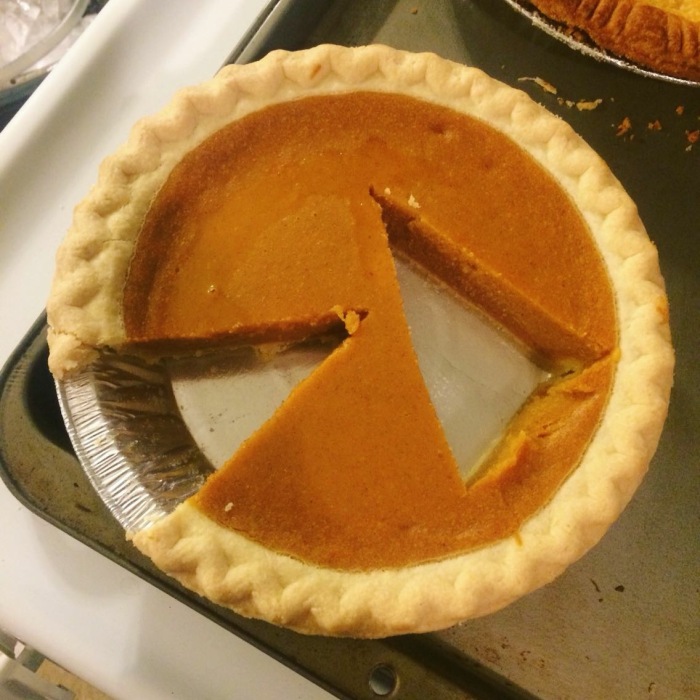
Sheila has just made a fresh pumpkin pie.

She offers you a slice.

You politely refuse, but she insists. She hands you the knife so you can take as big a piece as you like.

You start to cut and then ask, “Does it matter where I cut from?”

Sheila says, “No. Take whatever you want.”

You don’t like crust, so you cut a perfect triangle piece from the middle of the pie.

Sheila’s face reddens.

This wasn’t exactly what she meant, but what is she going to do? You took your slice, and now the rest of the pie is ruined. No one else can take a whole piece. Your choice has limited everyone else’s.

That’s what school choice does to public education.

It privileges the choice of some and limits the choices of others.

Advocates say parents should be able to choose the school their children attend.

And parents today do have many choices. About 90% send their kids to traditional public schools. Others home school, pay for private schools or opt for charter or voucher schools.

The problem comes with these last two options. In both cases, tax money meant to help all children is siphoned off for just one child. In the case of vouchers, tax money goes to pay part of the tuition at a private or parochial school. In the case of charters, we’re diverting tax money to a school that’s public in name but privately run.

That means less money for traditional public schools and more money for privately run institutions. That’s really what school choice is – a way to further privatize public schools.

Why is that bad?

3075829749_0ef3a3692c_z

First, it increases the cost and reduces the services for everyone.


Public schools pool all the funding for a given community in one place. By doing so, they can reduce the cost and maximize the services provided. One building costs less than two. The same goes for one staff, one electric bill, one infrastructure, etc.

When you start adding additional layers of parallel schools, you increase the costs even if you somehow divided the children evenly between the two systems (which hardly ever happens). You buy less with the same money. That translates to fewer services for the same kids, larger class sizes, narrowed curriculum, etc. Why? So that parents could choose School A or School B. So that privatizers get a bigger slice of the pie – right from the middle.

3075829749_0ef3a3692c_z
Second, each type of school has different goals.


Public schools are designed to educate. Corporate schools are designed to profit. Those are their very reasons for existing. It’s built into their DNA and is reflected in the way they’re administrated.

By law, public schools are not for-profit. They pay for goods and services, but at the end of the day, they aren’t beholden to shareholders or investors. They don’t need to bring in more money than they spend. All they have to do is educate children, and if they somehow end up with extra money at the end of that process, that money is bound by law to be reinvested as savings for next year.

Charter and voucher schools are not so constrained. Their reason for being is not education – it is profit. Where they can, they will cut services for children and reduce quality so that they can increase the bottom line. Even a casual glance at the news will show you a plethora of charter and voucher school scandals where privateers have stolen millions of dollars of taxpayer money instead of educating. To return to the dessert metaphor, they don’t care what their slice does to everyone else – they only care about the size of the slice.

3075829749_0ef3a3692c_z

Third, charter and voucher schools aren’t as accountable as traditional public schools.


Each type of school is supported by tax money. Therefore, each school should be held accountable for spending that money wisely. But the rules are radically different for public schools vs. choice schools.

Public schools have elected school boards made up of taxpayers from the community. Choice schools often do not. They are run by appointed boards who are only accountable to investors. Public schools are required to be transparent. Their documentation, budgets and meetings must be available to the media and community for review. This is not true of privatized choice schools.

If taxpayers are unhappy with the way a traditional public school is being run, they have multiple options for changing it. With choice schools, their only option is to withdraw their child. And in the case of taxpayers who do not have children in the system at all, they have no recourse at all. This is fiscally irresponsible and amounts to taxation without representation. This alone should be enough to make any true conservative withdraw support – however ideology has trumped logic and reason. Not only do they ruin the pie, they get to do so in secret.

3075829749_0ef3a3692c_z

Fourth, school vouchers rarely cover the entire cost of attending private schools.


They end up subsidizing costs for rich and upper middle class students while keeping away the poor. As such they create a system of cultural and racial education segregation. They create tiers of schools – the public schools being only for the poor, cheaper private schools for the middle class and expensive private schools for the rich.

This is not the best way to educate children. It is not the best way to organize a society. It entrenches social and class differences and builds in entitlements and racism for the wealthy. Surely our public schools have become more segregated even without vouchers, but that is no reason to make the situation exponentially worse. The size and placement of one’s slice shouldn’t depend on the color of your skin or the size of your bank account.

3075829749_0ef3a3692c_z

Fifth, all schools are not equally successful.


Though the media would have you believe otherwise, traditional public schools do a much better job of educating children than charter or voucher schools. Some choice schools have better outcomes, but the majority do no better and often much worse than traditional public schools. Moreover, children who continually move from school-to-school regardless of its type almost always suffer academically.

So when parents engage in these choice schemes, they often end up hurting their own children. The chances of children benefiting from charter or voucher schools is minimal. You can cut a slice from the center of the pie, but it’s likely to fall apart before you get it on a plate.

our-best-traditional-pumpkin-pie-ss

So in summary, school choice is essentially selfish. Even in cases where kids do benefit from choice, they have weakened the chances of everyone else in the public school system. They have increased the expense and lowered the services of children at both types of school. They have allowed unscrupulous profiteers to make away with taxpayer money while taxpayers and fiscal watchdogs are blindfolded. And when students return to their traditional public school after having lost years of academic progress at a substandard privatized institution, it is up to the taxpayers to pay for remediation to get these kids back up to speed.

Choice advocates talk about children being trapped in failing schools, but they never examine what it is about them that is failing.

Almost all public schools that are struggling serve impoverished students. That’s not a coincidence. It’s the cause. Schools have difficulty educating the poorest children. Impoverished children have greater needs. We should be adding tutoring, counseling and mentor programs. We should be helping their parents find jobs, providing daycare, healthcare and giving these struggling people a helping hand to get them back on their feet.

But instead we’re abandoning them. Most impoverished schools serving poor children receive less funding than those serving middle class or wealthy populations. In other western countries, it’s just the opposite. They provide more funding and resources for poor students to meet their greater needs.

School choice ignores all of this. If I may momentarily switch metaphors, instead of fixing the leak in our public school system, advocates prescribe running for the lifeboats. We could all be sailing on a strong central cruise-liner able to meet the demands of a sometimes harsh and uncaring ocean together. Instead we’re told to get into often leaky escape craft that even under the best of circumstances aren’t as strong as the system we’re abandoning.

And the reason is profits.

Have you ever noticed that the overwhelming majority of school choice proponents are rich white people?

Many of them own charter school companies or otherwise invest in the field. They aren’t advocating a policy to help children learn. They’re enriching themselves at public expense. Sure they point their fingers at union teachers making a middle class wage. Meanwhile these choice advocates rake in public money to buy yachts, condos and jewelry.

Make no mistake – school choice is essentially about selfishness. At every level it’s about securing something for yourself at the expense of others. Advocates call that competition, but it’s really just grift.

Public education is essentially the opposite. It’s about ensuring that every child gets the best education possible. Yes, it’s not perfect, and there are things we could be doing to improve it. But it is inherently an altruistic endeavor coming from the best of what it means to be an American.

We’ve all got choices in life. The question is what kind of person do you want to be? A person who takes only for his or herself? Or someone who tries to find an option that helps everyone?

pumpkin-pie