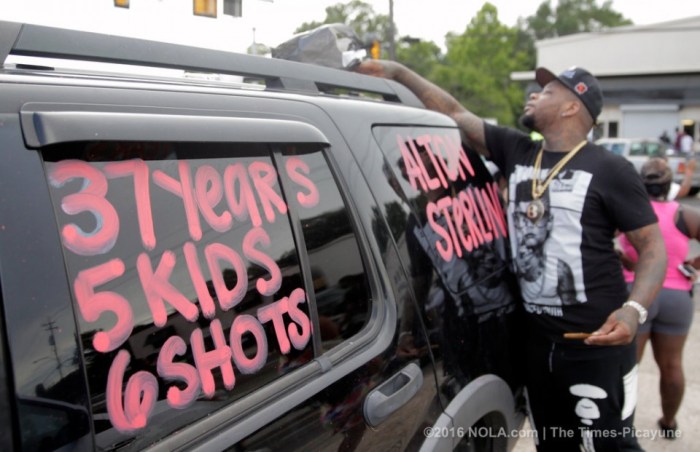
Racism is Just One of Two Things Shown in Alton Sterling Killing

-1dd3afa605e6bc1d

Americans are notoriously bad at holding two thoughts in our heads at the same time.

We look at the police shooting of Alton Sterling and can’t decide whether it was racist or if the 37-year-old black man just had it coming.

But we’re missing the point. Sometimes twice.

Baton Rouge Police shot and killed the father of five on July 5th.

The 37-year-old man was killed outside a convenience store in Louisiana because police allegedly got a tip someone was selling CDs and was armed. In the resulting scuffle, Sterling was shot and killed.

If the whole thing weren’t caught on a cell phone video, it probably wouldn’t be more than a sad headline. Just another black dude killed by police.

But the resulting attention has made his name a hashtag and his death a source of outrage – for good reason.

On the video, police tackle Sterling to the ground before gunshots are heard.

One of the officers shouts “gun” before shooting, but store owner Abdullah Mulfahi told the media that Sterling’s hand was not near any weapon and the alleged gun later recovered from his pocket was not visible.

People watch the video (or not) and immediately take sides.

Who is to blame – the police or Sterling?

Was the black man armed? Maybe – though Louisiana is an open carry state so he would be within his rights to do so.

What should he have done when confronted by police? What actions of his might have resulted in police not shooting him dead?

Did he have a record? Is that even relevant since police had no access to that information at the time?

Typically people come to conclusions based on their convictions and not based on the evidence. If you think black people are being victimized by police, then you’re probably on Sterling’s side. If you think black people are naturally violent and police rarely do any wrong, you’re probably on the side of law enforcement.

But what both sides are ignoring is a sense of context.

This was the 15th American killed by police so far in July alone.

Not the 15th black person. The 15th person. Period.

There’s some dispute over exactly how many people have been killed by police so far this year, but the number is surprisingly high. You’d think that would be something the federal government would keep track of, but no. The FBI’s Uniform Crime Reporting Program tabulates every criminal statistic imaginable – except homicide by law enforcement. Alarmingly, it leaves this to the private sector – almost as if it had something to hide.

Much of this is done by the news media, both in and out of the country. The Washington Post puts the number of Americans killed by police this year at 505 people. The Guardian puts it at 560. An open sourced database called Killed by Police puts the number at 580.

Any way you look at it, no matter which tally you go with, 2016 is turning out to be one of the deadliest years for police shootings since people have been counting.

It’s a problem for everyone. Police should not be killing such high numbers of civilians. In fact, in other countries, they don’t. Police kill more people in the U.S. in days than they do in other countries in years.

For instance, U.S. police killed 59 people in 24 days last year. In England and Wales, 55 people were killed by police in 24 YEARS!

And the numbers aren’t that high solely because the United States has a larger population. The entire nation of Canada has about as many people as the entire state of California, yet Canadian police killed 25 people last year to 72 by California law enforcement.

That may be due in part to a lack of accountability.

Despite such high body counts in this country, not a single police officer has served jail time for it in the last few years. Several officers went to trial in 2016, but none were convicted, according to the Wall Street Journal.

Last year had the highest number of officers being charged for shooting civilians in a decade. That number? 12. And none of them – not one – was convicted of murder or manslaughter.

We have a real problem here. American police kill far too many people.

However, this doesn’t mean that racism isn’t a motive in many of these police shootings. In fact, the numbers back that up.

Though more white people are killed by law enforcement in this country, it is black people who are killed at a disproportionately high rate. They only make up 13.2% of the population, yet they are twice as likely to be killed by police as whites. Nearly a quarter of all police homicides this year resulted in dead black folks.

What’s going on here?

First, we live in a police state. Officers often kill suspects with impunity and face little to no consequences. Not all police, certainly, but far too many.

Second, black folks are killed more regularly by police than whites. In fact, if all things were equal, you’d expect MORE white people to be killed than already are. Whites make up 77.7% of the population, yet they account for only half of the victims of police shootings.

This isn’t because black people are so much more violent than whites. According to the Center on Disease Control’s annual Youth Risk Behavior Survey, they engage in violent behavior at similar rates to whites.

For instance, they carry a weapon (whites 17.9% to African Americans 15.2%) and carry guns (whites 5.5% to African Americans 6.5%) at about the same rates. However, blacks are twice as likely to be arrested for weapons possession.

The same holds for assaults. African Americans report being in physical fights at similar rates (36.5% versus 32.5% for whites) but are three times more likely to be arrested for aggravated assault.

It should come as no surprise then that black people are more likely to be killed by police. This holds with everything else we know. When it comes to the criminal justice system, black people are penalized more often and that includes being shot and killed by law enforcement.

Why? Because they’re black. Because of societal attitudes, fears, phobias and prejudices.

For many of us, when we see Sterling’s last moments enacted on that cell phone video, we’re confronted with that fact. We put ourselves in his position. What could he have done differently? Whether he was guilty of a crime or not, what action on his part would have assured that he got out of this situation alive?

Eric Garner was choked to death by police while repeatedly saying, “I can’t breathe!” Tamir Rice was shot by police in two seconds. What exactly could a black person do to avoid being shot if law enforcement already perceives him or her to be a threat?

These are important questions. But they aren’t the only ones.

America has a problem with police violence. In fact, it has two problems. And we can’t solve one without solving the other.

We have to come to terms with this. It is not a case of racism or a police state. It is a case of BOTH.

Without Black Culture There Would Be No American Culture

Screen shot 2016-06-28 at 12.10.37 AM

“We’ve been floating this country on credit for centuries, and we’re done watching and waiting while this invention called whiteness uses and abuses us, burying black people out of sight and out of mind while extracting our culture, our dollars, our entertainment like oil – black gold, ghettoizing and demeaning our creations then stealing them, gentrifying our genius and then trying us on like costumes before discarding our bodies like rinds of strange fruit.”

With these words, Jesse Williams absolutely floored the crowd at the BET Awards Sunday night.

His acceptance speech for the Humanitarian Award was jaw dropping.

Here was a black actor on “Grey’s Anatomy” just telling it like it is on national TV.

He wasn’t afraid a business dominated by white people would take offense (and some white people did). Or if he was, he wasn’t going to let it stop him.

The activist who recently produced a documentary “Stay Woke: the Black Lives Matter Movement” said, “The burden of the brutalized is not to comfort the bystander… If you have a critique for the resistance… then you better have an established record of critique of our oppression.”

No more tone policing. No white fragility. Just if you’re with us, stand up – otherwise, sit down and shut up.

It was beautiful. And it got me thinking.

There are so many obvious truths about our country’s relationship with race that hardly anyone ever gives voice to – especially a white person like me.

So I’m going to add my voice to Jesse’s. I’m just going to say it.

It’s past time we admit it, white people.

American culture would not exist without black culture.

I don’t mean to say that white people are incapable of culture or that if black people had never been kidnapped and brought to our shores as slaves that white people wouldn’t have been able to devise a unique national character.

But if that had happened, it would have been a very different character than what we have today.

It might be America, but it would not be our America. It would be some other thing. I will leave it to speculative fiction to attempt to determine what that might have been like.

However, we need not resort to fantasy to see all the incredible things black people have given us. They’re everywhere, in everything – though usually staring back at us through a white face, heard from a white voice and monetized by a white industry.

The hundreds of years of struggle from slavery through Jim Crow through the modern prison state have given black people plenty of fertile ground with which to build our national culture. Traditionally white people have served as both oppressors and appreciators of the fruits of that oppression.

The most obvious example is music.

There is very little American music not based on black traditions. Even if it is performed by white musicians, even if it is written by white musicians – almost all American music owes an overwhelming debt to black people.

Take rock n’ roll, a style usually associated with white people. The majority of rock musicians are white. The majority of rock stars are white. The majority of rock listeners are white.

But it couldn’t exist without black music – specifically blues and jazz.

Rock n’ roll was invented during the second great migration, when black people from the southern United States came into contact with large groups of whites in big cities such as New York, Chicago, Cleveland, Buffalo, etc. It was the first time many white people heard black music like blues, work songs, etc. It was also the first time many black people heard European instrumentation. The resulting cultural collision was extremely fruitful.

Rhythm and blues (sometimes called “race music”) evolved into distinct new styles – country, jazz, gospel, folk and rock. In many ways the different styles had less to do with actual differences in the music than in rebranding black music for a white audience. When a black musician became known for a particular kind of music, the fledgling music industry tried to monetize it by finding a white musician who could do something similar and thus reach a larger audience.

They figured if X number of white people will listen to this music played by a black musician, X plus thousands more will listen to it if played by a white one. And they were right.

Black musician Chuck Berry was one of the first to play what we’d recognize as rock n’ roll. He took standard jump blues and played the two-note lead line on his guitar that until then was typically performed on piano. He put guitar at the center of the sound, amplified it, electrified it and rock was born.

The genre developed organically with many black musicians taking the lead – Fats Domino, Sister Rosetta Tharp, Goree Carter, Jimmy Preston, Bo Diddley, Little Richard, Joe Hill Louis, Guitar Slim, Howlin’ Wolf and many others.

However, the first certified rock hit “Rock Around the Clock,” was recorded in 1954 by an all white band, Bill Haley and His Comets. With this recording, the die was cast. The music was invented and developed mostly by black musicians, but it wasn’t a major success until it was recorded by white musicians.

The same thing can be seen with Elvis Presley, the so-called “King of Rock n’ Roll.” He wasn’t breaking any new ground. He was just the first white person who could sing like the black blues musicians who came before him. They toiled in obscurity. He cashed in.

This isn’t to say that no black musicians succeeded playing rock n’ roll. But it was predominantly white musicians who popularized the style that their black forebears had created.

To understand this, perhaps it is best to turn to the insight of Amiri Baraka (formerly known as LeRoi Jones). In his classic book “Blues People,” he dissects the complex American relationship of race and music through the 1960s.

Baraka writes that white and black America have different value structures. As such it is a very different thing for a black American and a white American to play the same music.

When a black musician like Louis Armstrong played jazz music – another invention of black culture – he was fulfilling the ideals of his culture. By contrast, when a white musician like Bix Beiderbecke played jazz music, he was rebelling against his.

There is something jarring and revolutionary when white musicians play black music, Baraka writes. In doing so, the music becomes devoid of race. It is no longer black music. It is just music.

However, the musicians who created it are not likewise freed from the ghetto. They’re still black even if their music no longer is.

So what are black musicians left to do but create new music that they can call their own?

This may explain why so few black performers play rock music anymore. It was taken from them. They had to move on.

Even so, their fingerprints are all over everything that came after. The Beatles, Rolling Stones, Led Zeppelin, Metallica, all the way through the White Stripes and Black Keys. Ask any hardcore fan to name the best rock guitarist who ever lived, and the answer is bound to come back – Jimi Hendrix. Yet, Eddie Van Halen made an awful lot more money.

Perhaps the most incredible thing is that black musicians have continued to develop new and more creative music after every appropriation. Funk, Rap, Pop, Hip Hop, modern R&B. One can see all of it as a progression of gentrification and subsequent creation.

It makes me wonder: why do we love black culture so much but not black people?

As Williams said to end his speech this weekend, “…just because we’re magic doesn’t mean we’re not real.”

Black people have achieved amazing things in America. But white people rarely give them their due.

For instance, people generally think of rap as a black thing. But the largest audience for the genre is us, white folks.

There’s something jarring about white teenagers singing along with every n-word in the lyrics of a black rapper’s song as if these kids had the right. We don’t, people.

As Baraka might say, it’s a very different thing when we say it. But it’s more than just rebellion.

Too often white people turn to music that is characterized as black as a way to mock that culture. We demand black culture be commodified in a way that makes sense to our vision of what black people are. And when someone like Williams comes forward to call us out on it, we resent it.

Look around, white folks.

We love our culture, but we’re ignorant of our history.

We enjoy living vicariously through a marketed vision of black struggle but we don’t do anything about the actual struggle before our eyes.

Our black brothers and sisters are crying out in pain. And we’re the cause.

No, we probably didn’t light any crosses afire on anyone’s lawn, but what about our attitudes? What do we say when race comes up? Do we indulge in gut reactions of colorblindness or do we actually listen to what black people have to say? Do we do anything but shrug?

This isn’t about white hate or white guilt. It’s about accepting our responsibilities.

We owe black people much of our very idea of what it is to be an American. Isn’t it time we started paying it back with love and action?

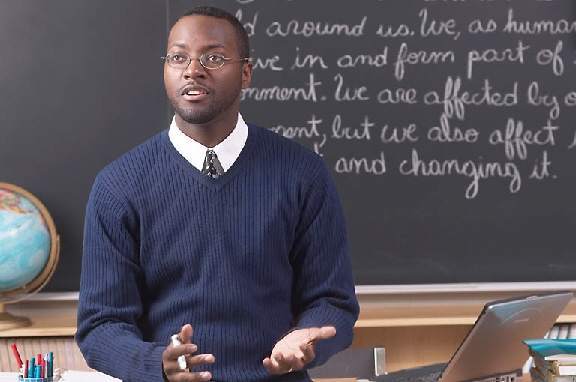
White Teacher: We Need More Teachers of Color in Public Schools

BlackMaleTeacher

Black students relate to black teachers.

White students relate to white teachers.

It’s just human nature. We identify most with people like us.

It doesn’t mean kids can only be taught by teachers of their own race. That’s silly.

But it’s just as ridiculous to pretend like this doesn’t matter at all.

Fact: Roughly 48% of our nation’s public school children are children of color.

Fact: Only 18% of our nation’s teachers are persons of color.

We’re missing a tremendous opportunity!

I am a white teacher with classes made up mostly of African Americans. The suburban Western Pennsylvania district where I teach has a smattering of Hispanics, Asians and other nationalities, but most of the students are white, black or multiracial.

I love all of my kids and try to relate to them. But I’d be fooling myself if I thought my culture and complexion didn’t sometimes stand between us.

When I walk down the halls of my school, I see the African American principal fist bumping kids and talking to them in ways I never could.

It doesn’t mean he’s a better educator then I am. It just means he’s different.

When I give a fist bump, it’s funny. We he does, it’s authentic. It’s not that I haven’t tried to bridge the divide. Kids understand and appreciate the effort. But there is a divide.

For example, I saw him collar a black student the other day and ask about the child’s misbehavior in class.

“What’s up with Mrs. Johnson’s class?” he asked.

And the student looked down at the ground embarrassed that he had let the principal down. He’d let down a strong black man in a bow tie and ascot cap, someone from his own community, someone who might look like his dad, grandpap or uncle.

They have a relationship, a connection that – as a white teacher – I’ll never have. Sometimes black kids want to impress me, too, but as you’d impress an outsider, as you’d make inroads into a world outside your comfort zone.

That doesn’t threaten me.

In fact, it makes me feel good. They have the option to seek role models both within and without their usual frame of reference.

Black children in our district have a role model in our principal. These kids see him as a possibility. Yes, black people can be authority figures. Yes, our school is the kind of place that includes African Americans in the way it functions. And, yes, blackness is a part of the school community and not something apart from it.

Moreover, I can serve as a positive example of a white authority figure. In the very act of trying to understand my students and attempting to be a fair educator, I’m demonstrating one way in which different people can relate with each other. And I offer them a safe opportunity to relate to someone with a host of different experiences and backgrounds.

That’s the benefit of having racially diverse teachers in any school. It isn’t just good for the black kids. It’s good for all of them – even the white children.

One of the biggest obstacles to racial harmony is segregation. So often we don’t know each other personally. All we know is second hand. Many white people get their knowledge about black folks from the police blotter, rap lyrics, and racially tinged anecdotes.

If that’s all white folks know about black people, it’s no wonder our conceptions of them can be skewed. Even the brief personal interactions we have can become somehow emblematic of our prejudicesTHAT black person was loudly singing on the subway so all black people must be annoying. THAT black person hit me with her shopping cart, therefore all black people are absentminded or mean.

But if we get to know all kinds of different people as children in school, we become less prone to this kind of prejudice. We get to see people for who they really are instead of as mere representatives of their entire race. So for students – of any race – to experience black teachers and administrators has tremendous benefits for everyone.

I’d be lying if I said it was easy.

There are roadblocks at every step of the way.

In my district, even with our new black principal, people of color make up less than 10% of the staff. There are no other black teachers in the middle school, two black teachers in the high school and maybe as many in our two elementary schools. Yet about half of our students are African American.

People of color often don’t go into teaching. In fact, there is a nationwide teacher shortage irrespective of race. Constant attacks by lawmakers and media pundits and reductions in benefits and pay have made the profession increasingly unattractive to college students looking for a career.

This is even more so for people of color. Why would individuals from a group that is already marginalized and scapegoated want a job where they can be doubly marginalized and scapegoated?

Even when racially diverse people become teachers, they face more obstacles than the rest of us. The same expectations and prejudices outside the school walls are present in the faculty room, conference center, office and classrooms.

I’ve seen it, myself, multiple times: black teachers getting the worst schedules with the most difficult children and the least time to prepare; black teachers being questioned more frequently about their use of technology, pedagogy and rationale; black teachers snickered about behind closed doors because they aren’t perfect and white staff unwilling to give them the benefit of the doubt.

I don’t think the white folks I’ve observed doing these things are purposefully trying to be racist. But the results are the same. Schools can be as unwelcoming a place for black staff as they can be for black students.

That’s why it’s imperative that we take steps to change.

If we want to improve public schools for all our students – including our students of color – we need to encourage more adults of color to take charge. We need to have incentives at the college level to increase the number of black and brown education majors. (And white ones, too, for that matter.) When positions open up, school directors and administrators need to prioritize filling them with people of color whenever possible. Administrators need to be more cognizant of treating black educators fairly, not assuming they’re only suited to the lowest academic tracks, etc. And white staff needs to be more understanding, less hyper critical of everything black teachers do.

There are a lot of white educators out there who really care about their minority students and colleagues. I’m one of them. But I know there’s more we can do.

We can demand more cultural competence training. If I were asked to teach a class full of Syrian refugees, I’d want extra training. If one of my co-workers only spoke sign language, I’d want help to communicate with her. White teachers need to admit that we could use that, too, when teaching children of color.

That’s one of the drawbacks of having so few black colleagues. Where do we turn for help in understanding our African American students? Who is there to point out potential hazards and help us better meet our minority students’ needs?

But the biggest challenge will be the first one – admitting that we have a problem in the first place.

Admitting that when we look around at all the white faces at the staff meeting and the faculty room, there is something missing.

Admitting that our black and brown students deserve to have teachers who look like them whom they can turn to from time-to-time.

Admitting the absence of our black brothers and sisters – and welcoming them to join us.

Whiteness: The Lie Made True

a456ccf8db4592c7a80552986d7ac86d

“The discovery of a personal whiteness among the world’s peoples is a very modern thing,—a nineteenth and twentieth century matter, indeed.” – W. E. B. Du Bois


What color is your skin?


You don’t have to look. You know. It’s a bedrock fact of your existence like your name, religion or nationality.


But go ahead and take a look. Hold out your hand and take a good, long stare.


What do you see?


White? Black? Brown?


More than likely, you don’t see any of those colors.


You see some gradation, a hue somewhere in the middle, but in the back of your mind you label it black, white, brown, etc.


When I look, I see light peach with splotches of pink. But I know that I’m white, White, WHITE.


So where did this idea come from? If my skin isn’t actually white – it’s not the same white I’d find in a tube of paint, or on a piece of paper – why am I labeled white?


The answer isn’t scientific, cultural or economic.


It’s legal.


Yes, here in America we have a legal definition of whiteness.


It developed over time, but the earliest mention in our laws comes from the Naturalization Act of 1790.


Only 14 years after our Declaration of Independence proclaimed all people were created equal, we passed this law to define who exactly has the right to call him-or-herself an American citizen. It restricted citizenship to persons who resided in the United States for two years, who could establish their good character in court, and who were white – whatever that meant.


In 1896 this idea gained even more strength in the infamous U.S. Supreme Court decision Plessy v Ferguson. The case is known for setting the legal precedent justifying segregation as “separate but equal.” However, the particulars of the case revolve around the definition of whiteness.


Homer Plessy was kicked off the white section of a train car, and he sued – not because he thought there was anything wrong with segregation, but because he claimed he was actually white. The U.S. Supreme Court was asked to define what that means.


Notably the court took this charge very seriously, admitting how important it is to be able to distinguish between white and non-white. Justices claimed whiteness as a kind of property – very valuable property – the denial of which could incur legal sanction.


In it’s decision, the court said, “if he be a white man, and be assigned to the color coach, he may have his action for damages from the company, for being deprived of his so-called property. If he be a colored man and be so assigned, he has been deprived of no property, since he is not lawfully entitled to the reputation of being a white man.”


Plessy wasn’t the only one to seek legal action over this. Native Americans were going to court claiming that they, too, were white and should be treated as such. Much has been written about the struggle of various ethnic groups – Irish, Slovak, Polish, etc. – to be accepted under this term. No matter how you define it, most groups wanted it to include them and theirs.


However, it wasn’t until 1921 when a strong definition of white was written in the “Emergency Quota and Immigration Acts.” It states:


“A White person has been held to include an Armenian born in Asiatic Turkey, a person of but one-sixteenth Indian blood, and a Syrian, but not to include Afghans, American Indians, Chinese, Filipinos, Hawaiians, Hindus, Japanese, Koreans, negroes; nor does white person include a person having one fourth of African blood, a person in whom Malay blood predominates, a person whose father was a German and whose mother was a Japanese, a person whose father was a white Canadian and whose mother was an Indian woman, or a person whose mother was a Chinese and whose father was the son of a Portuguese father and a Chinese mother.”


So there you have it – whiteness – legally defined and enforceable as a property value.


It’s not a character trait. It’s certainly not a product of the color wheel. It’s a legal definition, something we made up. THIS is the norm. THAT is not.


Admitting that leads to the temptation to disregard whiteness, to deny its hold on society. But doing so would be to ignore an important facet of the social order. As Brian Jones writes, the artificiality of whiteness doesn’t make it any less real:


“It’s very real. It’s real in the same way that Wednesday is real. But it’s also made up in the same way that Wednesday is made up.”


You couldn’t go around saying, “I don’t believe in Wednesdays.” You wouldn’t be able to function in society. You could try to change the name, you could try to change the way we conceptualize the week, but you couldn’t ignore the way it is now.


And whiteness is still a prominent feature of America’s social structure.


Think about it. A range of skin colors have become the dominant identifier here in America. We don’t like to talk about it, but the shade of your epidermis still means an awful lot.


It often determines the ease with which you can get a good job, a bank loan or buy a house in a prosperous neighborhood. It determines the ease with which you can go to a well-resourced school, a district democratically controlled by the community and your access to advanced placement classes. And it determines the degree of safety you have when being confronted by the police.


But to have whiteness as a signifier of the good, the privileged, we must imply an opposite. It’s not a term disassociated from others. Whiteness implies blackness.


It’s no accident. Just as the concept of whiteness was invented to give certain people an advantage, the concept of blackness was invented to subjugate others. However, this idea goes back a bit further. We had a delineated idea of blackness long before we legalized its opposite.


The concept of blackness began in the Virginia colonies in the 1600s. European settlers were looking to get rich quick through growing tobacco. But that’s a labor-intensive process and before mechanization it frankly cost too much in salaries for landowners to make enough of a profit to ensure great wealth. Moreover, settlers weren’t looking to grow a modest amount of tobacco for use only in the colonies. They wanted to produce enough to supply the global market. That required mass production and a disregard for humanity.


So tobacco planters decided to reduce labor costs through slavery. They tried enslaving the indigenous population, but Native Americans knew the land too well and would escape quicker than they could be replaced.


Planters also tried using indentured servants – people who defaulted on their debts and had to sell themselves into slavery for a limited time. However, this caused a lot of bad feeling in communities. When husbands, sons and relations were forced into servitude while their friends and neighbors remained free, bosses faced social and economic recriminations from the general population. Moreover, when an indentured servant’s time was up, if he could raise the capital, he now had all the knowledge and experience to start his own tobacco plantation and compete with his former boss.


No. planters needed a more permanent solution. That’s where the idea came from to kidnap Africans and bring them to Virginia as slaves. This was generational servitude, no time limits, no competition, low cost.


It’s important to note that it took time for this kind of slavery to take root in the colonies. Part of this is due to various ideas about the nature of Africans. People at the time didn’t all have our modern prejudices. Also it took time for the price of importing human beings from another continent to became less than that of buying indentured servants.


The turning point was Bacon’s Rebellion in 1676. Hundreds of slaves and indentured servants came together and deposed the governor of Virginia, burned down plantations and defended themselves against planter militias for months afterwards. The significance of this event was not lost on the landowners of the time. What we now call “white” people and “black” people had banded together against the landowners. If things like this were to become more frequent, the tobacco industry would be ruined, or at very least much less profitable for the planters.


After the rebellion was put down, the landed gentry had to find a way to stop such large groups of people from ever joining in common cause again. The answer was the racial caste system we experience today.


The exact meaning of “white” and “black” (or “colored”) was mostly implied, but each group’s social mobility was rigidly defined for the first time. Laws were put in place to categorize people and provide benefits for some and deprivations for others. So white people were then allowed to own property, own guns, participate in juries, serve on militias, and do all kinds of things that were to be forever off-limits to black people. It’s important to understand that black people were not systematically barred from these things before.


Just imagine how effective this arrangement was. It gave white people a permanent, unearned social position above black people. No matter how hard things could get for impoverished whites, they could never sink below this level. They would always enjoy these privileges and by extension enjoy the deprivation of blacks as proof of their own white superiority. Not only did it stop whites from joining together with blacks in common cause, it gave whites a reason to support the status quo. Sound familiar? It should.


However, for black people the arrangement was devastating.


As Brian Jones puts it:


“For the first time in human history, the color of one’s skin had a political significance. It never had a political significance before. Now there was a reason to assign a political significance to dark skin — it’s an ingenious way to brand someone as a slave. It’s a brand that they can never wash off, that they can never erase, that they can never run away from. There’s no way out. That’s the ingeniousness of using skin color as a mark of degradation, as a mark of slavery.”


All that based on pigmentation.


Our political and social institutions have made this difference in appearance paramount in the social structure, but what causes it? What is the essential difference between white people and black people and can it in any way justify these social distinctions, privileges and deprivations?


Science tells us why human skin comes in different shades. It’s based on the amount of melanin we possess, a pigment that not only gives color but blocks the body from absorbing harmful ultraviolet radiation from the sun. Everyone has some melanin. Fair skinned people can even temporarily increase the amount they have by additional solar exposure – tanning.


If the body absorbs too many UV rays, it can cause cancers or produce birth defects in the next generation. That’s why groups of people who historically lived closer to the equator possess more melanin than those further from it. This provided an evolutionary advantage.


However, the human body needs vitamin D, which often comes from sunlight. Having a greater degree of melanin can stop the body from absorbing the necessary Vitamin D and – if another source isn’t found -health problems like Sickle-cell anemia can occur.


That’s why people living further from the equator developed lighter skin over time. Humanity originated in Africa, but as peoples migrated north they didn’t need the extra melanin since they received less direct sunlight. Likewise, they benefited from less melanin and therefore easier absorption of Vitamin D from the sunlight they did receive.


Map_of_Indigenous_Skin_Colors


That’s the major difference between people of different colors.


Contrary to the persistent beliefs of many Americans, skin color doesn’t determine work ethic, intelligence, honesty, strength, or any other character trait.

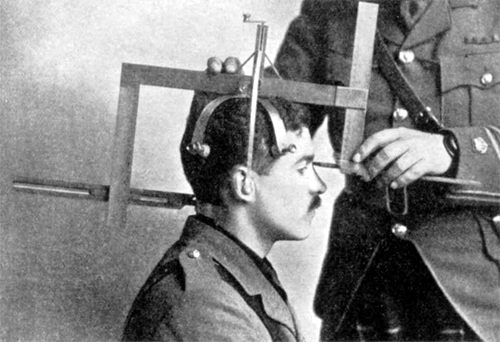
In the 19th through the 20th Centuries, we created a whole field of science called eugenics to prove otherwise. We tried to show that each race had dominant traits and some races were better than others.


However, modern science has disproven every scrap of it. Eugenics is now considered a pseudoscience. Everywhere in public we loudly proclaim that judgments like these based on race are unacceptable. Yet the pattern of positive consequences for light skinned people and negative consequences for dark skinned people persists. And few of us want to identify, discuss or – God forbid – confront it.


And that’s where we are today.


We in America live in a society that still subscribes to the essentially nonsensical definitions of the past. Both white and black people have been kept in their place because of them.


In each socio-economic bracket people have common cause that goes beyond skin color. But the ruling class has used a racial caste system to stop us from joining together against them.


This is obvious to most black people because they deal with the negative consequences of it every day. White people, however, are constantly bombarded by tiny benefits without noticing they’re present at all. White people take it as their due – this is what all people deserve. And, yes, it IS what all people deserve, but it is not what all people are receiving!


We are faced with a difficult task. We must somehow both understand that our ideas about race are man-made while taking arms against them. We must accept that whiteness and blackness are bogus terms and yet they dramatically affect our lives. We must preserve all that makes us who we are while fighting for the common humanity of all.


And we can’t do that by simply ignoring skin color. That kind of colorblindness only helps perpetuate the status quo. Instead, we must pay attention to inequalities based on the racial divide and actively work to counteract them.


In short, there are no white people and black people. There are only racists and anti-racists.


Which will you be?

Blinded by Pseudoscience: Standardized Testing is Modern Day Eugenics


eugenics-testing.jpg


Adolph Hitler was a big fan of standardized testing.


It helped justify much of the horrors of the Nazi regime.


National Socialism is nothing but applied biology,” he said.


In other words, it’s just science, people. Some races are simply inferior to others. Black people, Jews, Gypsies, Hispanics – they just can’t hold a candle to the superior races of Northwestern Europe.


And Hitler based much of this on the “science” of Eugenics, especially the work done in America in the 1910s and ‘20s.


Eugenicists used a flawed and biased interpretation of Gregor Mendel’s laws on heredity to argue that lawlessness, intelligence, and even economic success are passed down in families due to dominant or recessive genes. Moreover, the negative traits are widespread in certain races and the positive ones in others.


Practitioners like Carl Brigham used IQ tests to PROVE white people were just the best and everyone else, well, maybe they should just stop breeding. (In fact, laws were passed in the U.S. imposing mandatory sterilization on thousands based on the conclusions of these “scientists.”)


Brigham was a U.S. Army psychologist who used WWI data to declare that whites (especially those born inside the United States) were the most intelligent of all peoples and that immigrants were genetically inferior. He went on to refine his work into an even better indicator of intelligence the he called the Scholastic Aptitude Test or S.A.T.


Perhaps you’ve heard of it.


In his seminal work, A Study of American Intelligence, Brigham concluded that American education is declining and “will proceed with an accelerating rate as the racial mixture becomes more and more extensive.”


To combat this mixture, eugenicist education reformers encouraged schools to rigidly track students into low, middle and high level classes – similar to the way many of our schools are organized today.


Lewis Terman, Professor of Education at Stanford University and originator of the Stanford-Binet intelligence test, expressed these views in his textbook, The Measurement of Intelligence (1916). He wrote:


“Among laboring men and servant girls there are thousands like them [feebleminded individuals]. They are the world’s “hewers of wood and drawers of water.” And yet, as far as intelligence is concerned, the tests have told the truth. … No amount of school instruction will ever make them intelligent voters or capable voters in the true sense of the word.


… The fact that one meets this type with such frequency among Indians, Mexicans, and negroes suggests quite forcibly that the whole question of racial differences in mental traits will have to be taken up anew and by experimental methods.


Children of this group should be segregated in special classes and be given instruction which is concrete and practical. They cannot master, but they can often be made efficient workers, able to look out for themselves. There is no possibility at present of convincing society that they should not be allowed to reproduce, although from a eugenic point of view they constitute a grave problem because of their unusually prolific breeding” (91-92).


This was the original justification for academic tracking. Terman and other educational psychologists convinced many schools to use high-stakes and culturally-biased tests to place “slow” students into special classes or separate schools while placing more advanced students of European ancestry into the college preparatory courses.


Compare that ideal to the increasingly segregated American schools of today. We have schools for the rich and schools for the poor. We have schools for black and brown kids and schools for whites.


Terman would have been in heaven!


It was the work of patriots like Brigham and Terman that the Nazis relied on heavily to justify their forced sterilization programs and ultimately the Holocaust, itself.


Does that sound extreme? It isn’t.


At the Nuremberg Trials, Nazi scientists repeatedly praised the work of American eugenicists, who uncoincidentally also created the standardized test model of education favored by corporate education reformers today.


It’s easy to follow their logic. If certain races can be scientifically proven to be inferior, it is a small step to thinking that they should be stopped from breeding or eradicated from the face of the planet altogether.


And the pseudo-scientific justification for this scheme was standardized testing. The IQ test – which has since been shown to be incredibly biased – was used to justify mass murder. And then Brigham refined that same test into our most popular current standardized assessment – the SAT. In fact, all standardized tests that students are forced to take today owe a huge debt to the SAT and other standardized assessments used by Terman and other eugenicist educators.


The resemblance between testing in the 1910s and the 2010s is obvious to those who will but look.


Similar to the IQ test, modern standardized exams like the Partnership for Assessment of Readiness for College and Careers (PARCC) repeatedly have been shown to be biased in favor of affluent and white test takers. Supporters bemoan the “racial proficiency gap,” but that’s just a nice way of wondering why the same folks Hitler thought were “inferior” don’t do well on our modern tests.


This is no accident. It’s how the assessments are designed.


The IQ test is supposed to demonstrate an innate intelligence. However, modern psychologists have become increasingly skeptical that intelligence is fixed. So standardized assessments like the SAT are supposed to somehow show BOTH what students have learned AND their innate intelligence. That’s the justification behind the high stakes. You have to pass the SAT to show you’re smart enough to do well in college.


Such outright racism would not be tolerated today, so it becomes cloaked in doublespeak. It’s good that poor black students don’t score well on standardized tests because that shows us they need extra help. And then, instead of providing any help, we close their schools or turn them over to fly-by-night charter operators.


Once again, standardized tests are used as the justification for doing something obviously racist. If anyone said, “We’re going to close and privatize all the schools serving minorities and the poor,” people would revolt. However, when you say we’re doing it because of standardized tests – because of “science” – people just shrug and say, “You can’t argue with that!”


The same goes for Common Core State Standards. States were bribed to enact them so that the reasons for attacking public schools would be uniform across the country. This provides another level of pseudo-scientific justification.


They are supposed to ensure every student who graduates high school will be “college and career ready.” However, now that Common Core has been adopted in 46 states and their tests have become aligned with the standards, we’ve seen student scores take a nosedive. Only our rich white kids apparently are ready for college.


So what will we do with those who fall below the mark? We’re sending no additional resources to help them increase their achievement. We’ll just close their schools and/or privatize. And to make sure none of them escape, we’ll make passing the Common Core tests a graduation requirement.


This does not level the playing field. This does not – as some corporate education reformers claim – ensure the sanctity of students Civil Rights. It extensively violates them!


The education model of Test and Punish is a modern eugenics movement. We’re shellacking over class divides so that those below a certain point have no possibility of ever rising to the white place. And I do mean “white.”


Standardized testing is not a ladder of social mobility. It is a means of keeping certain people in their proper place.


Some try to deny the racial component by pointing to the intersection with class. Testing impacts poor white children as it does poor black ones.


To a degree this is true, but remember our eugenic forerunners saw everything in purely racial terms. For instance, today, few people would claim Judaism is a race. It is a religion. It is essentially a belief system, not a set of shared genes even though some adherents do share genetic characteristics after centuries of segregation. But the Nazis considered them a race and, thus, systematically murdered 6 million of them.


The same goes for the poor. Brigham and his Nazi admirers thought that people were poor mainly because of their genes. They are genetically predisposed to being lazy and good for nothing, so they can’t keep a job or advance themselves. Therefore, they’re poor. Pause for a moment to consider the large numbers of people in America today who would agree with them.


Standardized testing treats the poor the same way it does minorities. In fact, it is just the lack of opportunities that come with poverty that cause the very scores that are being used to denigrate these people. Lack of proper nutrition, food insecurity, lack of prenatal care, early childcare, fewer books in the home, exposure to violence – all of these and more combine to result in lower academic outcomes.


But standardized testing puts the blame on the victim. Students score badly because they aren’t working hard enough, corporate reformers say. These kids don’t have enough “rigor.”


To make sure few people actually volunteer to help, we blame their teachers, as well. We make the education profession as unattractive as possible, indicting teachers for all societies ills knowing full well that this will result – as it has – in a nationwide teacher shortage. Then we can deprofessionalize the field and replace educators who have four-year-degrees with lightly trained Teach for America temps.


These kinds of shenanigans didn’t fool the anti-racists of the past.


The great African American scholar W. E. B. Du Bois remarked in 1940, “It was not until I was long out of school and indeed after the [First] World War that there came the hurried use of the new technique of psychological tests, which were quickly adjusted so as to put black folk absolutely beyond the possibility of civilization.”


He could be talking about No Child Left Behind.


In “Intelligence Tests and Propaganda,” scholar Horace Mann Bond issued a warning about the misuse of IQ tests:


“But so long as any group of men attempts to use these tests as funds of information for the approximation of crude and inaccurate generalizations, so long must we continue to cry “Hold!” To compare the crowded millions of New York’s East Side with the children of Morningside Heights [an upper class neighborhood at the time] indeed involves a great contradiction; and to claim that the results of the tests given to such diverse groups, drawn from such varying strata of the social complex, are in any wise accurate, is to expose a fatuous sense of unfairness and lack of appreciation of the great environmental factors of modern urban life.”


He could be talking about Race to the Top.


Karen Lewis, a present-day Chicago teacher and president of her union, says this:


“What many people do not know is that the use of standardized tests has its origins in the Eugenics movement …we have to be clear about the original purpose of standardized tests.


In a society fascinated by statistics, we are often compelled to reduce everything to a single number. Those of us who work with children know that there are so many characteristics that cannot be quantified.


Ask yourselves whether you want to be part of a legacy born of the unholy alliance between the concept of  “natural inequality” and the drudgery that has been imposed on many of our classrooms.”


Make no mistake. Corporate Education Reform is modern day eugenics. It pretends to justify increasing standardization and privatization of public schools through flawed and biased assessments. Its claims that any of this is actually supported by research are spurious. At heart, these are articles of faith – not science. Neither Common Core nor high stakes testing nor charterizing impoverished schools nor putting districts into receivership nor evaluating teachers based on student test scores – none of it has ever been shown in peer-reviewed studies to help students learn.


Corporate Education Reformers are asking all of us to have faith in a racial and economic social order that benefits those already at the top and keeps the rest of us in our place.


And for anyone who questions it, we are continually blinded by their pseudoscientific justifications.

Beyoncé Upstaged by White Fragility at the Super Bowl

Pepsi Super Bowl 50 Halftime Show
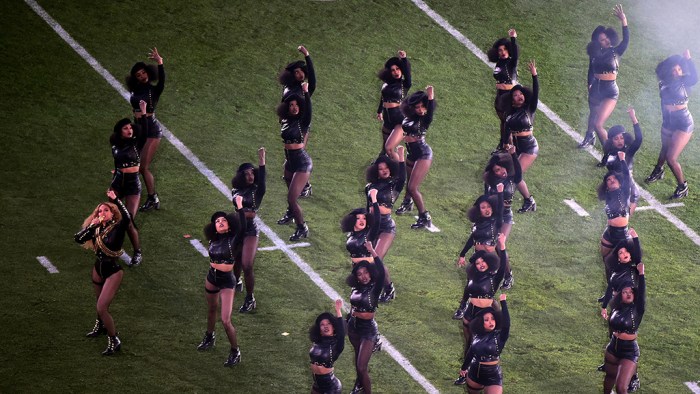
SANTA CLARA, CA – FEBRUARY 07: Beyonce performs during the Pepsi Super Bowl 50 Halftime Show at Levi’s Stadium on February 7, 2016 in Santa Clara, California. (Photo by Harry How/Getty Images)


Black women’s bodies are scary.


That’s the lesson we learned this Super Bowl Sunday.


When Beyoncé and 30 backup dancers performed a brief rendition of her new song, “Formation” during the halftime show, talking heads all over the country exploded.


Oh my God! Are those pro-black lyrics!? Are they making an allusion to the Black Panthers!? Was the music video to this song critical of overzealous police murdering black folks!?


Turn off the TV! This is too political for family entertainment!


When did we become so squeamish in this country? Can’t we all just sit back and enjoy seductive women gyrating in unison anymore?


I guess not. Not if they’re black.


Sleek female bodies in tight leather outfits displaying every curve of their anatomy – if their skin is black and their hair is Afro-ed and their fists are briefly in the air, it’s way too scary for white male libidos.


And that’s really the problem here.


Who was this performance supposed to be for? Fifty years of Super Bowl logic would suggest the target demographic was light skinned, heterosexual and possessing a penis. But these women had something to say – maybe. They had a message beyond “Look at me! I’m hot!”


How am I – as a red-blooded American male – supposed to commodify and objectify these women’s bodies if their brains are trying to convey a message that goes beyond mere consumerism?


That’s what the Super Bowl is, really. Some people say they watch it only for the commercials, but that’s all there is. It’s all a big advertisement for the American way of life.


Sit back, drink beer, eat pizza, watch an essentially meaningless contest and – whatever you do – don’t think about the way things really are. Don’t think about the problems we have and how we might fix them. Stay asleep. Watch the game and stay fast asleep.


And please don’t tell me this has nothing to do with race. If they were white girls with a message about world hunger, the outrage would be demonstrably more muted. If there’d be any outrage at all.


No. This was a direct assault on our tacit consent to be colorblind in all things. As a society we’ve silently agreed to refrain from mentioning anything about race in public.


Why are you even bringing up the fact that those dancers were black, someone is bound to ask.


My answer: because I have eyes.


Denying the pigment of their skin does no one any favors. And talking about it doesn’t denigrate them in any way. In fact, it acknowledges a key component of their being.


But Beyoncé’s performance didn’t let us forget her skin color. She made it important, and our white male society doesn’t want to admit it.

Or at least that’s what the 24-hour news cycle has made of it. Did Queen B really intend her routine to be taken as such a revolutionary display of black power? It’s hard to say.


In the actual performance, there is nothing much that is overtly political. Vaguely martial outfits? Dancing in an X-formation? A raised fist? Maybe.


The only somewhat rebellious moment occurred after they had already left the field. A few dancers held a sign offstage asking for justice for Mario Woods – a black San Francisco man gunned down by police. If you blinked, you missed it.


But the same cannot be said of the recently released music video for the song. It contains many images of black oppression from police brutality to the slow response to Hurricane Katrina. However, if you never saw the video, would you make that connection?


I didn’t. It went right over my head.


To be fair, I’d had a few.


It wasn’t until the next day that I read about the media’s hyperventilating all over it. Viewers had to actively search out the video to find any revolutionary content. Maybe that was Bey’s intent. Maybe not.


Either way, I find it hard to believe that most people’s immediate reaction was the same as that of the pundits.


At first, it was only a vocal minority that made a big deal about it. Then it snowballed into the center of our public discourse. I’m not sure why it’s gained such purchase. Maybe it’s because the halftime show always elicits strong emotions. Maybe it’s because it’s an election year. But without a doubt, a lot of folks’ white fragility is showing.


People of color are often stereotyped as having a thin skin about these issues. If black or brown folks bring it up, they’re criticized as “playing the race card.” But this situation shows how reactionary we, white people, really are.


No one decried Coldplay for starting the show with “Viva la Vida” – a song featuring the lyric, “When I Ruled the World.” People of color aren’t theorizing that the song by the whiter-than-white Chris Martin is really a Caucasian lament about the loss of white power.


“I used to rule the world

Seas would rise when I gave the word

Now in the morning I sleep alone

Sweep the streets I used to own”


Why? Because it would be just as ridiculous! Black folks have more important things to worry about – like the very things that white people are mad at Beyoncé for bringing up!

Taking Back Your Name – The Pros and Cons of Political Correctness

introduction


“What I think the political correctness debate is really about is the power to be able to define. The definers want the power to name. And the defined are now taking that power away from them.”
Toni Morrison

“Never trust anyone who says they do not see color. This means to them, you are invisible.”
Nayhyirah Waheed


Call me Steve.

Not Steven. Not Stephen. Certainly not Steveareno.

It’s a preference. My preference. My choice. And if people want to be in my good graces, they’ll comply with my wishes.

There’s nothing strange or unreasonable about this. We do it all the time – usually when we’re being introduced to someone.

“Hi. I’m Steve.”

“Nice to meet you, Steve. I’m Elisha.”

“Elisha? What a beautiful name!”

“Thank you, Steven.”

“Please. Call me Steve.”

Is there anything wrong with that? Does that stifle conversation? Does it stop people from talking freely to each other?

No. Certainly some names are hard to pronounce or – in my case – remember. But overcoming those hurdles is just common decency. It’s not too much to ask – especially if you’re going to be dealing with this person for an extended length of time.

The idea that allowing people to define themselves somehow shuts down conversation is rather strange. But it’s the essence of opposition to political correctness.

“Political correctness is tyranny with manners,” said conservative icon Charlton Heston.

I wonder if he would have felt the same if we’d called him Charlie Hessywessytone.

A more fleshed out criticism comes from President George H. W. Bush who said, “The notion of political correctness declares certain topics, certain expressions, even certain gestures off-limits. What began as a crusade for civility has soured into a cause of conflict and even censorship.”

Is that true? Is political correctness really censorship? That’s the conflation made by many conservatives and even some liberals. After all, popular Left-wing comedian Bill Maher sarcastically calls his HBO show “Politically Incorrect,” and he often rails against the practice.

There’s a kernel of truth to it. We are asked to change the way we speak. We’re asked to self-censor, but we already do this frequently without wailing against a loss of free speech.

Human beings are subject to various impulses, but as adults, we learn which ones we can act on and which we shouldn’t. I may think it would be hilarious to run into a crowded movie theater and yell, “FIRE!” However, I know that doing so – while possibly funny to a certain kind of person – would result in injuries and trauma as moviegoers stampede out of the theater. So I don’t do it. Is that censorship? Maybe. But it’s censorship with a small c.

The Hestons, Bushes and Mahers of the world seem to think political correctness is more like Capital C Censorship. But this is demonstrably false.

That kind of Censorship is the act of officials, possibly agents of the government, a corporation or some other formal bureaucracy. But political correctness has nothing to do with officials. There are no censors. There are only people who ask to be named a certain way.

A censor looks at a news report of military operations in Iraq and deletes material that would give away the army’s location. Political correctness is nothing like that. It involves someone asking others to refer to themselves THIS WAY and not THAT WAY.

The penalties for violating Censorship are official. Ask Chelsea Manning who is serving a 35-year prison sentence for doing just that. The penalties for violating political correctness are social. You may be criticized, condemned or disliked.

If you criticize Manning for releasing classified documents to Wikileaks, you’re not violating political correctness. That’s your opinion, and you’re entitled to it. However, Manning is a trans woman who is going through hormone replacement therapy. If you refer to her as “him” you are violating political correctness. You’re naming her in a way that violates her wishes. The penalty is not a prison sentence. It’s a sour look.

So political correctness is not Censorship. In some ways, the confusion comes from the term “political correctness,” itself.

Though its origins are hard to pin down, it appears to have been coined by the Soviets to mean judging “the degree of compatibility of one’s ideas or political analysis with the official party line in Moscow.” At least that’s what the International Encyclopedia of Social Studies says.

The term came to prominence in the United States in conservative writer Dinesh D’Souza’s book “Illiberal Education.” He disparaged affirmative action as a kind of political correctness that gave preference to (what he saw as) unqualified minority students over whites in college admissions.

So the first mention of the term in the USA was simply to disparage liberal political policies. It was a ham-handed way of comparing the Left with the Soviets. Yet somehow this term has become the handle by which we know simple civility. It’s kind of hard to feel positively about a concept that begins with a mountain of unearned negative connotations.

Conservatives know the power of getting to name something. It’s their go-to propaganda tactic and lets them control much of the debate. For instance, that’s why the Right loves to call Social Security an “entitlement.” There’s truth to it because you’re entitled to getting back the money you pay in, but it’s full of unearned negative connotations as if these people were somehow demanding things they don’t deserve.

In essence, political correctness shouldn’t be political at all. It’s just kindness. It’s just being a decent human being. Don’t purposefully call someone by a name they wouldn’t appreciate. Respect a person’s ownership of their own identity.

And for some people that’s hard to do. Their conceptions of things like gender, sexuality, race and religion are extremely rigid. The only way to be a man is THIS WAY. The only way to be spiritual is THAT WAY. But if they give voice to these ideas in the public square – especially in the presence of people who think differently – they will be frowned upon.

But is this really so dissimilar to the crowded movie theater? Refusing to acknowledge someone else’s identity is harmful to that person. It tramples the soul similarly to the way their body would be trampled in a stampeded exit. So you shouldn’t do it.

The result is an apparently much more tolerant society. It’s no longer okay to use racial, cultural, gender and sexual stereotypes in public. You’re forced to give other people consideration – or else face the consequences of being disliked. And on the surface, that’s a much more inviting world to live in.

However, there is a glaring problem. In some ways, this has made public discourse more antiseptic. People don’t always say what they mean in the public square. It’s not that they’ve changed the way they think about the world. They’ve just learned to keep it to themselves until they’re around like-minded individuals. They reserve their racist, classist, sexist language for use behind closed doors.

This is why when I’m at a party peopled exclusively by white folks, some partygoers may let racial epithets slip out. And we all laugh nervously to be polite. Or maybe it’s more than politeness. Maybe for some it’s to relieve the tension of such refreshing candor like taking off a girdle. Fwew! Here, at least, I can say what I really think without having to worry about people looking down on me for it!

Since such reactions occur mostly in homogeneous groups, it makes the world look much more enlightened than it really is. Pundits and policymakers look around and cheer the end of these social ills when they haven’t ended at all. They’ve merely gone underground.

And so we have an epidemic of colorblind white people who can’t see racism because of the gains of political correctness. Somehow they forget those unguarded moments. Somehow they haven’t the courage to examine their own souls. Or perhaps they don’t care.

And so we have the conundrum: which is better – to live in a world where all individuals have the right to name themselves or to live in a world where our most basic prejudices are on display for all to see?

Personally, I pick political correctness, and here’s why.

Words are important. We think in words. We use them to put together our thoughts. If we continue to respect individuals’ names in word, eventually we’ll begin to do so in thought and deed.

This isn’t mind control. It’s habit. It’s recognizing an ideal and working toward it. As Aristotle taught, the way to become a good person is to act like one. Eventually, your preferences will catch up with your habits.

I think that’s what’s happening today. Look at the children. They’re so much less prejudiced and racist than we, adults. This is because they’ve learned political correctness first. They didn’t have to unlearn some archaic white-cisgender-centrism. This is normal to them, and I think that’s a good thing.

Obviously some people will balk at this idea. They will look at this ideal as reprehensible. They want to return to a world where women were little more than property, a world where black people knew their place, where sexual identity was as simple as A or B.

But I think most of us recognize that this is not a world where we’d want to live. Modern society can be scary and confusing but trying to respect everyone as a person isn’t a bad thing. It’s consideration, concern, warmth.

Perhaps the best way to love your fellow humans is to call them by their proper names.

Who’s Your Favorite Gadfly? Top 10 Blog Posts (By Me) That Enlightened, Entertained and Enraged in 2015

Screen shot 2015-12-30 at 12.57.49 AM

“Pennsylvania educator and public school advocate Steven Singer is one of the most powerful voices in the nation when it comes to speaking out for students, parents, teachers and our public schools.”
Jonathan Pelto, founder of the Education Bloggers Network


“Steven Singer wrote these five terrific posts last year. I didn’t see them when they appeared. Probably you didn’t either. You should.”
Diane Ravitch, education historian


“Your name should be Sweet Steven Singer. You are a delight.”
Karen Lewis, President of the Chicago Teachers Union

11206058_10152940020833860_7943827034975790194_n


Hello. My name is Steven Singer, and I am a gadfly.

I make no apologies for that. It’s what I set out to do when I started this blog in July of 2014.

I told myself that people were too complacent. There was no curiosity. People were too darn sure about things – especially education policy and social issues.

They knew, for instance, that standardized testing was good for children. Why? Because Obama said so. And he’s such a nice man. It’s too bad all those mean Republicans keep making him do all this bad stuff.

They also knew racism was over. After all… Obama! Right? Black President, therefore, the hundreds of years of struggle – finished! Move along. Nothing to see here.

Yet all this “knowledge” went against everything I saw daily as a public school teacher.

Standardized tests are good for children? Tell that to more than half of public school kids now living below the poverty line who don’t have the same resources as middle class or wealthy kids yet are expected to magically ace their assessments. Tell that to the kids who get hives, get sick, or throw up on test day. Tell it to the black and brown students who for some unexplainable reason almost always score lower than their white peers.

Racism is over? Tell that to all my minority students who are afraid to walk home from school because they might get followed, jumped, beaten or killed… by the police! Tell it to their parents who can’t get a home loan and have to move from one rental property to another. Tell it to the advertising executives and marketing gurus who shower my kids with images of successful white people and only represent them as criminals, thugs, athletes or rappers.

So when I started this blog, I consciously set out to piss people off. But with a purpose. To quote the original historical gadfly, Socrates, my role is, “to sting people and whip them into a fury, all in the service of truth.” It seems well suited to a school teacher. After all, Socrates was accused of “corruption of the youth.”

It’s been quite a year. When I went to the Network for Public Education conference in Chicago last April, some folks actually seemed to know who I was. “Don’t you write that Gadfly blog?” was a common question.

When I met NEA President Lily Eskelsen Garcia and AFT President Randi Weingarten, they both said, “I read your blog.” And then they looked me up and down suspiciously as if they were thinking, “THIS is the guy who writes all that stuff!? THIS is the guy giving me such a hard time!?”

Of course, I am human, too. One can’t sting and bite every day. Sometimes the things I write are met with love and approbation. Some weeks even Lily and Randi like me. Sometimes.

Education historian Diane Ravitch has given me tremendous moral support. I can’t tell you how gratifying it is to have one of your heroes appreciate your work! Her book “The Death and Life of the Great American School System” really woke me up as a new teacher. I’m also on the steering committee of the Badass Teachers Association, an organization that has changed my life for the better. The more than 56,000 people  there are my support. I would never have had the courage to start a blog or do half of the crazy things I do without their love and encouragement.

And there are so many more people I could thank: my fellow bloggers Jonathan Pelto, Peter Greene, Russ Walsh, Nancy Flanagan, Mitchell Robinson, and Yohuru Williams. Also the good people at the LA Progressive and Commondreams.org. The incredible and tireless radio host Rick Smith.

There are just too many to name. But no list of acknowledgment would be even close to completion without mentioning my most important supporter – you, my readers. Whether you’re one of the 9,190 people who get every new post delivered by email or if you otherwise contribute to the 486,000 hits my site has received so far, THANK YOU.

So in celebration of my first full year of blogging, I present to you an end of the year tradition – a Top 10 list. Out of the 90 posts I wrote in 2015, these are the ones that got the most attention. Often they incensed people into a fury. Sometimes they melted hearts. I just hope – whether you ended up agreeing with me or not – these posts made you think.

Feel free to share with family, friends, co-workers, etc. After all, I’m an equal opportunity gadfly. I always cherish the chance to buzz around a few new heads!


10) The Democrats May Have Just Aligned Themselves With Test and Punish – We Are Doomed

sanders_warren-620x412

Published: July 17, 2015
Views: 7,122

Description: It hit me like a slap in the face that almost all Senate Democrats voted to make the reauthorization of the federal law governing K-12 public schools a direct continuation of the same failing policies of the Bush and Obama years. Heroes like Bernie Sanders and Elizabeth Warren seemed to be turning their back on teachers, parents and school children. And they were stopped in their efforts by… Republicans!

Fun Fact: This story had some legs. It inspired a bunch of education advocates like myself who are also Bernie Sanders supporters to write the candidate an open letter asking him to explain his vote. His campaign eventually responded that it was about accountability!?


9) Punching Teachers in the Face – New Low in Presidential Politics

cc-600x400

Published: Aug. 3
Views: 14,735

Description: New Jersey Governor Chris Christie thought he’d run for the Republican nomination for President. He thought threatening to metaphorically punch teachers unions in the face would get him votes. It didn’t.

Fun Fact: This new low in Presidential politics came just after Donald Trump had announced he was running. Christie’s new low now seems almost quaint after Trump’s calls to tag all Muslims and monitor their Mosques. How innocent we were back in… August.


8) This Article May Be Illegal – Lifting the Veil of Silence on Standardized Testing

whistle
Published: April 18
Views: 15,818

Description: Teachers and students may be legally restrained from telling you what’s on federally mandated standardized tests, but we’re not restrained from telling you THAT we’re restrained. Is this just protecting intellectual property or direct legal intimidation of educators and children?

Fun Fact: I have not yet been arrested for writing this piece.


7) Stories about Teachers Union Endorsements of Hillary Clinton

Did the AFT Rank and File REALLY Endorse Hillary Clinton for President? If So, Release the Raw Data

(July 12 – 4,448 hits)


The NEA May Be About to Endorse Hillary Clinton Without Input From Majority of Members

(Sept. 21 – 3,873 hits)

A Handful of NEA Leaders Have Taken Another Step Toward Endorsing Hillary Clinton Despite Member Outcry

(Oct. 2 – 739 hits)

Teachers Told They’re Endorsing Hillary Clinton by NEA Leadership, Member Opinions Unnecessary

(Oct. 4 – 7,074 hits)

Screen shot 2015-09-21 at 12.23.19 AM

Published: July 12 – Oct. 4
Views: 16,134 TOTAL

Description: You expect your union to have your back. Unfortunately it seems our teachers unions were more interested in telling us who we’d be endorsing than asking us who the organizations representing us should endorse.

Fun Fact: I broke this story pretty much nationwide. News organizations like Politico were calling me to find out the scoop.


6) Why We Should Have ZERO Standardized Tests in Public Schools

Screen shot 2015-01-30 at 4.35.10 PM

Published: Jan. 30
Views: 16,443

Description: Someone had to say it. We don’t need any standardized tests. We need teacher-created tests. And that’s not nearly as crazy as some people think.

Fun Fact: This was written back when the Elementary and Secondary Education Act (ESEA) was being rewritten and naïve fools like me thought we might actually get a reduction in high stakes testing. Spoiler alert: we didn’t.


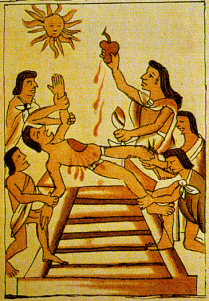
5) Atlanta Teacher RICO Conviction is Blood Sacrifice to the Testocracy

aztecshumansacrifice

Published: April 3
Views: 18,187

Description: There is something terribly wrong when we’re using laws created to stop organized crime as a means to convict  teachers cheating on standardized tests. I’m not saying cheating is right, but the mafia kills people. These were just teachers trying to keep their jobs in a system that rewards results and refuses to balance the scales, listen to research or the opinions of anyone not in the pockets of the testing and privatization industries.

Fun Fact: Watching all those seasons of “The Wire” finally came in handy.


4) Not My Daughter – One Dad’s Journey to Protect His Little Girl From Toxic Testing

FATHERS-AND-DAUGHTERS
Published: March 20
Views: 26,420

Description: How I went to my daughter’s school and demanded she not be subjected to high stakes testing in Kindergarten.

Fun Fact: They were very nice and did everything I asked. If you haven’t already, you should try it!


3) I Am Racist and (If You’re White) You Probably Are, Too

Screen shot 2015-06-02 at 1.42.34 PM

Published: June 2
Views: 28,906

Description: White folks often can’t see white privilege. This is my attempt to slap some sense into all of us. If you benefit from the system, you’re responsible to change it.

Fun Fact: Oh! The hate mail! I still get it almost every day! But I regret nothing! A black friend told me I was brave to write this. I disagreed. Anytime I want I can hide behind my complexion. She can’t.


2) I Am A Public School Teacher. Give Me All the Refugees You’ve Got

syrian_refugee_schools

Published: Nov. 19
Views: 45,196

Description: Our public schools are already places of refuge for our nation’s school children. Send me more. I’ll take them all. I’d rather they end up in my classroom than drowned by the side of a river.

Fun Fact: I got equal love and hate for this one. Some folks were afraid of terrorists. Others didn’t think we could afford it. But many told me my heart was in the right place. Lily and the folks at the NEA were especially supportive.


1) White People Need to Stop Snickering at Black Names

baby-and-parents

Published: Sept. 6
Views: 96,351

Description: Maybe we should stop laughing at black people’s names. Maybe we should try to understand why they are sometimes different.

Fun Fact: You’d have thought I threatened some people’s lives with this one! How dare I suggest people should stop mocking other people’s names! If you want to know how strong white fragility is in our country, read some of the comments! But many people thanked me for bringing up something that had bothered them for years but that they had been too polite to talk about, themselves. This is easily my most popular piece yet.


Don’t Blame My Students For Society’s Ills

poverty LOCAL POVERTY GEE


As a public school teacher, I see many things – a multiplicity of the untold and obscure.

On a daily basis, I see the effects of rampant poverty, ignorance and child abuse. I see prejudice, racism and classism. I see sexism, homophobia and religious intolerance.

And hardly any of it comes from my students.

Despite what some people might say in the media, on Facebook or at the local watering hole, the kids are all right. It’s what we, the adults, are doing to them that’s messed up.

It’s always been in fashion for grown-ups to trash the next generation. At least since Hesiod bemoaned the loss of the Golden Age, we’ve been looking at the current crop of youngsters waiting in the wings to replace us and found them lacking. They just don’t have our drive and motivation. In my day, we had to work harder than they do. If only they’d apply themselves more.

It’s all untrue. In fact, today’s children have it harder than children of the ‘70s and ‘80s did when we were their age! Much harder!

For one thing, we didn’t have high stakes standardized tests hanging over our heads like the Sword of Damocles to the degree these youngsters do. Sure we took standardized assessments but not nearly as many nor did any of them mean as much. In Pennsylvania, the legislature is threatening to withhold my students’ diplomas if they don’t pass all of their Keystone Exams. No one blackmailed me with anything like that when I was a middle schooler. All I had to do was pass my classes. I worried about getting a high score on the SAT to get into college, but it didn’t affect whether I got to graduate. Nowadays, kids could ace every course for all 13-years of grade school (counting Kindergarten) and still conceivably only earn a certificate of attendance! Try using that for anything!

Moreover, my teachers back in the day didn’t rely on me so they could  continue being gainfully employed. The principal would evaluate them based on classroom observations from time-to-time to assess their effectiveness based on what he or she saw them doing. But if I was having a bad day during the assessment or if I just couldn’t grasp fractions or if I was feeling too depressed to concentrate – none of that would affect my teacher’s job rating. None of it would contribute to whether my teacher still had an income.

Think of how that changes the student-teacher relationship. Now kids as early as elementary school who love their teachers feel guilty on test day if they don’t understand how to answer some of the questions. Not only might their score and future academic success suffer, but their teacher might be hurt. That’s a lot of pressure for people who’ve just learned how to tie their shoes. They’re just kids! In many cases, the educator might be one of the only people they see all day who gives them a reassuring smile and listens to them. And now being unready to grasp high-level concepts that are being hurled at kids at increasingly younger ages may make them feel responsible for hurting the very people who have been there for them. It’s like putting a gun to a beloved adult’s head and saying, “Score well or your teacher gets it!” THAT’S not a good learning environment.

Finally, child poverty and segregation weren’t nearly as problematic as they are today. Sure when I went to school there were poor kids, but not nearly as many. Today more than half of all public school children live below the poverty line. Likewise, in my day public policy was to do away with segregation. Lawmakers were doing everything they could to make sure all my classes had increasing diversity. I met so many different kinds of people in my community school who I never would have known if I’d only talked with the kids on my street. But today our schools have reverted to the kind of separate but equal mentality that was supposed to be eradicated by Brown vs. Board of Education. Today we have schools for the rich and schools for the poor. We have schools for whites and schools for blacks. And the current obsession with charter schools and privatization has only exacerbated this situation. Efforts to increase school choice have merely resulted in more opportunities for white flight and fractured communities.

These are problems I didn’t face as a teenager. Yet so many adults describe this current generation as “entitled.” Entitled to what!? Less opportunity!? Entitled to paying more for college at higher interest for jobs that don’t exist!?

And don’t get me started on police shootings of young people. How anyone can blame an unarmed black kid for being shot or killed by law enforcement is beyond me.

Children today are different. Every few years their collective character changes.  Today’s kids love digital devices. They love things fast-paced, multi-tasked and self-referential. But they don’t expect anything they haven’t earned. They aren’t violent criminals. As a whole they aren’t spoiled or unfeeling or bratty. They’re just kids.

In fact, if I look around at my classes of 8th graders, I see a great many bright, creative and hard-working young people. I’m not kidding.

I teach the regular academic track Language Arts classes. I don’t teach the advanced students. My courses are filled with kids in the special education program, kids from various racial, cultural and religious backgrounds. Most of them come from impoverished families. Some live in foster homes. Some have probation officers, councilors or psychologists.

They don’t always turn in their homework. Sometimes they’re too sleepy to make it through class. Some don’t attend regularly. But I can honestly say that most of them are trying their best. How can I ask for more?

The same goes for their parents. It can be quite a challenge to get mom, dad, grandma, grandpa, brother, sister or other guardians on the phone. Parent-teacher conferences are very lonely in my room while the advanced teacher is mobbed. But I don’t generally blame the parents. In my experience, most moms and dads are doing the best they can for their kids. Many of my student’s have fathers and mothers working multiple jobs and are out of the home for the majority of the day. Many of my kids watch over their younger brothers and sisters after school, cooking meals, cleaning house and even putting themselves to bed.

I wish it wasn’t like that, but these are the fruits of our economy. When the recession hit, it took most of the well-paying jobs. What we got back was predominantly minimum wage work. Moreover, people of color have always had difficulty getting meaningful employment because of our government sanctioned racial caste system. Getting a home loan, getting an education, getting a job – all of these are harder to achieve if your skin is black or brown – the same hue as most of my students and their families.

So, yes, I wish things were different, but, no, I don’t blame my students. They’re trying their best. It’s not their fault our society doesn’t care about them. It’s not their fault that our nation’s laws – including its education policy – create a system where the odds are stacked against them.

As their teacher, it’s not my job to denigrate them. I’m here to lift them up. I offer a helping hand, not a pejorative finger.

And since many of the factors that most deeply affect education come from outside the school, I think my duty goes beyond the confines of the classroom. If I am to really help my students, I must be more than just an educator – I must be a class warrior.

So I will fight to my last breath. I will speak out at every opportunity. Because my students are not to blame for society’s ills. They are the victims of it.


NOTE: This article also was published in Wait What?, and the Badass Teachers Association Blog.


I am a Public School Teacher. Give Me All the Refugees You’ve Got!

syrian_refugee_schools

Come into my classroom any day of the week and you’ll see refugees.

That little Iraqi boy slumped over a book written in Arabic while the rest of the class reads the same story in English. Those twin girls blinking back memories of the Bosnian War as they try to underline possessive nouns on an English worksheet. That brown-skinned boy compulsively rocking back-and-forth in his seat fighting back tears wondering when his dad is going to come home from prison.

Every day, every hour, every minute our public schools are places of refuge for children seeking asylum, fugitives, emigres, exiles, the lost, the displaced, dear hearts seeking a kind word and a caring glance.

Some may shudder or sneer at the prospect of giving shelter to people in need, but that is the reality in our public schools. In the lives of many, many children we provide the only stability, the only safety, the only love they get all day.

And, yes, I do mean love. I love my students. Each and every one of them. Sometimes they are far from lovable. Sometimes they look at me with distrust. They bristle at assignments. They jump when redirected. But those are the ones I try to love the most, because they are the ones most in need.

I told a friend once that I had a student who had escaped from Iraq. His parents had collaborated with the U.S. military and received death threats for their efforts. So he and his family fled to my hometown so far away from his humid desert heartland.

I told her how difficult it was trying to communicate with a student who spoke hardly any English. I complained about budget cuts that made it next to impossible to get an English Language Learner (ELL) instructor to help me more than once a week. And her response was, “Do you feel safe teaching this kid?”

Do I feel safe? The question had never occurred to me. Why wouldn’t I feel safe? I don’t expect ISIS to track him down across the Atlantic Ocean to my class. Nor do I expect this sweet little guy is going to do anything to me except practice his English.

In one of my first classrooms, I had a dozen refugees from Yugoslavia. They had escaped from Slobadan Milosevic’s ethnic cleansing. Yet you’d never know unless they told you. They were some of the most well-behaved, thoughtful, intelligent children I’ve had the pleasure to teach. They were always smiling, so happy to be here. They approached every assignment with a seriousness well beyond their years.

But sometimes you’d see a shadow cross their faces. Rarely you’d hear them whispering among themselves. I was so new I didn’t know any better but to come down on them. But later they told me what they had been talking about, what they had been thinking about – how Henry V’s military campaign brought back memories. They taught me that day. Every year I learn so much from my children.

My high poverty school doesn’t get a lot of refugees from overseas these days. But we’re overwhelmed with exiles from our own neighborhood. I can’t tell you how many children I’ve had in class who start off the year at one house and then move to another. I can’t tell you how many come to school bruised and beaten. I can’t tell you how many ask a moment of my time between classes, during my planning period or after school just to talk.

Last week one of my students walked up to me and said, “I’m having a nervous breakdown.”

Class had just been dismissed. I had a desk filled to the ceiling with ungraded essays. I still had to make copies for tomorrow’s parent-teacher conferences. I had gotten to none of it earlier because I had to cover another class during my planning period. But I pushed all of that aside and talked with my student for over an hour.

And I’m not alone. On those few days I get to leave close to on time, I see other teachers doing just like me conferencing and tutoring kids after school.

It was a hard conversation. I had to show him he was worth something. I had to make him feel that he was important to other people, that people cared about him. I hope I was successful. He left with a handshake and a smile.

He may not be from far away climes, but he’s a refugee, too. He’s seeking a safe place, a willing ear, a kind word.

So you’ll forgive me if I sigh impatiently when some in the media and in the government complain about the United States accepting more refugees. What a bunch of cowards!

They act as if it’s a burden. They couldn’t be farther from the truth. It’s a privilege.

When I see that iconic picture of three-year-old Syrian boy Aylan Kurdi drowned in Turkey as his family tried to escape the conflict, I find it impossible that anyone could actually refuse these people help. Just imagine! There are a host of others just like this family seeking asylum and we can give it! We have a chance to raise them up, to provide them a place to live, to shelter them from the storm. What an honor! What a privilege! What a chance to be a beacon of light on a day of dark skies!

I’m an American middle class white male. My life hasn’t been trouble free, but I know that I’ve won the lottery of circumstances. Through none of my own doing, I sit atop the social ladder. It is my responsibility to offer a helping hand in every way I can to those on the lower rungs. It is my joy to be able to do it.

It’s what I do everyday at school. When I trudge to my car in the evening dark, I’m exhausted to the marrow of my bones. But I wouldn’t have it any other way.

It’s not uncommon for a student or two to see me on the way to my car, shout out my name with glee and give me an impromptu hug. At the end of the day, I know I’ve made a difference. I love being a teacher.

So if we’re considering letting in more refugees, don’t worry about me. Send them all my way. I’ll take all you’ve got. That’s what public schools do.


NOTE: This article also was published in Everyday Feminism, the LA Progressive and on the Badass Teachers Association blog. It was also quoted extensively in an interview the National Education Association did with the author.