‘We’re Sorry Teachers are Unfairly Blamed’ says John King – Man Responsible for Unfairly Blaming Teachers

John King AP

Sometimes the messenger matters.

You wouldn’t expect Native Americans to believe an apology from Christopher Columbus.

You wouldn’t expect African Americans to believe an apology from David Duke.

So why the heck do the Democrats expect teachers to believe an apology from John King!?

The acting U.S. Secretary of Education is – himself – responsible for more attacks on public educators than almost anyone else.

In his former role as New York Chancellor of Education, he refused to fix a school system he was responsible for destroying all the while pointing his finger at teachers.

However, late last month in his new federal position, King gave a speech at a Philadelphia high school acknowledging the mistakes of the Obama administration in tying teachers’ evaluations to student test scores – a practice he was guilty of in New York.

“I think there’s just such an urgency around making sure that teachers feel valued in our society,” King said in an interview with the Washington Post in January.

“It’s one of the things I worry a lot about. I want young people to see a future for themselves as teachers.”

Seriously!?

Were you worried about teachers in New York when you tied their evaluations to unproven and inferior Common Core tests? Were you worried about students when you approved an obviously fraudulent charter school run by an obviously fraudulent con man? Were you worried about the profession when you ignored and dismissed parents at various education forums? Were you worried about public schools when you sparked the largest opt out movement in the country?

I’m sorry, but this apology rings hollow to most educators. We know you. We know that your biggest qualification for your position in charge of the nation’s public school system is a three year stint teaching in a “no excuses” charter school with a high suspension rate.

It’s kind of hard to believe you mean a thing you say. And by extension, it’s hard to believe a thing President Barack Obama says about education, either. He was the dunderhead who picked Arne Duncan to be his first Secretary of Education and then you to succeed him.

It must be an election year.

Since a few months before the Presidential Primaries, the Democrats have been apologizing for the damage they’ve done to public education.

Obama says he wants to reduce standardized tests. That’s great – with less than one year left in his second term! After increasing it beyond even the wildest dreams of his predecessor George W. Bush!

But since we’re talking apologies here, are you, Mr. King, willing to actually do anything to make things better for the nation’s teachers?

For instance, do you think the U.S. Department of Education should be exempt from regulatory capture? In other words, should a regulatory agency like the Department of Ed advance the commercial or political interests of special interests that dominate the industry it is charged with regulating?

In other words, should any employee of the department or their immediate family be permitted to collude with the corporate interests seeking special favor in the field of education? Should a prominent member of the department also be allowed to work for an industry seeking to profit off our public schools? Should his wife?

No? Then perhaps your wife Melissa Steele King shouldn’t be accepting a position at Bellwether Consultants, a leading corporate education reform organization. They represent The New Teachers Project, New School Venture Fund, KIPP, IDEA Charter Schools, Gulen Charter Schools, Rocketship Charters and many others.

So while classroom teachers will only be able to communicate with you through official correspondence, a representative of the standardization and privatization movement will be right across from you at the dinner table every night!

If you really wanted us to take you seriously, your family wouldn’t be pulling this crap.

Your latest apology is just an attempt to smooth over your own Senate education committee confirmation hearing on Thursday, Feb. 25. You want to show how much bipartisan support you have so you can become the official Education Secretary and not just acting Education Secretary.

Look, you might say. I just threw a bone to teachers. They love me!

What a steaming pile of bullshit!

Does that offend you? Oh. Then please accept my most heartfelt apology.


NOTE: Diane Ravitch also posted about this article on her blog.


Why Aren’t Public Schools Too Big To Fail?

CafptbBUEAAEKKW.jpg_large

There’s a new fad sweeping the nation.

It’s called “Educational Accountability.” Here’s how it works.

If your neighborhood school can’t afford to pay its bills, just close it.

That’s right. Don’t help. Don’t look for ways to save money. Don’t look for new revenue. Just lock the doors.

It’s fun! And everyone in the federal and state government is doing it!
It’s the saggy pants of United States education policy. It’s the virtual pet of pedagogical economics. It’s the cinnamon challenge of learning-centered legislating.

Sorry, poor urban folks. We’re closing your kids’ school. What? Your little tots are entitled to an education!? Fine! Take them to some fly-by-night charter or else they can get stuffed into a larger class at a traditional school miles away. It’s really none of my business.

Meanwhile, as government functionaries pat themselves on the back and give high fives all around, academic outcomes for these children are plummeting.

Moving to another school rarely helps kids learn. They lose all their support systems, social networks, community identity, and self esteem while spreading resources even thinner at their new location often putting it on the chopping block for the next round of closings. Or worse they’re subject to the unregulated whims of a for-profit company devoted to cutting student services in the name of increasing shareholders profits until some charter CEO shutters the building, himself, and sneaks away like a thief in the night.

But what else can we do? If a school can’t pay its bills, it’s got to go. Right?

Wrong.

Is it really so surprising that poor schools can’t pay their bills? We force them to make ends meet by relying heavily on taxes from local residents – most of whom are dead broke!

How is someone who can’t feed himself going to support a robust school system? How is someone working three minimum wage jobs going to have enough left over at the end of the week to fund a broad liberal arts education? How is someone with the wrong skin color who can’t get a home loan or a well-paying job going to provide the capitol necessary for a 21st century learning experience?

But whatever. Close the poor schools and blame it on the poor.

Tee-Hee!

Chicago, Detroit, Philadelphia, Puerto Rico – You have to admit, there’s a kind of glee about the whole prospect. It’s one of the few things that both Democrats and Republicans agree on.

In fact, they love it so much they’ve found all kinds of excuses for shuttering schools that aren’t even so obviously based on their budgets.

Look at how we evaluate schools effectiveness.

Does your school serve a mostly poor, undernourished, minority population who start kindergarten already years behind grade level? Those kids need help. They need extra assistance, tutoring, counseling, health screenings, and a whole host of wraparound services. But instead of providing any of that, we demand one factor – the school – provide everything without providing them any resources.

That’s like judging a soup kitchen by weighing its customers before you give them any soup!

My God, Man! This poor fellow is malnourished!

Yes, he came in that way.

What are you putting in that soup!?

It doesn’t matter. He hasn’t had any yet. Besides. He needs more than just soup.

Enough of your excuses! I’m closing you down!

Moreover, we use the worst possible measurements of student achievement – standardized test scores – to tell if our schools are doing a good job. Never mind that these sorts of assessments repeatedly have been shown to demonstrate parental income more than academic achievement. And surprise! Surprise! They show our poor kids have poor scores!

And just in case a few kids somehow manage to overcome the odds, we sabotage the learning they might otherwise get from their schools with top down policies like Common Core State Standards.

How does this cripple educational outcomes? By hobbling the one group most in a position to actually make a difference – teachers.

Instructional autonomy? Bye! Bye! After all, who wants to hear from the people on the ground who can empirically judge the situation, determine what needs to be done and how best to do it? Instead, we give the power to think tanks and the testing industry to decide what is taught, when and how.

Common Core has never been proven to help kids learn. In fact, most teachers despise it, saying the standards are developmentally inappropriate, ill-conceived and unwieldy. Even under the best of circumstances, why would you take someone who barely has the resources to get by and then make things MORE difficult? That’s like taking an 80-pound starving child and forcing him to lift a 200 pound barbell over his head in order to qualify for his dinner.

Put your back into it, youngster!

I’m trying, Sir, but I’m so hungry.

Just use your grit!

Grits! Yes, please. I’m famished.

So what do we do? We close their schools! That’ll show ‘em!

And somehow we call this accountability.

Would you solve a measles outbreak by closing the hospital? Would you solve a burning building by closing the fire department? Would you solve an asteroid hurtling toward Earth by closing NASA!?

NO! OF COURSE YOU WOULDN’T!

In fact, when the wealthy are at a disadvantage, we do just the opposite.
Take the banking industry.

When Wall Street crashed the economy with risky speculation and absurdly short-sighted practices, did we close the banks?

No way! We bailed them out.

Why? They were too big to fail.

If we had let them spiral into insolvency – which everyone agrees they deserved to do – it would have had too large an impact on the country. Middle class folks would have lost their savings. Retirees would have lost their pensions. Businesses throughout the nation would have closed. The economy would have come to a grinding halt.

So the federal government saved the banks.

Now clearly there should have been strings attached to this bail out. Those responsible for the crash should have been prosecuted and forced out. At very least, the banks should have had to make concessions such as more regulation and stopping the risky practices that crashed the economy in the first place. (SPOILER ALERT: That didn’t happen.)

However, the idea was sound.

But why does it only apply to the big banks? Aren’t there other areas of public life that are too big to fail? And isn’t public education one of them – perhaps the biggest one?

Heck! Unlike the banks, our schools did nothing to deserve these wholesale closures. In fact, they’ve done an amazing job with the few crumbs we force them to subsist on.

Moreover, the result of letting them shut down would be just as catastrophic for our nation as a banking collapse. Maybe more so.

If our schools fail, we won’t have educated citizens. Future generations won’t be qualified for any but the most menial of jobs. They won’t be able to navigate the media, commerce, politics, science or any domain of civic responsibility.

Without our schools, we’ll calcify the economic structure. The rich will stay rich, the poor will stay poor and there will be next to no social mobility. Our country will exist as a neo-feudal state and most of us will be relegated to little more than serfs.

Is it too cynical to suggest that this is exactly why we haven’t bailed out our schools? The overwhelming majority of our nation’s wealth is held by only 1% of the population. Disinvesting in public education is exactly the kind of thing that would ensure the status quo is maintained or perhaps even tilted further in the favor of the super rich.

Any sane society, wouldn’t let this happen. If we don’t want this nightmare scenario, it’s time to bail out our schools.

Seriously. The federal government should step in.

Provide a huge influx of cash to the poorest schools so every institution of learning can count on adequate, equitable, sustainable funding. Stop judging them based on high stakes test scores. Stop sabotaging them with social schemes like Common Core. Let the experts – the teachers – actually run their own buildings.

This is what almost every other major country in the world does. Funding is federal. Policy is local. Get with the times, America!

And you can pay for it by enacting a fair tax plan. Worldwide, American companies keep 60 percent of their cash overseas and untaxed. That’s about $1.7 trillion annually. Imagine what that kind of revenue could do for our public schools!

Imagine if we taxed risky Wall Street speculation. Imagine if we made the super rich pay their fair share with tax rates similar to those we had when our national economy was at its best – the 1950s and ‘60s.

You want to make America great again? This would do it? You champion personal responsibility? This is what responsible government would do.

After all, what’s the purpose of government if not to create a level playing field for the next generation?

Call it a bail out, if you want. Or more accurately call it being answerable to the future, taking charge, rising to meet our duties, true accountability.

Stop closing public schools. Save them.


NOTE: This article also was published in the LA Progressive.


High Stakes Testing Doesn’t Protect Civil Rights – It Violates Them

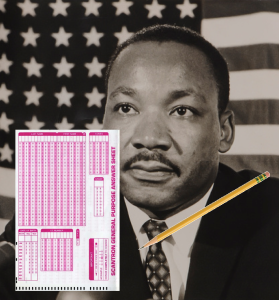
martin-luther-king-jr-small

“Daddy, I know who that is!”

“Who is it?”

“That’s Martin Luther King.”

“That’s right, Baby! Who was he?”

“We saw a movie about him today in school. He had a dream.”

Thus began a fascinating conversation I had with my seven-year-old daughter a few days ago.

I had been going through her book bag and found a picture of Dr. King blazoned above an article about his life.

“He wanted everyone to be nice to each other,” she said.

I laughed. My first grade scholar isn’t that far off.

“He’s one of my heroes,” I said. “He means a lot to me.”

“That’s silly,” she said. “He doesn’t have any super powers.”

Before I could reply, her attention shifted to her stuffed Yoshi doll. She began to play.

One of the best things about being a parent is getting to see the world anew through the eyes of your children. My little girl offers me this vantage point everyday.

Dr. King can’t be a hero. He had no super powers.

Or did he?

“I have a dream,” he famously said, “that my four little children will one day live in a nation where they will not be judged by the color of their skin but by the content of their character.”

It’s a simple wish. A simple insight.

Or is it?

Do we do that today? Do our schools?

As a middle school teacher, I’m well aware how our public schools judge our children, and it’s not by the content of their character. It’s by their standardized test scores.

High scores mean you’re learning. Low scores mean you’re not. And if you’re not learning, that’s your teachers fault and we’re going to close your school or turn it into a charter.

What’s worse, we’re going to do it because that ensures your civil rights.

That’s the story anyway.

Ever since rewriting the federal law governing K-12 schools began to be debated in earnest by Congress, the tale was told that high stakes testing is good for minorities. It makes sure schools aren’t neglecting them.

And now that the Every Student Succeeds Act (ESSA) has been passed, well-meaning people everywhere are wondering if we’re looking out for our black and brown brothers and sister enough – do we have enough federally mandated high stakes tests? Is there enough accountability?

After all, the new law potentially returns much of the power for education policy to the states. What if states don’t give as many tests? How will state legislatures ensure black students aren’t being neglected? Why would schools actually teach black kids if we don’t threaten to close them based on test scores?

These would be laughable questions if they weren’t asked in earnest. With such frequency. Even from some civil rights organizations.

Some things to consider:

1) The ESSA does absolutely nothing to limit standardized testing.

When Congress was rewriting federal education policy, parents, educators, students and experts of every stripe asked for a reduction in testing. It didn’t happen. Exactly the same number of tests are required under the ESSA as there were before it was passed – once a year in grades 3-8 and once in high school.

2) Punishing schools doesn’t help kids learn.

Once upon a time, it was the government’s job to provide schools with adequate resources to help kids master their lessons. Now it has become the government’s job to raise an arbitrary standard and shutter or privatize schools that fall below that mark.

This may come as a surprise, but no school has ever been improved by being closed. Students who are forced to relocate don’t suddenly do better. In fact, they usually do worse academically. Moreover, there is exactly zero evidence that charter schools do better than traditional public schools. In fact, the evidence points in exactly the opposite direction.

3) Standardized tests are poor assessments to judge learning.

Standardized testing has never been shown to adequately gauge what students know, especially if the skills being assessed are complex. The only correlation that has been demonstrated consistently is between high test scores and parental wealth. In general, rich kids score well on standardized tests. Poor kids do not.

Therefore, it is absurd to demand high stakes standardized testing as a means of ensuring students’ civil rights.

Judging kids based on these sorts of assessments is not the utopia of which Dr. King dreamed. We are not judging them by the content of their character. We’re judging them by the contents of their parents bank accounts.

There are real things we could be doing to realize racial and economic equality. We could do something about crippling generational poverty that grips more than half of public school students throughout the country. We could be taking steps to stop the worsening segregation of our schools that allows the effects of test-based accountability to disproportionately strike schools serving mostly students of color. We could invest in our neediest children (many of whom are minorities) to provide nutrition, tutoring, counseling, wrap around services, smaller class sizes, and a diverse curriculum including arts and humanities.

But we’re not doing any of that.

Why?

Because we’re too concerned about continuing the policies of test and punish. We’re too concerned about making sure huge corporations continue to profit off creating, grading and providing materials to prepare for annual standardized testing.

Dr. King may not have had super powers. But from his vantage point almost 50 years in the past, he saw through the lies of today’s education reform movement.

Standardized testing doesn’t protect civil rights. It violates them.

Our school policies for the past few decades have been about denying the right to an equitable education to our poor and minority students. Though the ESSA holds promise to limit federal meddling, it does nothing to change that. And all these people who cry foul at a potential loss of federal power are either ignorant or crying crocodile tears.

It’s no wonder that hundreds of civil rights organizations oppose high stakes testing. Nor is it surprising that the media rarely reports it. And it shouldn’t be a shock to learn that the overwhelming majority of civil rights organizations who have suddenly began championing testing are those who get big donations from the philanthro-capitalists pushing this agenda.

High stakes testing is a racist and classist policy. Period.


NOTE: This article was given a shout out on Diane Ravitch’s blog and published in the Badass Teachers blog.

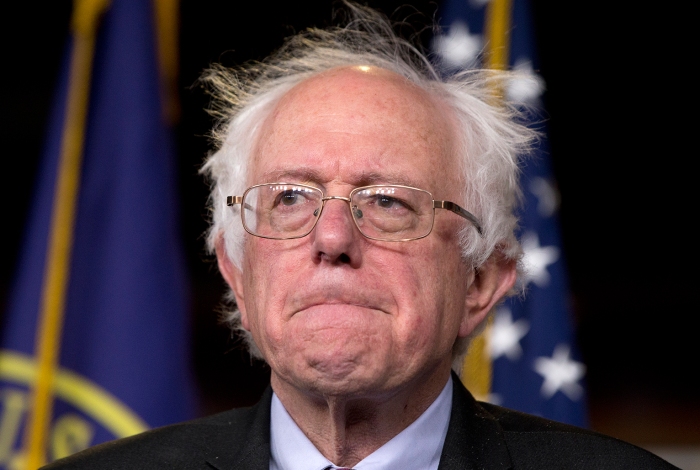
Bernie Sanders is Right: We Should Federalize Public School Funding

Bernie_Sanders_by_Gage_Skidmore

Bernie Sanders just dropped a massive dose of truth on us Monday night.

No politician in my lifetime has ever said anything so dangerous, fraught with problems, unlikely, impractical, and absolutely on the nose right!

The Presidential candidate running for the Democratic nomination wants to make the federal government largely responsible for funding public schools. Right now districts are supported mostly by local and state taxes.

This is what he said:

“One of the things that I have always believed is that, in terms of education, we have to break our dependency on the property tax, because what happens is the wealthiest suburbs can in fact have great schools but poor, inner-city schools cannot. So I think we need equality in terms of how we fund education, and to make sure the federal government plays an active role to make sure that those schools who need it the most get the funds that they deserve.”


(Find the quote above 17 minutes into this video.)


Wow! What a statement!

Don’t tell me that was focused grouped. Don’t tell me his campaign did a poll first. Don’t tell me he ran that by any big donors for approval.

Whether you agree with it or not, such an audacious remark has to come from a genuine belief. This is really what Bernie thinks, and it’s entirely consistent with the Democratic Socialism of his whole political career.

I don’t think his rival for the party’s nomination, Hillary Clinton, will be parroting THIS stance! If anything, she might criticize him for it. And she’d have a multitude of practical reasons to do so.

Lots of folks on both sides of the aisle are sick of federal intervention in our schools. No Child Left Behind was a disaster. Race to the Top was worse. And the just passed Every Student Succeeds Act (ESSA) amounts to a massive giveback of power to the states. Under the most popular interpretation, the reauthorization of the federal law governing K-12 schools makes the states responsible for filling in the details of education policy while limiting federal interventions.

And now Bernie is suggesting the Fed foot the bill!?

That is going against the political tide. Who would vote for such a thing? Probably not Hillary. Or any of the Republican candidates. Or more than a handful in Congress, either.

But it’s exactly the right thing to do.

The reason?

The biggest problem with America’s public school system isn’t test scores, lazy students, or teachers unions. It’s poverty, segregation and inequitable funding.

We have separate schools for the rich and separate schools for the poor. We have schools serving mostly black and brown populations and schools serving mostly whites. And the way we allocate money and resources to these schools both allows and perpetuates this system.

Nationwide, state and local governments spend 15 percent less per pupil on poor school districts. I see this first hand. My home state of Pennsylvania is the worst offender, providing the poorest districts an embarrassing 33.5 percent less per student. This means higher class sizes, less teachers, less arts and humanities, less electives, less nurses, guidance councilors and wrap around services. This is the reality in 23 states.

An additional 23 states do buck this trend with more progressive funding formulas. States like California and Florida actually provide MORE spending to poor districts. This helps heal the wounds of malnutrition, violence, family instability and a host of other problems that go hand-in-hand with generational poverty. It also offset the costs of greater numbers of special education students and English Language Learners you typically find in these districts.

You might say, then, that the states where poor children get shafted could simply follow the lead of their more enlightened neighbors. Good luck with that! Rich folks rarely volunteer to subsidize the poor. They got theirs, and they vote and donate more regularly to local politicians than their indigent brethren can afford to do.

The result is a funding system based on local wealth. Rich areas have Cadillac education systems. Poor areas have dilapidated ones. That’s demonstrably unfair and leads to worse academic outcomes for needy kids.

What’s worse, no one else runs their schools this way. The U.S. is one of the only countries in the world – if not probably the ONLY country – that funds schools based largely on local taxes. Other developed nations either equalize funding or provide extra money for kids in need. In the Netherlands, for example, national funding is provided to all schools based on the number of pupils enrolled. But for every guilder allocated to a middle-class Dutch child, 1.25 guilders are allocated for a lower-class child and 1.9 guilders for a minority child – exactly the opposite of the situation in the U.S.

Federalizing education funding could solve all these problems. It could set the groundwork for an even playing field. All students could get a fair start in life! That’s a goal worth shooting for! And that’s what Bernie is suggesting.

But it’s an incredibly dangerous proposal.

Our school system still suffers nationwide from the effects of corporate education reform. National policy has been and continues to be one of high stakes standardized testing, poorly conceived and untested academic standards, and a push to privatize struggling schools. Corporatists call this “Accountability.”

It goes something like this: raise your test scores or we’re closing your school and turning it into a for-profit charter. Adopt these academic standards written by the testing companies and we’ll give you a couple extra bucks. De-professionalize teachers with junk science evaluations and hiring under-trained Teach for America temps or else we’ll cut your funding.

THIS is the federal legacy in education, and Bernie is suggesting we give them MORE POWER!?

Yes, and no. I can’t speak for Bernie, but that’s certainly not how this has to go. We can increase the Fed’s responsibility for funding schools without increasing its power over education policy. In my view, education decisions should be made locally, and I don’t mean at the state legislature. Decisions about how best to run schools should be made at the district level by the experts – the teachers and parents.

Certainly there will be those who call for more federal power over policy as a condition of federalized funding. But that has to be a deal breaker. Equitable funding with inequitable policy would just be plugging one hole while making another.

In my view, equitable funding IS the role of the federal government in public education. When the Elementary and Secondary Education Act (ESEA) was first passed in 1965, it’s purpose was to make sure all schools were getting adequate resources. Under Bush and Obama, that became perverted to mean more standardized tests and philanthro-capitalist interventions. Bernie’s suggestion could be a step in returning to the original intent of the law.

Yes, the Fed should be engaged in accountability. It should make sure it’s funding schools properly. Maybe it should even be responsible to make sure those funds are being spent on things that broadly can be construed as education. I don’t mean that the fed should be able to withhold monies from districts with low test scores. But maybe it can prosecute administrators who use funding to lavishly redecorate their offices or who neglect the needs of students in their districts.

However, even if you agree – as I do – that this is a lofty goal, it is almost impossible to achieve. It’s like single-payer healthcare was in the ‘80s and ‘90s. This is what most of the world is doing but it was completely out of reach here politically. In fact, we still don’t have it, but look at how the landscape has changed. Obamacare is not-single payer, but it is a step in that direction. Bernie is even championing going that extra step and providing a medicare like system for all.

What seemed impossible decades ago, now seems within reach. The same may be true one day with federalized education funding.

To be honest, I doubt fixing our school funding system is high on Bernie’s list of things to do. Breaking up the big banks, overturning Citizens United, free college tuition, even healthcare probably come first. And maybe that’s not a bad thing. If any or all of these goals were realized, it would help the more than half of our public school children living in poverty. Moreover, just having equitable funding on the list with these other worthy goals puts it on the national agenda.

Right now, no one else is talking about this. It isn’t even a recognizable goal for most progressives. Frankly, I doubt many people have even thought about it. By bringing this up, Bernie is forcing us to do so.

When I first became an education activist, I thought I was doing it for my students. Then we had a daughter, and I thought I was doing it for her, too. But as the years have gone by, the landscape has changed only slightly. We’re still reaching a level of critical mass when the culture demands a major shift. We’re not there yet. So now I wonder if the people I’m really doing this for are my grandchildren.

One day we may have the courage to change the course of our education system. We may gain the nerve to actually accomplish our convictions. We might actually try to have a nation with liberty and justice for all.

That’s what I’m fighting to achieve. I think many of us are doing the same. But do we have the bravery to take Bernie at his word, to push this topic onto the national stage?

A Bernie Sanders presidency would do that. It might not achieve this lofty goal. Not now. The political winds aren’t favorable. But we can try, knowing full well the dangers and the improbability.

I wish Bernie would flesh out the details of his plan. I wish he’d exorcise the devil from the details. But the very fact that he has the intrepidity to offer this as a solution fills me with hope.

Is it hot in here or am I starting to Feel the Bern?

My Daughter is Not a Widget

Father Holding Daughter's Hand

“I’m not sure public schools understand that we’re their customer—that we, the business community, are your customer. What they don’t understand is they are producing a product at the end of that high school graduation. Now is that product in a form that we, the customer, can use it? Or is it defective, and we’re not interested? American schools have got to step up the performance level—or they’re basically turning out defective products that have no future. Unfortunately, the defective products are human beings. So it’s really serious. It’s tragic. But that’s where we find ourselves today.”
Rex Tillerson, ExxonMobil CEO

My daughter just turned seven during this holiday season.

She loves to draw. She’ll take over the dinning room table and call it her office. Over the course of a single hour, she can render a complete story with full color images supporting a handwritten plot.

These narratives usually star super heroes, cartoon characters and sometimes her mommy and daddy. In these flights of fantasy, I’ve traveled to worlds lit by distant suns, been a contestant on a Food Network cooking show, and even been a karate pupil to a Teenage Mutant Ninja Turtle sensei.

That little girl is my pride and joy. I love her more than anything else in this world.

Make no mistake – She is not anyone’s product.

She is not a cog to fit into your machine. She is not merchandise, a commodity, a widget for you to judge valuable or not. She is not some THING for you to import or export. She is not a device, a gadget, a doodad, a doohickey or a dingus. She is not an implement, a utensil, a tool, or an artifact.

Her value is not extrinsic. It is intrinsic.

She is a person with a head full of ideas, a heart full of creativity and passion. She has likes and dislikes. She loves, she lives, she dreams.

And somehow Tillerson, this engineer turned CEO, thinks she’s nothing more than a commercial resource to be consumed by Big Business. He thinks her entire worth as a human being can be reduced to her market value. It doesn’t matter what she desires for herself. It only matters if she fills a very narrow need set by corporate America.

But what else should we expect from the man in charge of ExxonMobil? The corporation has a history of scandal, corruption and malfeasance going back decades.

Since the 1980s the company has been suppressing its own incredibly accurate data on climate change because that science would adversely affect the bottom line of a business that earns its money burning fossil fuels. Moreover, the company funds climate change denial groups. A study by the US Union of Concerned Scientists reports that ExxonMobil funded 29 climate change denial groups in 2004 alone. Since 1990, the report says, the company has spent more than $19 million funding groups that promote their views through publications and Web sites that are not peer reviewed by the scientific community. Need we even mention the corporation’s long history with the American Legislative Exchange Council (ALEC)?

Tillerson and Exxon have also been major boosters of the fracking industry pushing for deregulation as health concerns mount. Most recently, the organization was ordered to pay a $100,000 Environmental Protection Agency civil penalty for an illegal discharge of fluids from a Marcellus Shale natural gas well site in Lycoming County, Pennsylvania.

It’s all about profit at Exxon. The corporation’s cost cutting measures also resulted in the largest oil spill in US waters to date. Environmental impacts are still being felt in Alaska’s Prince William Sound from the 11 million gallons of oil the Exxon Valdez supertanker unintentionally poured into the ocean, coasts and forests in 1989. Subsequent spills have occurred in Brooklyn (2007), the Yellowstone River (2011), Baton Rouge (2012), and Arkansas (2013). But why should that matter? The corporation was listed as the second most profitable in the world on the Fortune 500 in 2014.

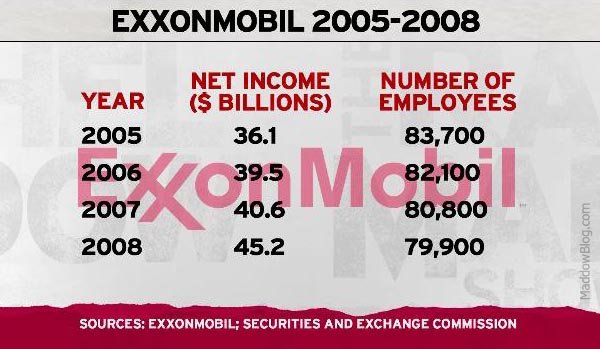
Yet Tillerson is somehow worried about American workers being up to snuff? Why? The corporation outsources a steadily increasing share of its jobs overseas. Those that it does keep in the continental US have been subject to massive downsizing efforts. As employees have decreased, corporate profits have increased. And Tillerson expects anyone to think he’s concerned about the well-being of the American worker!? Give me a break!


Exxon_Income_vs_Employment


I suppose it’s not that surprising though that someone who makes $40 million a year, himself, would expect a paycheck to be the ultimate display of personal significance. After all, he probably thinks his exorbitant salary proves that he’s very important.

Albert Einstein never made that kind of money. Heck! Neither did William Shakespeare, Dr. Martin Luther King, Marie Curie, or Abraham Lincoln. So by Tillerson’s ethos, all of these people were defective products unfit for the corporate world. Or at the very least our estimation of them is flawed.

After all, what need have we of Shakespeare’s poetry in the exercise of buying and selling? Perhaps the greatest author ever to write in the English language might find merit in the advertising department. Likewise, Dr. King’s ethic of equality might be useful in human resources. Marie Curie? She’d find gainful employment in research and development but any patents she generated would undoubtedly be held in the corporate interest. And Mr. Lincoln? Perhaps he could be useful as a low level administrator but, no, such iconoclasm as he possessed would probably not be a good fit. He’d end up freeing the wage slaves or other such unprofitable nonsense.

Is this really the American Dream? Find an occupation producing monetary wealth or else lose all claims to value? If so, how loud must history be laughing at us?

The post-Impressionist artist Van Gogh created 900 paintings and 1,100 drawings and sketches. Many of these works now adorn museums around the globe and have forever changed the way we see the world. But during his lifetime, he sold only one painting. So by Tillerman’s logic, he was a defective product, a failure.

This is the sickness of the profiteer – to be forever appraising worth but unable to see true value. It is the disease eating away at the soul of our country. It’s the same mindset that justifies anything in the name of short-term gain – credit default swaps, the housing bubble, charter schools and Common Core.

After all, Tillerson’s notorious quote above comes from an infamous article in Fortune magazine in which the CEO threatened the former governor of Pennsylvania that he’d pull ExxonMobil out of the state if the legislature didn’t adopt some form of Common Core. And so the state gave in to the whim of one man with no experience, knowledge or wisdom about how children learn. And students in more than 500 public school districts are thus constrained by this legal economic blackmail.

I am but a simple man. I don’t bring in a six-figure salary. I’m a teacher in that same public school system. I’m also the father of an elementary student. I am a man of no monetary means and thus little merit. But I say this: the Tillersons of this world are wrong. Our children are worth more than these tiny bean counter brains realize. The purpose of education is not to provide more resources for their pointless game of Monopoly.

My daughter has a life, and her education is a tool to enrich that life. It is her vehicle of understanding the world around her. It is a process to invigorate her sense of wonder. It is a method of understanding how things work and where she fits in the universe.

Yes, she will one day need to seek employment. But what she chooses as her occupation will be up to her. SHE will decide where she fits in, Mr. Tillerson, not you. SHE will decide what is valuable in her life. SHE will decide if she wants to spend her hours in the pursuit of profits or less tangible enterprises.

As such, she needs literature – not standardized tests. She needs mysteries to solve – not Common Core. She needs equitable resourcesnot charter schools. She needs teachers with advanced degrees and dedication to their jobs – not Teach for America temps.

Don’t you dare try to justify all that with some narrow economic view of monetary value. Some things have no price. My daughter is one of them.


NOTE: This article also was featured on Diane Ravitch’s blog, I did an interview about it on the Rick Smith Show, and was quoted in an article about the issue in the Washington Post.


Gadfly’s Choice – Top 5 Blogs (By Me) You May Have Missed from 2015

Screen shot 2016-01-02 at 11.01.09 PM

There are an awful lot of great blogs out there.

Especially if you’re into education. But many are telling the same story.

You don’t hear much about it in the mass media, yet our public schools are being systematically starved to death. They’re being set up to fail while the vultures of privatization and free enterprise drool over the corpse.

Phony philanthropists offer schools fake donations with more strings attached than Pinocchio and noses twice as long. To secure these financial “gifts,” schools are forced to pay out more than they receive for reforms that ultimately benefit the benefactor more than the beneficiary.

And even when these philanthro-capitalists are absent, our government is pretending to hold schools accountable by forcing them to enact these same unproven, disproven or counter-factual policies that actually make things worse. Then when these schemes fail, lawmakers use that as a justification to close schools and gift them to for-profit companies who squeeze every ounce of profit they can from what’s left while further cheating students out of resources.

It’s a scam, a heist, a racket – and you’re paying for it with your tax dollars.

But if you’ve been reading the plethora of excellent edu-blogs out there, you already know this.

Who writes about this public school shakedown? Often it’s the same teachers, parents, professors and bonafide education experts whom policymakers have excluded from the conversation.

As a public school teacher, myself, with more than a decade in the classroom, a masters degree and a national board certification, my empiricism and experience is not valued. So like many folks burdened with real-world knowledge, I write a blog.

In only a year and a half, I’ve had more than 487,000 hits and 9, 208 followers. In my last post I listed my 10 most popular articles from 2015.

Today I propose to continue a tradition I stole from fellow blogger Russ Walsh. I present not my most popular work, but 5 articles that deserve another look. Most of these didn’t receive massive public attention, but perhaps they should.

Please enjoy your humble gadfly’s choice.


5) Prejudice of Poverty: Why Americans Hate the Poor and Worship the Rich

2children

Published: Nov. 18

Views: 5,005

Description: America is rife with myths about the poor – mainly that the impoverished deserve their poverty. If they just worked harder, they wouldn’t be poor. Moreover, it’s a scam. The rest of us pick up the slack while they lounge around at home living better than we do. These are pernicious lies told with the certainty of truths. This article is my attempt to dispel these myths with facts.

Fun Fact: In my experience, often people are afraid to say certain things because they don’t want to appear racist. However, no such fear exists about sounding prejudiced against the poor, because few realize such bigotry even exists. It does. Big time.


4) Stories about Puerto Rican Resistance to Corporate Education Reform

Parents and Children Occupy Puerto Rican School Refusing to Let Corporate Vultures Raid Its Contents

(Aug. 22 – 1,551 hits)

In Puerto Rico, Students Go On Strike to Stop Teacher Relocations

(Sept. 25 – 1,211 hits)

Puerto Rico Teachers Plan One-Day Strike to Protest Corporate Education Reform

(Nov. 15 – 634 hits)

12050457_10153301043793152_183452142_o

Published: Aug. – Nov.

Views: 3,396 TOTAL

Description: The US territory of Puerto Rico is besieged by vulture capitalists encouraging damaging rewrites to the tax code while buying and selling island debt. Meanwhile hundreds of American private equity moguls and entrepreneurs are using the Commonwealth as a tax haven. As a result, tax revenues to fund public goods like education are drying up and hundreds of schools are being closed. However, the citizenry is putting up one of the most aggressive and successful resistance campaigns against corporate education reform in this hemisphere.

Fun Fact: For a while, few people on the mainland were talking about this – certainly not in the media. That appears to be slowly changing. There is so much we can all learn from Puerto Rico. We need each other.


3) Education Does Not Cure Poverty – It Cures Ignorance

Screen shot 2015-10-17 at 11.36.22 PM

Published: Oct. 18

Views: 3,080

Description: One of the biggest lies told by our national education policymakers is that schools alone can cure poverty. We don’t need an anti-poverty campaign. We just need to ensure people get a good education. This is baloney. The purpose of learning has never been to gain wealth or even teach how to gain wealth. It is and always has been about eradicating ignorance.

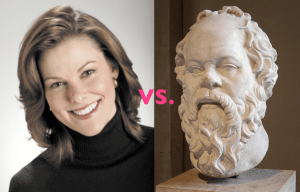
Fun Fact: If more people knew this, there would be no more high stakes testing, Common Core, etc. Also I’m kind of  partial to this article because of the image I made to go along with it. Campell Brown vs. Socrates!? That always makes me smile!


2) Do Americans “Throw Money” At Their Schools? A Fair Funding Primer

Screen shot 2015-07-06 at 11.05.59 PM

Published: July 9

Views: 1,372

Description: How many times have you heard someone complain about all the money we throw at our schools? It’s dismissive nonsense. We aren’t throwing anything. We INVEST in children. That money is not a waste. In fact, it is far from adequate for the job. This post is my attempt to explain the facts behind school funding. Please share.

Fun Fact: It is so nice to have all of this information in one place. I have tweeted, emailed, and posted this article to blowhards and ignoramuses more times than I can remember. Feel free to do the same.


1) We Shall Overcome… Our Lack of Standardized Tests!?

Screen shot 2015-07-19 at 12.34.34 AM

Published: July 19

Views: 628

Description: This is the newest myth being spread about standardized testing. Somehow high stakes assessments ensure that minorities civil rights don’t get violated!? It is exactly the opposite of the truth. Yet many of the more well-funded civil rights organizations suddenly began singing this tune over the summer. My article tries to explain why.

Fun Fact: Make no mistake. Many civil rights organizations still vehemently oppose high stakes testing. If we really want to stand up for our black and brown brothers and sisters, we need to stand with them and counter this AstroTurf narrative at every turn. Testing violates their rights, not protects them.

Who’s Your Favorite Gadfly? Top 10 Blog Posts (By Me) That Enlightened, Entertained and Enraged in 2015

Screen shot 2015-12-30 at 12.57.49 AM

“Pennsylvania educator and public school advocate Steven Singer is one of the most powerful voices in the nation when it comes to speaking out for students, parents, teachers and our public schools.”
Jonathan Pelto, founder of the Education Bloggers Network


“Steven Singer wrote these five terrific posts last year. I didn’t see them when they appeared. Probably you didn’t either. You should.”
Diane Ravitch, education historian


“Your name should be Sweet Steven Singer. You are a delight.”
Karen Lewis, President of the Chicago Teachers Union

11206058_10152940020833860_7943827034975790194_n


Hello. My name is Steven Singer, and I am a gadfly.

I make no apologies for that. It’s what I set out to do when I started this blog in July of 2014.

I told myself that people were too complacent. There was no curiosity. People were too darn sure about things – especially education policy and social issues.

They knew, for instance, that standardized testing was good for children. Why? Because Obama said so. And he’s such a nice man. It’s too bad all those mean Republicans keep making him do all this bad stuff.

They also knew racism was over. After all… Obama! Right? Black President, therefore, the hundreds of years of struggle – finished! Move along. Nothing to see here.

Yet all this “knowledge” went against everything I saw daily as a public school teacher.

Standardized tests are good for children? Tell that to more than half of public school kids now living below the poverty line who don’t have the same resources as middle class or wealthy kids yet are expected to magically ace their assessments. Tell that to the kids who get hives, get sick, or throw up on test day. Tell it to the black and brown students who for some unexplainable reason almost always score lower than their white peers.

Racism is over? Tell that to all my minority students who are afraid to walk home from school because they might get followed, jumped, beaten or killed… by the police! Tell it to their parents who can’t get a home loan and have to move from one rental property to another. Tell it to the advertising executives and marketing gurus who shower my kids with images of successful white people and only represent them as criminals, thugs, athletes or rappers.

So when I started this blog, I consciously set out to piss people off. But with a purpose. To quote the original historical gadfly, Socrates, my role is, “to sting people and whip them into a fury, all in the service of truth.” It seems well suited to a school teacher. After all, Socrates was accused of “corruption of the youth.”

It’s been quite a year. When I went to the Network for Public Education conference in Chicago last April, some folks actually seemed to know who I was. “Don’t you write that Gadfly blog?” was a common question.

When I met NEA President Lily Eskelsen Garcia and AFT President Randi Weingarten, they both said, “I read your blog.” And then they looked me up and down suspiciously as if they were thinking, “THIS is the guy who writes all that stuff!? THIS is the guy giving me such a hard time!?”

Of course, I am human, too. One can’t sting and bite every day. Sometimes the things I write are met with love and approbation. Some weeks even Lily and Randi like me. Sometimes.

Education historian Diane Ravitch has given me tremendous moral support. I can’t tell you how gratifying it is to have one of your heroes appreciate your work! Her book “The Death and Life of the Great American School System” really woke me up as a new teacher. I’m also on the steering committee of the Badass Teachers Association, an organization that has changed my life for the better. The more than 56,000 people  there are my support. I would never have had the courage to start a blog or do half of the crazy things I do without their love and encouragement.

And there are so many more people I could thank: my fellow bloggers Jonathan Pelto, Peter Greene, Russ Walsh, Nancy Flanagan, Mitchell Robinson, and Yohuru Williams. Also the good people at the LA Progressive and Commondreams.org. The incredible and tireless radio host Rick Smith.

There are just too many to name. But no list of acknowledgment would be even close to completion without mentioning my most important supporter – you, my readers. Whether you’re one of the 9,190 people who get every new post delivered by email or if you otherwise contribute to the 486,000 hits my site has received so far, THANK YOU.

So in celebration of my first full year of blogging, I present to you an end of the year tradition – a Top 10 list. Out of the 90 posts I wrote in 2015, these are the ones that got the most attention. Often they incensed people into a fury. Sometimes they melted hearts. I just hope – whether you ended up agreeing with me or not – these posts made you think.

Feel free to share with family, friends, co-workers, etc. After all, I’m an equal opportunity gadfly. I always cherish the chance to buzz around a few new heads!


10) The Democrats May Have Just Aligned Themselves With Test and Punish – We Are Doomed

sanders_warren-620x412

Published: July 17, 2015
Views: 7,122

Description: It hit me like a slap in the face that almost all Senate Democrats voted to make the reauthorization of the federal law governing K-12 public schools a direct continuation of the same failing policies of the Bush and Obama years. Heroes like Bernie Sanders and Elizabeth Warren seemed to be turning their back on teachers, parents and school children. And they were stopped in their efforts by… Republicans!

Fun Fact: This story had some legs. It inspired a bunch of education advocates like myself who are also Bernie Sanders supporters to write the candidate an open letter asking him to explain his vote. His campaign eventually responded that it was about accountability!?


9) Punching Teachers in the Face – New Low in Presidential Politics

cc-600x400

Published: Aug. 3
Views: 14,735

Description: New Jersey Governor Chris Christie thought he’d run for the Republican nomination for President. He thought threatening to metaphorically punch teachers unions in the face would get him votes. It didn’t.

Fun Fact: This new low in Presidential politics came just after Donald Trump had announced he was running. Christie’s new low now seems almost quaint after Trump’s calls to tag all Muslims and monitor their Mosques. How innocent we were back in… August.


8) This Article May Be Illegal – Lifting the Veil of Silence on Standardized Testing

whistle
Published: April 18
Views: 15,818

Description: Teachers and students may be legally restrained from telling you what’s on federally mandated standardized tests, but we’re not restrained from telling you THAT we’re restrained. Is this just protecting intellectual property or direct legal intimidation of educators and children?

Fun Fact: I have not yet been arrested for writing this piece.


7) Stories about Teachers Union Endorsements of Hillary Clinton

Did the AFT Rank and File REALLY Endorse Hillary Clinton for President? If So, Release the Raw Data

(July 12 – 4,448 hits)


The NEA May Be About to Endorse Hillary Clinton Without Input From Majority of Members

(Sept. 21 – 3,873 hits)

A Handful of NEA Leaders Have Taken Another Step Toward Endorsing Hillary Clinton Despite Member Outcry

(Oct. 2 – 739 hits)

Teachers Told They’re Endorsing Hillary Clinton by NEA Leadership, Member Opinions Unnecessary

(Oct. 4 – 7,074 hits)

Screen shot 2015-09-21 at 12.23.19 AM

Published: July 12 – Oct. 4
Views: 16,134 TOTAL

Description: You expect your union to have your back. Unfortunately it seems our teachers unions were more interested in telling us who we’d be endorsing than asking us who the organizations representing us should endorse.

Fun Fact: I broke this story pretty much nationwide. News organizations like Politico were calling me to find out the scoop.


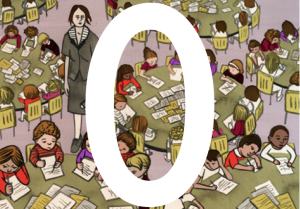
6) Why We Should Have ZERO Standardized Tests in Public Schools

Screen shot 2015-01-30 at 4.35.10 PM

Published: Jan. 30
Views: 16,443

Description: Someone had to say it. We don’t need any standardized tests. We need teacher-created tests. And that’s not nearly as crazy as some people think.

Fun Fact: This was written back when the Elementary and Secondary Education Act (ESEA) was being rewritten and naïve fools like me thought we might actually get a reduction in high stakes testing. Spoiler alert: we didn’t.


5) Atlanta Teacher RICO Conviction is Blood Sacrifice to the Testocracy

aztecshumansacrifice

Published: April 3
Views: 18,187

Description: There is something terribly wrong when we’re using laws created to stop organized crime as a means to convict  teachers cheating on standardized tests. I’m not saying cheating is right, but the mafia kills people. These were just teachers trying to keep their jobs in a system that rewards results and refuses to balance the scales, listen to research or the opinions of anyone not in the pockets of the testing and privatization industries.

Fun Fact: Watching all those seasons of “The Wire” finally came in handy.


4) Not My Daughter – One Dad’s Journey to Protect His Little Girl From Toxic Testing

FATHERS-AND-DAUGHTERS
Published: March 20
Views: 26,420

Description: How I went to my daughter’s school and demanded she not be subjected to high stakes testing in Kindergarten.

Fun Fact: They were very nice and did everything I asked. If you haven’t already, you should try it!


3) I Am Racist and (If You’re White) You Probably Are, Too

Screen shot 2015-06-02 at 1.42.34 PM

Published: June 2
Views: 28,906

Description: White folks often can’t see white privilege. This is my attempt to slap some sense into all of us. If you benefit from the system, you’re responsible to change it.

Fun Fact: Oh! The hate mail! I still get it almost every day! But I regret nothing! A black friend told me I was brave to write this. I disagreed. Anytime I want I can hide behind my complexion. She can’t.


2) I Am A Public School Teacher. Give Me All the Refugees You’ve Got

syrian_refugee_schools

Published: Nov. 19
Views: 45,196

Description: Our public schools are already places of refuge for our nation’s school children. Send me more. I’ll take them all. I’d rather they end up in my classroom than drowned by the side of a river.

Fun Fact: I got equal love and hate for this one. Some folks were afraid of terrorists. Others didn’t think we could afford it. But many told me my heart was in the right place. Lily and the folks at the NEA were especially supportive.


1) White People Need to Stop Snickering at Black Names

baby-and-parents

Published: Sept. 6
Views: 96,351

Description: Maybe we should stop laughing at black people’s names. Maybe we should try to understand why they are sometimes different.

Fun Fact: You’d have thought I threatened some people’s lives with this one! How dare I suggest people should stop mocking other people’s names! If you want to know how strong white fragility is in our country, read some of the comments! But many people thanked me for bringing up something that had bothered them for years but that they had been too polite to talk about, themselves. This is easily my most popular piece yet.


Does Bernie Sanders Offer Education Advocates Enough? Are We Feelin’ the Bern or Just Feelin’ Burned?

150430-berniesanders-editorial

You probably didn’t hear about this on the news.

To my knowledge no one covered it on TV, the newspaper or even on the blogosphere.

But Bernie Sanders may have made a reply to his Democratic Primary rival Hillary Clinton’s gaffe about closing public schools.

“I wouldn’t keep any school open that wasn’t doing a better than average job,” Clinton said at a campaign stop in Iowa on Dec. 22.

The media took this to mean Clinton is in favor of closing half the schools in the country. The comment has been much debated with calls for context and explanation by the Clinton campaign.

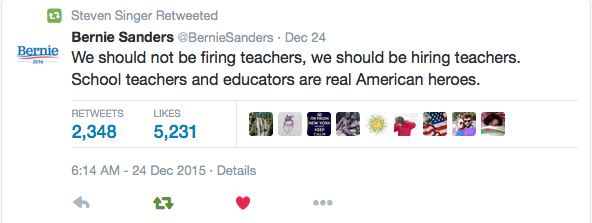
However, very quietly on Dec. 24, Sanders tweeted, “We should not be firing teachers. We should be hiring teachers. School teachers and educators are real American heroes.”

Screen shot 2015-12-26 at 8.06.51 PM

The @BernieSanders twitter account has more than 1 million followers, a little less than the @SenSanders account. But it does appear to be affiliated with the Bernie Sanders presidential campaign. If Sanders, himself, posted the tweet is unclear. The candidate used the same account to live tweet the Republican debates so he – at least sometimes – is personally responsible for the material that comes out of there.

Moreover, the comment can be connected directly to something he said on C-SPAN at a campaign stop in Cleveland, OH, on Nov. 16 – before Clinton’s gaffe. In a larger speech that touched on numerous issues he said, “We should not be firing teachers and childcare workers, we should be hiring teachers.” The line about teachers being American heroes is new.

Start the speech 56 minutes in to hear the comment.

So I think it’s fair to say that the sentiment is, in fact, Bernie’s. It’s only the timing that is in question.

Is this tweet an attempt to distinguish himself from Clinton? Is this his way of saying that he’s NOT interested in closing schools and firing teachers – instead he wants to invest in education and hire more educators?

Maybe.

It sure would be nice if he’d come out and tell us. Frankly, I’m getting tired of having to read the tea leaves to get a glimpse of Bernie’s K-12 education policy.

Don’t get me wrong. I love the guy.

He’s been one of my favorite politicians for years. As a U.S. Senator, he’s consistently worked against economic and social inequality for decades. He’s been a fearless critic of Wall Street and privatization, an advocate for single payer healthcare and fighting global climate change.

He champions historic investments in preschool and college – even vowing to make post secondary tuition free. But somehow when it comes to K-12 schools, he’s got very little to say.

Most notably, he voted against No Child Left Behind (NCLB) – the devastating schools bill passed with bipartisan support during the George W. Bush years. However, he also voted in favor of the Charter School Expansion Act of 1998 which further opened the nation’s piggy bank to for-profit school privatizers. He also opposed a bill in early 2015 that would have prohibited the federal government from imposing the terrible Common Core standards on the nation’s schools.

On the campaign trail, when asked about his stance on K-12 schools, Sanders has boasted he would end NCLB. That was just accomplished by Congress through a reauthorization of the bill now called the Every Student Succeeds Act (ESSA). As a member of the Health, Education, Labor and Pensions (HELP) Committee, Sanders was an active participant in that process.

When this legislation was still in the Senate, he – along with almost all Democrats – voted for a failed amendment that would have continued most of the worst aspects of NCLB. The bill eventually passed the chamber in a potentially more palatable form. Sanders eventually voted for that Senate version but was conspicuously absent from the final vote.

Though keeping a busy campaign schedule, Sanders is known for returning to Washington to vote for important legislation. He does this much more than most of the other sitting Congressional Presidential candidates.

So why was he absent for the final vote on the ESSA? Was that done on purpose, and if so why? Could it be an attempt to distance himself from this legislation? Or is it an attempt at plausible deniability – a way of justifying both his approval and disapproval of the same legislation?

Sanders hasn’t said much.

This puts would-be-supporters in an uncomfortable position. We like what Sanders has to say about the economy and poverty, but we have little to go on when it comes to K-12 education. Certainly if Sanders was elected President and came through with all of his other promises, that would help our public schools tremendously. And since Sanders has been fighting for these things his entire lengthy political career, it’s hard to doubt his sincerity. But why not include education as part of this platform? It seems to fit perfectly with everything else he believes.

On the other hand, there’s Clinton. She is making a real effort to clarify her education positions. In fact, last week’s gaffe was part of a much larger policy speech on K-12 schools. Sander’s reply – though better stated – was a one off. It was a sound-byte. It was an applause line. It didn’t have much substance behind it.

How are we to take it? Would Sanders hire more teachers as part of a nationwide education equity policy? If so, what exactly is that policy? Or is he – like Clinton – in favor of closing some struggling schools?

Certainly Clinton has a credibility problem. One of her first actions on the public scene as the First Lady of Arkansas in 1983 was to fight against the state teachers union to enact accountability-based school reform. Many of the billionaires and shady think tanks that are working so hard to destroy public schools have donated heavily to her campaign. Her endorsement by both major teachers unions – the National Education Association and American Federation of Teachers – were allegedly the result of leadership and not rank and file members.

But unlike Sanders, Clinton actually seems to care about getting the education vote. She is actively fighting for our advocacy. Bernie doesn’t seem to think he needs us.

The Democratic Primaries are about two months away. If Sanders is going to make a play for teachers, parents, students and education advocates, he still has a chance. But time is running out.

Personally I’d rather vote for him, and maybe I will. But if he finally came out swinging, if he actually made me feel like he’d strip away the high stakes testing, unproven or failing policies and put teachers in the drivers seat – he could get so much more.

There are tens of thousands of teachers and advocates standing on the sidelines looking to Bernie. If he gave us a major policy speech, he’d find his campaign offices flooded with new volunteers. Educators would take to the streets and phone banks. We’d lead the charge. We could help turn the tide in a Democratic primary where the margin of victory could well be razor thin.

We’re out there, Bernie. Just say the word and we’ll come running.

We want to Feel the Bern, but you’ve got to turn up the heat!


NOTE: This article also was published in Commondreams.org and the LA Progressive.

 

Don’t Blame My Students For Society’s Ills

poverty LOCAL POVERTY GEE


As a public school teacher, I see many things – a multiplicity of the untold and obscure.

On a daily basis, I see the effects of rampant poverty, ignorance and child abuse. I see prejudice, racism and classism. I see sexism, homophobia and religious intolerance.

And hardly any of it comes from my students.

Despite what some people might say in the media, on Facebook or at the local watering hole, the kids are all right. It’s what we, the adults, are doing to them that’s messed up.

It’s always been in fashion for grown-ups to trash the next generation. At least since Hesiod bemoaned the loss of the Golden Age, we’ve been looking at the current crop of youngsters waiting in the wings to replace us and found them lacking. They just don’t have our drive and motivation. In my day, we had to work harder than they do. If only they’d apply themselves more.

It’s all untrue. In fact, today’s children have it harder than children of the ‘70s and ‘80s did when we were their age! Much harder!

For one thing, we didn’t have high stakes standardized tests hanging over our heads like the Sword of Damocles to the degree these youngsters do. Sure we took standardized assessments but not nearly as many nor did any of them mean as much. In Pennsylvania, the legislature is threatening to withhold my students’ diplomas if they don’t pass all of their Keystone Exams. No one blackmailed me with anything like that when I was a middle schooler. All I had to do was pass my classes. I worried about getting a high score on the SAT to get into college, but it didn’t affect whether I got to graduate. Nowadays, kids could ace every course for all 13-years of grade school (counting Kindergarten) and still conceivably only earn a certificate of attendance! Try using that for anything!

Moreover, my teachers back in the day didn’t rely on me so they could  continue being gainfully employed. The principal would evaluate them based on classroom observations from time-to-time to assess their effectiveness based on what he or she saw them doing. But if I was having a bad day during the assessment or if I just couldn’t grasp fractions or if I was feeling too depressed to concentrate – none of that would affect my teacher’s job rating. None of it would contribute to whether my teacher still had an income.

Think of how that changes the student-teacher relationship. Now kids as early as elementary school who love their teachers feel guilty on test day if they don’t understand how to answer some of the questions. Not only might their score and future academic success suffer, but their teacher might be hurt. That’s a lot of pressure for people who’ve just learned how to tie their shoes. They’re just kids! In many cases, the educator might be one of the only people they see all day who gives them a reassuring smile and listens to them. And now being unready to grasp high-level concepts that are being hurled at kids at increasingly younger ages may make them feel responsible for hurting the very people who have been there for them. It’s like putting a gun to a beloved adult’s head and saying, “Score well or your teacher gets it!” THAT’S not a good learning environment.

Finally, child poverty and segregation weren’t nearly as problematic as they are today. Sure when I went to school there were poor kids, but not nearly as many. Today more than half of all public school children live below the poverty line. Likewise, in my day public policy was to do away with segregation. Lawmakers were doing everything they could to make sure all my classes had increasing diversity. I met so many different kinds of people in my community school who I never would have known if I’d only talked with the kids on my street. But today our schools have reverted to the kind of separate but equal mentality that was supposed to be eradicated by Brown vs. Board of Education. Today we have schools for the rich and schools for the poor. We have schools for whites and schools for blacks. And the current obsession with charter schools and privatization has only exacerbated this situation. Efforts to increase school choice have merely resulted in more opportunities for white flight and fractured communities.

These are problems I didn’t face as a teenager. Yet so many adults describe this current generation as “entitled.” Entitled to what!? Less opportunity!? Entitled to paying more for college at higher interest for jobs that don’t exist!?

And don’t get me started on police shootings of young people. How anyone can blame an unarmed black kid for being shot or killed by law enforcement is beyond me.

Children today are different. Every few years their collective character changes.  Today’s kids love digital devices. They love things fast-paced, multi-tasked and self-referential. But they don’t expect anything they haven’t earned. They aren’t violent criminals. As a whole they aren’t spoiled or unfeeling or bratty. They’re just kids.

In fact, if I look around at my classes of 8th graders, I see a great many bright, creative and hard-working young people. I’m not kidding.

I teach the regular academic track Language Arts classes. I don’t teach the advanced students. My courses are filled with kids in the special education program, kids from various racial, cultural and religious backgrounds. Most of them come from impoverished families. Some live in foster homes. Some have probation officers, councilors or psychologists.

They don’t always turn in their homework. Sometimes they’re too sleepy to make it through class. Some don’t attend regularly. But I can honestly say that most of them are trying their best. How can I ask for more?

The same goes for their parents. It can be quite a challenge to get mom, dad, grandma, grandpa, brother, sister or other guardians on the phone. Parent-teacher conferences are very lonely in my room while the advanced teacher is mobbed. But I don’t generally blame the parents. In my experience, most moms and dads are doing the best they can for their kids. Many of my student’s have fathers and mothers working multiple jobs and are out of the home for the majority of the day. Many of my kids watch over their younger brothers and sisters after school, cooking meals, cleaning house and even putting themselves to bed.

I wish it wasn’t like that, but these are the fruits of our economy. When the recession hit, it took most of the well-paying jobs. What we got back was predominantly minimum wage work. Moreover, people of color have always had difficulty getting meaningful employment because of our government sanctioned racial caste system. Getting a home loan, getting an education, getting a job – all of these are harder to achieve if your skin is black or brown – the same hue as most of my students and their families.

So, yes, I wish things were different, but, no, I don’t blame my students. They’re trying their best. It’s not their fault our society doesn’t care about them. It’s not their fault that our nation’s laws – including its education policy – create a system where the odds are stacked against them.

As their teacher, it’s not my job to denigrate them. I’m here to lift them up. I offer a helping hand, not a pejorative finger.

And since many of the factors that most deeply affect education come from outside the school, I think my duty goes beyond the confines of the classroom. If I am to really help my students, I must be more than just an educator – I must be a class warrior.

So I will fight to my last breath. I will speak out at every opportunity. Because my students are not to blame for society’s ills. They are the victims of it.


NOTE: This article also was published in Wait What?, and the Badass Teachers Association Blog.


Much Ado About an Enigma – No One Really Knows What Impact the ESSA Will Have on Public Schools

ESSA-Obama

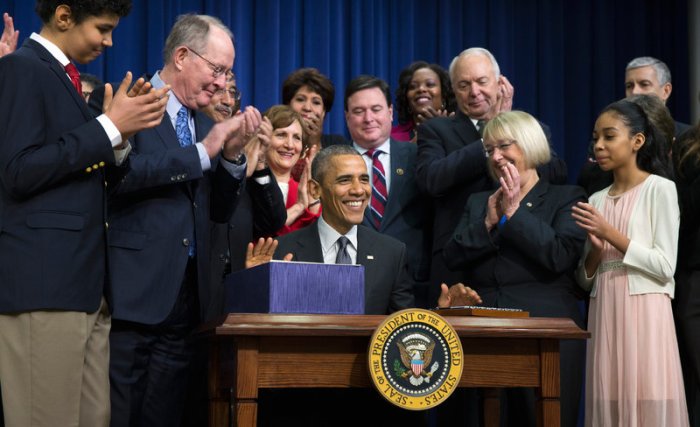
President Barack Obama signed the Every Student Succeeds Act (ESSA) this week.

The new legislation reauthorizes federal law governing K-12 public education.

In 1965 we called it the Elementary and Secondary Education Act (ESEA). Until today we called it No Child Left Behind (NCLB). And now after a much-hyped signing ceremony, the most definitive thing we can say about it is this: federal education policy has a new name.

Seriously. That’s about it.

Does it reduce the federal role in public schools? Maybe.

Does it destroy Common Core State Standards? Possibly.

Is it an improvement on previous policies? Potentially.

Will it enable an expansion of wretched charter schools and unqualified Teach for America recruits? Likely.

The problem is this – it’s an over 1,000 page document that’s been open to public review for only two weeks. Though it was publicly debated and passed in the House and Senate, it was finalized behind closed doors and altered according to secure hurried Congressional votes. As such, the final version is full of legal jargon, hidden compromise, new definitions and verbiage that is open to multiple meanings.

How one reader interprets the law may be exactly the opposite of how another construes it.

Take the much-touted contention that the ESSA reduces the federal role in public schools. Even under the most positive reading, there are limits to this freedom.

The document continues to mandate testing children each year in grades 3-8 and once in high school. It also mandates academic standards and accountability systems. However, what these look like is apparently open to the states.

For instance:

The Secretary [of Education] shall not have the authority to mandate, direct, control, coerce, or exercise any direction or supervision over any of the challenging State academic standards adopted or implemented by a State.

That seems pretty clear. The federal government will not be able to tell states what academic standards to adopt or how student test scores should be used in teacher evaluations.

But it also says that states will have to submit accountability plans to the Department of Education for approval. It says these accountability plans will have to weigh test scores more than any other factor. It says states will have to use “evidence-based interventions” in the schools where students get the lowest test scores.

That sounds an awful lot like the test-and-punish system we have now.

What if your state decides to take a different road and reject the high stakes bludgeon approach to accountability? In that case, some readers argue schools could lose Title I funds – money set aside to help educational institutions serving impoverished populations.

Will that actually happen? No one knows.

It may depend on who will be President in 2017 and whom that person picks as Secretary of Education. And even if the Feds try to take advantage of these potential loopholes, the matter could end up being decided by the U.S. Supreme Court.

What about Common Core?

Some readers interpret the new law as destroying forever the possibility of national academic standards. If states are allowed to pick their own standards, it is highly unlikely they’ll all pick the ones found in the deeply unpopular Common Core. However, the law does force each state to have academic standards of some kind, and it defines what those standards must look like. One interpretation of this is that they must look a lot like the Common Core.

They must be “state-developed college- and career-ready standards.” You read that right – “College and career ready.” That’s the Common Core catchphrase. If someone says they want to eat lunch at “the golden arches,” they haven’t said McDonalds, but you know they’re craving a Big Mac.

Will the Fed allow states to choose standards radically different than the Core? Again only time and – possibly – the courts can tell.

This same problem occurs throughout the document. As the public painstakingly combs through it, new legal wiggle room may be found. And I am not so naive as to suppose we’ve found all of the loopholes yet. Some of these may be the result of poorly chosen wording. Others may be purposefully hidden time bombs waiting for opportunists to exploit.

This uncertainty about exactly what the ESSA will eventually mean for our public schools may help explain the range of reactions to the formative law – from ecstasy to despair to shrugs and snores.

I’m not sure what to think of the thing, myself. I started the whole process disgusted but came around to accepting it if the final result was any kind of improvement over previous legislation. And now that it’s the law of the land, I look at this Frankenstein’s monster of a bill – stitched together pieces of mystery meat – and I don’t know whether to laugh or cry.

I still hope it will live up to the limited promise it holds to bring us some relief from NCLB. But I admit this thing could go sour. Anyone’s guess is as good as mine.

Which brings me to perhaps the biggest problem with this law that no one seems to be talking about.

Education needs reformed. We need to repeal the bogus policies that have been championed by the 1% and their lapdog lawmakers. We need to get rid of test-based accountability. We need to trash high stakes testing, Common Core, value added measures, charter schools and a host of other pernicious policies. We need to initiate a real anti-poverty program dedicated to attacking the actual problem with our schools – inequality of resources.

But more than any of that, we need to reform our government.

We need to find a better way to make our laws. The process that shat out this ESSA must go.

Think about it. No Child Left Behind was an abject failure by any metric you want to use. It didn’t close achievement gaps – it increased them. And the major policy of this law – annual standardized testing – remains intact in the reauthorization!

There has been massive public outcry against annual testing. Parents are leading an exponentially growing civil disobedience movement shielding their children from even taking these assessments. Everyone seems to agree that we test kids too much – even President “I’ll-veto-any-bill-that-deletes-testing” Obama.

Yet our legislators did next to nothing to fix this problem.
Instead preference was given to lobbyists and corporatists interested in making a buck off funding set aside to educate children. The focus was on smaller government – not better government. These aren’t mutually exclusive, but they aren’t exactly one-and-the-same, either.

This can’t continue if we are to keep pretending we have a representative Democracy. The voice of lobbyists must not be louder than voters. Money must be barred from the legislative process. Demagoguery must not overshadow the public good. We need transparency and accountability for those making our laws.

Until that happens, we will never have a sound and just education policy, because we don’t have a sound and just government.

Unfortunately, that is the biggest lesson of the ESSA.


NOTE: This article also was published in the LA Progressive, Badass Teachers Association Blog and quoted extensively on Diane Ravitch’s blog.