Truth Bomb: Democrats Need to Embrace Progressivism or Else Move Out of the Way

screen-shot-2016-12-03-at-12-15-35-am

“Democrats: Are we the party of the donor class or the working class? This is value clarification time. It’s now or never!”

Nina Turner, former OH State Senator

Democrats, liberals and progressives of every stripe – you’re not going to want to hear this, but hear it you must.

We’ve gone around for too long thinking we’ve got all the answers, but obviously we don’t.

Hillary Clinton lost. Donald Trump won. There’s something seriously wrong with what we’ve been doing to get that kind of result.

There are some hard truths we’ve got to understand, that we’ve got to learn from. Hearing them may be painful. Many of us will fight against it. But we can’t keep fooling ourselves anymore. All that “hope” and “change” we’ve been waiting for – it has to start with us, first.
We’re stuck in a loop and we’ve got to break ourselves out of it. And the only way to get there is to break the track wide open.

It’s time to stop mourning.

Trump is President-elect.

Yeah, that sucks. Hard.

He’s going to protect us by enacting policies to hurt brown people. He’s going to make it harder to get healthcare. He’s going to trample the Constitution. He’s going to offer up our schools to private companies to do with as they please in secret using our tax dollars. He’s going to legitimize white nationalism and embolden racists, bigots, sexist, xenophobes, homophobes and every kind of hate group imaginable. He’s going to hand out tax cuts to his megarich campaign contributors and tax us with the loss of government services. He’s going to use the office as an opportunity to enrich himself and his billionaire buddies and then go on social media and tweet about how he’s fighting for working people.

I don’t like it any better than you. But it’s time to face it.

Sure, Clinton won the popular vote. Sure, there’s a recount going on in Michigan, Pennsylvania and Wisconsin. I’d love for it to overturn Trump’s victory. But I have zero confidence that it will. And I refuse to let it blind me to the urgent need for change.

The first thing we have to do is own up to one essential thing: Hillary Clinton was a bad candidate.

The people were crying out for a populist champion. We had one in Bernie Sanders. He would have destroyed Trump, but we blew it.

I’m not going to rehash it all again, but there’s no way you can honestly say the Democratic primary process was fair. Party leaders were clearly in the bag for Clinton. They ignored her negatives and what their constituency were trying to tell them.

This loss belongs squarely on the shoulders of establishment Democrats. It’s not the fault of the electorate. It was the party’s job to convince people to vote for their candidate. They didn’t do that. Instead they told people who to vote for – or more accurately who NOT to vote for. It was clearly a losing strategy. It lost us the Presidency, Congress and the Supreme Court. Own it.

Next we have to acknowledge that this problem is not new. The Democrats haven’t been what they were or what they could be for a long time.

Since at least President Bill Clinton, many Democrats have traded in their progressive principles for neoliberal ones. They have sold out their concern for social justice, labor and equity in favor of slavish devotion to the same market-driven principles that used to characterize the other side.

Bill Clinton approved NAFTA. He deregulated Wall Street paving the way for the economic implosion. He expanded the failing war on drugs, increased the use of the death penalty, used the Lincoln bedroom as a fundraising condo, ignored the genocide in Rwanda while escalating conflicts abroad in Russia and the middle east. He dramatically and unfairly increased the prison population. He pushed poor families off welfare and into permanent minimum wage jobs. And when people had clearly had enough of it and wanted a change, we gave them Al Gore a.k.a. Bill Clinton part 2.

THAT’S why an idiot like George W. Bush won in 2000. It wasn’t because of Green Party challenger Ralph Nader. It was because people were sick of the Democrats not being real progressives.

But we clearly didn’t learn that lesson, because we did the same damn thing in 2016.

President Barack Obama is just as neoliberal as Bill. He gets credit for bringing back 16 million jobs lost under Bush. But we haven’t forgotten that they’re mostly minimum wage jobs. He gets credit for reducing unemployment to only 4.7%. But we haven’t forgotten that nearly 50 million Americans aren’t included in those statistics because they haven’t been able to find a job in two years and have given up even looking for one.

Obama rolled back legal protections that used to stop the government from spying on civilians, that used to stop the military from being used as a police force against civilians, that used to stop the military from assassinating U.S. citizens, that used to protect whisteblowers, that guaranteed free speech everywhere in the country not just in designated “free speech zones.” Not only did he fail to close Guantanamo Bay, his administration opened new black sites inside the U.S. to torture citizens.

Obama continued the endless wars in the middle east. Sure, he had fewer boots on the ground, but infinite drone strikes are still a continuation of Bush’s counterproductive and unethical War on Terror.

And when it comes to our schools, Obama continued the same corporate education reform policies of Bush – even increasing them. He pushed for more standardized testing, more Common Core, more privatization, more attacks on unions, more hiring unqualified Teach for America temps instead of authentic educators.

Voters clearly wanted a change. We wanted a real progressive champion who would roll back these neoliberal policies. Instead we got Hillary Clinton a.k.a. Obama part 2.

The Democrats didn’t learn a thing from 2000. We just repeated the same damn mistake. And some of us still want to blame third party candidates like Jill Stein.

It wasn’t her fault, and it wasn’t voters faults. It was the Democratic establishment that refused to listen to their constituency.

So here’s the question: will we do it again? Will we let party insiders continue in the same neoliberal direction or will we change course?

Re-electing Nancy Pelosi to House Democratic leadership isn’t a good sign. She represents the same failed administration. But we’ve kept her in place for another term, repeating our mistakes.

Maybe we’ll make a change with U.S. Rep Keith Ellison as DNC chair. It would certainly be a good start to put a real progressive in charge of the party. What better way to challenge Trump’s anti-Muslim propaganda than by promoting the only Muslim representative in the House to the head of our movement! That’s a sure way of showing that Democrats include all peoples, creeds and religions in contrast to the Republicans insularity. But there’s no guarantee we’re going to do it, and even if we did, it would only be a start.

It’s time to clean house.

We need to take back what it means to be a Democrat. We can’t have organizations funded by hedge fund managers and the wealthy elite pretending to be in our camp while espousing all the beliefs of Republicans. We can’t have Democrats for Education Reform, a group promoting the policies of George W. Bush, the economics of Milton Friedman and prescribing laws crafted by the American Legislative Exchange council. We don’t need Cory Booker going on Meet the Press to defend Mitt Romney against income inequality and then pretending to champion working people while taking in contributions from the financial sector. The brand needs to mean something again.

The party needs to move in an authentic progressive direction. So we need to get rid of all the neoliberals. They can go become Republicans. All it would take is exchanging in their blue ties for red ones. They’re functional Republicans already.

We’ve got leaders who can take their place. We’ve got longtime progressives like Bernie and sometime progressives like Elizabeth Warren. We’ve got younger statesmen like Nina Turner, Tulsi Gabbard, Jeff Merkley, John Fetterman, and Jesus “Chuy” Garcia, to name a few. But we need new blood.

Of course none of this matters if we don’t take steps to secure the validity of our elections in the first place.

We need to reform our entire electoral process. Ancient and hackable voting machines, voter suppression laws and efforts, rampant gerrymandering and, yes, that stupid relic of the slave states, the Electoral College – all of it must go. We’ve got to ensure that people can vote, people do vote and it actually counts. And if something goes wrong, we need a way to double check. Recounts in close races should be standard and automatic.

We’ve got to fight Citizens United and other Supreme Court rulings equating money with speech. We’ve got to run people-powered campaigns like Sanders did so our politicians aren’t so beholden to corporate and wealthy interests. We’ve got to make it easier for third parties to be part of the process, to include their candidates in debates, etc.

These are some of the many challenges ahead.

Sure, we have to fight Trump. But the best way to do that is to reinvent ourselves.

If the Democrats aren’t willing to do that, many of us will go elsewhere. The party cannot continue to exists if it continually ignores its base. It’s not enough to give us a charismatic leader to latch onto – we need real progressive policies.

The next four years are going to be hard. Trump is going to make things very difficult for the people we love. But in a way that’s a blessing.

We have a real opportunity to create an authentic resistance. People will be untied in their dissatisfaction and anger at what Trump is doing to the country. They’ll be looking for somewhere to turn, for a revolutionary movement to lead them through it.

We can give them another fake insurgency as we did against Bush. Or we can learn the lessons of history.

We can move forward. We can change. We can become a party of real progressives.

Or if we need – we can start a new one from the ground up.
The Essential Selfishness of School Choice

img_5992

Say your friend Sheila invites you over to her house.

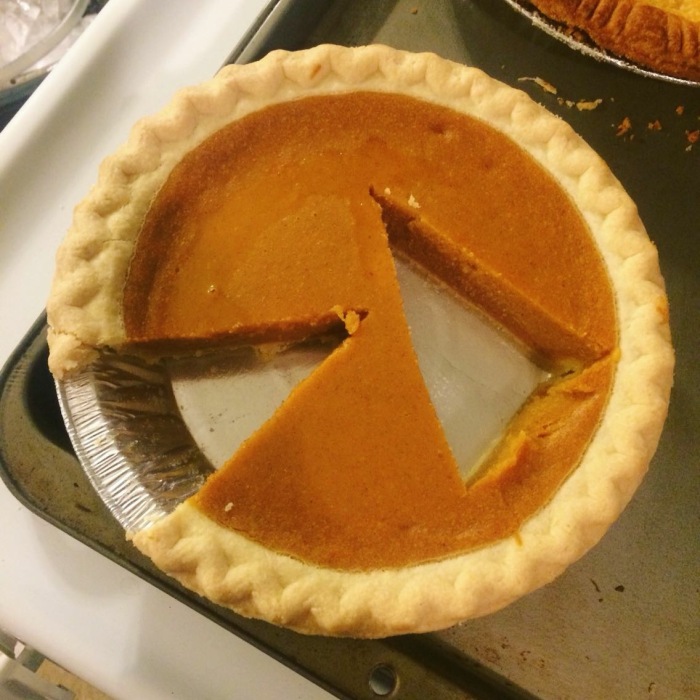
Sheila has just made a fresh pumpkin pie.

She offers you a slice.

You politely refuse, but she insists. She hands you the knife so you can take as big a piece as you like.

You start to cut and then ask, “Does it matter where I cut from?”

Sheila says, “No. Take whatever you want.”

You don’t like crust, so you cut a perfect triangle piece from the middle of the pie.

Sheila’s face reddens.

This wasn’t exactly what she meant, but what is she going to do? You took your slice, and now the rest of the pie is ruined. No one else can take a whole piece. Your choice has limited everyone else’s.

That’s what school choice does to public education.

It privileges the choice of some and limits the choices of others.

Advocates say parents should be able to choose the school their children attend.

And parents today do have many choices. About 90% send their kids to traditional public schools. Others home school, pay for private schools or opt for charter or voucher schools.

The problem comes with these last two options. In both cases, tax money meant to help all children is siphoned off for just one child. In the case of vouchers, tax money goes to pay part of the tuition at a private or parochial school. In the case of charters, we’re diverting tax money to a school that’s public in name but privately run.

That means less money for traditional public schools and more money for privately run institutions. That’s really what school choice is – a way to further privatize public schools.

Why is that bad?

3075829749_0ef3a3692c_z

First, it increases the cost and reduces the services for everyone.


Public schools pool all the funding for a given community in one place. By doing so, they can reduce the cost and maximize the services provided. One building costs less than two. The same goes for one staff, one electric bill, one infrastructure, etc.

When you start adding additional layers of parallel schools, you increase the costs even if you somehow divided the children evenly between the two systems (which hardly ever happens). You buy less with the same money. That translates to fewer services for the same kids, larger class sizes, narrowed curriculum, etc. Why? So that parents could choose School A or School B. So that privatizers get a bigger slice of the pie – right from the middle.

3075829749_0ef3a3692c_z
Second, each type of school has different goals.


Public schools are designed to educate. Corporate schools are designed to profit. Those are their very reasons for existing. It’s built into their DNA and is reflected in the way they’re administrated.

By law, public schools are not for-profit. They pay for goods and services, but at the end of the day, they aren’t beholden to shareholders or investors. They don’t need to bring in more money than they spend. All they have to do is educate children, and if they somehow end up with extra money at the end of that process, that money is bound by law to be reinvested as savings for next year.

Charter and voucher schools are not so constrained. Their reason for being is not education – it is profit. Where they can, they will cut services for children and reduce quality so that they can increase the bottom line. Even a casual glance at the news will show you a plethora of charter and voucher school scandals where privateers have stolen millions of dollars of taxpayer money instead of educating. To return to the dessert metaphor, they don’t care what their slice does to everyone else – they only care about the size of the slice.

3075829749_0ef3a3692c_z

Third, charter and voucher schools aren’t as accountable as traditional public schools.


Each type of school is supported by tax money. Therefore, each school should be held accountable for spending that money wisely. But the rules are radically different for public schools vs. choice schools.

Public schools have elected school boards made up of taxpayers from the community. Choice schools often do not. They are run by appointed boards who are only accountable to investors. Public schools are required to be transparent. Their documentation, budgets and meetings must be available to the media and community for review. This is not true of privatized choice schools.

If taxpayers are unhappy with the way a traditional public school is being run, they have multiple options for changing it. With choice schools, their only option is to withdraw their child. And in the case of taxpayers who do not have children in the system at all, they have no recourse at all. This is fiscally irresponsible and amounts to taxation without representation. This alone should be enough to make any true conservative withdraw support – however ideology has trumped logic and reason. Not only do they ruin the pie, they get to do so in secret.

3075829749_0ef3a3692c_z

Fourth, school vouchers rarely cover the entire cost of attending private schools.


They end up subsidizing costs for rich and upper middle class students while keeping away the poor. As such they create a system of cultural and racial education segregation. They create tiers of schools – the public schools being only for the poor, cheaper private schools for the middle class and expensive private schools for the rich.

This is not the best way to educate children. It is not the best way to organize a society. It entrenches social and class differences and builds in entitlements and racism for the wealthy. Surely our public schools have become more segregated even without vouchers, but that is no reason to make the situation exponentially worse. The size and placement of one’s slice shouldn’t depend on the color of your skin or the size of your bank account.

3075829749_0ef3a3692c_z

Fifth, all schools are not equally successful.


Though the media would have you believe otherwise, traditional public schools do a much better job of educating children than charter or voucher schools. Some choice schools have better outcomes, but the majority do no better and often much worse than traditional public schools. Moreover, children who continually move from school-to-school regardless of its type almost always suffer academically.

So when parents engage in these choice schemes, they often end up hurting their own children. The chances of children benefiting from charter or voucher schools is minimal. You can cut a slice from the center of the pie, but it’s likely to fall apart before you get it on a plate.

our-best-traditional-pumpkin-pie-ss

So in summary, school choice is essentially selfish. Even in cases where kids do benefit from choice, they have weakened the chances of everyone else in the public school system. They have increased the expense and lowered the services of children at both types of school. They have allowed unscrupulous profiteers to make away with taxpayer money while taxpayers and fiscal watchdogs are blindfolded. And when students return to their traditional public school after having lost years of academic progress at a substandard privatized institution, it is up to the taxpayers to pay for remediation to get these kids back up to speed.

Choice advocates talk about children being trapped in failing schools, but they never examine what it is about them that is failing.

Almost all public schools that are struggling serve impoverished students. That’s not a coincidence. It’s the cause. Schools have difficulty educating the poorest children. Impoverished children have greater needs. We should be adding tutoring, counseling and mentor programs. We should be helping their parents find jobs, providing daycare, healthcare and giving these struggling people a helping hand to get them back on their feet.

But instead we’re abandoning them. Most impoverished schools serving poor children receive less funding than those serving middle class or wealthy populations. In other western countries, it’s just the opposite. They provide more funding and resources for poor students to meet their greater needs.

School choice ignores all of this. If I may momentarily switch metaphors, instead of fixing the leak in our public school system, advocates prescribe running for the lifeboats. We could all be sailing on a strong central cruise-liner able to meet the demands of a sometimes harsh and uncaring ocean together. Instead we’re told to get into often leaky escape craft that even under the best of circumstances aren’t as strong as the system we’re abandoning.

And the reason is profits.

Have you ever noticed that the overwhelming majority of school choice proponents are rich white people?

Many of them own charter school companies or otherwise invest in the field. They aren’t advocating a policy to help children learn. They’re enriching themselves at public expense. Sure they point their fingers at union teachers making a middle class wage. Meanwhile these choice advocates rake in public money to buy yachts, condos and jewelry.

Make no mistake – school choice is essentially about selfishness. At every level it’s about securing something for yourself at the expense of others. Advocates call that competition, but it’s really just grift.

Public education is essentially the opposite. It’s about ensuring that every child gets the best education possible. Yes, it’s not perfect, and there are things we could be doing to improve it. But it is inherently an altruistic endeavor coming from the best of what it means to be an American.

We’ve all got choices in life. The question is what kind of person do you want to be? A person who takes only for his or herself? Or someone who tries to find an option that helps everyone?

pumpkin-pie

MythBuster: Do We Have a “Government-Run Education Monopoly”?

screen-shot-2016-11-22-at-11-48-57-pm


“There’s no failed policy more in need of change than our government-run education monopoly, and you know that’s exactly what it is.”

With these words, candidate Donald Trump unleashed his K-12 education policy at a campaign stop in September, two months before winning the general election.

In the speech, the former reality TV star and current President-elect vowed to spend $20 billion in federal tax dollars to encourage more charter and voucher schools nationwide.

It remains his most concrete executive policy offering to date. Yet it’s based on this characterization of public schools as a “government-run education monopoly.”

One wonders – is it true? Do we really have such a thing here in the U.S. or is it just propaganda to boost an unpopular education scheme?

The devil, it seems, is in the details.

The answer is both yes and no: Yes, public schools are government-run. No, they’re not a monopoly.

First, let’s consider “government-run.” Everything the government does from paving the roads, to delivering mail, to protecting us from invaders is “government-run.” The military is government-run. Would you rather a foreign power tell our soldiers what to do? Congress is government run. Would you rather big business come in and decide all our laws?

In that same spirit, yes, our public schools are indeed government run. But who else should run them? Russia!? The Mafia!? A media cabal?

In emphasizing the role of government in education, Trump appears to be trying to stoke the fires of anti-government sentiment. There is certainly a lot of that going around, deservedly so given the way the federal government has encroached on the states, the states have encroached on local government, etc.

However, public schools are not essentially federally-run schools, nor are they state-run schools. They are subject to federal and state mandates, but the major decisions about what happens in your neighborhood schools are made by your duly elected school board. They are not controlled by some nameless, faceless government bureaucracy. They’re controlled by you, your friends and neighbors – people you voted for and who are held accountable every few weeks at open meetings.

That, too, is government.

It’s not Big Brother. It’s Howdy Neighbor.

Let’s turn now to the “Monopoly” part.

A monopoly is the complete control of the supply or trade in a commodity or service. To put it in terms of the titular Parker Brothers board game, you have a monopoly when you own both Boardwalk and Park Place – you’re in control of what happens to all the dark blue properties. However, if you don’t have titles to BOTH, you don’t have a monopoly, and therefore can’t buy houses, hotels or charge double the normal rent.

Therefore, there is no education monopoly – no one has complete control of all the various kinds of schools. There are private schools, home schools, magnet schools, charter schools, even voucher schools. No one owns them all, no one tells them all what to do.

Yes, you could say that the overwhelming majority of them are public schools, but so what? That’s not a monopoly. There are far more personal computers out there than Macs. That doesn’t mean PCs have a monopoly on the field.

Once again, the term “monopoly” is meant to stir anti-government sentiment. We are meant to balk at the degree to which government – local government – is in control of our education system.
I’m sorry, but there is nothing objectionable about schools being controlled at the local level.

Are you upset by federal intrusions in school policy? Me, too.

Are you reeling about unfunded federal mandates? Me, too.

Are you angry about states sweeping in and stealing local control from impoverished inner city parents? Me, too.

But I’m just not one bit upset about being allowed a say in how my tax dollars are spent at my community school district. If you ask me, that how things SHOULD BE.

But Trump is proposing we change it. He’s proposing exactly the same kind of federal intrusion that drove many of us up the wall when it was done by President Barack Obama.

Obama used the Department of Education to bribe cash-strapped states into adopting Common Core. And now Trump wants to do the same thing with charters and voucher schools.

Excuse me, but it’s not the federal government’s job to dangle money in front of state legislatures with strings attached. The Department of Education is supposed to ensure all schools have adequate funding. It’s not supposed to tell us how we should be running our schools unless we’re breaking the law or violating students civil rights.

But what about parental rights? Shouldn’t parents be allowed to choose a school for their own children?

Heck no.

Hear me out. When you fall down the steps in your home alone, do you get to choose which governmental service comes to help you, or do you just call 9-1-1? When you need the police, do you get to choose officers from halfway across the state or make do with your local boys in blue? When your house catches on fire, do you shop around or call the nearest fire station?

It’s called a community for a reason. You’re a part of it, for better or for worse.

Our grandparents never thought they were so entitled they could pick and choose what governmental service should meet their needs. They joined the army, not Blackwater. They called the fire department where they volunteered. And they sent their kids to the local public school.

Yes, some public schools are better than others – which is just another way of saying that some are better funded. THAT is a problem we need to fix at the local, state and federal level. That’s something the President and Congress and our Governors and our state legislatures should actually be working on. But instead of meeting the real needs of their constituents, they’re too busy with all this choice nonsense.

Why? It’s a scam.

We’re talking Donald Trump here – founder of Trump University. He just settled out of court for $25 million for a fake business school that defrauded students out of hundreds of millions of dollars. If there’s one thing he knows, it’s a good scam.

Think about it.

Expanding charter and voucher schools, reduces accountability to taxpayers. These “choice” schools rarely are governed by elected school boards. They don’t have to abide by the same kinds of transparency standards as traditional public schools. They can spend our tax dollars in almost anyway they want behind closed doors, and there’s nothing we can do about it. In fact, there have been a rash of high profile scandals where charter and voucher operators have defrauded the public out of millions of dollars.

Who wants to expand that? Criminals!

Not me. I’m a taxpayer. I want a full account of how my money is spent, and most voters are with me.

We didn’t just vote for President a few weeks ago. Many states held referendums on whether to expand charter schools or not. In every case, voters decided against it.

But does Trump care? No way. This proposed school choice policy is yet another example of the federal government ignoring the will of the people in favor of wealthy donors hoping to further enrich themselves at public expense. It opens the door for profiteers to keep stealing our money.

And they justify it by offering a false choice:

Hey parents, they say. Want to enroll your children in a school with little to no accountability, a school you may not be able to afford unless you spend some of your own money in addition to the tuition you get from the state, a school that can turn you down for whatever reason including race, religion or nationality, a school that may very well be no better and often much worse than a traditional public school?

But they spin it, offering slick commercials and preying on the ignorant and hopeless. That weakens the traditional public schools because it means a loss in revenues. Therefore, the public schools get worse, which is a reason for more parents to try the ‘choice’ schools, etc. It’s an endless cycle where students lose but investors in for-profit schools win.

Invariably, it leads to a further social stratification of schools. The rich go to the best schools, the middle class to the middling schools and the poor to the substandard ones. You think we’ve got segregated schools now, wait until Trump’s school choice policies! It’ll benefit the Nazis of the alt-right who want more white flight, but most kids will lose.

Such a policy does not represent the best of America. This country was founded on the principles of working together. We haven’t always lived up to it, but our ideals are ones of shared sacrifice, community and brotherhood. Trump’s education policy is about selfishness and greed.

That’s your real choice. Which will it be?

Democrats Warned Not to Help Trump Enact Their Own Damn School Policies

screen-shot-2016-11-18-at-1-01-18-am

It must be hard to be a neoliberal Democrat in Donald Trump’s America.

Almost every policy decision you favor is also on the Republican President-elect’s to-do list. But if you work with him, you’ll ruin the illusion that there’s a difference between the two of you.

Take yesterday’s statement by Democrats for Education Reform (DFER) warning any Democrat not to accept Trump’s offer to be U.S. Secretary of Education.

DFER is a hedge fund managers’ pro-charter advocacy group. Despite it’s name, one would think the organization would be a natural ally for pro-school-choice Trump.

But, wait a minute.

I thought one of the first things Trump promised to do once he took the Oval Office was close the Department of Education.

Weeeeeelllllllll…. That’s so November 10th.

He’s already walking back that whooper just like he’ll soon have to admit that the Every Student Succeeds Act (ESSA) doesn’t allow him to end Common Core – another one of his campaign promises. Ending the Core is up to the states (has been for months, yet most Republican controlled legislatures just can’t bring themselves to do it for some reason).

It’s easy to see why Trump has had a Come To Jesus moment about the Department of Education. If he really wants to add $20 billion in school-choice programs, as he promised on the campaign trail, a big government office that hands out bundles of cash in return for states enacting his personal policy desires sure would come in handy!

This is where it gets really sticky.

Both Democrats and Republicans love school choice! Typically GOP politicians love all flavors of privatization – charter schools AND giving away vouchers to attend private schools with public tax dollars. Democrats usually are more finicky preferring just charter schools – though you don’t have to search long to find a neoliberal willing to embrace all things school choice. Many of them are members of DFER.

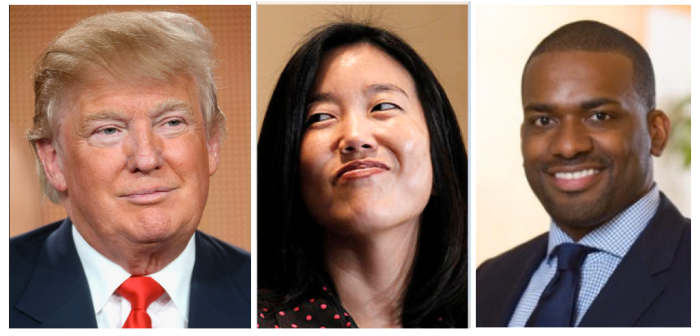
In fact, the leading voices of school privatization for the last 15 years have been Democrats. So it’s no wonder that faux progressives like Michelle Rhee and Eva Moskowitz made Trump’s short list to head the Department of Education.

Moskowitz, who has since turned down the offer, is founder of Success Academy Charter Schools, a chain of privatized institutions emphasizing endless test preparation and systematically weeding out struggling or special-needs students.

Rhee, who is still a contender, was chancellor of Washington, D.C., schools where she was given leeway to do almost whatever she wanted and boasted of high test scores. However, widespread cheating on the tests and public unrest at her tactics shot down her ascending star. She then started StudentsFirst, an organization using rich folks’ money to help elect Tea Party candidates who were in favor of both charter and voucher schools. As the organization faltered, she stepped out of the limelight.

One could think of few people more suited to Trump’s education agenda than Rhee.

But NO! Rhee – or another faux progressive – can’t do that, warns DFER President Shavier Jeffries. That goes against everything Democrats stand for – somehow.

Jeffries writes:

“It is, generally speaking, an honor for any person of any political persuasion to be asked by the President of the United States to consider a Cabinet-level appointment, but in the case of President-elect Trump, DFER encourages no Democrat to accept an appointment to serve as Secretary of Education in this new administration. In so doing, that individual would become an agent for an agenda that both contradicts progressive values and threatens grave harm to our nation’s most vulnerable kids.

“Foundational education reform principles – from raising standards and strengthening accountability, to expanding public-school choice, to furthering innovations in teacher preparation and support, and advancing resource equity – all find their roots in a progressive commitment to ensuring that all children, particularly our most vulnerable, have access to schools that enable them to fulfill their potential.”

Jeffries is worried about “raising standards?” Am I the only person here who read the ESSA? Common Core and academic standards aren’t the federal government’s business.

He’s worried about “strengthening accountability?” The ESSA already requires annual standardized testing in grades 3-8 and once in high school – same as it has since the George W. Bush administration.

“Expanding school choice?” You guys love school choice.

“Further innovations in teacher preparation and support?” That sounds like code for Teach for America and Value Added Measures – policies that Republicans love as much as you so-called Democrats.

“Advancing resource equity?” Now who are you kidding? DFER hasn’t done a thing to help poor schools get equitable resources. In fact, you’ve supported pulling the rug out from under poor schools based on those same standardized test scores you love so much.

So when it comes to policy, Jeffries and DFER are almost completely in synch with Trump. What’s the problem?

He goes on:

“This progressive commitment to equitable education policy also goes hand-in-hand with intersectional issues that affect our kids. While effective school policies are vitally important, so too are the environmental conditions affecting children and families.”

This is a shock to me. Jeffries and DFER support “no excuses” charter schools like Moskowitz’s. These are privately run schools that don’t accept a student’s poverty or abuse or health or anything to be used as an excuse not to get high scores on standardized tests. In fact, if any impoverished, underprivileged child can’t somehow pull himself up by his bootstraps, he’s often kicked out of these “no excuses” charter schools and sent back to a traditional public school.

But NOW Jeffries is complaining about “vitally important” “environmental conditions”!? You’ve got to be kidding me! That sounds like something under any other circumstances you’d call an excuse.

On any other day, DFER does nothing to help kids overcome their environmental factors. Jeffries claims we should ignore environmental factors, that focusing on them is the “soft bigotry of low expectations.” But NOW he’s suddenly seen the light!?

Sorry. I’m not buying it.

He goes on:

“A child who is homeless; a child without access to food or healthcare; a child whose parent cannot find steady work; a child whose dad is locked up for years on low-level drug offenses—each of these situations dramatically compromise the life chances of our children.”

Well, Hallelujah! Jeffries has seen the mountain top! Paying attention to the out of school factors is exactly what teachers, parents and students have been crying out for he and his neoliberal buddies to do for 15 years! Of course, doing so would invalidate the same policies he and Trump propose, but you can’t ask a neoliberal to be consistent. Baby steps.

He goes on:

“The policies and rhetoric of President-elect Trump run contrary to the most fundamental values of what it means to be a progressive committed to educating our kids and strengthening our families and communities. He proposes to eliminate accountability standards, cut Title I funding, and to gut support for vital social services that maximize our students’ ability to reach their potential. And, most pernicious, Trump gives both tacit and express endorsement to a dangerous set of racial, ethnic, religious, and gender stereotypes that assault the basic dignity of our children, causing incalculable harm not only to their sense of self, but also to their sense of belonging as accepted members of school communities and neighborhoods.

“For these reasons, no Democrat should accept appointment as Secretary of Education, unless and until President-elect Trump disavows his prior statements and commits to educating the whole child and supporting the communities and families they depend on.”

So what Jeffries really takes exception to here is Trump’s rhetoric.

Trump and DFER don’t have many policy differences. It’s just how they’re packaged.

Both Trump and Jeffries wants to give poor black and brown kids a substandard education. They both want to destroy the public school system and replace it with a privatized one. Both want to give endless standardized tests. But the real difference is that Jeffries wants to do this for the expressed purpose of protecting kids’ civil rights. Trump, apparently, wants to do it to violate them, or at least he’s indifferent to the civil rights implications.

Does that really constitute a significant difference between DFER and Trump?

No. It’s just branding.

Jeffries doesn’t want someone like Moskawitz or Rhee to be the face of Trump’s corporate education reform policies because he’s betting Trump will fail. And when that happens, he wants to be there when the next Democratic administration takes over – so he can enact the same damn policies all over again!

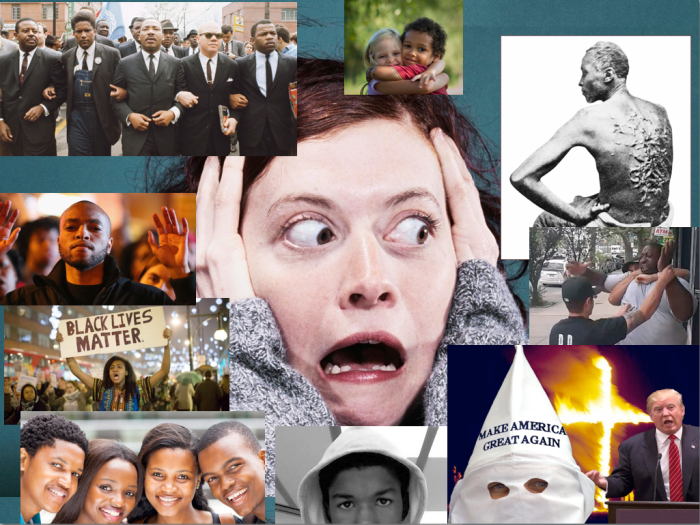
The Real Power Behind Trump is White Fear

screen-shot-2016-11-15-at-9-14-00-am

White people are terrified.

Shaken, panicked, scared beyond our capacity for logical thinking.

We’re so apprehensive, we elected Donald Trump, a reality show clown, to the White House.

Yeah, I know. Hillary Clinton wasn’t exactly inspiring. And the Democrats dropped the ball ignoring the populist mood of the country and the needs of middle class workers.

But 58% of white folks supported Trump. He only got 21% of nonwhite voters. In fact, Whites is the only major group he won – not black people, not Hispanics, not any other race or nationality.

Just white folks.

Trump bragged about sexually assaulting women – and yet 53% of white females voted for him.

Trump is an admitted serial monogamist who cheated on various ex-wives – and yet 65% of white Christians voted for him.

Trump promised to bring back outsourced manufacturing jobs while his own clothing line is foreign made – and yet 67% of white laborers voted for him.

That’s how panic-stricken we, Caucasians, are.

We held our hands over our eyes and ears and loudly proclaimed our loyalty to a charlatan.

Oh, we’ll pay for it. He’ll break campaign promises, disappoint us with retrograde policies and perhaps even hurt the people we love.

But in the meantime, many of us are in denial.

“Let’s give him a chance,” white folks say.

Yet Trump has already appointed a wife-beating, Jew-hating, white supremacist, Stephen Bannon, to be his chief White House strategist.

Just stop, white people. You’re embarrassing yourselves.

So why are we so damn scared?

Answer: we’ve been pricks throughout American history.

Yeah, I know. None of us were around for slavery. Many of us weren’t even on the scene for Jim Crow. But all of us have benefited from the society these institutions built up.

The 13th Amendment ended forced bondage except as a punishment for crime. And ever since then our justice system has found ways to unfairly accuse, sentence and enslave black people into the prison industrial complex. We live in the wealthiest country in the world, and much of that wealth is a direct result of laws that raise up white folks and crush black and brown people under our heels.

And we know it.

Don’t give me some story about how you never asked for it. You’ve got it. If you do nothing to fight it, you’re a member in good standing of the white supremacy board of directors.

White folks don’t talk about this stuff. We ignore and deny and whistle past the graves of millions of lynched and murdered people of color. What do you think the fascination is with zombie movies? It’s just another manifestation of white fear – fear that we’ll be overrun by the countless have-nots and devoured.

Few of us have articulated it, but we know our time is running out. The black and brown population is increasing faster than ours. We’re letting in too many dark skinned immigrants and too few light skinned ones. In three short decades, we won’t even be the numerical majority anymore.

Every year we find it increasingly more difficult to enforce this racial caste system. Our police gun down more unarmed black folks in the street. Our prisons can’t swallow them all.

Even now our majority is so slim that if just a few of us side with the dark underclass, we can elect a black President – well multiracial but who’s counting?

That infuriated a lot of us. How dare they pretend like THEY can run the country? After Obama, we were rushing to the gun store in our soiled pants afraid that the time for justice had finally come. Black folks were finally going to come for us because of the centuries of oppression.

That’s really the fear. Black people will seek justice.

At best we’ll lose our exalted positions in society. At worst, WE’LL be the ones crushed under the boot. And turnabout will be fair play.

That’s why we elected such an obviously unqualified blowhard as Donald Trump.

We want him to make America great again – and by “great” we know exactly what we mean.

It’s a sad reflection on white society.

We could admit the truth. We could take a deep breath and help our oppressed brothers and sisters take their places as equals among us.

After more than two centuries, we could throw off our denial.

But that’s not what most of us did.

History will judge us harshly for this election. We did nothing to turn back time. We’ve only engaged in a tantrum – this, the last gasp of white supremacy.

My Election Day Heart Attack: Lessons for Moving Forward

img_5937

I had a heart attack on Election Day.

This is not hyperbole.

I literally went to the polls, went to my doctor and then went to the hospital.

I didn’t know Donald Trump would win. Like most of us, I thought the nation would heave a big sigh, eat its vegetables and vote for Hillary Clinton.

But the election had been weighing on my mind (and apparently my body) for a long time.

How can we have narrowed it down to these two candidates nobody wants? How can these really be the only choices we get here in America? If either one of them wins, we all lose just in different ways.

So as I write this from my hospital bed, I’m left pondering lifestyle changes. I’ve got to start eating healthy. I need to exercise. I need to start taking care of myself.

But this kind of introspection is also what we need as a nation. After a disastrous election like the one we just had, the country is at least as sick as my ailing heart. We need to sit down with each other and decide how we’re going to move forward, how we’re going to prevent a national disaster like this from ever happening again.

Here’s what I’ve come up with so far:

1) Admit Who’s to Blame

Donald Trump was just elected President of the United States. That is unbelievable! This clown, this buffoon is now the “leader of the free world.” How did this happen?

There are many factors leading up to this, but politically the blame must be placed with the Democratic Party.

They put up a candidate – Hillary Clinton – who could not beat someone as odious as Trump. The people made it clear during the primary that they wanted a populous candidate, someone who wasn’t part of the establishment, yet the DNC ignored them. In fact, party elites did everything they could to tip the scales in Clinton’s favor.

We must always remember this lesson: when you rig the primary, you lose the general.

Bernie Sanders packed stadiums while Clinton could barely pull together rallies. He polled double digits ahead of Trump while Clinton was much less competitive. He would have beaten Trump in a landslide.

So if you want someone to blame, blame the DNC. Every party leader should immediately be fired. We must regain control of the party. If the Democrats refuse to be a real progressive institution, they will continue to lose and we will have to look elsewhere for political affiliation.

So admit the truth, it wasn’t third party voters with 3-4% of the vote, it wasn’t 45% of registered voters who didn’t show up at the polls because we gave them no one to vote for. It was the DNC. Period.

2) Understand the relationship between Race and Class

There are lots of folks out there blaming the election results on the racism of Trump voters. There are lots of folks blaming it on working class people choosing Trump over Hillary.

They’re both right.

Racism has always been a tool of the rich in this country. It’s a way of throwing a bone to poor whites so they will support the 1%.

Don’t go after us as we cheat you out of a living wage, they say. We’ll give you whole swaths of people you can lord it over.

White privilege is the grease that keeps our economy running. Without it, poor whites might look to the rich and see how much they’re being swindled.

Heck yeah Trump ran as a racist. Heck yeah he ran as a populist. But the only thing poor whites will get from him is a license to be racist.  No jobs. No better wages. No better education. Just go ahead and subjugate brown people.

We must understand this relationship. As anti-racists we must also fight for the middle class. As activists for the middle class we must also fight racism. These are two sides of the same coin, and we must address both if we are ever to achieve real positive change.

3) Acknowledge Sexism

That a nation of grown adults would pick a boorish misogynist against an educated, intelligent woman speaks wonders. Hillary Clinton was far from my first choice,  but compared to Trump she was obviously less odious.

There is no doubt that sexism played a part in this. Even white women chose Trump over Clinton. So many of Trump’s policies were anti-woman. He was an admitted serial groper. He’s on trial for child rape!

And if that’s not enough, I can’t even recall how many times I heard women tell me that a person of their gender doesn’t belong in the Oval Office.

This is something we have to overcome, and frankly I think we are. Millennials are not nearly as sexist as the rest of us. As the population ages and today’s kids become tomorrow’s adults, I think sexism will be left behind. Trump’s election is the last gasp of this antiquated prejudice. But we must recognize it for what it is.

4) Unions need to represent the rank and file

I’m a big supporter of labor unions, but in many cases they let us down in this election. Trump was no champion of the working stiff, but he got an awful lot of union votes. Why?

Many of our unions prematurely endorsed Clinton even though she has a spotty relationship with them and didn’t support many natural union initiatives like the fight for 15.

On the other hand, Sanders was the union candidate. He was the natural fit, yet union leadership like the American Federation of Teacher’s Randi Weingarten offered to attack other unions that didn’t fall in line behind Clinton. Both big teachers unions, the AFT and the National Education Association endorsed Clinton early in the primary without truly democratically polling membership. It doesn’t matter if they broke by-laws or not. If unions really represent the rank and file, these leaders should be held responsible.

In short, we should fire leaders like Weingarten and the NEA’s Lily Eskelsen Garcia immediately. Our union leaders must show a healthier respect for the rank and file or else they jeopardize the entire enterprise of workers’ rights.


These are just some of the ways we can move forward in the days and weeks ahead. It will be a rough road  but I’m sure we can come out of it together.

Just like my aging body, our nation is ill. For me, the result was a heart attack. For us, the result is President Trump.

Will we turn it around?

I’m sure going to try.

*****************

FULL DISCLOSURE: I didn’t vote for either Clinton or Trump. I happily voted for Jill Stein.


Standardizing Whiteness: the Essential Racism of Standardized Testing

cookie_cutter_s

“As a method of social production, as well as social reproduction, standardized testing has had serious cultural implications, not the least of which has been the eternal question of American identity. Consistent with notions of American identity, standardized testing, as an opposition to a cultural other, represents the normalization of whiteness, richness, and maleness.”
-Andrew Hartman

“In this country American means white. Everybody else has to hyphenate.”
-Toni Morrison

We talk about standardized testing as if we don’t really understand what it is.

We say we want No child left behind!

And then we pass a law named after that very sentiment that ensures some students MUST be left behind.

We say we want Every student to succeed!

And then we pass a law named after that very sentiment that ensures every student will NOT succeed.

It would be absurd if not for the millions of children being forced to endure the harsh reality behind our pretty words.

It’s not these ideals that are the problem. It’s standardized testing.

Researchers, statisticians, and academics of every stripe have called for an end to high stakes testing in education policy. Parents, students and teachers have written letters, testified before congressional committees, protested in the streets, even refused to take or give the tests. All to deaf ears.

The federal government still requires all students in 3-8th grade and once in high school to take standardized tests.

But these assessments are graded on a curve. A certain amount of students are at the bottom, a certain amount are at the top, and most are clustered in the middle. This would be true if you were testing all geniuses or all people with traumatic brain injuries.

It doesn’t matter how smart your test takers are. There will always be this bell curve distribution. That’s how the tests are designed. So to talk about raising test scores is nonsensical. You can raise scores at school A or School B, but the total set of all test takers will always be the same. And some students will always fail.

But that isn’t even the worst part.

Standardization, itself, has certain consequences. We seem to have forgotten what the term even means. It’s defined as the act of evaluating someone or something by reference to a standard.

This socket wrench is a good socket wrench because it most closely resembles some ideal socket wrench. This McDonald’s Big Mac is good because it resembles the ideal McDonald’s Big Mac.

That’s what we’re doing to people – children in fact. We’re evaluating them based on their resemblance to some ideal definition of what a child should know and what a child should be.

But children are not socket wrenches nor are they Big Macs. It is not so easy to reduce them to their component parts and say this is good and that is bad.

When you try to abstract them to that point, it is impossible to remove various essential factors of their identity – race, gender, socio-economic status, etc. Nor would it be admirable if you could, because you would have abstracted to the point where the individual is no longer visible or valued. A child raised in poverty is simply not the same as a child from a privileged upbringing. A child from a culture that values cooperation is not the same as a child from a culture that values individual achievement. And that’s often a good thing.

But when you define a standard, an ideal, you make certain choices – you privilege some attributes and denigrate others. Since the people creating the tests are almost exclusively upper middle class white people, it should come as no surprise that that is the measure by which they assess success.

Is it any wonder then that poor kids and children of color don’t score as well on these tests? Is it any wonder that upper middle class white kids score so well?

We’ve known this for almost a century. Standardized tests do a poor job of assessing intelligence or knowledge. Those things are too complex and the tests are too simple. If you’re evaluating something equally simple like basic addition and subtraction, these tests can work alright. But if you’re trying to get at something complex like critical thinking or creativity, they end up doing little more than prizing the way some people think and not others. In short, they elevate the thought processes most associated with rich white kids.

It doesn’t mean poor and/or black children are any less intelligent. It just means rich white kids have the things for which the test designers are looking. Some of this is due to economic factors like greater access to private tutoring, books in the home, parents with more time to read to their kids, coming to school healthy and more focused. However, a large portion is due to the very act of taking tests that are created to reflect white upper class values and norms.

Think about it. Almost all the questions are field tested before they become a permanent part of the exam. Students are given a question that doesn’t count to their final score, but test makers tabulate how many kids get it right or wrong. So when most white kids answer a field tested question correctly and most black kids get it wrong, it still becomes a permanent test question because there are so few blacks relative to whites. Maybe it’s a question that references sun tan lotion, something with which darker skinned people don’t have as much experience. Imagine if a question referencing the hair care practices of  black people became a test item. White people would have difficulty with it because they can’t easily relate. But the field testing process doesn’t allow that because it normalizes whiteness.

So black kids stumble while white kids have an easier time. We even have a name for it: the racial proficiency gap.

Many well-intentioned progressive voices have bemoaned this problem and wondered how to solve it. But it’s not the scores that are the problem. It’s the assessments. They are doing exactly what they were designed to do.

That’s right. You cannot have such obvious, historical problems perpetuated year-after-year, decade-after-decade, and still think they are mere unintended consequences.

This is how the system was designed to work. This is how it’s always been designed to work.

If you were going to create a racist and classist school system from scratch, what would you do? How would you go about it?

You’d need the lower classes to have SOME mediocre education so they are able to do the menial work that keeps society running. But only so much. Education as a social ladder is all well and good as propaganda. But you don’t want that ladder to lead out of the basement for more than a few.

You need something that will create a hierarchy with people of color at the bottom and poor whites only slightly better off so they can feel ennobled compared to their darker subordinates.

You need a biased sorting mechanism – something that allows you to put students into privileged and unprivileged categories but that will look to all the world like it was doing so fairly. It would have to appear like you were choosing students based on merit.

You’d need something like standardized test scores.

This is how these assessments have functioned from their very beginnings.

When Carl Brigham and Robert Yerkes, U.S. Army psychologists during WWI, designed the alpha and beta intelligence tests to determine which soldiers deserved to be officers, they were creating a pseudoscientific justification for white privilege. They used biased and unfair assessments to “prove” that rich white folks were best suited to give orders, and the rest of us belonged in the trenches.

Brigham and Yerkes were drawing upon eugenics, also called “racial hygiene” or “scientific racism.” This was a radical misreading of Gregor Mendel and Charles Darwin. Eugenicists thought positive traits such as intelligence were widespread in Northwestern European races and almost nonexistent in others. Moreover, negative traits such as laziness and criminality were common in nonwhites and almost absent in those same Northwestern Europeans.

“We should not work primarily for the exclusion of intellectual defectives but rather for the classification of men in order that they may be properly placed,” wrote Yerkes.

THIS is the basis of standardized testing.

After the war, Brigham took the same principles to create the Scholastic Aptitude Test or S.A.T. – in principle the same exam still taken by 2.1 million teenagers every year to ensure they get into their chosen college.

The test was further refined by fellow eugenicist Lewis Terman, Professor of Education at Stanford University and originator of the Stanford-Binet intelligence test. Together these three men created the foundations for the modern field of standardized testing. And make no mistake – its axiomatic principle is still that some races are genetically superior and others are inferior.

Or as Terman put it:

“A low level of intelligence is very common among Spanish-Indian and Mexican families of the Southwest and also among Negroes. Their dullness seems to be racial, or at least inherent in the family stocks from which they come… They constitute a grave problem because of their unusually prolific breeding.”

After WWII, the eugenicist brand suffered from comparison to the Nazis who had been inspired by the findings of Brigham, Yerkes and Terman among others. In the post war years, we’ve discarded the overtly racist language but kept the assessments. Yet they still function the same way – sorting out blacks and the poor while prizing the rich and white.

This information is not secret. It is not kept under lock and key in some hidden military base somewhere. It’s accessible to anyone with Internet access or a library card.
We ignore it, because otherwise it would destabilize the current power structure – the corporate education policies that drive school practices in our country. We close our eyes and pretend it isn’t happening.

But it is.

“Standardized tests are the last form of legalized discrimination in the US,” said Education and Psychology Prof. Phil Harris.

With them you can give rich and middle class whites every advantage while withholding the same from students of color. And we don’t call it racism or classism because we pretend the whites earned their privileges by their test scores.

“We are using the testocracy as a proxy for privilege,” said civil rights theorist Lanni Guinier. Test scores are the excuse for prejudicial and unjust practices that would be impossible without them.

For instance, if you really wanted to help someone who’s struggling, you might offer extra help. But low test scores are used as the reason for withholding that help. We actually use these invalid scores as a means of demeaning and firing poor black kids’ teachers – as if anything they could do could completely overcome biased assessments and poverty. In this way, we not only remove those already in place to help these kids, we ensure few people will volunteer to take their place.

And when you have a teacher shortage in these poor urban neighborhoods, you can use that to justify further deprivations. Instead of teachers with 4-year education degrees, you can hire lightly trained Teach for America temps – college grads who’ve taken no coursework in education beyond a six weeks cram session.

And if the parents of these children complain, you can open charter schools to pull a quick bait and switch. Make them feel like they have a choice when really you’re pulling the rug out from under them. You provide them with a school with none of the safeguards of a traditional public institution – no elected school board, no transparency on how tax dollars are spent, little oversight, a right to refuse any student they wish, etc. And when the school goes belly up, these kids will be pushed back to their former traditional public school that has had to make due with less funding and now can provide even fewer  services than it could before students jumped ship.

Using standardized test scores to judge not just students but whole schools, you can destabilize the entire system of public education. Charter schools and traditional public schools fight over ever-dwindling funding, one required to prove everything it does, the other able to do whatever it wants until it closes with little to no consequences for charter operators who take the money and run.

The US Supreme Court ruled in Brown vs Board that we can’t have “separate but equal” schools because when they’re separate, they’re rarely equal. But somehow that doesn’t apply to charter schools.

Somehow we’ve stopped caring about integration – one of the central victories of the Civil Rights movement! This plays right into the hands of the corporate education reformers. They have done everything they can to increase segregation because it makes it so much easier to privilege rich white kids and crush poor black ones.

They don’t want an equal mix of black and white, rich and poor in our schools. That would make it much harder to select against one class of student while boosting another.

They need to keep the races and classes as separate as possible. Charter schools help in this regard, but they would be insufficient without the help from many white families who flee from these “other” darker complected kids. It’s just another way to send more funding to white kids and less to poor black kids. They say it’s based on local property taxes. That way they can pretend it’s all fair and above board. Rich folks have a right to be able to give their kids the best, and if poor folks can’t afford to do the same, who do you expect to pick up the tab?

Oh! And let’s not forget setting “high academic standards” while all this is going on. They throw out everything that’s been working and come up with a Common Core of knowledge that all kids need to learn. Don’t include black and brown history, culture or the arts – just the stuff the business community thinks is valuable because they know so much about what’s really important in life. And have the whole thing written up by non-educators and non-psychologists and don’t bother testing it out to make sure it works.

Your rich white kids will have no problem jumping through these hoops. But your poor black and brown kids will stumble and fall – just as planned.

This is what has become of our public schools.

This is corporate education reform.

This is our racist, classist school system.

And it’s all based on standardized testing – a perfectly legal system of normalizing rich whiteness.

Who’s More Valuable – a Union Busting Lawyer or a Union Worker?

man-laughing-loudly-300

There he was standing in front of me in line.


New gray pinstriped suit. Silk red Armani tie. White button down shirt so bleached it hurt my eyes.


We were waiting to board our plane to take us to Houston. Me, a public school teacher. Him, a union busting lawyer.


I was on my way to an education and civil rights summit. He was going to an annual lawyers conference, one of many he attends each year.


I got all this information not from talking to the guy. He was jovial enough but he just couldn’t contain his backstory to a single audience. He was in the mood to talk to anybody and everybody as we waited for the stewardess to tell us it was okay to board.


He spent most of his time talking with two representatives of the natural gas industry who had visited my home of Pittsburgh to invest in our rich deposits of Marcellus shale – and incidentally poison our environment. He also joked with another lawyer further up in line and already tipsy.


I listened to him yuk it up about exclusive golf courses, wine country and the presidential election (he’s a Trump supporter) and felt a warm dislike spread through my chest.


I looked at my faded t-shirt and jeans and wondered how it was that this guy gets so much for what he does and I get so little. Oh I get all the intangibles, but he gets… well… the money, pride and prestige.


There he was asking the gas guys about a good steak place for lunch in Houston. I love steak. I’d like to eat a nice, juicy steak. But I can’t afford it.


I’m only able to make this trip because I took the least expensive flight (coach, by the way – guess where he was sitting) and I was sharing a hotel room with a college professor who had saved up enough discretionary funds to cover the room.


While the attorney was dining on steak, I’d be lucky to store up a muffin or two from the hotel’s complimentary breakfast.


Yet there he was telling the whole world his story unafraid that someone would take offense.


Well, I do take offense, buddy.


You make your living finding ways to make it harder for me to make mine. You spend your whole day looking for legal loopholes and documented precedents to take away protections at my job, cut my pay and make me work longer hours without overtime. You eat at expensive restaurants and wear Italian leather shoes while people like me live paycheck-to-paycheck. You are nothing but a parasite.


Yet no one else seemed to take offense at his braggadocio. Only me. The natural gas guys clapped him on the back and congratulated him on the delicious rib eye in his future.


It makes me wonder why unions are so often made to seem the villain and guys like this are seen as good ol’ boys at best and merely innocuous at worst.


I teach young children how to read and write. I open their minds to the world around them and show them how to think critically. I raise up the weak and give succor to the needy.


What value does he add to society? Seriously! How does he make the world one bit better than the way he found it?


Yes, I am a union employee and proud of it. I collectively bargain for a fair wage. I band together with my colleagues for a middle class income so I can afford to be a teacher. I demand professionalism and autonomy so I can do the job. I seek fair treatment so I’m not constantly looking over my shoulder in case a school board member would rather give my job to one of his cousins. And if you’re going to fire me, I ask for due process – proof of wrongdoing.


Somehow in the eyes of the public this makes me a monster.


But this guy gives you nothing. He provides no return on your investment except that he stifles me.


He makes it harder if not impossible for me to stay in the profession. He works so I can’t support my family. He endeavors for me to be paid the minimum wage so I won’t be able to come home and help my daughter with her homework but instead will have to move on to my second or third job. He argues that I should not be considered a professional and should not be treated like an intelligent person with an advanced degree but should be a factory widget who does as he’s told. He tries to make anxiety my normal state. And he seeks to ensure I can be fired at will with no proof, no reason, just an employers whim.


If he achieves his ends, my students will not have a productive atmosphere in which to learn. When you weaken teachers, you weaken students. We all say to put the kids first, but you can’t do that when you put teachers last.


He does all this and still has the gall to boast of it aloud in public. All while I stay silent, seethe and silently rave.


So we got on our plane, and when we landed in Texas went our separate ways.


I spent the weekend fighting for children and families. He partied with his partners. As a taxpayer, you pay a lot of money for his services. I’m a bargain, a steal. You get next to nothing from him. I open the gates for the next generation.


And somehow I’m the bad guy.

Fighting for Public Schools Means Fighting Against Systemic Racism – United Opt Out Education and Civil Rights Summit

14725673_10107838928072169_5986293484745396608_n

What do you do when you hold a civil rights summit and none of the big names show up?

That’s what happened last weekend when United Opt Out (UOO) held its Education and Civil Rights Summit in Houston, Texas.

We invited everybody.

We invited the National Association for the Advancement of Colored People (NAACP). We invited the National Council of La Raza “The People,” the League of United Latin American Citizens (LULAC), the Urban League and several others.

None came.

But instead we were host to many of these organizations individual members.
Just how many people came to the Lone Star State for the summit? Thousands? Hundreds?

More like dozens.

Not only did the major civil rights groups neglect to send their leadership, but the bulk of our nation’s education activists also stayed away.

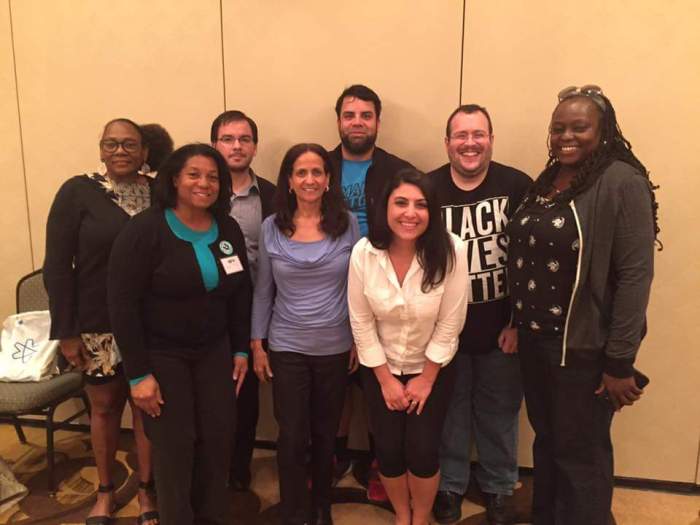
United Opt Out had just gone through a major reorganization on philosophical grounds. Only three of its long-time board members remain – Denisha Jones, Ruth Rodriguez and Ceresta Smith. They have since been joined by five new directors – Gus Morales, Zakary Rodriguez, Erika Strauss Chavarria, Deborah Anderson and Steven Singer (me).

The directors that left the group did so for various reasons, but some of them split along ideological lines. Some thought United Opt Out shouldn’t work with labor leaders or civil rights groups that weren’t perfectly aligned with all of UOO’s goals. So they left. Those who stayed are committed to working with almost anyone to push forward the cause, piece-by-piece if necessary.

As a result, this organization that had been growing by leaps and bounds, finds itself starting afresh. While last year’s conference in Philadelphia drew progressive luminaries like Chris Hedges, Jill Stein and Bill Ayers, this year’s gathering was more low key.

But it was far from somber. In fact, the board’s vision was vindicated in the most amazing way during the summit.

As Jesse “The Walking Man” Turner discussed the importance of reframing school policy to include students basic humanity, Gus looked up from his phone and announced, “The NAACP just ratified its moratorium on charter schools!”

We all stopped what we were doing and went to our phones and computers for verification. Denisha found it first and read the resolution in full.

We cheered, laughed and hugged each other.

This was exactly the kind of change we’ve been talking about! In fact, Julian Vasquez Heilig, education chair of the California and Hawaiian NAACP chapter, had originally been scheduled at the summit as a keynote speaker. When the resolution that he had been instrumental in crafting came up for a vote at the national NAACP meeting, he understandably had to cancel with us. Clearly he was needed elsewhere.

And now one of the largest civil rights organizations in the country has taken a strong stance on charter schools. Not only does the NAACP oppose charters as a solution to inequities experienced by children of color, they’ve now gone beyond mere ideology. They’re calling for action – no new charter schools.

It is a tremendous victory for parents, children and teachers everywhere. And a much needed win for civil rights and education activists. The civil rights community (including the Black Lives Matter movement) is starting to acknowledge that Brown vs. Board is right – we cannot have “separate but equal” school systems because when they’re separate, they’re rarely equal.

Let me be clear – UOO did not achieve this triumph alone. It took many people, some of whom probably have never heard of us. However, activists supporting our movement such as Julian were strongly involved.

And if we had listened to the naysayers who proposed only working with perfectly like-minded groups, this might never have happened.

As a national organization, the NAACP still supports standardized testing as necessary to hold schools accountable for teaching all students. But this was not always the case.

In October of 2014, there were 11 civil rights groups including the NAACP Legal Defense and Educational Fund (LDF) who wrote a letter to President Barack Obama asking him to reduce standardized testing.

Then in January of 2015, a full 19 Civil Rights organizations including the NAACP wrote to Congress asking lawmakers to preserve annual testing.

What changed in those three months?

All of these organizations accept huge donations from the corporate education reform industry including some of the richest people in the world like Bill Gates. While none of us were present at these decision making sessions, it seems clear that fear of losing their funding may have forced them to make hard compromises.

Should we then as education activists wipe our hands of them? Should we refuse to work with them on some issues because we disagree on others?

United Opt Out says no. We’ll work with almost anyone where we can, when we can. And the results were on display with the NAACP resolution calling for a charter school moratorium.

Perhaps now that we’ve found that common ground on school privatization, we can do the same with standardized testing. Perhaps we can help educate them about the history of this practice, how it was a product of the eugenics movement and has always been used to support white supremacy and keep people of color and the poor in their place.

If we can make that argument, think of the potential. Perhaps leadership at these big civil rights groups would be less willing to compromise if they understood that standardized testing was used to justify mass sterilizations of American citizens and it was greatly admired by the Nazis. Perhaps if they understood that our modern standardized assessments are little better and create a racial proficiency gap by their very design – maybe then threats from rich white philanthropists won’t seem as important. Perhaps if they understood that schools can best be held accountable by reference to the adequacy of the funding they receive and a detailed accounting of what they do with it, these organizations might be less inclined to rely on multiple choice testing.

In fact, this is why we were there together in Houston in the first place. We wanted to make our case to these same civil rights organizations.

They may not have sent their leaders, but their members were already here. And we spent the time working together to find ways to make our case.

It was really quite amazing.

Audrey Amerin-Breadsley, professor and author of the blog Vamboolzed, gave us an incredibly accessible and informative keynote on value-added measures (VAM), the practice of using students test scores as a way to evaluate their teachers. For instance, did you know this common practice was originally based on a model for the cattle industry? It’s junk science and has little relation to education, teachers and students. All it does is pit students and teachers against each other creating a culture of fear where educators can be unfairly fired at any time – not the best environment for learning. Yet ignorant, lazy and/or corrupt bureaucrats still champion it across the country as a solution to improving schools.

Sam Abrams, Director of the National Center for the Study of Privatization in Education (NCSPE) and an instructor at Columbia University, explained in minute detail how corporate education reform relies on bad statistics and is bad business. He explained how academics blinded by economics and unencumbered by any real-life experience of public schools came up with this scheme, which has been disproven by the facts again-and-again. Not only do the highest achieving countries such as Finland go a different route, but those that follow this market driven model find student achievement suffering. In short, our current education policies are really faith-based initiatives, a faith in the invisible hand of the market, and an ignorance of reality.

But perhaps most heartening was the series of talks given by the locals. Houston Federation of Teachers is one of the few labor unions to pass a resolution supporting parents rights to opt their children out of standardized testing. In fact, teachers and parents even run a free Opt Out Academy for children not taking the tests so that their education continues while their peers suffer through these useless assessments. We got to meet parent zero, the first parent to refuse testing in the district. We heard the community’s painstaking process of spreading the movement one family at a time. This was in effect an opt out cookbook, a how-to for anyone wishing to bring this social justice action to their own neighborhoods.

It was a weekend to give anyone hope.

We were small but we were powerful. Given a few years to rebuild, UOO could well be much stronger than we once were. Meanwhile parents across the country continue to refuse these tests for their children at an exponential rate.

There are many struggles ahead. But we have made real progress toward our goal of providing an excellent education for all children.

No longer can our governments be allowed to keep discriminating against them based on the color of their skin, their parents bank accounts and other factors. We’re standing for all students, because we don’t see them as consumers or data points. We see them as children, as human beings. And we stand together to protect and preserve that shared humanity.

What better way to spend a weekend?

What If Clinton and Trump Debated Education Policy?

bbxdrs0-img

The second Presidential debate was a bust for the millions of Americans who care about public schools.


Instead, we got Donald Trump mansplaining away his vagina-grabbing days. We got Hillary Clinton blaming Machiavellian duplicity on a movie about Abraham Lincoln. But not a word about K-12 education.


After all these debates in the primary and only one more debate left in the general, it seems a pattern is emerging. The media just doesn’t ask the kind of questions parents, teachers and students really care about. After all, there is no defined position staked out by each political party on schools and schooling. Both sides are kind of the same. Asking about it wouldn’t support the usual narratives about so-called “conservatives” and “liberals.”


So once again I appeal to the power of education bloggery to give you what I imagine a debate on this subject might sound like from Clinton and Trump.


Hold on to your pussies. Here goes…


Me: Thank you, Secretary Clinton and Mr. Trump, for being here today to talk about education issues.


Clinton: You’re very welcome.


Trump: (sniff) Yes. I am very glad to be here. No one cares more about education than me. Okay?


Clinton: Well, hold on there, Donald. I’ve spent my entire career fighting for kids and families…


Trump: (sniff. sniff.) What about the kids and families of Benghazi?


Me: O-kay! Let’s begin. Shall we? This question is for both of you. How would you describe your education vision? Mr. Trump, you won the coin toss, so you go first.


Trump: Thank you, Steven. And let me just say I have lots of education vision. My education vision is just tremendous. I think public schools are the most important thing in our country. The taxes we pay for them are just incredibly high. No one pays more taxes for schools than we do. Not the French. Not the Chinese. Not the Russians. And as President I would make America great again by cutting taxes on schools. The business community doesn’t need this. It hurts competition and that hurts education. And there are too many taxes for you regular people out there, too. Unlike my opponent, she’s just terrible. Isn’t she, folks? I’d cut taxes while she would raise them.


Me: Your time is up, Mr. Trump.


Trump: …and I just want to say this one last thing, Steven. Hillary Clinton is a liar. And I would never lie like her. Ask Bernie Sanders about that.


Me: Thank you, Mr. Trump. Secretary Clinton? Same question.


Clinton: Thank you, Steven. I want to take this opportunity to thank you, personally, for being here. As a country, we don’t appreciate teachers enough. You are our number one resource. And a renewable resource. Right? You can clap here, People. Ha! Ha! But seriously my vision for education is a strong one. I’ve fought for children and families all my life as First lady of Arkansas, as First Lady of the United States, as a U.S. Senator and as Secretary of State. You might say that I am the most qualified candidate for President in U.S. history.


Me: Thank you. Madame Secretary. Though I wish you had answered the question.


Clinton: Oh I will answer the question. That’s why I have been endorsed by the largest teachers unions in the country…


Me: Next question. Secretary Clinton, you mention your experience. Some have criticized you for putting the needs of Wall Street ahead of working families. How would you prioritize the needs of students and parents over the corporations and edu-tech industry?


Clinton: As you said, Steven, I’ve been around a long time. I’ve seen a thing or two. Like you, I’ve raised a daughter and know how to navigate the pitfalls of our education system. And, honestly, I don’t think we have to have a conflict of interests between business and education.


Trump: Crazy Bernie says differently.


Clinton: …I see our public schools and public charter schools working together hand-in-hand to provide our children with a world class education. You know my husband and I have long supported…


Trump: You should be in jail.


Clinton: Donald, I think this is my time. Is this my time, Steven?


Me: Yes, Mr. Trump. Please stop interrupting. You’ll have a chance to respond.


Trump: Sorry, Steven. I’m just not used to a woman talking for so long. It’s exhausting.


Clinton: Anyway, I’ve always been a booster for higher academic standards. And as President I would do everything I can to make sure our students get the best education possible.


Me: Mr. Trump. Same question.


Trump: What was that question again, Steven? I kind of forgot while I was listening to that long speech she just gave. Talk. Talk. Talk. This isn’t the Bengazhi commission, Hillary, but I wish it was. Trey Gowdy…


Me: Mr. Trump. The question was “How would you prioritize the needs of students and parents over the corporations and edu-tech industry?”


Trump: Students and parents? They’re just wonderful. We need more students, but I guess that’s where parents come in. That’s why I had so many kids, and they’re all so successful. We didn’t stop with just one. We raised one, two, three… a whole bunch of them. And they’re just tremendous. So I would definitely make sure their needs were being met. Their needs are my needs and so, of course, I would make sure they were being met. You know, perhaps she should have spent more time meeting her husbands needs. Do you know what I mean?


Me: Mr. Trump, the question was about corporations servicing public schools.


Trump: (sniff.) In that case, I’d service corporations. I believe in business. I’ve been a businessman all my life. Very successful. No one knows success like Trump. And I’ve just got to say we all might have been better off in the ‘90s if she had serviced her husband more. I have to tell you.


Me: You are disgusting.


Trump: (shrugs) This debate is rigged.


Me: The next question is for you, Mr. Trump. Whenever you’ve spoken out on education issues, you’ve consistently criticized Common Core. As President, what would you do about Common Core and what role do you think is appropriate for a President in setting national education policy?


Trump: Common Core? I’m against it. It’s no secret. I think it’s been just terrible. It’s been a disaster. A national disaster. And one of the first things I’d do – well the first thing I’d do is throw you in jail…


Clinton: Donald, I…


Trump: But after that I’d get rid of Common Core. There would be no more Common Core. Our kids don’t need Fed Ed. Period. They need more choice. Parents should get to pick the schools they send their kids to. We should stand back and let the parents choose. That’s what I did for Ivanka and my other children and they turned out just fine. Don’t you think they turned out fine, folks? You all saw them on my hit TV shows ‘The Apprentice’ and ‘Celebrity Apprentice.’ Those were great shows. Award-winning TV. Must See Television. Those were good days.


Me: Secretary Clinton. Same question.


Clinton: Thank you, Steven. I appreciate the quality of your questions. It’s clear that this debate has been put together by educators and not representatives of the media. Though I thoroughly support the field of journalism as a profession and a calling.


Trump: You never had a TV show.


Clinton: As to Common Core, I just want to ask Donald something.


Trump: (pops a Tic Tac) It’s surprising you’re going to give up your time to let me talk. I have to say. This is the first time you’ve let somebody else talk…


Clinton: How do you propose to get rid of Common Core when the Every Student Succeeds Act (ESSA) gives that power back to the states?


Trump: (sniff.) E-S-S-A? Never heard of it. I’ll have to ask Mike Pence about it. But the President can do what he wants. You know the old saying, folks: it’s good to be the king.


Clinton: You talk a good game about states rights, Donald, but when you propose getting rid of Common Core, you’re proposing a federal policy that takes away states rights. Every state legislature has the power to change academic standards or retain…


Me: Secretary Clinton, that may be true, but the question was meant for you. What would YOU do about Common Core as President?


Clinton: Nothing. I would respect the law.


Trump: THAT’S a first!


Clinton: I would encourage states to adopt high academic standards and if those standards were the same as Common Core then so be it.


Me: How would you encourage them? By withholding federal grant money like the Obama administration did?


Clinton: I… I think the federal government has a strong role to play in the education of our children. But I would not violate the spirit of the ESSA, unlike Donald. He says he’s for states rights but he calls for a bigger federal power grab than anything my party has ever participated in.


Trump: (sniff.) Wrong.


Me: Okay. Next question. Since we’re talking about the federal role in education, let me ask you both what role you see for the U.S. Department of Education under your administration and whom would you nominate as Education Secretary? Secretary Clinton. You go first.


Clinton: Thank you, Steven. As I said, I believe in the Department of Education. I believe in the Secretary of Education. I believe in teachers. And if we’re going to give our students a leg up – all of our students – then we need to strengthen our public schools and public charter schools. That’s where the Department of Education comes in. Not to enforce education policy but to set the agenda. It helps the states get things done through competitive grants, research and data collection.


Me: So whom would you nominate to head the department?


Clinton: I would have to talk about that with my advisors…


Me: Give us the shortlist.


Clinton: Perhaps someone like John King.


Me: John King!?


Clinton: He’s already there and as my daddy said, if it ain’t broke do not fix it.


Me: Mr. Trump. Same question. What in your opinion is the federal role in national education policy?


Trump: Well, Steven, I don’t think there is one. You know the government that governs best governs least. I learned that from my good friend, Gary Busey. You know? Come to think of it, he’d make a pretty good Secretary of Education, but no. One of the first things I would do is completely disband the Department of Education. On day one. Gone.


Me: So what would happen to Pell Grants, for example, and all the federal money that helps buoy our public schools?


Trump: Do we need it? I was able to raise my family without any help from the federal government.


Clinton: Unless you count your nine bankruptcies, and using loopholes to avoid paying any federal income taxes for over a decade at least.


Trump: I did it all on my own. My father gave me a loan but I made it pay out for me so I could build the Trump empire.


Me: Didn’t you inherit most of your money?


Trump: I’m surprised at you, Steven. I expect something like that from her. She’s bleeding from her… whatever. But you should know better. You think Americans are stupid. And I just think they are strong enough to do it on their own. They don’t need the government to help. We don’t need the regulation, the taxation. Parents can use state money to choose and that will be good enough. Let the free market decide.


Me: Okay. Next question. Standardized testing has come under fire for assessing children’s economic situation more than what they’ve learned. Would you continue to mandate annual testing for all public schools? Mr. Trump?


Trump: I dunno. I’ll have to ask Pence on this one.


Me: You have to ask your vice president what to think on standardized testing!?


Trump: Yes. I mean no. I’m not really sure. Could you make this one multiple choice?


Me: Secretary Clinton? Same question.


Clinton: Standardized testing has been an important part of how we hold school districts accountable. While I understand the concern about over-testing, I think it is important we keep testing our children in grades 3-8 and once in high school. It helps us make sure our schools are meeting all our students’ needs and not violating their civil rights. Many of my former colleagues in the Senate expressed the same concern you mention, Steven, but changed their minds when they were approached by various civil rights organizations…


Me: Many prominent civil rights organizations such as Journey for Justice and various chapters of the NAACP still oppose testing. Why do you chose to side with the organizations who are beholden to the testing industry for their funding?


Clinton: I think… maybe we can give the situation more study and find solutions that would satisfy both the civil rights organizations and testing critics. But it is imperative that schools are held accountable…


Me: What about politicians? Shouldn’t they be held accountable for adequately funding our public schools? That’s why schools struggle. They serve poor populations and don’t have the resources to help their kids excel.


Clinton: This is something you’re obviously passionate about. I have always listened to teachers and with the NEA and AFT would strive to work together to find a solution that’s mutually beneficial to everyone.


Me: Okay. Last question. Since you brought up civil rights, Secretary Clinton, one of the biggest issues facing our schools today is segregation. Many modern schools are as segregated or more segregated by race and socio-economic status than they were before Brown vs. Board. What would you do about that?


Clinton: That is a problem. We must make sure that all our students needs are being met. We cannot let our schools revert to old bad habits. We cannot have schools for blacks and schools for whites. Black lives matter – even when they’re in school. As President, I would make sure everyone had the opportunity to go to the best schools possible. Students who don’t get what they need at school end up on the streets. They feed the school-to-prison pipeline. They end up lost, and many of them become super-predators.


Trump: (laughs)


Me: Isn’t that the term you used as First Lady to describe black youth when your husband’s mandatory sentencing policies expanded our prison population exponentially?


Clinton: Yes and I stand by that statement. We need to help minorities rise above their circumstances. We need to give them a helping hand. They deserve all the same amenities my daughter had, because all lives matter…. Oh shit.


Me: Mr. Trump? Your response?


Trump: Do I have to?


Me: Yes.


Trump: Okay then. Let me just say that segregation is a bad thing. It’s terrible. I’m not exactly sure why but that’s what I’m hearing. We need to make sure only the best students get to go to the best schools and the worst students get their own schools, schools that are right for them. That’s why we need school choice to weed out the worst kids and let them go to the schools that are right for them.


Me: Isn’t that just segregation?


Trump: N…No. That was a really stupid thing to say. Too many people are just stupid today. That’s why I’m going to make America great again. We’re going to have the best schools. You won’t even believe it. They’ll be just the best anyone has ever seen. Okay?


Me: But they’ll be separate schools for blacks and whites? Rich and poor?


Trump: I’d like to pass, Steven.


Me: Okay. That’s all the time we have for today. I’d like to thank both candidates for coming…


Trump: Steven, I just want to say one last thing.


Me: O-kay.


Trump: I… uh… I never grabbed anyone’s pussy. That was just locker room talk.


Clinton: Oh please! It’s just that kind of talk that empowers rapists…


Me: Thank you both for coming…


Trump: Your husband certainly understands this, Hillary. Men like us with such big hands, we’ve never had any complaints. You know? Here let me show you. (reaches into pants.)


Me: Cut their microphones please. Call security on, Mr. Trump. Thank you, everyone, for coming. We’ll see you at the polls in November. Just remember, you picked these two assholes. We could have had Bernie Sanders but we’re left with these two tools. This is your democracy at work. We should have let Jill Stein in here to class up the joint. Oh well. Goodnight and good luck.