I Doubt Hillary Clinton Plans to Close Half of All Public Schools – But She Does Want to Close Some

www.usnews.com


“This school district, and these schools throughout Iowa, are doing a better than average job. Now, I wouldn’t keep any school open that wasn’t doing a better than average job. If a school’s not doing a good job, then, you know, that may not be good for the kids.”
-Hillary Clinton

The above comments have caused a tremendous stir in the media lately.

Hillary Clinton wants to close half of all public schools!? She wants to shutter all public houses of learning that are average or below average!?

The Federalist even did some quick math and decided this means Clinton would shutter 50,000 schools. They even put that number in the headline of their article!

But hold your horses, media backlash.

I’m not really a Hillary supporter, but this has gotten a little out of hand.

Maybe I’m being too generous here, but I’m going to assume that Clinton may be a lot of things, but stupid isn’t one of them.

She made a gaffe. She said something that doesn’t make much sense mathematically. Close all schools below average? Average means 50%. That’s half of all schools.

It was a blunder, a mistake, a foot-in-the-mouth moment.

I can believe a lot about Clinton, but not that her education policy includes shuttering half of our nation’s schools.

However, don’t take my word for it. Seriously! Ask her. She should clarify what she meant. But give her a chance to do so. Don’t mob her just looking to trip her up.

I doubt I’ll vote for Hillary in the primary, but she deserves a certain modicum of respect. She is an impressive person. She’s accomplished a heck of a lot in her life under some pretty intense circumstances.

As a college student in the 1960s, she volunteered to teach reading to children in poor Boston neighborhoods. She fought to ensure voting access for African Americans and even worked at an alternative newspaper in the black community. As First Lady and in Congress, she pushed for universal pre-kindergarten, arts education, after-school tutoring, smaller class sizes and the rights of families.

And in 2008 she ran an impressive – if ultimately unsuccessful – campaign for President.

As one of the most prominent women in the nation, she’s made some enemies.

Remember that Benghazi nonsense! Conservatives have been out for her blood because an American diplomatic compound in Libya was attacked in 2012 while Clinton was Secretary of State. They’ve trumped up a crazy amount of lies and innuendo that she was somehow responsible when it was the Republican-controlled Congress that voted to reduce security at these installations.

Heck! Michael Bay has a hatched job movie coming out during this election season just to wound Clinton’s current bid for president!

So give the woman some credit. She’s proven she’s a serious-minded, intelligent and capable politician.

However, like every human being she misspeaks from time-to-time. George W. Bush couldn’t open his mouth without English teachers and grammarians hiding under the sofa.

I think this explains much of what she said in Iowa trying to consolidate votes for the first Democratic primary on Feb. 1, 2016.

It explains much – but not all.

Clinton may have fudged her math momentarily forgetting that 50% of all schools are – and always will be – below average. If tomorrow every school in the country provided the greatest education the world has ever seen, half of them would still be below average. That’s what average means.

What bothers me is that Clinton thinks we should be closing schools at all.

That’s not a slip. That’s not a blunder or a miscalculation.

She really seems to believe you can improve public education by closing schools. And THAT is much more dangerous than any nonsense about her going on a nationwide school shuttering spree – something of which she would not, by the way, even have the power to do as President.

This idea that we can close schools to improve education is one of the founding principles of corporate education reform. And it’s demonstrably untrue.

Never has a school ever been improved by being closed. Student academic outcomes do not increase when children are displaced. In fact, they suffer.

If schools are struggling, a sensible strategy would be to find out what’s wrong. What is the reason kids are having trouble reaching academic success?

Spoiler Alert: nine times out of ten the problem is disinvestment. The school doesn’t have adequate resources to meet students’ needs.
More than half of our nation’s public school children live in poverty. Their schools don’t get equitable funding with districts that serve the rich. Moreover, privatization, charterization, increased efforts at vouchers, tax breaks and school choice have segregated our schools to such a degree that these problems disproportionately affect our students of color to a much larger degree than white children.

THAT is the problem with American education. It’s been proven time and again in study after study. Yet corporate education reformers like Michelle Rhee, Campbell Brown, Bill Gates, and Andrew Cuomo continue to ignore the facts in favor of simply closing more schools. In his time as Mayor, Rahm Emanuel has closed 50 Chicago schools46 of which serve mostly black and brown students. And he’s a close Clinton friend.

It is no accident that so many of these corporatists are Democrats. The entire neoliberal wing of the party is sick with these sorts of conservative policies. And Clinton can be connected with many of them.

Since getting the support of the American Federation of Teachers (AFT) and National Education Association (NEA), Clinton’s tried to distance herself from her disaster capitalist buddies. But it isn’t working.

On the one hand, she criticized charter schools for ignoring the most difficult students. On the other, she still champions keeping privatized education in the mix.

On one hand, she thinks there should be a federal investigation of the Chicago Police Department for civil rights abuses. On the other hand, she thinks Rahm is doing a heck-of-a job.

I am deeply troubled that Clinton seems to think we can close our way to academic success. She should know better than that by now. Everyone should. It is absolutely unacceptable that any candidate with such teacher support should hold these views. Quite frankly, it’s a deal breaker.

The ball’s in your court, Hillary. You need to explain what you meant by your Iowa comments.

I admire Clinton’s bravery for actually talking about K-12 education – something her rival Bernie Sanders seems much less inclined to do. However, we all know Clinton’s endorsements by the AFT and NEA don’t represent the views of the rank-and-file. These were top down decisions made without much member input. If Hillary wants those endorsements to translate into votes, she’d better do some serious convincing.

Otherwise it won’t be schools that are shuttered. It will be her campaign.


NOTE: This article also was published on the Badass Teachers Association Blog and mentioned on Diane Ravitch’s blog.


 

Don’t Blame My Students For Society’s Ills

poverty LOCAL POVERTY GEE


As a public school teacher, I see many things – a multiplicity of the untold and obscure.

On a daily basis, I see the effects of rampant poverty, ignorance and child abuse. I see prejudice, racism and classism. I see sexism, homophobia and religious intolerance.

And hardly any of it comes from my students.

Despite what some people might say in the media, on Facebook or at the local watering hole, the kids are all right. It’s what we, the adults, are doing to them that’s messed up.

It’s always been in fashion for grown-ups to trash the next generation. At least since Hesiod bemoaned the loss of the Golden Age, we’ve been looking at the current crop of youngsters waiting in the wings to replace us and found them lacking. They just don’t have our drive and motivation. In my day, we had to work harder than they do. If only they’d apply themselves more.

It’s all untrue. In fact, today’s children have it harder than children of the ‘70s and ‘80s did when we were their age! Much harder!

For one thing, we didn’t have high stakes standardized tests hanging over our heads like the Sword of Damocles to the degree these youngsters do. Sure we took standardized assessments but not nearly as many nor did any of them mean as much. In Pennsylvania, the legislature is threatening to withhold my students’ diplomas if they don’t pass all of their Keystone Exams. No one blackmailed me with anything like that when I was a middle schooler. All I had to do was pass my classes. I worried about getting a high score on the SAT to get into college, but it didn’t affect whether I got to graduate. Nowadays, kids could ace every course for all 13-years of grade school (counting Kindergarten) and still conceivably only earn a certificate of attendance! Try using that for anything!

Moreover, my teachers back in the day didn’t rely on me so they could  continue being gainfully employed. The principal would evaluate them based on classroom observations from time-to-time to assess their effectiveness based on what he or she saw them doing. But if I was having a bad day during the assessment or if I just couldn’t grasp fractions or if I was feeling too depressed to concentrate – none of that would affect my teacher’s job rating. None of it would contribute to whether my teacher still had an income.

Think of how that changes the student-teacher relationship. Now kids as early as elementary school who love their teachers feel guilty on test day if they don’t understand how to answer some of the questions. Not only might their score and future academic success suffer, but their teacher might be hurt. That’s a lot of pressure for people who’ve just learned how to tie their shoes. They’re just kids! In many cases, the educator might be one of the only people they see all day who gives them a reassuring smile and listens to them. And now being unready to grasp high-level concepts that are being hurled at kids at increasingly younger ages may make them feel responsible for hurting the very people who have been there for them. It’s like putting a gun to a beloved adult’s head and saying, “Score well or your teacher gets it!” THAT’S not a good learning environment.

Finally, child poverty and segregation weren’t nearly as problematic as they are today. Sure when I went to school there were poor kids, but not nearly as many. Today more than half of all public school children live below the poverty line. Likewise, in my day public policy was to do away with segregation. Lawmakers were doing everything they could to make sure all my classes had increasing diversity. I met so many different kinds of people in my community school who I never would have known if I’d only talked with the kids on my street. But today our schools have reverted to the kind of separate but equal mentality that was supposed to be eradicated by Brown vs. Board of Education. Today we have schools for the rich and schools for the poor. We have schools for whites and schools for blacks. And the current obsession with charter schools and privatization has only exacerbated this situation. Efforts to increase school choice have merely resulted in more opportunities for white flight and fractured communities.

These are problems I didn’t face as a teenager. Yet so many adults describe this current generation as “entitled.” Entitled to what!? Less opportunity!? Entitled to paying more for college at higher interest for jobs that don’t exist!?

And don’t get me started on police shootings of young people. How anyone can blame an unarmed black kid for being shot or killed by law enforcement is beyond me.

Children today are different. Every few years their collective character changes.  Today’s kids love digital devices. They love things fast-paced, multi-tasked and self-referential. But they don’t expect anything they haven’t earned. They aren’t violent criminals. As a whole they aren’t spoiled or unfeeling or bratty. They’re just kids.

In fact, if I look around at my classes of 8th graders, I see a great many bright, creative and hard-working young people. I’m not kidding.

I teach the regular academic track Language Arts classes. I don’t teach the advanced students. My courses are filled with kids in the special education program, kids from various racial, cultural and religious backgrounds. Most of them come from impoverished families. Some live in foster homes. Some have probation officers, councilors or psychologists.

They don’t always turn in their homework. Sometimes they’re too sleepy to make it through class. Some don’t attend regularly. But I can honestly say that most of them are trying their best. How can I ask for more?

The same goes for their parents. It can be quite a challenge to get mom, dad, grandma, grandpa, brother, sister or other guardians on the phone. Parent-teacher conferences are very lonely in my room while the advanced teacher is mobbed. But I don’t generally blame the parents. In my experience, most moms and dads are doing the best they can for their kids. Many of my student’s have fathers and mothers working multiple jobs and are out of the home for the majority of the day. Many of my kids watch over their younger brothers and sisters after school, cooking meals, cleaning house and even putting themselves to bed.

I wish it wasn’t like that, but these are the fruits of our economy. When the recession hit, it took most of the well-paying jobs. What we got back was predominantly minimum wage work. Moreover, people of color have always had difficulty getting meaningful employment because of our government sanctioned racial caste system. Getting a home loan, getting an education, getting a job – all of these are harder to achieve if your skin is black or brown – the same hue as most of my students and their families.

So, yes, I wish things were different, but, no, I don’t blame my students. They’re trying their best. It’s not their fault our society doesn’t care about them. It’s not their fault that our nation’s laws – including its education policy – create a system where the odds are stacked against them.

As their teacher, it’s not my job to denigrate them. I’m here to lift them up. I offer a helping hand, not a pejorative finger.

And since many of the factors that most deeply affect education come from outside the school, I think my duty goes beyond the confines of the classroom. If I am to really help my students, I must be more than just an educator – I must be a class warrior.

So I will fight to my last breath. I will speak out at every opportunity. Because my students are not to blame for society’s ills. They are the victims of it.


NOTE: This article also was published in Wait What?, and the Badass Teachers Association Blog.


Philly Schools Sacrificed on the Altar of Pennsylvania Budget Compromise

agnusdei


Pennsylvania lawmakers are ready to help all students across the Commonwealth – if only they can abuse, mistreat and trample some of them.

Which ones? The poor black and brown kids. Of course!

That seems to be the lesson of a school code bill passed with bipartisan support by the state Senate Thursday.

The legislation would require the Commonwealth to pick as many as 5 “underperforming” Philadelphia schools a year to close, charterize or just fire the principal and half the staff. It would also allow non-medically trained personnel to take an on-line course before working in the district to treat diabetic school children. And it would – of course – open the floodgates to more charter schools!

It’s a dumb provision, full of unsubstantiated facts, faulty logic and corporate education reform kickbacks. But that’s only the half of it!

The bill is part of a budget framework agreed to by Governor Tom Wolf and the Republican-controlled legislature necessary to finally pass a state-wide spending plan. The financial proposal has been held hostage for almost half a year!

The major sticking point has been school funding. Democrats like Wolf demand an increase. Republicans refuse. And the worst part is that the increase would only begin to heal the cuts the GOP made over the last four years.

Republicans just won’t clean up their own mess.

They slashed public school budgets by almost $1 billion per year for the last four years with disastrous consequences. Voters who could make little headway against a GOP legislature entrenched in office through gerrymandering rebelled by kicking the Republican Governor out of Harrisburg and voting in Wolf, a new chief executive who promised to support school children.

But for the last 5 months, the Republican-controlled legislature simply refused to spend money on – yuck – school children! Especially poor brown and black kids who rely more on state funding! Barf!

Finally a bargain was struck to put the money back, but only if it screws over more poor black and brown kids.

As usual, Philadelphia Schools is the state’s whipping boy.

For decades saddled with a host of social ills yet starved of resources, Philadelphia Schools simply couldn’t function on funding from an impoverished local tax base. The 8th largest school district in the country needed a financial investment from the state to make up the difference. However, in 2001 the Commonwealth decided it would only do this if it could assume control with a mostly unelected School Recovery Commission (SRC). Now after 14 years of failure, the state has decided annually to take a quintet of Philly schools away from the state and give them to – THE STATE! The State Department of Education, that is, which will have to enact one of the above terrible reforms to turn the schools around.

Yet each of these reforms is a bunch of baloney!

Hiring non-medical personnel with on-line training to treat diabetic kids!? Yes, two children died in Philly schools recently because budget cuts took away full-time school nurses. But this solution is an outrage! Try proposing it at a school for middle class or rich kids! Try proposing it for a school serving a mostly white population!

More charter schools!? Most new charter companies aren’t even interested in taking over Philly learning institutions. There’s no money in it! The carcass has been picked clean!

Privatizing public schools has never increased academic outcomes. Charter schools – at best – do no better than traditional public schools and – most often – do much worse.

Closing schools is a ridiculous idea, too. No school has ever been improved by being shut down. Students uprooted from their communities rarely see academic gains.

And firing staff because the legislature won’t provide resources is like kicking your car because you forgot to buy gas. You can’t get blood from a stone.

But this is what Republicans are demanding. And most of the Democrats are giving in. Every state Senator from Philadelphia voted for this plan – though reluctantly.

Is this really the only way to reach some kind of normalcy for the rest of the state? Do we really need to bleed Philadelphia some more before we can heal the self-inflicted wounds caused by our conservative legislators?

The bill includes a $100 million increase for Philadelphia Schools. But this is just healing budget cuts made to the district four years ago. Until Republicans took over the legislature, Philadelphia received this same sum from the state to help offset the vampire bite of charter schools on their shrinking budgets. Now – like all impoverished Pennsylvania schools – that charter school reimbursement is only a memory.

So this money only puts Philly back to where it was financially a handful of years ago when it was still struggling.

It’s a bad bargain for these students. Though some might argue it’s all we’ve got.

A sane government would increase funding to meet the needs of the students AND return the district to local control.

Republicans demand accountability for any increase in funding but how does this new bill do that exactly? Charter schools are not accountable to anyone but their shareholders. The School Recovery Commission has been failing for over a decade. Since most are political appointees, who are they accountable to really?

A duly elected school board would be accountable to residents. If voters didn’t like how they were leading the district, they could vote them out. THAT would be accountability. Not this sham blood sacrifice.

The state House is set to vote on this bill soon and will probably pass it, too. Maybe that’s just as well. Maybe there really is no other choice in the twisted halls of Pennsylvania politics.

However, let’s be honest about it. This is some classist, racist bullshit.


NOTE: This article also was published in full on Diane Ravitch’s blog, Commondreams.org, and the Badass Teachers Association Blog.


Much Ado About an Enigma – No One Really Knows What Impact the ESSA Will Have on Public Schools

ESSA-Obama

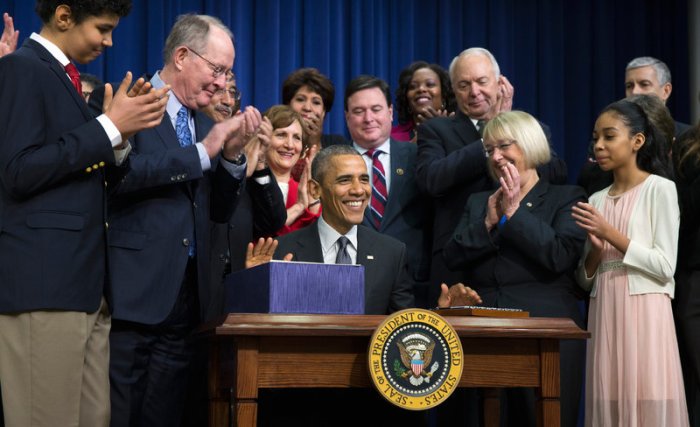
President Barack Obama signed the Every Student Succeeds Act (ESSA) this week.

The new legislation reauthorizes federal law governing K-12 public education.

In 1965 we called it the Elementary and Secondary Education Act (ESEA). Until today we called it No Child Left Behind (NCLB). And now after a much-hyped signing ceremony, the most definitive thing we can say about it is this: federal education policy has a new name.

Seriously. That’s about it.

Does it reduce the federal role in public schools? Maybe.

Does it destroy Common Core State Standards? Possibly.

Is it an improvement on previous policies? Potentially.

Will it enable an expansion of wretched charter schools and unqualified Teach for America recruits? Likely.

The problem is this – it’s an over 1,000 page document that’s been open to public review for only two weeks. Though it was publicly debated and passed in the House and Senate, it was finalized behind closed doors and altered according to secure hurried Congressional votes. As such, the final version is full of legal jargon, hidden compromise, new definitions and verbiage that is open to multiple meanings.

How one reader interprets the law may be exactly the opposite of how another construes it.

Take the much-touted contention that the ESSA reduces the federal role in public schools. Even under the most positive reading, there are limits to this freedom.

The document continues to mandate testing children each year in grades 3-8 and once in high school. It also mandates academic standards and accountability systems. However, what these look like is apparently open to the states.

For instance:

The Secretary [of Education] shall not have the authority to mandate, direct, control, coerce, or exercise any direction or supervision over any of the challenging State academic standards adopted or implemented by a State.

That seems pretty clear. The federal government will not be able to tell states what academic standards to adopt or how student test scores should be used in teacher evaluations.

But it also says that states will have to submit accountability plans to the Department of Education for approval. It says these accountability plans will have to weigh test scores more than any other factor. It says states will have to use “evidence-based interventions” in the schools where students get the lowest test scores.

That sounds an awful lot like the test-and-punish system we have now.

What if your state decides to take a different road and reject the high stakes bludgeon approach to accountability? In that case, some readers argue schools could lose Title I funds – money set aside to help educational institutions serving impoverished populations.

Will that actually happen? No one knows.

It may depend on who will be President in 2017 and whom that person picks as Secretary of Education. And even if the Feds try to take advantage of these potential loopholes, the matter could end up being decided by the U.S. Supreme Court.

What about Common Core?

Some readers interpret the new law as destroying forever the possibility of national academic standards. If states are allowed to pick their own standards, it is highly unlikely they’ll all pick the ones found in the deeply unpopular Common Core. However, the law does force each state to have academic standards of some kind, and it defines what those standards must look like. One interpretation of this is that they must look a lot like the Common Core.

They must be “state-developed college- and career-ready standards.” You read that right – “College and career ready.” That’s the Common Core catchphrase. If someone says they want to eat lunch at “the golden arches,” they haven’t said McDonalds, but you know they’re craving a Big Mac.

Will the Fed allow states to choose standards radically different than the Core? Again only time and – possibly – the courts can tell.

This same problem occurs throughout the document. As the public painstakingly combs through it, new legal wiggle room may be found. And I am not so naive as to suppose we’ve found all of the loopholes yet. Some of these may be the result of poorly chosen wording. Others may be purposefully hidden time bombs waiting for opportunists to exploit.

This uncertainty about exactly what the ESSA will eventually mean for our public schools may help explain the range of reactions to the formative law – from ecstasy to despair to shrugs and snores.

I’m not sure what to think of the thing, myself. I started the whole process disgusted but came around to accepting it if the final result was any kind of improvement over previous legislation. And now that it’s the law of the land, I look at this Frankenstein’s monster of a bill – stitched together pieces of mystery meat – and I don’t know whether to laugh or cry.

I still hope it will live up to the limited promise it holds to bring us some relief from NCLB. But I admit this thing could go sour. Anyone’s guess is as good as mine.

Which brings me to perhaps the biggest problem with this law that no one seems to be talking about.

Education needs reformed. We need to repeal the bogus policies that have been championed by the 1% and their lapdog lawmakers. We need to get rid of test-based accountability. We need to trash high stakes testing, Common Core, value added measures, charter schools and a host of other pernicious policies. We need to initiate a real anti-poverty program dedicated to attacking the actual problem with our schools – inequality of resources.

But more than any of that, we need to reform our government.

We need to find a better way to make our laws. The process that shat out this ESSA must go.

Think about it. No Child Left Behind was an abject failure by any metric you want to use. It didn’t close achievement gaps – it increased them. And the major policy of this law – annual standardized testing – remains intact in the reauthorization!

There has been massive public outcry against annual testing. Parents are leading an exponentially growing civil disobedience movement shielding their children from even taking these assessments. Everyone seems to agree that we test kids too much – even President “I’ll-veto-any-bill-that-deletes-testing” Obama.

Yet our legislators did next to nothing to fix this problem.
Instead preference was given to lobbyists and corporatists interested in making a buck off funding set aside to educate children. The focus was on smaller government – not better government. These aren’t mutually exclusive, but they aren’t exactly one-and-the-same, either.

This can’t continue if we are to keep pretending we have a representative Democracy. The voice of lobbyists must not be louder than voters. Money must be barred from the legislative process. Demagoguery must not overshadow the public good. We need transparency and accountability for those making our laws.

Until that happens, we will never have a sound and just education policy, because we don’t have a sound and just government.

Unfortunately, that is the biggest lesson of the ESSA.


NOTE: This article also was published in the LA Progressive, Badass Teachers Association Blog and quoted extensively on Diane Ravitch’s blog.


Putting the Arts Back in Language Arts – One Journal at a Time

d3493c8db7e1e4b423ce6b5e87f14eb6

This is the fifth in a series of blog posts focused on the value of art in our lives, and the role art can play in resisting the test and punish model of education.  See the intro and links to other posts in the series here.


Sometimes in public school you’ve just got to cut the crap.

No testing. No close reading. No multiple choice nonsense.

Get back to basics – pass out notebooks, crack them open and students just write.

Not an essay. Not a formal narrative. Not an official document. Just pick up a pencil and see where your imagination takes you.

You’d be surprised the places you’ll go.

You might invent a new superhero and describe her adventures in a marshmallow wonderland. You might create a television show about strangers trapped in an elevator. You might imagine what life would be like if you were no bigger than a flea.

Or you might write about things closer to home. You might describe what it’s like to have to take care of your three younger brothers and sisters after school until just before bedtime when your mom comes back from her third minimum wage job. You might chronicle the dangers of walking home after dismissal where drug dealers rule certain corners and gangs patrol the alleys. You might report on where you got those black and blue marks on your arms, your shoulders, places no one can see when you’re fully clothed.

My class is not for the academic all stars. It’s for children from impoverished families, kids with mostly black and brown skin and test scores that threaten to close their school and put me out of work.

So all these topics and more are fair game. You can write about pretty much whatever you want. I might give you something to get you started. I might ask you a question to get you thinking, or try to challenge you to write about something you’ve never thought about or to avoid certain words or phrases that are just too darn obvious. I might ask your opinion of something in the news or what you think about the school dress code or get your thoughts about how things could improve.

Because I actually care what you think.

Strange, I know.

At times like these, I’m not asking you to dig through a nonfiction text or try to interpret a famous literary icon’s grasp of figurative language. It’s not the author’s opinion that matters – it’s yours – because you are the author. Yes, YOU.

You matter. Your thoughts matter. Your feelings. YOU MATTER!

And sometimes students raise their hands and ask me to read what they’ve written. And sometimes – more often than not – the first thing they say is, “It’s no good.” “I don’t like it.” “I did bad on this.”

So I stop reading, I look them right in the eyes and ask them who wrote it.

“Me?” they say.

And I respond, “Then I’m sure it’s excellent.” And it usually is.

My 8th grade students have been ground down so low under the weight of a society that could care less about their well being that they’ve begun to internalize it. They think their thoughts and feelings are worthless. No one cares about what they think.

But I do.

So I offer them a chance to share what they’ve written. I don’t demand. I don’t force anyone to read anything. I know that some things that spill out on the page aren’t for sharing. But I want them to know that I value what they’ve just put down and that I think it’s worth taking the class time to let others hear it, too.

“Mr. Singer, I wrote five pages,” Jaquae tells me this afternoon. “That’s too long to share.”

“I disagree,” I say. “If you think it’s worth our time, you should read it. You deserve our attention.”

So he reads, blows out a cleansing breath and smiles.

In the process, we all become ennobled. We become more. We become a community. We get a peak at our common humanity.

It’s so easy to look at others as mere adversaries. Even our national education policy sees things in terms of a competition, a race. We set children against each other for points, for grades, for attention, just to feel valuable. You’re a Proficient. You’re a Basic. You’re a Below Basic. And somewhere along the way they lose the sense that they’re all valuable because they’re all human beings with thoughts, feelings and experiences that no one else has ever gone through before – but with which everyone can relate.

So I write, too. Every time I set my students a journal, I put pen to paper, as well.

At the beginning of the year, I share what I wrote to show them that it’s okay. At the middle of the year I ask them if they want me to share. And at the end of the year I remain silent unless they ask me to do otherwise.

Because these class moments aren’t about me. They’re about them. I’m willing to be as much a part of their creative space as they want, but it’s a choice, not a dictate.

In my class I will make you learn, but I don’t control what you learn or how you feel about it.

I extend my students this respect because I know that what we’re really doing isn’t some meaningless exercise. We’re creating art.

Not just scribbles on a page. Not something done just to please the teacher. This is an excavation of the soul. We dive into the depths of ourselves and come back all the better for it.

That’s why my students journal almost every day.

That’s why we put mechanics and spelling and grammar aside for a few moments and just write what we need to say.

Because Language Arts, after all, is an Art. It says that right in the title.

My students are artists. I am their muse. I hold a mirror up to their fractured and beaten spirits to show them the grandeur of what resides inside them.

And hopefully they come away inspired.

Because they are wonders. They are joyous. They are little pieces of my heart.


NOTE: This article was also published in Living in Dialogue, the Badass Teachers Association Blog and mentioned on Diane Ravitch’s blog.
 

Close Reading: Myopia as a Virtue

head in book
Painting by Pawel Kuczynski


You are reading a text.

Yes. Right now.

Your eyes are scanning over symbols called letters. They are joined together into words and sentences and paragraphs to make up the total of this article.

Your brain is in the process of translating these symbols into sounds, meanings, concepts. And you are reacting to those concepts.

You’re having thoughts about what you’re reading. Maybe you’re reminded of a similar article you’ve read sometime in the past. Maybe you’re feeling a thrill of excitement at such an original introduction to an education article. Or perhaps you’re rolling your eyes and wondering why the author is such a doofus.

No matter how you look at it, reading involves complex processes. A whole bunch of stuff is going on to make it happen – all of it essential.

Yet when we evaluate reading comprehension these days, we put the focus squarely on one or two of those multifarious processes. It’s reductive, reactionary, and lame. It’s a dumbing down of the cognitive and metacognitive process. But it makes things easy to grade on a standardized test.

That’s what the fad of close reading is all about. It’s an attempt to make the mysterious and complex mind something that can easily be labeled right or wrong.

For the uninitiated, close reading is the careful, sustained interpretation of a brief passage of text in which great emphasis is put on individual words, syntax, and the order in which sentences and ideas unfold.

It’s not that close reading is unimportant. After all, it’s something good readers do. But an overemphasis on this aspect leaves out so much that is even more vital. It’s like saying the only significant part of the Hershey bar is the wrapper, or the only salient part of eating the Hershey bar is chewing. However, when I unwrap my dessert, there better be chocolate inside, and after I bite into it, I’d better not forget to swallow!

But education specialists with little to no actual classroom experience are making a killing going from school-to-school lecturing teachers about how to teach. And they’re telling us to emphasize close reading to the detriment of all else.

They’re saying we need to give our students short texts of no more than a page or two. We should have our students read these texts without any background into who wrote them or why. We should then have students answer questions that require them to go back to the text, find something and spit it back to us.

For instance:

How does the author use figurative language to develop theme?

Explain how word choice in the passage develops characterization.

Provide examples from the passage that demonstrate the author’s bias.

To the uninitiated, it looks like really important work. It’s not. This is the literary equivalent of taking out the garbage or going on a scavenger hunt. These are good things, but they are not the be-all-end-all. They don’t capture the essential reason we read – to understand.

Imagine if I asked you to go back into the part of this article you’ve already read and find one example of a North American pejorative used by the author. You could do it. You could scan back to the beginning, look through everything I wrote and find that I used the word “Doofus.”

Huzzah! You win the scavenger hunt.

Now explain why I used that word by making reference to textual evidence. You could do that, too. You could look at all the other things I’ve written so far and explain why I probably chose that word.

Congrats!

But notice what you can’t do, what these think tank clones will never ask you to do – form a substantial opinion. Not just why do you think someone else did something but what do you think about what they did?

For example:

Do you think the use of colloquialisms and slang have a place in serious education theory? Why or why not?

When was the most or least effective time you or a colleague used a colloquialism to express a complex thought? Evaluate its effectiveness.

In what ways are forbidden words more or less meaningful than those more easily sanctioned?

At its core, reading is not about discrete facts. No one picks up a piece of text to find out minute fragments of information. Instead, we’re looking for enlightenment. We don’t care so much about how the astronaut puts on the spacesuit. We want to know why she put it on in the first place. We want to know where she’s going. We want to know what it’s like and if we’d want to do something like that ourselves.

But an overemphasis on close reading ignores all this. It pretends readers are robots. It pretends reading is a mechanical process that can be easily divided into its component parts and examined discretely.

Even worse it ignores the needs of individual students. For many children in our modern world, reading of this sort is almost entirely alien to their lives. There are so many things competing for our attention these days that reading often gets neglected. Even if you love to read, it can be difficult to find the time and inclination to sit down, quiet yourself and read.

THIS is where most educators would like to focus – getting students to read at all. We want to show learners why they might want to read. We want to engage them. Demonstrate what an amazing experience a good book can be. We want to foster that look of delight in their eyes, that sense of wonder, the epiphany of literacy.

But instead we’re being told to focus on the nuts and bolts, the everyday boring hunt and seek of mechanical mentation.

Whatever you do, don’t see the forest; see the trees. Don’t look at the big picture; look exclusively to the details and don’t worry your pretty little head about making any larger meaning out of it.

This is tantamount to child abuse. We’re putting blinders on children’s minds and telling them which direction to think. We’re taking away their ownership of the reading experience. It’s no longer about what they want, what they’ve lived through, what they believe or what they see. It’s only about the author’s view – an author they probably don’t care about because they had no part in all the other crucial facets of reading. In fact, I would argue that this isn’t even really reading at all. It’s little more than  decoding. It’s a skill set fit for a corporate drone, not someone in management or any position to make valuable decisions.

It’s no wonder that these prescriptions are only leveled at public schools. Parochial, private and charter schools are specifically left out of these mandates. The same people demanding close reading for your kids want something much different for their own.

This is class warfare as education policy. It’s all about keeping down working families and lifting up the one percent.

That’s essentially what corporate education reform is all about – every tentacle of the beast is wrapped around young minds of the poor, the brown skinned, the undesirable.

But perhaps you don’t agree with me. Perhaps you have your own thoughts on this matter which may differ from mine.

Fine, I say. Good!

Yes, please think about it. Ponder these issues carefully, because while I’m championing free thought, the other side wants nothing less than your children’s complete submission to the status quo.

Feel free to give that a nice close read.

12309794_10206881389730566_1129034647191120195_o


NOTE: This article also was published on the Badass Teachers Association Blog.


A Real Solution to the Infinitesimal Cases of Child Predators in Our Schools

110401_toomey_ap_605

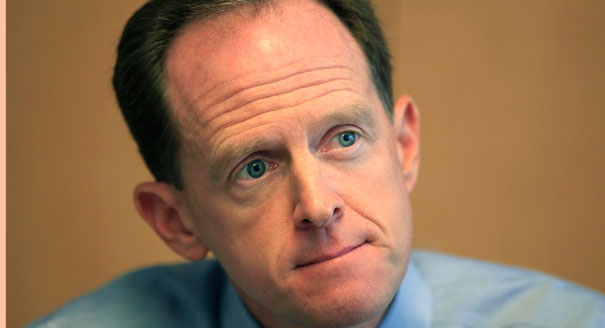
Pat Toomey is obsessed with child predators in our public schools.

When I came to Washington, D.C., this summer to visit 
the U.S. Senator from Pennsylvania, he was lobbying to get his “Passing the Trash” bill included in the Elementary and Secondary Education Act (ESEA).

His proposed legislation – now part of the Senate version of the ESEA – would ban school districts from helping known pedophiles from finding teaching jobs at different schools. Toomey is hopeful the provision will remain in the final version of the law that eventually will reach President Obama’s desk.

I met with his education aide who cheerily told me her job was to comb through the nation’s newspapers everyday and count the number of teachers accused of acting inappropriately with children. I’d mention issues like inequitable funding, standardized testing and Common Core. She’d solemnly quote back the number she’d found in her research.

There was definitely a disconnect between our priorities. After all, I’m a public school teacher. I work in our school system everyday. She and her boss only know about our schools through what they read in the newspaper. And according to the media every school in American houses child predators. They lurk behind every corner protected by administrators, superintendents and unions.

However, the facts do not back this up.

The Associated Press held a landmark investigation in 2007 to discover the extent of the problem. Reporters sought disciplinary records in all 50 states and the District of Columbia over a 5 year period. The investigation found 2,570 educators whose teaching credentials were revoked, denied, surrendered or sanctioned following allegations of sexual misconduct. About 70% of those cases involved children being victimized.

There is no glossing over it. The number is disgusting and startling. However, it is far from the national epidemic the media and Toomey are touting.

There are more than 3 million teachers in this country. This report found that 1 in 800,000 may be a child predator. That’s .00083%.

In other words, your child is more likely to be struck by lightning than be the victim of a child predator at school (1 in 134,906).

Other things more likely to happen include dying in an airplane crash (1 in 7,178), death on the job (1 in 48,000), and being murdered (1 in 18,000).

I don’t mean to be glib. One teacher betraying a young person’s trust in this way is one too many.

I’m glad Toomey is pursuing this legislation. I even support it.

However, I don’t like the slander and libel against the great majority of teachers. I don’t like how we’re all being painted with the same brush – even when it is done in the cause of making it more difficult for child predators.

I’ve been a public school teacher for almost 15 years. In that time, I have never met a single teacher who I would be uncomfortable letting babysit my 6-year-old daughter. Even when I was a student, myself, back in the 1980s and 90s, I never had a teacher who I was afraid would molest me or my classmates.

Compare this to the sex scandals in the Roman Catholic Church. A review by American Catholic bishops found about 4,400 of 110,000 priests were accused of molesting minors from 1950 through 2002. That’s .04% or 1 in 400. Sure the timescale involved is much longer than the AP study of educators, but the pool of priests is also much smaller. It would seem children are more in danger in houses of worship than houses of learning.

However, none of this helps people like Toomey pass legislation. You can’t say this doesn’t happen much, but we need to stop it. No one would vote for it. There would be no sense of urgency.

It’s just that in dramatizing the situation the Senator and his ilk are defaming the majority of teachers who would never even consider hurting a child.

The truth is not politically expedient. Child predation in schools is not a quantitative issue. It’s a qualitative one.

You don’t need large numbers of children to be hurt in this way for us to take the problem seriously. Even a small number, even a single instance, is enough to require action. No child should ever feel unsafe in school. No child should ever be victimized in these hallowed halls – especially by the very people who have devoted their lives to help them.

So I think Toomey’s right. We should pass his legislation. We should take steps to stop this kind of thing from ever happening in our schools.

And if we’re really serious, I have a solution that no one seems to be talking about: Let’s hire more teachers.

Stay with me here. Child predators almost always act alone. This sort of crime requires the perpetrator to have time undisturbed with the victim. Yet what do we have in our public schools? We’ve slashed and burned school budgets until there are fewer teachers and more students than ever. Class sizes have ballooned. It’s not uncommon for teachers to have upwards of 20, 30 even 40 children in one classroom.

This is the perfect breeding ground for child predators. They are more unsupervised than ever. They can do as they please and no one will catch them until it’s too late. Even principals and other administrators have less time to observe what goes on in the classroom because they’re unduly burdened with ridiculous amounts of paper work required to ensure every teacher gets a junk science value-added evaluation.

But if we hired more teachers, we could reduce this problem. We could even take the majority of these new teachers and put them together in the classroom. We could initiate a nationwide co-teaching initiative.

There would be challenges. You’d have to be careful to pair educators together that are compatible and can work well together. However, it would be worth it.

Few teachers would be alone with a class of students. There would almost always be another adult in the room. If another teacher was doing something fishy, it would be observed and probably reported. Moreover, the mere presence of another educator would be a huge deterrent to even trying something funny.

And this would solve our class size conundrum. You might still have larger classes, but the ratio between teacher and student would be halved. Educational outcomes would increase. Students would get more individual attention. They’d learn more. Teachers would be less stressed having someone else to shoulder the burden. And having an influx of new middle class jobs would boost our flagging economy.

This is a win-win.

Of course, it would cost some major bucks. It would require a lot of work from our nations lawmakers and policy wonks. But how could they really say ‘no’? After all, it’s being done to protect children!

From an economic standpoint, we already spend 54% of our federal budget on wars and the military. Only 6% is spent on education. It seems astoundingly unlikely that we can’t afford adding these jobs, increasing children’s educational outcomes, boosting the economy and protecting children – all in one sweep!

So, Senator Toomey, after your measure gets adopted in the final ESEA, I suggest you spearhead this new mission. After all, your bill will help, but co-teaching will almost eliminate the problem. Even if we had all children take classes exclusively on-line, it wouldn’t stop child predators from getting to them. (Heck! Predators thrive on the Web!) But co-teaching could make a real appreciative difference.

If we really want to stop students from being victimized in school, we need more teachers.


NOTE: This article was also published in the LA Progressive.


Standardized Tests Every Day: the Competency Based Education Scam

rocketship-charter-schools

IN THE NOT TOO DISTANT FUTURE:

Welcome to class, children.

Please put your hands down, and sit at your assigned seat in the computer lab.

Yes, your cubicle partitions should be firmly in place. You will be penalized if your eyes wander into your neighbors testing… I mean learning area.

Now log on to your Pearson Competency Based Education (CBE) platform.

Johnny, are you reading a book? Put that away!

Are we all logged on? Good.

Now complete your latest learning module. Some of you are on module three, others on module ten. Yes, Dara, I know you’re still on module one. You’ll all be happy to know each module is fully aligned with Common Core State Standards. In fact, each module is named after a specific standard. Once you’ve mastered say Module One “Citing Textual Evidence to Determine Analysis” you will move on to the next module, say “Determining Theme or Central Idea for Analysis.”

Johnny, didn’t I tell you to put away that book? There is no reading in school. You’re to read the passages provided by the good people at Pearson. No, you won’t get a whole story. Most of the passages are non-fiction. But I think there is a fun passage about a pineapple coming up in your module today. Isn’t that nice?

Laquan, you haven’t put on your headphones and started your module yet? You’ve been on module three for the past week. How can you learn at your own rate if you never progress beyond module three?

What’s that? Your mother wrote me a note? Let me see that.

Huh. So she wants to know how come you never get beyond module three. You should be able to answer that question for her, yourself, Laquan. (At least you could get that one right.)

Laquan, tell your mother that you haven’t passed the proficiency standard yet. You’ve taken all the remediation available on the computer program, haven’t you? Yes, that fun game where you answered multiple choice questions and when you got one correct the spaceship blasts an asteroid. And then you took the daily assessment but you just haven’t received a passing score yet. But don’t worry. I’m sure if you continue to do the same thing again today… eventually… you’ll get it right. It’s how the state and federal government determine whether you’ve learned anything on a daily basis.

In ancient times, teachers like me used to make up our own assignments. We’d give you books to read… Johnny, have you started yet? …whole books, novels, literature. And then we’d hold class discussions, class projects, act out scenes, draw posters, relate the books to your lives, write essays. But now all that silliness is gone.

Thanks to the good people at the American Legislative Exchange Council (ALEC), the Gates Foundation, and the Foundation for Excellence in Education, The state and federal government have mandated a much more efficient way of determining student learning. Back in the day, they forced schools to give one big standardized test in Reading and Math every year. Teachers would have to scramble with test prep material to make sure all learners could pass the test, because if students didn’t get passing marks, the teacher was out on her butt.

We’ve done away with such silliness now. Thankfully the government got rid of yearly high stakes standardized testing. What we do now is called Competency Based Education. That’s what this program is called. It’s kind of like high stakes standardized testing every day. So much more efficient, so much more data to use to prove you know this set of basic skills written by the testing companies with hardly any input from non-experts like classroom teachers.

That’s how the district became composed of 100% charter schools. No more inefficient school boards made up of community members. Today our schools are run by corporate CEOs who are experts at finding ways to cut corners and increase profits for their shareholders. And, ugh, make you learn good.

Hm. I seem to be talking too much. No one’s paying me to impart any information. I’m just supposed to make sure you’re all hooked up to the program and making satisfactory daily progress. Otherwise, I’ll be out of a job again.

You laugh, but it’s hard to get minimum wage work like this. Since the U.S. Supreme Court made labor unions all but illegal and public schools instituted CBE programs, teachers like me could no longer demand such exorbitant salaries. Now I make an honest living. Speaking of which, I may have to get out of here a few minutes early today to make it to my shift at WalMart. I’m greeter today!

And if you work hard, someday you can be, too!


NOTE: This article also was published on the Badass Teachers Association Blog and quoted extensively on Diane Ravitch’s blog.


Hypocrisy: Democrats Criticize Trump but Not a Peep Against Emanuel

13-emanuel-trump.w1058.h704


So Donald Trump is a narcissistic, bigoted, fascist.

Not exactly a surprise.

He’s also the Republican front runner for President. I’ll admit to being mildly shocked by that.

However, much more astonishing are the chauvinistic and possibly illegal actions of Chicago Mayor Rahm Emanuel – and the fact that no major Democrat of note is calling him out for any of it.

Let’s review.

Trump made a name for himself during this election cycle calling Mexican immigrants rapists and murderers. Then he insulted women and the disabled. He proposes surveillance of mosques and registering all Muslims. He even incites supporters at his rallies to beat Black protesters.

And every time this happens, his poll numbers rise.

Predictably Democrats have decried this state of affairs. They have pointed their fingers accusingly at a Republican base that would champion such an odious figure for leader of the free world. And rightly so!

By contrast, Emanuel isn’t currently a candidate for anything. He’s a second term Democratic Mayor of one of the most populous cities in the country.

During that time, he has closed 50 public schools46 of which serve mostly black students. Southside residents had to resort to a month-long hunger strike to keep their last neighborhood school open. In addition, his economic policy consists of closing public health clinics for the poor and installing red light cameras to increase fines – none of which has actually boosted the economy.

But perhaps worse than all of that is the recent revelation that Emanuel’s administration with full knowledge of the Mayor may have actually covered up the police killing of an unarmed black teen!

In October, 2014, Officer Jason Van Dyke shot 17-year-old Laquan McDonald 16 times. Most of those bullets went into the teenager after he was already flat on the ground and the officer was at least 10 feet away.

As usual, the police story includes all the usual racist clichés – a trained and experienced officer of the law fears for his life from a black teen. Van Dyke says he was attacked. The dashcam video, however, shows no such thing. McDonald did not lunge at the officer. The young man was walking away when Van Dyke shot, and after he fell, the officer unloaded a barrage of bullets at his prone and seemingly helpless body.

Then the cover-up began. Emanuel allegedly was told about the incident in February, 2015, while he was in the midst of a contentious re-election bid. His administration quickly issued a $5 million settlement to McDonald’s family on the condition they keep quiet about the incident. It wasn’t until May, after Emanuel had won re-election, that an independent journalist asked for the dashcam video to be released. It took the full power of the media and a lawsuit to accomplish this. Last Thursday, a Chicago judge ordered the video be disclosed and Van Dyke was quickly charged with first degree murder.

It seems impossible to deny that Van Dyke would have been charged a year ago if not for the cover-up. The officer had already received 17 citizen complaints including that he had made racist remarks and three excessive force complaints over four years. Only Emanuel’s protection kept him out of jail.

So which is worse? Trump loudly champions prejudice and bigotry without the power to do anything about it. Emanuel protects an actual racist, stops him from being charged for what may well be a racially motivated murder, but makes no flashy public comments about it.

Yet only one of these two politicos gains the ire of the supposedly progressive and enlightened Democratic party.

How can this be? If we accept Fox News to represent a realistic presentation of the Republican platform, the party is often regressive, counterfactual, and rife with prejudice. On the other hand, media representations of the Democrats present them as the exact opposite. They propose progressive policies based on facts and a much more pluralistic view of society. They’re just much more inept at achieving this vision than their GOP counterparts.

But if that were true, how could one of their anointed, one of the most powerful Democrats in the country, a man who had been White House Chief of Staff at the beginning of President Barack Obama’s first term, a former U.S. Representative, senior adviser to President Bill Clinton, how could HE be perpetrating so many repressive, bigoted, “conservative” policies? How could so many leading Democrats support him? Why are so few criticizing him now?

It makes one question the perceived wisdom about the two parties. Is there really a difference, or are the left and the right wings just two parts of the same bird? When you look at what Democrats do – I mean when you actually examine the policies they enact when they’re in office – they really aren’t much different than those proposed by Republicans.

Perhaps there are a few far left Democrats like Bernie Sanders who actually represent a real progressive movement. Or perhaps there is no  major progressive party anymore in the United State.

We  must keep our eyes on Chicago. If there is any fight left for the soul of the Democratic party it will be here. Will the party call for Emanuel’s resignation? Or will it continue to side with one of the most regressive politicians currently holding office while it congratulates itself for condemning clownish Trump?


NOTE: This article also was published on Commondreams.org, the LA Progressive and on the Badass Teachers Association Blog.

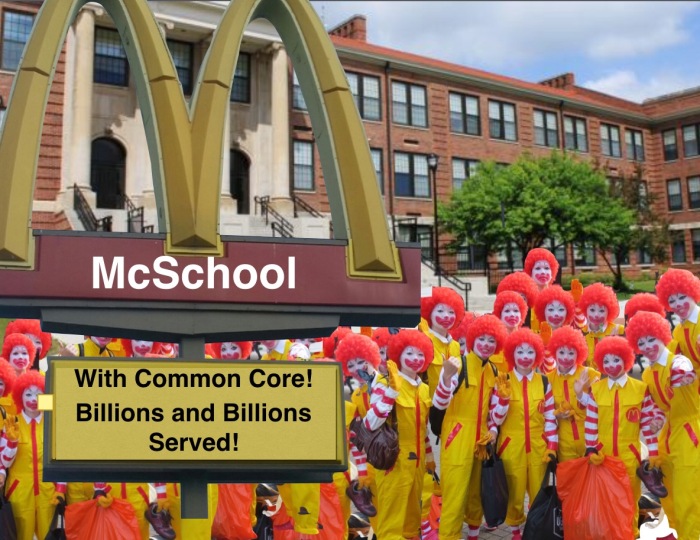
National Academic Standards – Turning Public Education into McSchools


FullSizeRender

America is obsessed with standardization.

Let’s make everything the same – neat and uniform.

It’s ironic coming from a country that’s always been so proud of its rugged individualism.

But look almost anywhere in the US of A, and you’ll see a strip mall with almost all of the same stores and fast food restaurants selling the same crusty burgers and fries left waiting for the consumer under a heat lamp.

Somehow this has become THE model for public education, as well. Corporations have convinced our lawmakers that the disposable franchise business schematic is perfect to increase student learning.

That’s where we got the idea for Common Core. All schools should teach the same things at the same times in the same ways.

It’s been a horrendous failure.

But this article isn’t about the Common Core per se. It isn’t about how the Core is unpopular, expensive, developmentally inappropriate, created by non-experts or illegal. It’s about the very idea of national academic standards. After all, if the Core is flawed, one might suggest we simply fix those flaws and institute a better set of national standards. I contend that this would be a failure, too.

The problem with standardization is that it forces us to make uniform choices. In situation A, we always do THIS. In Situation B, we always do THAT. There are some areas where this is a good thing, but education is not one of them.

For instance, we can all agree that children need to read books, but what kind of books? Should they read mostly fiction or nonfiction? Should books be limited by subjects or should they be chosen by interest? Should they be ebooks or hardcopies? Should they be organized by grade level or an individual’s reading level?

These are decisions that are best made in class by the teacher. However, when we write national standards, we’re taking away educators’ autonomy and giving it to some nameless government entity. This isn’t smart. Teachers are the scientists of the classroom. They can use their observational skills to determine what a child needs and how best to meet those needs. If we remove this, we’re forced to guess what hypothetical children will need in hypothetical situations. Even under the best of circumstances, guesses will not be as good as empiricism.

But, some will say, standards should be broad. They shouldn’t determine what children will learn in detail. They just set a framework. For instance, they’ll detail that all children should learn how to add and subtract. All children will learn how to read and write.

There is some truth to this. We can all agree to a basic framework of skills children need before graduation. However, if the framework is this broad, is it even necessary?

Do you really think there are any public schools in this country that don’t attempt to teach adding and subtracting? Are there any schools that don’t teach reading and writing?

I doubt such educational institutions exist, and even if they did, you wouldn’t need national academic standards to change them. By any definition, they would be cheating their students. If the community found out this was going on, voters would make sure things changed.

What about evolution, someone asks. This is a central scientific concept vital to a modern understanding of the field that in many places isn’t being taught in our public schools. Don’t we need national standards to ensure things like evolution are part of the curriculum?

The short answer is no.

For a moment, let me remove my ban on talking about Common Core – our current attempt at national standards. Some people defend the Core with this same argument. However, it should be noted that the Core has no science and history standards. It does nothing to ensure evolution is taught in schools.

But could we ever have standards that did ensure evolution was taught? Yes, we could.

Why don’t we? Why doesn’t Common Core explicitly address this? Because enacting such standards would take political power of a sort that doesn’t exist in this country. Too many voters oppose it. No state or federal legislature would be able to pass it.

But let’s assume for a moment that the political stars had aligned, and we could get lawmakers to vote for this. Why would they need to? This is a central theory to so many fields of science. Do we need an act of Congress to make sure all schools teach about gravity? Do we need one for Nuclear force? Friction?

You don’t need a Congressional order to teach science. If the community wants it, teachers will just do it. That’s their jobs. You can’t legislate that everyone believes in evolution. You have to convince people that it should be taught. National standards won’t change that. You can’t sneak it in under Newton’s laws of motion. We need to come to consensus as a society. As much as I truly believe evolution should be taught in schools, national standards are not going to make that happen.

Even if I were wrong, the cost would be far too high. We shouldn’t want all of our public schools to be uniform. When everyone teaches the same things, it means we leave out the same things. There is far too much to know in this world than can ever be taught or learned in one lifetime. Choices will always need to be made. The question is who should make them?

If we allow individuals to make different choices, it diversifies what people will know. Individuals will make decisions, which will become the impetus to learning, which will then become intrinsic and therefore valued. Then when you get ten people together from various parts of the country, they will each know different things but as a whole they will know so much more than any one member. If they all know the same things, as a group they are no stronger, no smarter than each separate cog. That is not good for society.

We certainly don’t want this ideal when going out to eat. We don’t want every restaurant to be the same. We certainly don’t want every restaurant to be McDonalds.

Imagine if every eatery was a burger joint. That means there would be no ethnic food. No Mexican. No Chinese. No Italian. There would be nothing that isn’t on that one limited menu. Moreover, it would all be prepared the same way. Fast food restaurants excel in consistency. A Big Mac at one McDonalds is much like a Big Mac at any other. This may be comforting but – in the long run – it would drive us insane. If our only choices to eat were on a McDonald’s Value Menu, we would all soon die of diabetes.

But this is what we seem to want of our public schools. Or do we?
There is a bait and switch going on in this argument for school standardization. When we talk about making all schools the same, we’re not talking about all schools. We’re only talking about traditional public schools. We’re not talking about charter schools, parochial schools or private schools.

How strange! The same people who champion this approach rarely send their own children to public schools. They want sameness for your children but something much different for their own.

I have never heard anyone say this approach should be applied to all schools across the board. That’s very telling. These folks want your kids to be limited to the McDonald’s Value Menu while their kids get to go to a variety of fancy restaurants and choose from a much daintier display.

If standardization were so great, why wouldn’t they want it for their own children? I think that proves how disingenuous this whole argument is. Standardization makes no one smarter. It only increases the differences between social classes.

The rich will get a diverse individualized education while the poor get the educational equivalent of a Happy Meal.

Think about it. Every generation of American that has ever gone to public school managed to get an excellent education without the need for national academic standards. Steve Jobs, Jeff Bezos, Bill Clinton, Ronald Reagan, Carl Sagan, Ruth Bader Ginsberg, Spike Lee, Larry King, and Stan Lee along with 90% of the United States population went to public school. None of them needed national academic standards to succeed.

This is a solution in search of a problem. The only reason we’re being sold the need for these standards is because it makes it easier for corporations to profit off federal, state and local tax dollars set aside for education. New standards mean new text books, new tests, new test prep materials, new software, and new computers. In the case of Common Core, it also means failing as many children as possible to secure a never ending supply of the above and an open door to privatization.

We must wake up to the lies inherent in these sorts of policies. Yes, the Common Core is horrible, but the problem goes far beyond the Common Core.

National Academic Standards are a terrible idea propagated by the 1% to turn the rest of us into barely educated subhumans and boost the bottom line.

Do you want fries with that?


NOTE: This article also was published on the Badass Teachers Association Blog and quoted extensively on Diane Ravitch’s blog.