
Could This Be Gadfly’s End? Top 12 Articles From 2023 Read By Fewer Than Ever

Thank you, loyal readers, but this may be the end of Gadfly on the Wall.

Readership has fallen off to such a degree that I’m just not sure it’s worth continuing anymore.

That combined with increasing difficulties in my own life have made me truly question whether I should (or can) go on with it.

Don’t get me wrong. I will truly cherish every moment writing these articles, fighting for what I (still) think needs to happen in public education so that our children can be fairly treated and succeed.

There is so much I think most people don’t know about what happens in our schools and what could be done to make them better for children, families and the people who work there.

But after 9 years of pounding my head against the wall – well, it seems like the wall is winning.

This blog used to be read by at least half a million people each year. But social media – the prime distributor of this material – is not what it was a decade ago. In 2021, I had 222,414 hits. Last year it was 124,984. This year it was 73,121.

And much of those were for articles I’d written in years past. The highest three articles this year were not written in 2023. They were: The MAP Test – Selling Schools Unnecessary Junk at Student Expense ( 2,344) from Aug. 2022, When Good Students Get Bad Standardized Test Scores (1,775) from Oct. 2022, and Lesson Plans Are a Complete Waste of Time (1,544) from Sept. 2021.

Why keep putting out new content? It often feels like I’m saying the same thing over and over anyway – and not really being heard except by the same few people.

So I’m going to pause, take a moment and really think about things.

Heck! I might find out that I simply can’t quit because I’ve got too much to say. Then again, I may only write when something really important comes up that I absolutely have to let loose on.

Or this could be it.

I don’t know.

In any case, thank you so much for nearly 10 years of readership. I assume most people seeing this would have been here for the long haul.

It has been an amazing experience. I’m not sure what comes next, but for now I leave you with some outstanding moments from 2023.

All the best in the future!

-Steven Singer

The Gadfly on the Wall

12) Standardized Tests Hurt Asian-American Students, Too, Though Many Get High Scores

Published: March 27

Views: 243

Description: Asian-Americans – taken as a whole – score better on standardized tests than white Americans. But they are just as much victimized by testing as any other minority. The only difference is their success is held up as an excuse for upholding this deeply inequitable practice. It obscures that all Asians are not the same, certain types do not score as highly yet all are held to unfair expectations.

Fun Fact: This is a rarely explored or reported on aspect of the standardized testing phenomenon. I’m proud to have written on it despite its low readership.

11) Fact Checking Propel Charter Schools – Do They Live Up to Their Own Hype?

Published: Jan. 20

Views: 572

Description: The Propel Charter School network of 13 schools based in Pittsburgh, Pa, has advertisements everywhere proclaiming its virtues. However, this is just advertising. From test scores to safety to class size to teacher qualifications and many other factors, the charter chain comes up short again and again. Compared with authentic public schools in the same neighborhoods where these schools are located, Propel compares rather badly.

Fun Fact: I think this is incredibly important in the western Pennsylvania region. This information should be shared far and wide. It should at very least spark media investigations comparing Propel and authentic public schools so parents could make informed choices about where to send their children. But we never see that because Propel is a frequent advertiser. If the media provided this information – and didn’t just uncritically repeat propaganda – the media conglomerates would lose valuable advertising revenue. I am proud I could provide this public service.

10) Stay Woke, Public School Teachers

Published: March 12

Views: 588

Description: Being “woke” just means being alert to racial prejudice and discrimination – just knowing that these things exist and trying to recognize them when present. The way I see it, that’s well under a teacher’s job description. After all, who else will teach the true history that for more than 400 years in excess of 15 million men, women and children were the victims of the transatlantic slave trade? Who will teach the true history of the fight against human bondage and the struggle for equal rights? Who will teach about women’s fight for suffrage, equal pay, and reproductive freedom? Who will teach about the struggle of the individual to affirm their own gender identity and sexual expression? It’s up to us.

Fun Fact: Republicans are so anti-teacher, they’ve made the acquisition of knowledge part of the culture war and turned teachers into the enemy. This was just my way of pushing back a little.

9) Where Have School Libraries Gone?

Published: Aug. 25

Views: 681

Description: McKeesport Area School District – where I graduated and my daughter still attends classes – closed its high school public library for good. They gave away the books and turned it into a large group instruction room. And this kind of thing is happening all across the country. This is a problem because every book is not available on-line. In fact, the number and variety of books available digitally is much smaller than most public or school libraries typically have in their collections – if you’re not going to pay an additional fee. I can read most of the classics of world literature on the Internet, but anything that isn’t in the public domain is going to require me to pony up some dough. And the same goes for most respected resources.

Fun Fact: This was a truly depressing discovery but even more so was the response. Many people couldn’t grasp why libraries are even necessary today. Libraries used to be something society provided to every citizen just as a matter of course. Now our expectations are so low that we’ve nearly given up on this essential resource.

8) After School Satan Clubs Are Teaching Public School Districts an Important Lesson in Free Speech  

Published: May 17

Views: 691

Description: Thousands of districts in the US allow religious organizations and clubs to operate on public school property, especially after classes are over. So The Satanic Temple goes around proposing After-School Satan Clubs at the same districts – and all Hell breaks loose.  

Fun Fact: You want to let religion in the school house door, you have to let all of them in. You can’t pick and choose.

7) Congress May Raise Educators’ Minimum Salaries to Combat the Teacher Exodus

Published: Jan. 1

Views: 699

Description: A group of Congressional Democrats have proposed a national minimum salary for teachers. Rep. Frederica Wilson and Rep. Jamaal Bowman, (both former teachers) and six other members of the House have introduced The American Teacher Act establishing a minimum salary of $60,000 for all public school teachers working in the U.S. – the first legislation of its kind. The average starting salary of teachers nationwide was $41,770 in the 2020-21 school year, according to the National Education Association (which supports the bill).

Fun Fact: What a lovely thought! Still waiting on this to be approved. Any day now. Come on, Congress!

6) I am a Charter School Abolitionist, and You Should Be, Too 

Published: March 22

Views: 701

Description: Charter schools have been around since 1992. Though it seems like they’re everywhere these days, only 45 states and the District of Columbia allow these schools and even then they enroll just 6% of the students in the country – roughly three million children. The five states that do not have charter school laws are Montana, Nebraska, North Dakota, South Dakota, and Vermont. So after 32 years of trial and error, we’re left with a charter school system that does not get better academic results than authentic public schools (despite being given dramatic advantages in their charter agreements) and in many cases drastically fails by comparison. Not to mention all the fraud, malfeasance and ineptitude you get from removing regulations for any Tom, Dick or Harry who thinks he can open a school. Time to abolish these schools and end this failed experiment.

Fun Fact: This article really angered some folks. There are lots of people who hate the idea of charter schools in general but want to preserve anything that they think might give their own kids an advantage over others. Even if that is rarely the case! However, the gleam of the new has definitely worn off this concept and an increasing number of folks are open to limiting or ending this fiasco.


5) A Private Equity Firm, The Makers of the MAP Test, and an Ed Tech Publisher Join Forces

Published: Jan. 26

Views: 930

Description: A year after being gobbled up by private equity firm Veritas Capital, ed tech company Houghton Mifflin Harcourt (HMH) is acquiring K-12 assessment giant Northwest Evaluation Association (NWEA). Let me put that in perspective – a scandal-ridden investment firm that made billions in the wars in Iraq and Afghanistan bought one of standardized testing’s big four and then added the Measures of Academic Progress (MAP) test to its arsenal. This almost certainly means the cost of state testing is going to increase since the providers of the tests are shrinking. 

Fun Fact: This is the kind of story that will creep into our lives before we even realize what is happening. We’ll wonder why our districts and even entire states which rely heavily on the MAP test are buying as much HMH curriculum as possible. That way they can teach directly what is on their standardized tests. Bye, bye, tax dollars that could have been spent to educate kids!

4) Top 4 Things McKeesport Area School Directors Need to do to Extinguish the District Dumpster Fire

Published: Oct. 8

Views: 963

Description: My neighborhood district – McKeesport Area School District (MASD) – is going through tough times. School directors reneged on a teachers contract. Their business manager ran for the hills. And at a board meeting two school directors had their dirty laundry aired during public comments prompting one to call a White Oak Councilperson a homophobic slur. I had four suggestions to right the ship: (1) Pass a Code of Conduct for Board Members and Administrators, (2) Start Streaming Council Meetings Again, (3) Hire a New Reputable Business Manager, and (4) Pass a Teachers Contract with No Tax Increase.

Fun Fact: This article got a lot of notice in the neighborhood and some of my suggestions actually got done. The district hired a new business manager and will begin streaming new meetings. They’re also negotiating with teachers so fingers crossed.

3) Teach for America Promised to Fix the Teacher Exodus Before Anyone Even Noticed There Was One. Now It’s Choking on Its Own Failure

Published: Aug. 7

Views: 1,070

Description: Teach for America (TFA) was supposed to fix the teacher exodus by fast tracking non-education majors into the classroom where they would teach for a few years and then enter the private sector as “experts” to drive public policy. College graduates would take a five-week crash course in education and commit to at least two years in the classroom thereby filling any vacant teaching positions. Not only didn’t it work, it ended up making the situation worse. Now the organization created in 1990 is expecting its lowest enrollment in 15 years. TFA anticipates placing slightly less than 2,000 teachers in schools across the country this fall. I guess watering down what it means to be a teacher is even less popular than actually being an educator.

Fun Fact: People really hate TFA. The organization’s cred has gone down more than anything else in the education field – even more than charter schools. The fact that the emperor has no clothes here is painfully obvious.

2) Come Visit Your Wasted Tax Dollars at Commonwealth Charter Academy’s Waterfront Luxury Office Space

Published: Feb. 4

Views: 1,236

Description: If you go to the Waterfront in Homestead, PA, you’ll find the newest satellite office of Commonwealth Charter Academy (CCA) – the biggest cyber charter school network in the entire state. It’s one of 51 locations statewide. Only 27 states allow CYBER charters like this – schools that teach mostly (or entirely) distance learning through the Internet. Nationwide, Pennsylvania and Ohio have the largest cyber charter enrollment. In 2020-21, the Keystone State enrolled 61,000 students in 14 cyber charters – and roughly 21,000 attend CCA! There’s an authentic public school in this neighborhood, too – Steel Valley School District – right up the hill. It’s not located in nearly as trendy a spot though. Moreover, its four buildings were constructed around the 1970s and are crumbling down in places. But the new cyber charter school building looks like a palace!

Fun Fact: I don’t think most people who go to the Waterfront understand what the CCA location really is. To them it’s just another school, kind of sleek and modern looking. This article was my attempt to tell them. Thankfully it proved relatively popular, though the CCA people absolutely had a conniption. They couldn’t believe someone was criticizing their profitable business venture. This story brought the most trolls of any this year.

1) McKeesport Teachers Without a Contract Because of Bad Business Manager or Bad Faith School Board?

Published: Aug. 16

Views: 1,409

Description: McKeesport Area School District (MASD) botched a new teachers contract. So the question is – does it have a terrible business manager or a regressive school board? School directors and the teachers had agreed to a new contract, but the board tabled it in June after concerns that the western Pennsylvania district didn’t have the money to pay for moderate raises. Then the board skipped the entire month of July without a meeting as if the livelihoods of hundreds of employees don’t count. By the time classes were set to begin in August, the board was no closer to solving the problem. Board members mostly blamed the business manager who eventually quit. The situation still has not been resolved.

Fun Fact: This article hit the neighborhood like a nuclear blast. Everyone seemed to be talking about it. Someone in the neighborhood literally called me a “local legend” for having written it. I’m just glad it focused people’s attentions on the facts of the matter. If anything gets me to blog again, it will be writing more about the local stories that are so important but no one else is talking about.

Gadfly’s Other Year End Round Ups

This wasn’t the first year I’ve done a countdown of the year’s greatest hits. I usually write one counting down my most popular articles and one listing articles that I thought deserved a second look. Here are all my end of the year articles since I began my blog in 2014:


2022:

Top 11 Education Articles of 2022 Hidden by Facebook, Buried by Twitter, and Written by a Gadfly


2021:

Gadfly’s Most Outrageous Articles in 2021 That You May Have Missed or Been Too Polite to Share

Gadfly’s Top 10 Articles of 2021 – Shouts in the Dark

2020:

The Most Important Education Articles (By Me) That You Probably Missed in 2020

Outrunning the Pandemic – Racing Through Gadfly’s Top 10 Stories of 2020


2019:

Sixteen Gadfly Articles That Made Betsy DeVos Itch in 2019

Screen Shot 2019-12-28 at 3.51.03 PM


2018:

A Gadfly’s Dozen: Top 13 Education Articles of 2018 (By Me)

thumbnail_IMG_8445


2017:


What’s the Buzz? A Crown of Gadflies! Top 10 Articles (by Me) in 2017


thumbnail_Screen shot 2017-12-26 at 3.44.17 PM


Hidden Gadfly – Top 5 Stories (By Me) You May Have Missed in 2017
 

7fd6a56c2ffc7a03c9fd2f431a543e92


2016

Worse Than Fake News – Ignored News. Top 5 Education Stories You May Have Missed in 2016

 

ignoring-wisdom


Goodbye, 2016, and Good Riddance – Top 10 Blog Post by Me From a Crappy Year


screen-shot-2016-12-27-at-3-29-49-am


2015


Gadfly’s Choice – Top 5 Blogs (By Me) You May Have Missed from 2015


Screen shot 2016-01-02 at 11.01.09 PM


Who’s Your Favorite Gadfly? Top 10 Blog Posts (By Me) That Enlightened, Entertained and Enraged in 2015


Screen shot 2015-12-30 at 12.57.49 AM


2014


Off the Beaten Gadfly – the Best Education Blog Pieces You Never Read in 2014
 

Wonderfull illusion art painting


Top 10 Education Blog Posts (By Me) You Should Be Reading Right Now!

 

computer-people-png-300x202


Like this post?  You might want to consider becoming a Patreon subscriber. This helps me continue to keep the blog going and get on with this difficult and challenging work.

Plus you get subscriber only extras!

Just CLICK HERE.

Patreon+Circle

I’ve also written a book, “Gadfly on the Wall: A Public School Teacher Speaks Out on Racism and Reform,” now available from Garn Press. Ten percent of the proceeds go to the Badass Teachers Association. Check it out!

Florida Attempting to Revive the “Happy Slave” Myth as Real History

Frederick Douglass was widely considered the most photographed American in the 19th century, though he never smiled in a single portrait.

He stares out of the frame with a look of quiet dignity, but never joviality or contentment.

The reason for this is simple – he didn’t want to perpetuate the myth of the “Happy Slave.”

Douglass was born into bondage until he fled to the North at age 20. He was considered a fugitive for nine more years until 1845 when English friends raised $711.66 to buy his freedom. He was already a famous orator, author and abolitionist.

But he knew the power of a picture and how a still image of him grinning ear-to-ear might be used by slaveholders to indicate that people of color enjoyed their own servitude.

Now 158 years after the Civil War, the Florida Department of Education is trying to perpetuate that same myth with its new guidelines for Black history curriculum in public schools.

Among other things, the guidelines suggest that American slavery was not all bad because enslaved people developed skills that “could be applied for their personal benefit.” 

The guidelines say that teachers’ lessons should “examine the various duties and trades performed by slaves (e.g., agricultural work, painting, carpentry, tailoring, domestic service, blacksmithing, transportation).”

This seems like a strange thing to emphasize about people who were engaged in back-breaking, life-shortening fieldwork on the cotton, rice and sugar cane plantations. Putting the focus on the various tasks they completed seems to make slavery little more than another type of “agricultural work” – just one of many “trades.”

But we’re losing sight of the fact that it was forced labor! That seems an essential feature – a defining characteristic!

So enslaved people might acquire skills in bondage that they did not previously possess. They could sometimes become expert artisans who might earn money to buy things.

But they did not own their own bodies! They were property! That limits your buying power in kind of a major way – not to mention your humanity!

No skills, nothing you could purchase could possibly make you cherish your lack of freedom.

In his autobiography, Douglass wrote:

“I have observed this in my experience of slavery, that whenever my condition was improved, instead of its increasing my contentment, it only increased my desire to be free, and set me to thinking of plans to gain my freedom.”

People like to tell stories of enslaved people singing on the plantations to ease their load and as proof of how much they enjoyed their work.

Of this, Douglass wrote:

“Every tone was testimony against slavery, and a prayer to God for deliverance from chains. The hearing of those wild notes always depressed my spirit, and filled me with ineffable sadness. . . . To those songs I trace my first glimmering conception of the dehumanizing character of slavery. . . . The songs of the slave represent the sorrows of his heart; and he is relieved by them, only as an aching heart is relieved by its tears.”

The new education guidelines in the Sunshine state are the latest since the Stop Woke Act was enacted in July 2022. The law says discussions about race must be taught in an “objective manner” and should not be “used to indoctrinate or persuade students to a particular point of view.” It also states that students should not feel guilty for actions taken in the past by people of their same race or origin.

Florida has taken broad measures to align its education standards with Gov. Ron DeSantis’s vision of a state “where woke goes to die,” which constrains teachers to discuss race, gender and sexuality, if at all, only in a way in which the Governor would approve.

The irony is that these guidelines show exactly why teachers need to discuss these subjects more openly and freely – why authentic history MUST be taughtnot some far right fairytale vision of the past.

Not only are these guidelines insensitive at best, state policymakers do not understand the actual record. They seem to believe in Rudyard Kipling’s “white man’s burden” to colonize, civilize, and Christianize non-Europeans – that slavery was a means of protecting and bringing Africans into the civilized era.

But this is pure nonsense – what’s worse it’s antiquated nonsense.

People who were kidnapped from Africa and forced into slavery across the Atlantic were not savages who were civilized by white slavers.

These were people with their own cultures, heritages and, yes, skills.

Most Africans who were abducted to North America were from West Africa and West Central Africa.

Each regional clan or group had professions or crafts such as weaving, basket making, potting, or iron working. They grew agricultural products, made textiles, manufactured goods, music and art. They made traditional foods and had unique customs.

These skills were used by enslaved people in the American South and beyond creating many industries in the US, but their contributions were most often erased.

Take Jack Daniel’s whiskey.

Around 1850, an enslaved man named Nathan “Nearest” Green taught a white man, Jack Daniel, the art of whiskey distillation – though it would take another 150 years before this would be publicly acknowledged.

Daniel was an orphan working as a day laborer on the farm of Dan Call, a Lynchburg preacher, grocer and distiller. Daniel took an interest in the distillery and pleaded to learn the trade. Call eventually introduced him to Green, who he called “the best whiskey maker that I know of,” according to a 1967 biography, Jack Daniel’s Legacy. He instructed the enslaved man to teach the young boy his distilling process.

Green taught Daniel “sugar maple charcoal filtering” (now called the Lincoln County Process), a universally accepted critical step in the making of Tennessee whiskey. This involves filtering the whiskey through wooden charcoal chips before being placed in casks for aging. Food historians believe this was inspired by similar charcoal filtering techniques used to purify water and foods in West Africa. The process imparts a unique flavor that set Jack Daniel’s whiskey apart from its competitors.

After the Emancipation Proclamation, Daniel bought Call’s distillery, renaming it after himself. More than seven generations of the Green family worked either for or with the Jack Daniel’s brand.

It’s important to note that these were skills Green already possessed. They were not learned in bondage. They were brought with him to this country.

Another example of this would be Black cowboys.

Despite the relative lack of Black faces in Hollywood Westerns, Black men made up about 1 in 4 cowboys in the old West.

Men of color handled cattle, tamed horses, worked ranches, encountered outlaws and starred in rodeos. It’s estimated that anywhere from 5,000 to 8,000 Black cowboys were part of the legendary cattle drives of the 1800s.

Many Black cowboys developed their skills in Africa – not America. People abducted from countries such as Ghana and Gambia were already experienced in managing large herds of cattle and their abilities with animals were highly desirable.

During the Civil War, some Texas ranchers who fought with the Confederacy left enslaved people behind to maintain their ranches.

Once again these were skills brought to this country just as the people possessing them were – by force.

The Cotton Gin offers a more contentious example.

Eli Whitney, a white man, is given credit for inventing the machine that revolutionized the production of cotton by greatly speeding up the process of removing seeds from cotton fiber.

However, there is much debate about where he got the idea.

Some historians believe Catherine Greene, a woman he was living with, devised the cotton gin and Whitney merely built it and applied for the patent, since at that time women were not allowed to do this. Others believe the idea was Whitney’s but Greene played an important role as both designer and financier.

However, according to the University of Houston’s College of Engineering, Whitney got the idea from an enslaved person known to history only as Sam. Sam’s father came up with a kind of comb to get the seeds out of a cotton boll. Whitney heard about the idea and simply mechanized it.

Whether Sam or his father were able to invent the cotton gin because of skills learned in America or Africa is hard to say, but they certainly didn’t profit off of them. If they were given any remuneration, it was nothing in comparison to Whitney.

Ironically, this device made the mass cultivation of cotton profitable. The result was that the enslaved population in the United States jumped from about 250,000 around the time of the Revolutionary War to around 4 million at the time of the Civil War.

Sadly, this is far from the only example of white people getting the credit for the intellectual work of enslaved people.

Jo Anderson came up with the idea or at least co-invented a reaping machine that revolutionized agriculture. But the credit went to Cyrus McCormick, the white man who owned him.

Cutting wheat in the early 1800s was slow, difficult and labor-intensive. Workers had to walk and cut the stalks with scythes, and laborers (also called “binders”) walking behind them gathered and tied the stalks into sheaves. The reaper was a device that sheared a wide path of grain. A worker would just need to rake the cut stalks off the machine’s bed onto the ground in ready-to-bind stacks.

In the 1850s, Benjamin Montgomery invented a steamboat propeller designed for shallow water. But since he was enslaved, his invention could not be patented in his name. His owners – future Confederate President Jefferson Davis and his brother Joseph – then tried to patent the propeller in their names but the request was denied since they were not the inventors. It went unpatented.

In 1831, a freed slave named Henry Boyd invented a “Tester Bed” that used wooden side rails. However, he had to let a white man, George Porter, patent his design for him since he could not do it, himself.

Free Black men were technically allowed to patent inventions but it could be incredibly difficult to do so. Often they ended up putting patents in the names of their white lawyers to give them a better shot at acceptance.

While some of these skills may have been learned in servitude, Black people rarely got to experience the rewards they deserved for using them.

It should be achingly obvious that being kidnapped and enslaved did not in the final analysis profit Black people even if they may have occasionally learned skills or earned a little money. Any suggestion otherwise is pure fantasy.

It is a political fiction that is being revived to stop any attempts at actual justice in this country.

Though they are no longer enslaved, African Americans still suffer from the after affects of our peculiar institution. Jim Crow laws continued until the 1960s and the Civil Rights Movement. Even then policies like red lining, discriminatory hiring practices, and over-policing of Black neighborhoods continued. Though progress has been made at each step along the way, Black people still suffer from institutional racism of which Florida’s new educational guidelines are a prime example.

Just in our public education system, children of color are more likely to find themselves in under-funded schools with fewer opportunities, narrowed curriculum and subjected to evaluation by biased standardized tests. They are targeted by fly-by-night charter schools which often have no elected school boards and worse academic records than neighborhood authentic public schools.

Florida’s new guidelines are another attempt to erase the problem without fixing it – to make even stating the racial realities impossible for teachers in the classroom and thus unlikely to be learned by anyone who doesn’t experience this type of inequity first hand.

As Douglass said in a speech in Cork, Ireland:

“The people of America deprive us [Black people] of every privilege—they turn round and taunt us with our inferiority!—they stand upon our necks, they impudently taunt us, and ask the question, why we don’t stand up erect? They tie our feet, and ask us why we don’t run? That is the position of America in the present time. The laws forbid education, the mother must not teach her child the letters of the Lord’s prayer; and then while this unfortunate state of things exist they turn round and ask, why we are not moral and intelligent; and tell us, because we are not, that they have the right to enslave [us].”

It’s no wonder he did not smile in his photographs.

I doubt his expression would change much, If he were alive today and presented with Florida’s idea of Black history.


Like this post?  You might want to consider becoming a Patreon subscriber. This helps me continue to keep the blog going and get on with this difficult and challenging work.

Plus you get subscriber only extras!

Just CLICK HERE.

Patreon+Circle

I’ve also written a book, “Gadfly on the Wall: A Public School Teacher Speaks Out on Racism and Reform,” now available from Garn Press. Ten percent of the proceeds go to the Badass Teachers Association. Check it out!

Stay Woke, Public School Teachers

“I advise everybody, be a little careful when they go along through there – best stay woke, keep their eyes open.”

Lead Belly “Scottsboro Boys”

How can you understand a problem if you are not allowed to name it?

How can you fight injustice if you are forbidden from learning its history and connection to the present moment?

These questions are at the heart of a well-financed war against a simple term – woke-ness.


Since the summer of 2020, oligarchs and their tools in the United States have been waging a disinformation campaign against that term – especially as it pertains to our schools.

Chiding, nagging, insinuating – you hear it constantly, usually with a sneer and wagging finger, but what does it really mean?

To hear certain governors, state legislators and TV pundits talk, you’d think it was the worst thing in the world. But it’s not that at all.

In its simplest form, being woke is just being alert to racial prejudice and discrimination.

That’s all – just knowing that these things exist and trying to recognize them when present.

I’m not sure what’s so controversial about that. If we all agree racism is bad, why is it undesirable to acknowledge it exists when it’s demonstrably there?

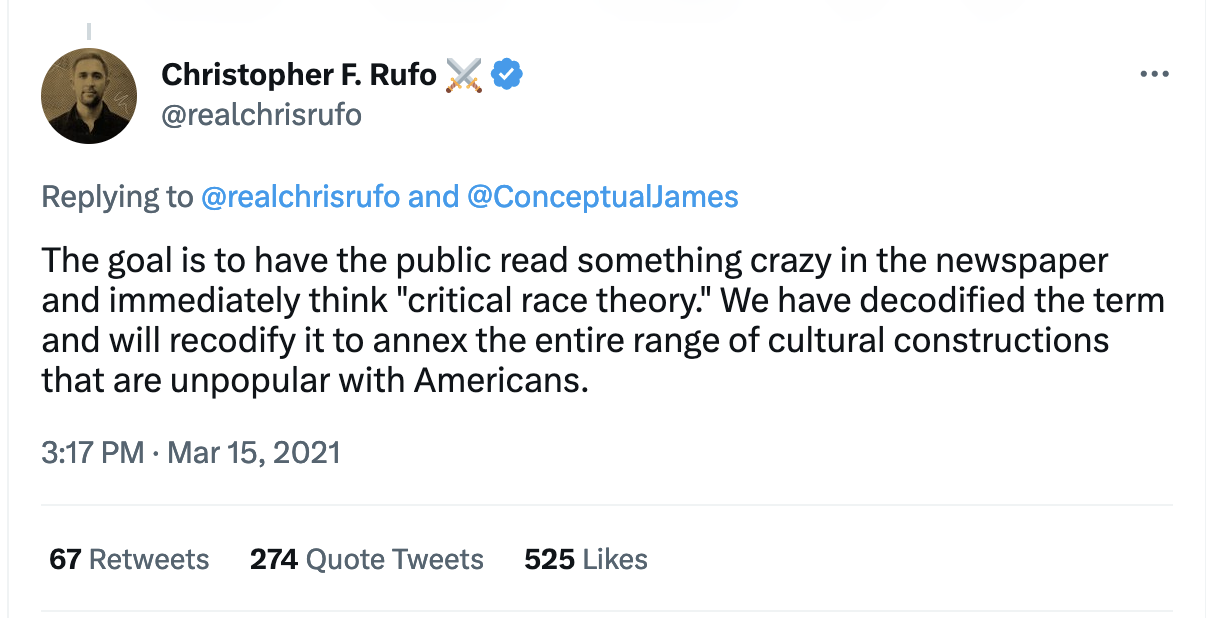
More specifically, being woke means focusing on intersectionality – how issues of race, class and gender overlap and interrelate with each other. It means practicing critical race theory – not the made up dog whistle conservatives use to describe anything they don’t like being taught in school, but the study of how racial bias is inherent in many Western social and legal systems. It means using the lens of Black feminism, queer theory and others to address structural inequality.

Again, why is that a bad thing? If we agree that prejudice is bad, we should want to avoid it in every way possible, and these are the primary tools that enable us to do so.

Our society is not new. We have history to show us how we got here and how these issues have most successfully been addressed in the past.

But these Regressives demand we ignore it all.

Shouldn’t we protect hard-fought advances in human rights? Shouldn’t we continue to strive for social justice and the ability of every citizen to freely participate in our democracy – especially in our public schools?

Of course we should!

But leaders of the backlash will disagree.

Like in so many other areas of our culture, they have stolen the term “woke-ness” and tried to co-opt it into another invented grievance. For people who deride their political opponents as being too fragile and unable to handle reality, they certainly find a million things to cry about on their 24-hour news networks to keep their base angry and engaged all the time.

They have attacked librarians, spied on and harassed teachers, banned books and weaponized the law to forbid certain ideas from our schools and public spheres.


They have targeted and demonized antiracist work. They have tried to discredit the concepts that Black women and LGBTQ people have created to explain and improve the inequitable conditions of their lives.

And the reason is crystal clear – they oppose that work.

They oppose anti-racism. They oppose the rights of Black women and LGBTQ people to better treatment.

They are against everyone but a perceived white, male, heteronormative majority that doesn’t even really exist.

They call their political opponents extremist. They call them groomers. They call them prejudiced and racist.

But it is Regressives’ anti-woke agenda that is really all of those things.

For them, up is down and circles are squares.

As public school teachers, being woke is not a choice. It is a responsibility.

For we are the keepers of history, science and culture.

Who will teach the true history that for more than 400 years in excess of 15 million men, women and children were the victims of the transatlantic slave trade? Who will teach the true history of the fight against human bondage and the struggle for equal rights? Who will teach about women’s fight for suffrage, equal pay, and reproductive freedom? Who will teach about the struggle of the individual to affirm their own gender identity and sexual expression?

We, teachers, must help students understand what happened, what’s happening and why. And to do so we must protect concepts that emerged from decades of struggle against all forms of domination.

It must be us.

It won’t be the College Board, a billion-dollar American business calling itself a non-profit, that after years of stalling finally released its Advanced Placement African American Studies curriculum – a college-level course available for high school students nationwide. In the wake of political backlash, the new course material is as watered-down as weak tea in comparison to previous drafts of the course.

This just goes to show that the free market will never stand up to political power if it is perceived as adversely affecting the bottom line. True education comes not from corporate academic standards or standardized test gatekeepers. It comes from teachers.

And we must teach like never before because our lessons have a pivotal impact on society at large.

Intersectional frames such as those under attack by billionaires posing as populists have been incredibly important in supporting overlooked social problems and addressing today’s human rights failures.

Those of us who know history understand that suppression of knowledge and intellectuals (especially those from marginalized peoples) are a tool used to increase racism and oppression – to overturn the progress of the last century.

Refusing students access to books, criminalizing “divisive concepts,” and discrediting those with whom they disagree have all been tools of domination. Just as denying the persistence of any inequality has been a tool to discredit its victims.

Progress has been made in the last hundred years, but the struggle is not over. And denying that there are any problems left to solve is a way of stifling that progress and turning back the clock against it.

If we give in to these partisan “anti-woke” imperatives, we enable the return of racist and cultural inequalities that had been at least partially rectified years ago. We clear the way for these extremists to bring back a mythical past in which women are meant to be merely subservient to men and where race, gender and sexuality are rigidly defined and limited according to the ruling class.

Teachers, we cannot allow this to happen.

We stand at the gates, the first (and perhaps last) line of defense, because we stand at the schoolhouse doors.

It is a responsibility none of us signed up to take. But here we are.

If we are truly educators, we must teach the truth.

We must put the facts in their proper context.

We must encourage our students to think about what came before and what’s happening now.

We must stay woke.

Or the whole world sleeps.


Like this post?  You might want to consider becoming a Patreon subscriber. This helps me continue to keep the blog going and get on with this difficult and challenging work.

Plus you get subscriber only extras!

Just CLICK HERE.

Patreon+Circle

I’ve also written a book, “Gadfly on the Wall: A Public School Teacher Speaks Out on Racism and Reform,” now available from Garn Press. Ten percent of the proceeds go to the Badass Teachers Association. Check it out!
 

The Same People Who Think Antiracists Have Gone Too Far Think Standardized Testing Hasn’t Gone Far Enough

Some folks are fed up with modern anti-racism.

Why?

For one, all this focus on equity has made it harder to support standardized testing.

That’s a big problem for these folks.

They think that if being against discrimination means also turning against something as obviously innocuous as fill-in-the-bubble tests, maybe it’s today’s brand of anti-racism that has to go.

However, most of us probably don’t see this as a difficult choice.

High stakes testing – like racism – is one of those really bad ideas that just won’t go away.

Since 2001 unless their parents actively opted out their children, standardized tests have been forced on all public school students in 3-8th grade and at least once in high school.

The scores have been used to judge students, teachers, schools – everything except the corporations who make and score the tests and then sell remediation needed to improve failing test scores. Good money if you can get it.

Low test scores have been used to justify closing schools in poor and minority communities, narrowing the curriculum in those communities to just the basics of reading, writing and arithmetic, and increasing racial and economic segregation through charter schools and voucher programs.

Most people can see it’s a scam and a racist one to boot.

In the United States, standardized testing was invented by eugenicists trying to prove white Europeans were better than darker skinned immigrants and thus deserved a privileged position in society. This is no hyperbole – in the early 20th Century they were literally used to justify the forced sterilization of tens of thousands of mostly poor, brown-skinned people.

And today the scores still routinely fail Black and Brown people while passing whites thus barring many people of color from graduation or college entrance.

However, describing such a state of affairs as “racist” has been criticized by a self-described anti-woke backlash.

People as diverse as Fox News correspondents, old school neoliberals and contrarian progressive academicians have taken arms together to fight against what they see as an overstatement of the degree of racism present in modern America and an attack on free speech.

John McWhorter, a linguistics professor at Columbia University, has long been an apologist for standardized testing and included his decades old arguments defending the practice in his new book, “Woke Racism: How a New Religion Has Betrayed Black America.”

Tony Norman, a columnist at the Pittsburgh Post Gazette, writes that McWhorter is:

“…an old-school Black progressive who doesn’t hide his disdain for white liberals and what he considers their Black enablers in academia and the culture. He argues that the anti-racism movement of the “elected” is more performative than intellectually serious and that the white allies who provide the shock troops at universities and street rallies are just as gross as white supremacists because their virtue signaling hides their condescension.”

Ultimately Norman concludes, “I agreed with so much of what the writer had to say about specific hypocrisies of white saviors while disagreeing with much of its premise.”

As a white person, I make no judgment on McWhorter’s overall thesis because I don’t feel qualified to do so.

However, as a classroom educator with more than two decades experience teaching mostly poor and minority students, I feel qualified to address the issue of testing.

After all, I have proctored hundreds of these assessments, seen their impact, studied the history and spoken with hundreds of people of color who oppose the tests and a few like McWhorter who defend them.

The linguist’s main argument can be summed up as follows.

Excusing people of color from the tests because they generally score lower is mere pity. People of color don’t need your pity. Give them the tools necessary to pass the tests like everyone else.

In 2014 he wrote:

“Is it the moral thing to exempt black and Latino kids from the serious competition we consider a normal part of life for all other children, instead of making an effort to prepare them for it?”

However, McWhorter seems to be missing the point.

Critics of standardized testing do not think the tests should be a “serious competition we consider a normal part of life for all other children.” It should be abolished altogether.

First of all, testing should not be about competition. It should be about assessment – telling who knows what, not judging who is worthy of what social and economic position later in life.

Second, it’s not just Black and Brown children who are hurt by the testing. It is ALL children.

These test are not unfair just to students of color. They are unfair to the poor, people from non-white cultures, the neurodivergent, and others.

The very term “standardized test” means an assessment based around a standard. It privileges the kinds of questions white students are more likely to get correct. After all, that’s how test questions are chosen – not based on the quality of the question but on whether the majority (i.e. white people) get the questions right and the minority (i.e. people of color and others) consistently get it wrong.

It’s not just about knowing math. It’s about knowing the cultural terms, shared experiences and assumptions the math question is embedded in.

McWhorter sees nothing wrong in this. He thinks people of color simply need the tools necessary to pass the tests even if that means being taught to respond as a white person would and to make the same linguistic assumptions and have the same cultural knowledge as privileged white people.

I think it’s kind of sad that in McWhorter’s view Black people would have to engage in such a radical and complete double consciousness or more likely give up their own uniqueness and assimilate as much as possible just to be considered the equal of a white person.

However, another thing he doesn’t seem to understand is that even if he got his wish and the playing field were level giving all children the same chances on the tests, it wouldn’t change a thing.

Standardized tests are bad at their job of assessing student learning – even when all test takers are white.

These exams are made up of multiple choice questions. This is not the best way to determine whether learning has taken place on complex topics. How a linguist could ever suppose even the most rudimentary subtleties of meaning could be captured by a simple A, B, C and D is beyond me.

Wittgenstein, Jakobson, Chomsky… all just so you could choose between a narrow set of prewritten answers!?

That seems to be McWhorter’s position because he criticizes proposed remedies to the problem:

“And yet it is considered beyond the pale to discuss getting the kids up to speed: Instead we are to change the standards—the current idea is to bring GPA, performance on a state test, and even attendance into the equation as well. What an honor to black kids to have attendance treated as a measure of excellence. What’s next, rhythm?”

However, it’s not a matter of adding ridiculous or insulting data to the mix to make Black kids look better. It’s about adding enough data to give a clear enough picture of a student’s learning.

At best a standardized test is a snapshot of a student’s learning. It shows what a student answers on a single day or even two or three. By contrast, grade point average (GPA) is made up of student assessments (informal, formal, formative and summative) over the course of 360 some days.

By that metric, alone, you should expect a GPA to be more accurate than a standardized test.

Whether you take other things into account like attendance, poverty level, per pupil spending at the school, etc. – that would just give more information.

It could be argued that some of these things are necessary and some irrelevant. But to consider standardized tests as the ne plus ultra is patently absurd.

In fact, if I were using a metric to accurately assess student learning, I would not include standardized testing at all. I would look at many of these other measures like GPA instead.

Standardized assessments are not being used because they are effective or accurate. They are a money-making scheme that victimizes those groups society doesn’t care about – the poor, people of color, English language learners, etc.

It is yet another system that enables and promotes white supremacy.

But don’t just take my word for it. Look to Black thinkers like Jesse Hagopian, Dr. Denisha Jones, Dr. Yohuru Williams, Jitu Brown, and Dr. Ibram X. Kendi who have spoken out against standardized testing. Look to the NAACP and the Black Lives Matter movement which have called for an end to standardized testing. Look to the Journey for Justice Alliance (JJA), a group made up of 38 organizations of Black and Brown parents and students in 23 states, who have never wavered in their opposition to high stakes standardized testing.

These tests are not just immoral because they’re racist, but they’re bad at the act of fairly assessing.

And part of the reason for that is their embedded prejudice.

An assessment that unfairly singles out certain groups not because of their lack of knowledge of the subject being tested but their different enculturation and lack of similar opportunities as the dominant culture can never be a good assessment.

But even if they didn’t do that, they would be like using a pencil to eat soup.

The systems of our society matter. Using the right tool matters.

Whether we call an appreciation of these facts being “woke,” “antiracist” or anything else does not.


Like this post?  You might want to consider becoming a Patreon subscriber. This helps me continue to keep the blog going and get on with this difficult and challenging work.

Plus you get subscriber only extras!

Just CLICK HERE.

Patreon+Circle

I’ve also written a book, “Gadfly on the Wall: A Public School Teacher Speaks Out on Racism and Reform,” now available from Garn Press. Ten percent of the proceeds go to the Badass Teachers Association. Check it out!