What Antonin Scalia’s Death Means to the People I Love

antonin-scalia-26

I’m not sad Antonin Scalia is dead.

Wow! It feels so good to say that aloud!

Come on. Admit it. You feel exactly the same way.

I know. I know. Everywhere you turn, people are going out of their way to talk about the ramifications of the 79-year-old Supreme Court Justice’s death without passing judgement on him.

“Let’s keep it classy,” they say.

Oh. Stop it.

In his 30 years on the bench, Scalia hurt an awful lot of people. And I mean real, live people – not ideological constructs, not hypotheticals – but moms, dads, husbands, wives, daughters, and sons.

The aggregate amount of misery in the world was drastically increased by his being in it. And now that he’s gone, much of that misery may be relieved.

So spare me any shock at my thesis. Spare me the false praise of a truly reprehensible human being.

He was against women controlling their own bodies, efforts to desegregate our schools, an individual’s right to love whomever they choose, refraining from executing mentally disabled or teenage prisoners. Heck! He was even against police reading suspects their Miranda Rights!

This was a person who said black people should go to “slower” colleges, homosexuality was the same as murder or bestiality, sex discrimination is constitutional, and maybe we have a right to all carry around rocket launchers in public.

If it is outrageous to feel relief at the death of this man, you may call me outrageous.

I’m not usually the kind of person who celebrates someone else’s death. Not even a famous person.

But you have to admit that the people we love are a lot better off without Scalia in the world.

It’s not like he kept all this to himself. He wasn’t some lone drunkard in the back of the bar mumbling sexist, racist views. He wasn’t your ancient uncle who you only see twice a year making people uncomfortable at the dinner table. He was a judge in the highest court in the land, and his demented and warped world view drove public policy impacting… well… everyone.

He was the deciding vote in several 5-4 decisions that – if they had gone differently – would have greatly benefited every person in this country.

You can thank him for the Presidency of George W. Bush and Citizens United. Let that sink in for a moment.

Imagine all the horrific blunders of the Bush Presidency – easily the worst administration in my lifetime. If the Supreme Court hadn’t given the highest office in the land to Dubya, arguably we wouldn’t have had the Iraq War, the Great Recession, No Child Left Behind, the slow response to Hurricane Katrina – maybe even 9-11.

And if you hate what our elections have become, imagine if we didn’t have the Citizens United verdict. Campaign donations would have to be made in public with some limits on how much individuals and corporations can contribute.

How much better the world would have been without these terrible decisions!

I’m not saying Scalia wasn’t a good man in his personal life. I have no idea what he was like to the people he loved. For all I know he may have been a good friend, a loving husband, father and grandfather. He probably had people he cared about and who cared about him. And to those people I send my condolences.

However, he royally screwed just about everyone else. And for that I feel nothing but relief at his death. If only it had come sooner.

Who am I to bask in such schadenfreude?

I am a father and public school teacher.

I have a seven-year-old daughter and several classes full of mostly impoverished and minority students.

And Scalia’s death is good for everyone I care about.

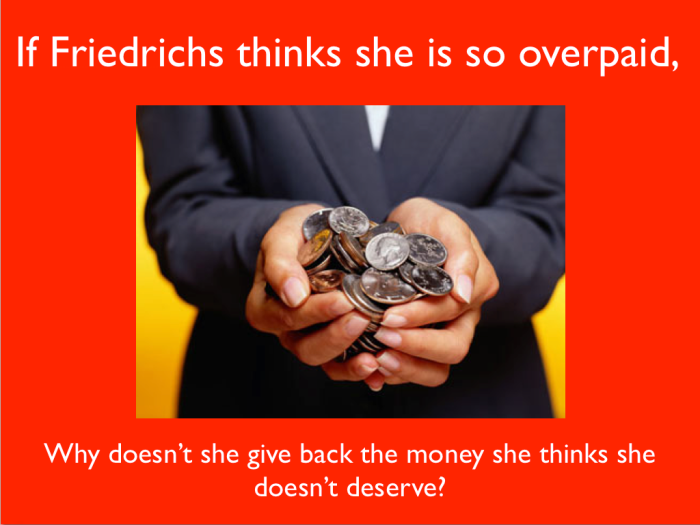
If he were still alive, there was so much more damage he could have done. Take the Friedrichs case, an important one for teachers like me.

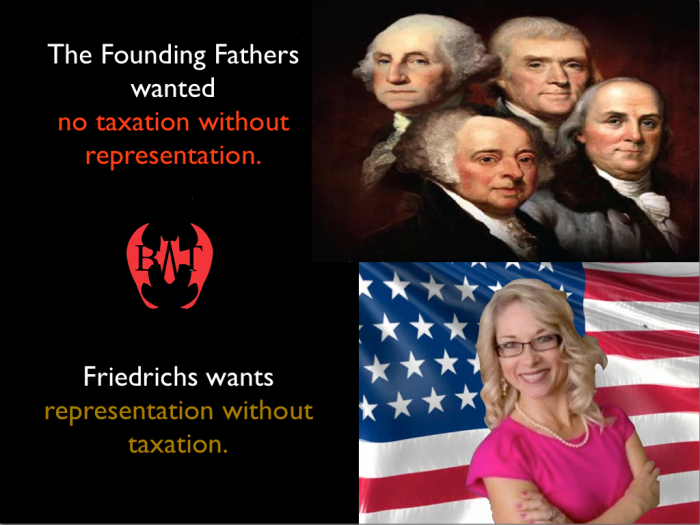
The case is an attempt to strip teachers unions of the right to charge members for their services. If the court rules in favor of Friedrichs, it would overturn decades of established law against free riders. People would be allowed to be in a union, enjoy higher salary and benefits negotiated by that union, but not pay dues. It would be absurd. Yet with Scalia still on the bench, most court watchers seem to think we would have had another terrible 5-4 decision.

However, with Scalia’s death, the best anti-union forces would probably receive is a 4-4 decision – not enough to overturn established law. True the case has already been heard by the justices, but a ruling has not yet been handed down. According to the Supreme Court blog, even if Scalia had already written a ruling on this matter, it would be void. Any rulings he wrote that have not yet been made public don’t count.

So the most likely outcome now is that millions of people will continue to be protected from unfair labor practices. And you expect me not to have a big ‘ol smile on my face!?

So where do we go from here?

President Barack Obama will select who is to succeed Scalia. Numerous excellent choices have been floated. If Obama chooses any one of them, he would probably tilt the court fractionally to the left.

Before the body was even cold, Republicans vowed to block any nominee Obama makes until the next President is sworn in. Some are trying out the talking point that Supreme Court Justices have never been sworn in during an election year. But if that were true, we wouldn’t have Justice Anthony Kennedy who was confirmed during the last year of Reagan’s presidency.

Funny. The U.S. Constitution clearly states that the President has the right to nominate Supreme Court Justices with the advice of Congress. Yet so many of these right leaning partisans who considered themselves Constitutionalists last week suddenly find themselves against that revered document today.

I wonder how Scalia would have argued such a situation.

Not really. He was the one who taught the rest of his party how to twist the words of the founding fathers to mean whatever the far right favors this week.

Obama still has more than 300 days in office. If Republicans try to block his nomination until a new face tops the Executive, it would be the longest such obstruction in a century. Of sitting justices, the longest confirmation period was for Clarence Thomas who took 106 days to be approved by Congress.

And that brings us to the 2016 Presidential race.

Scalia’s death is likely to have a huge impact on whom becomes our next President.

If Republicans block Obama’s Supreme Court nominee, it would probably increase voter turnout. Whenever that happens, it favors Democrats since they have more registered members than the GOP.

Either way, Scalia’s death is probably beneficial to whomever the Democratic nominee will be. If either Hillary Clinton or Bernie Sanders get the nomination, supporters of the defeated candidate are more likely to support the reigning Democrat.

Even if voters don’t like the winner’s policies as much as their preferred candidate, they’re likely to support the nominee in order to continue tipping the Supreme Court to the left. After all, three additional justices are 70 or older. Stephen Breyer is 77, Anthony Kennedy is 79, and Ruth Bader Ginsburg is 82.

We have had a long haul these last 15 years. Much social progress has been stalled.

But now that Scalia is out of the picture, the future looks bright.

Maybe things really will turn out alright. Maybe we’ll actually have a chance to build that better world we’ve all been dreaming about.

Rest in Peace, Scalia. The nation can’t wait to move on without you.
Unions Can’t Just Be About What We’re Allowed to Do: Social Justice Unionism

7983807401_6b0075f742_b.sm_a

If labor unions were an animal, they’d be an old hound dog napping on the porch.

They’re slow to get up and chase away burglars but they do like to howl at night.

Most of the time you don’t even know they’re around until the dinner bell rings. Then that ancient mutt is first to bolt into the kitchen to find a place at the table.

It’s kind of sad really. That faithful old dog used to be really something in his youth.

He was fierce! He’d bark at trespassers even tearing them apart if they threatened his patch of land.

Old Uncle Sam used to yell at him and even threaten the pooch with a rolled up newspaper, but that dog didn’t care. He had a sense of right and wrong, and he didn’t mind getting into deep trouble fighting for what he thought was fair.

Today, however, the only thing that really riles him is if you threaten to take away his ratty old bone.

Let’s face it. Unions have become kind of tame. They’re housebroken and not much of a threat to those people waiting in the shadows to rob us blind.

Some people say we’d be better off without them. But I don’t agree. Even a decrepit canine can act as a deterrent, and thieves sure are frightened of dogs.

Think about all unions have given us: the weekend, child labor laws, vacation time, pensions, lunch breaks, healthcare, the 8-hour day, maternity leave, safety measures, due process, sick leave and free speech protections on the job!

They didn’t get us all that by sitting politely at the table with their hands crossed. They didn’t do all that by contributing modest sums to political campaigns. They didn’t do it by obsessively protecting collective bargaining at the expense of all else.

Unions used to take to the streets. They took over the job site. They marched with signs and placards. They exercised people power.

And the government was scared of them. The President called out the army to get them back to work. Lawmakers hired mercenaries to break strikes with clubs and guns. But eventually Congress passed laws to placate them.

Unfortunately, That was a long time ago.

For decades the pendulum has been swinging against us. Federal and state laws have become increasingly restrictive. They want to tell us when we can strike and how long. They want to tell us when and if we can collect dues. And – frankly – they want to tell us to just disperse and do whatever the bosses want – because the business class has already bought and paid for our politicians.

For decades we’ve heard to their propaganda on TV, the radio and the print media. Well-paid shills have poured their poison in our ears about the evils of the labor movement. They’ve spoken these lies so often lots of people believe them.

Workers used to fight to make sure everyone got a fair deal. Now the working man has been brainwashed to focus instead on making sure no one else gets more than him. And the bosses are laughing all the way to the bank.

Union membership is at the lowest it’s been in a century. So are wages adjusted for inflation. A family of four used to be able to get by comfortably on one salary. Now it can barely make ends meet with two.

Yes. There’s no doubt about it. We need unions today more than ever.

But for unions to survive, they must change. They have to become a reflection of the membership and not just of the leaders.

During this presidential election cycle, we’ve seen our largest national unions – the National Education Association (NEA) and American Federation of Teachers (AFT) endorsing a candidate without bothering to actively poll their members. We’ve seen them speak for us on policy decisions without asking our opinions. We’ve seen them act just like the corrupt politicians who we should be fighting against.

Yes, it is time for a change. No longer can our unions be run from the top down. They must be run from the bottom up. They shouldn’t tell us what to do. We, the membership, should be giving orders to them.

Moreover, we need to stop obsessing about collective bargaining. I’m not saying that’s unimportant. But it can’t be the only thing we do.

Our unions used to be in the midst of larger social movements. We were part of the Civil Rights movement. We were part of the push for desegragation. We were part of the fight to protect children and provide them a decent education.

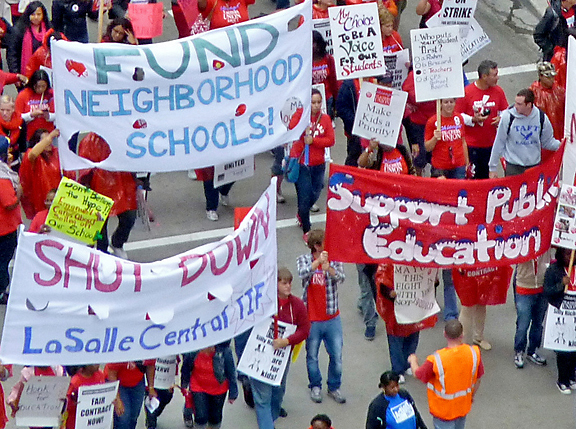
We need to continue that today. And in some places we are already doing that! Look to Chicago, Detroit and Philadelphia. Teachers unions in those urban areas are fighting not just for better pay and benefits but for the communities they serve. Detroit teachers en mass are calling off sick to protest horrible conditions in the schools. Chicago teachers are marching in the streets with the community to demand indictments for police murdering their black and brown students. Philadelphia teachers are supporting students who walk out of class to protest state disinvestment and toxic testing.

THIS is what unions should be doing. We should be fighting for social justice. We should be a central part of the struggle to turn the tide against corporatization, privatization and standardization of our country’s public goods. We should be marching hand-in-hand with BlackLivesMatter activists. We should be in the front lines of the fight to save our environment and replace fossil fuels with renewable energy.

We must be part of the community and not apart from it. We must share in the struggles and goals of those we serve. We must be an example of the old truism that a rising tide raises all ships. After all, the word “union” literally means together. By definition we must all be in this together or else we’re not even really a union.

And to do this we have to stop being so concerned with what they tell us we can do.

We live in a democratic society. The government gets its power from us, from our consent. That means that if there are enough of us, we trump their corrupt laws. They only get to make those laws because we say so. And court decisions – even Supreme Court decisions – mean nothing next to the court of public opinion.

The bosses buy the politicians and tell them to legislate us into a box. It’s time to break out of that box. We can’t be afraid to take our power back. We shouldn’t be afraid of our government. Our government should be afraid of us.

How do we do it? Organize.

If you belong to a union, roll up your sleeves and get active. Run for office. Convince like-minded folks to join you. Take over your local. Spread to your national.

If you don’t belong to a union, start one at your job. Talk to your co-workers. Talk about the benefits for each of you and your neighborhoods. Fight for your rights.

I know. It’s a whole lot easier to complain. Real change, though, takes real work.

We used to know these things. Somewhere along the line we forgot.

So wake up, you yeller cur dog, and get off the porch. Take to the streets.

Because the surest way to take back our country is to take back our unions.

F is for Friedrichs… and Freeloader: A Supreme Court Nightmare

Screen shot 2016-01-11 at 9.50.07 PM
Say you’re on an airplane flying high over the Rockies.

The plane is going down.

You need a parachute.

Luckily, before you took off, all the passengers got together and pooled their money to buy them.

There’s enough for everyone. We’re all going to make it out of this alive.

People line up at the doors getting ready to jump.

Right in front of you is a lady with a sour look on her face.

“I can’t believe they’re making us pay for these parachutes,” she says.

“Really?” you reply. “Don’t you want one?”

“Sure I do!” she says. “I just don’t think I should be forced to pay for it.”

You give her a look. You can’t help it.

“But how else can they buy the parachutes?” you say.

She puts her hands on her hips and says, “There are some people on other airplanes that don’t have parachutes. I don’t think it’s fair that I get a parachute when they don’t have one.”

“You could just leave your parachute here on the plane and jump without it,” you offer helpfully.

She makes a face looking down at the parachute she’s been provided. “Will you look at this?” she says. “Mine’s blue.”

“So what?” you say. “So is mine.”

“I hate blue. I don’t want my money going to buy blue parachutes.”

“Um. At least you’ll have a soft landing.”

“A soft BLUE landing without my Constitutional rights.”

Just then a hole breaks open in the back of the plane sending air whooshing through the cabin. Oxygen masks fall from the ceiling. The plane shudders back and forth before the hole is plugged and cabin pressure returns.

A man with a similar sour expression comes forward to both of you. He is wearing a military police uniform and has a whistle in his mouth. He blows it.

“Did I hear right!?” he bellows. “Is this woman being forced to pay for her parachute!?”

“Yes,” you say after a moment. “She wants one.”

They both look at you like a third arm is growing out of your forehead.

“That’s beside the point,” the military man spits. “She can’t be FORCED to pay for it!”

By this time, a woman makes her way to the three of you from the front of the plane. She is wearing a beret and an armband.

“What’s the problem back here?” she asks.

“The problem is that this woman is being forced to pay for her parachute!” the MP says.

“Do you want a parachute?” beret woman asks the sour jumper.

“Of course,” the woman says.

“Then why shouldn’t you pay for it?”

“Because it’s blue,” she says.

“Are you kidding me?” beret woman asks. “Of course it’s blue. We got those on sale. The only way we could afford parachutes for everyone was if we bought in bulk and bought blue.”

“I don’t care,” the jumper says. “I shouldn’t be forced to buy a blue parachute if I don’t want one.”

“But you DO want one,” you say.

“Not a blue one,” she responds.

“Just give it back,” you say.

“No,” she replies stubbornly.

“That’s it,” the MP says drawing his gun. “Both of you, give me your parachutes.”

“What!?” you say.

“You heard me, Flyboy!” he says opening a huge rucksack. “Everyone on this plane! Put your parachutes in this bag!”

Everyone groans but does as he commands. After all, he’s holding a gun.

“Now what?” the sour jumper says once all the parachutes have been collected.

“Now I’m going to return all of these to the store,” he says.

“Huh!?” you say.

“It’s the only fair thing to do. You’ll each have to come back to the store and pay for your own ‘chutes.”

“But we’re on a plane plummeting out of the sky!” you say.

He turns to the sour jumper. “You’re welcome,” he says. “My job here is done.”

You turn to beret lady. “Isn’t there something you can do?” you ask.

“I’m afraid not,” she says. “Even if we could go back to the store, we can’t afford to buy everyone a parachute unless everyone pitches in. And even then only the blue ones are on sale.”

The military man salutes and jumps out of the plane. After he falls an appreciable depth he pulls his own rip cord. You can see his parachute balloon open. It’s bright red.

You turn to beret girl. “Who was that guy?” you ask.

Air Marshal Alito,” she says before making her way back to the front of the plane.

The nose of the cabin dips down. The sound of rushing wind is intense.

You turn to the sour jumper. “Are you satisfied now?” you say. “We’re all going to die.”

She slumps to the ground. Her head falls off. She’s hollow. She was just a mannequin.

You sit back in your seat stunned.

You put on your belt.

“I don’t want to pay for any seat belts,” comes whining from the mannequin’s head rolling on the floor.

You kick it out of the plane.

And smile.

Before you crash.

And experience a fiery death.


Meanwhile on the ground, Air Marshall Alito is shaking a man’s hand. The man is from Wall Street. He just made a small fortune betting the plane would crash. His name is Koch.

He gives Alito a suitcase full of greenbacks. He turns to another man, the owner of Friedrichs’ Mannequin Manufacturing. He gives him another similar suitcase.

These suitcases contain just a fraction of the money Koch has won betting on the demise of the airplane passengers.

He is laughing.

On the suitcases it says, “Right to Fly.”

He laughs harder.

He laughs and laughs and laughs.

EPILOGUE:

You’re still dead.


MORALS:

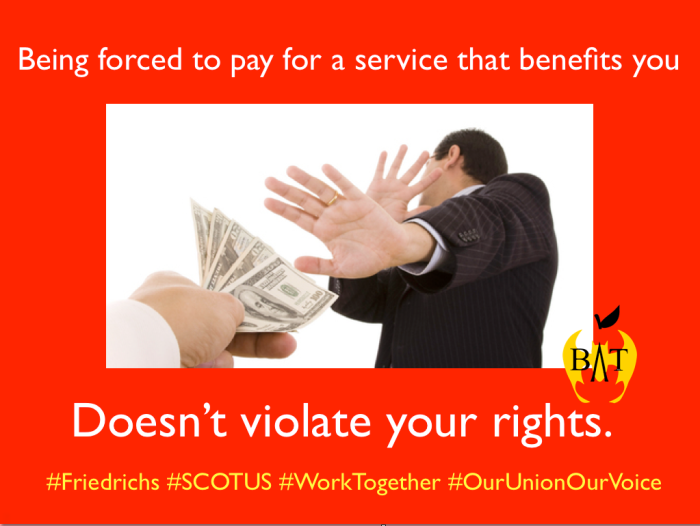
Should workers be permitted to benefit from collective bargaining without paying union dues? No. Pay for what you get or turn down the benefit.

Is collective bargaining essentially political? No. It’s negotiating fair treatment. Ebay isn’t political. Neither is this.

Is Friedrichs v. California Teachers Association a trumped-up case tailor-made for the five conservative Supreme Court justices to overturn existing law simply because they wanna? HELL YEAH!


Screen shot 2016-01-12 at 2.15.19 PM


Screen shot 2016-01-10 at 6.35.02 PM


Screen shot 2016-01-10 at 11.58.53 AM


Screen shot 2016-01-11 at 10.10.01 PM


NOTE: This article was featured on Diane Ravitch’s blog.


The Best Way To Honor Tamir Rice is by Reforming Our Broken Justice System

Memorial for Tamir Rice, 12-year-old shot dead by Police in Cleveland

Michael Brown – no indictment.

Eric Garner – no indictment.

Sandra Bland – no indictment.

And now Tamir Rice.

How many times will our justice system refuse to charge police with killing unarmed black people?

What will it take for our courts to accept the responsibility for at least attempting to seek justice?

When will our judicial system deem the death of people of color at the hands of law enforcement to at least be worthy of a trial?

Brown had no weapon but was shot to death by law enforcement.

Garner had no weapon but was choked to death by police.

Bland had no weapon but was found hanged in her jail cell after being assaulted by police during a traffic stop.

Rice had a legal pellet gun that was not pointed at anyone yet he was shot to death two seconds after police arrived.

This is not justice. This is a national travesty that continues to be played out daily. How many more human beings will be ground under the boot of a system that finds no value in their lives?

And don’t give me any of your excuses! Police were just doing there job! These people should have listened to law enforcement! Rice shouldn’t have had a pellet gun!

Listen to yourself. Lethal force is the only option!? Police have no tasers anymore, no pepper spray? Their guns only fire death strokes? They can’t hit non-vital areas meant to incapacitate but not kill?

What a bunch of cowards we are if we don’t demand police publicly explain themselves when they kill another human being – especially someone who posed them no bodily harm! How morally and spiritually bankrupt a nation we are not to weigh the evidence and decide guilt or innocence! “Freedom and justice for all!?” What a sham! What a lie! What a farce!

I don’t know about you, but I am sick of it. I refuse to put up with it for even one more day.

But what can we do?

No. Really.

When reading about these government sanctioned murders, I feel helpless. I’m just one person. What can I do to stop it?

Here are a few suggestions:

1) Ban Grand Juries in Fatal Shootings by Police

Connecticut and – most recently – California already have laws to this effect. District attorneys should have to decide whether officers face criminal charges when they kill people in the line of duty. This decision should be made in the light of day in full view of the public and not behind the closed doors of a grand jury hearing. These hearings involve no judges or defense attorneys and the transcripts of these proceedings are almost always sealed.

The problem is that district attorneys work closely with police and depend on them for political support. Sending cases like these to a grand jury gets the DA off the hook so he or she doesn’t offend the officers.

If the decision had to be made in public, voters could hold DAs accountable. With the grand jury system, there are no consequences because we have no concrete evidence about what happened during the proceedings, what arguments were made, by whom and who made what decisions. That’s a poor breeding ground for justice.

2) Construct a National Database on Police Killings

Right now there is no way to tell exactly how many people are killed by law enforcement in this country every year. Moreover, there is no way to tell if officers involved in these killings were ever charged.

Information can be compiled state-by-state, often through unofficial and anecdotal sources. However, this does not nearly give the full picture of what is going on. The people of this country deserve to know the full scope of the issue. That’s why apologists often claim these sorts of incidents are relatively rare and blown out of proportion by the media. But are they? A national database would prove the matter one way or the other.

Federal law from 1994 already calls for just such a database, yet it has not been funded. This may be due in part to the cost. A pilot study found that it would take a decade and cost $1 billion.

Certainly this is not a quick fix. But don’t we deserve to know this information? And isn’t it suspicious that nothing is being done to compile this data now?

3) Overturn Graham v. Connor

Perhaps the biggest obstacle to seeking justice for those unnecessarily killed by police is a precedent set by the U.S. Supreme Court 25 years ago. Graham v. Connor effectively ruled that police can kill you if they feel you present a “reasonable” threat to their own lives.

The problem is the word “reasonable.” What does that mean? In court, it can be almost anything. It’s a “Get Out of Jail Free” card to police for wanton murder. Justice Sonia Sotomayor calls this a “Shoot first, think later” approach to policing. She says this violates the Fourth Amendment which stipulates what counts as “probable cause” for police actions including arrests. However, Sotomayor is the only sitting justice publicly to take this stance.

This is why without more robust protections for citizens and more realistic expectations for law enforcement, even when cases like these go to court, they rarely result in police convictions.

But courts change. Public opinion can move mountains if given enough time. We need to start putting on the pressure.

Organize, people. Start writing letters. Write petitions. Hold rallies. Meet with your Congress-people. Make some noise.

In the meantime, let us grieve for all the Browns, Garners, Blands and Rices.

Their lives matter. And the best way to prove that is to get off our collective asses and do something about it.


NOTE: This article also was published on Commondreams.org.


Much Ado About an Enigma – No One Really Knows What Impact the ESSA Will Have on Public Schools

ESSA-Obama

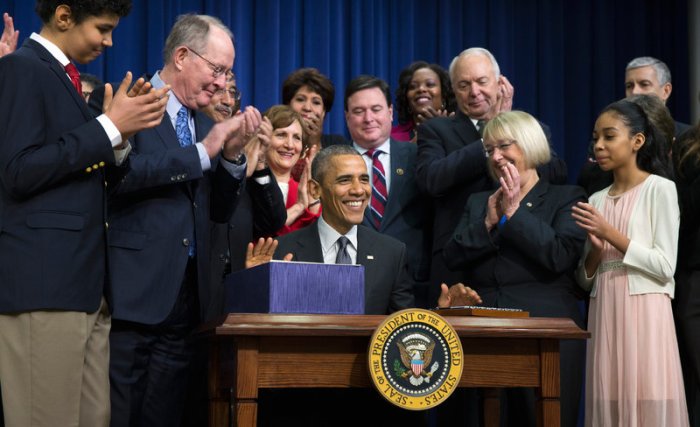
President Barack Obama signed the Every Student Succeeds Act (ESSA) this week.

The new legislation reauthorizes federal law governing K-12 public education.

In 1965 we called it the Elementary and Secondary Education Act (ESEA). Until today we called it No Child Left Behind (NCLB). And now after a much-hyped signing ceremony, the most definitive thing we can say about it is this: federal education policy has a new name.

Seriously. That’s about it.

Does it reduce the federal role in public schools? Maybe.

Does it destroy Common Core State Standards? Possibly.

Is it an improvement on previous policies? Potentially.

Will it enable an expansion of wretched charter schools and unqualified Teach for America recruits? Likely.

The problem is this – it’s an over 1,000 page document that’s been open to public review for only two weeks. Though it was publicly debated and passed in the House and Senate, it was finalized behind closed doors and altered according to secure hurried Congressional votes. As such, the final version is full of legal jargon, hidden compromise, new definitions and verbiage that is open to multiple meanings.

How one reader interprets the law may be exactly the opposite of how another construes it.

Take the much-touted contention that the ESSA reduces the federal role in public schools. Even under the most positive reading, there are limits to this freedom.

The document continues to mandate testing children each year in grades 3-8 and once in high school. It also mandates academic standards and accountability systems. However, what these look like is apparently open to the states.

For instance:

The Secretary [of Education] shall not have the authority to mandate, direct, control, coerce, or exercise any direction or supervision over any of the challenging State academic standards adopted or implemented by a State.

That seems pretty clear. The federal government will not be able to tell states what academic standards to adopt or how student test scores should be used in teacher evaluations.

But it also says that states will have to submit accountability plans to the Department of Education for approval. It says these accountability plans will have to weigh test scores more than any other factor. It says states will have to use “evidence-based interventions” in the schools where students get the lowest test scores.

That sounds an awful lot like the test-and-punish system we have now.

What if your state decides to take a different road and reject the high stakes bludgeon approach to accountability? In that case, some readers argue schools could lose Title I funds – money set aside to help educational institutions serving impoverished populations.

Will that actually happen? No one knows.

It may depend on who will be President in 2017 and whom that person picks as Secretary of Education. And even if the Feds try to take advantage of these potential loopholes, the matter could end up being decided by the U.S. Supreme Court.

What about Common Core?

Some readers interpret the new law as destroying forever the possibility of national academic standards. If states are allowed to pick their own standards, it is highly unlikely they’ll all pick the ones found in the deeply unpopular Common Core. However, the law does force each state to have academic standards of some kind, and it defines what those standards must look like. One interpretation of this is that they must look a lot like the Common Core.

They must be “state-developed college- and career-ready standards.” You read that right – “College and career ready.” That’s the Common Core catchphrase. If someone says they want to eat lunch at “the golden arches,” they haven’t said McDonalds, but you know they’re craving a Big Mac.

Will the Fed allow states to choose standards radically different than the Core? Again only time and – possibly – the courts can tell.

This same problem occurs throughout the document. As the public painstakingly combs through it, new legal wiggle room may be found. And I am not so naive as to suppose we’ve found all of the loopholes yet. Some of these may be the result of poorly chosen wording. Others may be purposefully hidden time bombs waiting for opportunists to exploit.

This uncertainty about exactly what the ESSA will eventually mean for our public schools may help explain the range of reactions to the formative law – from ecstasy to despair to shrugs and snores.

I’m not sure what to think of the thing, myself. I started the whole process disgusted but came around to accepting it if the final result was any kind of improvement over previous legislation. And now that it’s the law of the land, I look at this Frankenstein’s monster of a bill – stitched together pieces of mystery meat – and I don’t know whether to laugh or cry.

I still hope it will live up to the limited promise it holds to bring us some relief from NCLB. But I admit this thing could go sour. Anyone’s guess is as good as mine.

Which brings me to perhaps the biggest problem with this law that no one seems to be talking about.

Education needs reformed. We need to repeal the bogus policies that have been championed by the 1% and their lapdog lawmakers. We need to get rid of test-based accountability. We need to trash high stakes testing, Common Core, value added measures, charter schools and a host of other pernicious policies. We need to initiate a real anti-poverty program dedicated to attacking the actual problem with our schools – inequality of resources.

But more than any of that, we need to reform our government.

We need to find a better way to make our laws. The process that shat out this ESSA must go.

Think about it. No Child Left Behind was an abject failure by any metric you want to use. It didn’t close achievement gaps – it increased them. And the major policy of this law – annual standardized testing – remains intact in the reauthorization!

There has been massive public outcry against annual testing. Parents are leading an exponentially growing civil disobedience movement shielding their children from even taking these assessments. Everyone seems to agree that we test kids too much – even President “I’ll-veto-any-bill-that-deletes-testing” Obama.

Yet our legislators did next to nothing to fix this problem.
Instead preference was given to lobbyists and corporatists interested in making a buck off funding set aside to educate children. The focus was on smaller government – not better government. These aren’t mutually exclusive, but they aren’t exactly one-and-the-same, either.

This can’t continue if we are to keep pretending we have a representative Democracy. The voice of lobbyists must not be louder than voters. Money must be barred from the legislative process. Demagoguery must not overshadow the public good. We need transparency and accountability for those making our laws.

Until that happens, we will never have a sound and just education policy, because we don’t have a sound and just government.

Unfortunately, that is the biggest lesson of the ESSA.


NOTE: This article also was published in the LA Progressive, Badass Teachers Association Blog and quoted extensively on Diane Ravitch’s blog.


Standardized Tests Every Day: the Competency Based Education Scam

rocketship-charter-schools

IN THE NOT TOO DISTANT FUTURE:

Welcome to class, children.

Please put your hands down, and sit at your assigned seat in the computer lab.

Yes, your cubicle partitions should be firmly in place. You will be penalized if your eyes wander into your neighbors testing… I mean learning area.

Now log on to your Pearson Competency Based Education (CBE) platform.

Johnny, are you reading a book? Put that away!

Are we all logged on? Good.

Now complete your latest learning module. Some of you are on module three, others on module ten. Yes, Dara, I know you’re still on module one. You’ll all be happy to know each module is fully aligned with Common Core State Standards. In fact, each module is named after a specific standard. Once you’ve mastered say Module One “Citing Textual Evidence to Determine Analysis” you will move on to the next module, say “Determining Theme or Central Idea for Analysis.”

Johnny, didn’t I tell you to put away that book? There is no reading in school. You’re to read the passages provided by the good people at Pearson. No, you won’t get a whole story. Most of the passages are non-fiction. But I think there is a fun passage about a pineapple coming up in your module today. Isn’t that nice?

Laquan, you haven’t put on your headphones and started your module yet? You’ve been on module three for the past week. How can you learn at your own rate if you never progress beyond module three?

What’s that? Your mother wrote me a note? Let me see that.

Huh. So she wants to know how come you never get beyond module three. You should be able to answer that question for her, yourself, Laquan. (At least you could get that one right.)

Laquan, tell your mother that you haven’t passed the proficiency standard yet. You’ve taken all the remediation available on the computer program, haven’t you? Yes, that fun game where you answered multiple choice questions and when you got one correct the spaceship blasts an asteroid. And then you took the daily assessment but you just haven’t received a passing score yet. But don’t worry. I’m sure if you continue to do the same thing again today… eventually… you’ll get it right. It’s how the state and federal government determine whether you’ve learned anything on a daily basis.

In ancient times, teachers like me used to make up our own assignments. We’d give you books to read… Johnny, have you started yet? …whole books, novels, literature. And then we’d hold class discussions, class projects, act out scenes, draw posters, relate the books to your lives, write essays. But now all that silliness is gone.

Thanks to the good people at the American Legislative Exchange Council (ALEC), the Gates Foundation, and the Foundation for Excellence in Education, The state and federal government have mandated a much more efficient way of determining student learning. Back in the day, they forced schools to give one big standardized test in Reading and Math every year. Teachers would have to scramble with test prep material to make sure all learners could pass the test, because if students didn’t get passing marks, the teacher was out on her butt.

We’ve done away with such silliness now. Thankfully the government got rid of yearly high stakes standardized testing. What we do now is called Competency Based Education. That’s what this program is called. It’s kind of like high stakes standardized testing every day. So much more efficient, so much more data to use to prove you know this set of basic skills written by the testing companies with hardly any input from non-experts like classroom teachers.

That’s how the district became composed of 100% charter schools. No more inefficient school boards made up of community members. Today our schools are run by corporate CEOs who are experts at finding ways to cut corners and increase profits for their shareholders. And, ugh, make you learn good.

Hm. I seem to be talking too much. No one’s paying me to impart any information. I’m just supposed to make sure you’re all hooked up to the program and making satisfactory daily progress. Otherwise, I’ll be out of a job again.

You laugh, but it’s hard to get minimum wage work like this. Since the U.S. Supreme Court made labor unions all but illegal and public schools instituted CBE programs, teachers like me could no longer demand such exorbitant salaries. Now I make an honest living. Speaking of which, I may have to get out of here a few minutes early today to make it to my shift at WalMart. I’m greeter today!

And if you work hard, someday you can be, too!


NOTE: This article also was published on the Badass Teachers Association Blog and quoted extensively on Diane Ravitch’s blog.


The Most Important Election You’ll Probably Skip

t1larg.voter.jan10

The future prosperity of your state may be decided this November.

Will your public schools receive adequate, equitable and sustainable funding?

Will you be permitted to choose medical marijuana to treat certain ailments?

Will your state enact sensible gun reforms to keep firearms out of the hands of the criminally insane?

Will your voice be heard in future elections?

All this and more is on the table and YOU get to cast the deciding vote.

But more likely than not, you won’t show up.

Why? You’re too busy worrying about the upcoming Presidential election.

With both Democratic and Republican Presidential Primaries approaching in February through June, 2016, most people just don’t have the energy for another general election before the end of 2015.

However, most states will ask residents to cast a ballot on Nov. 3 for all kinds of important initiatives. There will be municipal, school board, gubernatorial and state legislative elections in a few states; as well as numerous citizen initiatives, and a variety of other local offices on the ballot.

Yet if history is any guide, most people will stay home while vastly important decisions are being made by the few who trudge to the polls. On the one hand, that means the results are bound to be unrepresentative. On the other, it means if you show up, your vote will have more weight than ever!

Either way, the course for the future of your state will be quietly and discreetly set for years to come.

Take my home state of Pennsylvania.

We’re holding a historic election with three state Supreme Court seats up for grabs. The last time this many seats were open on our highest court in the same year was 1704, and the body was still called the Provincial Appellate Court.

This is huge because it will determine who gets the final say on a plethora of contentious political issues.

For instance, four years ago, Republicans controlled every branch of Commonwealth government and redrew the state’s legislative districts to gerrymander in a GOP majority. They redrew district lines to ensure that conservatives got elected to public office by making boundaries around areas that have pockets of people who generally lean Republican.

With that foundation in place, the GOP ran the state into the ground. While most taxpayers didn’t agree with the corporate tax giveaways and draconian budget cuts to public services like children’s schools, there wasn’t much we could do about it. The redrawn district boundaries were such that legislators were free to do whatever they wanted without fear of reprisals from constituents.

Voters gave the GOP Governor the boot, but almost all of his good soldier legislators stayed in place. This was only possible because Republicans controlled the state Supreme Court. When those gerrymandered districts were challenged, the court backed the legislature. So, in practice, continued Republican control of state Senate and House districts was due not to voters but to the state Supreme Court.

Currently, Republicans hold the balance of power in the highest Commonwealth court by 3-2 with two vacancies. This election could rewrite that balance of power.

If Democrats win two or more seats in this Supreme Court election – thereby replacing two Republicans and one Democrat – it could change everything! Democrats would have a majority.

When redistricting comes up again in 2022, if Democrats want to re-draw the lines more fairly (or in their favor), a Democratic-controlled Supreme Court could make that possible.

Moreover, the new court would almost certainly rule on cases that will have a dramatic impact on the lives of everyday Pennsylvanians.

Perhaps the most hot button issue in the state is education funding. Republicans have been waging all out war on poor Commonwealth schools. For the past 4 years, the legislature slashed public school funding by almost $1 billion – an ideological divide that still rages between the newly elected Democratic governor and the legislature where Republicans remain in control.

Several lawsuits demanding more equitable school funding are winding their way through the state court system. These cases are bound to end up in the state Supreme Court. So if voters still care about making sure all Pennsylvania children have a fair shake at an education, voting for Democrats to retake the court may be the surest option! If recent history is any guide, Republicans sure won’t do it!

Other issues such as the death penalty and gun laws are likely to appear on the docket. Moreover, without opposition, it’s feared a GOP court could easily allow Tea Party legislators to enact so-called Right to Work and other union busting initiatives. A Democratic court could stop such shenanigans cold.

For decades, Pennsylvania politics have been like a game of tennis – power going almost exclusively from one party to another. Neither major party has held the governor’s office for more than two terms since 1955. Democrats broke the Republican Party’s hold on the state House in 2006 only to give back the chamber during the 2010 elections. So the Supreme Court remains the ultimate arbiter.

Voters will have the choice of 3 of the following candidates for Supreme Court Justice: Democrats Christine Donohue, Kevin M. Dougherty and David N. Wecht; Republicans Anne Covey, Michael A. George and Judith F. Olson; and independent candidate Paul P. Panepinto.

In my opinion, the Democrats are the strongest candidates – especially Wecht who is vowing to ban gifts for judges, tighten anti-nepotism policies, and broadcast court proceedings on television. Dougherty has strong union ties and clearly respects collective bargaining rights. Donohue is a strong supporter of personal rights including holding corporations accountable for fraudulent behavior and eliminating bias against LGBTs.

Of the Republicans, Covey is the most reasonable and has shown a willingness to reach across the aisle. The others are your typical extreme right Tea Party conservatives. Panepinto may be running as an independent, but I see little to distinguish him from the GOP candidates.

Choose carefully, Pennsylvania. Whoever you decide to support in the Supreme Court race, it will have a long-term impact. State Supreme Court justices hold 10-year terms! And three more justices will be replaced by 2018.

Whether you live in Pennsylvania or anywhere else in the US, it is vital that you get off your duff on Nov. 3 and vote. Focusing exclusively on Hillary vs. Bernie is not just myopic, it’s dangerous. Even if your candidate wins the presidency and does a fabulous job, the forces of stagnation and corporate greed could net tremendous gains in these other elections.

Unless we turn up.

Unless we vote.


NOTE: This article also was published on the Badass Teachers Association blog.