McKeesport Area School District (MASD) put the needs of students first this week when it postponed the Varsity and Junior Varsity Boys Basketball game because too many district players were ineligible.
Student-athletes are required to earn a passing grade in at least 4 different classes, not counting gym, in order to qualify at the western Pennsylvania school district.
The game with South Allegheny School District was initially cancelled but may end up just being postponed.
Throughout the years, US courts have upheld the idea that participation in athletics is a privilege – not a right. So school districts and athletics administrators can suspend or bar athletes from competing on teams for all kinds of reasons including not meeting academic standards.
This may come as a surprise to some folks, but sports and other extracurricular activities are not the primary purpose of school curriculum. Education is.
We need the next generation to be able to read, write and do math – not just dribble a ball. We need teenagers who comprehend and value science so they aren’t ready-made patsies to whatever charlatans come along – not just musclebound and flexible. We need good citizens who can evaluate political ideologies and come to logical conclusions – not just make touchdowns. We need people who remember the mistakes of history and can evaluate the claims of media and advertisers – not just the ability to score points.
That’s why most secondary schools and colleges require student-athletes to maintain a certain grade point average to participate – although the exact academic standard often varies by school district and on individual campuses.
If high schoolers want to play in college, they have to keep their grades up, too.
The NCAA requires a minimum grade point average and successful completion of core courses in order for athletes to participate in college sports.
Moreover, coaches usually recruit players with good grades because they want players who can handle college coursework. Someone who can dominate on the court is no good if he’s constantly on the bench. They want student-athletes who care about keeping scholarships and not being placed on academic probation.
Unfortunately, there are many unscrupulous individuals who try to circumvent the rules to boost athletic victories and sports revenues.
In our own school days, we all knew student-athletes who were failing classes but either secretly kept on the team or given special tutoring or other amenities to keep them eligible.
I remember I took a speech course back in college with a famous football star who was certainly not head of the class. He could barely read the assignments.
A 2014 CNN investigation found a massive achievement gap between college athletes and their peers at public universities across the country. Many students in the basketball and football programs could read only up to an eighth-grade level.
For example, at UNC-Chapel Hill, 60% of athletes who played football or basketball from 2004 to 2012 read between fourth- and eighth-grade levels. Between 8% and 10% read below a third-grade level.
In fact, in 2012 a North Carolina grand jury indicted a UNC professor for being paid $12,000 for a class he didn’t teach. Students at the university – many of them athletes – were given grades for classes they didn’t attend. They were only required to turn in a single paper.
So it is with great pride that I report the actions of MASD today.
The district has upheld its academic integrity and given students more incentive to put as much effort into their school work as their work on the playing field.
I just hope such a philosophy is widespread across the district and doesn’t only apply to varsity boys basketball.
Like this post? You might want to consider becoming a Patreon subscriber. This helps me continue to keep the blog going and get on with this difficult and challenging work.
Players from Steel Valley School District contend that during a November playoff game at their home field, rivals South Side Area School District called them the N-word and “monkeys” as well as purposefully incapacitated their star player.
WPIAL Executive Director Amy Scheuneman said her organization is refusing to take sides and students, coaches and administrators for both districts will have to undergo racial sensitivity training.
It is absurd. Imagine making a gunman and the person he shot go through firearms training.
Talk about false equivalency!
“We don’t want to walk away saying you’re right and you’re wrong, but we need to learn from this,” Scheuneman said. “We need to all work together to make that happen.”
Calls for unity are great but justice needs to come first. It’s nearly impossible for everyone to just get along when you don’t hold wrongdoers accountable for their actions – especially when the victims are mostly black and the perpetrators are mostly white.
Though Steel Valley went on to win the game, their star senior running back and linebacker Nijhay Burt suffered a season ending ankle injury which his family alleges was caused by South Side Players on purpose.
Burt’s mother Shunta Parms says, “…The two players that tackled him, they were pushing off his ankle. They were twisting it as they got up. After they got up they cheered in his face and said ‘Yeah! We got you now!’”
WPIAL board of directors and Diversity and Inclusion Council heard testimony for more than four hours on Wednesday.
The meeting was closed to the public at the request of the South Side District from Beaver County, and WPIAL officials have refused to give specific details of what was said behind closed doors.
However, Scheuneman was adamant that the board did not find any evidence the official used racial taunts.
“…The board did not find that to be accurate,” Scheuneman said.
I would love to know what evidence there was to so unequivocally clear the referee.
Especially since she noted the other allegations came down to a matter of he said-she said.
There were “conflicting reports” about what happened and “direct testimony against” the claims of Burt and the Steel Valley School District, Scheuneman said.
“Based on what we heard, I would say that, while there may be tendencies to lean one way or another, it was inconclusive, specifically, one way, as opposed to another.”
Ma’am, isn’t it your job to lean one way or another?
You need to be impartial at first but then you listen to the evidence and decide who was at fault.
Either South Side Beaver players used hate speech against Steel Valley players or not. Either they intentionally injured Steel Valley’s star player or not.
And if they did not, that means Steel Valley players made the whole thing up.
Do you really find that possibility credible?
“There was testimony on both sides, and there were missed opportunities by adults from both schools, so we do feel that it’s important for everybody to learn from the events that happened and take something positive from it,” Scheuneman said.
And Steel Valley’s coach did not report his player’s accusations to the head referee.
Therefore, they’re both to blame!?
What the heck are you smoking!?
Steel Valley Superintendent Ed Wehrer issued a statement that shed some light on the previous incident at South Side Beaver:
“The testimony by South Side Area confirmed that a month prior to the playoff game at issue a member of their team had behaved the same way in a game against Carlynton High School, as witnessed by the Athletic Director at Carlynton. Combined with our statements, that admission established a pattern of racist behavior by our opponent, which should have reinforced the trustworthiness of our complaint.”
The only specific mention of wrongdoing on Steel Valley’s part is neglecting to alert the head referee. But the district’s actions make perfect sense in context. Why would the district go to the referees after allegations that one of them was also guilty of making racial taunts!? Isn’t it logical that Steel Valley and Burt waited to file a report against the Beaver County District!?
South Side Beaver district is 96% white. There are so few black students, 2019 Census data puts the number at 0%.
Meanwhile, Steel Valley is 72% white and 23% black with a higher percentage of children of color on the football team than in the district as a whole.
Are you telling me it’s likely that a mostly black team who is already crushing their rivals (they won 20-12) would make up being the target of racism? Are you saying Burt would make up how his leg was manhandled by the opposing team?
And then we have the issue of socioeconomics.
South Side Beaver is a wealthier district than Steel Valley.
Median household income at the South Side district is $69,905. At Steel Valley it’s $42,661.
At the South Side, 7.7% of residents live below the poverty line. At Steel Valley it’s 17.4%.
These make a difference.
More privileged students are way more likely to think they deserve to win just because of who they are. Underprivileged kids have to work for everything they have.
And officials are way more likely to ignore poorer black kids in favor of richer white ones.
Scheuneman said, “Regardless if one side was more wrong than the other, it takes both parties to mend that bridge and get through anything. So we want those schools to work together in moving forward in cultural competency.”
This is a bad idea.
It won’t do anything to stem the increasing tide of racism from whiter, wealthier districts directed at poorer blacker ones.
These sorts of trainings are not in themselves enough to stop hate speech.
It’s true that having South Side Beaver and Steel Valley go through racial sensitivity training won’t hurt anyone.
Steel Valley students won’t suffer being forced to undergo this measure.
But the fact that they HAVE TO do this will underscore the injustice of the systems they have to live under.
They were the victims, and they got the same punishment as the oppressor.
And at South Side Beaver we can HOPE the training will do some good.
But let’s be honest – this sort of thing is only effective when those attending the training are receptive to its message.
The fact that South Side got away with this will poison everything being taught.
WPIAL is supposed to be about fair play.
They got it really wrong here.
If anyone needs this training, it’s them.
Steel Valley’s Statement:
Like this post? You might want to consider becoming a Patreon subscriber. This helps me continue to keep the blog going and get on with this difficult and challenging work.
The most popular topic people wanted to read about on my blog this year has been how teachers are dealing with the Covid-19 pandemic.
In short, it’s a mess.
We’re struggling big time.
In the media, they call it a teacher shortage, but it’s really an Exodus away from the profession for educators who are fed up with being treated like crap.
But that’s not the only thing I wrote about in 2021.
At this point in my career with everything crumbling around me, I have no more F’s to give.
I’m laying it all out straight. And this is from a blogger who has often been criticized for not holding anything back BEFORE!
Now I am pointing out all the elephants in the room.
Some of these articles are not for the faint of heart.
If you’re tired of being polite and ignoring all the flaming dumpster fires that well behaved teachers aren’t supposed to mention, then you might enjoy some of these stories.
Description: The title says it all. Stop wasting teachers’ time by making us fill out paperwork that won’t help us do our jobs but will make administrators and principals look good. We make our own plans for ourselves. We don’t need to share with you a bunch of BS with Common Core nonsense and step-by-step blah-blah that will probably have to change in the heat of the moment anyway.
Fun Fact: Teachers in my building rarely say anything to me about my blog. But I got some serious appreciation on my home turf for this one.
Description: We talk about missing teachers, subs, aides, bus drivers, but not parents or guardians. We should. They are absolutely essential to student learning. I think there are a lot of good reasons why parents don’t participate in their children’s schooling, but they will never get the help they need if we continue to ignore this issue and throw everything on teachers and the school.
Fun Fact: So many liberals lost their minds on this article saying I was attacking parents. I’m not. If people were drowning, you would not be attacking them by pointing that out and demanding help fishing them out of the water. It is not “deficit thinking” to acknowledge that someone needs help. It’s authentic advocacy for both students and parents.
Description: It wasn’t just liberals who were butt hurt by my writing – it was neoliberals, too. Comedian Bill Maher actually mentioned my article “Standardized Testing is a Tool of White Supremacy” on his HBO show. He joked that I was devaluing the term ‘white supremacy.” Sure. These assessments only help white people unfairly maintain their collective boot on the throats of black and brown people. That’s not white supremacy. It’s melanin deficient hegemony. Happy now!?
Fun Fact: Maher’s assertion (I can’t claim it’s an argument because he never actually argued for anything) seems to be popular with neoliberals trying to counter the negative press standardized testing has been receiving lately. We need to arm against this latest corporate talking point and this article and the original give plenty of ammunition. My article was republished on Alternet and CommonDreams.org.
Description: Most of the world does not have competitive after school sports. Kids participate in sports through clubs – not through the schools. I suggested we might do that in the US, too. This would allow schools to use more of their budgets on learning. It would stop crucial school board decisions from being made for the athletics department at the expense of academics. It would remove litigation for serious injuries. Simple. Right?
Fun Fact: So many folks heads simply exploded at this. They thought I was saying we should do away with youth sports. No. Youth sports would still exist, just not competitive sports through the school. They thought poor kids wouldn’t be able to participate. No, sports clubs could be subsidized by the government just as they are in other countries. Some folks said there are kids who wouldn’t go to school without sports. No, that’s hyperbole. True, some kids love sports but they also love socialization, routine, feeling safe, interaction with caring adults and even learning! But I know this is a radical idea in this country, and I have no illusions that anyone is going to take me up on it.
Description: Republicans have a new racist dog whistle. They pretend white people are being taught to hate themselves by reference to a fake history of the US called Critical Race Theory. In reality, schools are teaching the tiniest fraction of the actual history of racism and Republicans need that to stop or else they won’t have any new members in a few generations. I wrote three articles about it this year from different points of view than I thought were being offered elsewhere.
Fun Fact: I’m proud of this work. It looks at the topic from the viewpoint of academic freedom, the indoctrination actually happening (often at taxpayer expense) at private and parochial schools, and the worthy goal of education at authentic public schools. Article B was republished on CommonDreams.org.
Description: I ran for office this year in western Pennsylvania. I tried for Allegheny County Council – a mid-sized position covering the City of Pittsburgh and the rest of the second largest county in the state. Ultimately, I lost, but these three articles document the effort.
Fun Fact: These articles explain why a teacher like me ran for office, how I could have helped public schools, and why it didn’t work out. Article C was republished on CommonDreams.org.
Description: These are terrifying times. In the future people may look back and wonder what happened. These two articles document how I got vaccinated against Covid-19 and my thoughts and feelings about the process, the pandemic, and life in general.
Fun Fact: It hasn’t even been a full year since I wrote these pieces but they somehow feel like they were written a million years ago. So much has changed – and so little.
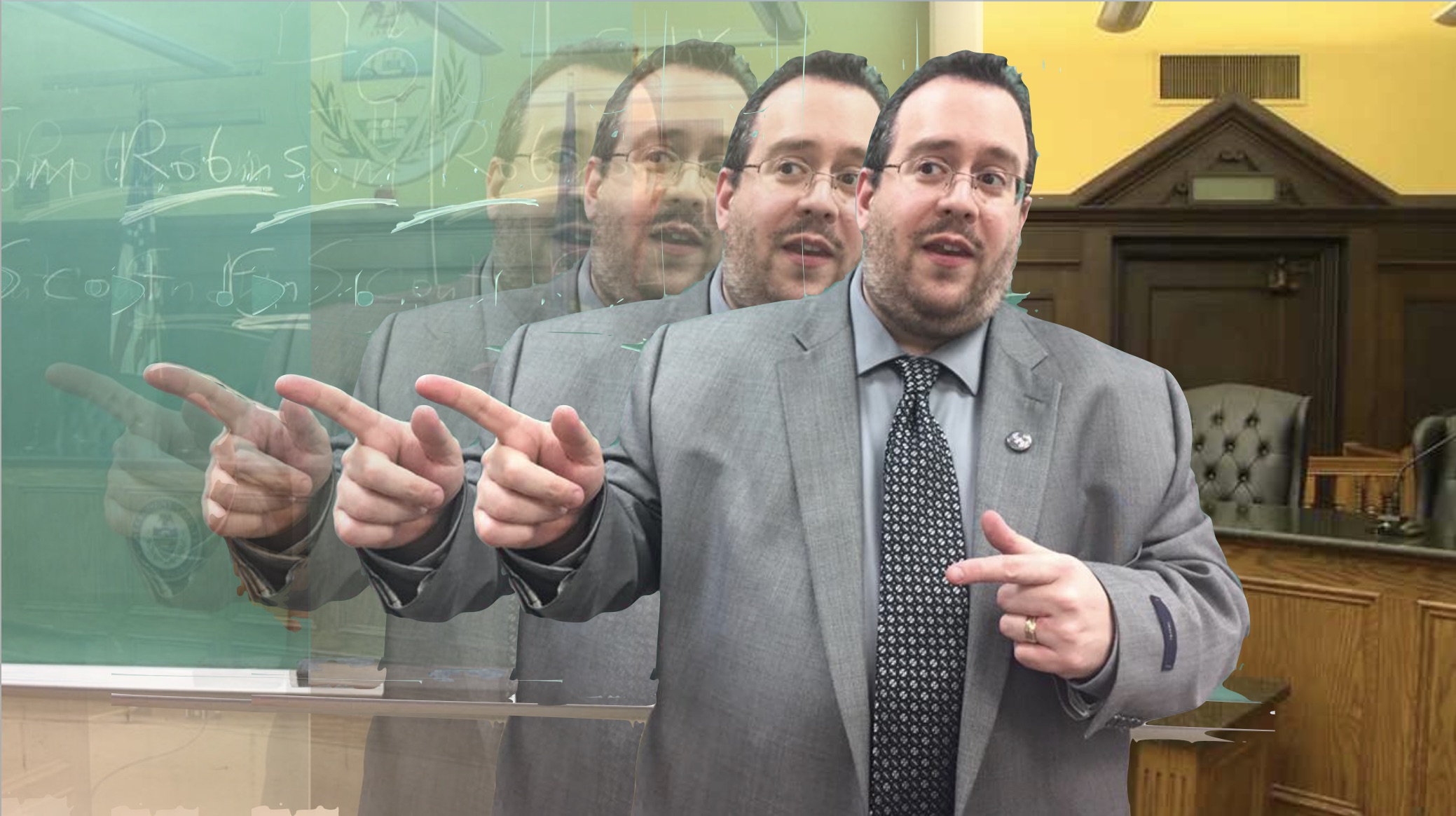
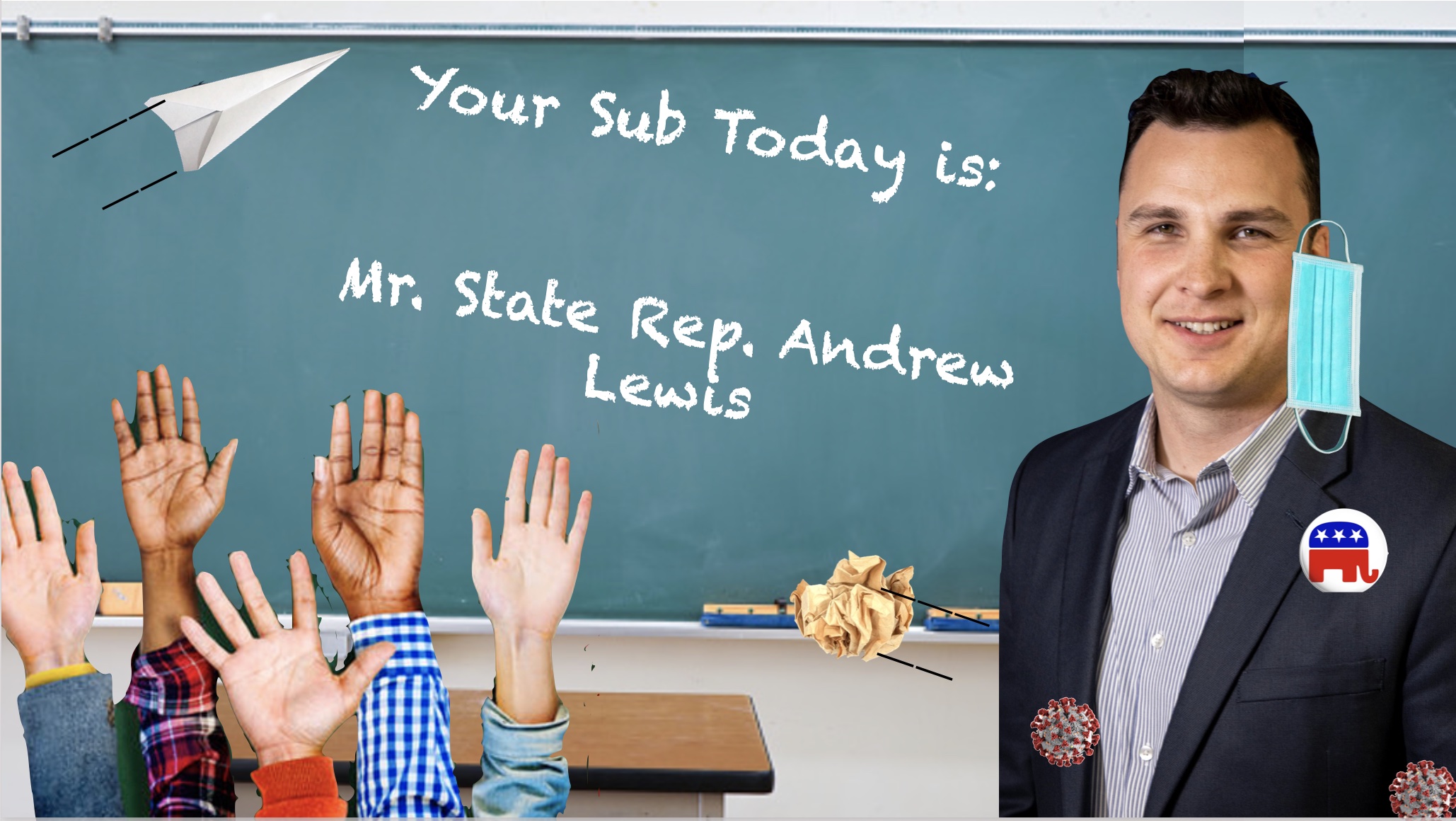
Description: Pennsylvania Republican state legislators were whining that they didn’t know what teachers were doing in public school. So they proposed a BS law demanding teachers spend even more of their never-ending time giving updates. I suggested legislators could just volunteer as subs and see for themselves.
Fun Fact: So far no Republicans have taken me up on the offer and their cute bit of performative lawmaking still hasn’t made it through Harrisburg.
Description: When it comes to stopping a global pandemic, we need federal action. This can’t be left up to the states, or the counties, or the townships or every small town. But all we get from the federal government about Covid mitigation in schools are guidelines. Stand up and do your F-ing jobs! Make some rules already, you freaking cowards!
Fun Fact: As I write this, President Joe Biden just came out and said there is no federal solution to the pandemic. It’s not that I think the other guy would have done better, but this was a softball, Joe. History will remember. If there is a history after all this is over.
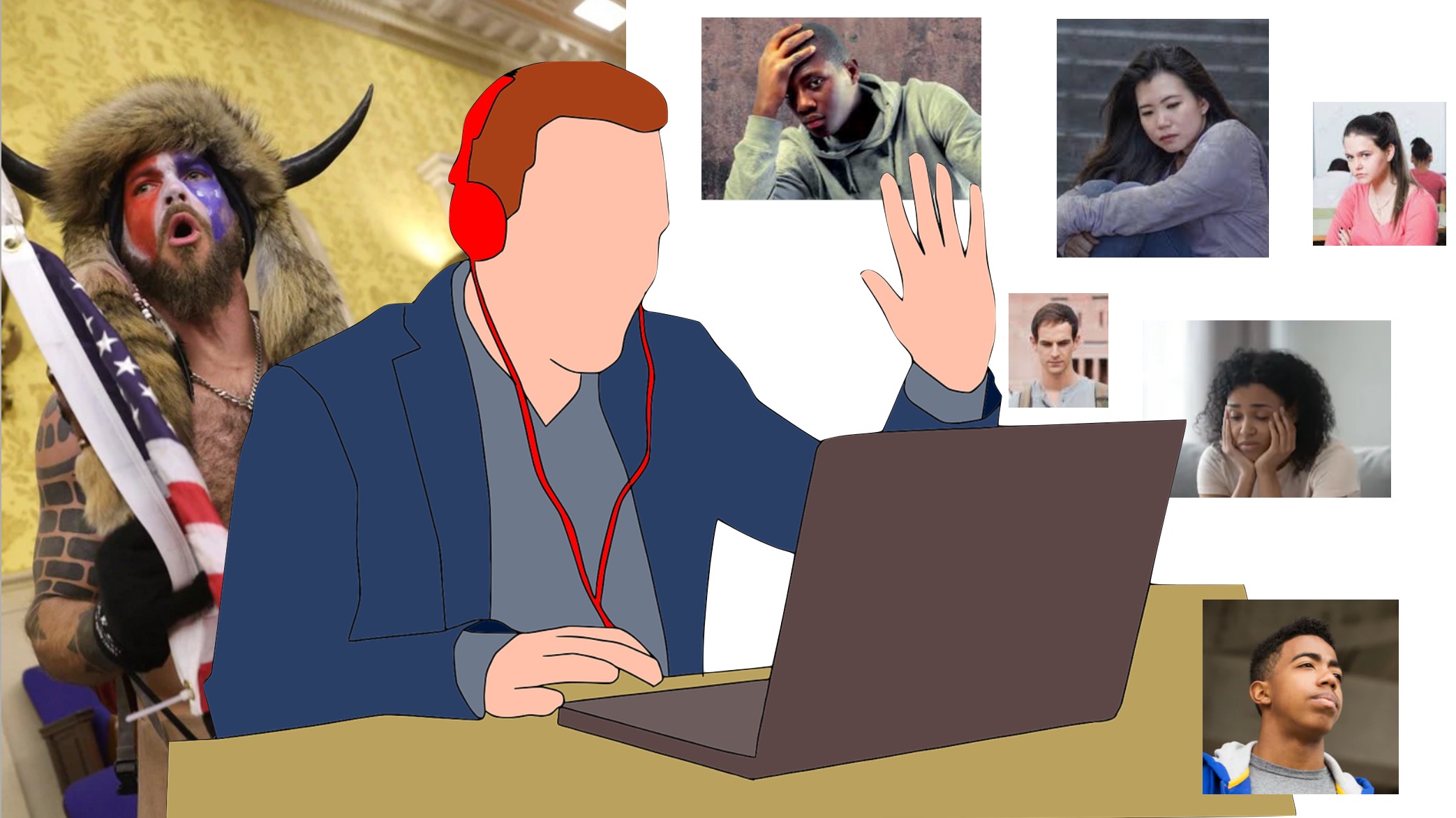
Description: On January 6, a bunch of far right traitors stormed the Capitol. This articles documents what it was like to experience that as a public school teacher with on-line classes during the pandemic.
Fun Fact: Once again, history may want to know. Posterity may have questions. At least, I hope so. The article was republished on CommonDreams.org.
Gadfly’s Other Year End Round Ups
This wasn’t the first year I’ve done a countdown of the year’s greatest hits. I usually write one counting down my most popular articles and one listing articles that I thought deserved a second look (like this one). Here are all my end of the year articles since I began my blog in 2014:
Like this post? You might want to consider becoming a Patreon subscriber. This helps me continue to keep the blog going and get on with this difficult and challenging work.
Even Canada follows this practice with hockey. Young athletes don’t play for their high schools; they play for one of three national hockey leagues – the Ontario Hockey League, the Western Hockey League or the Quebec Major Junior Hockey League.
The way we do things in the US – combining athletics and academics under one roof – ends up making each undertaking enemies.
Kids are unnecessarily injured in the games and indoctrinated in an ethic of dominance. In addition, sports programs gobble up limited resources meant for the classroom, and incentivize bad decisions that prize athletics over everything else.
Let’s look at each in turn:
1) Injuries
School sports began as a way to keep kids safe.
About 120 years ago, schools were not involved in organized athletics.
Perhaps the most dangerous are concussions. These are especially frequent in contact sports like football where athletes bump or smash their heads or bodies into each other. Even with protective equipment like helmets and pads, such collisions can cause traumatic brain injuries that can alter the way brains function for a lifetime.
During the 2005-06 season, high school football players sustained more than half a million injuries nationally, according to the Center for Injury Research and Policy at Columbus Children’s Hospital. While football easily incurs the highest risk, even sports like soccer and baseball are responsible for thousands of injuries to adolescents between the ages of 10 to 14 every year.
And that’s only the most obvious danger. It doesn’t even include increased steroid use, fighting during games, hazing violence, excessive training, verbal abuse, and failure to provide proper care during important matches.
Competitive extracurricular sports can be dangerous to young people’s health. It is certainly valid to question whether schools should be involved in such practices incurring liability and potentially harming their own students.
2) Warrior Mindset
And then there’s the question of whether school sports are healthy for our minds as well as our bodies.
At the turn of the 20th Century, schools started organizing their own teams because they wanted to not just keep kids physically safe, but provide a healthy alternative to the kinds of activities they might be lured into on the streets. Based on the Victorian ideal of “Muscular Christianity,” sports was considered something wholesome that would district American children (especially boys) from social ills like gambling and prostitution.
However, even then it was a manifestation of the period’s xenophobia.
In the early 1900s, the US had just admitted a surge of European immigrants. Some people were worried that immigrant children would overrun the kids already here. Physician and poet Oliver Wendell Holmes Sr. described this class of American-born kids as “stiff-jointed, soft-muscled, paste-complexioned youth.” It was suggested that organized sports would help them become as brawny as those just coming to our shores.
So the driving motives behind the creation of school sports were bigotry and fear.
Sadly, not much has changed in the intervening years.
Sports culture creates understandings of the world and self that are not entirely healthy in a democratic society.
For instance, an emphasis on competition instills the ethic that it is the outcome – winning or losing – that is most important. As kids become adults, this informs the way they frame ethical choices. Moreover, it dampens empathy. You’re discouraged from caring about members of the other team and encouraged to be hostile to anyone considered an other. Even teammates are only worthy of care in so much as they help you win. There is always latent competition because there is a constant danger that one of your teammates could take your place.
Moreover, sports do not value critical thinking or individuality. You listen to your coach or team captain or whoever in the hierarchy is above you. Questioning authority is discouraged. Instead, you’re impressed with the duty to follow and accept the decisions of those in charge.
These values would be more helpful in the development of warriors or soldiers – not democratic citizens. We need people who value tolerance, discussion, justice, caring, and diversity of ideals – exactly the opposite of what organized sports instills.
The world view promoted by organized athletic competition is not healthy for our students.
3) Expense
However, even if school sports didn’t hurt kids physically and mentally, they cost a ridiculous amount of money!
However, this is actually a minority of students, only about 42%. That’s because it often costs parents an additional fee for their kids to play on school teams – between $670 – $1,000 a year. This includes sporting registration fees, uniforms, coaching, and lessons.
Costs to districts are hard to quantify but significant.
Football is easily the most expensive high school sport. Consider that many football teams have half a dozen or more coaches, all of whom usually receive a stipend. And some schools go even further hiring professional coaches at full salaries or designate a teacher as the full-time athletic director. The cost of new bleachers can top half a million dollars – about the same as artificial turf. Even maintaining a grass field can cost more than $20,000 a year. Not to mention annual expenses like reconditioning helmets, which can cost more than $1,500 for a large team. To help offset these costs, some communities collect private donations or levy a special tax for initiatives like new gyms or sports facilities.
There are so many costs people rarely consider. For example, when teachers who also serve as coaches travel for game days, schools need to hire substitute teachers. They also need to pay for buses for the team, the band, and the cheerleaders. And that’s before you even take into account meals and hotels during away games. Even when events are at home, schools typically cover the cost of hiring officials, providing security, painting the lines on the field, and cleaning up afterward.
They often end up spending more per student athlete than they do per pupil in the classroom.
Marguerite Roza, the author of Educational Economics, analyzed the finances of one public high school in the Pacific Northwest. She and her colleagues found that the school was spending $328 a student for math instruction and more than four times that much for cheerleading—$1,348 a cheerleader.
One wonders – can we afford school athletics? Wouldn’t it be better to spend school budgets on learning – something all students participate in – rather than something that only benefits a fraction of the student body?
4) Decision Making
The cost of school sports isn’t measured just in dollars and cents but in the kinds of decisions administrators and school board members make for the sake of athletics – regardless of how it impacts academics.
People are often hired for important school positions based on their sports credentials even when their jobs are supposed to be mainly focused on improving student learning.
This is especially true where I live in Western Pennsylvania.
In my home district of McKeesport, when our superintendent, Dr. Mark Holtzman, was hired, he did not have any proven track record of scholastic success but had been a football star when he was a student here.
Likewise, the district where I work as a teacher, Steel Valley, hired Eddie Wehrer as superintendent without any degree in education but experience as a football coach.
The same goes for principals recommending new staff.
Sometimes administrators will lower their standards and recommend a less qualified applicant if he or she has experience as an athletic coach.
Whether they’ll admit it or not, the prospect of a winning season for the football team is often prioritized over new textbooks, smaller class sizes or other improvements.
The act of running for school board is often seen as a way to have greater control over district athletics. Go to most local school board meetings and you’ll hear much more discussion of various teams and extracurricular activities than academic programs.
National organizations like the NFL, NBA and Major League Baseball recruit most of their players from colleges who recruit most of their players from K-12 schools. It’s a lucrative system with billions of dollars in profit on the line.
If students get an excellent education, that’s seen as a personal benefit to them, alone. But if a student athlete gets signed to a sports contract, that enriches the team and the corporation orders of magnitude more than the athlete.
Schools bask in the reflected glory of successful athletes, teams and programs. Grown adults who are too old to participate, themselves, take vicarious pleasure in these successes.
I understand that this is a very controversial topic.
There is a small minority of students who benefits from school athletics and even come to school primarily just to participate in sports.
However, the negatives far outweigh the benefits.
I think it’s time we begin considering separating sports and schools.
Students who want to participate in such activities can do so through private athletic clubs just like kids all over the world.
And before I’m criticized as being anti-sports, consider that such a separation would benefit both endeavors. Students would have more time and resources to focus on learning, while athletes could concentrate more on their chosen sport and train all year long instead of just during a certain season.
I have no illusions that anyone will take my advice. Sports are way too entrenched in American schools and our elected officials can’t even seem to find the courage to enact obvious reforms like gun control, repealing charter schools, ending standardized testing and funding schools equitably.
However, if we really want the best for US children, we should give them what kids the world over already have – schools separate from organized sports.
Like this post? You might want to consider becoming a Patreon subscriber. This helps me continue to keep the blog going and get on with this difficult and challenging work.























 gadflyonthewallblog