Could This Be Gadfly’s End? Top 12 Articles From 2023 Read By Fewer Than Ever

Thank you, loyal readers, but this may be the end of Gadfly on the Wall.

Readership has fallen off to such a degree that I’m just not sure it’s worth continuing anymore.

That combined with increasing difficulties in my own life have made me truly question whether I should (or can) go on with it.

Don’t get me wrong. I will truly cherish every moment writing these articles, fighting for what I (still) think needs to happen in public education so that our children can be fairly treated and succeed.

There is so much I think most people don’t know about what happens in our schools and what could be done to make them better for children, families and the people who work there.

But after 9 years of pounding my head against the wall – well, it seems like the wall is winning.

This blog used to be read by at least half a million people each year. But social media – the prime distributor of this material – is not what it was a decade ago. In 2021, I had 222,414 hits. Last year it was 124,984. This year it was 73,121.

And much of those were for articles I’d written in years past. The highest three articles this year were not written in 2023. They were: The MAP Test – Selling Schools Unnecessary Junk at Student Expense ( 2,344) from Aug. 2022, When Good Students Get Bad Standardized Test Scores (1,775) from Oct. 2022, and Lesson Plans Are a Complete Waste of Time (1,544) from Sept. 2021.

Why keep putting out new content? It often feels like I’m saying the same thing over and over anyway – and not really being heard except by the same few people.

So I’m going to pause, take a moment and really think about things.

Heck! I might find out that I simply can’t quit because I’ve got too much to say. Then again, I may only write when something really important comes up that I absolutely have to let loose on.

Or this could be it.

I don’t know.

In any case, thank you so much for nearly 10 years of readership. I assume most people seeing this would have been here for the long haul.

It has been an amazing experience. I’m not sure what comes next, but for now I leave you with some outstanding moments from 2023.

All the best in the future!

-Steven Singer

The Gadfly on the Wall

12) Standardized Tests Hurt Asian-American Students, Too, Though Many Get High Scores

Published: March 27

Views: 243

Description: Asian-Americans – taken as a whole – score better on standardized tests than white Americans. But they are just as much victimized by testing as any other minority. The only difference is their success is held up as an excuse for upholding this deeply inequitable practice. It obscures that all Asians are not the same, certain types do not score as highly yet all are held to unfair expectations.

Fun Fact: This is a rarely explored or reported on aspect of the standardized testing phenomenon. I’m proud to have written on it despite its low readership.

11) Fact Checking Propel Charter Schools – Do They Live Up to Their Own Hype?

Published: Jan. 20

Views: 572

Description: The Propel Charter School network of 13 schools based in Pittsburgh, Pa, has advertisements everywhere proclaiming its virtues. However, this is just advertising. From test scores to safety to class size to teacher qualifications and many other factors, the charter chain comes up short again and again. Compared with authentic public schools in the same neighborhoods where these schools are located, Propel compares rather badly.

Fun Fact: I think this is incredibly important in the western Pennsylvania region. This information should be shared far and wide. It should at very least spark media investigations comparing Propel and authentic public schools so parents could make informed choices about where to send their children. But we never see that because Propel is a frequent advertiser. If the media provided this information – and didn’t just uncritically repeat propaganda – the media conglomerates would lose valuable advertising revenue. I am proud I could provide this public service.

10) Stay Woke, Public School Teachers

Published: March 12

Views: 588

Description: Being “woke” just means being alert to racial prejudice and discrimination – just knowing that these things exist and trying to recognize them when present. The way I see it, that’s well under a teacher’s job description. After all, who else will teach the true history that for more than 400 years in excess of 15 million men, women and children were the victims of the transatlantic slave trade? Who will teach the true history of the fight against human bondage and the struggle for equal rights? Who will teach about women’s fight for suffrage, equal pay, and reproductive freedom? Who will teach about the struggle of the individual to affirm their own gender identity and sexual expression? It’s up to us.

Fun Fact: Republicans are so anti-teacher, they’ve made the acquisition of knowledge part of the culture war and turned teachers into the enemy. This was just my way of pushing back a little.

9) Where Have School Libraries Gone?

Published: Aug. 25

Views: 681

Description: McKeesport Area School District – where I graduated and my daughter still attends classes – closed its high school public library for good. They gave away the books and turned it into a large group instruction room. And this kind of thing is happening all across the country. This is a problem because every book is not available on-line. In fact, the number and variety of books available digitally is much smaller than most public or school libraries typically have in their collections – if you’re not going to pay an additional fee. I can read most of the classics of world literature on the Internet, but anything that isn’t in the public domain is going to require me to pony up some dough. And the same goes for most respected resources.

Fun Fact: This was a truly depressing discovery but even more so was the response. Many people couldn’t grasp why libraries are even necessary today. Libraries used to be something society provided to every citizen just as a matter of course. Now our expectations are so low that we’ve nearly given up on this essential resource.

8) After School Satan Clubs Are Teaching Public School Districts an Important Lesson in Free Speech  

Published: May 17

Views: 691

Description: Thousands of districts in the US allow religious organizations and clubs to operate on public school property, especially after classes are over. So The Satanic Temple goes around proposing After-School Satan Clubs at the same districts – and all Hell breaks loose.  

Fun Fact: You want to let religion in the school house door, you have to let all of them in. You can’t pick and choose.

7) Congress May Raise Educators’ Minimum Salaries to Combat the Teacher Exodus

Published: Jan. 1

Views: 699

Description: A group of Congressional Democrats have proposed a national minimum salary for teachers. Rep. Frederica Wilson and Rep. Jamaal Bowman, (both former teachers) and six other members of the House have introduced The American Teacher Act establishing a minimum salary of $60,000 for all public school teachers working in the U.S. – the first legislation of its kind. The average starting salary of teachers nationwide was $41,770 in the 2020-21 school year, according to the National Education Association (which supports the bill).

Fun Fact: What a lovely thought! Still waiting on this to be approved. Any day now. Come on, Congress!

6) I am a Charter School Abolitionist, and You Should Be, Too 

Published: March 22

Views: 701

Description: Charter schools have been around since 1992. Though it seems like they’re everywhere these days, only 45 states and the District of Columbia allow these schools and even then they enroll just 6% of the students in the country – roughly three million children. The five states that do not have charter school laws are Montana, Nebraska, North Dakota, South Dakota, and Vermont. So after 32 years of trial and error, we’re left with a charter school system that does not get better academic results than authentic public schools (despite being given dramatic advantages in their charter agreements) and in many cases drastically fails by comparison. Not to mention all the fraud, malfeasance and ineptitude you get from removing regulations for any Tom, Dick or Harry who thinks he can open a school. Time to abolish these schools and end this failed experiment.

Fun Fact: This article really angered some folks. There are lots of people who hate the idea of charter schools in general but want to preserve anything that they think might give their own kids an advantage over others. Even if that is rarely the case! However, the gleam of the new has definitely worn off this concept and an increasing number of folks are open to limiting or ending this fiasco.


5) A Private Equity Firm, The Makers of the MAP Test, and an Ed Tech Publisher Join Forces

Published: Jan. 26

Views: 930

Description: A year after being gobbled up by private equity firm Veritas Capital, ed tech company Houghton Mifflin Harcourt (HMH) is acquiring K-12 assessment giant Northwest Evaluation Association (NWEA). Let me put that in perspective – a scandal-ridden investment firm that made billions in the wars in Iraq and Afghanistan bought one of standardized testing’s big four and then added the Measures of Academic Progress (MAP) test to its arsenal. This almost certainly means the cost of state testing is going to increase since the providers of the tests are shrinking. 

Fun Fact: This is the kind of story that will creep into our lives before we even realize what is happening. We’ll wonder why our districts and even entire states which rely heavily on the MAP test are buying as much HMH curriculum as possible. That way they can teach directly what is on their standardized tests. Bye, bye, tax dollars that could have been spent to educate kids!

4) Top 4 Things McKeesport Area School Directors Need to do to Extinguish the District Dumpster Fire

Published: Oct. 8

Views: 963

Description: My neighborhood district – McKeesport Area School District (MASD) – is going through tough times. School directors reneged on a teachers contract. Their business manager ran for the hills. And at a board meeting two school directors had their dirty laundry aired during public comments prompting one to call a White Oak Councilperson a homophobic slur. I had four suggestions to right the ship: (1) Pass a Code of Conduct for Board Members and Administrators, (2) Start Streaming Council Meetings Again, (3) Hire a New Reputable Business Manager, and (4) Pass a Teachers Contract with No Tax Increase.

Fun Fact: This article got a lot of notice in the neighborhood and some of my suggestions actually got done. The district hired a new business manager and will begin streaming new meetings. They’re also negotiating with teachers so fingers crossed.

3) Teach for America Promised to Fix the Teacher Exodus Before Anyone Even Noticed There Was One. Now It’s Choking on Its Own Failure

Published: Aug. 7

Views: 1,070

Description: Teach for America (TFA) was supposed to fix the teacher exodus by fast tracking non-education majors into the classroom where they would teach for a few years and then enter the private sector as “experts” to drive public policy. College graduates would take a five-week crash course in education and commit to at least two years in the classroom thereby filling any vacant teaching positions. Not only didn’t it work, it ended up making the situation worse. Now the organization created in 1990 is expecting its lowest enrollment in 15 years. TFA anticipates placing slightly less than 2,000 teachers in schools across the country this fall. I guess watering down what it means to be a teacher is even less popular than actually being an educator.

Fun Fact: People really hate TFA. The organization’s cred has gone down more than anything else in the education field – even more than charter schools. The fact that the emperor has no clothes here is painfully obvious.

2) Come Visit Your Wasted Tax Dollars at Commonwealth Charter Academy’s Waterfront Luxury Office Space

Published: Feb. 4

Views: 1,236

Description: If you go to the Waterfront in Homestead, PA, you’ll find the newest satellite office of Commonwealth Charter Academy (CCA) – the biggest cyber charter school network in the entire state. It’s one of 51 locations statewide. Only 27 states allow CYBER charters like this – schools that teach mostly (or entirely) distance learning through the Internet. Nationwide, Pennsylvania and Ohio have the largest cyber charter enrollment. In 2020-21, the Keystone State enrolled 61,000 students in 14 cyber charters – and roughly 21,000 attend CCA! There’s an authentic public school in this neighborhood, too – Steel Valley School District – right up the hill. It’s not located in nearly as trendy a spot though. Moreover, its four buildings were constructed around the 1970s and are crumbling down in places. But the new cyber charter school building looks like a palace!

Fun Fact: I don’t think most people who go to the Waterfront understand what the CCA location really is. To them it’s just another school, kind of sleek and modern looking. This article was my attempt to tell them. Thankfully it proved relatively popular, though the CCA people absolutely had a conniption. They couldn’t believe someone was criticizing their profitable business venture. This story brought the most trolls of any this year.

1) McKeesport Teachers Without a Contract Because of Bad Business Manager or Bad Faith School Board?

Published: Aug. 16

Views: 1,409

Description: McKeesport Area School District (MASD) botched a new teachers contract. So the question is – does it have a terrible business manager or a regressive school board? School directors and the teachers had agreed to a new contract, but the board tabled it in June after concerns that the western Pennsylvania district didn’t have the money to pay for moderate raises. Then the board skipped the entire month of July without a meeting as if the livelihoods of hundreds of employees don’t count. By the time classes were set to begin in August, the board was no closer to solving the problem. Board members mostly blamed the business manager who eventually quit. The situation still has not been resolved.

Fun Fact: This article hit the neighborhood like a nuclear blast. Everyone seemed to be talking about it. Someone in the neighborhood literally called me a “local legend” for having written it. I’m just glad it focused people’s attentions on the facts of the matter. If anything gets me to blog again, it will be writing more about the local stories that are so important but no one else is talking about.

Gadfly’s Other Year End Round Ups

This wasn’t the first year I’ve done a countdown of the year’s greatest hits. I usually write one counting down my most popular articles and one listing articles that I thought deserved a second look. Here are all my end of the year articles since I began my blog in 2014:


2022:

Top 11 Education Articles of 2022 Hidden by Facebook, Buried by Twitter, and Written by a Gadfly


2021:

Gadfly’s Most Outrageous Articles in 2021 That You May Have Missed or Been Too Polite to Share

Gadfly’s Top 10 Articles of 2021 – Shouts in the Dark

2020:

The Most Important Education Articles (By Me) That You Probably Missed in 2020

Outrunning the Pandemic – Racing Through Gadfly’s Top 10 Stories of 2020


2019:

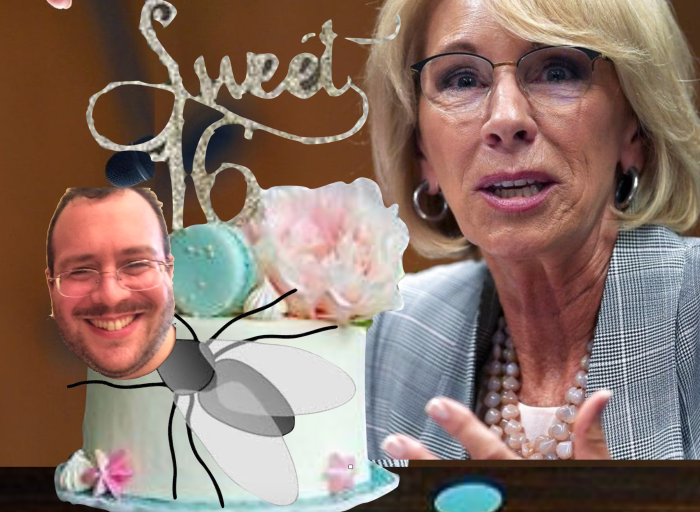
Sixteen Gadfly Articles That Made Betsy DeVos Itch in 2019

Screen Shot 2019-12-28 at 3.51.03 PM


2018:

A Gadfly’s Dozen: Top 13 Education Articles of 2018 (By Me)

thumbnail_IMG_8445


2017:


What’s the Buzz? A Crown of Gadflies! Top 10 Articles (by Me) in 2017


thumbnail_Screen shot 2017-12-26 at 3.44.17 PM


Hidden Gadfly – Top 5 Stories (By Me) You May Have Missed in 2017

 

7fd6a56c2ffc7a03c9fd2f431a543e92


2016

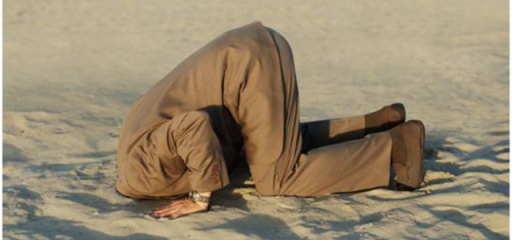
Worse Than Fake News – Ignored News. Top 5 Education Stories You May Have Missed in 2016
 

ignoring-wisdom


Goodbye, 2016, and Good Riddance – Top 10 Blog Post by Me From a Crappy Year


screen-shot-2016-12-27-at-3-29-49-am


2015


Gadfly’s Choice – Top 5 Blogs (By Me) You May Have Missed from 2015


Screen shot 2016-01-02 at 11.01.09 PM


Who’s Your Favorite Gadfly? Top 10 Blog Posts (By Me) That Enlightened, Entertained and Enraged in 2015


Screen shot 2015-12-30 at 12.57.49 AM


2014


Off the Beaten Gadfly – the Best Education Blog Pieces You Never Read in 2014

 

Wonderfull illusion art painting


Top 10 Education Blog Posts (By Me) You Should Be Reading Right Now!

 

computer-people-png-300x202


Like this post?  You might want to consider becoming a Patreon subscriber. This helps me continue to keep the blog going and get on with this difficult and challenging work.

Plus you get subscriber only extras!

Just CLICK HERE.

Patreon+Circle

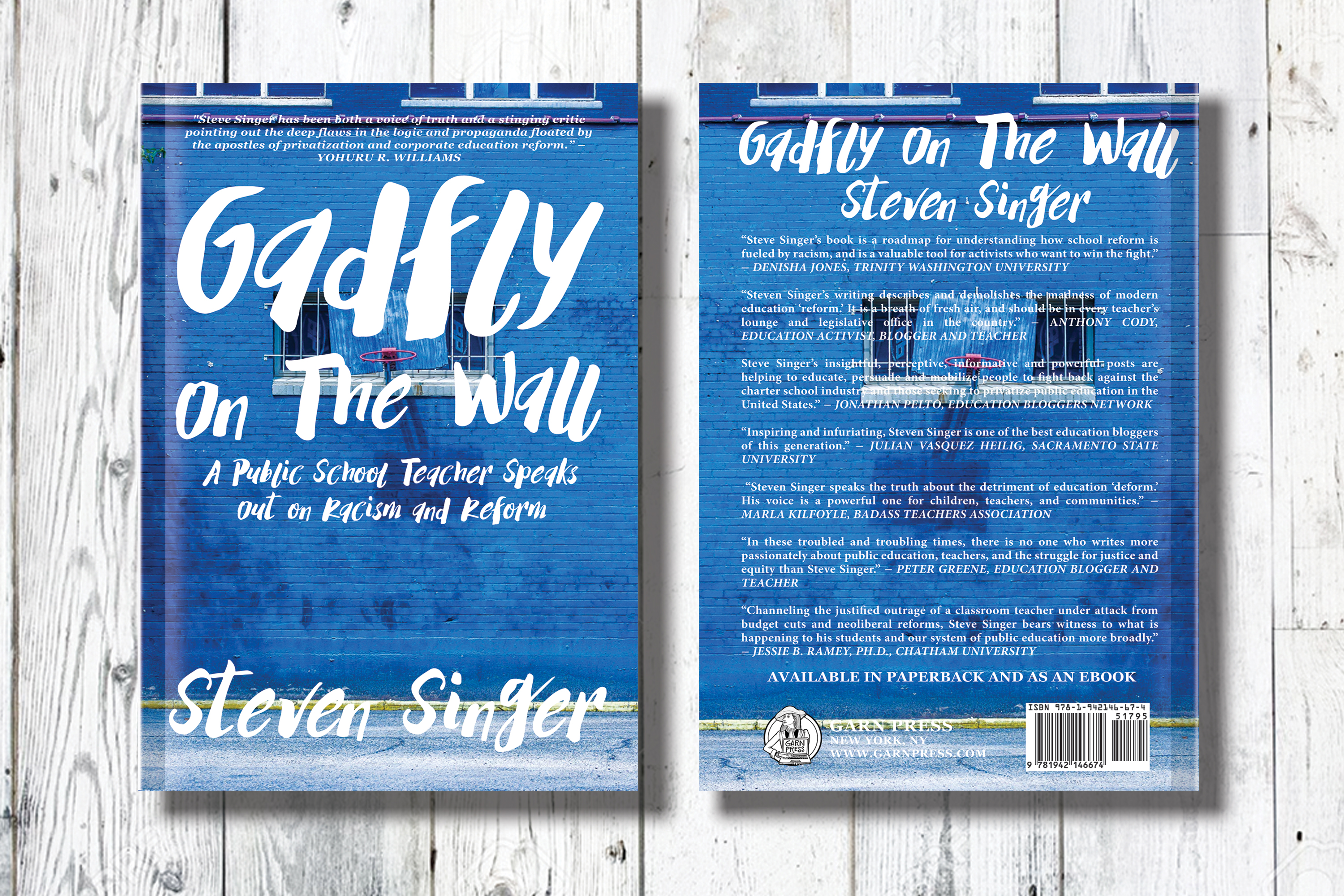
I’ve also written a book, “Gadfly on the Wall: A Public School Teacher Speaks Out on Racism and Reform,” now available from Garn Press. Ten percent of the proceeds go to the Badass Teachers Association. Check it out!

Congress May Raise Educators’ Minimum Salaries to Combat the Teacher Exodus

When it comes to teachers, America doesn’t mind getting away cheap.

The minimum salary for a teacher in Pennsylvania is $18,500 a year.

That’s not a lot of money – roughly $9.63 an hour.

It’s barely more than the federal minimum wage of $7.25 an hour ($15,080 annually).

But in many states there is no minimum teacher salary – so the minimum wage IS a teacher’s minimum salary!

You could probably make more as a dishwasher, cashier or parking lot attendant. So why take on a four-year education degree, mountains of student loan debt, and the added challenge of a (likely unpaid) internship?

Just pick up a broom and start sweeping.

Perhaps that’s why a group of Congressional Democrats have proposed a national minimum salary for teachers.

Rep. Frederica Wilson and Rep. Jamaal Bowman, (both former teachers) and six other members of the House have introduced The American Teacher Act establishing a minimum salary of $60,000 for all public school teachers working in the U.S. – the first legislation of its kind.

Though state minimums are less (assuming your state has one at all), the average starting salary of teachers nationwide was $41,770 in the 2020-21 school year, according to the National Education Association (which supports the bill).

However, even that number shows how poorly we reimburse teachers for their labor.

It means on average teachers make about 77 cents on the dollar compared to their peers in similar professions, according to the Economic Policy Institute, a nonprofit think tank.

So a potentially $20,000 base increase would help.

If passed, the bill wouldn’t simply force all states to comply. It would offer funding through federal grants encouraging states and school districts to raise their minimum starting salary to $60,000 by the 2024-25 academic year.

In the short term, the funding would pay to implement the new salary minimum but states would be responsible for sustaining the cost in the long run.

No cost projection for the program has yet been conducted.

The new minimum salary would be adjusted for inflation each year, beginning with the 2025-26 school year, and any grant funding would have to be used toward salaries and not to supplant any existing funding that goes toward schools.

Sponsors hope the bill would affect more than just minimum salaries.

The idea is that states would adjust their entire teacher salary schedules with $60,000 as the floor and all other salary steps increasing incrementally based on education levels and years of experience. So even veteran teachers should see their wages increase.

However, the bill doesn’t stop there. The authors of the legislation know that respect for the teaching profession is important to ensure salaries remain adequate.

In addition to wages, 4 percent of the grant funding would be used to launch a national campaign about the teaching profession, highlighting its importance and value as well as encouraging high school and college students to pursue a career in education.

It’s high time something were done because the US is losing teachers at an alarming rate.


After decades of neglect only made worse by the Covid-19 pandemic, we’re missing almost a million teachers.

Nationwide, we only have about 3.2 million teachers left!

According to the Bureau of Labor Statistics, there are 567,000 fewer educators in our public schools today than there were before the pandemic. And that’s on top of already losing 250,000 school employees during the recession of 2008-09 most of whom were never replaced. All while enrollment increased by 800,000 students.

Meanwhile, finding replacements has been difficult. Across the country, an average of one educator is hired for every two jobs available.

Not only are teachers paid 20% less than other college-educated workers with similar experience, but a 2020 survey found that 67% of teachers have or had a second job to make ends meet.

It’s no wonder then that few college students want to enter the profession.

Over the past decade, there’s been a major decline in enrollment in bachelor’s degree programs in education.

Beginning in 2011, enrollment in such programs and new education certifications in Pennsylvania — my home state— started to decline. Today, only about a third as many students are enrolled in teacher prep programs in the Commonwealth as there were 10 years ago. And state records show new certifications are down by two-thirds over that period.

Legislation like The American Teachers Act is absolutely necessary to stop the teacher exodus and ensure our children receive a quality education.

However, at present not a single Republican lawmaker has expressed support for legislation of this type, only support in individual states when it becomes obvious the whole system will collapse without help.

Moreover, even neoliberal Democrats want to use such measures to sneak in unnecessary and destructive policies like more standardized testing, evaluating teachers on student test scores and increased funding for charter schools and school voucher programs.

At present it seems unlikely that this legislation would pass in any manner that would be helpful if at all.

It may take further crumbling of the public school system and/or a change in political leadership and power for anything to be done.

On the bright side, it is encouraging that for the first time (ever?) lawmakers actually seem to recognize there is a real problem here.

It has finally come down to a simple matter of dollars and cents.


Like this post?  You might want to consider becoming a Patreon subscriber. This helps me continue to keep the blog going and get on with this difficult and challenging work.

Plus you get subscriber only extras!

Just CLICK HERE.

Patreon+Circle

I’ve also written a book, “Gadfly on the Wall: A Public School Teacher Speaks Out on Racism and Reform,” now available from Garn Press. Ten percent of the proceeds go to the Badass Teachers Association. Check it out!

Federal or State Legislatures May Raise Teacher Salaries so Schools Have Enough Staff to Reopen

What will we do when schools reopen and there aren’t enough teachers to instruct our kids?

People complain when there aren’t enough servers at restaurants or baggers at the grocery store.

What will they say in August if school buildings in many districts remain closed or the only viable option is online remote schooling?

Lawmakers at the state and federal level are taking the matter seriously with measures to increase teacher salary or provide one-time bonuses.

Alabama, New Mexico, and Mississippi have already boosted teacher pay, with Florida, Iowa and Kentucky potentially set to do the same. Meanwhile, even US Congress could pass a nationwide measure to heighten teacher salary and encourage educators to stay in the classroom.

After decades of neglect only made worse by Covid-19, we’re missing almost a million teachers.

And we only have about 3.2 million teachers nationwide!

According to the Bureau of Labor Statistics, there are 567,000 fewer educators in our public schools today than there were before the pandemic. And that’s on top of already losing 250,000 school employees during the recession of 2008-09 most of whom were never replaced. All while enrollment increased by 800,000 students.

Meanwhile, finding replacements has been difficult. Across the country, an average of one educator is hired for every two jobs available.

So what are we doing about it?

Surprisingly, something!

Congress has at least one bill under consideration that would raise teacher salaries nationwide.

The Respect, Advancement, and Increasing Support for Educators (RAISE) Act would provide teachers with a minimum of $1,000 in refundable tax credits and as much as $15,000.

The more impoverished the school where teachers work, the higher the tax credit available to increase their salaries. The bill would also double the educator tax deduction to offset the cost of school supplies, and expand eligibility to early childhood educators.

The bill was introduced by Senator Cory Booker (D-NJ) and U.S. Representatives Adam Schiff (D-CA), Jahana Hayes (D-CT), John Larson (D-CT), and Mark Takano (D-CA). It is supported by a broad coalition of organizations including the American Federation of Teachers (AFT) and the National Education Association (NEA).

Such a measure is long overdue.

Teachers are paid 20% less than other college-educated workers with similar experience. A 2020 survey found that 67% of teachers have or had a second job to make ends meet.

Why would you go into debt earning a four year degree in education and serve an (often unpaid) internship in the classroom just to earn little more than a fry chef or Walmart greeter?

Why enter a field where you can’t buy a home or even rent an apartment in most metropolitan areas? Why volunteer for a job where you won’t be able to afford to marry, raise children, or eke out a middle class existence?

Thankfully, Congressional proposals aren’t the only attempt to make teaching more attractive.

Some states have already taken action.

The Alabama Senate passed a budget that would raise minimum salaries for teachers with nine or more years experience. The raises would range from 5% to nearly 21%, depending on years of experience.

A teacher with a bachelor’s degree and 20 years of experience would see their salary rise from $51,810 to $57,214. A teacher with a master’s degree and 25 years experience would see their pay rise from $61,987 to $69,151.

In New Mexico, Gov. Michelle Lujan Grisham signed a bill that would increase base salary levels by an average of 20 percent. This advances minimum salary tiers for educators by $10,000 to $50,000, $60,000 and $70,000. 

In Mississippi, Gov. Tate Reeves signed off on an average increase of $5,100 that will raise educator salaries by more than 10 percent.

According to Politico, both Republican and Democratic Governors are proposing teacher salary increases or one-time bonuses as part of budget proposals and legislative priorities.

Even Governors like Iowa’s Kim Reynolds and Florida’s Ron DeSantis are promoting teacher bonuses while also stoking classroom culture wars. On the other side of the aisle, Kentucky’s Democratic governor Andy Beshear is trying to push through a teacher pay plan through opposition by the state’s GOP-controlled legislature.

Such measures are even being proposed in Pennsylvania. Sen. Judith Schwank (D-Berks) recently introduced Senate Bill 1211 to boost starting pay for teachers from the current minimum of $18,500 listed in state law. She proposes increasing it to $45,000 a year. However, the bill sent to the Senate Education Committee has several Democratic co-sponsors but no Republicans, making it doubtful it will progress anytime soon.

The main factor behind these plans seems to be the $350 billion in state and local recovery funds under the American Rescue Plan. These federal dollars have few strings attached and only about half of the money has been spent so far.

After decades of neglect, these plans may not be enough and they may not even come to fruition. However, at least lawmakers seem to understand the problem exists.

It’s gratifying that politicians finally seem to feel a sense of urgency here.

Because this problem didn’t spring up overnight and it won’t go away in a flash.

If we don’t do something to make teaching more attractive, the problem will only be compounded in coming years.

Not only are we having a hard time keeping the teachers we have, few college students want to enter the field.

Over the past decade, there’s been a major decline in enrollment in bachelor’s degree programs in education.

Beginning in 2011, enrollment in such programs and new education certifications in Pennsylvania — my home state— started to decline. Today, only about a third as many students are enrolled in teacher prep programs in the Commonwealth as there were 10 years ago. And state records show new certifications are down by two-thirds over that period.

And it’s not just classroom teachers – substitutes are even harder to find.

The shortage of substitute teachers has gotten so bad in 2021-22, it forced some schools across the country to temporarily move to remote learning. Even Pittsburgh Public Schools was forced to go to cyber learning on Nov. 29 because of a staffing shortage and a lack of substitute teachers.

And it doesn’t look to get better next year.

Last June almost a third of working educators expressed a desire to leave the profession.

According to a survey in June of 2,690 members of the National Education Association, 32% said the pandemic was likely to make them leave the profession earlier than expected. So we don’t have enough teachers now and one in three educators we do have are ready to walk out the door.

What could we do about it?

In the long term, we need structural solutions to the problem:  

 Money

 Autonomy

 Respect.  

And in the short term we need: 

 Less Paperwork

 Reduced case load

 Dedicated planning periods

But don’t take my word for it.

A survey by the RAND Corp. reported that the pandemic has increased teacher attrition, burnout and stress. In fact, educators were almost twice as likely as other adult workers to have frequent job-related stress and almost three times more likely to experience depression.

The CDC Foundation in May released similar results – 27% of teachers reporting depression and 37% reporting anxiety.

However, the RAND survey went even deeper pinpointing several causes of stressful working conditions. These were (1) a mismatch between actual and preferred mode of instruction, (2) lack of administrator and technical support, (3) technical issues with remote teaching, and (4) lack of implementation of COVID-19 safety measures. 

It’s a problem of exploitation and normalization. 

 Exploitation is when you treat someone unfairly for your own benefit. 

 Our schools have been doing that to teachers for decades – underpaying them for the high responsibilities they have, expecting each individual to do the work of multiple people and when anything goes wrong, blaming them for it. 

 We piled on so many extra duties – online teaching, hybrid learning, ever changing safety precautions – these became the proverbial straw that broke educators’ backs.  

There are things we can do to alleviate this situation – reducing nonessential tasks, eliminating unnecessary paperwork, refraining from excess staff meetings, forgoing new initiatives, letting teachers work from home on professional development days – anything to give them a break and an opportunity to heal from the years of overburdening.

But we also have to start paying teachers more.

Thankfully our lawmakers are taking this matter to heart and actually getting some results.

Hopefully this trend will continue until every teacher in the nation is adequately, equitably and sustainably compensated for the work done in the classroom.


Like this post?  You might want to consider becoming a Patreon subscriber. This helps me continue to keep the blog going and get on with this difficult and challenging work.

Plus you get subscriber only extras!

Just CLICK HERE.

Patreon+Circle

I’ve also written a book, “Gadfly on the Wall: A Public School Teacher Speaks Out on Racism and Reform,” now available from Garn Press. Ten percent of the proceeds go to the Badass Teachers Association. Check it out!

Sell Your Soul to the Testocracy: Kamala Harris’s Faustian Teacher Raises

Screen Shot 2019-03-27 at 7.03.07 PM

 
I love the idea of Kamala Harris’ plan to give teachers a pay raise.
 

But once we get past ideas, it’s way more troubling.


The California Senator and Democratic Presidential hopeful is proposing a $13,500 pay increase for the average teacher, with the exact number based on the size of each state’s pay gap.
 

That’s $315 billion more over a decade through federal matching funds, which amounts to a 23 percent salary increase for most educators.


Yes, please!

 
I could certainly use a raise.
 

But as Joe Moore said, “You can’t trust a promise someone makes while they’re drunk, in love, hungry, or running for office.”

 
And Harris IS running for office.


With this policy she’s wooing the national teachers unions and filling the neoliberal seat left by Hillary Clinton in 2016.

 
I love my union, but its leadership is like a college kid during spring break – ready to jump into bed with anyone who says the right words.
 

The fact of the matter is this plan also is favored by the people out to destroy my profession from the inside out.
 

Arne Duncan likes it.
 

Yes, THAT Arne Duncan!

 
Obama’s first Education Secretary. The guy who thought Hurricane Katrina was the best thing to happen to New Orleans because it allowed the government to close the public schools and replace them with charter schools.

The man who held federal grant money hostage unless schools enacted his unproven and disastrous corporate driven education reforms.


The man who encouraged pushing out teachers of color who had four year education degrees in favor of mostly white Teach for America temps with a few weeks crash course training.


The man who encouraged a rapid increase in high stakes standardized testing, narrowed curriculum, let class sizes balloon and decreased authentic lessons.

 
THAT Arne Duncan wrote this about Harris’ plan on Twitter:


“Radical idea: pay the professionals we entrust to teach, nurture and mentor our children a better salary!”


Screen Shot 2019-03-27 at 7.53.10 PM

 
How to reconcile the two?


I draw your attention to what he said on a recent book tour:


“If we were willing to invest in high-quality early childhood education, if we’re willing to pay great teachers and great principals significantly more, the benefits to our society, the benefits to our economy, the benefits to our democracy I think would be extraordinary…

[But] Money is never enough. So you’ll never hear me say, it’s only about money. For me it’s always about your high expectations as well as high support. And we have to hold ourselves accountable for great results. When schools aren’t working, we have to be willing to challenge the status quo. So investment is part of it, but high expectations have to go with that, and we have to hold ourselves accountable as educators for results, absolutely.”


So for Duncan this plan is entirely consistent with corporate education reform.


In fact, it makes sense as a continuation of those policies.


When privatization cheerleaders like Duncan talk about “high quality teachers” and “accountability” what they really mean are strings attached.


In this case, they probably mean merit pay – giving bonuses to teachers whose students get high test scores.


It’s a terrible idea because it encourages bad behavior from teachers, administrators and districts, which in turn hurts kids.


Having all your teachers fight over the rich white kids who get the highest test scores doesn’t help the struggling students. It just means fewer educators will want to teach the underprivileged because they can’t take the financial hit that comes with it.


The result is test prep all day, every day.


I want a raise, but not if it means I have to bastardize my own profession down to that!


And it’s not just Duncan who loves this idea.


Catherine Brown, a senior fellow at the Center for American Progress (CAP), actually helped Harris write this proposal.


“It could be transformative in terms of how we think about elevating and modernizing the teaching profession and the federal role in doing so,” Brown said.


CAP is a neoliberal think tank that worked closely with the Obama and Clinton administrations. And Brown is also the co-author of “The Progressive Case for Charter Schools”.


Any plan to raise teacher salary that is consistent with increased privatization is inherently suspect.


You can’t champion authentic public schools and public school teachers while also pushing for more institutions run without the same transparency, democratic government, and enrollment standards. If you think schools should be able to cherrypick which students to accept, they should be run by appointed bureaucrats, and it’s fine to cut student services while pocketing the profits, you aren’t a friend of public education.


In an article she co-wrote published by CAP called “Fact Sheet: Yes, Increase the Salaries of All Teachers,” she made it clear that merit pay is a good idea.


She wrote:


“…there is still debate surrounding whether all teachers need a raise, or if it is enough to make changes for a select group of teachers through differentiated or merit-based pay. While differentiated and merit-based pay can help alleviate some specific teacher shortages, such as those in subjects or schools that are high-needs, they are not a substitute for higher base pay.”


Ultimately, Brown comes out in favor of an across the board salary increase for teachers, but in her view merit pay is part of that solution.


This is a backdoor for the same snake oil the privatizaters have been selling for years.


As education blogger Peter Greene points out, the language used in Harris’ proposal is right from the neoliberal playbook. It is full of the same euphemisms and code words that have signaled school privatization, high stakes testing and merit pay.


Consider this gem:


“Every child deserves a world-class education, regardless of their ZIP code. Of all in-school factors that impact their success, there’s nothing more important than our teachers.”


“World class education” and  “regardless of ZIP code” mean charter schools galore. And the only “success” these folks are interested in is high test scores.


Or this:


“Our plan will include a multi-billion dollar investment in programs that help elevate the teaching profession and support principals and other school leaders. This includes high-quality teacher and principal residencies early-career induction programs that pair new teachers with mentors and master teachers, career ladder models that allow for advancement opportunities for teacher leaders, and “Grow Your Own” programs that help increase teacher diversity.”


Greene says that the term “Career ladders” is a red flag because it usually denotes career stagnation. It’s code for adding more duties and responsibilities on teachers without actually furthering their careers.


If I’m honest, these are all red flags.


As much as I want a raise, I’m doubtful Harris’ plan would actually accomplish much other than selling my soul to the testocracy.


Ultimately that’s what this is – a Faustian bargain.


We need to invest in greater per pupil spending and let that translate into higher teacher salaries.


We need equitable and sustainable funding formulas that aren’t tied to testing or that don’t open the door for privatization.


And most of all, we need an understanding of the real challenges in education and not a piece of parchment where teachers are supposed to sign in blood.


Like this post? I’ve written a book, “Gadfly on the Wall: A Public School Teacher Speaks Out on Racism and Reform,” now available from Garn Press. Ten percent of the proceeds go to the Badass Teachers Association. Check it out!

book-1