Teaching Blind Obedience is Child Abuse

My daughter is not a little soldier.

She does not jump at my orders.

She can be rude, crude and badly behaved.

But I wouldn’t want her any other way – because the alternative is worse.

The same goes for my middle school students.

If you enter my classroom, you may find some children questioning my assignments.

“Mr. Singer, why can’t we chew gum in class?”

“Mr. Singer, why do you give so much homework?”

“Mr. Singer, why do we have to write a rough draft? Why can’t we just write a final copy?”

But you’ll notice my students almost always call me “Mr. Singer.” The reason is trust and respect.

Over time we’ve formed a relationship with each other where they’ve learned to respect me as their teacher and I have tried to earn that trust by treating them kindly and giving good reason for the things I tell them to do.

They are obedient (for the most part), but not BLINDLY obedient.

That may sound like splitting hairs but it’s one of the most important distinctions in education.

When someone knows WHY they’re doing something, they are an agent – they are responsible for their own actions. They are self-disciplined – not drones acting without thinking solely because they were told to do so.

That is incredibly important.

Think of what blind obedience does to adults.

American historian Howard Zinn famously put it this way:

“Civil disobedience is not our problem. Our problem is civil obedience. Our problem is that people all over the world have obeyed the dictates of leaders… and millions have been killed because of this obedience… Our problem is that people are obedient all over the world in the face of poverty and starvation and stupidity, and war, and cruelty. Our problem is that people are obedient while the jails are full of petty thieves… [and] the grand thieves are running the country. That’s our problem.”  

When I was a college undergraduate, I was unsure what to major in and I began my undergraduate work in psychology. Of all the things I learned in those early survey classes before changing course to writing, philosophy and (after a career in journalism) education, the lesson I’ll never forget is the groundbreaking 1961 study by Stanley Milgram, a Yale University psychologist.

Milford famously wondered how many people would willingly comply if a person in a position of authority told university students to deliver a 400-volt electrical shock to another person. His students predicted that no more than 3% of participants would deliver the maximum shocks. However, when he actually conducted the experiment, 65% delivered the maximum shocks.

During the experiment, each subject was asked to press a button that they believed gave increasingly high voltage electric shocks to the student on the other side of a wall if the student gave the wrong answer to a teacher’s questions. It should be noted that the students on the other side of the wall did not actually receive shocks, but the participants BELIEVED that they truly were shocking their fellow students by pressing the button.

Many of the subjects, while believing that the student was actually receiving shocks and hearing their protests and cries for mercy – including complaints of a heart condition – became increasingly agitated and even angry at the experimenter. Yet 36 out of 40 people, in turn, continued to do what they were instructed to do all the way to the end. Even when the student became silent when apparently receiving a shock from a switch labeled “danger: severe shock”, the subject continued based on the instruction that silence is to be read as a wrong answer.

This experiment (which would be highly unethical today) has become a classic in psychology, demonstrating the dangers of obedience.

Milgram wrote in 1974:

“Ordinary people, simply doing their jobs, and without any particular hostility on their part, can become agents in a terrible destructive process. Moreover, even when the destructive effects of their work become patently clear, and they are asked to carry out actions incompatible with fundamental standards of morality, relatively few people have the resources needed to resist authority.”

In fact, these experiments were inspired by history – specifically by the Nazi, Adolph Eichmann, who defended himself at the Nuremberg Trials by saying that he was simply following orders when he commanded the deaths of millions of Jews during the Holocaust.

This is what blind obedience gets us – a society of Nazis willing to do anything if told to do so by the proper authorities.

Parents and teachers are in a delicate situation then.

We’re responsible for guiding children into adulthood, and that often does require a measure of obedience. The question is how to get there without stripping away a child’s agency? How to get children to do generally what is necessary for their learning while still leaving their independence intact?

Let’s be honest – schools play an essential role in teaching obedience. It’s a critical life skill that helps children learn to follow rules and directions. Without obedience, adolescents would have difficulty following rules at home, at school, and in society.

One of the ways schools teach obedience is through rules and consequences. When children break rules, they face consequences such as being sent to the principal’s office, getting detention or being suspended. Such consequences help children learn that there are repercussions for their actions.

Schools also teach obedience through modeling. Teachers and administrators try to set good examples for children by obeying rules, themselves. When children see adults following the rules, they are more likely to do so themselves.

Finally, schools teach obedience through positive reinforcement. When children do the right thing, they are rewarded with praise, stickers, or other incentives. This positive reinforcement helps children learn that obedience is a good thing and that it is something that should be rewarded.

However, as children grow older, it is just as vital that teachers and parents not only foster obedience but also critical thinking about that obedience.

When a child questions a rule (and they will question it), we should not instantly meet that questioning with negativity or shock. We should calmly and rationally answer.

We should not get angry at questions, we should welcome them. Questioning should be a part of instruction because as educators and parents we should not want blind obedience. We should want trust and understanding.

As Albert Einstein said, “Peace cannot be kept by force. It can only be achieved by understanding.”

I was reminded of this when watching the recent documentary “Shiny Happy People” about the Duggar family. The brood of religious fundamentalist Christians made their TV debut in 2004, going on to become a household name with their TLC show “19 Kids and Counting,” presenting Jim Bob and Michelle Duggar and their ever-expanding household as a seemingly “perfect” family. 

However, behind the scenes, the family’s theocratic hierarchy led to sexual, emotional, and physical abuse, which was allegedly brushed aside by their church.

In 2015, it was revealed that the Duggars’ eldest son, Josh James, had molested numerous underage girls, including four of his siblings, when he was aged 14 to 15. These revelations led to the cancellation of “19 Kids and Counting.” In 2021, Josh was arrested after police discovered he had been receiving and was in possession of child pornography.

The family belongs to the Institute in Basic Life Principles (IBLP), a nondenominational Christian sect that serves as an umbrella organization for several ministries founded by minister Bill Gothard in 1961. 

According to the documentary, IBLP teachings require absolute obedience. Authority is distributed in various circles – God being the highest authority, followed by the family’s father, etc. Women are considered to be among the lowest forms of authority. In fact, two of Josh’s sisters who he had abused were even made to go on TV to speak in defense of their abuser. 

We hear a lot of propaganda from religious fundamentalists about how public schools groom students into being politically liberal. However, teaching blind obedience is the true grooming. It is setting people up to become victims of anyone who they perceive as having authority over them.

This is what made the Duggar children ready made victims for their own brother. It sets children up to be easily abused, gaslit, fooled and dominated.

And in doing research on this topic, I found many articles defending absolute obedience by reference to the Bible. The idea that authority is a hierarchy and we should simply follow the instructions of those above us in that hierarchy is as rampant as it is perverted.

Any discipline adults give to children should be in service of them eventually becoming independent and self-disciplined. That means being able to make independent choices about their own behavior without prompting from an adult.

There is a difference between being self-disciplined and being obedient.

A self-disciplined child will complete an action, regardless of who is watching. She will do the behavior because it is the right thing to do. In contrast, an obedient child may follow directions to please a parent, to avoid a consequence or to receive a reward. Being obedient is following directions or commands from an adult. It is exhibiting “good behavior” when an adult is present. Meanwhile, having self-discipline is making those choices without the presence or reminders from adults.

It may be tempting to see children marching in line or sitting calmly with their hands in their laps and consider that an ideal. But as children grow, we must learn to tolerate more frequent independence.

In fact, we must do more than tolerate it. We must cherish it.

The opposite is so much worse.


Like this post?  You might want to consider becoming a Patreon subscriber. This helps me continue to keep the blog going and get on with this difficult and challenging work.

Plus you get subscriber only extras!

Just CLICK HERE.

Patreon+Circle

I’ve also written a book, “Gadfly on the Wall: A Public School Teacher Speaks Out on Racism and Reform,” now available from Garn Press. Ten percent of the proceeds go to the Badass Teachers Association. Check it out!

The Further You Get From Public Schools, the Greater the Chance of Child Abuse

nn_mal_house_of_horrors_180118_1920x1080.nbcnews-ux-1080-600


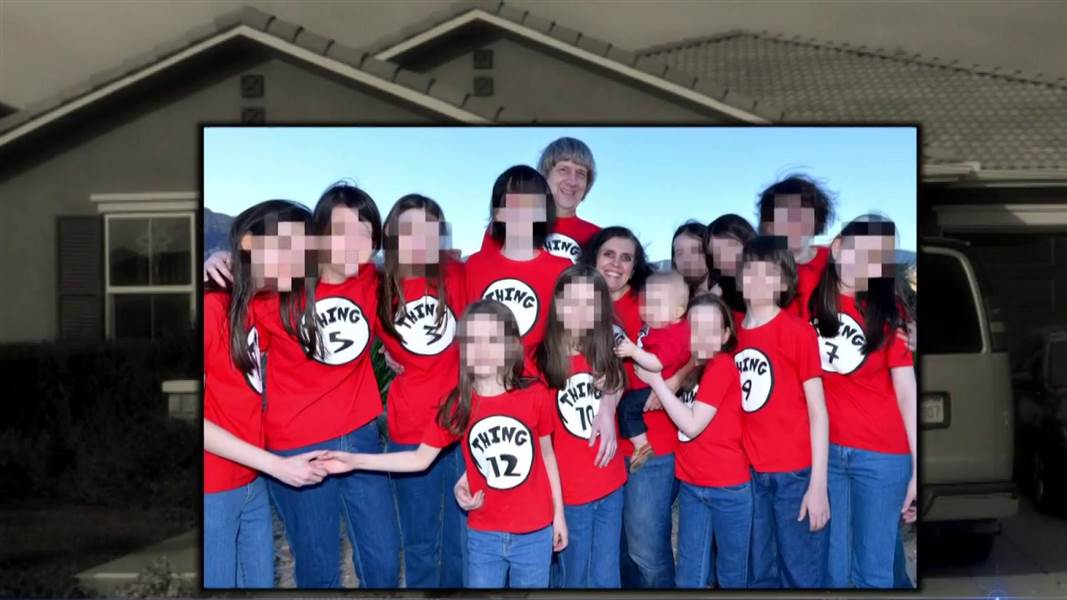
A California home-school where parents shackled, starved and abused their children is a symptom of a larger disease.


And that disease is privatization.


David Allen Turpin and his wife, Louise Anna Turpin, were arrested after police found the couple’s 13 children living in deplorable conditions in their Perris, California, home.


Some of the children were actually young adults but were so malnourished investigators at first mistook them for minors.


It is a situation that just could not have happened had those children been in the public school system.


Someone would have seen something and reported it to Child Protective Services. But school privatization shields child predators from the light and enables a system where minors become the means to every adult end imaginable.


Let me be clear. Privatization is defined as the transfer of a service from public to private ownership and control.


In education circles, that means home-schools, charter schools and voucher schools – all educational providers that operate without adequate accountability.


We are taking our most precious population – our children – and allowing them to be educated behind closed doors, out of sight from those tasked with ensuring they are getting the best opportunities to learn and are free from abuse.


And since home-schooling operates with almost zero oversight, it is the most susceptible to child neglect and mistreatment.


Children who in traditional public schools would have a whole plethora of people from teachers to counselors to principals to cafeteria workers who can observe the danger signs of abuse are completely removed from the home-school environment.


Home-schooled children receive their educations almost exclusively from parents.


While most moms and dads would never dream of abusing their kids, home-schooling provides the perfect cover for abusers like the Turpins to isolate children and mistreat them with impunity.


It is a situation that at least demands additional oversight. And at most it requires we rethink the entire enterprise as dangerous and wrongheaded.


Charter and voucher schools at least utilize whole staffs of people to educate children. The chances of something like this happening at these institutions is much smaller. However, both types of school also are much less accountable for their actions than traditional public schools.


And that is the common factor – responsibility. Who is being held answerable when things go wrong? At traditional public schools, there is a whole chain of adults who are culpable for children. At these other institutions, the number of people in the hot seat shrinks to zero.


Much of that has to do with the regulations each state puts on privatized schools.


Just look at the regulations governing home-schooling.


In 14 states including Delaware, California and Wisconsin, parents don’t have to do anything but let the school district know they’re home-schooling. That’s it! And in 10 states including Texas, Illinois and New Jersey, you don’t even have to do that!


Kids just disappear without a trace. If no one reports them missing, we assume they’re being home-schooled.


But even in states that appear to be more exacting on paper, the reality is a virtual free-for-all.


Take my home state of Pennsylvania. To begin home-schooling, parents must notify the superintendent, have obtained a high school degree themselves, provide at least 180 days of instruction in certain subjects and maintain a portfolio of their child’s test results and academic records.


That sounds impressive. However, this doesn’t really amount to much in practice because these regulations have few teeth. Hardly anyone ever checks up to make sure these regulations are being met – and they’re only allowed to check up under certain circumstances and only in certain ways and at certain times!


Even when it comes to charter and voucher schools, most states, including Pennsylvania, go little further than that.  


Frankly, most of the time we don’t know what happens in charter and voucher schools, because few state governments insist on audits, unscheduled visits or reports.


For instance, though few charter or voucher schools starve, lock up or torture students, many have zero tolerance discipline policies. Few would claim even these controversial behavior management systems sink to the level of some home-school parents who have allegedly withheld food and bound children’s hands with zip ties. But adolescents being forced to sit silently with their eyes looking forward, hands on the table or else receive loud rebukes – as they are in many charter or voucher schools – may qualify as another kind of abuse.


Moreover, all privatized schools can withhold providing a proper education. Home-school parents can refuse to teach their children not just truths about science and history but the basics of reading, writing and math. Likewise, charter and voucher schools can cut student services and pocket the savings as profit. And no one is the wiser because the state has abrogated its responsibility to check up on students or even require they be taught much of anything at all.


Meanwhile, none of this is possible in the traditional public school setting because it must operate in the light of day. It is fully accountable to the public. Its documents are public record. Decisions about how it should be run and how tax dollars are spent are made at open meetings by duly-elected members of the community.


Some, including myself, would argue that the regulations required of public schools by the state and federal government are sometimes too onerous, unnecessary or even just plain dumb. But that doesn’t change the fact that regulations are necessary. It just leaves open the question of which ones.


The bottom line is this: Public school is the equivalent of teaching children in an open room with qualified educators that have proven and continue to prove they have no criminal record and are able and ready to educate.


Privatized schools are the equivalent of teaching children in a closed room with educators who may not deserve the name and may or may not have deplorable criminal pasts.


Looked at in the abstract, no one in their right mind would conceivably suggest the latter is a better educational environment than the former. However, we have been subjected to an expensive propaganda campaign to make us think otherwise.


Look. I’m not saying public schools are perfect. Certainly students can be abused there, too. The media salaciously reports every doe-eyed teacher who stupidly has a sexual relationship with a student – whether it be at a public or privatized school. But in comparison with the worst that can and often does happen at privatized schools, these incidents at public schools are extremely rare (1 in 800,000) and of much less severity.


Though both are bad, there is a world of difference between the infinitesimal chance of being propositioned by your high school teacher and the much more likely outcome of being treated like a prison inmate at 13 by the charter school corporation or being starved, shackled and beaten by your parents!


Human beings aren’t going to stop being human anytime soon. Wouldn’t it be better to entrust our children to an environment with regulations and accountability than letting them go off in some locked room and just trusting that everything will be alright?


Our posterity deserves better than privatization.


They deserve the best we can give them – and that means fully responsible, fully regulated, fully accountable public schools.

A Teacher’s Dilemma: Take a Stand Against Testing or Keep Abusing Children

 AJGE5E_2026469c

What am I?


Seriously. What is it I do for a living?


When I wake up to go to work in the morning, am I preparing to be a teacher or a test proctor?


Am I engaged in the practice of nurturing young minds or am I a tool of the establishment?


Should I be held accountable to the dozens of students in my classroom, their parents and the community – or to my administrators, the bureaucrats and moneyed interests ordering us around?


I ask these questions not as a rhetorical device. I really don’t know the answers. Because the solution begins with me.


Today was not a banner day in my classroom, and I can honestly say it was not my fault.


I had to give my 7th grade students the Classroom Diagnostic Tools assessment in Reading/Lit for grades 6-high school.


If you’re not familiar with the CDT, this is an optional test offered by Data Recognition Corporation for students in Pennsylvania’s public schools. It’s a way to assess student learning to predict whether they’ll pass there annual federally mandated standardized tests (also created by Data Recognition Corp. in the Keystone State). In addition, it offers example questions of the type that students struggled to answer correctly on the diagnostic.


It’s very helpful if you want to print out a buttload of test prep, give it to students and then read the paper quietly at your desk – something I never do.


For the second straight year, I’ve been forced to give it to my students three times annually – twice before the Pennsylvania System of School Assessment (PSSA) tests and once after.


I am not a fan.


Students hate it. It does not return valuable data. And it takes precious time that I could be using to actually teach something.


When I told my kids they were going to have to take the assessment this morning, one girl said, “I hate the CDTs. It stands for I Can’t Do This.”


Another girl had a more visceral reaction. When she saw the letters “CDT” on the board, she literally began rolling around on the floor and groaning.


These are the kinds of students I have – victims of generational poverty, malnutrition, childhood trauma, violence, drug abuse and systemic racism and prejudice. Strong-arming them into another standardized test isn’t doing them any favors.


Compare their reaction this morning to yesterday’s lesson.


We had just finished a unit on plot using Dr. Seuss stories and cartoons to illustrate complex concepts like exposition, conflict, rising action, climax, resolution, theme, etc.


I made a competitive review game through a program called Kahoot, and kids were out of their seats, jumping around, squealing with delight as they demonstrated their knowledge of what they’d learned. It got so loud one of the principals came running over from the office to make sure things weren’t getting out of hand. But what he found were students so engaged by the work they could barely contain themselves.


Heck! I even gave them a test of my own creation right afterward. There were no groans. There were no protests.


They sat at their seats like grown adults, concentrated and answered the questions to the best of their abilities.


Compare that with today’s assessment.


Behaviors off the hook. Sullen looks. Demands to use the restroom, go to their lockers, visit the nurse – ANYTHING but be here in class and do this test.


Why the difference?


Because they knew what was expected on MY test, and they knew they could meet my expectations. I was there for the lesson. I made the test. I would grade it. I have a relationship with these kids and they know I will assess them fairly.


But not on this standardized CDT nonsense!


Data Recognition Corp isn’t there for the lesson. It has no rapport with students. Kids don’t know what the expectations are and don’t think they can meet them. And they have no sense that this multi-billion dollar corporation will grade them fairly for their efforts.


So they act out.


They throw wads of paper or airdrop pictures to each others’ iPads.


And here I am in front of this room of unruly children forced to have to defend the bullcrap garbage that I’m being coerced to do to them.


I want to apologize. I want to tell them this is not my idea. And after a while, I even DID that. But it’s no use.


It matters little whether the executioner does his job with reluctance or not. He’s still here to end your life. And I was still cast in the role of ending their education for the day and replacing it with “proof” that they aren’t good enough.


When the test was over, so many children showed me their scores with hurt faces.


“Mr. Singer, I really tried!” one boy said.


“This is rigged!” another said.


And what am I supposed to say to that? Should I explain how they’re right – how standardized tests have always been culturally and economically biased? Why would they care!? What kind of teacher would that make me!?


I know this is wrong, but I still do it!?


What use am I?


What purpose do I serve enforcing policies I know to be detrimental?


I went through five years of college to become a teacher – not a prison guard. But on days like today that’s what I am. I’ve devoted over a decade of my life to nourishing children, not ordering them all to march in line single file.


But here I am, a paid thug who browbeats and coerces innocents into doing things they don’t want to do for purposes that won’t benefit them and will in fact be used against them.


I wonder what the school board would say if I had the guts to stand in front of them at a public meeting and tell them.


I guess I’ll just have to keep wondering because the last time I tried to address that august body without an explicit invitation, I was told I wasn’t allowed to do so since I don’t live in the district where I teach.


But sometimes I question whether the elected representatives of my district even understand what I’m being bulldozed into doing in their name.


Do you know I am abusing your children? I am crushing their creativity, their self-respect, their curiosity. Is that really what you want of me? Is that what you hired me for?


Don’t get me wrong.


It’s not really anything new. I’ve been doing this for almost 15 years. It’s just harder every year.


I heap on justifications – you have to do the bad stuff so you can do the good stuff. You have to enforce the testing so you can do authentic teaching.


And every year the mandates get more restrictive, the teaching gets a little less and the testing a bit more.


Meanwhile, politicians pretend like they’re doing something to fix it. Gov. Tom Wolf (whom I generally like) cuts off a few days from the PSSA tests this year. But he keeps the recommendation that we take the CDTs. He keeps the entire test-and-punish framework in place. Like most Democrats, he’s willing to twiddle around the edges but has no guts to do away with what’s wrong and replace it with what’s right.


Meanwhile, parents in my state are generally clueless.


You have some strong advocates here and there. Some moms and dads who understand what’s going on. But most are either oblivious, too busy putting food on the table, in jail or dead.


I used to send home a letter to parents reminding them of their right to opt out of standardized tests. It almost got me fired.


And for my efforts, I think maybe one or two parents over five years actually took me up on it.


I go to my local union and tell them my concerns. They nod and ask for more information and then quietly forget it.


Meanwhile, the national unions are behind the testocracy 100%. They’ll wag their fingers and complain about testing, but they’re too busy making sure the teaching profession even exists tomorrow to stop for small potatoes like bad practices.


I feel so alone here.


I’m pulling my hair out and the only response I get is from the choir (Hallelujah!) and the corporate education reformers (How dare you!?).


The majority stays silent. And complicit.


I’m just not sure I can do it anymore.


I’ve thought about calling in sick whenever I have to give a standardized test. It would be a lot of days, but I could do it.


That might be safe, but it would be cowardly.


I’d just be saving myself the pain and humiliation of giving the tests. My students would still be forced to take them.


So what do I do?


I write.


I write blogs like this one.


I pound out my cares and reservations, put them in a virtual bottle and set it adrift on the seas of the Internet.


It’s a constant gamble.


Someday someone may read them who can end my career.


Or maybe someone with the power to make a difference will read them.


Maybe that’s you.


Maybe it’s all of us.


I don’t know.


I have no solutions today. Just shame and regrets.


A dilemma that I cannot solve.

Middle School Suicides Double As Common Core Testing Intensifies

Screen Shot 2017-07-24 at 10.35.30 AM


Here’s a high stakes testing statistic you won’t hear bandied about on the news.


The suicide rate among 10- to 14-year-olds doubled between 2007 and 2014 – the same period in which states have increasingly adopted Common Core standards and new, more rigorous high stakes tests.


For the first time, suicide surpassed car crashes as a leading cause of death for middle school children.

In 2014, the last year for which data was available, 425 middle schoolers nationwide took their own lives.


To be fair, researchers, educators and psychologists say several factors are responsible for the spike, however, pressure from standardized testing is high on the list.


In fact, it is a hallmark of other nations where children perform better on these tests than our own.


In our efforts to emulate these countries, we’ve inadvertently imported their child suicide problem.


In South Korea, one of the highest performing nations on international tests, youth suicide is a national epidemic.


According to the National Youth Policy Institute in Korea, one in four students considers committing suicide. In fact, Korea has the second highest youth suicide rate among contemporary nations.


For several years, the Korean school system has topped the roughly 70 member countries of the Organization for Economic Co-operation and Development (OECD) educational league, which measures 15-year-old students’ knowledge through the PISA test, an international student assessment exam within OECD member states.


However, the system is roundly criticized for its emphasis on memorization and test prep with little real-life application. In fact, 75 percent of South Korean children attend “cram schools” where they do little else than prepare for standardized assessments.


Likewise, Chinese students suffer similar curriculum and rates of child suicide. Though Shanghai students have some of the highest scores in OECD, abuse runs rampant.


According to the China Daily, teachers at Hubei Xiaogan No 1 High School in central Hubei province actually rigged their students up to IV drips in the classroom so they could continue studying after being physically exhausted.


Brook Larmer of the New York Times reports visiting student dormitories in Maotanchang, a secluded town in Anhui province, where the windows were covered in wire mesh to prevent students from jumping to their deaths.


In the United States, education “reform” hasn’t reached these depths, but we’re getting closer every year.


Efforts to increase test scores have changed U.S. schools to closer resemble those of Asia. Curriculum is being narrowed to only the tested subjects and instruction is being limited to testing scenarios, workbooks, computer simulations, practice and diagnostic tests.


A classroom where students aren’t allowed to pursue their natural curiosities and are instead directed to boring and abstract drills is not a place of joy and discovery. A school that does not allow children to express themselves but forces constant test prep is a lifeless environment devoid of hope.


But that’s not the worst of it.


American students are increasingly being sorted and evaluated by reference to their test score rather than their classroom grade or other academic indicators. Students are no longer 6th, 7th or 8th graders. They’re Below Basics, Basics, Proficents and Advanced. The classes they’re placed in, the style of teaching, even personal rewards and punishments are determined by a single score.


In some states, like Florida, performance on federally mandated tests actually determine if students can advance to the next grade. Some children pass their classes but don’t move on purely because of test scores well within the margin or error.


The results are devastating.


Marion Brady tells a gut-wrenching story on Alternet about a 9-year-old Florida boy who tried to hang himself after failing the state’s FCAT (Florida Comprehensive Assessment Test) by one point.


His mother explains that he had to take a summer remediation course and a retest, but still failed by one point. She couldn’t bear to tell him, but he insisted that he had failed and was utterly crushed.


After a brief period where he was silent, alone in his room, she became apprehensive:


“I … ran down the hall to [his] room, banged on the door and called his name. No response. I threw the door open. There was my perfect, nine- year-old freckled son with a belt around his neck hanging from a post on his bunk bed. His eyes were blank, his lips blue, his face emotionless. I don’t know how I had the strength to hoist him up and get the belt off but I did, then collapsed on the floor and held [him] as close to my heart as possible. There were no words. He didn’t speak and for the life of me I couldn’t either. I was physically unable to form words. I shook as I held him and felt his heart racing.


“I’d saved [him]! No, not really…I saved him physically, but mentally he was gone…The next 18 months were terrible. It took him six months to make eye contact with me. He secluded himself from friends and family. He didn’t laugh for almost a year…”


The boy had to repeat the third grade but is haunted by what had happened as is his mother.


And this is by no means an isolated incident.


According to U.S. Census Bureau statistics, the suicide rate for 5- to 14- year-olds jumped by 39.5 percent from 2000 to 2013. The rate for 15- to 24-year-olds, which was already 818% higher than for younger children, also increased during the same time period by 18.9 percent.


That’s more than 5,000 children and rising each year taking their own lives.


Again, high stakes testing isn’t responsible for all of it. But the dramatic increase along with a subsequent increase in high stakes testing is not unrelated.


The Alliance for Childhood, a nonpartisan, nonprofit organization that advises on early education, compiled a report from parents, teachers, school nurses, psychologists, and child psychiatrists noting that the stress of high-stakes testing was literally making children sick.


On testing days, school nurses report that their offices are filled with students complaining of headaches and stomachaches. There have even been reports of uncontrollable sobbing.


In 2013, eight prominent New York principals were so alarmed by this increasing student behavior that they wrote a letter to parents expressing their concerns:


“We know that many children cried during or after testing, and others vomited or lost control of their bowels or bladders. Others simply gave up. One teacher reported that a student kept banging his head on the desk, and wrote, ‘This is too hard,’ and ‘I can’t do this,’ throughout his test booklet.”


And they’re not alone.


In fact, student anxiety is so common on test day that most federally mandated tests include official guidelines specifically outlining how to deal with kids vomiting on their test booklets.


School counselors note increasing student anxiety levels, sleep problems, drug use, avoidance behaviors, attendance problems, acting out, etc. that increase around testing time and during test prep lessons. This is a major contributor, they say, to the unprecedented increase in the number of young children being labeled and treated for psychiatric illnesses ranging from learning disabilities and attention disorders to anxiety and depression.


And the psychological trauma isn’t limited to the students, alone. The adults also suffer from it.


In 2015, Jeanene Worrell-Breeden, a West Harlem elementary school principal, took her own life by jumping in front of a subway train to escape a standardized testing scandal. Under intense pressure from the federal and state government to improve academic achievement, she had allegedly instructed her staff to change students’ answers on a new Common Core aligned high stakes test.


But the trauma isn’t always so dramatic. Teachers and principals often suffer in silence. And when it affects the adults in the room, imagine what it does to the children.


It isn’t that teachers aren’t trying to teach or that students aren’t trying to learn. It’s that the expectations and testing are developmentally inappropriate.


Middle school children’s brains are still growing. They are only physically able to learn certain concepts and skills, but we’re forcing them to deal with increasingly advanced and complex concepts at younger ages.


And when expectations and high stakes consequences come crashing down on children, they can feel there is no way out.


This is why thousands of parents have refused to allow their children to take high stakes standardized testing.


This is why there is a growing grass roots movement against these sorts of assessments and other corporate school reforms.


It’s time the media connect the dots and report these sorts of stories in context.


Don’t just shrug when reporting on child suicide rates, if you report it at all. Give the microphone to experts who can point the finger where it belongs.


And the rest of us need to make sure our representatives at the state, local and federal level know where we stand.


High stakes testing is child abuse. We should not emulate other nations’ scores especially when they come at such a cost.


The fact that we don’t engage in the worst abuses of Asian schools should be a point of pride, not jealousy.


We should cherish and nurture our children even if other nations sacrifice theirs on the altar of competition and statistics.