Surprised by Charlottesville? You Haven’t Been Paying Attention

 Charlottesville-neo-Nazis-alt-right


America is a funny place.


On the one hand, we’re one of the first modern Democracies, a product of Enlightenment thinking and unabashed pluralism and cultural diversity.


On the other, we’ve built our entire society on a cast system that is the basis of our economics, politics and cultural mores.


We’re the land of Benjamin Franklin, the Wright brothers, Duke Ellington, Toni Morrison, and Sandra Day O’Connor.


But we’re also the land of Andrew Jackson, Jefferson Davis, Charles Lindberg, Bull Connor, and David Duke.


Tolerance and love are as American as apple pie. But so are racism, sexism, prejudice and anti-Semitism.


“It is not as though the United States is the land of opportunity, or a hypocritical racist state,” says sociologist John Skrentny. “It is one or both, depending on context.”


So this week when people saw Nazis marching openly in Charlottesville, Virginia, the only thing that was really so surprising about it was how surprised so many people seem to be.


“That’s not my America!” they seem to be saying.


To which I reply, “Hell, yes, it is! Where have you been the last 241 years!?”


We base our salary scales on genitalia! You think we’re really so freaking advanced!?


The shade of your epidermis determines the likelihood of police arresting you, charging you, even killing you regardless of your having a weapon, whether you resist arrest or simply lay on the ground with your hands in the air.


Regardless of the evidence, if you’re convicted, the length and severity of the sentence are all partially determined by the amount of melanin in your skin. The cultural derivation of the name on your resume determines the likelihood of employers calling you back for an interview. In many places, your rights are legislated based on whom you love.


Our schools are segregated. Our taxes are levied most heavily on those with the least means to pay. Our prisons house more black people today than did slave plantations in the 1860s.


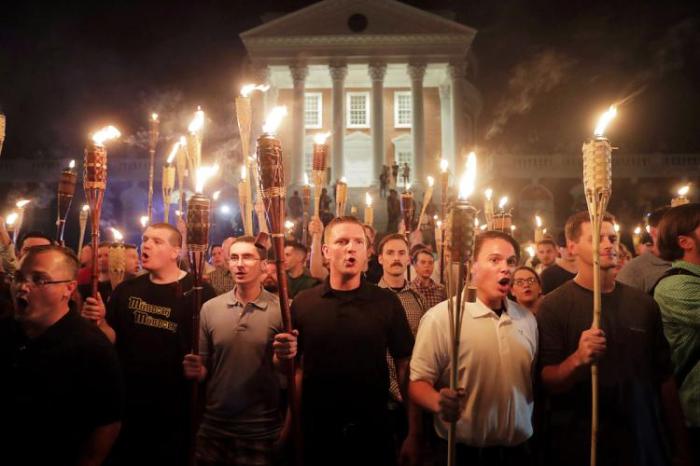
Yet a bunch of white dudes carrying Tiki torches shouting hate filled puns (“Jew will not replace us”? Seriously?) somehow doesn’t compute?


Come on.


This is America.


Racism and prejudice are not threats smuggled in past border security. They’ve always been here. At least since Europeans came offering trade and peace with one hand and guns and smallpox with the other.


The land of the free was stolen from the Native Americans. Our national wealth was built on the backs of slaves. Our laws and electoral system were built to empower one group at the expense of others.


Yet reformations in this process are rarely met with celebration. Instead of memorializing the end of slavery, we embrace the institution with fond remembrance.


Nor did prejudice and bigotry end when Rosa Parks refused to give up her seat, after Brown vs. Board, the Voting Rights Act, Freedom Rides, sit-ins or civil rights protests.


America has always been a place hostile to the under privileged, the second sex, religious dissenters, the brown skinned.


At most, we had become less confrontational in recent years, but we never really changed our core values, our social structures, who has power and who does not.


During my lifetime, people started to equate having a black President with the end of racism. Somehow they ignored the everyday reality for most black people.


They ignored the constant prejudice against the poor, the continued bigotry against LGBTs, the Islamophobia, the increase in hate crimes.


If there has been any change during the past eight months, it hasn’t been with the degree to which Americans are prejudiced. It’s the degree with which we’re willing to hide it.


Whereas before racists would claim to be colorblind, that their actions were completely devoid of racial bias, today they sigh and repeat the dusty slogans of Jim Crow Alabama or 1930s Berlin.


And somehow people are actually surprised about this.


It’s because too many of us have swallowed the lies about living in a post-racial society.


You thought we were beyond all that. It was a brave new world, morning in America, and we were finally treating everyone equally – unless you looked at what we were actually doing.


Mainly this is the reaction you get from white people. They rub their eyes and just can’t believe it.


You don’t see this too often from people of color, Muslims, LGBTs and some Jews. Why? Because they never had the luxury to ignore it.


That’s what we white folks have been doing since the beginning.


Whenever these issues come up, we have a knee jerk reaction to minimize it.


Things aren’t that bad. You’re just blowing it out of proportion.


But, no. I’m not.


That’s why you’re so damn shocked, son.


You haven’t been looking reality square in the face.


So when we’ve got undeniable video footage of angry white males (mostly) marching through Southern streets brandishing swastikas and assault rifles, it catches many white folks off guard.


They’re not prepared for it – because they haven’t been doing their homework.


We’ve been living in a bubble. Especially those living in major metropolitan areas.


That kind of thing never happens around here, right?


Of course it does!


Just because you live above the Mason Dixon Line doesn’t mean you’re safe.


You have a black friend, you like authentic Mexican food and you laugh while watching “Modern Family.”


But you haven’t opened your eyes to the reality outside your door.


You send your kids to private school or live in a mostly upper class white district. You have an exclusive gym membership that keeps out the riff-raff. You work in an office where that one token person of color makes you feel sophisticated and open-minded.


You’ve got to wake up.


You’ve got to educate yourself about race and class in America.


Because those people you saw in Charlottesville aren’t an anomaly.


They are an authentic part of this country, and if you don’t like it, you have to do something about it.


You can’t hide behind denial.


You have to take a stand, pick a side, and be counted.


Because one day soon, the torches will be outside your door.


You have to decide now – do you want to brandish or extinguish them?
Dear White Supremacists: There Will Be No Race War

a51c6a1d-da93-4129-9050-431ae50718b9


This one goes out to all the white boys.


No.


Not ALL the white boys.


Just the ones who think being “white” and being a “boy” means the world owes them something.


Cause I’m white, too, and I know it doesn’t make me any better than anyone else.


But not you.


You think your lack of pigmentation is a special sign of your supremacy. As if being pale was synonymous for God’s chosen.


Well let me tell you something, white boy. God didn’t choose you. You did.


What you take for superiority is just a misguided attempt at self-esteem.


I’m a snowflake? YOU’RE the snowflake. Same color. Same consistency. In the first warm breeze, you’ll melt.


I’m talking to YOU, white boy. All of you.


All those melanin-starved faces wearing matching eggshell t-shirts and fat-ass khakis.


All those brave, young men holding Tiki torches and an inflated sense of self worth.


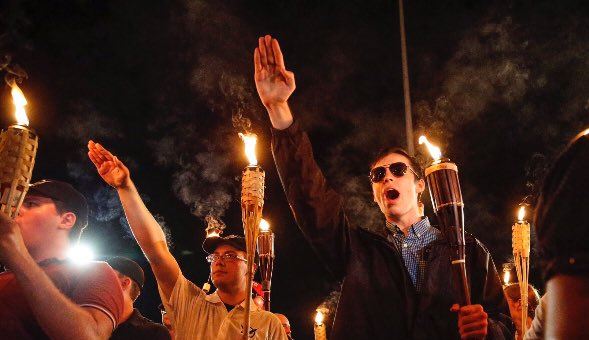
All the protesters in Charlottesville, Virginia, so fearless they can spray mace on those they disagree with, so bold they can throw punches so long as they know the police won’t hold them accountable, so courageous they can drive a car into unarmed counter-protestors, so brave that they can’t even call themselves what they are: Nazis, the Klan, white supremacists.


You hide behind “Alt Right” as if the rest of us can’t figure out who you really are.


Surprise! We see you!


We see your twisted lips, scrunched eyes and flaring nostrils. Your hood-starved heads and sweat-gelled haircuts. Your hate warped faces spouting reheated leftovers from WWII.


My grandparents fought people like you.


They dressed in army green and hopped the ocean to pound people like you into the ground.


They took your goose-stepping forebears and blasted them into bits. They buried your intellectual precursors under the ashes of their eternal Reich.


And for my grandfathers’ sacrifice, I rarely had to deal with people like you, myself. Not outright.


It’s not that people like you didn’t exist. Your attitudes and beliefs still percolated just beneath the surface of so many frustrated white boys.


The difference was that they were too smart to actually give voice to the darkness in their hearts.


It didn’t stop them from acting on it. They just wouldn’t admit why.


Segregation, red lining, broken windows policing, and a plethora of others. It was all polite, all deniable, all just the colorblind way we do things around here.


But that doesn’t really work anymore, does it?


Times are changing.


The face of America is changing. And it’s increasingly brown.


It’s got curly hair and unexpected features. It’s fed by different foods and nourished by different beliefs and customs. And it’s often called by a name that doesn’t derive from Europe.


People are starting to speak up. They’re starting to call you out.


And you don’t like it.


More than that you’re scared. Terrified.


It’s all going to end. The lie you told yourself about being special.


So you huddle together with others just like you, shivering and crying and blowing snot onto each others shoulders pretending that it’s a rally for white pride. It’s really just the world’s biggest pity party for boys too scared to be men and own up.


You’re brave when you’re in numbers, aren’t you? With numbers or with a gun.


Then you can say whatever you want. You can pretend whatever racial fantasy will protect your fragile little egos.


You’ll whine and boast and imagine you’re winning some kind of war for survival. But we know what you’re really doing.


You’re on your knees. You’re begging for a confrontation.


You’ll do anything to provoke it.


It’s your only hope.


Push them. Prod them. Insult them until they fight.


Bring them down to your level.


Prove your moral superiority by stoking a race war.


Because you can battle human bodies, but you can’t stop ideas.


You can’t triumph over equality, empathy and love.


You can’t stop the tick of time. You can just hope to reset the clock.


Well, I’ve got bad news for you.


There will be no race war.


Not now. Not ever.


Oh, there may be fighting.


You’ll try to make it happen. But it won’t be white vs. black.


It won’t be race vs. race.


It will be your minority of cowards and fools vs. the majority of the rest of us.


Do you really think people like me will fight on your side?


Do you think I’ll stand by you just because the shade of my epidermis matches yours?


Hell No!


I’ll fight with my black brothers and sisters if it comes to it.


I’ll fight on the side of equality, fairness and love.


I’ll do like my grandfathers and smash you into the ground. We all will.


But I’d rather not fight at all.


There need be no violence.


And there won’t be.


Unless you force it.


You see, you can’t make a race war happen.


All you can do is unite the rest of us against you.

I Am Not A Hero Teacher

Screen Shot 2017-08-01 at 10.53.52 AM


I’m sorry.


I am not a hero teacher.


I am not stronger than a locomotive.


I cannot jump tall ignorance in a single bound.


I am not faster than a tax-cutting zealot.


Up in the air – it’s a bird, it’s a plane, but it’s certainly not a teacher because we can’t fly.


I am not bullet proof.


If a gunman storms the building and shoots me, I will be wounded and may die.


Giving me a gun doesn’t help, either, because I am not a marksman.


I am just a man.


I cannot stand in front of a class of thirty and give them each my undivided attention. Not all at once.


When students ask a question, I need time to answer it.


When students hand in a paper, I need time to grade it.


During the workday, I need time to plan my lessons. I need time to call parents. I need time to read all the individual education plans, fill out all the weekly monitoring forms, finish all the administrative paperwork.


At the end of a long day, I get tired and need rest.


At the end of a long week, I need time to spend with my family.


At the end of a long year, I need time to myself – to get a summer job, to take continuing education courses, to plan for next year, to heal.


I need a middle class income – not because I’m trying to get rich, but because I’m human. I need food and shelter. I have a family for whom I need to provide. If you can’t give me that, I’ll need to move on.


Sorry, but it’s true.


I’ll tell you one thing I don’t need. I don’t need the state, federal or local government telling me how to do my job. When I plan my lessons, I need the freedom to teach children in the way that seems most effective to me – the professional in the room.


I also don’t need some bureaucrat telling me how to assess my students. I don’t need some standardized test to tell me what kids have learned, if they can read or write. I’ve spent an average of 80 minutes a day with these children for five days a week. If I can’t tell, I don’t deserve to be in the classroom.


And I don’t need my principal or superintendent setting my colleagues and me against each other. We’re not competing to see who can do a better job. We should be collaborating to make sure everyone succeeds.


What do I need? My union, for one.


I need my right to collective bargaining. I need the power to gather with my colleagues and co-workers so we can create the best possible work environment for myself and my students. I need due process, tenure, so I can’t be fired at the whim of the school board or administrators without having them prove my inequities.


I need my work to be evaluated fairly. Judge me on what I do – not on what my students do with what I’ve given them.


And when it comes to the racial proficiency gap, don’t look to me to exert some kind of supernatural teacher magic. I am not a white savior who can make school segregation, racism and prejudice disappear. I try to treat every student fairly, but my actions can’t undo a system that’s set up to privilege some and disadvantage others.


I guess what I’m trying to say is that if you’re expecting a superhero, I’m bound to disappoint.


And that DOES seem to be what many of you expect us to be.


Seven years ago, Davis Guggenheim characterized the public schools as if we were Waiting for Superman.


Things are so screwed up, he alleged back then, that we need someone with superpowers to swoop in and fix it all.


But there is no superman. There’s just Clark Kent.


That’s me – a bespectacled shlub who shows up everyday in the naive hope that he can make a difference.


According to landmark research by Dan Goldhaber and James Coleman, only about 9 percent of student achievement is attributable to teachers.


That’s right – 9 percent.


If you add in everything in the entire school environment – class size, curriculum, instructional time, availability of specialists and tutors, and resources for learning (books, computers, science labs, etc.), all that only accounts for 20 percent.


There’s another 20 percent they can’t explain. But the largest variable by far is out of school factors. This means parents, home life, health, poverty, nutrition, geographic location, stress, etc. Researchers estimate those count for 60 percent of student success.


Yet we somehow expect teachers (9%) to do it all.


I’m sorry, America. I can’t.


More than half of all public school students live in poverty. No matter how hard I try, I cannot solve that all by myself.


I try to teach children how to read though many are hungry and traumatized by their home lives.


I try to teach children how to write though many haven’t slept the night before, haven’t taken their ADD medication and – to be honest – many haven’t even shown up to school yet.


I most certainly try to get them to pass culturally biased, developmentally inappropriate standardized tests without sucking away every bit of creativity from the classroom.


But much of this is beyond my control.


I can’t help that the federal, state and local government are cutting school funding. I can’t help that my impoverished district has few school supplies, the students enter the building without them because their parents are too poor to buy them. But I can – and do – spend out of my own pocket to make sure all of my students have pencil, paper, whatever they need.


I can’t help that officials at every step of the way want me to narrow my teaching to only things that will appear on the yearly standardized test, that they want me to present it as a multiple choice look-a-like item, that they want me to teach by pointing at a Common Core standard as if that held any meaning in a child’s life. But I can make the lesson as creative as possible and offer kids a chance to engage with the material in a way that connects to their real lives, desires and interests.


I can’t help that kids don’t read like they used to and instead experience the bulk of text on the Internet, Facebook or Twitter. I can’t help that most of their real world writing experience is limited to thumbing social media updates, comments on YouTube videos or communicating through a string of colorful emojis. But I can try to offer them meaningful journal topics that make them think and offer them the chance to share their thoughts in a public forum with their peers.


There’s nothing super about any of it.


But it’s the kind of things teachers do everyday without anyone noticing. It’s the kind of thing that rarely gets noted on an evaluation, rarely earns you a Thank You card or even an apple to put on your desk.


However, when the day is done, students often are reluctant to leave. They cluster about in the hall or linger in the classroom asking questions, voicing concerns, just relieved that there’s someone there they can talk to.


And that’s reason enough for me to stay.


The odds are stacked against me. Help isn’t coming from any corner of our society. But sometimes despite all of that, I’m actually able to get things done.


Everyday it seems I help students understand something they never knew before. I’ve become accustomed to that look of wonder, the aha moment. And I helped it happen!


I get to see students grow. I get to nurture that growth. I get to be there for young ones who have nobody else.


It’s a wonderful feeling.


I know I’m making a difference.


So, yes, I’m no superman.


I have no special powers, no superhuman abilities. I can’t fix all of our social problems all by myself.


But I help to make the future.


That’s why I do what I do.


Thank you for letting me do it.

School Voucher Industry Strikes Back: We’re Segregated!? No, You’re Segregated!

144447167


In what must count as another new low in American discourse, the school voucher industry is striking back against claims that their products lead to greater segregation of students.


Randi Weingarten, President of the American Federation of Teachers (AFT), had the audacity to voice the truth:


“Make no mistake: This use of privatization, coupled with disinvestment are only slightly more polite cousins of segregation,” she said a week ago during a speech at the AFT’s yearly convention.


To which school privatization mouthpieces quickly countered with the truth:


“If vouchers are the polite cousins of segregation, then most urban school districts are segregation’s direct descendants. The vast majority of our urban public school districts are segregated because of white flight and neighborhood neglect.”


This was from a statement by Kevin Chavous, founding board member of the American Federation for Children, the school privatization advocacy group that Secretary of Education Betsy DeVos used to lead.


So there you have it.


A nation of more than 325 million people, with a more than 241-year history reduced to – I Know You Are But What Am I?


The sad fact is that they’re both right.


School vouchers do lead to increased segregation (and so do charter schools, by the way, the method preferred by corporate Democrats). But many traditional public schools are, in fact, deeply segregated both racially and economically.


Does that mean that both systems – privatized and public – are equally at fault? Does it mean that both somehow get a pass for reprehensible behavior?


No and no.


First, we must explain why segregation is bad.


Peter Cunningham, former assistant secretary for communications and outreach at the Education Department under Obama, wagged his finger at Weingarten on the privatization propaganda Website, the 74.


He called out Weingarten’s hypocrisy, which takes some cojones for a man who only last year pondered aloud and in public whether segregation was really such a bad thing.


He had this to say last September:


“Maybe the fight’s not worth it. It’s a good thing; we all think integration is good. But it’s been a long fight, we’ve had middling success. At the same time, we have lots and lots of schools filled with kids of one race, one background, that are doing great. It’s a good question.”


Funny, isn’t it?


He calls out Weingarten because of public school segregation but defends charter schools because their segregation is somehow just swell.


Keep in mind. Cunningham is the executive director of the Education Post, a well-funded charter school public relations firm that packages its advertisements, propaganda and apologias as journalism. And he’s not about to poop where he eats.


So, yes, Mr. Cunningham, segregation is worth fighting.


When you have schools made up mostly of minority and/or economically disadvantaged students, it makes it easier to provide fewer resources and less funding to those children while sending the lion’s share to the white and wealthy.


That’s why in Brown v. Board the U.S. Supreme Court struck down “Separate but Equal” – because when races are kept separate, their schools are rarely equal.


This game of excusing one system based on the deficiencies of the other is pure sophistry.


You can’t defend voucher and charter schools from being segregated by reference to public school segregation. Nor can you ignore public school segregation by reference to the same at privatized schools.


They’re both bad, and they both need fixing.


To be fair, Weingarten seems to tacitly admit this about public schools.


She acknowledges the disinvestment in public education, how public schools have been systemically undermined by politicians and lobbyists, many of them advocating for privatized schools, so that they could use this disinvestment as an excuse for their own for-profit education schemes.


“…no amount of facts or evidence will sway voucher proponents from their agenda to starve public schools to the breaking point, then criticize their deficiencies and let the market handle the rest, all in the name of choice,” she said in a statement.


The fact of the matter is this: public schools have become more segregated not because teachers or administrators want it, but because of local, state and federal law; a series of subsequent Supreme Court decisions allowing it within district boundaries; the continuation of racist redlining in the loan and insurance industry; and the xenophobia of wealthy and middle class whites who prefer their kids be educated separately from those they consider undesirable.


These policies could be changed. The system could be fixed. All it would take is the will to do it.


Charter and vouchers schools, on the other hand, will never solve the problem of segregation, because they have turned that problem into a “solution.”


Schools serving poor and minority students aren’t getting the proper resources. So they propose further segregating them.


That’s a terrible idea. It’s like escaping from a leaky cruise ship by jumping into a leaky lifeboat. You’ll sink in both, but the lifeboat will sink quicker.


Yes, our public schools are segregated by race and class and therefore poor and minority students receive inequitable funding and resources. Charters and vouchers cannot possibly remedy that. They will always make it worse. Only a robust and integrated public school system can be truly equitable. A system that deifies choice cannot combat racism if it is freely chosen.


What Weingarten is getting at is this: if we want to help the nation’s children – all of the nation’s children – we must support and reform public schools.


We must also acknowledge that many of the problems of systemic disinvestment are caused by those who want to privatize in the first place.


We have let the wolf write our education policy. It should be no shock that his solution isn’t to build more houses of bricks but to process our little piggies into bacon.


Full disclosure: I am no fan of Weingarten.


I recently called for both her and National Education Association (NEA) President Lily Eskelsen Garcia to voluntarily step down because of undemocratic practices and mismanagement in both teachers unions.


However, I’ll stand up for her when she’s right, and in this instance, she is.


If anything, maybe she should have included charter schools in her criticism. I laid into her in June for writing an op-ed with Jonah Edelman, an anti-union activist, specifically praising charter schools over vouchers.


But I get it. Now that some charter school teachers have unionized and joined the AFT, she’s stuck between a rock and a hard place.


Frankly, it makes her ineffective in speaking out on this matter. I have nothing against charter school teachers. I know, personally, several very good educators who work at charter schools. In this job market, sometimes you have to take what you can get. However, the sad fact of the matter is that by their very structure, charter schools are inferior to public schools. They are less democratic, less transparent, less accountable and more easily subject to fraud and abuse of children. That’s not to say all charters are guilty of this, but just by being a charter school and being subject to the deregulated rules governing them, they are more susceptible to these errors than their traditional public school brethren.


But, of course, the same can be said of voucher schools. It’s just that you can’t criticize one privatization scheme without also criticizing the other.


Perhaps the biggest mistake Weingarten made was in glossing over the worst abuses of public schools. If she was going to call out the segregation at voucher schools, she also should have explicitly called it out at public schools.


But that’s something even our first black President Barack Obama refused to do. You’d think he’d make that a priority for his administration, but instead he favored the same school privatization schemes that just made it worse.


Currently, you’ll find no political party that actively champions integration. Democrats will give it more lip service than Republicans, but both parties either ignore it in practice or actively work against it.


The only use they have for it is as a club with which to hit the other side when issues like this come up.


You’re segregated!


No, YOU’RE segregated!


And so we are all lead over the cliff by partisans and fools.

Where Did All The Integrated Schools Go? Why Segregation is Still Bad

 Screen Shot 2017-07-05 at 2.22.58 AM

School segregation is bad.


Still.


It is shocking to me that in 2017 making this argument remains necessary.


But everywhere you look in the education debate you’ll find people clinging to their segregated charter schools, pushing for more segregated school vouchers, and lobbying to increase segregation at our traditional public schools.


You might be forgiven for thinking that the issue was resolved way back in 1954 when the US Supreme Court ruled in the landmark Brown vs. Board of Education case.


Justices decided that it was unconstitutional to have substandard schools for black and minority students while also maintaining pristine schools for white children, as was the practice in most parts of the country at the time.


They struck down the previous justification of “separate but equal” because when you have separate schools, they are rarely equal.


You might think that’s just common sense. When you have schools just for blacks and schools just for whites, the resources aren’t going to be divided fairly or evenly. One group will always get the upper hand. Better to mix the two groups so it’s harder to select against one or the other.


And this is true of almost every cultural division you can think of: race, gender, class, religion, etc. The only way to protect everyone is to make it harder to hurt one group without hurting them all.


Everyone should already know that. But it still strikes some as news.


What may be less well known is the long, racist history of resistance to this ruling. In fact, what we now call “school choice” was invented during this time as an explicit attempt to avoid desegregation. “Charter Schools” and “School Vouchers” are modern terms that could almost as easily be used to describe the multifarious discriminatory attempts to stop racial mixing by reference to “choice.”


Take vouchers – allocating tax dollars to parents so they could “choose” to send their kids to private schools that won’t accept minorities – they tried it.


Or charters – setting up schools that are privately run but publicly funded so parents can “choose” to send their kids to schools allowed to discriminate against minorities during enrollment – they tried it.


And they’re still trying it and getting away with it.


It took decades for Brown v. Board to truly be enforced nationwide, and even after it became unavoidable, the fight to undermine it never truly died.


Betsy DeVos probably doesn’t consider herself a segregationist. Barack Obama probably doesn’t consider himself an advocate of “apartheid education”. But that’s what the policies each of them support actually accomplish. Both major political parties have been complicit – and are still complicit – in keeping our public schools separated by race and class.


There’s big bucks in it. Privatization means reducing accountability and transparency for how tax dollars are spent, which means unscrupulous corporations can pocket public money with no questions asked.


But it’s not just the charter and voucher industry that increase segregation. Our traditional public schools have also become separate and unequal.


After initial progress, our traditional public schools have been allowed to slip back into segregation. In many parts of the country, they are actually more segregated today than they were at the height of the civil rights movement in the 1960s.


According to a report from the U.S. Government Accountability Office, from 2000 to 2014, school segregation has more than doubled nationwide. That’s twice the number of schools comprised almost entirely of students living in high poverty and/or students of color.


The number went from 7,009 to 15,089 schools. And that’s just the worst offenders – schools with more than three quarters of students from only one race or class. Throughout the country there are thousands more schools not as extreme but still serving mostly poor and/or minority students, and thus receiving fewer resources, more teacher layoffs, dealing with larger classes and crumbling infrastructure.


It wasn’t always like this.


Classrooms were the most diverse from the 1970s through the early 1990s. At peak integration, four out of 10 black southern students attended a white school, while less than a third of all black students attended majority black schools.


What went wrong? The Supreme Court.


The highest court in the land laid down a series of decisions, starting with Milliken vs. Bradley in 1974, that effectively put the breaks on school integration. In fact, that first case is often criticized as “one of the worst Supreme Court decisions” ever.


It dealt with Detroit’s plan to integrate students by busing them from the inner city to the suburbs. The court ruled that such a plan was unconstitutional, because black students only had the right to attend integrated schools WITHIN THEIR OWN SCHOOL DISTRICT. If few white people lived there, well oh well.


And thus, de facto segregation was born.


If black and white people didn’t live together in the same neighborhoods – and they rarely do – then they wouldn’t be forced to go to school together. Forget that banks and insurance companies often refuse or limit loans, mortgages, and insurance to people of color for properties within specific geographical areas – a practice known as red lining. There was nothing municipal or school officials from minority jurisdictions could do to force integration across these artificial borders.


Between 1991 and 1995, the Court made matters even worse in three additional rulings. Justices decided that integration was merely a temporary federal policy and once the imbalance was righted, school districts should be released from any desegregation orders.


The results can be seen in almost every traditional public school in the country. There are rich schools and poor schools. There are black schools and white schools. And our federal and state education policies take advantage of the separation making sure that privileged schools get the lions share of resources while the others have to make do with less.


It is the key issue holding back our system of public education. Almost every school where students have low test scores has a disproportionately high level of poverty and students of color. If our schools were truly integrated, there would be none labeled “failing.” There would only be students who need extra help though they would be equally distributed throughout and thus not stigmatized. Unfortunately, re-segregation has allowed an easy scapegoat, and this, in turn, has been an excuse to build more charter schools and pass more school vouchers that drastically increase that same segregation.


Some people look at this situation and claim that it means we should abandon traditional public schools. If they’re already segregated, they argue, we should just invest in the choice schools.


However, doing so would not solve any of our problems. It would only exacerbate them. The solution to smoking is not more cigarettes. It’s quitting.


School segregation is terrible. That’s true at charter, voucher and traditional public schools.


The presence of segregation is no reason to abandon public education. It just means we need to fix it.


We need to overturn these destructive and short-sighted Supreme Court decisions. We need federal and state policies that recommit us to integration. At very least, we need a moratorium on new charter and voucher programs.


We need to value all children, not just those who resemble us racially, socially and/or economically.


That’s why school segregation is so bad.


It divides our children into discrete groups. It sets up the social structure and ensures the privileged will continue to be prized and the underprivileged will continue to be devalued. It teaches children to trust those like themselves and to distrust those who are different.


School segregation is the mother of racism and prejudice. And until we, adults, have the courage to tackle it, the next generation will grow up just like us – selfish, racist and blind.


John Oliver recently reported on the same issue (Warning: vulgarity):


Reaching Black Students Harder for White Teachers in the Age of Trump

Screen shot 2017-05-08 at 7.51.23 PM

“Not everything that can be faced can be changed. But nothing can be changed until it is faced.”
James Baldwin

“I have a great relationship with the blacks. I’ve always had a great relationship with the blacks.”
Donald Trump

Mariah’s eyes were wide as dinner plates.

She covered her mouth with her journal and pointed at the wipe board at the front of the room.

On it, I had written my question for the day. It’s how I usually begin class for my 8th grade students.

It read:

“Some movies and books like “To Kill a Mockingbird” describe what life was like in the South before the civil rights movement. To do so, they use the N-Word. Is it ever okay to us the N-Word? Why or why not? When might it be appropriate if at all? Why?”

I guess I’ve been teaching this for too long, because I didn’t expect Mariah’s reaction.

Not that was she alone. Several of my mostly impoverished and black students were looking around at each other in shock.

Kendra even said under her breath, “I don’t want to do this.”

We had just begun reading the novel yesterday. I thought it was time to address this issue before we were confronted with the word in the text.

In all of my classes that day, students had been interested in the query. But never had any of them reacted this way.

One student raised her hand and asked, “Which word are you talking about?”

I said, “I don’t want to say it, but it starts with an N and rhymes with trigger. Do you know what I’m getting at?”

They knew. Yet in removing doubt, I had only reinforced their outrage.

I thought maybe if they tried to write an answer first, it might help them organize their thoughts and maybe comprehend the point of the lesson. But they wouldn’t be directed back to the page.

Latrell was particularly upset. “It’s not always just words against black people,” he said. “How would you like it if we talked about words against white people?”

There were grumbles of agreement.

So there it was.

My white skin was the impediment. Here I was, a white man telling mostly black students to think about the appropriateness of the N-Word. I wasn’t trying to express an opinion of my own one way or the other. I wanted them to express their opinions.

But I had taken it for granted that asking them the question was appropriate in the first place.

I had forgotten that you can’t talk about racism with just anyone. It’s the same with sexual violence or abuse or a host of other topics that are deeply personal.

You need a relationship, the recognition of shared values and the promise of safety.

I assumed that I already had provided that for my students. In most classes that understanding seemed to be there. But for whatever reason, these students didn’t feel comfortable talking about this with me.

And I get it.

It’s the confluence of skin and history. No matter what I do, no matter what I say, I will always resemble the oppressor to some people. In the age of the Donald, it’s only gotten worse.

Building walls, casual misogyny, rushed deportations, religious intolerance – all are at the forefront of our modern social discourse now. These are matters not hidden under euphemisms or disguised as well-meaning public policy. They’re commands from on high, dictates coming from a mouth in a face that looks much like mine.

No wonder these kids didn’t want to talk about hate speech with me. I resemble the personification of hate speech.

I’ve been teaching “Mockingbird” for over a decade, but this was the first time in years that I paused not knowing what to do.

Should I force the issue and push forward? Should I give in and try to read the novel without the discussion? Should I put the book away altogether and find something else to teach?

I decided to get more information.

I asked the students to tell me how they felt. I asked them to explain what they were feeling.

Many were angry with me for even asking. They accused me of being racist. They tried to make me angry and blow up the lesson.

But I swallowed my pride and just let them talk.

After each statement, I repeated what I took them to be saying and asked if that was correct.

At first, many students didn’t even seem to be certain what they meant. When I repeated it to them, they shook their heads or said they weren’t sure.

Kendra spoke, “Mr. Singer, you tell me. Why are we talking about this? It don’t do nothing.”

I said, “Can we all agree that racism is a bad thing?”

But she deflected.

“Why’s it always got to be about black people? Other people experience racism,” she said.

And I agreed. I reminded them that we had just finished reading “The Diary of Anne Frank.” I asked why we had read it.

At first the loudest students said they didn’t know, but then Eva said it was to try to make sure nothing like the Holocaust ever happened again.

I nodded, and repeated my original question, “So can we all agree racism is bad? Raise your hand if you think racism is bad.”

They all raised their hands.

“Okay,” I said. “Then how do we stop it if we can’t talk about it?”

Kendra responded, “Mr. Singer, when we leave this class, none of this is going to matter. People are still going to be racist. Cops still gonna’ kill little black kids. People like you still gonna’ push people like me out.”

Others chimed in with similar comments.

I nodded, and said, “You’re right.”

That silenced them.

“You’re right, Kendra,” I said. “Maybe we can’t stop racism with what we say in here. Maybe no one can. But the hope is that if we talk about it, we’ll reduce it, we’ll cut it down to size. What do you think? Do you think we can take all the racism in the world and cut it down even by just a little bit?”

She didn’t say anything.

No one did. But hands were raised in the air. No one was shouting. No one seemed angry. Several students wanted to talk, and they were looking to me to organize the discussion.

So I let them talk.

All the time I had scheduled to write the journal fell through the hour glass and then some.

And when the discussion was petering out, I promised them that I would be available after class if anyone wanted to continue talking about it.

Then we picked up the book and continued reading.

I don’t know if it was the best class I’ve ever taught.

It was disturbing and uncomfortable.

I don’t see myself as anyone’s savior. But I’m there to help. I had hoped my students knew that.

But as a public school teacher, you learn not to take anything students do personally. They’re all going through a struggle you know little about.

I don’t want them to see me as an adversary. I want them to see me as a fellow traveler, as someone on their side.

But so much has changed in the last 100 days.

It’s a different world.

Racism and prejudice are no longer at the same remove. They never went away, but now they’re an unspoken presence coiled at our feet – constantly.

I have no answers. I ask questions and try to get my students to think about their own answers.

I just hope we’ll continue to have the courage to try.

Let’s Hear It For Black Girls!

Natural-Hair-600x398


“Sisters are more than the sum of their relative disadvantages: they are active agents who craft meaning out of their circumstances and do so in complicated and diverse ways.”

-Melissa Harris-Perry, Sister Citizen (2011)


Let’s hear it for black girls!


They are beautiful, bold, irrepressible and – above all – so incredibly strong.


Black girls will outlast any struggle, face down any adversary, and – more often than not – triumph in the face of adversity.


I know. I’m a public school teacher, and many of my best students are black and female.


That doesn’t necessarily mean they get the best grades. Some earn A’s and some don’t. But when it comes to pure willpower and the courage to stand up for themselves, no one beats a black girl.


Those are rare qualities nowadays. Sometimes it doesn’t make these girls easy to have in class. But think about how important they are.


As a teacher, it sure makes your life easier when students do whatever they’re told. But in life, we don’t want citizens who simply follow orders. We want people who think for themselves, people who question directives and do only what they think is right.


In short, we need people who act more like black girls.


As a white male, it’s taken me some time to come to an appreciation of black womanhood. But after about 15 years teaching in public schools serving mostly poor, minority students, appreciate them I do.


Think of the challenges they face and often overcome. Not only are they subject to the same racism as black males, they also have to function under the burden of male patriarchy and the quiet sexism that pervades American society.


According to a study entitled Unlocking Opportunity for African American Girls by the NAACP and the National Women’s Law Center, African-American girls suffer from higher rates of sexual violence and intimate partner violence than white women, high rates of sexual harassment in school, and they are more vulnerable to sex trafficking than any other group.


In addition, more than one-third of black female students did not graduate on time in 2010, compared to 19 percent of white female students. However, there has been progress. Despite a lingering graduation gap, black girls have actually increased their graduation rate by 63% in the past 50 years, according to the National Coalition on Black Civic Participation. Unfortunately, this hasn’t meant they’ve built up more wealth. In 2010, single black women’s median wealth was just $100 compared to single white women’s wealth, which was $41, 500.


And it only gets worse the closer we look at it. Black women are the only group whose unemployment rate remained stagnant at 10.6%, while the overall rate for workers in the United States dropped from 7.2% to 6.1% between August 2013 and August 2014, according to a National Women’s Law Center report on jobs data. More than a quarter of black women live in poverty, according to the Center for American Progress, despite making up a larger portion of the workforce than white and Latina women.


Despite such problems, black women start businesses at six times the national average, according to the Center for American Progress. And this is even more startling when you realize they are also more likely to be denied small business loans and federal contracts.


It’s one of the reasons black girls are so special. Those who somehow survive the incredible pressures society puts them under often become super achievers. They can do almost anything.


Perhaps it’s an internalization of the advice black women often get from their mothers. They’re frequently told they have to work harder and do more just to be noticed, and they often do. In my classes, I’ve had more black girls achieve grades over the 100% mark than any other group. And that’s not easy to do. But it’s typical black girl power – they try to be more than perfect.


However, it takes a toll.


They are more likely to die of breast cancer than any other racial group, according to the Centers for Disease Control and Prevention. The reasons are complex, but include the fact that black women experience delays in diagnosis and treatment. Like many oppressed people, they often internalize that oppression – they don’t take care of themselves and the stress can be a killer.


And for those who can’t overcome the unfair pressures we place them under, the results are even worse. In school, I’ve seen precious and valuable girls thrown into a sometimes cruel and uncaring disciplinary system – a system from which it can be hard to extract yourself.


Some teachers and schools when faced with the independence and forthrightness of black girls don’t know how to handle them. In such cases, these girls are often disciplined out of all proportion to their population size in school districts. For example, in New York City, black girls made up only 28% of the student body during the 2011-2012 school year, but were 90% of all girls expelled that year from the city’s schools, according to the “Black Girls Matter” report by the African American Policy Forum. Similarly, black girls made up only 35% of the Boston public school population that same year, but accounted for 63% of all girls expelled.


In short, we’ve got a lot of work to do to dismantle a national system of racism and white privilege. But even beyond that, as a society we need to recognize and appreciate black girls. A little bit would go a long way.


We need to acknowledge the unique talents and skills of these amazing young women. And so much of it starts with a matter of conceptualization in the white adult mind.


Instead of seeing them as defiant, we need to recognize their independence. Instead of seeing them as challenging your authority, you need to see them as asserting themselves and standing up for their beliefs.


Those are all such positive qualities. How many times do adults complain that kids today don’t care enough about things – their apathy, their entitlement, their indifference. As a group, black girls are nothing like that! They are exactly the opposite! But instead of praising them for it, instead of valuing them, white adults often feel threatened and respond by trying to crush what they perceive as a rebellious and disruptive element in their classrooms or in society.


That’s why I love the Black Girl Magic movement.


It was created by CaShawn Thompson to celebrate the beauty, power and resilience of black women. It started as a simple social media hashtag – #BlackGirlMagic.


It embodies a theme I’ve already touched on – the irrepressible spirit of black women, how they are faced with an overwhelming mountain of challenges but somehow manage to overcome them and become tremendous overachievers! It’s a celebration of everything good and positive about the black female experience.


I think it’s just wonderful.


How can you not look at someone like Misty Copeland and not appreciate her success? She’s the first ever black principal at the American Ballet Theatre. She has shot to the top of one of the whitest, wealthiest and most elitist arts you can pursue.


Or how about Gabby Douglas? You can’t watch videos of the amazing Olympic gymnast, who at only 17, absolutely wowed the world with gold medals despite internet trolls hating on her hair.


And if we’re talking undue hate and criticism, no woman in recent memory has suffered as much as Michelle Obama. Whatever you think of her husband’s Presidency, you have to admit Michelle was a model of grace under pressure. How many times did haters pick apart her appearance while she just got on with the business of making school lunches healthier and being a tremendous role model for children of color and women of all races and creeds.


Or Ava DuVernay, the amazing director snubbed at the Oscars for her film “Selma.” What did she do? She made another amazing film “13th” about how the 13th Amendment ended slavery but opened the door to the prison industrial complex.


That’s Black Girl Magic. And it’s actually pretty common.


So come on, fellow white people. Let’s celebrate black girls.


Stop trying to touch their hair or compare them with Eurocentric standards of beauty. Stop, pause and actually see them. See them for who and what they are.


Black girls are amazing and make the world a better place.


Here’s to all the incredible and irreplaceable black girls in my classes and in my life!


You go, girls!

Dept of Ed Hires Anti-Civil Rights Crusader to Protect Student’s Nonexistent Civil Rights

Screen shot 2017-04-16 at 1.27.11 AM

Candice Jackson is a victim of oppression.

When she was attending Stanford University in the mid-1990s, a minority calculus tutoring group refused to help her because she was white.

Sure she could probably afford to pay for private tutoring, but it was the point of the  thing.

She came from a family where both parents ran medical practices. Her dad, Dr. Rick Jackson, even unsuccessfully ran for Congress. You know – just like black families redlined into the ghetto and struggling to find work because of their African-sounding names.

Why shouldn’t the limited amount of tutoring spaces serve her as well as people from traditionally less privileged backgrounds? White lives matter, ya’ll.

“I am especially disappointed that the University encourages these and other discriminatory programs,” she wrote in the Stanford Review. “We need to allow each person to define his or her own achievements instead of assuming competence or incompetence based on race.”

With that kind of empathy and innate understanding of social justice, I – for one – am overjoyed that U.S. Education Secretary Betsy DeVos has hired Jackson to run the department’s Office for Civil Rights.

Well, she’s acting assistant secretary for the office. Technically she was hired as deputy assistant secretary, because that doesn’t require a confirmation hearing. A permanent assistant secretary will have to be approved by Congress – if DeVos ever gets around to nominating one.

I’m sure she’ll do that soon. There’s no way she’d sneak in someone who doesn’t believe in civil rights whose main job is to protect civil rights! That would be like hiring a Secretary of Education who doesn’t believe in the mission of public education tasked with protecting public schools!

That’s unpossible!

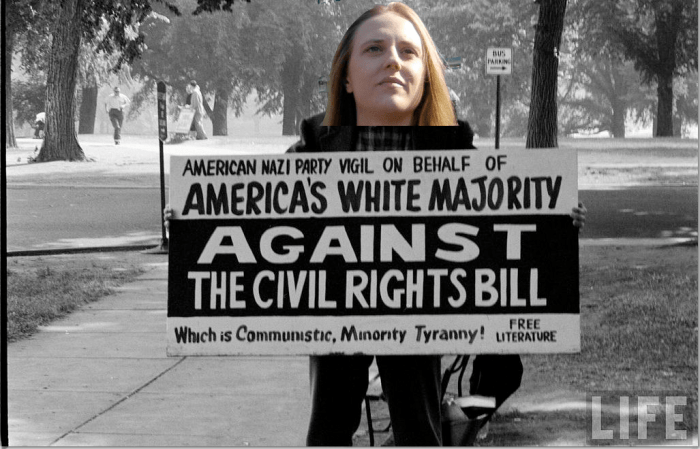
And Jackson is all about civil rights. The 39-year-old attorney is anti-women’s rights, anti-distributive justice and possibly even anti-compulsory education and anti-Civil Rights Act of 1964!

Just perfect!

I mean what does the Department of Education have to do with civil rights anyway?

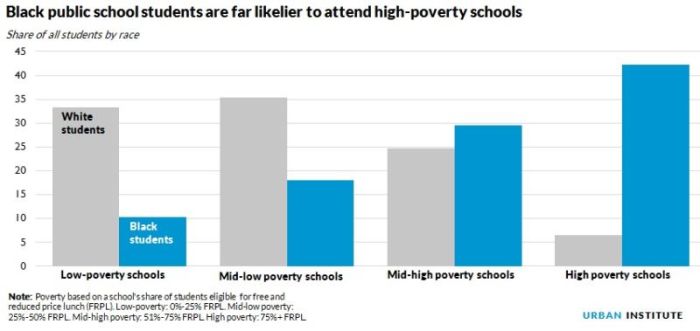
According to the department’s own statistics, black students are at least six times more likely than white students to attend poor schools. These schools have smaller budgets, fewer resources, a crumbling infrastructure, larger classes and higher student needs based on the trauma of living in poverty – worse nutrition, lack of books in the home, exposure to violence and abuse, etc. Meanwhile, white students are three times more likely than blacks to attend rich schools overflowing with resources, pristine infrastructures, small class sizes, and fewer needs.

k2sij4hm9oqedzpfqslp

j1wqdpqnvg4fuwjx7opd

Is that fair? Should the government do anything about ensuring all students receive the same opportunities?

Heck no!

That’s up to… I don’t know… somebody else. And what about all those poor white kids trapped in poor schools with a majority of students of color!? Who’s going to help the six percent of white kids in mostly black schools escape?

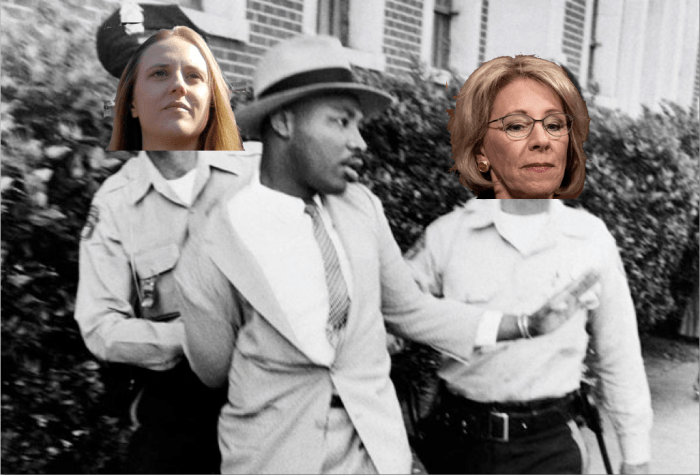
Betsy DeVos – that’s who! Donald Trump – who is really indistinguishable from Dr. Martin Luther King, Jr., and her are proposing a school voucher program so that these white kids can go to a charter, private or religious school.

The black kids? Maybe the choice schools will accept some of them, I mean if the appointed boards and CEOs who run them want to take these kids, it’s really all up to them. We aren’t going to force them to do anything. We’re all libertarians here in Washington now. You wouldn’t want us to trample on the civil rights of charter and private school operators, would you?

Of course not!

And we’re certainly not going to do anything to help these impoverished public schools succeed. No additional funding. No preferential treatment! The free market will sort things out – it always does.

And people wonder why DeVos needs to be protected by U.S. Marshals at a cost of $1 million a month.

Her department is doing away with services the public has come to rely on: protecting special needs students, protecting college students from predatory loans, and now prosecuting civil rights violations.

The liberal snowflakes! Pull yourselves up by your bootstraps! Why are you demanding the government provide you with actual services in return for your tax dollars? You should be demanding tax cuts. That way you can just buy everything you need, yourselves, like the billionaire DeVos family and even the well to do Jacksons.

It’s a wonder why DeVos doesn’t pay for her own security detail – or why President Trump demands we pay for the extra security for all his trips to Mar-a-Lago.

But in any case, the extra security is clearly necessary for DeVos. Every other Education Secretary in history has been able to make due with protection from the Secret Service – from agents already on the payroll and in fact still on the payroll now. But when you’re striping the public of services and enacting programs like school vouchers that Americans angrily don’t want, you need the extra protections.

It’s like Saddam Hussein and Kim Jong Un. They didn’t and don’t have Royal Guards just because they love/loved pageantry. They need/needed protection from the people. That’s how you know you’re best serving the people. You need protected from them.

This is the conservative dream – federal employees appointed by bureaucrats instead of voted on by representatives, public servants who don’t believe in public service, and a military machine protecting them from the taxpayers.

This is the kind of administration that will finally ensure that never again will any white person ever be inconvenienced by people of color and all their needs! Never will the poor or minorities ever receive any federal help that could be perceived by white people as extra help – if we forget about all that we have helping us.

Finally we’ll all be equal. And some of us will be even more equal than others!

Screen shot 2017-04-16 at 1.30.48 AM

Civil Rights Aren’t Just for Minorities – They’re For Everyone

civil-right-museum-mural


“Injustice anywhere is a threat to justice everywhere.”

-Martin Luther King, Jr.


It’s still shocking to me that so many white people seem to think civil rights are just a black issue.


As if they’re something that only concerns people of color.


White people can’t be the victims of discrimination? We can’t be mistreated on the basis of gender, religion, sexuality, or age?


Of course we can! And many of us are. But we are rarely discriminated against on the basis of our race. And somehow accepting that fact seems to turn us against the very idea of civil rights.


We act as if talking about civil rights is code for black issues. Many of us refuse to even admit that black people have legitimate grievances in this area, that they’re just needlessly complaining and looking for sympathy, that they’re trying to get something for free or get one over on us.


It’s pure bullshit. Black people are authentically aggrieved. They are the victims of a systemic racism that rarely even becomes visible to white eyes. And that same system either ignores whiteness or even privileges it.


The criminal justice system, alone, is rife with examples including racial profiling, stop-and-frisk policies, police brutality and the failed War on Drugs. Add to that voter ID laws, redlining, and credit scores. Add to that the use of bigoted and prejudiced textbooks, punishing non-white students more harshly than white students, underfunding public schools, and closing them down if they’re attended mostly by students of color.


Yet that doesn’t mean white people are impervious to civil rights violations. It just means that people of color are targeted much more often and are in much greater need of help than we are.


Yet many of us refuse to admit it. We refuse even though doing so actually puts ourselves at greater risk.


Think about it. If we ignore the civil rights concerns of those most victimized, who will be there for us when we’re targeted?


Take police brutality.

According to the Guardian’s The Counted, 1,092 Americans were killed by police in 2016. If we look at it proportionately, a much higher percentage of minorities were killed than white people. Specifically, Native Americans were killed at 10.13 per million, black people at 6.66 per million, while Hispanics and Latinos were killed at 3.23 per million. By comparison, white people were only killed at 2.9 per million.


So minorities were killed at much higher rates than whites given their smaller percentages of the population. However, if we look at the raw numbers, more white people were killed than any other group. Specifically, the police killed 574 whites, 266 blacks, 183 Hispanics/Latinos and 24 Native Americans.


So, yes, the African American community is right to be angry that they’re being disproportionately targeted by police. However, more than 500 white people were killed by law enforcement, too. That’s a troubling figure all by itself. Why are American police killing so many of us? Why is law enforcement so trigger happy in the USA?


It’s a problem for everyone. Police should not be killing such high numbers of civilians. In fact, in other countries, they don’t. Police kill more people in the U.S. in days than they do in other countries in years. Yet very few police officers actually serve jail time. Several officers went to trial in 2016, but only a handful were convicted.


This is a real problem, yet many white people dismiss it as a black issue – and an illegitimate one at that. As a country, we have a real concern with the way police are trained, protocol for when deadly force is allowed and how officers are held accountable. But we’re letting this issue fall through the cracks because it’s being delegitimized as a “mere” civil rights complaint.


Things have really changed in this country.


In 1963, when the all black 16th Street Baptist Church in Birmingham, Alabama, was bombed by four members of the Ku Klux Klan, the entire society took notice. Even whites who had been unsympathetic to the civil rights struggles of African Americans up to this point were disturbed at the murder of four children and the injury of 22 others. Dr. Martin Luther King, Jr., called it “one of the most vicious and tragic crimes ever perpetrated against humanity,” and it marked a turning point in our history. The fight for civil rights became a multi-racial, multi-ethnic, American struggle to secure equality for our brother and sister African Americans.


However, just two years ago when Dylann Roof was inspired by white supremacist Websites to kill nine people at all black Charleston Church in South Carolina, the response was… meh. Though it has been categorized as a hate crime, it has done nothing to wake up the society at large to the realities of modern day American racism. At most, it’s dismissed as an isolated event.


However, it’s not. White supremacists have long targeted African American churches as objects of their hatred. In 1991 it took a series of 154 suspicious church burnings for Congress five year later to pass the Church Arson Prevention Act, making it a federal crime to damage religious property because of its “racial or ethnic character.” More recently, a black church in Massachusetts was burned down the day after President Barack Obama was inaugurated in 2009.


For some reason, these continuing hate crimes fail to rouse the public at large. Perhaps the Internet culture and the perpetuation of so-called news sources that only support partisan confirmation bias has something to do with it. But it’s harmful to all of us.


When white people ignore the legitimate claims of black people, they make it easier for everyone to be mistreated. Often white people have acted as if prejudice could never be perpetrated against them, and when it’s cropped up, we’ve defined it narrowly to fit only the immediate group targeted. That’s an LGBT issue. That’s a Jewish issue. That’s an issue for people with disabilities. We rarely see them as they are – human issues.


In the age of Trump, violations of individual rights are popping up every day: journalists receiving felony charges for covering unrest at the inauguration, a Louisiana bill that makes resisting arrest a hate crime punishable by 10 years in prison, proposed laws in 10 states to criminalize peaceful protects – and on and on.


Nor is it partisan. Here are a list of human rights violations under Obama: drone strikes outside active war zones, ongoing use of massive civilian surveillance programs, failure to close Guantanamo Bay, harsh penalties for whistle blowers and no accountability for those they expose.


We live in an age where our rights are being eroded by ignorance, indifference, and the uncritical acceptance of prepacked political narratives. The powers that be use racism and prejudice to keep us divided so we’ll never mount an effective opposition.


Today as ever we need each other. We need to be there for our brothers and sisters in humanity. That starts with white people waking up to the harsh realities of black life in America.

The Racists Roots and Racist Indoctrination of School Choice

screen-shot-2017-01-15-at-8-10-02-am

“Simple justice requires that public funds, to which all taxpayers of all races contribute, not be spent in any fashion which encourages, subsidizes, or results in racial discrimination.”
-President John F. Kennedy

“Injustice anywhere is a threat to justice everywhere.”
-Dr. Martin Luther King, Jr.

Billionaires and far right policymakers are pushing for school choice.

I say they’re pushing for it because voters always turn it down.

Every single referendum held on school choice in the United States has been defeated despite billions of dollars in spending to convince people to vote for it.

But advocates aren’t discouraged that the public isn’t on their side. They have money, and in America that translates to speech.

The Donald Trump administration is dedicated to making our public schools accept this policy whether people want it or not.

But don’t think that’s some huge change in policy. The previous administration championed a lighter version of these market-driven plans. The main difference goes like this: Democrats are for charter schools and tax credits for private and parochial schools. Republicans are for anything that calls itself a school getting your tax dollars – charter schools, private schools, religious schools – if some charlatan opens a stand on the side of the road with the word “school”in the title, they get tax dollars.

In all this rush to give away federal and state money, no political party really champions traditional public schools. Ninety percent of children attend them. In opinion polls, a majority of Americans like their local community schools. But like most things Americans want, politics goes the other way. Universal healthcare? Have Romneycare. Universal background checks on all gun sales? Nah. That sort of thing.

However, what often gets lost in the rush of politicians cashing in on this policy is its racist roots.

You read that right. School choice was invented as a mechanism of white flight. Before the federal government forced schools to desegregate, no one was all that interested in having an alternative to traditional public schools. But once whites got wind that the Supreme Court might make their kids go to school with black kids, lots of white parents started clamoring for “choice.”

It was intended as a way to get around Brown vs. Board. In 1953, a year before that landmark decision, many white southerners felt it was vitally important to continue a segregated education. They deeply desired to continue having “separate but equal” schools for the races, yet the US Supreme Court seemed ready to strike that down.

Enter Georgia’s Gov. Herman Talmadge who created what became known as the “private-school plan.” Talmadge proposed an amendment to the Georgia Constitution to empower the general assembly to privatize the state’s public education system. “We can maintain separate schools regardless of the US Supreme Court by reverting to a private system, subsidizing the child rather than the political subdivision,” Talmadge said.

The plan goes like this. If the Supreme Court mandates desegregation (as it did), the state would close the schools and issue vouchers allowing students to enroll in segregated private schools.

Fortunately, Talmadge’s plan was never implemented in Georgia. But it became the model for segregationists everywhere.

In Prince Edward County, Virginia, the plan actually came to fruition – sort of.

Two years before the 1959 federal desegregation deadline, local newspaper publisher J. Barrye Wall explained what county leaders were planning:

“We are working [on] a scheme in which we will abandon public schools, sell the buildings to our corporation, reopen as privately operated schools with tuition grants from [Virginia] and P.E. county as the basic financial program,” he wrote. “Those wishing to go to integrated schools can take their tuition grants and operate their own schools. To hell with ’em.”

Ultimately the county refused to sell the public school buildings. However, public education in Prince Edward County was nevertheless abandoned for five years, from 1959 to 1964. During that time, taxpayer dollars were funneled to the segregated white academies, which were housed in privately owned facilities such as churches and the local Moose Lodge.

The federal government struck down the program as a misuse of taxpayer funds after only a year, but even so whites benefited and blacks lost. Since there were no local taxes collected to operate public schools during those years, whites could invest in private schools for their children, while blacks in the county were left to fend for themselves. Since they were unable and unwilling to finance their own private, segregated schools, many black children were simply shut out of school for multiple years.

In other states, segregationists enacted “freedom of choice” plans that allowed white students to transfer out of desegregated schools. Any black students that tried to do the same had to clear numerous administrative hurdles. Moreover, entering formerly all-white schools would subject them to harassment from teachers and students. Anything to keep the races apart in the classroom – and usually the entire building.

Eventually, segregationists began to realize that separate black and white schools would no longer be tolerated by the courts, so they had to devise other means to eliminate these “undesirables.”

Attorney David Mays, who advised high-ranking Virginia politicians on school strategy, reasoned:

“Negroes could be let in [to white schools] and then chased out by setting high academic standards they could not maintain, by hazing if necessary, by economic pressures in some cases, etc. This should leave few Negroes in the white schools. The federal courts can easily force Negroes into our white schools, but they can’t possibly administer them and listen to the merits of thousands of bellyaches.”

Mays turned out to be somewhat prescient. Though desegregation efforts largely succeeded at first, in the last 20-30 years whites accomplished through housing and neighborhood segregation what they couldn’t legally enforce through outright school segregation. District lines were drawn to minimize the number of blacks at predominantly white schools and vice versa. Moreover, since funding was often tied to local property taxes, whites could legally ensure black schools got less resources than white schools. And with standardized tests constantly showing students at these schools as failing, policymakers could just blame the school instead of what they’d done to set the school up for failure.

Today racist policies undermine much of the structure of our public schools. We should acknowledge this and work to peel it back. We need to ensure all schools are equitably funded, that class sizes are under control, that all students get a broad curriculum and the services they need. But in the absence of a new, robust desegregation policy, our schools will always be in danger of racist programs that can easily select which students to benefit and which to ignore.

Instead of doing this hard work, we’re engaged in resurrecting the school choice policies of the deep South and universalizing them across the country. School vouchers are extremely similar to Talmadge’s private school plan. The main difference is that vouchers don’t close public schools outright, they simply allow them to be defunded and ignored. With universal school vouchers, public schools often become the de facto holding area for whichever group of children the private schools refuse to accept or who can’t afford private school tuition even with the vouchers.

Charter schools are built on the Prince Edward County model. They’re administered as private institutions yet claim to be somehow public. As a result, they’re allowed to bypass many of the rules that protect students at public schools from discrimination and fraud. In effect, they’re largely unregulated. In the modern age, that means they can be incredibly substandard for long periods of time and no one knows or intervenes. The kinds of scandals perpetrated at some charter schools are simply not possible at traditional public schools. Some charters close without notice, have facilities used as nightclubs, involve taxpayer funds used for non-school purposes such as apartments for mistresses, the purchase of yachts, etc.

In both cases, charters and voucher schools often cater to mostly one race rather than another. That increases segregation at both these facilities and traditional public schools. But voucher schools can go a step further. They can even put racism on the curriculum.

Supporting the racial order is often what’s actually being taught at private and religious schools. They are infamous for revisionist history and denying climate science. What’s less well-known is how they often try to normalize racist attitudes.

The American Christian Education (ACE) group provides fundamentalist school curriculum to thousands of religious schools throughout the country. Included in this curriculum is the A Beka Book and Bob Jones University Press textbooks.  A Beka publishers, in particular, reported that about 9,000 schools nationwide purchase their textbooks.

These books include the following gobsmackers:

“[The Ku Klux] Klan in some areas of the country tried to be a means of reform, fighting the decline in morality and using the symbol of the cross. Klan targets were bootleggers, wife-beaters, and immoral movies. In some communities it achieved a certain respectability as it worked with politicians.”
—United States History for Christian Schools, 3rd ed., Bob Jones University Press, 2001

“God used the Trail of Tears to bring many Indians to Christ.”
—America: Land That I Love, Teacher ed., A Beka Book, 1994

“A few slave holders were undeniably cruel. Examples of slaves beaten to death were not common, neither were they unknown. The majority of slave holders treated their slaves well.”
—United States History for Christian Schools, 2nd ed., Bob Jones University Press, 1991

“To help them endure the difficulties of slavery, God gave Christian slaves the ability to combine the African heritage of song with the dignity of Christian praise.  Through the Negro spiritual, the slaves developed the patience to wait on the Lord and discovered that the truest freedom is from the bondage of sin. By first giving them their spiritual freedom, God prepared the slaves for their coming physical freedom. ”
-Michael R. Lowman, George Thompson, and Kurt Grussendorf, United States History:  Heritage of Freedom, 2nd ed. (Pensacola, FL: A Beka Book, 1996), p. 219.

“Africa is a continent with many needs. It is still in need of the gospel…Only about ten percent of Africans can read and write. In some areas the mission schools have been shut down by Communists who have taken over the government.”
—Old World History and Geography in Christian Perspective, 3rd ed., A Beka Book, 2004

Gay people “have no more claims to special rights than child molesters or rapists.”
—Teacher’s Resource Guide to Current Events for Christian Schools, 1998-1999, Bob Jones University Press, 1998

Brown v. Board of Education is described as social activism by the Supreme Court: “While the end was a noble one – ending discrimination in schools – the means were troublesome… liberals were not willing to wait for a political solution.”
-Teacher’s Resource Guide to Current Events for Christian Schools, 1998 – 1999 (Greenville, SC: Bob Jones University Press, 1998), p. 34

These are claims that are uncritically being taught to children at many voucher schools. If this were happening only at private schools, it would be troubling that racists were indoctrinating their children in the same hatred and bigotry of their parents. However, that we’re actually using public money – and planning to expand the amount of public money – to increase the racism and prejudice of the next generation is beyond troubling! It’s infuriating!

School choice does not enhance civil rights. It is inimical to them. It is part of a blatant policy to make America racist again. We cannot allow the Trump administration and any neoliberal Democrats who quietly support his ends to undo all the progress we’ve made in the last 60 years.

The bottom line is this – voters don’t want school choice. It does nothing to better childrens’ educations. It is a product of segregation and racism and even in its modern guise it continues to foster segregation and racism.

If we care about civil rights, social equality and democratic rule, school choice is something that should be relegated to the dust heap of history. It’s time to move forward, not look back fondly on the Confederacy, Jim Crow and segregationism.