
The First Rule of Test Club is We Don’t Talk About Test Club

whistleblower_whistleblowing_danger_brian_stauffer_cw_single_use-100462731-primary.idge

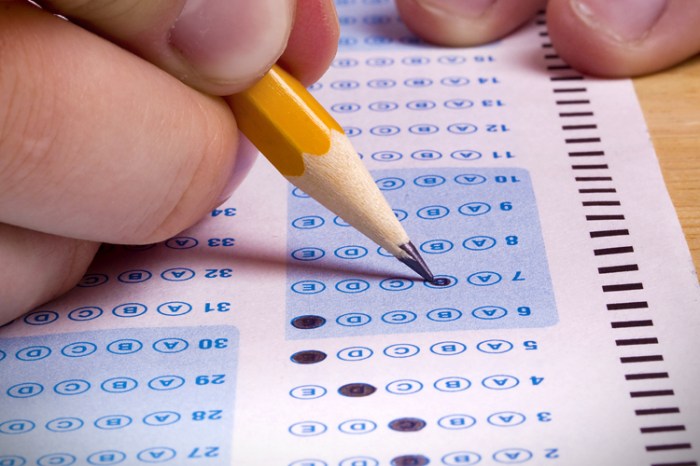
How can you criticize standardized testing if you aren’t allowed to talk about the tests?

To show why these assessments are bad, you have to be able to mention specific questions on the exams.

But if you do that, you will be violating the test company’s copyright and thus be subject to legal action.

So there will be no discussion of your concerns, no defense of the questions in question. Instead you’ll be threatened to silence.

This is the Catch-22 for teachers, parents and children throughout the nation.

We know the federally mandated high stakes assessments public school children must take are poorly constructed, culturally and racially biased, and ultimately unfair. But if we speak up in public with any kind of specificity, we’re threatened with steep fines. And if we write about it on-line, those articles will be taken down, censored or otherwise disappeared.

This is what happened to Prof. Celia Oyler of Teachers College, Columbia University this week when she posted an anonymous classroom teacher’s critique of the 4th grade PARCC exam on her blog.

Since the article reproduced three live questions from the exam, Oyler received a threatening email from PARCC CEO Laura Slover.

Oyler acquiesced to the CEO’s demand that she remove the PARCC questions, but she did not – as Slover commanded – reveal the name of her source. Oyler is debating legal action of her own against the testing company.

Meanwhile, education bloggers across the country have engaged in civil disobedience by reprinting Oyler’s entire post along with the PARCC questions. Many of these articles have been taken down by Twitter, Facebook or other Internet enforcers.

It’s a sad day in America when free speech is treated so disdainfully.

These PARCC questions are considered private property, but in many important ways they are not. They were developed at public expense. They were funded by taxpayers for use in our public schools. As such, they should be subject to public review.

And we may review them – privately. Ostensibly anyone could ask their local school district officials to be allowed to come in to the principal’s office and look over the tests. In fact, this is one of the first steps parents go through to opt their children out of taking the exams. You can page through the tests with supervision so you don’t make any copies or remove any materials from the building.

I’m sorry. This is just not the same thing as putting these tests under public scrutiny.

I can look at them, myself, and make up my own mind. So can you. We can even meet and talk about this together in our own private homes. But the second I go to a public forum like a school board meeting and begin to discuss these assessments in any detail, I can be charged with breaking the testing company’s copyright.

And so can my child. In fact, multiple students have already been harassed on-line by test corporation Pearson for allegedly talking about their exams.

This begs several questions: Can we legally hold minors accountable to such contracts without first providing them with legal representation of their own? Moreover, can they be forced to enter into these agreements without the presence of their parents or guardians?

However, there is an even more basic question with more far-reaching implications for the entire high stakes enterprise: How can experts explain what is wrong with the tests, if they can’t talk about anything on the tests?

Oyler mentions a question from the 4th Grade PARCC exam that is written at least two years above the grade level being assessed. Students are asked to read at a level beyond their years in order to find an answer. That’s patently unfair. But it’s one thing to make that claim – it’s quite another to point to the exact question and prove it beyond a shadow of a doubt.

Unfortunately, this vital fact is being completely ignored. The testing companies have already silenced that debate. We’re not discussing the quality of the test anymore. We’re discussing free speech. It’s an important issue, but it isn’t the one we started with.

Standardized assessments are not top secret military documents. Reproducing a test question that tens of thousands of students have already seen is not analogous to Edward Snowden or Julian Assange.

Hundreds of test questions are already released by assessment corporations as examples to help with test preparation. Some of them even show up on the actual tests. Why not release them all? One couldn’t possibly go through every question and memorize the answers before taking the tests.

When the assessment industry gets to show us only a portion of the questions they use, they’re bound to display only the least objectionable ones in the bunch. We’re accepting an illusion of transparency and forking out more than $1 billion annually for the privilege.

A product created with such a wealth of taxpayer dollars should be open to public review and debate. At very least, we should demand these questions are subject to independent review. That doesn’t mean the testing companies get to hire so-called experts with ties to their industry to sign off on the questions. It means real experts should have a say. We should hear from PhD’s in the field like Oyler. We should hear from classroom teachers. We should hear from parents and even students.

This is the only way we can ensure students are being assessed fairly. We shouldn’t just trust the huge corporations manufacturing this stuff. We have to know exactly what’s on the tests.

Without such public scrutiny and outcry, test corporations have no incentive to better their products. In fact, this is exactly how New York State residents got rid of perhaps the most infamous test question ever reported – The Pineapple Question.

You can read about the whole thing here, but the basic story goes as follows. Several years ago, students who finished their 8th grade reading test couldn’t get over how absurd this question was. They talked about it to anyone who would listen. Eventually, the question was reprinted on parent Leonie Haimson’s blog, Class Size Matters. It became a national head-scratcher. People all over the country called for the question’s removal.

Without public input, the Pineapple Question might still be on the tests. Students could still be trying to answer a question almost everyone thinks is ridiculous.

People often say they want more accountability in public education. Isn’t it time we started to hold the test manufacturers accountable for their products? Isn’t it time we restored free speech to public education?

We can’t improve our schools if we’re more concerned with a private company’s copyright than we are with the quality of the product they’re providing us.

We can’t have a functioning school system if whistle blowers are silenced.
The PARCC Test: Exposed

standardized_test


The following article comes from Prof. Celia Oyler’s blog. In it, she reprinted an anonymous teacher’s critique of the 4th grade PARCC exam. Since the piece includes three live test questions from the exam, the article has been repeatedly taken down under threat that it violates copyright. I hold that this is a spurious claim and am re-posting the article in-full as an act of civil disobedience. The public has a right to know exactly what questions are on the standardized tests they’re paying to be produced.


The PARCC Test: Exposed

The author of this blog posting is a public school teacher who will remain anonymous.

I will not reveal my district or my role due to the intense legal ramifications for exercising my Constitutional First Amendment rights in a public forum. I was compelled to sign a security form that stated I would not be “Revealing or discussing passages or test items with anyone, including students and school staff, through verbal exchange, email, social media, or any other form of communication” as this would be considered a “Security Breach.” In response to this demand, I can only ask—whom are we protecting?

There are layers of not-so-subtle issues that need to be aired as a result of national and state testing policies that are dominating children’s lives in America. As any well prepared educator knows, curriculum planning and teaching requires knowing how you will assess your students and planning backwards from that knowledge. If teachers are unable to examine and discuss the summative assessment for their students, how can they plan their instruction? Yet, that very question assumes that this test is something worth planning for. The fact is that schools that try to plan their curriculum exclusively to prepare students for this test are ignoring the body of educational research that tells us how children learn, and how to create developmentally appropriate activities to engage students in the act of learning. This article will attempt to provide evidence for these claims as a snapshot of what is happening as a result of current policies.

The PARCC test is developmentally inappropriate
In order to discuss the claim that the PARCC test is “developmentally inappropriate,” examine three of the most recent PARCC 4th grade items.

A book leveling system, designed by Fountas and Pinnell, was made “more rigorous” in order to match the Common Core State Standards. These newly updated benchmarks state that 4th Graders should be reading at a Level S by the end of the year in order to be considered reading “on grade level.” [Celia’s note: I do not endorse leveling books or readers, nor do I think it appropriate that all 9 year olds should be reading a Level S book to be thought of as making good progress.]

The PARCC, which is supposedly a test of the Common Core State Standards, appears to have taken liberties with regard to grade level texts. For example, on the Spring 2016 PARCC for 4th Graders, students were expected to read an excerpt from Shark Life: True Stories about Sharks and the Sea by Peter Benchley and Karen Wojtyla. According to Scholastic, this text is at an interest level for Grades 9-12, and at a 7th Grade reading level. The Lexile measure is 1020L, which is most often found in texts that are written for middle school, and according to Scholastic’s own conversion chart would be equivalent to a 6th grade benchmark around W, X, or Y (using the same Fountas and Pinnell scale).

Even by the reform movement’s own standards, according to MetaMetrics’ reference material on Text Complexity Grade Bands and Lexile Bands, the newly CCSS aligned “Stretch” lexile level of 1020 falls in the 6-8 grade range. This begs the question, what is the purpose of standardizing text complexity bands if testing companies do not have to adhere to them? Also, what is the purpose of a standardized test that surpasses agreed-upon lexile levels?

So, right out of the gate, 4th graders are being asked to read and respond to texts that are two grade levels above the recommended benchmark. After they struggle through difficult texts with advanced vocabulary and nuanced sentence structures, they then have to answer multiple choice questions that are, by design, intended to distract students with answers that appear to be correct except for some technicality.
Finally, students must synthesize two or three of these advanced texts and compose an original essay. The ELA portion of the PARCC takes three days, and each day includes a new essay prompt based on multiple texts. These are the prompts from the 2016 Spring PARCC exam for 4th Graders along with my analysis of why these prompts do not reflect the true intention of the Common Core State Standards.

ELA 4th Grade Prompt #1

Refer to the passage from “Emergency on the Mountain” and the poem “Mountains.” Then answer question 7.
1. Think about how the structural elements in the passage from “Emergency on the Mountain” differ from the structural elements in the poem “Mountains.”
Write an essay that explains the differences in the structural elements between the passage and the poem. Be sure to include specific examples from both texts to support your response.

The above prompt probably attempts to assess the Common Core standard RL.4.5: “Explain major differences between poems, drama, and prose, and refer to the structural elements of poems (e.g., verse, rhythm, meter) and drama (e.g., casts of characters, settings, descriptions, dialogue, stage directions) when writing or speaking about a text.”

However, the Common Core State Standards for writing do not require students to write essays comparing the text structures of different genres. The Grade 4 CCSS for writing about reading demand that students write about characters, settings, and events in literature, or that they write about how authors support their points in informational texts. Nowhere in the standards are students asked to write comparative essays on the structures of writing. The reading standards ask students to “explain” structural elements, but not in writing. There is a huge developmental leap between explaining something and writing an analytical essay about it. [Celia’s note: The entire enterprise of analyzing text structures in elementary school – a 1940’s and 50’s college English approach called “New Criticism” — is ridiculous for 9 year olds anyway.]

The PARCC does not assess what it attempts to assess

ELA 4th Grade Prompt #2
Refer to the passages from “Great White Shark” and Face the Sharks. Then answer question 20.
 Using details and images in the passages from “Great White Sharks” and Face to Face with Sharks, write an essay that describes the characteristics of white sharks.

It would be a stretch to say that this question assesses CCSS W.4.9.B: “Explain how an author uses reasons and evidence to support particular points in a text.”

In fact, this prompt assesses a student’s ability to research a topic across sources and write a research-based essay that synthesizes facts from both articles. Even CCSS W.4.7, “Conduct research projects that build knowledge through investigation of different aspects of a topic,” does not demand that students compile information from different sources to create an essay. The closest the standards come to demanding this sort of work is in the reading standards; CCSS RI.4.9 says: “Integrate information from two texts on the same topic in order to write or speak about the subject knowledgeably.” Fine. One could argue that this PARCC prompt assesses CCSS RI.4.9.

However, the fact that the texts presented for students to “use” for the essay are at a middle school reading level automatically disqualifies this essay prompt from being able to assess what it attempts to assess. (It is like trying to assess children’s math computational skills by embedding them in a word problem with words that the child cannot read.)

ELA 4th Grade Prompt #3

  1. In “Sadako’s Secret,” the narrator reveals Sadako’s thoughts and feelings while telling the story. The narrator also includes dialogue and actions between Sadako and her family. Using these details, write a story about what happens next year when Sadako tries out for the junior high track team. Include not only Sadako’s actions and feelings but also her family’s reaction and feelings in your story.

Nowhere, and I mean nowhere in the Common Core State Standards is there a demand for students to read a narrative and then use the details from that text to write a new story based on a prompt. That is a new pseudo-genre called “Prose Constructed Response” by the PARCC creators, and it is 100% not aligned to the CCSS. Not to mention, why are 4th Graders being asked to write about trying out for the junior high track team? This demand defies their experiences and asks them to imagine a scenario that is well beyond their scope.

Clearly, these questions are poorly designed assessments of 4th graders CCSS learning. (We are setting aside the disagreements we have with those standards in the first place, and simply assessing the PARCC on its utility for measuring what it was intended to measure.)

Rather than debate the CCSS we instead want to expose the tragic reality of the countless public schools organizing their entire instruction around trying to raise students’ PARCC scores.

Without naming any names, I can tell you that schools are disregarding research-proven methods of literacy learning. The “wisdom” coming “down the pipeline” is that children need to be exposed to more complex texts because that is what PARCC demands of them. So children are being denied independent and guided reading time with texts of high interest and potential access and instead are handed texts that are much too hard (frustration level) all year long without ever being given the chance to grow as readers in their Zone of Proximal Development (pardon my reference to those pesky educational researchers like Vygotsky.)

So not only are students who are reading “on grade level” going to be frustrated by these so-called “complex texts,” but newcomers to the U.S. and English Language Learners and any student reading below the proficiency line will never learn the foundational skills they need, will never know the enjoyment of reading and writing from intrinsic motivation, and will, sadly, be denied the opportunity to become a critical reader and writer of media. Critical literacies are foundational for active participation in a democracy.

We can look carefully at one sample to examine the health of the entire system– such as testing a drop of water to assess the ocean. So too, we can use these three PARCC prompts to glimpse how the high stakes accountability system has deformed teaching and warped learning in many public schools across the United States.

In this sample, the system is pathetically failing a generation of children who deserve better, and when they are adults, they may not have the skills needed to engage as citizens and problem-solvers. So it is up to us, those of us who remember a better way and can imagine a way out, to make the case for stopping standardized tests like PARCC from corrupting the educational opportunities of so many of our children.

How Far We Have Come Fighting Against the Testocracy: Network for Public Education Conference Ramblings

GetAttachmentThumbnail

Kelly Ann Braun said it best.


“Do you remember three years ago when I said this would all be over in 6 months?”


And we all laughed. Me the loudest, because back then I had thought the same darn thing.


Corporate education reform is on its last legs. Once we tell people about the terrible mistakes of standardized testing and Common Core, it will all be over in an election cycle or two.


Kelly, that incredibly dedicated member of the Badass Teachers Association (BATs) from Ohio, hadn’t been the only one.


It seemed so reasonable back then. Once it became common knowledge, our leaders couldn’t keep perpetuating policies that harm our children, we thought.


No one would actually continue to stomp on the futures of our little kids once we’d pointed out that that was what they were actually doing! Right?


Now the Network for Public Education is having its third annual conference – this one in troubled Raleigh, North Carolina. And far from being on its last legs, the testocracy is mightier than ever with a new federal education policy, the Every Student Succeeds Act, rebranding and refreshing its same horrific disdain for the young.


But that’s not really news, is it?


The powerful have always tried to find ways to keep the poor and minorities under heel. It’s a struggle as old as civilization, itself.


What’s new is us.


Yes, us – the ragtag band of rebels and revolutionaries who gather together every year to celebrate our victories, lament our losses and plan for the future.


This is a real community – stronger than anything I’ve ever experienced. During the year we all have our separate support systems, be they Badass Teachers, United Opt Out, our teachers unions, our communities or – for many of us – some unique combination.


But once a year we all come together from our separate corners of the country (and in some cases beyond) to commune, to gather strength from each other so we can carry on the fight.


I cannot express to you the power and the glory I got this morning listening to Chicago parent activist Rousemary Vega talking about the pain of losing her children’s community school. This is still a raw wound for her, gushing blood. One moment she was heartbreaking sorrow; the next she was frightening strength and determination.


She told us how to learn from her example, how to put up a fight, how to make it as difficult as possible for anyone to ever do this again. And when she was done and I had dried the tears that she had somehow cried with my eyes, I found that I had a tiny Rousemary inside my heart. I will never forget her story. I hope I can call on even a fraction of her strength.


Later I sat in on a conference about Competency Based Education. Two of the founders of United Opt Out, Denisha Jones and Morna Mcdermott, gave the best presentation on the topic I have yet heard.


This is the future of standardized testing. It goes something like this: you don’t want a big high stakes test at the end of the school year? Okay. How about we sit your kids in front of a computer all day, everyday, and they can take endless high stakes mini-tests?


Morna would keep apologizing that what she was saying sounded too far-fetched to be true, but then she’d prove its veracity. Subsequently, Denisha explained how proponents of this new educational scheme had slipped this all under our noses by redefining and co-opting language we all thought we knew. You want “individualized” education? Fine! Kids can sit by themselves as individuals and take these standardized test snippets – in perpetuity.


I left them with a much clearer understanding of how this was happening and exactly what kind of push back is necessary.


Perhaps most inspiring so far though was the keynote address by the Rev. William Barber, president of North Carolina’s NAACP and organizer of Moral Mondays. He put the whole fight in perspective.


History, philosophy, economics, religion all mixed together into a picture that would have been grim if he hadn’t made it so beautiful. Our children are being harmed by the standardization and privatization of public education. The ones hurt the most are those who are poor and minorities, but that doesn’t make them any less “our” children.


This fight can’t just be about your school and your child. We have to love and care about all children and all schools. Only then can we really have a public school system worthy of the next generation.


Finally, the moment came when I couldn’t just sit in the audience and passively take all this in. I was actually on the program – I was part of a bloggers panel!


It was called “Blogging and Other Tools to Educate, Persuade and Mobilize Targeted Audiences.” It featured the amazing talents of Julian Vasquez Heilig, Susan DeFresne, Dora Taylor, Anthony Cody, Jonathan Pelto and – somehow – me!


It was the first time I had presented anything at one of these conferences. Sure I’m in front of my students every day, but this was a room full of adults, many with PhDs or more, who really know what they are talking about.


I had agonized over what I was going to say, wrote out a few remarks and then was told by fellow BAT and activist Gus Morales that I shouldn’t read it. I should just go with the moment. That’s what he says he did during his TWO TED Talks!


I practiced. I tried it his way, but I just couldn’t make it work. So when my time came, I compromised. I talked off the cuff when I could and then returned to the script when I couldn’t.

 

It seemed to work. I got laughs. I got applause. It looks like no one noticed how utterly terrified I was. (Sh! Our secret.)


And so another year’s worth of inspiration has ended – all stuffed into that first day.


We’re a different group than we were last year. We’re more somber, perhaps. Maybe a bit more seasoned, more knowledgeable.


There’s a sadness that society hasn’t joined us to crush those who would harm our children. But there’s also a renewed commitment to the struggle. A feeling of our place in history.


We hear the marching feet of those who came before. We see their pale upturned faces, their sad smiles. And somewhere in the distance that may be the sound of our own children marching in our footsteps continuing this same fight.


We will have victories. We may end high stakes testing. We may abolish Common Core. But we may never see the promised land.


One day perhaps our children will get there. And the only thing we have to propel them to that place is our love and activism.


At the Network for Public Education, you begin to realize these are really the same thing.


Why is It So Hard to Vote in America? Voter Suppression is Desperation Politics


635942902228020220-Presidential-Primary-9


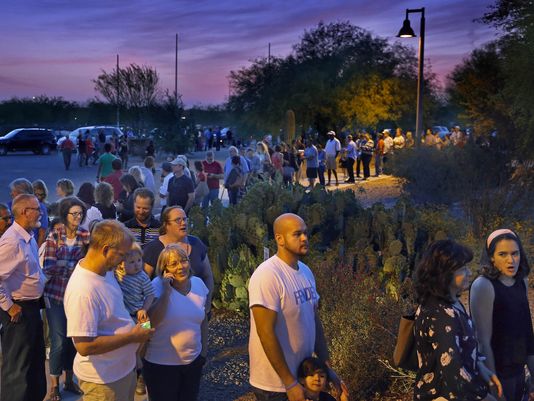
No one should have to stand in line an entire work day to vote.


But that’s what happened to people in yesterday’s Arizona primary election.


Lines stretched literally for miles. People actually ordered pizza to be delivered to them IN LINE!


Citizens were already getting in line when polls opened at 6 am, and hundreds were still in line when polls closed at 7 pm. The last ballot wasn’t cast until midnight – a new record for the Grand Canyon State!


What the fuck!


The most populous county in the state, Maricopa County, reduced polling locations from 200 during the last election to just 60 this year. That amounts to over 20,000 voters for every location.


The reason? They were trying to save money.


Let that sink in. When you run government like a business, services suffer. It means fewer resources for your schools. More lead in your water. And long as fuck lines to vote.


Oh. And if your skin happens to be black or brown, you get it even worse.


Hispanics and Latinos make up more than 40% of the population of Phoenix (30% state wide). Yet in these densely populated neighborhoods, there were few to no polling places open. I can’t imagine why!


And to top it all off, this “oversight” was used for political gain.


At roughly 8:30 pm, a little over an hour after polls closed, with less than one percent of precincts reporting, the Associated Press declared Hillary Clinton the winner of the Arizona primary.


In Democratic primaries delegates are awarded proportionally. It’s not winner take all. Delegates are awarded by the percent of the vote each candidate receives. If the race is really close delegates are split.


Prematurely declaring Hillary the winner while hundreds are still waiting to vote discourages Bernie Sanders supporters from staying in line and, thus, can reduce the number of delegates he receives.


These are not the actions of a robust Democracy. These are the actions of a de facto oligarchy trying desperately to crush any last remnants of majority rule.


In an age when you can buy anything you want on-line, why do we have to wait on line to vote? If the Internet is safe enough for global commerce and government, why is it too risky for casting a ballot?


It isn’t. The only reason this hasn’t happening is because it would dramatically increase voter turnout. It makes things too easy. While pundits decry “slacktivists” on Facebook and massive political participation on Twitter, they actively discourage bringing Democracy to those same forums.


It’s the same reason why election day isn’t a holiday. If people didn’t have to sneak voting in before or after work or during their lunch break, too many of us would be heard.


During every election cycle, there is an outcry against shady practices like what happened in Arizona, but we never do anything about them after the election cycle. We look at our antiquated primary and caucus system (especially on the Democratic side) and wonder how a modern country can actually function this way. We shake our heads at the Electoral College and maybe make some noise about changing it until the next President is sworn in. Then we all go silent.


Meanwhile, voter suppression efforts gain ground every year – even when the White House isn’t changing hands.


Despite low turnout and nearly non-existent cases of voter fraud, state legislatures are making it increasingly more difficult to vote.


A total of 36 states now have draconian Voter ID laws on the books – 33 of them are being enforced this cycle. During the 2015 legislative session, at least 113 bills that would restrict access to registration and voting were introduced or carried over in 33 states, according to the Brennan Center for Justice.


I know. I was part of the successful effort that defeated one of the most severe Voter ID laws in the country in my home state of Pennsylvania. State Rep. Mike Turzai proudly bragged in 2012 that our law would give the state to a Republican president. After protests and petitions from Philadelphia to Pittsburgh and everywhere in between, the state Supreme Court struck it down.


Meanwhile, other states are trying to enact the same kinds of laws that were ruled unconstitutional in the Keystone State. Wisconsin’s Voter ID law is almost identical to the defunct Pennsylvania legislation. Instead of being defeated, Republican lawmakers are trying to restrict the kinds of permissible identification and prohibit country and town governments from issuing any IDs to residents for free.


And last year, a year after enacting a voter ID law, Alabama shuttered 31 driver’s license offices — most of them in rural, impoverished, majority-black counties. Civil rights groups have filed suit, arguing that the change disproportionately affects racial minorities.


All across the country, early voting hours are being cut. Same day registration is being discontinued. Mountains of paperwork are being required to ensure proof of citizenship. And mysteriously people who have had no problems voting for decades are finding themselves given provisional ballots because of bookkeeping errors.


This has to stop.


Either we live in a country governed by majority rule or not.


Corporations and billionaires set national policy. If we want any chance in taking back our country, we must continue to have the right to vote.


Voting should be protected. It should be free and easy. It should be every citizens right.


Fight for it, America. Fight like your life depends on it.


Your freedoms certainly do.

Say It To My Face: Chicago’s Epic Trump Shutdown

trump_chicago_rally_ap_1457744693678_33791410_ver1.0_640_480
All fascists are cowards.

Especially Donald Trump.

The Reality TV star turned Presidential candidate is known for making bigoted statements at his rallies against Muslims, Latinos, women, black people, the disabled – basically anyone not white, male and straight.

So when thousands of these Muslims, Latinos, women, black people, etc. showed up at his rally in Chicago last night, Trump took a bold stance… and ran away.

He cancelled the rally rather than face them.

Sure there was the potential for violence if he had continued with his speech as planned, but that has never stopped him before. How many times have we seen cellphone videos of minorities being forcibly escorted from his campaign events, sometimes after being beaten or otherwise accosted? I don’t remember Trump canceling any of those events.

But when the people he denigrates show up in force, THAT’S when he pulls the plug. When voicing the same hostility-filled rant puts himself in danger, that’s when he turns tail.

THIS is your strongman, America! A sniveling coward who only has the guts to spout hate speech to a receptive audience!

Hilariously, his supporters are defending the Republican challenger’s brave retreat by appealing to the First Amendment.

Trump’s right to free speech is being violated, they say. What nonsense!

I just saw him on CNN complaining about it. And CBS. And NBC. And every other cable channel plus satellite! If that’s having your First Amendment rights violated, I wish someone would violate mine! Put my blog in the center of the 24-hour news cycle!

Let’s get one thing straight: the First Amendment guarantees your right to free speech. It does not guarantee a right to consequence free speech.

When you build a political campaign on the notion that some people are inferior to people like you, those so-called inferior people are eventually going to call you out.

There’s no hiding behind Uncle Sam’s coattails. YOU did that. You’re responsible for dealing with it.

Another popular response is that the protesters are sinking to Trump’s level. They’re meeting one mob with another.

Wrong. You cannot equate these two groups.

Trump’s supporters are embracing a message of hatred and intolerance. The protesters are espousing a message of love and tolerance. Trump’s supporters are singling out and beating individuals or small groups of minorities. The protesters are overwhelmingly nonviolent – though occasional sporadic violence did erupt at the rally most often when protesters defended themselves.

The protesters marched hand-in-hand into the lion’s den where they were vastly outnumbered. They put their lives on the line to make their views heard. They had the full expectation of being attacked and possibly killed, but they did it anyway. THAT is true bravery. THAT is true conviction – not someone who expected to be in a stadium full of like-minded people waiting to be whipped into a frenzy by a megalomaniac with extremely bad hair.

Which brings me to my favorite criticism of the Chicago protest. Some folks say the protesters had no idea what they were doing. They were just ignorant fools.

Exactly. People coming to protest hatred are ignorant and those coming to celebrate it are intelligent!

And finally we have the man, himself. The Donald has been crying on the news about the organized “thugs” who disrupted his rally.

He must really be rattled to call them “thugs.” Trump isn’t known for falling back on racist dog whistles. Usually he just says it outright. Did he forget his favorite N-word?

So once again Chicago shows us all the way.

The runaway Trump campaign can run roughshod over media criticism, wagging fingers and shaking heads. But the one thing it cannot handle is confrontation by the very people it denigrates.

Like a schoolyard bully, Trump retreats when you call him out.

You don’t like Muslims! Say it to my face!

You don’t like Latinos? Say it to my face!

You don’t like women…

This could take a while.

In the meantime, here’s to those brave Chicago protesters who stopped totalitarianism in its tracks!

They showed us that the only thing we need to truly make America great again is to recognize how great we are when we come together to fight for each other.

How Radical Must We Be To Get the Schools Our Children Deserve? United Opt Out Musings

GetAttachmentThumbnail-3

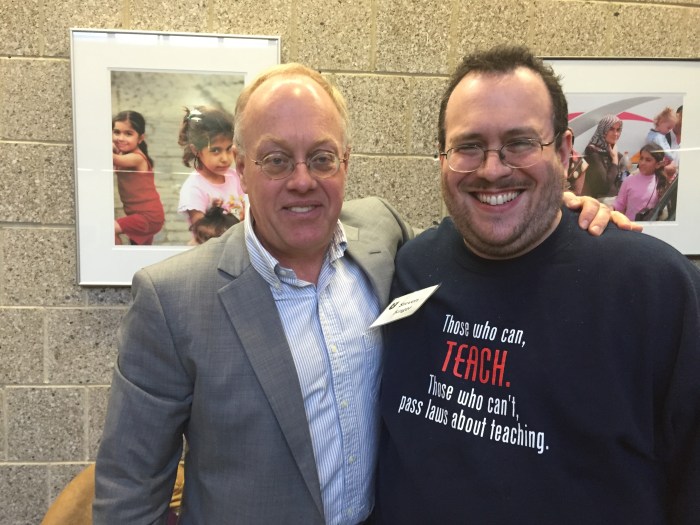
There was a point during Chris Hedges keynote address today when I could barely catch my breath.


My chest was heaving, tears were leaking from my eyes and I wasn’t sure I would be able to stop.


The Pulitzer Prize winning journalist had his audience enraptured at the United Opt Out Conference in Philadelphia Saturday morning.


I’ve read Chris before. We’ve all read Chris before. But I had never seen or heard him speak.


It was kind of like hearing a good sermon by a pastor who felt every word he said. And that really was it – Chris FELT every word.


When I’ve read Hedges’ articles on Truthdig, I’ve found myself getting angry. He stirs me up. He disturbs me, makes me feel uncomfortable. And when I heard him speak today I was surprised that he seemed to be reacting the same way to his own words.


When he talked about teaching teenage prisoners, he was emotionally invested in the story he was telling. When he criticized American neoliberal policies, he was just as angry as his audience.


The only difference was that his sorrow and rage somehow became transformed in his throat into something akin to poetry.


He turned the struggle of the oppressed into something beautiful. He transformed the hurt in my chest into something profound. He mutated my disturbance into a sense of actions-to-be.


I won’t repeat the words he said. I’d never be able to reproduce them with anything resembling his eloquence. But I will remark on one of his closing remarks because it hit me like a splash of cold water.


Rebellion, he said, is not about changing the world. It’s about changing yourself.


When you stand up for what is right, you become a better person – whether you achieve your goal or not. In a sense, it doesn’t matter if we destroy the testocracy. But in trying, we transmute ourselves into something better.


I don’t know if that’s true, but I’d like to think so.


I don’t know if we will ever destroy the system of Test and Punish, but I know I can try. I know I can put myself on the line and damn the consequences.


All weekend at the United Opt Out Conference we’ve been talking about rebellion and revolution. There’s no weak tea here in the City of Brotherly Love. No half measures. We’ve been discussing tearing the system down piece-by-piece.


A timid voice speaks up in the back of mind, “Do we really need to do all that? Do we really need revolution just to keep our public schools and make them into something worthy of our children?”


I think I’ve been trying to answer that question for a while now. Maybe a lot of us have.


In a rational country, our demands wouldn’t be so radical.


We want public schools centered on the good of all, not the profit of some. We want educationally valid curricula for our children. We want some control over the school system – both as parents and teachers.


Is that so much to ask? Is that such a lunatic request?


And as I listened to Hedges and Dr. Antonia Darder, Dave Green, Jonathan Pelto, Dr. Denisha Jones, Ceresta Smith, Yohuru Williams, Aixa Rodriguez and many, many others, I heard another timid voice begin to answer the first.


“Yes.”


The system of standardization and privatization of public education confronts students of color and impoverished students head on. They are in the front lines. Yet few people outside of activists seem willing to admit it.


Perhaps the most impressive thing about this conference has been its ability to put issues of human rights at the center of the argument. That’s the essential concept. We’re not just talking about bad education policies. We’re not just talking about schemes for billionaires to make more money. We’re talking about the systematic oppression of a group of people and the widespread complacency and complicity of the majority of the populace.


How do you combat such a monster without being revolutionary? How do you fight for your child without being a rebel?


More has happened at this conference than I can adequately put into words. I’ve met so many incredible people. Some of them I knew, some I had met before, some had only been names I had seen on my computer screen.


I will leave here Sunday feeling refreshed and energized, ready for the battles ahead.


Am I a radical?


Am I becoming a better person?


I don’t know.


But I will keep fighting.


Because I love my daughter, I love my students and I love all children everywhere.


Photo Gallery:


NOTE: This article was given a shout out on Diane Ravitch’s and Jonathan Pelto’s blogs.


United Opt Out Conference Highlights Dual Role of Technology in Education

FullSizeRender


Technology is the most powerful weapon we have against corporate education reform.


It is also our greatest foe.


Such were the remarks of Dr. Stephen Krashen at the United Opt Out Conference on Friday.


The linguist, educational researcher and activist gave the opening keynote address to hundreds of people who traveled to Philadelphia for the conference.


Krashen, who is known for his work on second language acquisition and bilingual education, has been a strong critic of the test and punish policies of the Barack Obama administration.


He warned the assembly of parents, students, teachers, professors and activists about the dangers of Competency Based Education (CBE), the next big thing in the movement to dumb down public schools.


CBE is touted as a way to reduce high stakes standardized testing by allowing students to work at their own pace while on various computer programs. However, Krashen sees this is an increase in testing.


In effect, it’s testing everyday. The computer programs used in CBE are little more than the same kinds of questions you’d see on a standardized test. An emphasis on CBE would replace a robust school curriculum with never-ending test preparation and multiple-choice assessment.


In the hands of a classroom teacher, technology can be an excellent tool to help kids learn. However, top-down policies like CBE only take away educators’ autonomy and turn them into mere facilitators of prepackaged materials of dubious quality.


He noted that the National Governors Association – an organization promoting CBE and Common Core State Standards – admits that there is no research supporting this new policy. But they’re suggesting we do it anyway. In fact, provisions to increase CBE are embedded in the new federal education law – the Every Child Succeeds Act (ESSA).


He sees this as a massive boondoggle to swipe the $600 billion we spend on technology in schools. After all, CBE will require increasingly newer computers at every school that will need to be constantly replaced as they become obsolete.


Krashen quoted Gerald Bracey: “There’s a growing technology of testing that permits us now to do in nanoseconds things we shouldn’t be doing at all.”


There is light at the end of the tunnel though.


The same technology that is being used to pervert the education system can be used to help save it.


Krashen advised activists to use the power of social media to spread the word about CBE and other Trojan Horse reforms – policies that look like they’re helping children while actually hurting them.


“The Internet is our underground,” he said, “Facebook and Twitter are our weapons.”


Though policymakers and journalists rarely listen to experts like classroom teachers, the Internet allows us to spread our message. We don’t need anyone’s permission to speak up. We are all free to do so and should do it more often.


I know many people are scared to speak up, he said, but we can all educate ourselves about what’s happening and then share it and retweet it. We need to do more of this. We need to reach a critical mass. We need to show the world the truth and that it can’t be ignored and buried under the dominant media and political narrative being sold to the public as if it were truth.


These policies, while dangerous in and of themselves, also overshadow the real needs of our school children – namely devastating, generational poverty.


When Congress passes No Child Left Unfed, No Child Without Healthcare, and No Child Left Homeless, then when can talk about No Child Left Behind and Every Child Succeeds, he said.


Dr. Martin Luther King spoke about this issue, claiming that solving poverty would in turn solve any problems with education.


Krashen’s keynote was an exciting beginning to a conference that promises to be eye-opening, exciting and energizing to the community of people fighting to take back our schools from the oligarchy.


Photo Gallery:


Beyoncé Upstaged by White Fragility at the Super Bowl

Pepsi Super Bowl 50 Halftime Show
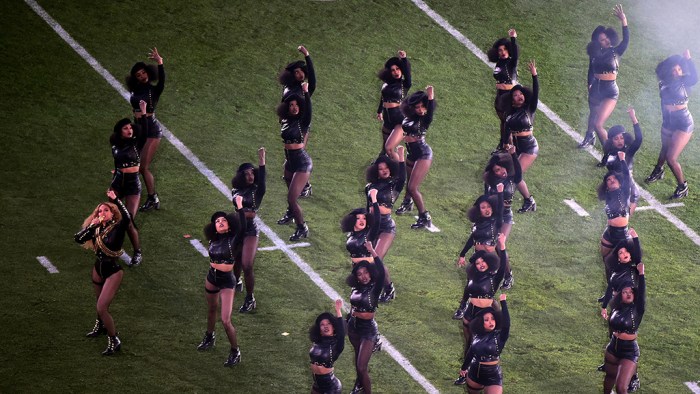
SANTA CLARA, CA – FEBRUARY 07: Beyonce performs during the Pepsi Super Bowl 50 Halftime Show at Levi’s Stadium on February 7, 2016 in Santa Clara, California. (Photo by Harry How/Getty Images)


Black women’s bodies are scary.


That’s the lesson we learned this Super Bowl Sunday.


When Beyoncé and 30 backup dancers performed a brief rendition of her new song, “Formation” during the halftime show, talking heads all over the country exploded.


Oh my God! Are those pro-black lyrics!? Are they making an allusion to the Black Panthers!? Was the music video to this song critical of overzealous police murdering black folks!?


Turn off the TV! This is too political for family entertainment!


When did we become so squeamish in this country? Can’t we all just sit back and enjoy seductive women gyrating in unison anymore?


I guess not. Not if they’re black.


Sleek female bodies in tight leather outfits displaying every curve of their anatomy – if their skin is black and their hair is Afro-ed and their fists are briefly in the air, it’s way too scary for white male libidos.


And that’s really the problem here.


Who was this performance supposed to be for? Fifty years of Super Bowl logic would suggest the target demographic was light skinned, heterosexual and possessing a penis. But these women had something to say – maybe. They had a message beyond “Look at me! I’m hot!”


How am I – as a red-blooded American male – supposed to commodify and objectify these women’s bodies if their brains are trying to convey a message that goes beyond mere consumerism?


That’s what the Super Bowl is, really. Some people say they watch it only for the commercials, but that’s all there is. It’s all a big advertisement for the American way of life.


Sit back, drink beer, eat pizza, watch an essentially meaningless contest and – whatever you do – don’t think about the way things really are. Don’t think about the problems we have and how we might fix them. Stay asleep. Watch the game and stay fast asleep.


And please don’t tell me this has nothing to do with race. If they were white girls with a message about world hunger, the outrage would be demonstrably more muted. If there’d be any outrage at all.


No. This was a direct assault on our tacit consent to be colorblind in all things. As a society we’ve silently agreed to refrain from mentioning anything about race in public.


Why are you even bringing up the fact that those dancers were black, someone is bound to ask.


My answer: because I have eyes.


Denying the pigment of their skin does no one any favors. And talking about it doesn’t denigrate them in any way. In fact, it acknowledges a key component of their being.


But Beyoncé’s performance didn’t let us forget her skin color. She made it important, and our white male society doesn’t want to admit it.

Or at least that’s what the 24-hour news cycle has made of it. Did Queen B really intend her routine to be taken as such a revolutionary display of black power? It’s hard to say.


In the actual performance, there is nothing much that is overtly political. Vaguely martial outfits? Dancing in an X-formation? A raised fist? Maybe.


The only somewhat rebellious moment occurred after they had already left the field. A few dancers held a sign offstage asking for justice for Mario Woods – a black San Francisco man gunned down by police. If you blinked, you missed it.


But the same cannot be said of the recently released music video for the song. It contains many images of black oppression from police brutality to the slow response to Hurricane Katrina. However, if you never saw the video, would you make that connection?


I didn’t. It went right over my head.


To be fair, I’d had a few.


It wasn’t until the next day that I read about the media’s hyperventilating all over it. Viewers had to actively search out the video to find any revolutionary content. Maybe that was Bey’s intent. Maybe not.


Either way, I find it hard to believe that most people’s immediate reaction was the same as that of the pundits.


At first, it was only a vocal minority that made a big deal about it. Then it snowballed into the center of our public discourse. I’m not sure why it’s gained such purchase. Maybe it’s because the halftime show always elicits strong emotions. Maybe it’s because it’s an election year. But without a doubt, a lot of folks’ white fragility is showing.


People of color are often stereotyped as having a thin skin about these issues. If black or brown folks bring it up, they’re criticized as “playing the race card.” But this situation shows how reactionary we, white people, really are.


No one decried Coldplay for starting the show with “Viva la Vida” – a song featuring the lyric, “When I Ruled the World.” People of color aren’t theorizing that the song by the whiter-than-white Chris Martin is really a Caucasian lament about the loss of white power.


“I used to rule the world

Seas would rise when I gave the word

Now in the morning I sleep alone

Sweep the streets I used to own”


Why? Because it would be just as ridiculous! Black folks have more important things to worry about – like the very things that white people are mad at Beyoncé for bringing up!

The Theft of a Great American School: José Meléndez Ayala Elementary

Screen shot 2016-02-03 at 10.48.49 PM

They came in the early morning like thieves in the night.

The predawn chill was still in the air.

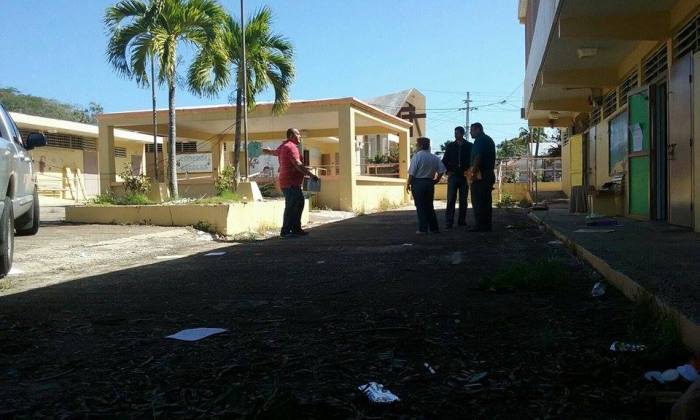
But employees of Puerto Rico’s Department of Education (DOE) were already at work closing a beloved public school.

They sneaked into José Meléndez Ayala Elementary Tuesday around 4 a.m. taking out desks, chalkboards and any equipment that could be repurposed. Then they loaded it all into trucks and zoomed off.

By the time the sun had risen, it was all over.

In the morning light, parents and children staggered to their neighborhood school in the Manatí region of the U.S. territory to find it an empty shell.

12650330_10153558452598152_2002114875_n

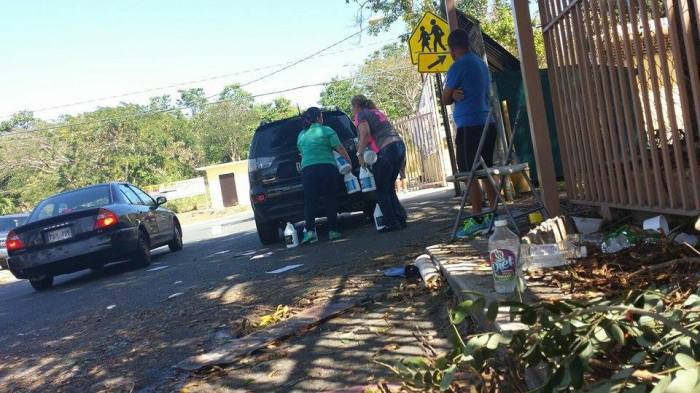
For 9 months they had been camping out in front of the building during the day to stop anyone from doing what had just been done.

“Tears were shed by parents and children. We will never forget,” says Mercedes Martinez, president of the Federación de Maestros de Puerto Rico (FMPR) – the teachers union.

Even though the school was one of 150 closed in the past 5 years, roughly 35 community members refused to let government employees step foot inside.

For about 180 days, they had kept the DOE away with placards and slogans like “This is my school and I want to defend it,” and “There is no triumph without struggle, there is no struggle without sacrifice!”

Officials hadn’t even been able to shut off the water or electricity. Until now.

The community had hoped to convince the government to reopen the school.

Screen shot 2016-02-03 at 10.47.09 PM

Parents went to Governor Alejandro García-Padilla’s mansion and spoke with his assessors, members of the legislature, the Secretary of Education Rafael Román, regional officers from the DOE, candidates for both major parties, and members of the municipal assembly.

“All stated their support except the DOE,” Martinez says. “But nothing was done.”

The municipal assembly even passed a resolution requesting the school to be reopened. It never happened.

The Commonwealth Senate sent its education committee to visit the school and inspect it. They made a recommendation to reopen it.

It never happened.

“The Secretary of Education didn’t answer,” Martinez says. “He’s behind all this.”

Manatí’s Mayor Juan Aubín Cruz Manzano may have wanted the building to use for anther purpose.

“The Secretary of Education confabulated to give it to him, as he handed him two other schools he shut down in Manatí for the mayor to use the buildings as he pleases,” Martinez says.

Perhaps most hurtful, says Martinez, is that employees of the DOE weren’t alone in looting the school.

After the DOE left, teachers from other schools came to take whatever free materials were left behind, she says. They were directed to do so by principals who had never supported the occupation.

“It was shameful,” Martinez says. “Now this building will become part of the obsolete infrastructure. Parents are demoralized.”

12650443_10153558452208152_1061368990_n

Community members whose children went to the school now have to pay to transport their kids to new schools miles away. With drastic budget cuts, these remaining schools often have class sizes of 35 students or more. Amenities like arts, music, health and physical education have typically been slashed.

The island territory’s financial woes stem from a flock of steady circling vulture capitalists encouraging damaging rewrites to the tax code while buying and selling Puerto Rican debt.

Hundreds of American private equity moguls and entrepreneurs are using the Commonwealth as a tax haven.

Since 2012, U.S. citizens who live on the island for at least 183 days a year pay minimal or no taxes, and unlike those living in Singapore or Bermuda, they get to keep their U.S. passports. After all, they’re still living in the territorial U.S. These individuals pay no local or federal capital gains taxes and no local taxes on dividend interest for 20 years. Even someone working for a mainland company who resides on the island is exempt from paying U.S. federal taxes on his salary.

12695755_10153558451663152_49828998_n

Big corporations are taking advantage of the situation, too.

Worldwide, American companies keep 60 percent of their cash overseas and untaxed. That’s about $1.7 trillion annually.

Microsoft, for instance, routes its domestic operations through Puerto Rican holdings to reduce taxes on its profits to 1.02 percent – a huge savings from the U.S. corporate tax rate of 35 percent! Over three years, Microsoft saved $4.5 billion in taxes on goods sold in the U.S. alone. That’s a savings of $4 million a day!

Meanwhile, these corporate tax savings equal much less revenue for government entities – both inside and outside of Puerto Rico – to use for public goods such as schooling.

12666292_10153558451738152_1967990747_n

Public schools get their funding from tax revenues. Less tax money means less money to pay for children’s educations. As the Puerto Rican government borrowed in an attempt to shore up budget deficits, the economy tanked.

But have no fear! In swooped Hedge Funds to buy up that debt and sell it for a profit.

When this still wasn’t enough to prop up a system suffering from years of neglect, the Hedge Fund managers demanded more school closures, firing more teachers, etc.

Wall Street greed has devoured another public school. But the battle for public education goes on.

Tania Ginés, the community leader who organized the occupation for so long says she is not defeated.

“I have decided to become the voice of those with no voice and will continue organizing parents throughout the island against any more School closings.”

“These are our schools, our children’s schools. The government of the slogan ‘Put Children First’ just demonstrated one more time that it’s just that – an attractive slogan they’re not willing to live by.”

The Teachers Federation supported the parents 100% and wants to recognize this humble community for its big heart, says Martinez.

“We want to show the world what a true revolutionary is. Che Guevara once said that the “true revolutionary is guided by a deep love feeling.’ These parents showed him to be true.”

12650276_10153558451898152_1947957478_n

12659828_10153558451693152_1837034232_n


MORE ON PUERTO RICO:

 –‘Pay Our Special Education Teachers Before Vulture Capitalists’ Demand Puerto Rican Protesters


Hundreds Gather in Puerto Rico on Martin Luther King Day Demanding Arts Education


Puerto Rico Teachers Plan One-Day Strike to Protest Corporate Education Reform


In Puerto Rico, Students Go On Strike to Stop Teacher Relocations


Parents and Children Occupy Puerto Rican School Refusing to Let Corporate Vultures Raid Its Contents

‘Pay Our Special Education Teachers Before Vulture Capitalists’ Demand Puerto Rican Protesters

GetFileAttachment-4

Every student with special needs in the United States is guaranteed a Free and Appropriate Public Education under national law.


So why has the U.S. territory of Puerto Rico stopped paying its special education teachers?


More than 100 parents, therapists, psychologist, occupational therapists, students and teachers marched on Monday to the capital in San Juan to find out.


The rally began in front of the legislature at 9 before protesters marched to the governor’s mansion at 10:30 am. Demonstrators then met with representatives of Governor Alejandro García-Padilla.

GetFileAttachment-3

The answer may be a crippling $72 billion debt. Puerto Rico is besieged by vulture capitalists encouraging damaging rewrites to the tax code while buying and selling the territory’s debt.


The Commonwealth government has been prioritizing payments to American private equity moguls instead of services for communities such as public schools.


“Our Children Before Vulture Capitalists,” proclaims one protestor’s sign.

GetFileAttachment-6

Jinnette Morales agrees with the sentiment. Morales organized the protest.


“No credit line would back up this lack of payment,” says the mother of a child with Down Syndrome.


“These therapists have been working for months without pay and if Secretary of Education Rafael Román says that he has paid them, I want to hear him say that when we take him to court.”


GetFileAttachment-5

Though the Commonwealth Department of Education hasn’t paid these professionals in up to six months, students still have been receiving services. Special education employees have been working without pay. However, that can’t continue indefinitely.


The therapists, psychologists and teachers have had enough. They simply can’t continue without an income.


So starting this week, roughly 1,200 students are without services they are guaranteed by law.

IMG_4819

“We are talking about children’s humans rights to receive an appropriate and quality education,” says Mercedes Martinez, president of the Federación de Maestros de Puerto Rico (FMPR) – the teachers union.


“Children need these therapies to progress in their development. Therefore, we stand with the workers, parents, and students and demand action from the governor of our country.”


Protesters are demanding special education employees be paid immediately so child services can continue with as little interruption as possible.


After arriving at the governor’s mansion, activists met with the governor’s attorneys.


They were told the government will eventually pay the special education teachers, says Martinez. In the meantime, officials suggested improving billing for services. Instead of having all invoices be digitized and go through corporate channels, special education teachers can provide manual bills. This will shorten the amount of time between billing and payment.


Protesters are scheduled to meet again with government officials on Thursday to pin down an exact date when payments will begin.


Until then, many demonstrators are camping out in front of the governor’s mansion vowing not to leave until the government makes good on its fiscal responsibilities to teachers and students.

GetFileAttachment

“The government needs to pay the debt with these professionals before our country’s debt,” says Martinez.


“Our children should come first.”


This monetary crisis is imported from the mainland. Legislation is being manipulated by corporate interests profiting off the chaos. Moreover, hundreds of American bankers and entrepreneurs are using the Commonwealth as a tax haven.


As a result, tax revenues are drying up while the super rich rake in profits.


Officials warn the government may be out of money to pay its bills sometime this year. Over the next five years, it may have to close nearly 600 more schools – almost half of the remaining facilities!


Of the 135 schools closed in just the last two years, Román had originally proposed shuttering 200. The remaining 65 were only kept alive because communities occupied the buildings and refused to let the government step in.


Despite Wall Street manipulation, Puerto Rican communities aren’t letting their government sell their children short. The fight goes on.


MORE ON PUERTO RICO:

Hundreds Gather in Puerto Rico on Martin Luther King Day Demanding Arts Education


Puerto Rico Teachers Plan One-Day Strike to Protest Corporate Education Reform


In Puerto Rico, Students Go On Strike to Stop Teacher Relocations


Parents and Children Occupy Puerto Rican School Refusing to Let Corporate Vultures Raid Its Contents