
Who’s Your Favorite Gadfly? Top 10 Blog Posts (By Me) That Enlightened, Entertained and Enraged in 2015

Screen shot 2015-12-30 at 12.57.49 AM

“Pennsylvania educator and public school advocate Steven Singer is one of the most powerful voices in the nation when it comes to speaking out for students, parents, teachers and our public schools.”
Jonathan Pelto, founder of the Education Bloggers Network


“Steven Singer wrote these five terrific posts last year. I didn’t see them when they appeared. Probably you didn’t either. You should.”
Diane Ravitch, education historian


“Your name should be Sweet Steven Singer. You are a delight.”
Karen Lewis, President of the Chicago Teachers Union

11206058_10152940020833860_7943827034975790194_n


Hello. My name is Steven Singer, and I am a gadfly.

I make no apologies for that. It’s what I set out to do when I started this blog in July of 2014.

I told myself that people were too complacent. There was no curiosity. People were too darn sure about things – especially education policy and social issues.

They knew, for instance, that standardized testing was good for children. Why? Because Obama said so. And he’s such a nice man. It’s too bad all those mean Republicans keep making him do all this bad stuff.

They also knew racism was over. After all… Obama! Right? Black President, therefore, the hundreds of years of struggle – finished! Move along. Nothing to see here.

Yet all this “knowledge” went against everything I saw daily as a public school teacher.

Standardized tests are good for children? Tell that to more than half of public school kids now living below the poverty line who don’t have the same resources as middle class or wealthy kids yet are expected to magically ace their assessments. Tell that to the kids who get hives, get sick, or throw up on test day. Tell it to the black and brown students who for some unexplainable reason almost always score lower than their white peers.

Racism is over? Tell that to all my minority students who are afraid to walk home from school because they might get followed, jumped, beaten or killed… by the police! Tell it to their parents who can’t get a home loan and have to move from one rental property to another. Tell it to the advertising executives and marketing gurus who shower my kids with images of successful white people and only represent them as criminals, thugs, athletes or rappers.

So when I started this blog, I consciously set out to piss people off. But with a purpose. To quote the original historical gadfly, Socrates, my role is, “to sting people and whip them into a fury, all in the service of truth.” It seems well suited to a school teacher. After all, Socrates was accused of “corruption of the youth.”

It’s been quite a year. When I went to the Network for Public Education conference in Chicago last April, some folks actually seemed to know who I was. “Don’t you write that Gadfly blog?” was a common question.

When I met NEA President Lily Eskelsen Garcia and AFT President Randi Weingarten, they both said, “I read your blog.” And then they looked me up and down suspiciously as if they were thinking, “THIS is the guy who writes all that stuff!? THIS is the guy giving me such a hard time!?”

Of course, I am human, too. One can’t sting and bite every day. Sometimes the things I write are met with love and approbation. Some weeks even Lily and Randi like me. Sometimes.

Education historian Diane Ravitch has given me tremendous moral support. I can’t tell you how gratifying it is to have one of your heroes appreciate your work! Her book “The Death and Life of the Great American School System” really woke me up as a new teacher. I’m also on the steering committee of the Badass Teachers Association, an organization that has changed my life for the better. The more than 56,000 people  there are my support. I would never have had the courage to start a blog or do half of the crazy things I do without their love and encouragement.

And there are so many more people I could thank: my fellow bloggers Jonathan Pelto, Peter Greene, Russ Walsh, Nancy Flanagan, Mitchell Robinson, and Yohuru Williams. Also the good people at the LA Progressive and Commondreams.org. The incredible and tireless radio host Rick Smith.

There are just too many to name. But no list of acknowledgment would be even close to completion without mentioning my most important supporter – you, my readers. Whether you’re one of the 9,190 people who get every new post delivered by email or if you otherwise contribute to the 486,000 hits my site has received so far, THANK YOU.

So in celebration of my first full year of blogging, I present to you an end of the year tradition – a Top 10 list. Out of the 90 posts I wrote in 2015, these are the ones that got the most attention. Often they incensed people into a fury. Sometimes they melted hearts. I just hope – whether you ended up agreeing with me or not – these posts made you think.

Feel free to share with family, friends, co-workers, etc. After all, I’m an equal opportunity gadfly. I always cherish the chance to buzz around a few new heads!


10) The Democrats May Have Just Aligned Themselves With Test and Punish – We Are Doomed

sanders_warren-620x412

Published: July 17, 2015
Views: 7,122

Description: It hit me like a slap in the face that almost all Senate Democrats voted to make the reauthorization of the federal law governing K-12 public schools a direct continuation of the same failing policies of the Bush and Obama years. Heroes like Bernie Sanders and Elizabeth Warren seemed to be turning their back on teachers, parents and school children. And they were stopped in their efforts by… Republicans!

Fun Fact: This story had some legs. It inspired a bunch of education advocates like myself who are also Bernie Sanders supporters to write the candidate an open letter asking him to explain his vote. His campaign eventually responded that it was about accountability!?


9) Punching Teachers in the Face – New Low in Presidential Politics

cc-600x400

Published: Aug. 3
Views: 14,735

Description: New Jersey Governor Chris Christie thought he’d run for the Republican nomination for President. He thought threatening to metaphorically punch teachers unions in the face would get him votes. It didn’t.

Fun Fact: This new low in Presidential politics came just after Donald Trump had announced he was running. Christie’s new low now seems almost quaint after Trump’s calls to tag all Muslims and monitor their Mosques. How innocent we were back in… August.


8) This Article May Be Illegal – Lifting the Veil of Silence on Standardized Testing

whistle
Published: April 18
Views: 15,818

Description: Teachers and students may be legally restrained from telling you what’s on federally mandated standardized tests, but we’re not restrained from telling you THAT we’re restrained. Is this just protecting intellectual property or direct legal intimidation of educators and children?

Fun Fact: I have not yet been arrested for writing this piece.


7) Stories about Teachers Union Endorsements of Hillary Clinton

Did the AFT Rank and File REALLY Endorse Hillary Clinton for President? If So, Release the Raw Data

(July 12 – 4,448 hits)


The NEA May Be About to Endorse Hillary Clinton Without Input From Majority of Members

(Sept. 21 – 3,873 hits)

A Handful of NEA Leaders Have Taken Another Step Toward Endorsing Hillary Clinton Despite Member Outcry

(Oct. 2 – 739 hits)

Teachers Told They’re Endorsing Hillary Clinton by NEA Leadership, Member Opinions Unnecessary

(Oct. 4 – 7,074 hits)

Screen shot 2015-09-21 at 12.23.19 AM

Published: July 12 – Oct. 4
Views: 16,134 TOTAL

Description: You expect your union to have your back. Unfortunately it seems our teachers unions were more interested in telling us who we’d be endorsing than asking us who the organizations representing us should endorse.

Fun Fact: I broke this story pretty much nationwide. News organizations like Politico were calling me to find out the scoop.


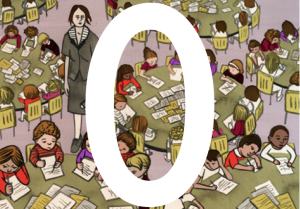
6) Why We Should Have ZERO Standardized Tests in Public Schools
Screen shot 2015-01-30 at 4.35.10 PM

Published: Jan. 30
Views: 16,443

Description: Someone had to say it. We don’t need any standardized tests. We need teacher-created tests. And that’s not nearly as crazy as some people think.

Fun Fact: This was written back when the Elementary and Secondary Education Act (ESEA) was being rewritten and naïve fools like me thought we might actually get a reduction in high stakes testing. Spoiler alert: we didn’t.


5) Atlanta Teacher RICO Conviction is Blood Sacrifice to the Testocracy

aztecshumansacrifice

Published: April 3
Views: 18,187

Description: There is something terribly wrong when we’re using laws created to stop organized crime as a means to convict  teachers cheating on standardized tests. I’m not saying cheating is right, but the mafia kills people. These were just teachers trying to keep their jobs in a system that rewards results and refuses to balance the scales, listen to research or the opinions of anyone not in the pockets of the testing and privatization industries.

Fun Fact: Watching all those seasons of “The Wire” finally came in handy.


4) Not My Daughter – One Dad’s Journey to Protect His Little Girl From Toxic Testing

FATHERS-AND-DAUGHTERS
Published: March 20
Views: 26,420

Description: How I went to my daughter’s school and demanded she not be subjected to high stakes testing in Kindergarten.

Fun Fact: They were very nice and did everything I asked. If you haven’t already, you should try it!


3) I Am Racist and (If You’re White) You Probably Are, Too

Screen shot 2015-06-02 at 1.42.34 PM

Published: June 2
Views: 28,906

Description: White folks often can’t see white privilege. This is my attempt to slap some sense into all of us. If you benefit from the system, you’re responsible to change it.

Fun Fact: Oh! The hate mail! I still get it almost every day! But I regret nothing! A black friend told me I was brave to write this. I disagreed. Anytime I want I can hide behind my complexion. She can’t.


2) I Am A Public School Teacher. Give Me All the Refugees You’ve Got

syrian_refugee_schools

Published: Nov. 19
Views: 45,196

Description: Our public schools are already places of refuge for our nation’s school children. Send me more. I’ll take them all. I’d rather they end up in my classroom than drowned by the side of a river.

Fun Fact: I got equal love and hate for this one. Some folks were afraid of terrorists. Others didn’t think we could afford it. But many told me my heart was in the right place. Lily and the folks at the NEA were especially supportive.


1) White People Need to Stop Snickering at Black Names

baby-and-parents

Published: Sept. 6
Views: 96,351

Description: Maybe we should stop laughing at black people’s names. Maybe we should try to understand why they are sometimes different.

Fun Fact: You’d have thought I threatened some people’s lives with this one! How dare I suggest people should stop mocking other people’s names! If you want to know how strong white fragility is in our country, read some of the comments! But many people thanked me for bringing up something that had bothered them for years but that they had been too polite to talk about, themselves. This is easily my most popular piece yet.


 

The Best Way To Honor Tamir Rice is by Reforming Our Broken Justice System

Memorial for Tamir Rice, 12-year-old shot dead by Police in Cleveland

Michael Brown – no indictment.

Eric Garner – no indictment.

Sandra Bland – no indictment.

And now Tamir Rice.

How many times will our justice system refuse to charge police with killing unarmed black people?

What will it take for our courts to accept the responsibility for at least attempting to seek justice?

When will our judicial system deem the death of people of color at the hands of law enforcement to at least be worthy of a trial?

Brown had no weapon but was shot to death by law enforcement.

Garner had no weapon but was choked to death by police.

Bland had no weapon but was found hanged in her jail cell after being assaulted by police during a traffic stop.

Rice had a legal pellet gun that was not pointed at anyone yet he was shot to death two seconds after police arrived.

This is not justice. This is a national travesty that continues to be played out daily. How many more human beings will be ground under the boot of a system that finds no value in their lives?

And don’t give me any of your excuses! Police were just doing there job! These people should have listened to law enforcement! Rice shouldn’t have had a pellet gun!

Listen to yourself. Lethal force is the only option!? Police have no tasers anymore, no pepper spray? Their guns only fire death strokes? They can’t hit non-vital areas meant to incapacitate but not kill?

What a bunch of cowards we are if we don’t demand police publicly explain themselves when they kill another human being – especially someone who posed them no bodily harm! How morally and spiritually bankrupt a nation we are not to weigh the evidence and decide guilt or innocence! “Freedom and justice for all!?” What a sham! What a lie! What a farce!

I don’t know about you, but I am sick of it. I refuse to put up with it for even one more day.

But what can we do?

No. Really.

When reading about these government sanctioned murders, I feel helpless. I’m just one person. What can I do to stop it?

Here are a few suggestions:

1) Ban Grand Juries in Fatal Shootings by Police

Connecticut and – most recently – California already have laws to this effect. District attorneys should have to decide whether officers face criminal charges when they kill people in the line of duty. This decision should be made in the light of day in full view of the public and not behind the closed doors of a grand jury hearing. These hearings involve no judges or defense attorneys and the transcripts of these proceedings are almost always sealed.

The problem is that district attorneys work closely with police and depend on them for political support. Sending cases like these to a grand jury gets the DA off the hook so he or she doesn’t offend the officers.

If the decision had to be made in public, voters could hold DAs accountable. With the grand jury system, there are no consequences because we have no concrete evidence about what happened during the proceedings, what arguments were made, by whom and who made what decisions. That’s a poor breeding ground for justice.

2) Construct a National Database on Police Killings

Right now there is no way to tell exactly how many people are killed by law enforcement in this country every year. Moreover, there is no way to tell if officers involved in these killings were ever charged.

Information can be compiled state-by-state, often through unofficial and anecdotal sources. However, this does not nearly give the full picture of what is going on. The people of this country deserve to know the full scope of the issue. That’s why apologists often claim these sorts of incidents are relatively rare and blown out of proportion by the media. But are they? A national database would prove the matter one way or the other.

Federal law from 1994 already calls for just such a database, yet it has not been funded. This may be due in part to the cost. A pilot study found that it would take a decade and cost $1 billion.

Certainly this is not a quick fix. But don’t we deserve to know this information? And isn’t it suspicious that nothing is being done to compile this data now?

3) Overturn Graham v. Connor

Perhaps the biggest obstacle to seeking justice for those unnecessarily killed by police is a precedent set by the U.S. Supreme Court 25 years ago. Graham v. Connor effectively ruled that police can kill you if they feel you present a “reasonable” threat to their own lives.

The problem is the word “reasonable.” What does that mean? In court, it can be almost anything. It’s a “Get Out of Jail Free” card to police for wanton murder. Justice Sonia Sotomayor calls this a “Shoot first, think later” approach to policing. She says this violates the Fourth Amendment which stipulates what counts as “probable cause” for police actions including arrests. However, Sotomayor is the only sitting justice publicly to take this stance.

This is why without more robust protections for citizens and more realistic expectations for law enforcement, even when cases like these go to court, they rarely result in police convictions.

But courts change. Public opinion can move mountains if given enough time. We need to start putting on the pressure.

Organize, people. Start writing letters. Write petitions. Hold rallies. Meet with your Congress-people. Make some noise.

In the meantime, let us grieve for all the Browns, Garners, Blands and Rices.

Their lives matter. And the best way to prove that is to get off our collective asses and do something about it.


NOTE: This article also was published on Commondreams.org.


Does Bernie Sanders Offer Education Advocates Enough? Are We Feelin’ the Bern or Just Feelin’ Burned?

150430-berniesanders-editorial

You probably didn’t hear about this on the news.

To my knowledge no one covered it on TV, the newspaper or even on the blogosphere.

But Bernie Sanders may have made a reply to his Democratic Primary rival Hillary Clinton’s gaffe about closing public schools.

“I wouldn’t keep any school open that wasn’t doing a better than average job,” Clinton said at a campaign stop in Iowa on Dec. 22.

The media took this to mean Clinton is in favor of closing half the schools in the country. The comment has been much debated with calls for context and explanation by the Clinton campaign.

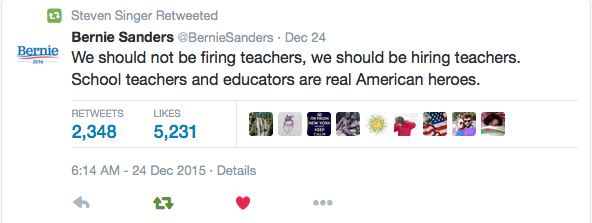
However, very quietly on Dec. 24, Sanders tweeted, “We should not be firing teachers. We should be hiring teachers. School teachers and educators are real American heroes.”

Screen shot 2015-12-26 at 8.06.51 PM

The @BernieSanders twitter account has more than 1 million followers, a little less than the @SenSanders account. But it does appear to be affiliated with the Bernie Sanders presidential campaign. If Sanders, himself, posted the tweet is unclear. The candidate used the same account to live tweet the Republican debates so he – at least sometimes – is personally responsible for the material that comes out of there.

Moreover, the comment can be connected directly to something he said on C-SPAN at a campaign stop in Cleveland, OH, on Nov. 16 – before Clinton’s gaffe. In a larger speech that touched on numerous issues he said, “We should not be firing teachers and childcare workers, we should be hiring teachers.” The line about teachers being American heroes is new.

Start the speech 56 minutes in to hear the comment.

So I think it’s fair to say that the sentiment is, in fact, Bernie’s. It’s only the timing that is in question.

Is this tweet an attempt to distinguish himself from Clinton? Is this his way of saying that he’s NOT interested in closing schools and firing teachers – instead he wants to invest in education and hire more educators?

Maybe.

It sure would be nice if he’d come out and tell us. Frankly, I’m getting tired of having to read the tea leaves to get a glimpse of Bernie’s K-12 education policy.

Don’t get me wrong. I love the guy.

He’s been one of my favorite politicians for years. As a U.S. Senator, he’s consistently worked against economic and social inequality for decades. He’s been a fearless critic of Wall Street and privatization, an advocate for single payer healthcare and fighting global climate change.

He champions historic investments in preschool and college – even vowing to make post secondary tuition free. But somehow when it comes to K-12 schools, he’s got very little to say.

Most notably, he voted against No Child Left Behind (NCLB) – the devastating schools bill passed with bipartisan support during the George W. Bush years. However, he also voted in favor of the Charter School Expansion Act of 1998 which further opened the nation’s piggy bank to for-profit school privatizers. He also opposed a bill in early 2015 that would have prohibited the federal government from imposing the terrible Common Core standards on the nation’s schools.

On the campaign trail, when asked about his stance on K-12 schools, Sanders has boasted he would end NCLB. That was just accomplished by Congress through a reauthorization of the bill now called the Every Student Succeeds Act (ESSA). As a member of the Health, Education, Labor and Pensions (HELP) Committee, Sanders was an active participant in that process.

When this legislation was still in the Senate, he – along with almost all Democrats – voted for a failed amendment that would have continued most of the worst aspects of NCLB. The bill eventually passed the chamber in a potentially more palatable form. Sanders eventually voted for that Senate version but was conspicuously absent from the final vote.

Though keeping a busy campaign schedule, Sanders is known for returning to Washington to vote for important legislation. He does this much more than most of the other sitting Congressional Presidential candidates.

So why was he absent for the final vote on the ESSA? Was that done on purpose, and if so why? Could it be an attempt to distance himself from this legislation? Or is it an attempt at plausible deniability – a way of justifying both his approval and disapproval of the same legislation?

Sanders hasn’t said much.

This puts would-be-supporters in an uncomfortable position. We like what Sanders has to say about the economy and poverty, but we have little to go on when it comes to K-12 education. Certainly if Sanders was elected President and came through with all of his other promises, that would help our public schools tremendously. And since Sanders has been fighting for these things his entire lengthy political career, it’s hard to doubt his sincerity. But why not include education as part of this platform? It seems to fit perfectly with everything else he believes.

On the other hand, there’s Clinton. She is making a real effort to clarify her education positions. In fact, last week’s gaffe was part of a much larger policy speech on K-12 schools. Sander’s reply – though better stated – was a one off. It was a sound-byte. It was an applause line. It didn’t have much substance behind it.

How are we to take it? Would Sanders hire more teachers as part of a nationwide education equity policy? If so, what exactly is that policy? Or is he – like Clinton – in favor of closing some struggling schools?

Certainly Clinton has a credibility problem. One of her first actions on the public scene as the First Lady of Arkansas in 1983 was to fight against the state teachers union to enact accountability-based school reform. Many of the billionaires and shady think tanks that are working so hard to destroy public schools have donated heavily to her campaign. Her endorsement by both major teachers unions – the National Education Association and American Federation of Teachers – were allegedly the result of leadership and not rank and file members.

But unlike Sanders, Clinton actually seems to care about getting the education vote. She is actively fighting for our advocacy. Bernie doesn’t seem to think he needs us.

The Democratic Primaries are about two months away. If Sanders is going to make a play for teachers, parents, students and education advocates, he still has a chance. But time is running out.

Personally I’d rather vote for him, and maybe I will. But if he finally came out swinging, if he actually made me feel like he’d strip away the high stakes testing, unproven or failing policies and put teachers in the drivers seat – he could get so much more.

There are tens of thousands of teachers and advocates standing on the sidelines looking to Bernie. If he gave us a major policy speech, he’d find his campaign offices flooded with new volunteers. Educators would take to the streets and phone banks. We’d lead the charge. We could help turn the tide in a Democratic primary where the margin of victory could well be razor thin.

We’re out there, Bernie. Just say the word and we’ll come running.

We want to Feel the Bern, but you’ve got to turn up the heat!


NOTE: This article also was published in Commondreams.org and the LA Progressive.


I Doubt Hillary Clinton Plans to Close Half of All Public Schools – But She Does Want to Close Some

www.usnews.com


“This school district, and these schools throughout Iowa, are doing a better than average job. Now, I wouldn’t keep any school open that wasn’t doing a better than average job. If a school’s not doing a good job, then, you know, that may not be good for the kids.”
-Hillary Clinton

The above comments have caused a tremendous stir in the media lately.

Hillary Clinton wants to close half of all public schools!? She wants to shutter all public houses of learning that are average or below average!?

The Federalist even did some quick math and decided this means Clinton would shutter 50,000 schools. They even put that number in the headline of their article!

But hold your horses, media backlash.

I’m not really a Hillary supporter, but this has gotten a little out of hand.

Maybe I’m being too generous here, but I’m going to assume that Clinton may be a lot of things, but stupid isn’t one of them.

She made a gaffe. She said something that doesn’t make much sense mathematically. Close all schools below average? Average means 50%. That’s half of all schools.

It was a blunder, a mistake, a foot-in-the-mouth moment.

I can believe a lot about Clinton, but not that her education policy includes shuttering half of our nation’s schools.

However, don’t take my word for it. Seriously! Ask her. She should clarify what she meant. But give her a chance to do so. Don’t mob her just looking to trip her up.

I doubt I’ll vote for Hillary in the primary, but she deserves a certain modicum of respect. She is an impressive person. She’s accomplished a heck of a lot in her life under some pretty intense circumstances.

As a college student in the 1960s, she volunteered to teach reading to children in poor Boston neighborhoods. She fought to ensure voting access for African Americans and even worked at an alternative newspaper in the black community. As First Lady and in Congress, she pushed for universal pre-kindergarten, arts education, after-school tutoring, smaller class sizes and the rights of families.

And in 2008 she ran an impressive – if ultimately unsuccessful – campaign for President.

As one of the most prominent women in the nation, she’s made some enemies.

Remember that Benghazi nonsense! Conservatives have been out for her blood because an American diplomatic compound in Libya was attacked in 2012 while Clinton was Secretary of State. They’ve trumped up a crazy amount of lies and innuendo that she was somehow responsible when it was the Republican-controlled Congress that voted to reduce security at these installations.

Heck! Michael Bay has a hatched job movie coming out during this election season just to wound Clinton’s current bid for president!

So give the woman some credit. She’s proven she’s a serious-minded, intelligent and capable politician.

However, like every human being she misspeaks from time-to-time. George W. Bush couldn’t open his mouth without English teachers and grammarians hiding under the sofa.

I think this explains much of what she said in Iowa trying to consolidate votes for the first Democratic primary on Feb. 1, 2016.

It explains much – but not all.

Clinton may have fudged her math momentarily forgetting that 50% of all schools are – and always will be – below average. If tomorrow every school in the country provided the greatest education the world has ever seen, half of them would still be below average. That’s what average means.

What bothers me is that Clinton thinks we should be closing schools at all.

That’s not a slip. That’s not a blunder or a miscalculation.

She really seems to believe you can improve public education by closing schools. And THAT is much more dangerous than any nonsense about her going on a nationwide school shuttering spree – something of which she would not, by the way, even have the power to do as President.

This idea that we can close schools to improve education is one of the founding principles of corporate education reform. And it’s demonstrably untrue.

Never has a school ever been improved by being closed. Student academic outcomes do not increase when children are displaced. In fact, they suffer.

If schools are struggling, a sensible strategy would be to find out what’s wrong. What is the reason kids are having trouble reaching academic success?

Spoiler Alert: nine times out of ten the problem is disinvestment. The school doesn’t have adequate resources to meet students’ needs.
More than half of our nation’s public school children live in poverty. Their schools don’t get equitable funding with districts that serve the rich. Moreover, privatization, charterization, increased efforts at vouchers, tax breaks and school choice have segregated our schools to such a degree that these problems disproportionately affect our students of color to a much larger degree than white children.

THAT is the problem with American education. It’s been proven time and again in study after study. Yet corporate education reformers like Michelle Rhee, Campbell Brown, Bill Gates, and Andrew Cuomo continue to ignore the facts in favor of simply closing more schools. In his time as Mayor, Rahm Emanuel has closed 50 Chicago schools46 of which serve mostly black and brown students. And he’s a close Clinton friend.

It is no accident that so many of these corporatists are Democrats. The entire neoliberal wing of the party is sick with these sorts of conservative policies. And Clinton can be connected with many of them.

Since getting the support of the American Federation of Teachers (AFT) and National Education Association (NEA), Clinton’s tried to distance herself from her disaster capitalist buddies. But it isn’t working.

On the one hand, she criticized charter schools for ignoring the most difficult students. On the other, she still champions keeping privatized education in the mix.

On one hand, she thinks there should be a federal investigation of the Chicago Police Department for civil rights abuses. On the other hand, she thinks Rahm is doing a heck-of-a job.

I am deeply troubled that Clinton seems to think we can close our way to academic success. She should know better than that by now. Everyone should. It is absolutely unacceptable that any candidate with such teacher support should hold these views. Quite frankly, it’s a deal breaker.

The ball’s in your court, Hillary. You need to explain what you meant by your Iowa comments.

I admire Clinton’s bravery for actually talking about K-12 education – something her rival Bernie Sanders seems much less inclined to do. However, we all know Clinton’s endorsements by the AFT and NEA don’t represent the views of the rank-and-file. These were top down decisions made without much member input. If Hillary wants those endorsements to translate into votes, she’d better do some serious convincing.

Otherwise it won’t be schools that are shuttered. It will be her campaign.


NOTE: This article also was published on the Badass Teachers Association Blog and mentioned on Diane Ravitch’s blog.


Much Ado About an Enigma – No One Really Knows What Impact the ESSA Will Have on Public Schools

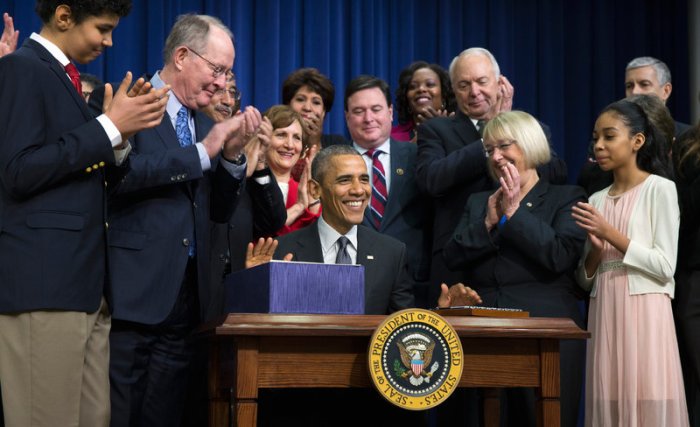
ESSA-Obama

President Barack Obama signed the Every Student Succeeds Act (ESSA) this week.

The new legislation reauthorizes federal law governing K-12 public education.

In 1965 we called it the Elementary and Secondary Education Act (ESEA). Until today we called it No Child Left Behind (NCLB). And now after a much-hyped signing ceremony, the most definitive thing we can say about it is this: federal education policy has a new name.

Seriously. That’s about it.

Does it reduce the federal role in public schools? Maybe.

Does it destroy Common Core State Standards? Possibly.

Is it an improvement on previous policies? Potentially.

Will it enable an expansion of wretched charter schools and unqualified Teach for America recruits? Likely.

The problem is this – it’s an over 1,000 page document that’s been open to public review for only two weeks. Though it was publicly debated and passed in the House and Senate, it was finalized behind closed doors and altered according to secure hurried Congressional votes. As such, the final version is full of legal jargon, hidden compromise, new definitions and verbiage that is open to multiple meanings.

How one reader interprets the law may be exactly the opposite of how another construes it.

Take the much-touted contention that the ESSA reduces the federal role in public schools. Even under the most positive reading, there are limits to this freedom.

The document continues to mandate testing children each year in grades 3-8 and once in high school. It also mandates academic standards and accountability systems. However, what these look like is apparently open to the states.

For instance:

The Secretary [of Education] shall not have the authority to mandate, direct, control, coerce, or exercise any direction or supervision over any of the challenging State academic standards adopted or implemented by a State.

That seems pretty clear. The federal government will not be able to tell states what academic standards to adopt or how student test scores should be used in teacher evaluations.

But it also says that states will have to submit accountability plans to the Department of Education for approval. It says these accountability plans will have to weigh test scores more than any other factor. It says states will have to use “evidence-based interventions” in the schools where students get the lowest test scores.

That sounds an awful lot like the test-and-punish system we have now.

What if your state decides to take a different road and reject the high stakes bludgeon approach to accountability? In that case, some readers argue schools could lose Title I funds – money set aside to help educational institutions serving impoverished populations.

Will that actually happen? No one knows.

It may depend on who will be President in 2017 and whom that person picks as Secretary of Education. And even if the Feds try to take advantage of these potential loopholes, the matter could end up being decided by the U.S. Supreme Court.

What about Common Core?

Some readers interpret the new law as destroying forever the possibility of national academic standards. If states are allowed to pick their own standards, it is highly unlikely they’ll all pick the ones found in the deeply unpopular Common Core. However, the law does force each state to have academic standards of some kind, and it defines what those standards must look like. One interpretation of this is that they must look a lot like the Common Core.

They must be “state-developed college- and career-ready standards.” You read that right – “College and career ready.” That’s the Common Core catchphrase. If someone says they want to eat lunch at “the golden arches,” they haven’t said McDonalds, but you know they’re craving a Big Mac.

Will the Fed allow states to choose standards radically different than the Core? Again only time and – possibly – the courts can tell.

This same problem occurs throughout the document. As the public painstakingly combs through it, new legal wiggle room may be found. And I am not so naive as to suppose we’ve found all of the loopholes yet. Some of these may be the result of poorly chosen wording. Others may be purposefully hidden time bombs waiting for opportunists to exploit.

This uncertainty about exactly what the ESSA will eventually mean for our public schools may help explain the range of reactions to the formative law – from ecstasy to despair to shrugs and snores.

I’m not sure what to think of the thing, myself. I started the whole process disgusted but came around to accepting it if the final result was any kind of improvement over previous legislation. And now that it’s the law of the land, I look at this Frankenstein’s monster of a bill – stitched together pieces of mystery meat – and I don’t know whether to laugh or cry.

I still hope it will live up to the limited promise it holds to bring us some relief from NCLB. But I admit this thing could go sour. Anyone’s guess is as good as mine.

Which brings me to perhaps the biggest problem with this law that no one seems to be talking about.

Education needs reformed. We need to repeal the bogus policies that have been championed by the 1% and their lapdog lawmakers. We need to get rid of test-based accountability. We need to trash high stakes testing, Common Core, value added measures, charter schools and a host of other pernicious policies. We need to initiate a real anti-poverty program dedicated to attacking the actual problem with our schools – inequality of resources.

But more than any of that, we need to reform our government.

We need to find a better way to make our laws. The process that shat out this ESSA must go.

Think about it. No Child Left Behind was an abject failure by any metric you want to use. It didn’t close achievement gaps – it increased them. And the major policy of this law – annual standardized testing – remains intact in the reauthorization!

There has been massive public outcry against annual testing. Parents are leading an exponentially growing civil disobedience movement shielding their children from even taking these assessments. Everyone seems to agree that we test kids too much – even President “I’ll-veto-any-bill-that-deletes-testing” Obama.

Yet our legislators did next to nothing to fix this problem.
Instead preference was given to lobbyists and corporatists interested in making a buck off funding set aside to educate children. The focus was on smaller government – not better government. These aren’t mutually exclusive, but they aren’t exactly one-and-the-same, either.

This can’t continue if we are to keep pretending we have a representative Democracy. The voice of lobbyists must not be louder than voters. Money must be barred from the legislative process. Demagoguery must not overshadow the public good. We need transparency and accountability for those making our laws.

Until that happens, we will never have a sound and just education policy, because we don’t have a sound and just government.

Unfortunately, that is the biggest lesson of the ESSA.


NOTE: This article also was published in the LA Progressive, Badass Teachers Association Blog and quoted extensively on Diane Ravitch’s blog.


A Real Solution to the Infinitesimal Cases of Child Predators in Our Schools

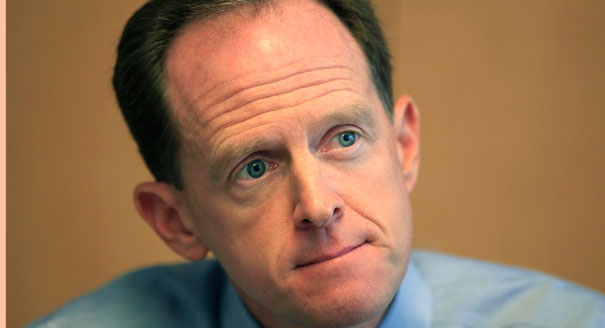
110401_toomey_ap_605

Pat Toomey is obsessed with child predators in our public schools.

When I came to Washington, D.C., this summer to visit 
the U.S. Senator from Pennsylvania, he was lobbying to get his “Passing the Trash” bill included in the Elementary and Secondary Education Act (ESEA).

His proposed legislation – now part of the Senate version of the ESEA – would ban school districts from helping known pedophiles from finding teaching jobs at different schools. Toomey is hopeful the provision will remain in the final version of the law that eventually will reach President Obama’s desk.

I met with his education aide who cheerily told me her job was to comb through the nation’s newspapers everyday and count the number of teachers accused of acting inappropriately with children. I’d mention issues like inequitable funding, standardized testing and Common Core. She’d solemnly quote back the number she’d found in her research.

There was definitely a disconnect between our priorities. After all, I’m a public school teacher. I work in our school system everyday. She and her boss only know about our schools through what they read in the newspaper. And according to the media every school in American houses child predators. They lurk behind every corner protected by administrators, superintendents and unions.

However, the facts do not back this up.

The Associated Press held a landmark investigation in 2007 to discover the extent of the problem. Reporters sought disciplinary records in all 50 states and the District of Columbia over a 5 year period. The investigation found 2,570 educators whose teaching credentials were revoked, denied, surrendered or sanctioned following allegations of sexual misconduct. About 70% of those cases involved children being victimized.

There is no glossing over it. The number is disgusting and startling. However, it is far from the national epidemic the media and Toomey are touting.

There are more than 3 million teachers in this country. This report found that 1 in 800,000 may be a child predator. That’s .00083%.

In other words, your child is more likely to be struck by lightning than be the victim of a child predator at school (1 in 134,906).

Other things more likely to happen include dying in an airplane crash (1 in 7,178), death on the job (1 in 48,000), and being murdered (1 in 18,000).

I don’t mean to be glib. One teacher betraying a young person’s trust in this way is one too many.

I’m glad Toomey is pursuing this legislation. I even support it.

However, I don’t like the slander and libel against the great majority of teachers. I don’t like how we’re all being painted with the same brush – even when it is done in the cause of making it more difficult for child predators.

I’ve been a public school teacher for almost 15 years. In that time, I have never met a single teacher who I would be uncomfortable letting babysit my 6-year-old daughter. Even when I was a student, myself, back in the 1980s and 90s, I never had a teacher who I was afraid would molest me or my classmates.

Compare this to the sex scandals in the Roman Catholic Church. A review by American Catholic bishops found about 4,400 of 110,000 priests were accused of molesting minors from 1950 through 2002. That’s .04% or 1 in 400. Sure the timescale involved is much longer than the AP study of educators, but the pool of priests is also much smaller. It would seem children are more in danger in houses of worship than houses of learning.

However, none of this helps people like Toomey pass legislation. You can’t say this doesn’t happen much, but we need to stop it. No one would vote for it. There would be no sense of urgency.

It’s just that in dramatizing the situation the Senator and his ilk are defaming the majority of teachers who would never even consider hurting a child.

The truth is not politically expedient. Child predation in schools is not a quantitative issue. It’s a qualitative one.

You don’t need large numbers of children to be hurt in this way for us to take the problem seriously. Even a small number, even a single instance, is enough to require action. No child should ever feel unsafe in school. No child should ever be victimized in these hallowed halls – especially by the very people who have devoted their lives to help them.

So I think Toomey’s right. We should pass his legislation. We should take steps to stop this kind of thing from ever happening in our schools.

And if we’re really serious, I have a solution that no one seems to be talking about: Let’s hire more teachers.

Stay with me here. Child predators almost always act alone. This sort of crime requires the perpetrator to have time undisturbed with the victim. Yet what do we have in our public schools? We’ve slashed and burned school budgets until there are fewer teachers and more students than ever. Class sizes have ballooned. It’s not uncommon for teachers to have upwards of 20, 30 even 40 children in one classroom.

This is the perfect breeding ground for child predators. They are more unsupervised than ever. They can do as they please and no one will catch them until it’s too late. Even principals and other administrators have less time to observe what goes on in the classroom because they’re unduly burdened with ridiculous amounts of paper work required to ensure every teacher gets a junk science value-added evaluation.

But if we hired more teachers, we could reduce this problem. We could even take the majority of these new teachers and put them together in the classroom. We could initiate a nationwide co-teaching initiative.

There would be challenges. You’d have to be careful to pair educators together that are compatible and can work well together. However, it would be worth it.

Few teachers would be alone with a class of students. There would almost always be another adult in the room. If another teacher was doing something fishy, it would be observed and probably reported. Moreover, the mere presence of another educator would be a huge deterrent to even trying something funny.

And this would solve our class size conundrum. You might still have larger classes, but the ratio between teacher and student would be halved. Educational outcomes would increase. Students would get more individual attention. They’d learn more. Teachers would be less stressed having someone else to shoulder the burden. And having an influx of new middle class jobs would boost our flagging economy.

This is a win-win.

Of course, it would cost some major bucks. It would require a lot of work from our nations lawmakers and policy wonks. But how could they really say ‘no’? After all, it’s being done to protect children!

From an economic standpoint, we already spend 54% of our federal budget on wars and the military. Only 6% is spent on education. It seems astoundingly unlikely that we can’t afford adding these jobs, increasing children’s educational outcomes, boosting the economy and protecting children – all in one sweep!

So, Senator Toomey, after your measure gets adopted in the final ESEA, I suggest you spearhead this new mission. After all, your bill will help, but co-teaching will almost eliminate the problem. Even if we had all children take classes exclusively on-line, it wouldn’t stop child predators from getting to them. (Heck! Predators thrive on the Web!) But co-teaching could make a real appreciative difference.

If we really want to stop students from being victimized in school, we need more teachers.


NOTE: This article was also published in the LA Progressive.


I am a Public School Teacher. Give Me All the Refugees You’ve Got!

syrian_refugee_schools

Come into my classroom any day of the week and you’ll see refugees.

That little Iraqi boy slumped over a book written in Arabic while the rest of the class reads the same story in English. Those twin girls blinking back memories of the Bosnian War as they try to underline possessive nouns on an English worksheet. That brown-skinned boy compulsively rocking back-and-forth in his seat fighting back tears wondering when his dad is going to come home from prison.

Every day, every hour, every minute our public schools are places of refuge for children seeking asylum, fugitives, emigres, exiles, the lost, the displaced, dear hearts seeking a kind word and a caring glance.

Some may shudder or sneer at the prospect of giving shelter to people in need, but that is the reality in our public schools. In the lives of many, many children we provide the only stability, the only safety, the only love they get all day.

And, yes, I do mean love. I love my students. Each and every one of them. Sometimes they are far from lovable. Sometimes they look at me with distrust. They bristle at assignments. They jump when redirected. But those are the ones I try to love the most, because they are the ones most in need.

I told a friend once that I had a student who had escaped from Iraq. His parents had collaborated with the U.S. military and received death threats for their efforts. So he and his family fled to my hometown so far away from his humid desert heartland.

I told her how difficult it was trying to communicate with a student who spoke hardly any English. I complained about budget cuts that made it next to impossible to get an English Language Learner (ELL) instructor to help me more than once a week. And her response was, “Do you feel safe teaching this kid?”

Do I feel safe? The question had never occurred to me. Why wouldn’t I feel safe? I don’t expect ISIS to track him down across the Atlantic Ocean to my class. Nor do I expect this sweet little guy is going to do anything to me except practice his English.

In one of my first classrooms, I had a dozen refugees from Yugoslavia. They had escaped from Slobadan Milosevic’s ethnic cleansing. Yet you’d never know unless they told you. They were some of the most well-behaved, thoughtful, intelligent children I’ve had the pleasure to teach. They were always smiling, so happy to be here. They approached every assignment with a seriousness well beyond their years.

But sometimes you’d see a shadow cross their faces. Rarely you’d hear them whispering among themselves. I was so new I didn’t know any better but to come down on them. But later they told me what they had been talking about, what they had been thinking about – how Henry V’s military campaign brought back memories. They taught me that day. Every year I learn so much from my children.

My high poverty school doesn’t get a lot of refugees from overseas these days. But we’re overwhelmed with exiles from our own neighborhood. I can’t tell you how many children I’ve had in class who start off the year at one house and then move to another. I can’t tell you how many come to school bruised and beaten. I can’t tell you how many ask a moment of my time between classes, during my planning period or after school just to talk.

Last week one of my students walked up to me and said, “I’m having a nervous breakdown.”

Class had just been dismissed. I had a desk filled to the ceiling with ungraded essays. I still had to make copies for tomorrow’s parent-teacher conferences. I had gotten to none of it earlier because I had to cover another class during my planning period. But I pushed all of that aside and talked with my student for over an hour.

And I’m not alone. On those few days I get to leave close to on time, I see other teachers doing just like me conferencing and tutoring kids after school.

It was a hard conversation. I had to show him he was worth something. I had to make him feel that he was important to other people, that people cared about him. I hope I was successful. He left with a handshake and a smile.

He may not be from far away climes, but he’s a refugee, too. He’s seeking a safe place, a willing ear, a kind word.

So you’ll forgive me if I sigh impatiently when some in the media and in the government complain about the United States accepting more refugees. What a bunch of cowards!

They act as if it’s a burden. They couldn’t be farther from the truth. It’s a privilege.

When I see that iconic picture of three-year-old Syrian boy Aylan Kurdi drowned in Turkey as his family tried to escape the conflict, I find it impossible that anyone could actually refuse these people help. Just imagine! There are a host of others just like this family seeking asylum and we can give it! We have a chance to raise them up, to provide them a place to live, to shelter them from the storm. What an honor! What a privilege! What a chance to be a beacon of light on a day of dark skies!

I’m an American middle class white male. My life hasn’t been trouble free, but I know that I’ve won the lottery of circumstances. Through none of my own doing, I sit atop the social ladder. It is my responsibility to offer a helping hand in every way I can to those on the lower rungs. It is my joy to be able to do it.

It’s what I do everyday at school. When I trudge to my car in the evening dark, I’m exhausted to the marrow of my bones. But I wouldn’t have it any other way.

It’s not uncommon for a student or two to see me on the way to my car, shout out my name with glee and give me an impromptu hug. At the end of the day, I know I’ve made a difference. I love being a teacher.

So if we’re considering letting in more refugees, don’t worry about me. Send them all my way. I’ll take all you’ve got. That’s what public schools do.


NOTE: This article also was published in Everyday Feminism, the LA Progressive and on the Badass Teachers Association blog. It was also quoted extensively in an interview the National Education Association did with the author.


Parent Power Can Crush the Testocracy – and the Government is Scared Witless

opt-out7

“We need to change accountability for schools to be more holistic. My greatest frustration is that I can’t do it fast enough.”
Pedro Rivera, Pennsylvania’s Education Secretary

Parents, you can.

It doesn’t matter where you live. It doesn’t matter what laws are on the books. It doesn’t matter if your state is controlled by Democrats, Republicans or some combination thereof.

No government – not federal, state or local – can trample your parental rights. If you don’t want your child to be evaluated based on standardized tests, your child doesn’t have to be. And if a majority of parents nationwide make this decision, the era of standardized testing comes to an end. Period.

It has already begun.

Across the nation last school year, parents decided to opt their children out of standardized testing in historic numbers. The government noticed and functionaries from New York to California and all places in between are scrambling to deal with it.

In the Empire State one in five students didn’t take federally mandated standardized tests. State education commissioner Mary Ellen Elia responded yesterday by threatening sanctions against schools this year with high opt out numbers. In short, if in the coming year too many kids don’t take the test in a given school, the state will withhold funding.

It’s a desperate move. If the public doesn’t like what its duly elected officials and their functionaries are doing, those same officials and functionaries are vowing to punish the public. But wait. Don’t those people work for the public? Isn’t it their job to do our will? It’s not our job to do theirs.

The message was received a bit better in U.S. Congress where the Elementary and Secondary Education Act (ESEA) is being reauthorized. Two drafts of the law that governs K-12 public schools were approved – one in the House and one in the Senate. And both specifically allow parents to opt their children out of standardized testing. But can schools be punished for it?

The House version says no. The Senate version says it’s up to each state legislature.

These bills are being combined before being presented to President Obama for his signature. If he doesn’t veto the result, one might assume that at worst the issue will become each state’s prerogative.

But you’d be wrong. The state has as much business deciding this matter as does the fed – which is none. This is a parental rights issue. No one has the right to blackmail parents to fall in line with any government education policy. It’s the other way around.

In my own state of Pennsylvania, opt out numbers this year were not as dramatic as in New York, but they still sent a message to state government.

The number of students opted out of state tests tripled in 2015, according to data from the Pennsylvania Department of Education. PSSA math opt-outs rose to 3,270 students from 1,064 in 2014. PSSA English language arts opt-outs rose to 3,245 from 1,068. Those are the largest jumps in the nine years of available data.

And it’s not only parents who are concerned. Teachers continue to speak out against high stakes standardized tests.

Thousands of teachers have told State Education Secretary Pedro Rivera that school accountability needs to be less about test scores and more about reading levels, attendance, school climate, and other measures, he said. They have concerns about graduation requirements and the state’s current system of evaluating schools.

It’s not like these criticism are new. Education experts have been voicing them since at least 1906 when the New York State Department of Education advised the legislature as follows:

“It is a very great and more serious evil to sacrifice systematic instruction and a comprehensive view of the subject for the scrappy and unrelated knowledge gained by students who are persistently drilled in the mere answering of questions issued by the Education Department or other governing bodies.”
-Sharon L. Nichols and David Berliner, Collateral Damage: How High Stakes Testing Corrupts America’s Schools, 2007

Corporate education reformers complain that testing is necessary to hold schools accountable. However, the results are not trustworthy, according to the Pennsylvania Department of Education, itself! In 2011 and now again in 2015, officials are cautioning against using test scores to compare student achievement from year-to-year.

“The 2015 assessment should not and cannot be compared to the 2014 and 2013 assessment,” Rivera said. “It’s apples and oranges. Schools are still working on aligning curriculum to standards. They’re still catching up to teaching what we’re assessing.”

Each year students and teachers are told to hit a moving target, which was the reason also cited for caution four years ago.

While Rivera laments the issue and his inability to change anything soon within the government bureaucracy, parents are not thus encumbered.

All you have to do to save your child from being part of this outdated and destructive system is opt out.

But don’t stop there. Talk to other parents. Talk to classroom teachers. Organize informational get-togethers. Go to the PTA and school board meetings. Get others to join you.

And if the government threatens to withhold funding, lawyers are waiting in the wings to start the class action suits. Withholding taxpayer money expressly put aside to educate children because those same taxpayers disagree with government education policy!? Just try us!

Governments are tools but we hold the handles. If enough of us act this year, there will be no testing next year. Functionaries can threaten and foam at the mouth, but we are their collective boss. If they won’t do what we want them to do, we have the power to boot them out.

A multi-billion dollar industry has sprung up around high stakes standardized testing. Lobbying dollars flow from their profit margins into the pockets of our politicians. But we are more powerful.

Because you can’t serve your corporate masters if you are voted out of office.

Bending Toward Justice: BATS Congress and the Fight Against Corporate Education Reform Taking Back the Power of Teachers

Screen shot 2015-07-30 at 8.32.22 PM

(NOTE: This article was written by Yohuru Williams and Steven Singer)

Be the change that you wish to see in the world.—Mahatma Gandhi

Nearly a year ago today, I joined an inspiring band of intrepid activists who made their way to the nation’s capital to protest the impact of high stakes testing and corporate education reform. We arrived with the genuine hope that a demonstration at the Department of Education might encourage a national discussion about what many have rightfully identified as the destruction of public education.

After a long day of speeches and activities, a representative from the Department came out and asked for a meeting. After being ushered through security, a small contingent of protesters and I travelled upstairs where we were hustled into a small conference room. After a few minutes, Secretary Arne Duncan joined us. He stayed for only a few minutes, sometimes listening, but mostly politely but firmly pushing back and evading our grievances. It was clear that we had come to the wrong place.

After he departed, Arne’s staff pressed us for solutions. I suggested a National Teacher Congress that would allow real teachers, from across the nation, and from all backgrounds and districts, to convene in Washington to earnestly discuss and explore solutions. Arne’s aides perked up. “What a fantastic idea,” one his staffers chimed in. In abstract it was, but as we debated it in the weeks following the protest it was clear that we needed something stronger. We felt acknowledged for sure, but certainly not heard. For all the power projected on him, Arne is a functionary and we determined that we needed to go after the persons and entities on whose behalf he functioned.

In the months that followed my idea of a Teachers Congress morphed into a week of lobbying to educate elected officials about the detrimental impact of corporate education exacerbated by rampant racism and poverty. The idea of a National Badass Teachers Association (BATs) Congress was born.

On Saturday, July 24, 2015 I reprised my role as keynote speaker as part of that Congress, but the real action had already taken place as my fellow BAT and edu-blogger Steven Singer of Pennsylvania chronicles below. The BATs returned to DC, not to revisit history but to continue our mission of creating real opportunity and equity in the nation’s schools. For even as we all firmly believe, as the Reverend Dr. King once expressed that the arc of the universe bends towards justice, we also acknowledge that sometimes you have to push at its base to help it’s curvature along. —Yohuru Williams

Steven Singer:

We came to Washington, D.C., in ones, twos and threes.

We came by the carload. On the train. In transcontinental flights. Even walked.

No mass uprising. No angry rhetoric. No fists shaking.

No corporate funding. No thick rolls of bills. Just whatever jingling change we could spare for travel, room and board.

We occupied the Capitol stuffed overcapacity in hotel rooms, sometimes sleeping on the floor or even in the hall.

Not ideologues, not Democrats, not Republicans – just parents, teachers, students, people.

Who are we? We are the Badass Teachers Association. And we came to be heard.

Last year we stood outside the U.S. Department of Education to air our grievances. We spoke to those walls, we spoke to each other and the open air. We spoke with such volume, the doors opened and we were invited inside.

And in the presence of The Powerful, we didn’t stumble, we didn’t lose our courage, we told the truth to their disbelieving faces.

Our public schools are not failing. YOU are failing our public schools.

Your policies are poisonous. Your testing is treasonous. Your facts are fallacious. Your designs are dangerous. Your ideas imperious. Your lectures libelous. Your measures malicious. Your networks nefarious. Your rigor ridiculous. Your standards suspicious.

Secretary Duncan, next year you should convene a congress of teachers. They would tell you what needs to be done.


And we meant it.

We didn’t wait for permission. We didn’t wait for an invitation. We gathered our own power, gathered our selves and this year became the Badass Teachers Congress.

For two days we marched up Capitol Hill and into the halls of the House and Senate. We made appointments months in advance to sit down with our legislators, and if they wouldn’t meet with us, we sat down with their aides, and if they wouldn’t commit to a meeting, we showed up anyway.

We told them the truth. Right to their faces if they were brave enough to face us.

We didn’t wait for education policy to be directed by education experts. We presented our expertise, offered it freely, shook hands, smiled and looked them right in the eye.

But we didn’t stop there. Telling Congress is one thing. We BECAME a Congress.

We drew on our own first hand experiences of the failure of national education policy. We drew on research, peer-reviewed studies, the fruits of universities and colleges – real, unmanipulated data.

And we came up with resolutions.

We acknowledged that our labor unions sometimes fail to live up to their promise. But we didn’t throw them away. We devised ways to strengthen them, to increase their power to empower and make them more like us.

We shared our fear of being the lone dissenting voice and planned ways to overcome ourselves and speak up for our children and communities even if our voices shake.

We acknowledged our national history of racism, sexism, and prejudice. And we didn’t allow our many different shades of skin to provide offense, we didn’t allow our various cultures, ethnicities, religions and sexualities to become a burden. We drew on our differences as a strength and committed ourselves to acknowledging the ways we have been disenfranchised. We decided on a path of love and acceptance even if that path might take us to places that make us uncomfortable, we’d go there together.

We resolved to continue protecting teachers from toxic work environments that far too often become abusive. Too many of our colleagues have taken their own lives due to the toll of this job. We are the last line of defense between children and people who would sooner sell their futures for a few pieces of silver. And finally the problem is being recognized and steps are being taken – slowly – to help.

In short, we did what The Powerful least expected or wanted. We held each other up. We recognized our own power and vision. We organized, made plans and set the course for our future.

In the weeks that follow, more details will emerge. We’re still examining the incredible input, ideas and information. So much happened, it’s hard for any one person to encapsulate it all.

But of this you can be sure.

We are the Badass Teachers Association.

We are not waiting to be invited anywhere. We are not asking permission. We are taking control of our own destinies.

And we will be back.


 About the Authors:

Yohuru Williams is an author, Professor of History and Black Studies, and education activist. Steven Singer is a husband, father, teacher, and blogger, education advocate. Both are members of the Badass Teachers Association.

williams-singerNOTE: This article also was published in the LA Progressive.