Broken Promises! Pennsylvania Republicans Ready to Renege on Pension Deal Even if It Means Breaking the Law

 F91E3E25-2DD6-4B65-A7D488D759E216F2

Pennsylvania lawmakers are considering breaking the law.

In fact, they may have already done it.

The reason? Pension debt.

The Commonwealth owes an estimated $50 million in unpaid pension obligations to state employees.

Instead of doing the responsible thing and paying off the state debt, Republican legislators are trying to rip up the bill and pay whatever they want.

If you or I did that, they’d put us in jail. But I guess the rules are different in Harrisburg.

As a public school employee, I work for the commonwealth. So do the state’s troopers, judges, university staff, etc. When I took this job, I signed a contract. I agreed to certain things (i.e. teaching, keeping up my certification, etc.) if the state agreed to certain things (i.e. pay, benefits, etc.).

But now GOP lawmakers – I don’t mean to be partisan but it is ONLY Republicans – want to renege on that deal.

Let’s say I came into school one day and said, “You know what? I just don’t feel like teaching today. But you still have to pay me.” No reasonable person would expect the state to cut me a check.

I need to live up to my end of the bargain. Otherwise, the state doesn’t have to give me one dollar.

And I have no problem with that. I love teaching. There’s nothing else I’d rather do.

But the state has to live up to its end, too. That goes beyond common sense. It’s one of the key principals of any civilized society. Each party to a contract has to abide by the agreement.

That’s really the issue – breach of contract. Legislators want to reduce benefits for both new employees – which is shortsighted but legal – and current employees – which has NEVER been permissible.

This isn’t just my interpretation. When lawmakers in Oregon and Illinois tried to rip up their state employee pensions, their state Supreme Courts ruled it unconstitutional.

State constitutions in both Oregon and Illinois specifically prohibit violation of contracts. Pennsylvania’s state constitution has an almost identical provision.

1+1=2.

That is not serious lawmaking. It’s theater.

This legislation has already passed the state Senate with all Democrats and one Republican voting against it. If it somehow were to pass the state House (which is by no means a sure thing) and if Gov. Wolf signed it into law (which he has said he would NOT do), it would go straight to court.

There would be no cost savings. In fact, the state would have to spend additional taxpayer money to defend legislators’ disdain for their own laws and 370,000 state workers.

So why do it?

Politics.

Gov. Wolf has proposed a budget that would right the wrongs of the previous Republican administration. Among other things, Wolf would restore $1 billion in annual cuts to public schools.

With this, we could reduce class size by rehiring the 25,000 teachers we unnecessarily sacked four years ago. We could ensure all children get arts, music, science labs, foreign languages, sports and extra-curricular activities. Even amenities like school nurses and guidance counselors could be restored.

But from the moment the governor made this promise, Republicans have vowed to oppose it. They had no problem four years ago voting to cripple our state education system. The result: Pennsylvania has the most inequitable school spending in the nation.

The commonwealth spends only 36.1% of the cost to educate students. That’s far below the national average of 45.5%, and ranks 45th in the country. The remaining cost is absorbed by local property taxes. Not only does this put an enormous tax burden on residents, it ensures schools in richer communities are better funded than those in poorer ones.

In fact, Pennsylvania has the worst disparity in the nation between dollars spent on rich vs. poor children.

But our Republican lawmakers are refusing to do anything about that…

Unless!

Unless the Democrats allow them to pilfer state workers pensions.

Republicans are holding the budget hostage to this criminal pension scheme.

Realistically, they need no help in the House and Senate. They control both bodies and in theory could pass whatever they want. However, this is the first year we have a Democrat in the governor’s mansion, so they need to bargain with him.

Funny when Republicans controlled both the executive and legislative branches, they didn’t have the guts to do this alone. Once it failed, who would they have had to blame?

That’s the reason for this elaborate hoax of a bill. They know it’s illegal. They know it won’t make it through court. They know it won’t save the state a dime because it will never be enacted.

But they are putting on a show for the voters.

Look how hard we tried to save the state money, but the Democrats (i.e. Wolf) wouldn’t let us do it. Look how hard we tried to increase school spending, but the Democrats (i.e. Wolf) wouldn’t pass our pension bill so we just couldn’t do it.

Excuse me while I go vomit all over myself!

How did we get in such a situation?

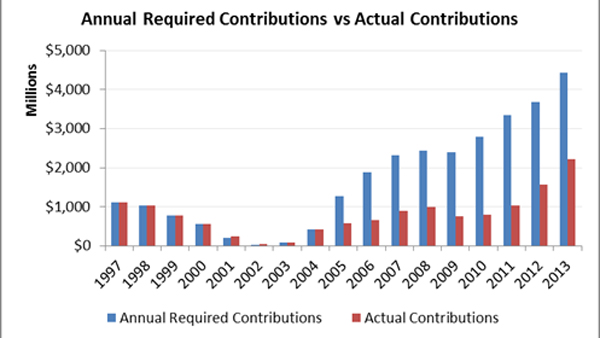
Basically, the legislature stopped paying the bills for 17 years.
pa_required_vs_actual_contributions_pew_600

Both the state government and commonwealth employees are responsible for paying into the pension system. And state workers made all their payments. They put aside 7.5% of their salaries every year to pay for their retirement.

But the legislature didn’t make its payments. It pushed them off to the future, and now that the future’s here, lawmakers have the gall to act like they have no idea where this cost is coming from!?

You ran up the bill! Time to pay! But instead of doing that, you blame the hardworking men and women who do all the state’s actual J.O.B.’s. And you practice Al-Qaeda tactics against labor, teachers and students!

Is that too harsh?

Who else holds people hostage to their demands?

This is terrorism as governmental policy. Our course of action should be the same with guerrilla extremists at home as it is with those on foreign soil: We don’t bargain with fanatics.

Gov. Wolf has a plan to pay off the pension debt. It’s nothing fancy. It’s the same kind of advice you might get from your accountant – or your mom. Refinance, reduce costs elsewhere and pay your bills.

That’s certainly a more sound strategy than holding a knife to workers and kids.


If you live in the commonwealth, please write your Senator and State Representative asking them not to support the GOP pension plan and to pass Gov. Wolf’s budget.

NOTE: This article was also published on the Badass Teachers Association blog. I also talked at length about this subject on the Rick Smith Show.

BONUS VIDEO:
https://www.youtube.com/watch?v=JhUPs6SJQMc

Data Abuse – When Transient Kids Fall Through the Cracks of Crunched Numbers

Screen shot 2015-05-16 at 9.13.34 AM

I was teaching my classes.

I was grading assignments.

I was procrastinating.

I should have been working on my class rosters.

My principals wanted me to calculate percentages for every student I had taught that year and submit them to the state.

How long had each student been in my grade book? What percentage of the year was each learner in my class before they took their standardized tests?

If I didn’t accurately calculate this in the next few days, the class list generated by the computer would become final, and my evaluation would be affected.

But there I was standing before my students doing nothing of any real value – teaching.

I was instructing them in the mysteries of subject-verb agreement. We were designing posters about the Civil Rights movement. I was evaluating their work and making phone calls home.

You know – goofing off.

I must not have been the only one. Kids took a half-day and the district let us use in-service time to crunch our numbers.

Don’t get me wrong. We weren’t left to the wolves. Administrators were very helpful gathering data, researching exact dates for students entering the building and/or transferring schools. Just as required by the Commonwealth of Pennsylvania.

But it was in the heat of all this numerological chaos that I saw something in the numbers no one else seemed to be looking for.

Many of my students are transients. An alarming number of my kids haven’t been in my class the entire year. They either transferred in from another school, transferred out, or moved into my class from another one.

A few had moved from my academic level course to the honors level Language Arts class. Many more had transferred in from special education courses.

In total, these students make up 44% of my roster.

“Isn’t that significant?” I wondered.

I poked my head in to another teacher’s room.

“How many transient students are on your roster?” I asked.

She told me. I went around from room-to-room asking the same question and comparing the answers.

A trend emerged.

Most teachers who presided over lower level classes (like me) had about the same percentage of transients – approximately 40%. Teachers who taught the advanced levels had a much lower amount – 10% or below.

Doesn’t that mean something?

Imagine if you were giving someone simple instructions. Let’s say you were trying to tell someone how to make a peanut butter and jelly sandwich. But in the middle of your instruction, a student has to leave the room and go right next door where someone is already in the middle of trying to explain how to do the same thing.

Wouldn’t that affect how well a student learned?

If someone was trying to give me directions how to get somewhere under those circumstances, I’m willing to bet I’d get lost.

And this assumes the break between Teacher A and Teacher B is minimal, the instruction is disrupted at the same point and both teachers are even giving instruction on the exact same topics.

None of that is usually true.

I did some more digging. Across the entire building, 20% of our students left the district in the course of this school year. About 17% entered mid-year. So at least 37% of our students were transients. That’s 130 children.

The trend holds district wide. Some schools have more or less transients, but across the board 35% – 40% of our students pop in and out over the year.

Taking an even broader view, student mobility is a national problem. Certainly the percentage of student transience varies from district to district, but it is generally widespread.

Nationally, about 13 percent of students change schools four or more times between kindergarten and eighth grade, according to a 2010 Government Accountability Office analysis. One-third of fourth graders, 19 percent of eighth graders, and 10 percent of twelfth graders changed schools at least once over two years, according to the 1998 National Assessment of Educational Progress (NEAP).

And it gets worse if we look at it over a student’s entire elementary or secondary career. In fact, more students moved than remained in a single school, according to a national longitudinal study of eighth graders.

This problem is even more widespread among poor and minority students. The type of school is also a factor. Large, predominantly minority, urban school districts attract the most student mobility. In Chicago public schools, for instance, only about 47 percent of students remained in the same school over a four-year period. Fifteen percent of the schools lost at least 30 percent of their students in only one year.

And this has adverse affects on children both academically and psychologically.

Several studies at both the elementary and secondary levels conclude student mobility decreases test scores and increases the drop out rate.

A 1990s Baltimore study found, “each additional move” was associated with a .11 standard deviation in reading achievement. A similar 1990s Chicago study concluded that students with four or more moves had a .39 standard deviation. Highly mobile students were as much as four months behind their peers academically in fourth grade and as much as a full year behind by sixth grade, according to a 1993 Chicago study by David Kerbow.

It just makes sense. These students have to cope with starting over – fitting in to a new environment. They have to adjust to new peers and social requirements.

Moreover, transients have an increased likelihood of misbehaving and participating in violence. After all, it’s easier to act out in front of strangers.

What causes this problem? Most often it is due to parental job insecurity.

Parents can’t keep employment or jobs dry up resulting in the need to move on to greener pastures.

In my own district, one municipality we serve is mostly made up of low-cost housing, apartments and slums. It is a beacon  for mobility. Few people who haven’t lived here their whole lives put down roots. We’re just another stop on a long and winding road.

“We should be doing something about this,” I thought.

Our legislators should help promote job security. We should make it easier to afford quality housing. We should try to encourage new-comers to become part of the community instead of remain eternal outsiders.

At our schools, we need resources to help this population make the necessary adjustments. We should encourage them to participate in extra-curricular activities, provide counseling and wraparound services.

But we don’t do any of that.

Instead, we gather mountains of data.

We sort and sift, enter it into a computer and press “submit.”

And off it goes to the Pennsylvania Value Added Assessment System (PVAAS).

We don’t use it to help kids.

We use it to blame school teachers for things beyond their control.

Data has value but that doesn’t mean all data is valuable.

We need to know what we’re looking for, what it means and how to use it to make our world a better place.

Otherwise it’s just a waste of precious class time.

And an excuse to continue ignoring all the children who fall through the cracks.


NOTE: This article also was published on the LA School Report and the Badass Teachers Association blog.

This Article May Be Illegal – Lifting the Veil of Silence on Standardized Testing

whistle

Warning!

What you are about to read may be a criminal act.

I may have broken the law by putting this information out there.

Edward Snowden leaked data about civilian surveillance. Chelsea Manning released top secret military documents.

And me? I’m leaking legal threats and intimidation students and teachers are subject to during standardized testing.

Not exactly a federal crime is it?

No. I’m asking. Is it?

Because teachers are being fired and jailed. Students are being threatened with litigation.

All because they talked about standardized tests.

The US government mandates public school children be subjected to standardized assessments in reading and math in grades 3-8 and once in high school. Most schools test much more than that – even as early as kindergarten.

And since all of these assessments are purchased from private corporations, the testing material is ideological property. The students taking these exams – regardless of age – are no longer treated as children. They are clients entering into a contract.

At the start of these tests, students are warned of the legal consequences of violating the terms of this agreement.

In particular, the Pennsylvania System of School Assessment (PSSA) tests require students to read the following warning on the first day of the assessment:

DO NOT PHOTOGRAPH, COPY OR REPRODUCE MATERIALS FROM THIS ASSESSMENT IN ANY MANNER. All material contained in this assessment is secure and copyrighted material owned by the Pennsylvania Department of Education. Copying of material in any manner, including the taking of a photograph, is a violation of the federal Copyright Act. Penalties for violations of the Copyright Act may include the cost of replacing the compromised test item(s) or a fine of no less than $750 up to $30,000 for a single violation. 17 U.S.C. $ 101 et seq

So the first act of testing is a threat of legal consequences and possible fines.

There are no such warnings on my own teacher-created tests. Sure I don’t want students to cheat, but I don’t threaten to take them to court if they do.

The school has a plagiarism policy in place – as almost every public school does – which was created and approved by the local school board and administration. The first infraction merits a warning. The second one results in a zero on the assignment, and so on.

Moreover, this is something we go over once at the beginning of the year. We do not reiterate it with every test. It would be counterproductive to remind students of the dire consequences of misbehavior right before you’re asking them to perform at their peak ability.


Okay, Brady! Go out there and win us a football game! By the way, if you deflate that football, you will spend the rest of your life in jail. Go get ‘em!

But that’s not all.

In Pennsylvania, we also force kids to abide by a specific code of conduct for test takers. They must enter a quasi-legal relationship before they are even permitted to begin the tests we’re forcing them to take.

Much of this code is common sense. Get a good night’s sleep. Fill in bubbles completely using a number two pencil.

But some of it is deeply disturbing.

For example, students are told to “report any suspected cheating to your teacher or principal.”

They have to agree to be an informer or snitch to a government agency. My students aren’t old enough to vote or even drive a car, but they are directed to collaborate with the government against their classmates.

In addition, they are told NOT to:

-talk with others about questions on the test during or after the test.

-take notes about the test to share with others.

Sure kids shouldn’t talk about the test with classmates DURING the testing session. Obviously! But why can’t they discuss it after the test is over!?

Kids aren’t allowed to say to their friends, “Hey! Did you get the essay question about ‘The Tell-Tale Heart’?”

They aren’t allowed to discuss how difficult it was or compare how each of them answered the questions?

These are children. If you think they aren’t talking, then you just don’t know kids. You don’t know people!

And why shouldn’t they talk about it? They just shared a stressful, common experience. Who wouldn’t want to compare it to what others went through so as to decide how your experience rates? Did you answer the questions well or not? Did you get a more difficult question than others? Did the thing that struck you as odd also hit others the same way?

Personally, I do not consider talking like this to be cheating. It’s just human nature.

But we force kids into a legalistic vow they won’t do it. On the test, we make them fill in a bubble next to the following statement:

By marking this bubble I verify that I understand the “Code of Conduct for Test Takers” that my Test Administrator went over with me.

As a test administrator, I am not allowed to move on until all students have filled in that bubble. I wonder what would happen if one of them refused.

Technically, we aren’t making them promise TO ABIDE by the code of test takers. Perhaps we lack that legal authority. We are, however, making them swear they understand it. Thus we remove ignorance as an excuse for not following it.

But there is a veiled threat here. We imply that not following this code will have harsh legal consequences.

And I’m not sure it should.

Kids certainly ignore it. They almost definitely discuss the exam with their peers after the testing session. But we’ve given them a sense of guilt, fear and anxiety just for being normal human beings.

That’s wrong.

Teachers are forced to do it, too.

Just as there is a code for test takers, there is a code for test proctors.

I have to sign that I understand the “Ethical Standards of Test Administration.” Again, much of this is common sense, but it includes such statements as:

DO NOT:

-Discuss, disseminate or otherwise reveal contents of the test to anyone.

-Assist in, direct, aid, counsel, encourage, or fail to report any of the actions prohibited in this section.

So even teachers technically are not allowed to discuss the test and should report students or colleagues seen doing so.

If I walk into the faculty room, and one of my co-workers describes a question on the test and asks my opinion, I’m supposed to report this person to the authorities.

What kind of Orwellian nightmare are we living in?

If we see a question that is badly worded, misleading, has no correct answer, contains misspelled words – anything out of the ordinary – we’re supposed to remain silent. In fact, we’re not supposed to read anything on the test other than the instructions.

I can’t talk about it to my colleagues, my principal, my spouse, my priest – ANYONE.

What are the consequences of breaking this code?

Ask those teachers in Atlanta who were convicted of cheating. Obviously they did more than just talk about the test and they deserve to be punished. But there is a specific threat to teachers if they violate this code.

According to the “Pennsylvania System of School Assessment Directions for Administration Manuel”:

Those individuals who divulge test questions, falsify student scores, or compromise the integrity of the state assessment system in any manner will be subject to professional disciplinary action under the Professional Educator Discipline Act, 24 P.S. $ 2070. 1a et seq, including a private reprimand, a public reprimand, a suspension of their teaching certificate(s), a revocation of their teaching certificate(s), and/or a suspension or prohibition from being employed by a charter school. [emphasis added]

So teachers may lose our certifications, livelihoods, etc. Heck! We could be charged with racketeering like the Gambino Family and face up to 20 years in jail!

And all just for talking!

I thought speech was protected by law. Doesn’t the First Amendment protect me from prosecution for speaking except under extreme and unusual circumstances?

If my colleagues and I were to discuss the appropriateness of certain test questions, would that really be such a bad thing? If we compared the questions being asked with how we prepared our students for the test, wouldn’t that – in fact – be the responsible thing to do?

I never give my students one of my own teacher-created tests without knowing exactly what’s on it. I’ve read the test from top to bottom. Heck! I made it!

One shouldn’t feel like a whistle-blower for talking about a standardized test. Discussing the appropriateness of specific test questions does not make me Julian Assange.

Therefore, I must ask an important question of you, dear reader: Did I violate these rules by writing this very article? Is the piece you are reading right now illegal?

I contend that it isn’t. The code of conduct for both test takers and test administrators is freely available on-line from the Pennsylvania Department of Education. The legal threat at the beginning of the test is reproduced almost word-for-word in a sample letter the state Department of Education suggests schools send to parents before testing begins.

I haven’t included anything here that is not freely available on the Internet or elsewhere.

But the need I feel to stop and answer this question is kind of scary.

There is a veil of secrecy over these tests and the way they are administered. And it’s no accident. The testing companies don’t want all of this to become public knowledge. They don’t want the quality or inferiority of the actual exams to be known.

And our state and federal governments are protecting them. From whom? Our teachers, parents, and students.

Shouldn’t our legislators be looking out for our rights and not just those of private contractors who were hired to provide a service? Obviously we have to allow test manufacturers the freedom to do their jobs – but some of this seems to go beyond that requirement.

We’re being silenced and intimidated to protect an industry that is of dubious quality and obscene profitability.

Every day more people are asking questions about the validity of standardized testing. Everything from the frequency of the tests to the value of cut scores has been the subject of criticism. Thousands of parents are refusing to let their children take these assessments at all.

Isn’t it time to throw back the Iron Curtain of standardization and look at these tests in the cleansing light of day? Isn’t it time to evaluate this process as well as the product? Do we really want to support a system that encourages silence and snitching from our children and educators?

Isn’t it time to move beyond standardization and toward a system of teacher-created curriculum and testing instead of relying on capitalist profiteers.

Big Corporation is watching.

Let’s poke him in the eye.


NOTE: This article also has appeared on Diane Ravich’s blog, Commondreams.org and the Badass Teachers Association blog.

Oooh! Scary! What Would Happen if Pennsylvania Passed the Wolf Budget?

campfirestorrd

Gather round the campfire, children, and hear a story to chill the very marrow in your bones!

Let me turn off the lights and point this yellow flashlight beam on my face as I share a tale of terror straight from the Pennsylvania legislature!

Imagine – if you will – a Commonwealth that has invested in public education.

The schools are pristine palaces to learning and self-actualization.

Class sizes are down. We’ve rehired the 25,000 teachers we sacked four years ago to balance the books. All children get arts, music, science labs, foreign languages, sports and extra-curricular activities. Even amenities like school nurses and guidance counselors have been restored.

Children from all walks of life enter those hallowed halls and no matter their family background, parental education, income, race or social class, they leave fully functioning adult citizens ready to lead our state into a brighter future.

But!

Oh the horrendous but!

No one can afford toilet paper!

I know, children! It’s enough to shrink your sphincter with dread!

We’d pay for this educational utopia with an anal Armageddon!

Even the name of our fair state would have to change to Poopsylvania!

Educated urchins would roam the streets hunting for any scrap of angel softness. It would be bathroom chaos from the City of Phila-dookie-ah to the streets of Shittsburgh!

Because… TAXES!

Such is the horror story being told by Pennsylvania Republicans about Gov. Tom Wolf’s budget proposal.

They softly intone the words, “tax hike,” while squeezing the Charmin tightly to their chests.

Fortunately, they’re just talking out of their butts.

Gov. Wolf’s proposed budget WOULD increase education funding. In fact, it would heal the $1 billion in annual education cuts made by the previous administration.

To do so, the freshman governor has proposed an ambitious new tax plan.

Much income would be generated from a proposed severance tax on natural gas extraction, closing tax loopholes and other cost savings. However, the sticking point for fiscal conservatives is a plan to reduce local property taxes while increasing income and sales taxes.

“Tax hike!” they scream tearing out fistfuls of grey hair. But if you’re raising taxes on one thing and reducing them on something else, at the end of the day are you really raising taxes?

It depends.

In short, homeowner’s property tax bills will go down, but grocery bills will go up.

Some consumer analysts are projecting toilet paper, for example, to go up a whole six cents on the dollar!

This is where conservatives offer us a Sophie’s Choice: will your kids learn how to read and write or will you get to wipe your butt?

Apparently there is no middle ground.

But this isn’t a matter of opinion. It’s a simple question of math. Would most people save enough from the property tax reduction to come out ahead of the increased sales and income taxes?

The answer? According to the Wolf administration, the poor and middle class will end up paying less, while the rich will end up paying more. The average family would receive a net tax decrease of about 13%.

Tax savings would depend on several factors – income, whether you own or rent your home, which school district you live in, and how much you spend on taxable items each year.

If this seems too complex to you, far right think tanks have simplified the matter to a pure “The Sky is Falling” scenario.

The Heritage Foundation estimates Wolf’s budget would cost families an additional $1,400 a year. However, this estimate is highly contested. No one seems to be able to show where it comes from, how it was calculated or to prove that it truly takes into account the cost savings from reduced property taxes.

It’s an amorphous number, floated in obscurity in great need of being flushed away.

More over, these gloom and doom calculations are clearly politically motivated. A few years ago, Republicans proposed a similar plan, themselves!

That’s right! Conservatives had no problem offsetting property taxes with increased sales taxes when it was the GOP proposing it! However, when almost-the-same-plan comes out of the mouths of Democrats, it’s suddenly a three-ply catastrophe!

Property tax relief has been a major issue for both Democrats and Republicans in the Commonwealth for decades.

Pennsylvania has one of the worst tax codes in the country. Currently, the less income you bring home, the higher percent you pay in taxes.

This is true for taxpayers nationwide, but in the Keystone state we take it to a whole new level.

This is largely due to unequal property taxes. The Commonwealth’s poorest households pay nearly 4% of their total income on their homes, while the wealthiest pay just 1.6%. This is a much larger difference than in most states. Wolf’s new tax plan would address this inequality directly making for a fairer distribution of costs for the average resident.

The problem is even worse for our public schools that are forced to rely far too heavily on property taxes. The Commonwealth only pays 36.1% of the cost of education. This is far below the national average of 45.5%, and ranks 45th in the nation. Wolf’s budget would bring state spending up to 50% – more in line with what the rest of the country invests in its children.

Add to this a funding formula that would ensure poorer schools get a fair distribution of the pie, and you get a whole mess of education equity. A whole mess that Republicans want to wipe away.

It is a sad commentary on our right-leaning legislators that they’re pissing and moaning about putting back the funds this year that they had no problem stripping away four years ago.

After one term of a Republican governor, Pennsylvania is the laughing stock of the country in terms of education. We spend less on our poor students compared to our rich ones than ANY OTHER STATE!

That’s right! When it comes to cheating impoverished kids out of an education, we’re number one!

Nationwide, rich schools already spend on average 15.6% more than high poverty schools. But in Pennsylvania, the difference is 33%!

We are systematically short-changing our neediest children year-after-year, and there are actually people out there who can look at you with a straight face and complain about toilet paper!?

But you know what? Let’s entertain this criticism for a moment.

Let’s say that the Commonwealth Foundation, Americans for Prosperity and a host of other far right think tanks are correct. Wolf’s budget taxes things it shouldn’t.

Does that mean you scrap the whole education funding plan? Or does it mean you find the money elsewhere?

Do we just shrug, clutch the bathroom tissue to our chests and walk away? Or do we make education a statewide priority?

Even Wolf’s budget reduces taxes for corporations and big business. Perhaps we could generate some revenue there instead of in the toiletry aisle.

It’s funny how you never hear that offered as a solution.

The reason? They don’t give a shit about poor kids. Even if they had reams of toilet paper!

So the next time you hear someone try to sell you on this bogus bathroom Catch 22 – turn up your nose.

It’s not a question of toilet paper or education.

It’s not a question of the butt or the brain.

It’s a question of conscience.


NOTE: This article also appeared in the Badass Teachers Association blog.

When Kids Teach Adults – Lessons from the Newark Student Union Sit-in

Newark-student-walkout-3-9-9-141

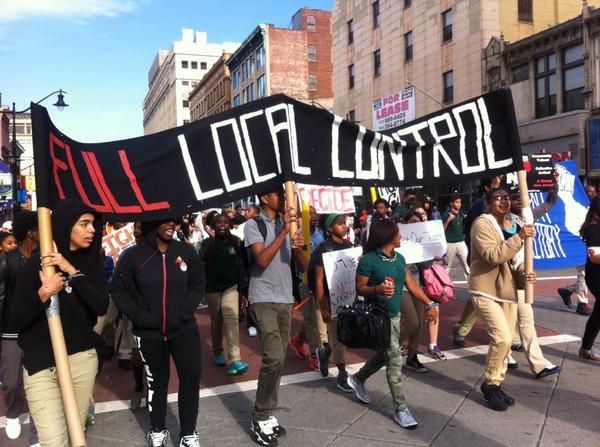
If ISIS extremists flew in from the Middle East and took over our public schools, we wouldn’t stand for it.

But if those extremists are from our own state or federal government, we just yawn and change the channel.

Though not for the last three nights.

A handful of plucky Newark school students have demanded our attention, and, Brother, do they have it!

At least six Newark students have staged a sit-in at the offices of Superintendent Cami Anderson demanding she step down and the district be returned to the voters. The district has been under state control for the last two decades.

This could have been handled easily. Anderson could have met with the students to talk about their concerns. After all, she is a public servant and even school kids are members of the public.

But instead she’s abandoned her office, sent threatening letters to the children’s parents and blocked or held up shipments of food to the young protestors.

Undeterred, the youngsters have set up a live feed on youtube to broadcast their action to the world, tweeting with the hashtags #OccupyNPS and #OurNewark. And the world has been paying attention. Local officials including Mayor Ras Baracka are calling for Anderson’s resignation. The teachers union is discussing holding an illegal strike if the students are forcibly removed.

But more importantly, people all over the country are talking about something they haven’t talked about – maybe – ever: local control.

What gives the state or federal government the right to come in and take over your public school?

Sure if there’s some kind of malfeasance going on, it makes sense to oust a particular school director. If the entire board is working in collusion against the public interest, maybe then it makes sense to get rid of all of them. A temporary acting school board might be necessary in such an unlikely case.

But why not then just hold another election and be done with it? Why would the state keep control over a public school for years or decades after a crisis?

The answer: many of our state and federal government officials don’t believe in local control.

Don’t worry. They’re not against it for everyone.

They don’t come in and take over just any school. If you live in a rich neighborhood, you can breathe easy. No state has ever taken over a posh district.

However, if you live in a poor community with a school that struggles to get by on the contributions of the impoverished local tax base, then the state may be gunning for you.

In my home state of Pennsylvania this has happened numerous times: Duquesne, Chester Upland and Philadelphia spring immediately to mind. In fact, Philly schools have been under control of the State Recovery Commission almost as long as Newark. At the same time Newark students were settling in for their second night in Anderson’s office, the Philadelphia SRC was having citizens arrested for protesting the state-appointed directors decision to expand charter schools.

What gives these people the right to take over our schools?

Poverty.

The excuse is always that the democratically-elected school board didn’t manage the district’s finances well enough. That’s why there were dwindling services for students.

However, the truth is more simple. School directors weren’t able to get blood from a stone. While rich districts rely heavily on a fat tax base that could support whatever services their children need, poor ones limp by. The state and federal government – seeing the trouble our poor districts are in – have a responsibility to come forward and provide financial assistance. After all, every child in this country has the right to a free and appropriate public school education. This doesn’t change just because your folks are poor.

But instead of facing up to their responsibilities, the state and federal government have used this monetary crisis to steal control of the poorest public schools.

And what’s worse, they haven’t improved the quality of services for students under their care! Instead they make sure any moderate increase in funding gets siphoned off to the corporate education reform movement before it ever reaches kids.

The standardized testing industry has increased 57% in the last three years alone to a $2.5 billion a year market. And that doesn’t even count the billions more being raked in by textbook companies (many of them are the same ones producing and grading the tests) with test prep materials and Common Core.

So why does the state and federal government unconstitutionally swipe away local control from people living in poor districts?

Because they can make money off of it!

This is exactly the abomination that the Newark Student Union is shinning light on.

Five years ago, Newark Schools received a $100 million gift from Facebook’s Mark Zuckerberg to turn around the district. The project is called One Newark. The director is Anderson.

However, instead of turning the district around, it has been responsible for closing or relocating schools, opening new charter schools and displacing staff. And no improvement to district services!

Where’s the money going? Here’s a hint: Anderson has been sharply criticized for spending $37 million on consulting fees to prominent factory school reformers.

It’s time to end the practice of public school takeovers. There is no good reason for the state or federal government to snatch away our local schools. This is clearly a violation of the almost every state constitution (including New Jersey and Pennsylvania’s) and the rights of citizens and students. Public schools should remain public.

This is what our children are trying to tell us there in Cami Anderson’s office.

As they continue for a third night, I find myself with two distinct opposite emotions.

I feel an overwhelming shame for my generation. We have let greed get the better of us. How dare we trample the future of countless generations of children for financial gain! When I think of people like Anderson and ex-Mayor Cory Booker, people like my own ex-Governor Tom Corbett, I want to throw up.

However, at the same time I’m also filled with such immense hope! These children have shown us that we can be so much more than the sum of our base natures! We can overcome our menial immediate needs and put the suffering of others over that of ourselves!

I can’t express enough the joy and admiration I have for the members of the Newark Student Union! They represent the future we might attain – if only us adults will let them shine!


UPDATE: The sit-in ended after three days when Anderson met with students. They continue to call for her resignation.

This article was also published on the Badass Teachers Association blog.

The Worst Sort of Violence Against Children

school_and_TBI_iStock_000007171993XSmall

She was smiling and laughing, but her eyes were terrified.

Sitting in class among her fellow middle school students, her words were all bravado. But her gestures were wild and frightened. Tears were close.

So as the morning bell rang and the conversation continued unabated, I held myself in check. I stopped the loud rebuke forming in my teacher’s throat and just listened.

“You know that shooting at Monroeville Mall Saturday night, Mr. Singer? I was there!”

I swallowed. “My gosh, Paulette. Are you okay?”

She acts street smart and unbreakable, but I can still see the little girl in her. She’s only 13.

She slowed down and told us what happened; a story framed as bragging but really a desperate plea for safety and love.

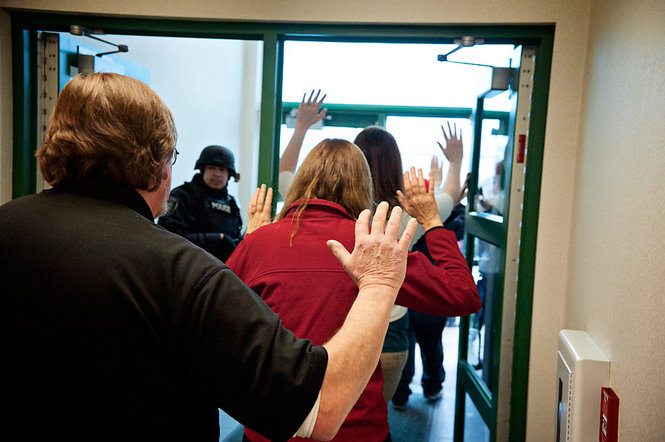
She went to the mall with her mother. When they separated so she could go to the restroom, the gunfire began. She ran out and Mom was gone. She was ushered into a nearby store where the customers were kept in lockdown. She stayed there until the police cleared the mall, and it was safe to find her mother and go home.

A 17-year-old boy had gunned down three people. One was his target. The others were bystanders – parents who had gotten in the way. Now they were all in the hospital, two in critical condition.

And my student – my beautiful, precious, pain-in-the-butt, braggadocious, darling little child – was stuck in the mix.

I could imagine how scared she must have been separated from her mother, hiding with strangers as police swept the shops, food court and children’s play center.

Here she was telling the class her story and getting more upset with each word.

I gave her a meaningful look and told her we’d talk more later. Then I began class.

But I kept my eye on her. Was that relief I saw as the talk turned from bullets and bloodshed to similes and metaphors? Did the flush leave her cheeks as we crafted multi-paragraph theses? I hope so.

I think I know her pretty well by now. She’s been mine for two years – in both 7th and 8th grades. I even taught her older brother when he was in middle school.

I know she’s rarely going to do her homework – and if she does, it will be finished in the last 20 minutes. I know she’d rather be out playing volleyball or cheerleading than in school writing or reading. I know when she’s secure and when she’s scared.

And I know that today’s lesson will be a breeze for her. So why not put her in her comfort zone, show her things haven’t changed, she’s still the same person, she can still do this – nothing is different?

At least, that was the plan.

As any experienced public school teacher knows, you have to satisfy a person’s basic needs before you have any chance at teaching them something new. Psychologist Abraham Maslow’s Hierarchy of Needs is always at the back of mind.

Students must have their physical needs met first – be fed, have a full night’s rest, etc. Then they have to feel safe, loved, and esteemed before they can reach their potentials.

But meeting these needs is a daily challenge. Our students come to us with a wealth of traumas and we’re given a poverty of resources to deal with them.

How many times have I given a child breakfast or bought a lunch? How many kids were given second-hand clothes or books? How many hours have I spent before or after school just listening to a tearful child pour out his heart?

Let me be clear. I don’t mind.

Not one bit.

It’s one of the reasons I became a teacher. I WANT to be there for these kids. I want to be someone they can come to when they need help. It’s important to me.

But what I do mind is doing this alone. And then being blamed for not healing all the years of accumulated hurt.

Because that’s exactly what’s expected of teachers these days. Fix this insurmountable problem with few tools and if you can’t, it’s your fault.

I didn’t shoot up the mall. I didn’t pass the laws that make it so easy for kids to get a hold of a gun. I didn’t pass the laws that allow such rampant income inequality and the perpetuation of crippling poverty that more than half of our nation’s public school children live with every day. And I sure didn’t slash public school budgets while wealthy corporations got a tax holiday.

But when society’s evils are visited on our innocent children, I’m expected to handle it alone. And if I can’t solve it all by myself, I should be fired.

That is where I take umbrage.

The issue is violence but not all of it comes at the end of a gun.

Keeping public schools defunded and dysfunctional is also a form of violence. Promoting privatization and competition when kids really just need resources is also cruelty. Pretending that standardized curriculum and tests are a Civil Right is also savagery.

It’s called class warfare. Its most prominent victims are children. Its most active soldiers are teachers. And we’re on the front lines every day.

When the bell rang to end class, Paulette stopped by my desk.

I looked up at her ready to give whatever support I could. It was my lunch break, but I was willing to skip it and just talk. I’d get the guidance counselor. I’d call home. Whatever she needed.

But none of it was necessary.

“Are you okay?” I asked.

“Yeah.” She gave me a big smile and a deep breath.

I returned it.

Today would be alright. Tomorrow? We’ll meet that together.

But we sure could use some help.


NOTE: Names and other minor details may have been changed to preserve anonymity.

This Article was also published in The Progressive, Portside Navigator, Common Dreams, Public School Shakedown and the Badass Teachers Association blog.

Confession of a Standardized Test Proctor

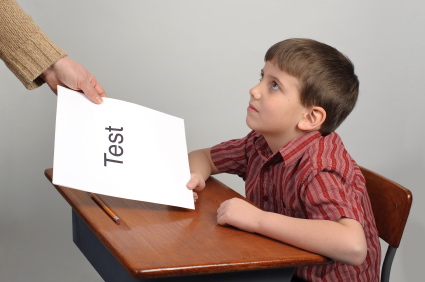
A boy receiving a failing test score

Hello. My name is Steven.

HI, STEVEN!


And I’m a standardized test proctor.

(Clapping!)

I’ve been a proctor for over 10 years now. I used to be a teacher. Some days I still get to be one, but most of the time… I’m just a proctor.

(Clapping. Shouts of “YEAH!”)


I give my students standardized tests.

WOO-HOO!


And I make them do test prep.

(Cheers!)

But…

(Breaks down. Someone walks up behind him, claps him on the back and whispers in his ear. Encouraging noises from the crowd of people sitting in folding chairs around the room.)


Let me start with the box.

(Laughter)


The box came to my middle school classroom right before Christmas break. You know the one. Like a cinder block made of cardboard. 

A high school student brought it down from administration. She shook it like a huge maraca and asked, “Mr. Singer, where do you want it?”

For a second I had no idea what it was. Then I remembered – it was almost time again to take the GRADE Test. And I knew what it was – a box full of those black and green test booklets, Scantron sheets wrapped in plastic, a box of No. 2 pencils, a monitor’s booklet, scratch paper, student rosters and ID numbers… Everything I wanted for Christmas.

(Laughter)


So I put it on the shelf, went on teaching and forgot about it until December was over, until after the holiday break.

I didn’t want to even think about it.

But when I came back to school in January all rested and raring to go, I saw it there like some sinister Elf on the Shelf.

So I put it off for another week. No rush. I had until the end of the month to make my students take it.

I just…

I couldn’t have them come into my classroom and first thing take a standardized test. That would have been heartless. They didn’t come back to school to fill in bubbles. They wanted to do something interesting, something that they really cared about.

They wouldn’t admit it, but they wanted to learn Goddammit!

And I wanted to teach!

(Grumbling) TELL US ABOUT IT!


What?

TELL US ABOUT THE WEEK BEFORE YOU TESTED!


Okay. I…

It was great. We read S. E. Hinton’s The Outsiders. Or at least a few chapters of it. 

The kids couldn’t put it down. If there were only a few minutes left in class, they didn’t want to stop reading – they wanted to keep going. 

We wrote journal entries about what we might have done in the characters’ places, examined the use of slang and how it has evolved over time.

We participated in a Socratic Seminar discussion where we made connections between the novel and our own lives, explored gender issues, the role of socioeconomic status and race – it was higher level thinking all around. You know? The stuff they tells us we’re supposed to teach – the stuff all the research tells us helps learners grow.

But it didn’t last. The week ended. And I had to give the GRADE Test.

OOOH! (a few claps)

You know, it’s funny. Working in a poor school district like mine, you hear a lot about accountability. If administrators don’t enact this reform, or teachers don’t do that paperwork or students don’t score this high – they’ll close us down. But no one talks about holding politicians accountable for making sure we have the resources we need.

Case in point: when I came back from break, the fan in my room’s cooling system had broken down. I have no windows and the air wasn’t circulating. It was hot and muggy and miserable. Yes, in January with arctic temperatures outside!

I asked the grounds keeper and administrators to do something about it, but was told repeatedly “the part is on order.” Nothing happened.

The first week wasn’t too bad. We managed. But it wasn’t until the second week – when I gave out the test – that it went from annoying to miserable!

(He pauses, shaking his head.)

I don’t know. Maybe it wouldn’t be so bad if it was a different test, but the GRADE…

…. is such a waste of time!


(good natured laughter. Mumbling.)


They call it a reading diagnostic test because it’s supposed to diagnose the kids’ deficiencies in reading. But it doesn’t do that for a host of reasons – chief among them the fact that kids take the same exact test over-and-over again for at least three years!

That’s right! No variation! The same questions in the same order three times a year – year-after-year. Heck! This was the second time they were taking this same test just this year alone!

Sure there’s one alternative version we COULD give to mix things up, but administration rarely lets us do that. And even if we did, it wouldn’t help that much.

(Snickers!)


What’s worse, it isn’t even aligned with the high-stakes tests kids have to take in March and April!

Yeah! They stick a gun to our heads and say if your students don’t score well on the all-or-nothing, win-or-lose state tests, we’ll label you a “failure,” cut your funding or close you down.

So you’d think we’d practice – try to do look-alikes and get comfortable with the format and everything.

But the rehearsal we’re forced to do is the GRADE test! That’s like practicing a layup when you’re getting ready for the chess tournament!

The preparation doesn’t reflect what students will be asked to do when it comes to the make-or-break exams!

It wasn’t always like this.

We used to have kids take a diagnostic test called the 4SIGHT. It wasn’t perfect. Kids took it on computers, but there was an essay section they’d write on paper, too, that I was actually allowed to grade, myself!

I thought there were better uses of class time, but at least the 4SIGHT was actually a good dry run for the kind of high-stakes tests they were going to take later in the year. And sections they took on the computer gave you a score immediately. 

It was something you could look at as a rehearsal, as reducing test anxiety, as providing you data you could use to make decisions about the students.

(Laughter)


Yeah! As if you’d need it! Any teacher who knows his students so poorly that he needs standardized tests to tell their strengths and weaknesses is a pretty poor teacher.

The only reason we changed to the GRADE Test in the first place is because the district got a grant from the state. 

First, the governor and legislature slashed our budget, then they offered to give us back a small portion of it if we enacted certain reforms – one of which was to replace our somewhat helpful diagnostic test with a totally useless Pearson product.

(clapping. A few catcalls of “PEARSON! OOOH! OOOH!”)

Come to think of it – 4SIGHT was also made by Pearson.

(Laughter)


And the time it takes to give this thing! There are only four sections – Vocabulary, Sentence Completion, Listening Comprehension and Passage Comprehension. But it takes a minimum of two days – and I have double periods! That’s two 80-minute sections – actually more like three so I can give the make-ups!


(unhappy noise from crowd)


That’s right! If a student is absent, I have to somehow proctor the whole thing over again just for him. Administration says it’s too hard for them to pull students out of class and give the make-ups, themselves. So I’m forced to give busy work to students who completed the assessment so they have something to do while the stragglers catch up.

(grumbles)

So to review: today was day three of testing. Day six if you count the first time I proctored this darn thing. And three more days will be coming in May.

This is day seven of no air flow. Kids sitting at their desks like they’re half dead. Sad, bored looks on their faces, and I completely sympathize but I’m the one who’s forced to do this to them!

Every now and then one of them asks, “Why are we doing this, Mr. Singer? Will this affect my grade?” 

And I find the lies hard to get out. Because, no, it won’t affect your grade. There’s really no good reason you’re taking this, except that some of those books on the shelf you enjoy during sustained silent reading were bought with money we get for making you go through this nonsense.

I used to believe in standardized testing. I did!

When I first started teaching it made a certain kind of sense. We had the Pennsylvania System of School Assessment (PSSA) tests then. My 8th grade kids took one in Reading and one in Writing.

It was challenging but at least the expectations were clear. I knew exactly what kinds of things they would be tested on and what they were expected to do. 

There were reams of remediation material available, and I could have my pick of the best – the clearest and most engaging – as test prep materials go.

But then Pennsylvania adopted Common Core – or at least it adopted the look-a-like PA Core – and had to develop new tests! 

Today, high school students take a test called the Keystone and middle schoolers still take the PSSA. But they’re both just different versions of the PARCC test with a Pennsylvania-sounding name on it. We just pretend it’s something new and ground breaking.

That might be acceptable if the PARCC was a valid assessment. However, it’s notorious throughout the country for being designed to fail students – not fairly evaluate them. 

Moreover, the state Department of Education is extremely stingy with examples teachers can look at so we know what’s on the test. I doubt even they know what’s on it because they keep changing it from year-to-year.

So all of my remediation material is almost useless. I can’t even buy something new because it takes several years after a test is developed for the preparatory material to appear, and we’re still chasing a moving target!

And on top of all that – the state is forcing all schools to use the scores from these tests to evaluate teachers performance!

We use incomplete test prep and unaligned pretests to prepare for more tests that don’t fairly assess student learning – and then use these invalid scores to blame teachers and bemoan the state of education!

WHAT THE HELL!?

Yeah! So…

(Someone walks up behind him and whispers in his ear. Hands him something.)

I get this… chip?

(Cheers! He looks it over.)

One week. I’m a one week man!

(Clapping. People standing.)

I’ve accepted my lot for one week?

(Volume gets louder on applause.)

I’m a test proctor.

(Catcalls. ONE OF US! ONE OF US!)

I’m a test proctor!

(Insane yelling!)

I’M A PROCTOR! A PROCTOR! A TESTING PROCTOR!

(The crowd rushes to the stage and engulfs the speaker. More and more approach. They just keep coming – more than could possibly fit in this room. The clamor continues to gain in volume until its unclear whether its celebratory cheering or out of control insanity. One word is heard through it all until even it cannot be made out in any distinctness.)

PROCTOR!

(curtain.)


This article also appeared in the LA Progressive, Education Bloggers Network, Public School Shakedown and the Badass Teachers Association blog.

Dear Gov. Wolf – 10 Ways to Help Pennsylvania’s Schools

wolf-edu-infographic-blog-photo

Dear Gov. Tom Wolf:

It’s so nice to hear your name. Wolf. Wolf. Wolf.

I could write it all day. It’s so much better than Corbett.

As one of millions who voted for you, campaigned for you and even posted a yard sign for you – I want to offer my most cordial congratulations and welcome to office.

I know it may take a few weeks to get used to the new job. Heck! It could take a month just cleaning out all the skeletons left by your predecessor. It’s no coincidence that most of them are child sized.

Your forerunner treated public education like his own private piggy bank. He slashed education budgets with glee blaming it on federal stimulus dollars, Gov. Rendell or anyone but himself. Moreover, he trashed a newly created funding formula designed to ensure needy districts received adequate support. He stopped partially reimbursing poverty-stricken districts for the extra costs of having charter schools drain their coffers. And for a candidate who campaigned on limited government, he dramatically expanded the state role in education policy.

In short, it was a disaster. As a public school teacher, those were the four longest years of my life. I dearly hope we can expect better from you. One could easily make the case that you owe your position as governor to your stance against all these policies and the expectation that you would reverse course.

So let me offer some help. This is what I’d like to see you do as governor. I know it won’t be easy. I know you’ll probably have to compromise to work with a Republican legislature that enabled all these disasters to take place.

But you play a vital role – to set the agenda. And I fully expect you to do that for the children of Pennsylvania.

These are the top 10 ways to Help Pennsylvania’s schools:

1) Reverse Course in York

Talk about an American tragedy! York City Schools is a victim of your predecessor’s Draconian budget cuts. But instead of actually helping the district recover from years of underfunding, it was further hobbled by ideologues and profiteers.

First, Pennsylvania underfunds the already impoverished York Schools. Then when the district can’t cope with the lack of support, it’s labeled a “failure” and forced into a ridiculous recovery program. How does this make sense: tighten your belt, try a few targeted reforms and if that doesn’t work, give control of the district to a for-profit charter operator with a record of failure!?

And when the duly-elected school board has second thoughts, the state snatches control away from them and sends the school into receivership so this ridiculous privatization scheme can be instituted unmolested by Democracy!?

No. You need to listen to the taxpayers. Give control of the district back to the school board. Give the so-called Chief Recovery Officer his walking papers, throw his “Recovery Plan” into the trash and properly fund the district. No charters. Just common sense reform.

2) Return All Schools to Local Control

Public schools should be exactly that – public. Their actions should be governed by the community – not the state. Within certain Constitutionally mandated limits, the state has no business deciding what schools should be doing. The state’s main job is to ensure schools have what they need to function.

Yet Pennsylvania is running a handful of districts. Philadelphia Schools have been under control of the School Recovery Commission and appointed CEO for almost two decades with no improvement. Likewise, Duquesne and Chester Upland districts have struggled through receivership with nothing to show for it but misery and lack of services.

That’s why these schools were taken over in the first place. New leadership was never the problem. It was lack of funds.

Restore all Pennsylvania districts to the taxpayers and democratically elected school boards. Fund properly and stand back. Watch them flourish.

3) Increase the Education Budget

You campaigned on it. It’s time to do it. Bring funding back to pre-Corbett levels. In fact, increase it to reflect the increased costs of services. And bring back the charter school reimbursement.

A small increase will not be enough. Our schools have suffered through too much neglect. We need to lower class sizes and restore arts and music, extra-curricular activities, school nurses, librarians – everything we lost under your forerunner.

Critics will say this is throwing money at the problem. The rest of us call it an investment. We need to put more money toward educating children than locking up high school dropouts. We need to put all the strength and power of the Commonwealth into ensuring the next generation will have a better chance at succeeding than the current one.

That takes money. It takes taxes – especially on the wealthy and corporations that have had a tax holiday for the past four years. It’s time to pay up.

4) Institute a Fair Funding Formula

This is another of your campaign promises. Even your predecessor eventually came around to supporting it – after he trashed the one that had already been in place.

We need to make sure schools get the money they need to operate. This means the state has to provide more funding to cash-strapped schools than rich ones. After all, wealthy districts can rely more on local taxes. Poor districts cannot.

Start by re-instituting the funding formula the legislature created in 2008.

5) Halt Charter School Expansion

Speaking of money, it makes no sense to have two separate educational systems. It’s unnecessary and wasteful. We don’t need traditional public schools AND charters.

It’s all about performance. Traditional public schools often do much better or as well as charters – especially cyber charters.

So put a moratorium on new charter schools. Then make the ones we have transparent and accountable. You know? Like we already do for public schools!

No more holding board meetings in private, keeping budgets secret and discouraging difficult students from enrolling. Otherwise, the potential for malfeasance is huge – especially at those organized for-profit.

Direct the state Department of Education to investigate all existent charter schools to determine which are exemplary and which substandard. Close the bad, keep the good.

We simply can’t afford letting profiteers suckle on Pennsylvania’s school budgets.

6) Divest from Common Core. Return to PA Standards

Technically Pennsylvania never adopted Common Core State Standards. It just plagiarized them. We pretend our wonderful PA Core Standards are something new and innovative. They’re not. They’re just Common Core with Pennsylvania in the name.

What a waste of time and money! We don’t need the state telling districts what to do. There’s nothing wrong with benchmarks – suggested goals to which districts can aim. But unfunded mandates? No, thank you.

The Pennsylvania Standards that preceded PA Core were closer to the benchmark ideal. They were a guide – not a high-stakes mandated gun-to-your-head de facto curriculum.

Every teacher knows you don’t help children by simply changing the bar. But you do help textbook publishers by making them uniform. You create a market.

It’s time to do what’s best for children, not corporations. Throw out Common Core. Return to PA State Standards.

7) Cut Back on Standardized Testing

Everyone is sick of standardized tests. Teachers are sick of them. The kids and parents are sick of them. Even politicians are sick of them.

It’s time to do something about it.

Pennsylvania’s standardized test system is a joke. We took our own Pennsylvania System of School Assessments (PSSAs) – flawed as they were – and threw them away in favor of copying the horrific PARCC tests. The PSSAs weren’t exactly fair, nor did they accurately evaluate student learning. But at least they held reasonable goals.

The new state tests are so much like the PARCC, they expect students to be far above what is developmentally appropriate. Kids just aren’t ready for certain concepts until they’re older. These new tests ignore everything we know about how the growing mind works in favor of a scheme to fail more kids and sell more remedial textbooks.

We need to scrap these new tests and – in fact – dramatically reduce the number of standardized tests we give. In a perfect world, we’d give only one standardized test in high school and call it a day. Let kids in elementary and middle school learn their basic skills without the sword of Damocles hanging over their heads.

Moreover, don’t attach high-stakes to any test. That corrupts the score. Use it as a tool. It’s a way of checking the oil on a school’s educational engine. But you don’t throw a temper tantrum and blame the car when it’s low on oil. You add more oil. (See increase school funding.)

8) Abolish VAM Teacher Evaluations. Let Districts Design Their Own Evaluations.

When experts like those in the American Statistical Association are complaining that you’re using statistics incorrectly, you need to listen. Value-Added Measures are a horrible way to evaluate teachers. You simply can’t use student test scores to judge the effectiveness of teachers. It’s like measuring the size of the potholes on your work route to determine if you’re a good driver.

Moreover, the evaluation system now in place is a gothic, baroque mess. It’s cumbersome, takes way too much time from teachers and administrators and ultimately doesn’t provide a fair evaluation.

Let each school district come up with its own evaluation system. Yes, this probably means going back to relying on principals to actually observe their own teachers in their own ways.

Critics will complain this system is flawed because too many teachers get positive evaluations. So what? Most principals, parents and students are well satisfied with the quality of the teachers in their districts. Who are these corporate bureaucrats to tell them they’re wrong?

9) Appoint a Teacher as Secretary of Education

The state should have a limited role in setting education policy. You’d think your predecessor would agree seeing how he downsized the state Department of Education. But those employees he did keep – especially at the highest levels – had little to no education background.

In the rare case when an educator was hired, that background was almost completely in management positions – hardly any time in the classroom.

The Secretary of Education and the majority of staff running the Department of Education should be teachers – not CEOs, political advocacy nuts with an agenda – not even principals, superintendents, or academics. They should have real world experience doing the job recently. No more corporate shills. If you want the state to do what’s right for children, you need to employ their best advocates, people who know what’s needed and how to achieve it – teachers.

10) Kick Out TFA

Speaking of teachers – that’s who should be running our classrooms – Not lightly trained temps who have no intention of staying in the field.

It is a sad joke that our politicians have valued Teach for America recruits equally or more than educators. Teachers graduate from intensive education programs at our best colleges. TFA recruits go through a few weeks of training.

It is ridiculous and insulting to accept TFA as a substitute for well-trained staff – especially at our poorest schools. As governor, you should push for a moratorium on any new TFA recruits at our public schools. Every student matters. Every student deserves a real teacher.

In closing, thank you for your time. I hope you will consider enacting these reforms. You would be doing what’s truly in the best interests of the citizens, parents, teachers and children of the Commonwealth.

But be warned. We have had enough of politicians who come into office on a promise and a smile but don’t back it up with real action. We gave you our overwhelming support in the last election. Now it’s up to you to keep it.

Yours,

Steven Singer


This article appeared in its entirety on the Badass Teachers Association blog, and a shortened version was published in the York Daily Record. I also did a radio interview on the Rick Smith Show where I went over all 10 points. 

Stealing Your Right to Appeal – Tortured Logic in York Schools Takeover

dealing-with-stealing-at-school_89686909.s300x300

Q: When can’t you take a robber to court for stealing your stuff?

A: When the robber steals your ability to appeal.

Such is the tortured logic being used by the Commonwealth of Pennsylvania against one of its own public school districts.

Last week, a judge ruled that the state was entitled to take over York City Schools from taxpayers.

The district filed an appeal, which the state is trying to strike down.

None of that is surprising. But the justification the state Department of Education is using to overturn this appeal is something out of Alice in Wonderland.

Get this! When the state was granted control of York Schools, the district lost the ability to appeal unless that appeal was approved by the state.

So goes a motion filed by the state in York County Court.

When the judge allowed the district to go into receivership, control of almost all functions except taxation went to the Chief Recovery Officer David Meckley.

“Consequently, at the time that he filed the notice of appeal, the (school district) solicitor had no lawful authority to appeal the order on behalf of the district,” the state argues.

And Meckley did not approve the appeal to unseat himself.

That this is ridiculous should need no explanation. There can be no justice when wronged parties lose the ability to petition for a redress of grievances in a court of law.

If the court rules for the state, one could easily imagine a murderer getting off because his victim was unavailable to testify. Or a thief might complain that the original owner has no right to sue because he no longer owns the item in question.

But what’s obvious to you and me is sometimes obscure to judges.

The state also accuses York School Directors of violating the state’s open meeting “Sunshine” laws by voting to appeal the decision in a closed meeting.

The school board should have voted to authorize the appeal during an open meeting in full view of the public, the state alleges.

While the state’s first objection is absurd, this one is simply incorrect. School boards are – in fact – allowed to vote behind closed doors in executive sessions for various reasons including litigation matters. School boards are given this right because if they had to discuss legal matters publicly, they could easily endanger their cases.

A judge is expected to rule on the state’s motion Tuesday.

It’s just another sad page in a history of governmental overreach and circular logic in York, Pennsylvania.

First, outgoing Governor Tom Corbett slashes $1 billion from education funding, taking the lion’s share from impoverished districts like York that need it the most. For York Schools that was an $8.4 million cut – over 15% of the district’s budget.

Then when York can’t cope with the loss of funding nor does it have the tax base to make up the difference, the state labels the district a failure.

So the state swoops in to save the day – not with the money the district desperately needs – but with a bureaucrat to come up with a recovery plan: Meckley.

And what a plan it is! Let’s try these few targeted reforms, tighten our belts and if that doesn’t work, give the entire district over to a charter school operator.

How will that help?

It’s funny, but no one ever answers that question. They just assume it makes sense.

It doesn’t.

Unfortunately, the school board approved this plan in 2013, but it was having second thoughts. Thus the bid by the state Department of Education to take it over and let Meckley continue with his privatization scheme.

Let’s hope the court doesn’t fall for the Mad Hatter defense against appeal.

Even if the judge allows the appeal to move forward, the court still needs to decide who controls York Schools in the meantime.

One would assume it should be the school board.

That seems to be a no brainer.

Obviously the state shouldn’t be in control of York Schools until the appeals process is completed.

Obviously Meckley shouldn’t be able to move forward with charterizing the district until his legal right to do so has been firmly established.

But in York, a “no brainer” no longer means something obvious – it often means people with no brains get to make the decisions.

The district’s appeal isn’t the only one.

Attorneys for the district’s two employees’ unions also filed appeals mere hours after the court decision allowing the state takeover.

The matter should be tied up in court for a while. However, this move by the state and the question of who controls York in the meantime may make the court’s other actions irrelevant.

The Corbett administration – which backs the privatization of York – has only a few weeks left before Governor-elect Tom Wolf takes office on Jan. 20.

Wolf has said he is not in favor of privatizing the district. In fact, he asked the Corbett administration to hold off on the state takeover until the Gov.-elect takes office.

He was ignored.

One could easily read this motion to strike the school district’s appeal and remain in control of the district as a last ditch effort to push through a charterization scheme that no one else seems to want.

The school board is against it. The parents are against it. The students are against it. The teachers are against it. Even many York County Commissioners such as President Steve Chronister – a Republican – are against it.

The people have spoken. Unfortunately, the lame duck Corbett administration doesn’t care.

When Wolf takes office, he could easily direct the state Department of Education to drop the whole matter, return control of York Schools to its duly-elected school board and create a recovery plan that makes sense.

But if this matter is settled before he takes office, his power to intervene becomes questionable.

So once again in York, the rule of the people hangs by a thread.

Will it hold for just a few more weeks?


NOTES:

-This article was also published in the LA Progressive and on the Badass Teachers Association blog.

-Please sign the petition from York residents asking the PA Department of Education drop the petition for receivership, replace David Meckley as Chief Recovery Officer, and to approve a new recovery plan that does not include turning the school district over to charter schools.

-Feel free to use the following memes created by madly talented BAT Sue Goncarovs to help spread awareness of the injustice unfolding in York:

10906440_10152688635688860_7298209087144043502_n

10885602_10152688630113860_3285715766174623897_n

Top 10 Education Blog Posts (By Me) You Should Be Reading Right Now!

computer-people-png-300x202

Chill the champagne, call the babysitter and get out those funky illuminated 2015 party glasses! It’s New Year’s!

What a year it’s been!

Good ol’ 2014 was a rough one in many ways. National news was bloodier and more violent than usual.

But in response, social activism was on the rise. People were taking to the streets to protest in numbers not seen since the Civil Rights movement. Corporate Education Reform was on the wane. National teachers unions were calling for the resignation of Arne Duncan, our U.S. Secretary of Education. Pennsylvania lost its worst governor in my lifetime – Tom Corbett. And they’re making a new Star Wars movie!

But perhaps most important of all, Gadflyonthewallblog was born!

I never thought I’d be a teacher-blogger. But here I am.

I used to just read the amazing work of people like Jessie Ramey, Peter Green, Jersey Jazzman, Anthony Cody, Diane Ravich and so many more.

They gave me ideas, made me want to speak out. I’d start posting things on Facebook. A status update here, a meme there. Until one day I starting writing something that was so long, I couldn’t fool myself anymore.

I had written a blog post. There was nothing for it, then, but to start a blog.

I promised myself if I took that step I would publish at least once a week as long as people were reading what I wrote.

At first, I’d get 50-100 page views. That quickly turned to 1,000 – 2,000 and then sometimes much more.

Now, more than 40,000 hits later, with 5,785 followers, I’m flattered beyond words that people seem to like what I’ve been writing. I hope I’m helping add to the conversation about education, social justice and anything else I write about.

To celebrate my half year as a blogger – I started all this in July – I’ve compiled a Top 10 List of my posts.

I hate to use data to rank my students, but I found it very helpful here in selecting which articles to include.

Like all data, it has its limitations. For instance, many of these articles were reblogged or published in many different venues – the Washington Post, LA Progressive, Diane Ravich’s blog, Public School Shakedown, the Badass Teachers Association blog, etc. Since I don’t have access to their statistics, I couldn’t include them in my calculations. As a result, a post may be lower on my list but it actually received more views overall if you include everywhere it was published. I suspect this is true in some cases but can’t prove it.

What I ended up with – in ascending order – are the most viewed posts on my blog site.

I hope you’ll find something interesting you haven’t read before or perhaps an old favorite to read again. Or maybe you can just share this list with a friend to let them know how totally super awesome my blog is!

Anyway, here we go – the Top 10 Posts of 2014 from Gadflyonthewallblog:


10) LIFE OR DEATH PROFESSIONAL DEVELOPMENT

Published: Aug. 2312184861-standard
Views: 1,022

Description: Before the first day with students, my school had an active shooter drill. This is how it went down.

Fun Fact: This piece was chosen for a Freshly Pressed award by WordPress.com. It has the most likes (145) and the most comments (31) of any article I have published so far.


9) FIGHT CORPORATE EDUCATION REFORM AND MEME IT

Published: Oct. 19 20-beach-sea-photography
Views: 1,053

Description: Just a bunch of education memes I made – most of them before I started the blog.

Fun Fact: This was meant to be a toss off – somewhere for me to keep track of my memes. It was unexpectedly popular and many of these memes keep popping up in unexpected places to this day.


8) TOXIC TESTING MY KINDERGARTEN TOT – OR DADDY DON’T PLAY THAT

Published: Dec. 15  76754238
Views: 1,071

Description: It’s a surreal experience for a teacher to attend a parent-teacher night for the first time as a parent. From a daddy’s eyes, there’s no choice but to question the value of standardized testing in Kindergarten.

Fun Fact: This was so personal it was very hard to write. I didn’t think anyone would care. I was wrong. It’s been published widely beyond my blog.


7) TRACKING, TESTING AND THE MYTH OF MERITOCRACY

Published: Sept. 7  sad student
Views: 1,316

Description: When one of my students earned outstanding grades in my class last year but was denied a place in this year’s advanced class because of low standardized test scores, I took action.

Fun Fact: This piece really angered people on Facebook for the injustice this student faced. I received a plethora of comments and messages from others who had gone through similar situations.


6) A MOMENT OF SILENCE FOR MICHAEL BROWN

Published: Nov. 26  140824-michael-brown-4p_98a645e4e00131864161045b0edd09e7
Views: 2,052

Description: My students were so depressed by the Grand Jury decision not to hold a trial for the police officer who killed Michael Brown, I had to address it in class.

Fun Fact: I received more hate mail for this article than any other. It was widely published – even in the Washington Post. I had to stop reading the comments after a while. Many thanks to those who don’t want my head for doing this.


5) THE REAL AMERICAN EDUCATION CRISIS

Published: Aug. 3  Arne Duncan
Views: 2,131

Description: I got so sick of hearing corporate education reformers go on TV and talk about our failing schools. Yes, they’re failing because of education policies that don’t work that we refuse to replace.

Fun Fact: This was something of a slow burn. At first, it didn’t receive much attention, but I was surprised to see that views continue to trickle in daily.


4) MERRY CHRISTMAS. WE’RE STEALING YOUR SCHOOLS

Published: Dec. 27  feb5a53244c611e48eca12313d21419c
Views: 2,949

Description: My continuing coverage and outrage at the Commonwealth of Pennsylvania’s overreach to steal York City Schools away from taxpayers and give it to a failed charter school operator.

Fun Fact: My most recent post, widely published. I have been one of very few writers sounding the alarm for months. Finally, the nation seems to be paying attention.


3) THE BEST EVIDENCE AGAINST COMMON CORE

Published: Oct.4  Classroom-Management2
Views: 3,121

Description: Common Core is nonsense. To see that all you have to do is step in a classroom. Unfortunately that’s one thing the authors of CCSS have never done.

Fun Fact: I knew I had a winner from the second I posted this. It took off like a rocket. It has also been widely published and debated – one of the most popular pieces on the Badass Teachers Association blog. This is the only article I know of to inspire another blogger to write a complete piece attempting to debunk it.


2) CHECK YOUR WALLET – YOU TOO CAN BE AN EXPERT ON TEACHER TENURE

Published: Oct. 24  0714_wallet-open-money_485x340
Views: 6,070

Description: When Time Magazine promoted tech millionaires’ plan to improve education by attacking teachers, I exploded in fury. The result is this angry diatribe taking them to task point-by-point.

Fun Fact: Hugely, popular, widely published and almost universally praised by teachers and teachers groups. This lead to my involvement helping craft a response to the Time article published in the magazine along with my fellows at the Badass Teachers Association.


1) THE FINAL STRAW: CANCEL OUR LABOR CONTRACTS, WE CANCEL YOUR TESTS

Published: Oct. 11  the-straw-that-broke-the-ca1-300x273
Views: 10,910

Description: When Pennsylvania cancelled its contract with Philadelphia teachers, I saw the writing on the wall. If they can do that, teachers need to stop giving them the ammunition. They need to refuse to proctor the standardized tests being used to unjustly label our schools failures and justify the elimination of our collective bargaining rights.

Fun Fact: This is easily my most popular article yet. For a few weeks I was something of a folk hero. I saw my words memed by others and this piece appeared almost everywhere. Originally, I had debated publishing it at all thinking, “Who am I to tell teachers what they should do?” But my advice turned out to really hit a nerve. Teachers are dying to opt out of standardized testing. All it will take is one spark. One tiny spark.