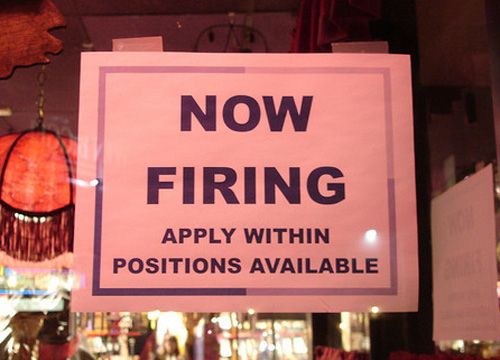
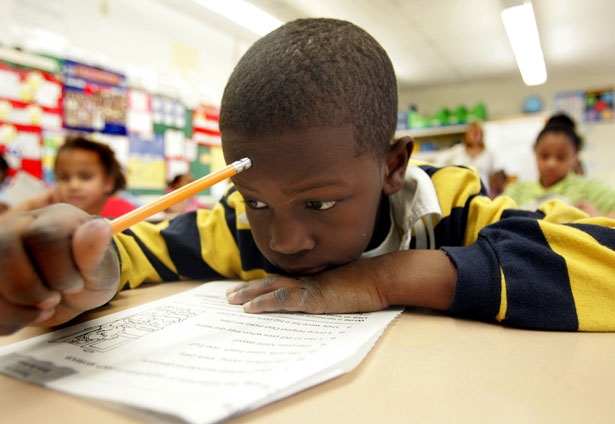
The Democrats May Have Just Aligned Themselves With Test and Punish – We Are Doomed

sanders_warren-620x412

Almost every Democrat in the US Senate just voted to keep Test and Punish.

But Republicans defeated them.

I know. I feel like I just entered a parallel universe, too. But that’s what happened.

Some facts:

No Child Left Behind (NCLB) is a disaster.

It took the Elementary and Secondary Education Act (ESEA) – a federal law designed to ensure all schools get equitable resources and funding – and turned it into a law about standardized testing and punishing schools that don’t measure up.

This was a Republican policy proposed by President George W. Bush.

But now that the ESEA is being rewritten, those pushing to keep the same horrendous Bush era policies are the Democrats.

Almost all of the Democrats!

That includes so-called far left Dems like Bernie Sanders and Elizabeth Warren!

It comes down to the Murphy Amendment, a Democratically sponsored change to the ESEA.

This provision was an attempt to keep as many Test and Punish policies as possible in the Senate rewrite.

The amendment, “reads more like NCLB, with its detailed prescription for reporting on student test results, for ‘meaningfully differentiating among all public schools’ (i.e., grading schools), including publicly identifying the lowest five percent, and, among interventions, potentially firing staff and offering students the option to transfer to other schools and using part of the budget to pay for the transportation,” according to blogger Mercedes Schneider.

Education historian Diane Ravich adds, “This amendment would have enacted tough, federal-mandated accountability, akin to setting up an ‘achievement school district’ in every state.”

Thankfully it was voted down. The ESEA will probably not be affected. The rewrite was passed by both the House and Senate without these provisions. Once the two versions of the bill are combined, it is quite possible – maybe even probable – that we’ll have a slight improvement on NCLB. Sure there is plenty of crap in it and plenty of lost opportunities, but the ESEA rewrite looks to be a baby step in the right direction.

The problem is this: the failed Murphy Amendment shows the Democrats’ education vision. Almost all of them voted for it. Warren even co-sponsored it!

When it was defeated and the Senate approved the ESEA rewrite, Warren released a statement expressing her disapproval. But if you didn’t know about the Murphy Amendment, you could have read her criticisms quite differently.

She says the (ESEA rewrite) “eliminates basic, fundamental safeguards to ensure that federal dollars are actually used to improve both schools and educational outcomes for those students who are often ignored.”

That sounds good until you realize what she means. “Educational outcomes” mean test scores. She’s talking about test-based accountability. She is against the ESEA rewrite because it doesn’t necessarily put strings on schools’ funding based on standardized test scores like NCLB.

She continues, “Republicans have blocked every attempt to establish even minimum safeguards to ensure that money would be used effectively. I am deeply concerned that billions in taxpayer dollars will not actually reach those schools and students who need them the most…”

She is upset because Republicans repeatedly stripped away federal power to Test and Punish schools. The GOP gave that power to the states. So Warren is concerned that somewhere in this great nation there may be a state or two that decides NOT to take away funding if some of their schools have bad test scores! God forbid!

And Warren’s about as far left as they come!

What about liberal lion Bernie Sanders? I’d sure like an explanation for his vote.

It makes me wonder if when he promised to “end No Child Left Behind,” did he mean the policies in the bill or just the name!?

The Democrats seem to be committed to the notion that the only way to tell if a school is doing a good job is by reference to its test scores. High test scores – good school. Bad test scores – bad school.

This is baloney! Test scores show parental income, not academic achievement. Virtually every school with low test scores serves a majority of poor children. Virtually every school with high test scores serves rich kids.

Real school accountability would be something more akin to the original vision of the ESEA – making sure each district had what it needs to give kids the best education possible. This means at least equalizing funding to poverty schools so they have the same resources as wealthy ones. Even better would be ending our strange reliance on local property taxes to provide the majority of district monies.

But the Dems won’t hear it. The Murphy Amendment seems to show that they’re committed to punishing poor schools and rewarding rich ones.

I really hope I’m wrong about this. Please, anyone out there, talk me down!

Up until now I’ve always been with the Democrats because they had better – though still bad – education policies than the Republicans. I’m not sure I can say that anymore. In fact, it may be just the opposite.

Which party is most committed to ending Common Core? The Republicans!

Which party has championed reducing federal power over our schools and giving us a fighting chance at real education reforms? Republicans!

Which party more often champion’s parental rights over the state? Republicans!

Sure, most of them still love vouchers and charter schools. But increasingly so do the Democrats.

This vote has me rethinking everything.

Our country’s education voters may have just been abandoned by their longest ally.

Where do we go from here?


NOTE: This article also was published on Commondreams.org and on the Badass Teachers Association blog. It was also mentioned in the Washington Post.

Do Americans “Throw Money” At Their Schools? A Fair Funding Primer

Screen shot 2015-07-06 at 11.05.59 PM

“Don’t throw money at schools.”

It’s a common rejoinder when lobbying for an increase in public education budgets.

You offer facts why schools need it: both the state and federal government continue to reduce K-12 funds, class sizes are increasing, the curriculum is being narrowed, buildings are crumbling – real world consequences to spending deficits.

And some guy (it’s often a dude) stands up with a cock-eyed grin and says, “You know, we really need to stop throwing money at schools.”

And he pauses as if we all need a moment to take that in.

Is there anything to this? We hear it often enough, but does he have a point?

Let’s see.

“Don’t throw money at schools.”

First, is it true? Is anyone actually throwing money at our schools?

I’ve worked as a public school teacher for over a decade. To my great disappointment never once has anyone hurled greenbacks through a window in my building. I have never had to dodge, duck or otherwise exercise gymnastics to avoid being thunked in the head by a stack of airborne bills.

Origami ninja stars made out of $100 notes do not routinely fly through the air in my classroom. No government representative has ever shown up in the auditorium during a professional development and said, “Yeah baby! Let’s make it rain!” before showering my coworkers and myself in Benjamin’s.

No. This has never happened. Not even coins. More change is thrown at the fountain in my local mall than at any public school where I’ve ever worked.

At this point, you’re probably saying, but, Steven, that’s not what this guy meant. He wasn’t implying someone literally tossed bills at foundations of learning. He was just being colorful.

To which I respond: was he? Because there are lots of ways to phrase that idea. He simply could have said, “We shouldn’t increase education funding.”

He could have said, “We need to spend school money more wisely before increasing it.”

He could have said, “Additional learning revenues are a waste because schools do such a bad job.”

He could have said, “We spend too much on education already.”

He could have said, “Kids don’t deserve more of my cash.”

But he didn’t say any of those things. Instead he conjured an image out of a Roman orgy or a rap video. He purposefully tried to frame this as a ridiculous situation. He wasn’t just trying to make an argument. He wanted to paint anyone who could possibly disagree with him as a fool.

“Can you believe these guys crying about public school funding?” he implied. “They’re having money thrown at them and they actually want more!?”

So before we even start to study the content of his phrase, we must remember it’s coated in bias and malicious intent. He is not really calling for a rational argument. He is appealing to emotions – most probably the emotions of those listening to the debate.

But we cannot sink to his level. We need reasons.

This is difficult because it’s not entirely clear what exactly he was getting at. Let’s examine what his statement might mean in plain English and try to determine if – underneath all this spin – he has a point or not.

Here are some possibilities.

1) “We need to spend education money more wisely before increasing it.”

This might be what he intended to say. And if so, he does have a bit of a point.

There is a problem with how school funding is spent. There is waste and misappropriation. At the local level, school boards and administrators do not always do things in the most efficient manner. But you could say the same thing at every level of democratic government. Fascist states have much less waste. Shall we just burn up the Constitution, then?

At the state and federal level, the problem is compounded by the ignorance of those allowed to write our laws. Education policy is rarely made by those who know what they’re talking about, thus funding often is wasted on useless initiatives. Common Core, standardized testing, punitive accountability systems – these were all created by business interests without regard to educational validity or efficacy and – as such – waste taxpayer money that could be better spent on things that would actually help children learn.

And speaking of waste, may I introduce you to charter schools? Favored by lawmakers yet rocked by fiscal scandals, charters are legal means of sucking up tax dollars for a profit. While public schools have to account for every penny spent and prove funds went to better the educations of real live students, charters are not just permitted but encouraged to withhold some tax money from going to student services and instead bolstering administrators’ bank accounts. Anyone who speaks of fiscal accountability in education yet is in favor of its further privatization is either disingenuous or in need of a basic math course!

The solution, however, is not to withhold additional funding. The solution is more oversight. And I don’t mean only government oversight and regulations. I mean oversight by the public.

Democracy only works if people participate. People need to push for transparency and less wasteful policies. They need to educate themselves about what’s going on. They need to investigate. They need to lobby, protest, and criticize. They need to vote. And they need a free and interested media to give them the facts to make smart decisions.

Clearly we’re lacking some of these things today. But that’s a national problem not limited to education funding.

In the meantime, we can’t wait for a perfect government before increasing school spending. Our children need help now!

If we do nothing, we doom another generation to getting less than they deserve, less than what we could have provided. Why? Because we were afraid some of it wouldn’t reach them!?

A deep sea diver with a kink in his air hose, doesn’t shrug and turn off his oxygen. He turns it up!

2) “Additional learning revenues are a waste because schools do such a bad job.”

This might have been his criticism. Let’s look at the facts.

International comparisons of national school systems are all the rage in political circles. And raw data suggests that children from the United States are not at the top. We are somewhere in the middle.

That’s all true. But what pundits refrain from admitting is that it’s been true for a long time – in fact, for as long as we’ve been making these types of comparisons. Our schools have not gotten worse. They have stayed the same.

This brings up an important issue. How does one compare national school systems to each other, anyway? What do we use to make these comparisons? Income prospects? Student portfolios? Measures of critical thinking? Classroom grades?

No. We use standardized test scores – the PISA test to be exact.

However, we’ve known for decades that standardized tests are poor measures of academic success. Bubble tests can assess simple things but nothing complex. After all, they’re scored based on answers to multiple choice questions. In fact, the only thing they seem to measure with any degree of accuracy is the parental income of the test-taker. Kids from rich families score well, and poor kids score badly.

So these comparisons are suspect.

But even if we accept them, we are leaving out a very important factor: Poverty.

Virtually all of the top scoring countries taking the PISA exam have much less child poverty than the U.S. As we’ve seen, this will boost their scores. If we adjust our scores for poverty, our students jump to the top of the list.

Let me repeat that: U.S. students do the best in the world on international tests – IF THEY ARE NOT POOR.

Moreover, the U.S. education system does something that many international systems do not. We educate everyone! Foreign systems often weed children out by high school. They don’t let every child get 13 years of grade school (counting kindergarten). They only school their highest achievers.

So when we compare ourselves to these countries, we’re comparing ALL of our students to only SOME theirs – their best academic pupils, to be exact. Yet we still hold our own given these handicaps!

In short, U.S. public schools do an excellent job educating children. They overcome incredible obstacles to achieve near miraculous ends often with very few resources.

Imagine what they could achieve if our schools were properly funded.

3) “We spend too much on education already.”

This one is a favorite of politicians of both parties. We already spend a lot on education. Some lawmakers and media personalities go so far as to claim that we spend more than any other country in the world.

Is that true? No.

We are near the top, but according to the most recent OECD study, four countries – Austria, Luxembourg, Norway and Switzerland – spend more.

Additionally, the study was released in 2014 but used data from 2011. Since that time, the U.S. has cut its school spending by leaps and bounds while most other advanced nations have been increasing it. Look for many more countries to pass us up when the next study is released.

But even using current figures, there are troubling social, economic and political differences between nations that impact how school funding needs to be spent. While most advanced countries spend their education budgets on actual instruction, the United States mandates public schools use a larger portion of their budgets on things outside the classroom.

For example, many international schools don’t have metal detectors or security staff. Given the U.S. problem with mass shootings and gun violence, our schools need to spend a significant portion of their monies in this way. I’m not suggesting we stop. Clearly we need to continue these practices, but that’s less money to help kids learn.

In addition, unfunded legislative mandates and court decisions have made U.S. public schools responsible for many things that international schools are not. About one third of all budget increases in recent years has gone to support special education students; 8 percent went to dropout prevention programs, alternative instruction, and counseling aimed at keeping students in school; another 8 percent went to expand school lunch programs; and so forth. Very few additional dollars were provided for needs associated with basic instruction.

Again, I’m not saying we should stop. Given our national epidemic of child poverty – an epidemic not shared by other advanced nations – we have to address these adjacent issues. But without additional funding, we’re letting the very heart of our schools – the classroom – go to waste while other countries are providing significantly more support.

Unfortunately, the problem doesn’t end there. Not only does the U.S. have unique problems that other nations do not share, we also are unique in how we allocate the funding we already have. And this difference only worsens the problem and increases the need for more money.

While most advanced countries divide their education dollars evenly between students, the United States does not. Some students get more, some get less. It all depends on local wealth.

The average per pupil expenditure for U.S. secondary students is $12,731. But that figure is deceiving. It is an average. Some kids get much more. Many get much less. It all depends on where you live. If your home is in a rich neighborhood, more money is spent on your education than if you live in a poor neighborhood.

The U.S. is one of the only countries in the world – if not probably the ONLY country – that funds schools based largely on local taxes. Other developed nations either equalize funding or provide extra money for kids in need. In the Netherlands, for example, national funding is provided to all schools based on the number of pupils enrolled. But for every guilder allocated to a middle-class Dutch child, 1.25 guilders are allocated for a lower-class child and 1.9 guilders for a minority child – exactly the opposite of the situation in the U.S.

So even though we spend more than many countries, we spend it so unevenly that poor and minority children are being left out.

Therefore, we have a choice: either do away with funding based on local property taxes or increase funding to poor school districts – or both.

4) “Kids don’t deserve more of my cash.”

Dollars to doughnuts, this is probably what he really means.

The United States has a moral failing. And we’re proud of it. We call it libertarianism. It means – Screw you! I’ve got mine.

We don’t care about helping others, we don’t care about the common good, we only look out for ourselves and our immediate friends and families. Everyone else can eat crap and die.

It’s ethical immaturity and, frankly, there’s not much you can say to someone who feels this way except that you disagree.

At most you can try to appeal to his self interest. Do you really want to live in a society full of uneducated people? Do you really want your kids to grow up in a world like that?

But that’s as far as it goes. You can’t help emotionally and intellectually stunted people – especially adults. Most children go through this phase. Some never grow out of it.

The good news is that most of us aren’t so far gone. If you can show that our interlocutor’s statement really comes down to this, you may be able to convince some people to agree with you simply because no one wants to be such an odious troll.

You need to pull back the curtain and show the truth.

How do we best spend these education dollars? How do we raise the money? Those are valid questions, but only a truly horrible person simply refuses to help children learn.

Because we’re not “throwing money” at schools. We’re throwing certain kids away.


NOTE: This article also was published in the LA Progressive, Commondreams.org and on the Badass Teachers Association blog.


The School-to-Prison Pipeline: Turning Kids into Cash

Screen shot 2015-06-07 at 10.34.48 PM
For too many children, public school is just a “GO DIRECTLY TO JAIL” card.

Do not pass GO. Do not collect $200.

The institution that should be raising kids to the skies is chaining them to the ground.

It’s called the School-to-Prison Pipeline, and it disproportionately affects students of color and the poor.

School policy at the highest levels is designed to sort and rank students. Some go to the college track. Some go to the industrial track. And even more end up on the prison track.

We actually have procedures that prepare certain children for life behind bars.

Why? Because people make money from it.

Think about it. The United States represents only 4.4% of the world population but we house 22% of the world’s prisoners. We’re the number one jailor!

It’s not that our citizens are out of control. It’s not a rise in violent crime. In fact, the crime rate has decreased to 1970s levels.

But instead someone has found a way to convert prisoners into cash.

Since the 1980s, we’ve been handing over our prison system to private companies to run for a profit.

The number of inmates in privatized prisons has increased by 44% in the last decade alone, according to a 2013 Bloomberg report.

This creates a market. Without a steady stream of prisoners, these institutions would go bankrupt. And corporations such as Corrections Corporation of America and The GEO Group spend tons of cash lobbying our government to ensure just that.

It’s no accident that our national education policy meets the needs of the for-profit prison industry.

Look at the so-called education reforms of the last decade: increasing standardization, efforts to close schools serving poor and minority children, cutting school budgets and narrowing the curriculum. All of these serve to push kids out of school and into the streets where they are more likely to engage in criminal activity and enter the criminal justice system.

Federal education policy – whether it be No Child Left Behind or Race to the Top – continually doubles down on privatization and standardization. These policies consistently have failed to produce academic gains but are offered as the only possible solution in school reform initiatives.

Question: Why do we keep enacting the same failed policies?

Answer: Because they are not MEANT to succeed. They are meant to fail a certain percentage, race and economic bracket.

If we had effective education procedures that increased academic success, we wouldn’t have enough prisoners to feed our for-profit prisons. Lawmakers would loose valuable lobbying revenue.

Call it what you will – misplaced priorities, profiteering or an outright scam. But the reform-to-profit cycle is advocated, perpetrated and championed by the most prominent figures in the so-called education reform movement.

Take Bill Gates – the monetary force behind Common Core State Standards (CCSS), one of the leading policies in education.

The Bill and Melinda Gates Foundation also is an investor in The GEO Group – one of the biggest for-profit prison providers in the country. It’s most recent tax filing (2013) shows a more than $2 million investment.

Nominally a philanthropic organization, the Gates Foundation refuses to admit if it still backs the industry or by how much. Sure Gates underwriting is just a drop in the bucket, but it proves how the organization’s interest is economic and not charitable. It is one of a herd of Trojan horses stampeding over the cries of critics under a banner of largesse.

Likewise, Common Core essentially isn’t concerned with increasing the quality of children’s education. CCSS has never been proven to be effective and is – in fact – developmentally inappropriate. But it’s touted as a panacea to a host of ills when its real concern is to continue fortifying the prison machine.

We live in a country where more than half of the children attending public school live below the poverty line. They need proper nutrition, social assistance, tutoring, counseling and a host of wrap around services. But instead they get so-called “higher” academic standards and standardized tests.

It’s like a sporting goods store withholding wheelchairs to the Special Olympics and instead donating extra hurdles – all the while claiming it was trying to help participants become better hoppers!

Even worse, these standards aren’t actually better. They’re just confusing, ignorant and ill-conceived. After all, they weren’t developed by educators. They were made by ideologues who admit they were unqualified for the task.

Was this a huge mistake? No. These standards and the associated bubble tests that drive them do exactly what they were meant to do.

They increase the numbers of failing students. They push more kids out of school and into the waiting arms of the prison industry.

And when kids have difficulty sitting through the hours, days, and months of test prep that are increasingly replacing a well-rounded curriculum, they face unfair discipline practices.

We treat misbehaving kids like little criminals.

Can’t sit still in class? Can’t keep quiet? Can’t control your frustration?

Out you go! Detentions, suspensions, expulsions!

We have zero tolerance for your childish behavior – even if you are still a child.

And unsurprisingly the majority of the children who are crushed by the hammer of discipline have dark skin.

Let me be clear. I’m not saying that misbehaving children shouldn’t be disciplined. Far from it.

But we need to stop criminalizing their misbehavior.

If we can’t provide them with schools that teach in a developmentally appropriate manner – it’s not the children who are misbehaving. It’s us! The school system!

Moreover, when a child has a problem conforming to the norm, our first reaction shouldn’t be punishment. It should be understanding. The goal should be to find ways to change the negative behavior, not weed the kid out of the system.

But this means treating children as ends not means.

We have to care about their well-being. They have to be more than just piggy banks for big business.

Otherwise, it is our sick society that really deserves to be sent to jail.


NOTE: This article also appeared in the LA Progressive, ConversationED and the Badass Teachers Association blog.

Public School Takeovers – When Local Control is Marked ‘White Only’

segregated

Do you like Democracy?

Then you’d better not be poor or have brown skin.

Because in America today we only allow self-government to rich white folks.

Sad but true.

American public schools serving large populations of impoverished and minority children are increasingly being taken over by their respective states.

People of color and people living in poverty are losing their right to govern their own schools. They are losing a say in how their own children are educated. They are losing elective governance.

Why? No other reason than that they are poor and brown skinned.

The most recent example is Holyoke Public Schools in Massachusetts.

Just two weeks ago, the state education board moved to place Holyoke schools in receivership.

So later this spring out goes the elected school board and in comes either an individual or non-profit organization to take over running the district.

On what grounds?

Well, Holyoke is a city of about 40,000 residents in the western part of the state. According to the most recent U.S. Census Bureau figures, 31.5% of the city’s residents live below the poverty level – nearly three times the state average.

Nearly half of Holyoke students do not speak English as a first language and nearly 30 percent are English-language learners. Eighty-five percent of Holyoke students come from low-income households.

But those aren’t the reasons given for the state takeover. It’s poor test scores and high dropout rates.

The state board can’t just come out and admit it’s waging class and race warfare against its own citizens. Instead, out comes the racist dog whistle of test scores and accountability.

If those kids had just filled in the right bubbles on their standardized tests, freedom would continue to ring in Holyoke. If more kids didn’t become frustrated and drop out, the district would be a haven to rival ancient Athens.

Never mind that poor students almost always score lower on standardized tests than rich kids. Never mind that children trying to learn English don’t score as high as kids who have been speaking it since before preschool.

However, these “alarming trends” are actually improving – just not fast enough for the state.

The graduation rate climbed from 49.5 percent in 2011 to 60.2 percent in 2014. The dropout rate also has improved. However, when compared with richer, whiter districts, this “performance” still leaves much to be desired.

But Holyoke isn’t alone.

In January, the Arkansas Board of Education did the same to the Little Rock district.

The state dissolved the local school board but at first kept Superintendent Dexter Suggs in an interim capacity.

Little Rock – one of the flashpoints of desegregation in the Civil Rights movement of the 1950s and ‘60s – is the state’s largest school district, with about 25,000 students.

Once again, African-American and Latino students are about three-fourths of the city’s student body. About 70% of students meet the federal government’s definition of poverty.

Yet the state cited low standardized test scores as the reason for the takeover.

About 45% of Little Rock high school students attend schools designated as “underperforming.” Last year, the Arkansas state board classified six of its 48 schools as being in “academic distress” after fewer than half their students scored at the “proficient” level on achievement tests.

So out with democracy and in with bureaucracy.

Does it work?

Not really.

Across the country, more than half of all states have laws allowing the dissolution of local control for districts that meet certain academic and economic parameters. However, even after decades of receivership, most districts still don’t improve their test scores.

In New Jersey, for instance, the Newark school district has been under state control since 1995 but still registers low test scores and graduation rates. Pennsylvania took over Philadelphia’s public schools in 2001, and test scores have actually dropped while the creation of new charter schools have drained state coffers. In 2013, district officials had to borrow $50 million to avoid delaying the beginning of the new school year.

Nationally, takeovers tend to improve administrative and financial practices but have less of an effect on classroom instruction, according to a 2004 report from the Education Commission of the States.

Academic performance for state-controlled districts is usually mixed, the report concluded, with increases in some areas, and decreases in others. “The bottom line is that state takeovers, for the most part, have yet to produce dramatic and consistent increases in student performance,” the report concluded.

Q: If state-takeovers don’t actually improve academic outcomes, why do we continue to allow them?

A: It’s cheaper than actually fixing the problem – poverty.

Poor students need resources they aren’t getting.

Fact: across the country, we spend more money to educate our rich children than we do our poor ones.

Fact: Poor students need MORE resources to learn than rich ones. They need access to food and nutrition, stability, tutoring and wraparound social services.

In short, we’re ignoring the needs of our impoverished children, because many of them are children of color.

And we’re selling this whole-sale neglect as the impartial product of “accountability” measures. We say that schools and teachers aren’t doing their jobs, so we’re taking over poor districts – where nothing much improves – but at least we made a show of doing something.

The people behind this sham are actually selling it as a Civil Rights issue. And it IS a Civil Rights issue – but not the one they claim. Standardization and privatization of public schools and the blatant government overreach involved in state takeovers are Civil Rights ABUSES.

We should be helping high-poverty schools meet the needs of their students. Instead we put on a show and hope no one peeks behind the curtain.

We liberally dole out blame and conservatively hide our pocketbooks. We point the finger at easy targets – poor and minority parents and children. We demonize the one group devoting their lives to actually helping improve the situation – teachers. And instead of empowering neighborhoods, we steal their vote and call it “help.”

Until we recognize these facts, our public schools will remain “separate but equal.” Ensuring an adequate education for all will remain a privilege of the elite. And the dream of racial and social equality will remain stifled under the boot of false accountability.


NOTE: This article also was published on the Badass Teachers Association Blog.

It’s Not Nothing: Why I Support the ‘Every Child Achieves Act’

not-perfect1

No more federal intervention.

No more reducing schools to a number.

That’s the promise of the Every Child Achieves Act (ECAA).

Sure, it’s not perfect. But this Senate proposed rewrite of the Elementary and Secondary Education Act (ESEA) could do a lot of good – even if it includes some bad.

Imagine it.

States would be in control of their own public schools. The U.S. Department of Education and its appointed Secretary would lose much of their power to impose unfunded federal mandates.

For example, the federal government could no longer force states to tie teacher evaluations to student test scores. It could no longer force states to adopt Common Core or Common Core look-a-like standards. It could no longer label high poverty schools “Failing” and then demand they be closed.

That’s not nothing.

But to realize these goals, we may have to compromise.

This federal law (currently known as No Child Left Behind) governs K-12 public schools. It has to be reauthorized.

We tried in 2007, but no one could agree. So the Obama administration took over – offering states a waiver from the worst consequences of the current disastrous law if they just doubled down on those same failing policies.

The result? Seven years of continued educational failure. Policies to privatize, punish the poor and enrich profiteers.

And now we have another chance to reauthorize the law!

We can change course! We can right the ship! We can get our heads out of our collective asses and actually do what’s right for our children!

But this is politics. It’s never that simple.

We have a divided Congress. We have a President who never met a corporate school reform scheme he didn’t like.

But we also have a citizenry who is fed up with all the bullshit. People are demanding change.

We have a real opportunity. If we can seal the deal, a generation of children will be the better for it. If not, the current calamitous law will stay in place for at least 7 more years.

That’s just unacceptable.

The biggest flaw in this proposed act is that it keeps annual testing in place. If approved in its current form, public schools would still have to give standardized tests to children in grades 3-8 and once in high school.

If you’re like me, you just threw up in your mouth a little bit.

However, supporting ECAA doesn’t have to mean supporting testing. There is an amendment proposed by Senator Jon Tester (D-Montana) that would replace annual testing with assessments only once at the elementary, middle and high school levels.

Yes. It’s not enough. We really should have zero standardized tests in our schools. If we have to accept Grade Span Testing – as Tester’s proposal is called – it should be done by a random sample. Don’t test all kids. Just test some small group and extrapolate their scores to the whole.

But Tester’s amendment is not nothing.

Even if it weren’t approved – even if all schools are mandated to continue annual testing as is – the ECAA requires no minimum length for those tests.

How many questions do we need to have on our exams? How many sections? Right now, most states have three sections in both Reading and Math of around 30-40 questions each.

If I’m reading this correctly, it’s conceivable that states that disagree with standardized testing could give assessments of only one section with only one question.

Talk about opting out!

That’s not nothing.

Moreover, the proposed law does not require states to continue evaluating teachers based on student test scores. States are free to stop using the same junk science evaluations currently championed by U.S. Secretary of Education Arne Duncan or not. It’s totally up to the states.

That’s not nothing.

If the proposed act were passed, Common Core State Standards (CCSS) would lose much of their backing.

We all know the sad story of how these supposedly “state” standards were pushed on states from the federal government. We know how states were bribed with federal money to enact these standards before many of them had even finished being written. We know how the U.S. Department of Education has required states to either adopt CCSS or come up with their own academic standards. Moreover, any state that decides to go its own way and write its own standards must then have these standards approved by the federal government, thereby ensuring that regardless of the name you slap on them, they are usually Common Core lite.

However, the ACAA removes the requirement that state standards need federal approval. Therefore, it allows states to actually lead their own quest for real, consequential standards. They no longer have to follow in the footsteps of CCSS. They can set their own agenda.

That’s not nothing.

The proposed act also improves the situation for at risk students. It would establish appropriate class size, specifically in low-income areas. It would give clear/expanded rights to homeless children so they could continue attending their original schools. It would allow English Language Learners to appropriately remain in their classes longer. It would continue Head Start and Early Start programs. It would provide adequate support for gifted and talented students. It would add early intervention services and support early childhood programs.

That’s not nothing.

But the ACAA isn’t the only version of the rewrite being considered. The House has it’s own version called HR 5 or the Student Success Act (SSA).

The biggest difference between the two is Title I Portability – the House version allows it, the Senate one does not.

Currently Title I funds are allocated by the federal government to states each year based on the numbers of children living in poverty in each district. The goal is to provide billions of dollars to poor schools to help them meet students’ needs often left neglected because of lack of local tax revenue.

Title I portability found in the SSA would mandate this money follow the students instead of going to districts. That would be a budgetary and economic nightmare. It would decrease money going to poor schools and increase funds going to rich districts. It would pave the way for nefarious and misnamed “school choice” measures.

That’s why the Senate ECAA is better. It doesn’t allow this wrongheaded scheme.

That’s not nothing.

But – I know – you’re still pinning for that one pristine act that would right all the wrongs of the current law.

Me, too.

In dreams, we can get everything we want.

In waking life, we sometimes have to compromise and accept less.

But at least here you get SOMETHING!

Quite a lot actually.

And as we support the general outline of the ACAA, we can push to make it better by adopting the Tester Amendment and other improvements that may come along the way.

We have to be realistic. A perfect law probably wouldn’t get through Congress. Our lawmakers just wouldn’t vote for it. They couldn’t agree.

We’d be where we were in 2007.

And that would mean more of the status quo.

I can accept the problems with the ACAA, but I cannot accept that.


Please consider joining the Badass Teachers Association in writing your Congresspeople to approve the ACAA with the Tester Amendment.

NOTE: This article also has appeared in the La Progressive, the Badass Teachers Association Blog and was written about on Diane Ravich’s blog.

This Article May Be Illegal – Lifting the Veil of Silence on Standardized Testing

whistle

Warning!

What you are about to read may be a criminal act.

I may have broken the law by putting this information out there.

Edward Snowden leaked data about civilian surveillance. Chelsea Manning released top secret military documents.

And me? I’m leaking legal threats and intimidation students and teachers are subject to during standardized testing.

Not exactly a federal crime is it?

No. I’m asking. Is it?

Because teachers are being fired and jailed. Students are being threatened with litigation.

All because they talked about standardized tests.

The US government mandates public school children be subjected to standardized assessments in reading and math in grades 3-8 and once in high school. Most schools test much more than that – even as early as kindergarten.

And since all of these assessments are purchased from private corporations, the testing material is ideological property. The students taking these exams – regardless of age – are no longer treated as children. They are clients entering into a contract.

At the start of these tests, students are warned of the legal consequences of violating the terms of this agreement.

In particular, the Pennsylvania System of School Assessment (PSSA) tests require students to read the following warning on the first day of the assessment:

DO NOT PHOTOGRAPH, COPY OR REPRODUCE MATERIALS FROM THIS ASSESSMENT IN ANY MANNER. All material contained in this assessment is secure and copyrighted material owned by the Pennsylvania Department of Education. Copying of material in any manner, including the taking of a photograph, is a violation of the federal Copyright Act. Penalties for violations of the Copyright Act may include the cost of replacing the compromised test item(s) or a fine of no less than $750 up to $30,000 for a single violation. 17 U.S.C. $ 101 et seq

So the first act of testing is a threat of legal consequences and possible fines.

There are no such warnings on my own teacher-created tests. Sure I don’t want students to cheat, but I don’t threaten to take them to court if they do.

The school has a plagiarism policy in place – as almost every public school does – which was created and approved by the local school board and administration. The first infraction merits a warning. The second one results in a zero on the assignment, and so on.

Moreover, this is something we go over once at the beginning of the year. We do not reiterate it with every test. It would be counterproductive to remind students of the dire consequences of misbehavior right before you’re asking them to perform at their peak ability.


Okay, Brady! Go out there and win us a football game! By the way, if you deflate that football, you will spend the rest of your life in jail. Go get ‘em!

But that’s not all.

In Pennsylvania, we also force kids to abide by a specific code of conduct for test takers. They must enter a quasi-legal relationship before they are even permitted to begin the tests we’re forcing them to take.

Much of this code is common sense. Get a good night’s sleep. Fill in bubbles completely using a number two pencil.

But some of it is deeply disturbing.

For example, students are told to “report any suspected cheating to your teacher or principal.”

They have to agree to be an informer or snitch to a government agency. My students aren’t old enough to vote or even drive a car, but they are directed to collaborate with the government against their classmates.

In addition, they are told NOT to:

-talk with others about questions on the test during or after the test.

-take notes about the test to share with others.

Sure kids shouldn’t talk about the test with classmates DURING the testing session. Obviously! But why can’t they discuss it after the test is over!?

Kids aren’t allowed to say to their friends, “Hey! Did you get the essay question about ‘The Tell-Tale Heart’?”

They aren’t allowed to discuss how difficult it was or compare how each of them answered the questions?

These are children. If you think they aren’t talking, then you just don’t know kids. You don’t know people!

And why shouldn’t they talk about it? They just shared a stressful, common experience. Who wouldn’t want to compare it to what others went through so as to decide how your experience rates? Did you answer the questions well or not? Did you get a more difficult question than others? Did the thing that struck you as odd also hit others the same way?

Personally, I do not consider talking like this to be cheating. It’s just human nature.

But we force kids into a legalistic vow they won’t do it. On the test, we make them fill in a bubble next to the following statement:

By marking this bubble I verify that I understand the “Code of Conduct for Test Takers” that my Test Administrator went over with me.

As a test administrator, I am not allowed to move on until all students have filled in that bubble. I wonder what would happen if one of them refused.

Technically, we aren’t making them promise TO ABIDE by the code of test takers. Perhaps we lack that legal authority. We are, however, making them swear they understand it. Thus we remove ignorance as an excuse for not following it.

But there is a veiled threat here. We imply that not following this code will have harsh legal consequences.

And I’m not sure it should.

Kids certainly ignore it. They almost definitely discuss the exam with their peers after the testing session. But we’ve given them a sense of guilt, fear and anxiety just for being normal human beings.

That’s wrong.

Teachers are forced to do it, too.

Just as there is a code for test takers, there is a code for test proctors.

I have to sign that I understand the “Ethical Standards of Test Administration.” Again, much of this is common sense, but it includes such statements as:

DO NOT:

-Discuss, disseminate or otherwise reveal contents of the test to anyone.

-Assist in, direct, aid, counsel, encourage, or fail to report any of the actions prohibited in this section.

So even teachers technically are not allowed to discuss the test and should report students or colleagues seen doing so.

If I walk into the faculty room, and one of my co-workers describes a question on the test and asks my opinion, I’m supposed to report this person to the authorities.

What kind of Orwellian nightmare are we living in?

If we see a question that is badly worded, misleading, has no correct answer, contains misspelled words – anything out of the ordinary – we’re supposed to remain silent. In fact, we’re not supposed to read anything on the test other than the instructions.

I can’t talk about it to my colleagues, my principal, my spouse, my priest – ANYONE.

What are the consequences of breaking this code?

Ask those teachers in Atlanta who were convicted of cheating. Obviously they did more than just talk about the test and they deserve to be punished. But there is a specific threat to teachers if they violate this code.

According to the “Pennsylvania System of School Assessment Directions for Administration Manuel”:

Those individuals who divulge test questions, falsify student scores, or compromise the integrity of the state assessment system in any manner will be subject to professional disciplinary action under the Professional Educator Discipline Act, 24 P.S. $ 2070. 1a et seq, including a private reprimand, a public reprimand, a suspension of their teaching certificate(s), a revocation of their teaching certificate(s), and/or a suspension or prohibition from being employed by a charter school. [emphasis added]

So teachers may lose our certifications, livelihoods, etc. Heck! We could be charged with racketeering like the Gambino Family and face up to 20 years in jail!

And all just for talking!

I thought speech was protected by law. Doesn’t the First Amendment protect me from prosecution for speaking except under extreme and unusual circumstances?

If my colleagues and I were to discuss the appropriateness of certain test questions, would that really be such a bad thing? If we compared the questions being asked with how we prepared our students for the test, wouldn’t that – in fact – be the responsible thing to do?

I never give my students one of my own teacher-created tests without knowing exactly what’s on it. I’ve read the test from top to bottom. Heck! I made it!

One shouldn’t feel like a whistle-blower for talking about a standardized test. Discussing the appropriateness of specific test questions does not make me Julian Assange.

Therefore, I must ask an important question of you, dear reader: Did I violate these rules by writing this very article? Is the piece you are reading right now illegal?

I contend that it isn’t. The code of conduct for both test takers and test administrators is freely available on-line from the Pennsylvania Department of Education. The legal threat at the beginning of the test is reproduced almost word-for-word in a sample letter the state Department of Education suggests schools send to parents before testing begins.

I haven’t included anything here that is not freely available on the Internet or elsewhere.

But the need I feel to stop and answer this question is kind of scary.

There is a veil of secrecy over these tests and the way they are administered. And it’s no accident. The testing companies don’t want all of this to become public knowledge. They don’t want the quality or inferiority of the actual exams to be known.

And our state and federal governments are protecting them. From whom? Our teachers, parents, and students.

Shouldn’t our legislators be looking out for our rights and not just those of private contractors who were hired to provide a service? Obviously we have to allow test manufacturers the freedom to do their jobs – but some of this seems to go beyond that requirement.

We’re being silenced and intimidated to protect an industry that is of dubious quality and obscene profitability.

Every day more people are asking questions about the validity of standardized testing. Everything from the frequency of the tests to the value of cut scores has been the subject of criticism. Thousands of parents are refusing to let their children take these assessments at all.

Isn’t it time to throw back the Iron Curtain of standardization and look at these tests in the cleansing light of day? Isn’t it time to evaluate this process as well as the product? Do we really want to support a system that encourages silence and snitching from our children and educators?

Isn’t it time to move beyond standardization and toward a system of teacher-created curriculum and testing instead of relying on capitalist profiteers.

Big Corporation is watching.

Let’s poke him in the eye.


NOTE: This article also has appeared on Diane Ravich’s blog, Commondreams.org and the Badass Teachers Association blog.

WANTED: Progressive Candidate With the Guts to Stand Up For Public Education

weird-help-wanted-9

Wanted:

Progressive presidential candidate.

MUST SUPPORT PUBLIC EDUCATION.

No. Not just the words. Not as a soundbite. Must actually support policies that help public schools – not tear them apart and sell them away piece-by-piece while you smile and brag about how much you support education.

This means you must:

1) Repudiate and Vow to Repeal Common Core State Standards

-Must know how they were created by unqualified partisans with little input from real educators.

-Cash strapped states were coerced into accepting them – in many cases even before they were done being written – as a condition for increased funding.

-They have never been proven to help kids learn and are in fact a massive social experiment at taxpayers’ expense and students’ peril.

-They are a huge payday for the testing and test prep industry who provide the new standardized assessments and new textbooks necessary for their implementation.

-They are developmentally inappropriate, demanding all students to learn at the same rate and at a time frame that is inconsistent with the way children cognitively develop.

2) End Annual Standardized Testing

-Must promise to end policies forcing public schools to give standardized tests in reading and math to all students in grades 3-8 and once in high school. Ideally, standardized tests should be completely eliminated.

-Must understand that standardized tests are poor assessments that have never been proven to measure academic achievement. However, they do an excellent job of demonstrating a student’s parental income – rich kids do well, poor kids less so.

-Must realize these tests are nothing but a money-maker for private industry and are used as an excuse to close under-funded schools predominantly serving children of color.

MUST REPUDIATE THE MEDIA NARRATIVE OF FAILING SCHOOLS, which is not supported by facts and merely the propaganda of an industry feeding off of our public taxes and children’s misery.

3) Stop the Expansion of Charter Schools

-Must understand how for-profit charters siphon away public money for use as private profits. Charters reduce services for children to increase the bottom line.

-Must vow to protect funding meant for traditional public schools that is lost when charters open in the district.

-Must know that no research has ever shown charters to be better than public schools, and many studies have shown them to be drastically worse.

-Must appreciate the lack of transparency charters are afforded feeds the growing plague of national charter financial scandals.

4) Work to Stop School Segregation

-Our public schools are more segregated now than they were before Brown vs. Board of Education 60 years ago. This is intolerable and makes it easy to disenfranchise students of color.

-Must not only recognize this, but have a plan to solve the problem.

5) Promise to Increase Public School Funding – Especially to the Poorest Districts

-Must understand that nationwide, rich schools spend on average 15.6% more than high poverty schools. Being born poor should not mean you get a worse education. In fact, impoverished students have greater needs than wealthy ones. It costs MORE to educate them.

-Must champion an effective plan to address funding inequalities with an emphasis an equity.

6) Have a Plan to Address Child Poverty

-Must understand that more than half of public school students live below the poverty line.

-Must have an effective plan to help children, parents and families rise out of poverty.

7) Allow Teachers Autonomy and Recognize Them as Professionals

-Must support letting teachers run their own classrooms, champion teacher-created tests over standardized ones – in short, LET TEACHERS TEACH.

-Must vow to eliminate any so-called teacher accountability programs that evaluate educators based on student test scores. Let teachers be evaluated by their own administrators based on classroom observations.

8) Stop Supporting Teach For America

-Must admit six weeks training for college graduates without education degrees is not good preparation to become classroom teachers. All students deserve a teacher with a 4-year degree specializing in education.

-Must condemn valuing TFA recruits who have only promised to be in the classroom for two years over teachers who have devoted their whole lives to their students.

9) Repudiate Any So-called School Choice or Voucher Programs

-Must understand that these policies are often backdoor support for the unconstitutional practice of spending public money on religious or parochial schools.

-Must recognize these policies are another attempt by private industry to convert public taxes into profits. Private schools are not subject to the same regulations as public entities and as such can freely use tax money in more nefarious ways.

-Must acknowledge that school choice is a sham – sending children to schools without public school boards paradoxically reduces the choice parents have over how the school is run.

-Public schools must remain public. Policies allowing for choice among schools – if done fairly – would increase the cost of public education exponentially. It is a much more efficient policy and less open to fraud if we instead ensure every student has a quality education. We need one excellent education system – not multiple ones.

10) Support the Right of Workers to Unionize

-Must support policies to make it easier for private citizens to exercise their collective bargaining rights. Period.


I would be willing to vote for any candidate who met all of these requirements regardless of race, gender, sexual orientation, background or party affiliation.

That’s right. This job need not be filled by a Democrat. Any party will do. I am sick of being offered false progressives under a Democratic banner.

And Hillary Clinton coming right out of the gate praising Common Core may have been the last straw.

Why vote for her over Jeb Bush when they support THE SAME THING!?

No. I will not vote Democrat just because. Never, never again.

If they want my vote, they will have to meet my job application. I will vote to hire the best candidate. Whoever that is.

And I bet I’m not alone.

The education vote is no longer a gimme for the Democrats.

Progressive education candidates? Are you out there?


NOTE: This article was additionally published on the Badass Teachers Association blog.

No TEST Left Behind – Why the Senate ESEA Reauthorization is Unacceptable

student_reading_ap_img_0
Testing.

Testing.

One, two, three…

How about four? Maybe more.

There’s never enough testing for you and me!

And that’s exactly the problem with the Senate reauthorization of the Elementary and Secondary Education Act (ESEA) – the federal law that governs K-12 schools.

The Senate draft of the law (currently called No Child Left Behind) doesn’t do a single thing to limit or reduce standardized testing.

It keeps annual testing in place, untouched.

The legislation needs reauhorized every five years. After epochs of political stalling, the House and Senate are both hammering out versions of the law.

If this Senate version were enacted, public school students across the country would still be subjected to standardized tests in grades 3-8 and once in high school.

And legislators have the gall to call this the “Every Child Achieves Act of 2015.”

Ha! They should call it what it really is – No TEST Left Behind.

Now is the perfect moment to rein in our nationwide addiction to fill-in-the-bubble multiple choice tests. There is a national consensus that these sorts of assessments do more damage than good. Legislators should listen.

The Senate even asked concerned parents, teachers and people of conscience to write in with suggestions to improve the law. But instead of actually doing the most important thing on everyone’s list – the one thing that almost everyone who isn’t profiting off of the testing industry wants – they chickened out.

Why?

Education historian Diane Ravich has an interesting theory. In a comment on her blog, she says, “I have spoken to people directly involved in the negotiations who told me that President Obama made known that he would veto any bill that does not include annual testing.”

It wouldn’t be the first time the President’s threatened to veto this legislation. Just a few months ago he promised to return the House’s version of the ESEA if it left open the Title I piggy bank to privatizers.

That much-publicized threat was a sane response to an insane suggestion by partisans. But veto the ESEA if it didn’t have enough testing? That would be highly controversial.

Can I prove he said it? No, but Ravich is a reputable source. After all, she was U.S. Assistant Secretary of Education under President George H. W. Bush. She served under Lamar Alexander – then Secretary of Education and now one of the U.S. Senators chairing this reauthorization project. She’s in a unique position to know.

Moreover, this alleged threat is right in line with comments made by Obama’s own Secretary of Education, Arne Duncan.

“I believe parents, teachers, and students have both the right and the need to know how much progress all students are making each year towards college-and career-readiness.” Duncan said in a January speech.

“That means all students need to take annual, statewide assessments that are aligned with their teacher’s classroom instruction in reading and math in grades 3-8, and once in high school.”

Duncan’s assertion – clearly supported by President Obama – is that annual testing is necessary to show if kids are learning. Without it, we wouldn’t know if schools were teaching them.

This is absurd.

The ONLY way to tell if a child can read is a standardized test? The ONLY way to tell if a child can add and subtract is if they can choose between A, B, C or D?

Such an assertion is not only a slap in the face of every classroom teacher who grades their students on actual work done in the classroom, it’s also an insult to the intelligence of the American people.

Students do a variety of assignments throughout the year to demonstrate their learning – book reports, essays, group projects, reading aloud, homework, power point presentations – heck – even just walking up to the blackboard and solving a problem with a piece of old fashioned white chalk!

All of these things show nothing!? They provide no significant data with which to determine if a child is learning!?

I guess teachers just wander around all year saying “I’ll find out if my students learned anything when they take their state assessments. In the meantime I’ll just throw darts at the wall to determine the grades to put on their report cards.”

Moreover, where is the proof that standardized tests are such good indicators? Which peer-reviewed studies have ever proven that the results of these tests are – in fact – valid?

The answer: there are no such studies. In fact, there is a mountain of evidence that proves just the opposite. Standardized test scores are highly correlated with a child’s parental income. Rich kids generally score highly and poor kids score lower.

That’s what these tests measure – not academic achievement.

And it should be no surprise considering how they’re scored. Go on Craig’sList and find yourself an advertisement seeking test scorers. You need have no experience or degree in education. What counts as a passing score changes from year-to-year based on the whim of the scorers.

The whole system is set up to fail as many kids as possible in order to justify the need for more test prep materials which are often provided by the same giant corporations that make the tests in the first place.

And THIS is what Obama is demanding we keep in our public schools or else he’ll veto the legislation?

I say, “Fine! Veto it!”

Obama is already the testing president. He hides behind his lap dog, Duncan, but it is and always has been his policy to double down on George W. Bush’s bad educational ideas.

So I say we force him to own up. Make him admit it to the world, shout it to the heavens – I am President Barrack Obama, and I will do anything for standardized testing!

Then for once critics could actually blame him for something he really did.

Annual testing!? Thanks, Obama!

The President and Duncan claim to hear these testing criticisms, but they’re talking out of both sides of their mouths.

Duncan says he’ll ask Congress to include language in the ESEA to call on states to set limits on how much time can be spent on testing.

They demand we keep it, but let’s spend less time doing it!?

So we’ll still take all those math and reading tests, but maybe there will be less questions? We’ll force schools to spend less time on test prep by timing them and punishing those who don’t comply?

Which brings me to the best thing about the Senate version of the ESEA. It puts a stop to this kind of federal meddling. No more top down we-know-better-than-you federal mandates.

Annual testing is still in there, but the act leaves it up to states how to use the scores. No more Adequate Yearly Progress (AYP). The act forbids the federal government from dictating to states and districts how to help improve schools where kids are struggling.

Moreover, it no longer requires states to create new teacher evaluation systems, though it allows them to do so if they wish. And the fed cannot mandate or incentivize states to adopt particular standards such as Common Core. States are required to have standards but are free to determine their content.

These – at least – are positive revisions. They demonstrate why some education advocates are expressing cautious optimism about this Senate version of the ESEA.

But it’s just not enough. Sorry.

I could be political and say “It’s a good first step,” but that’s all it would be. A first step on a long and treacherous journey. Don’t start patting yourself on the back just yet. There’s a long way to go.

There’s no mystery what needs to be done to improve public education – fund it.

Stop wasting tax dollars trying to determine where the problem is. That’s obvious! It would be like a fire department spending all it’s money on a high tech machine to scan the city in infrared to determine where the maximum heat sources are and thus where they should dispatch the fire truck. But all they have to do is take the call and follow the smoke, screams and flames!

The high poverty schools are the ones that are struggling the most. More than half of our public school students live below the poverty line. They need help!

And stop offering funding with strings attached! We’ll let you buy books for your students if you use these fancy new standards that have never been tried or proven to work.

It’s time for action.

We must be bold. No more chasing after scraps. We must demand Congress get this right – regardless of presidential threats.

And please no grade span testing!

Even organizations like Fair Test – who rightly criticize the Senate ESEA for similar reasons outlined here – don’t go far enough in their demands of Congress.

Instead of asking for an end to standardized testing, they request a reduction. Not tests yearly in grades 3-8 and once in high school, but once in elementary, middle and high school.

Yes, it’s better than annual testing, but have some courage.

There is no need for our children to take even one standardized test. That should be our demand.

Zero standardized tests. Not six, not three, not one. ZERO.

We might not get it, but we’ll get a whole lot more than if we start from a compromise position.

The time is now. Write your Congresspeople. Write the President. Tell them in no uncertain terms – NO MORE STANDARDIZED TESTING!

PUT CHILDREN FIRST! LEAVE ALL TESTS BEHIND!


NOTE: This article also appeared in the LA Progressive and the Badass Teachers Association blog.
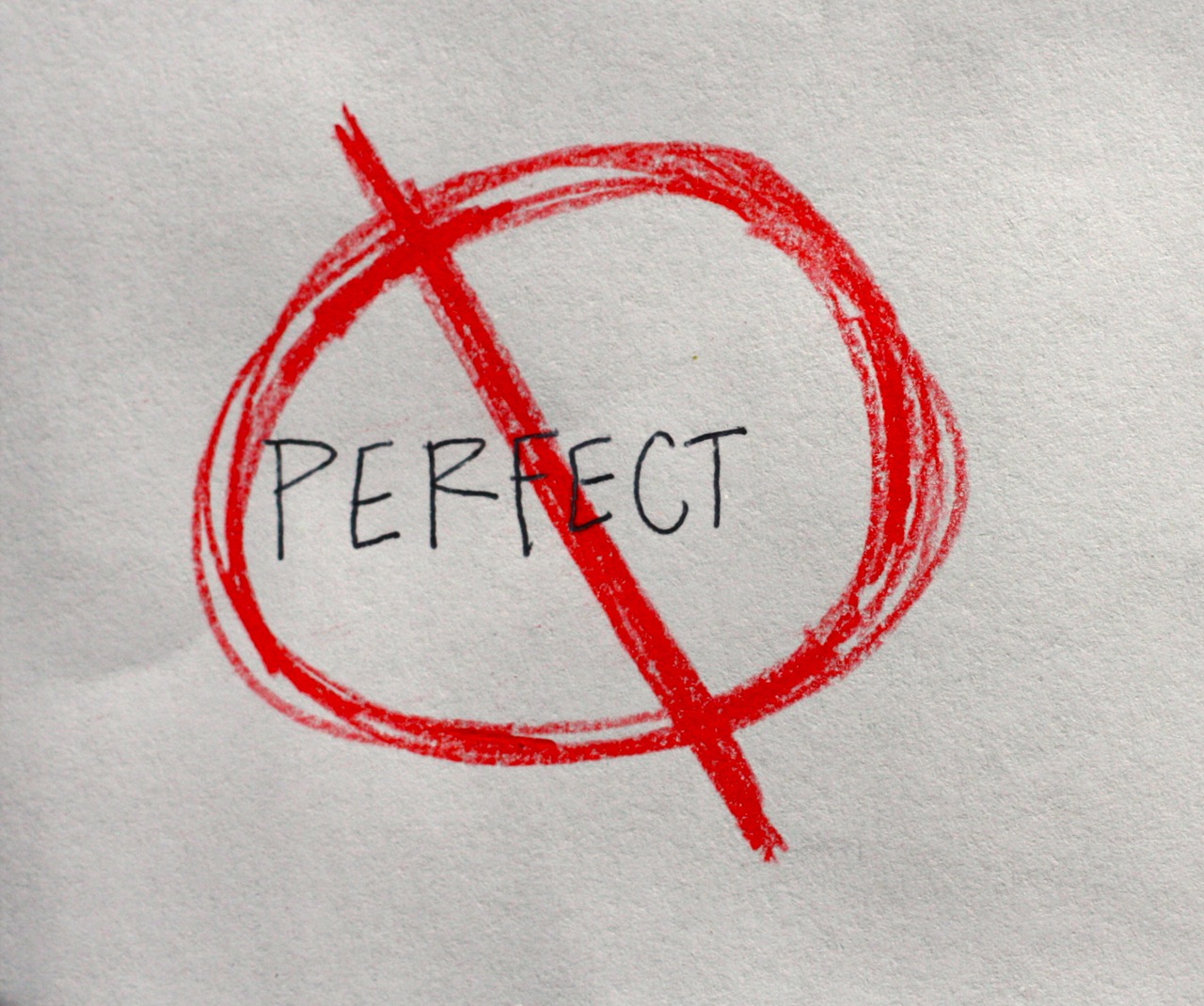
Why We Should Have ZERO Standardized Tests in Public Schools


Screen shot 2015-01-30 at 4.35.10 PM

Zero.

That’s the number.

No annual testing. No grade span testing. Not even one measly graduation requirement.

Zero.

We need exactly ZERO standardized tests in our public schools.

I know that sounds extreme. We’ve been testing our children like it was the only thing of academic value for more than a decade. When the question finally arises – how many tests do we need? – it can sound radical to say “none.”

But that’s the right answer.

And finally Congress is asking the right question.

The U.S. Senate is holding hearings to rewrite the Elementary and Secondary Education Act (ESEA) – the federal law that governs K-12 schools. One of the biggest issues at stake is exactly this – how many standardized tests should we give students?

Sen. Lamar Alexander – head of the Senate Education Committee – is asking the public to email testimony to FixingNCLB@help.senate.gov. Parents, teachers and concerned citizens are writing in with their concerns about testing.

But will they have the courage to tell the whole truth in this – our moment of truth?

We’ve fought so long just to get someone to recognize there is a problem. Will we be able to honestly assess the solution?

We’re like a lifetime smoker who’s been diagnosed with lung cancer being asked how many packs he needs.

Or an alcoholic waking in a puddle of vomit being asked how many drinks he needs.

Or a junkie after a near-death overdose being asked how many crack pipes he needs.

We all know the right answer in those situations – and it’s the same for us about standardized testing.

We need None. Nada. Negatory.

But our hands shake. We get cold sweats. Withdrawal sets in.

Will we face our national addiction? Or again double down in denial?

Remember there is no positive benefit for forcing our children to go through this mess. It is not for them that we mandate these policies. It is for us – so that we can pretend we have control over something that is uncontrollable.

Learning is not something measurable in the same way as water being poured into a glass. It defies the precision of our instruments.

Don’t think so? Then answer me this: which unit of measurement should we use to determine how much learning has been accomplished? Pounds? Grams? Liters? Hectares?

Billy got hisself 20 pounds of book learnin‘ at the school today?

Not really.

We use grades like A, B, C – but there’s nothing precise about them. They’re just a percentage of assignments completed to the teacher’s satisfaction.

I don’t mean to say that you can’t tell if learning has taken place. But how much? That’s difficult to gauge – especially as the complexity of the skill in question increases.

You can tell if your dog knows how to sit by commanding it to sit and observing what it does. It’s a much different matter to ask someone to evaluate the themes of a novel and determine how much literary analysis that person understands based on his answer.

Of course teachers do it every day, but that determination is, itself, subjective. You’re required to trust the judgment of the educator. You have to believe the instructor knows what she’s talking about.

That’s the best you can get in the humanities – and teaching is a humanity – more an art than a science.

Perhaps some day neuroscientists will allow us to determine the relationship between firing synapses and brain events to internal states like learning. At such time, perhaps the very act of comprehension will be closer to loading a program onto your hard drive. But until that day, education is a social science.

The push for increased standardized testing, however, is an attempt to hide this fact. And the results are less – not more – valid than a teacher’s classroom grades.

Why?

Cut scores.

Most people don’t know how you score a standardized test. If they did, they wouldn’t automatically trust the results.

Fact: standardized tests are graded by temporary workers – many of whom have no education background – determining at will what counts as passing and failing in any given year. In fact, they have an incentive to fail as many people as possible to increase the market for their employer’s test prep material.

That is NOT objective. In fact, it is LESS objective than the grade provided by the classroom teacher. After all, what is the educator’s incentive to pass or fail a student other than successful completion of the work?

In fact, statistics back this up. Taken as a whole, standardized test scores do NOT demonstrate mastery of skills. They show a students’ parental income. In general, poor kids score badly and rich kids score well.

Moreover, the high stakes nature of testing distorts the curriculum students receive. Instead of a well-rounded course of study focusing on higher order thinking skills, high stakes testing narrows what is taught to that which can most easily be tested. This creates a market for the test prep materials that are often created and distributed by the same corporations who create, distribute and grade the standardized tests. It’s a conflict of interests, a feedback loop, a Ponzi scheme – in short, fraud perpetrated on the public as if it were education reform.

Honestly, we know all this at heart. Every teacher, politician, statistician, and student. But as a society, instead of devising a better method, we continually reach for the same failing solutions.

When No Child Left Behind failed to produce results, we doubled down with Race to the Top. When a focus on state standards didn’t help, we created Common Core.

That’s an addiction.

Likewise calls to reduce testing without ending it are just cries from the junkie for another fix.

Yes, grade span testing (three exams spaced out over elementary, middle and high school) is better than annual testing (once in each grade from 3-8th and once in high school). So is a single graduation test. But why do it at all?

The burden of proof is on those defending tests. If these assessments really are as toxic as we’ve shown, why would less of them be more beneficial than none?

I see no reason to suppose that even limited testing would avoid these criticisms. Grade span testing would still be appraised with cut scores, still assess socioeconomics – not academics, still deform the curriculum… Why keep it – even in smaller quantities?

But what’s the alternative, naysayers will complain. If we don’t standardize test our children to death, what do we do?

Answer: focus on the problem – poverty.

More than half of all US public school students live below the poverty line. These children have increased needs for tutoring, counseling, nutrition, and wraparound services. Moreover, these are exactly the children who go to the most underfunded schools. They have the largest class sizes and the smallest offerings of arts, music, foreign languages and extra-curricular activities. The equipment and often buildings which serve these kids are overwhelmingly out-of-date and in need of repair, remodeling or replacement.

If you really wanted to improve the US education system, you’d address this glaring problem.

Equally, you need to elevate the profession of teaching, not denigrate it. Return the creation and execution of education policy to the experts – educators. Provide them with the resources they need to get the job done. Equip them with professional development that helps instruction, not testing. Help them individualize students’ educational experience, not standardize it. And offer racial sensitivity training to maximize cultural understanding between teachers and students.

How would we tell if any of this worked?

Easy. First, stop pretending that our current system of accountability works. It’s a sham.

Despite a media narrative of failing schools, comparisons with international education systems put American students at the very top – not the bottom – if you take poverty into account. Of course, no one wants to do that because we’d have to admit these comparisons are based on – you guessed it – standardized test scores, which AGAIN show economic disparity not intellectual achievement!

So we deify testing as the only thing that can hold schools accountable, then ignore data that disproves our findings and pretend like we have some hard-nosed system that keeps educators responsible. It doesn’t. It’s just a story like The Three Little Pigs, Little Red Riding Hood or Climate Change Denial.

So how do we start to actually tell if our education system works? Easy. Trust our nations parents, students and teachers to tell us. And actually listen to what they say!

Now is the time.

Speak or forever hold your peace.

Whether our policymakers will even listen to us is a separate question. If WE’RE strung out on testing, they’re at least as dependent on the lobbying dollars of the assessment industry.

But we have to try.

Our collective hands may shake. A quaver may creep into our voices. We may get hot and cold sweats.

But the truth must come out.

How many standardized tests do we need?

NONE.


This article was also published on the Education Bloggers Network page and the Badass Teachers Association blog.

Off the Beaten Gadfly – the Best Education Blog Pieces You Never Read in 2014

Wonderfull illusion art painting
So you’re interested in education.

You’ve read your Diane Ravich. You peruse Peter Greene’s blog with your morning coffee. You have a Badass Teachers Association jersey on under your button down work shirt and tie.

But you need something more.

Well, friend, have I got a treat for you!

Please to enjoy Gadflyonthewallblog! This is the site where all the cool intellectuals go – the folks who want an edge to fight corporate school reform.

You probably already read Gadfly’s Top 10 Posts of 2014. That wouldn’t get by a discerning customer like you. But have you seen this – Gadfly Deep Tracks?

That’s right! These are the five posts selected by the author that maybe didn’t get the page views of the popular articles but are really worth your time.

Take a look. There’s some really good stuff here!

So for your continued edification, elucidation and just plain old enjoyment, I present to you the Top 5 Gadfly Rarities:


5) RAIDERS OF YOUR LOST PENSION

Views: 50  shutterstock_pickpocket
Publication: July 22

Description: Have you ever wished you could be a fly on the wall and listen to a secret meeting of corporate education reformers to hear what they REALLY think? Well, here’s your chance. I came across a conservative think tank paper that outlines ways to manipulate school boards to reduce teachers pension benefits. It’s all right here: Teach for America, Disaster Capitalism, Reducing School Budgets, etc. This is a smoking gun.

Fun Facts: My first post. It’s where I got the name for my blog. I thought this was really important, but not many people saw it. Here’s my attempt to change that.


4) FORGET CORPORATIONS… UNIONS REALLY ARE PEOPLE

Views: 152  Labor-Unions
Publication: Nov. 1

Description: Why do some people hate labor unions so much? Maybe it’s because they don’t understand them. In this article I outline the philosophy behind unions and debunk many common criticisms.

Fun Facts: Strong union folks loved this. Randi Weingarten was a fan. But it never gained the audience I feel it deserves. This is important. At best, it’s a way to convince reasonable people that unions are relevant and in fact indispensable to our economy. At worst, it’s at least a good tool to use to help explain your support of unions. It’s worth noting that this article is about unions in general – not any particular union.


3) THE MULTIPLE CHOICE MIND

Views: 356  Scanning of a human brain by X-rays
Publication: July 29

Description: What’s the problem with standardized tests? What do they do to growing minds? This article answers those questions and more. The basic thesis is that bubble tests are horrible ways to help create thinkers, but excellent for creating consumers.

Fun Facts: Standardized testing is central to all corporate education reform. But few people question its purpose. I think it’s important the public understand that none of this is about education. It’s about creating a permanent underclass just smart enough to be customers at Walmart but not smart enough to question the status quo.


2) A CURRICULUM OF COMPASSION

Views: 623  05_A1CP_t400
Publication: Nov. 8

Description: This is just a simple story about a poor, damaged student who entered my class needing so much more than just an education. I got her to smile. That’s it.

Fun Facts: This girl was in my class about a third of the time last year, and only two days this year. I hope she returns someday soon. It just breaks my heart. Wherever she is I send this article out to her as a virtual hug so my readers might love her as much as I do. Sometimes that’s more important than lesson plans, etc.


1) FRANZ KAFKA AND THE METAMORPHOSIS OF TEACHER EVALUATIONS  kafka-drawing-251x300

Views: 775
Publication: Aug. 30

Description: Value-Added Measures of teachers are absurd. So I mixed them up with the master of absurdity – Franz Kafka. Thrill as a teacher wakes up in class transformed into a giant insect about to be evaluated by a reformy principal.

Fun Facts: This is one of my own personal favorites. I think if more people actually saw it, they’d feel the same. I hope you enjoy it, too.


P.S. – I stole the idea for this Top 5 list from the excellent blogger Russ Walsh. He came up with the concept of writing a list of hidden gems – not a typical Top 10 list. His Russ on Reading is well worth your time.


P.S.S. – Diane Ravich gave this article a shout out on her blog.