

Thank you, loyal readers, but this may be the end of Gadfly on the Wall.
Readership has fallen off to such a degree that I’m just not sure it’s worth continuing anymore.
That combined with increasing difficulties in my own life have made me truly question whether I should (or can) go on with it.
Don’t get me wrong. I will truly cherish every moment writing these articles, fighting for what I (still) think needs to happen in public education so that our children can be fairly treated and succeed.
There is so much I think most people don’t know about what happens in our schools and what could be done to make them better for children, families and the people who work there.
But after 9 years of pounding my head against the wall – well, it seems like the wall is winning.
This blog used to be read by at least half a million people each year. But social media – the prime distributor of this material – is not what it was a decade ago. In 2021, I had 222,414 hits. Last year it was 124,984. This year it was 73,121.
And much of those were for articles I’d written in years past. The highest three articles this year were not written in 2023. They were: The MAP Test – Selling Schools Unnecessary Junk at Student Expense ( 2,344) from Aug. 2022, When Good Students Get Bad Standardized Test Scores (1,775) from Oct. 2022, and Lesson Plans Are a Complete Waste of Time (1,544) from Sept. 2021.
Why keep putting out new content? It often feels like I’m saying the same thing over and over anyway – and not really being heard except by the same few people.
So I’m going to pause, take a moment and really think about things.
Heck! I might find out that I simply can’t quit because I’ve got too much to say. Then again, I may only write when something really important comes up that I absolutely have to let loose on.
Or this could be it.
I don’t know.
In any case, thank you so much for nearly 10 years of readership. I assume most people seeing this would have been here for the long haul.
It has been an amazing experience. I’m not sure what comes next, but for now I leave you with some outstanding moments from 2023.
All the best in the future!
-Steven Singer
The Gadfly on the Wall
12) Standardized Tests Hurt Asian-American Students, Too, Though Many Get High Scores

Published: March 27
Views: 243
Description: Asian-Americans – taken as a whole – score better on standardized tests than white Americans. But they are just as much victimized by testing as any other minority. The only difference is their success is held up as an excuse for upholding this deeply inequitable practice. It obscures that all Asians are not the same, certain types do not score as highly yet all are held to unfair expectations.
Fun Fact: This is a rarely explored or reported on aspect of the standardized testing phenomenon. I’m proud to have written on it despite its low readership.
11) Fact Checking Propel Charter Schools – Do They Live Up to Their Own Hype?

Published: Jan. 20
Views: 572
Description: The Propel Charter School network of 13 schools based in Pittsburgh, Pa, has advertisements everywhere proclaiming its virtues. However, this is just advertising. From test scores to safety to class size to teacher qualifications and many other factors, the charter chain comes up short again and again. Compared with authentic public schools in the same neighborhoods where these schools are located, Propel compares rather badly.
Fun Fact: I think this is incredibly important in the western Pennsylvania region. This information should be shared far and wide. It should at very least spark media investigations comparing Propel and authentic public schools so parents could make informed choices about where to send their children. But we never see that because Propel is a frequent advertiser. If the media provided this information – and didn’t just uncritically repeat propaganda – the media conglomerates would lose valuable advertising revenue. I am proud I could provide this public service.
10) Stay Woke, Public School Teachers

Published: March 12
Views: 588
Description: Being “woke” just means being alert to racial prejudice and discrimination – just knowing that these things exist and trying to recognize them when present. The way I see it, that’s well under a teacher’s job description. After all, who else will teach the true history that for more than 400 years in excess of 15 million men, women and children were the victims of the transatlantic slave trade? Who will teach the true history of the fight against human bondage and the struggle for equal rights? Who will teach about women’s fight for suffrage, equal pay, and reproductive freedom? Who will teach about the struggle of the individual to affirm their own gender identity and sexual expression? It’s up to us.
Fun Fact: Republicans are so anti-teacher, they’ve made the acquisition of knowledge part of the culture war and turned teachers into the enemy. This was just my way of pushing back a little.
9) Where Have School Libraries Gone?

Published: Aug. 25
Views: 681
Description: McKeesport Area School District – where I graduated and my daughter still attends classes – closed its high school public library for good. They gave away the books and turned it into a large group instruction room. And this kind of thing is happening all across the country. This is a problem because every book is not available on-line. In fact, the number and variety of books available digitally is much smaller than most public or school libraries typically have in their collections – if you’re not going to pay an additional fee. I can read most of the classics of world literature on the Internet, but anything that isn’t in the public domain is going to require me to pony up some dough. And the same goes for most respected resources.
Fun Fact: This was a truly depressing discovery but even more so was the response. Many people couldn’t grasp why libraries are even necessary today. Libraries used to be something society provided to every citizen just as a matter of course. Now our expectations are so low that we’ve nearly given up on this essential resource.
8) After School Satan Clubs Are Teaching Public School Districts an Important Lesson in Free Speech

Published: May 17
Views: 691
Description: Thousands of districts in the US allow religious organizations and clubs to operate on public school property, especially after classes are over. So The Satanic Temple goes around proposing After-School Satan Clubs at the same districts – and all Hell breaks loose.
Fun Fact: You want to let religion in the school house door, you have to let all of them in. You can’t pick and choose.
7) Congress May Raise Educators’ Minimum Salaries to Combat the Teacher Exodus

Published: Jan. 1
Views: 699
Description: A group of Congressional Democrats have proposed a national minimum salary for teachers. Rep. Frederica Wilson and Rep. Jamaal Bowman, (both former teachers) and six other members of the House have introduced The American Teacher Act establishing a minimum salary of $60,000 for all public school teachers working in the U.S. – the first legislation of its kind. The average starting salary of teachers nationwide was $41,770 in the 2020-21 school year, according to the National Education Association (which supports the bill).
Fun Fact: What a lovely thought! Still waiting on this to be approved. Any day now. Come on, Congress!
6) I am a Charter School Abolitionist, and You Should Be, Too

Published: March 22
Views: 701
Description: Charter schools have been around since 1992. Though it seems like they’re everywhere these days, only 45 states and the District of Columbia allow these schools and even then they enroll just 6% of the students in the country – roughly three million children. The five states that do not have charter school laws are Montana, Nebraska, North Dakota, South Dakota, and Vermont. So after 32 years of trial and error, we’re left with a charter school system that does not get better academic results than authentic public schools (despite being given dramatic advantages in their charter agreements) and in many cases drastically fails by comparison. Not to mention all the fraud, malfeasance and ineptitude you get from removing regulations for any Tom, Dick or Harry who thinks he can open a school. Time to abolish these schools and end this failed experiment.
Fun Fact: This article really angered some folks. There are lots of people who hate the idea of charter schools in general but want to preserve anything that they think might give their own kids an advantage over others. Even if that is rarely the case! However, the gleam of the new has definitely worn off this concept and an increasing number of folks are open to limiting or ending this fiasco.
5) A Private Equity Firm, The Makers of the MAP Test, and an Ed Tech Publisher Join Forces

Published: Jan. 26
Views: 930
Description: A year after being gobbled up by private equity firm Veritas Capital, ed tech company Houghton Mifflin Harcourt (HMH) is acquiring K-12 assessment giant Northwest Evaluation Association (NWEA). Let me put that in perspective – a scandal-ridden investment firm that made billions in the wars in Iraq and Afghanistan bought one of standardized testing’s big four and then added the Measures of Academic Progress (MAP) test to its arsenal. This almost certainly means the cost of state testing is going to increase since the providers of the tests are shrinking.
Fun Fact: This is the kind of story that will creep into our lives before we even realize what is happening. We’ll wonder why our districts and even entire states which rely heavily on the MAP test are buying as much HMH curriculum as possible. That way they can teach directly what is on their standardized tests. Bye, bye, tax dollars that could have been spent to educate kids!
4) Top 4 Things McKeesport Area School Directors Need to do to Extinguish the District Dumpster Fire

Published: Oct. 8
Views: 963
Description: My neighborhood district – McKeesport Area School District (MASD) – is going through tough times. School directors reneged on a teachers contract. Their business manager ran for the hills. And at a board meeting two school directors had their dirty laundry aired during public comments prompting one to call a White Oak Councilperson a homophobic slur. I had four suggestions to right the ship: (1) Pass a Code of Conduct for Board Members and Administrators, (2) Start Streaming Council Meetings Again, (3) Hire a New Reputable Business Manager, and (4) Pass a Teachers Contract with No Tax Increase.
Fun Fact: This article got a lot of notice in the neighborhood and some of my suggestions actually got done. The district hired a new business manager and will begin streaming new meetings. They’re also negotiating with teachers so fingers crossed.
3) Teach for America Promised to Fix the Teacher Exodus Before Anyone Even Noticed There Was One. Now It’s Choking on Its Own Failure

Published: Aug. 7
Views: 1,070
Description: Teach for America (TFA) was supposed to fix the teacher exodus by fast tracking non-education majors into the classroom where they would teach for a few years and then enter the private sector as “experts” to drive public policy. College graduates would take a five-week crash course in education and commit to at least two years in the classroom thereby filling any vacant teaching positions. Not only didn’t it work, it ended up making the situation worse. Now the organization created in 1990 is expecting its lowest enrollment in 15 years. TFA anticipates placing slightly less than 2,000 teachers in schools across the country this fall. I guess watering down what it means to be a teacher is even less popular than actually being an educator.
Fun Fact: People really hate TFA. The organization’s cred has gone down more than anything else in the education field – even more than charter schools. The fact that the emperor has no clothes here is painfully obvious.
2) Come Visit Your Wasted Tax Dollars at Commonwealth Charter Academy’s Waterfront Luxury Office Space

Published: Feb. 4
Views: 1,236
Description: If you go to the Waterfront in Homestead, PA, you’ll find the newest satellite office of Commonwealth Charter Academy (CCA) – the biggest cyber charter school network in the entire state. It’s one of 51 locations statewide. Only 27 states allow CYBER charters like this – schools that teach mostly (or entirely) distance learning through the Internet. Nationwide, Pennsylvania and Ohio have the largest cyber charter enrollment. In 2020-21, the Keystone State enrolled 61,000 students in 14 cyber charters – and roughly 21,000 attend CCA! There’s an authentic public school in this neighborhood, too – Steel Valley School District – right up the hill. It’s not located in nearly as trendy a spot though. Moreover, its four buildings were constructed around the 1970s and are crumbling down in places. But the new cyber charter school building looks like a palace!
Fun Fact: I don’t think most people who go to the Waterfront understand what the CCA location really is. To them it’s just another school, kind of sleek and modern looking. This article was my attempt to tell them. Thankfully it proved relatively popular, though the CCA people absolutely had a conniption. They couldn’t believe someone was criticizing their profitable business venture. This story brought the most trolls of any this year.
1) McKeesport Teachers Without a Contract Because of Bad Business Manager or Bad Faith School Board?

Published: Aug. 16
Views: 1,409
Description: McKeesport Area School District (MASD) botched a new teachers contract. So the question is – does it have a terrible business manager or a regressive school board? School directors and the teachers had agreed to a new contract, but the board tabled it in June after concerns that the western Pennsylvania district didn’t have the money to pay for moderate raises. Then the board skipped the entire month of July without a meeting as if the livelihoods of hundreds of employees don’t count. By the time classes were set to begin in August, the board was no closer to solving the problem. Board members mostly blamed the business manager who eventually quit. The situation still has not been resolved.
Fun Fact: This article hit the neighborhood like a nuclear blast. Everyone seemed to be talking about it. Someone in the neighborhood literally called me a “local legend” for having written it. I’m just glad it focused people’s attentions on the facts of the matter. If anything gets me to blog again, it will be writing more about the local stories that are so important but no one else is talking about.
Gadfly’s Other Year End Round Ups
This wasn’t the first year I’ve done a countdown of the year’s greatest hits. I usually write one counting down my most popular articles and one listing articles that I thought deserved a second look. Here are all my end of the year articles since I began my blog in 2014:
2022:
Top 11 Education Articles of 2022 Hidden by Facebook, Buried by Twitter, and Written by a Gadfly

2021:
Gadfly’s Most Outrageous Articles in 2021 That You May Have Missed or Been Too Polite to Share

Gadfly’s Top 10 Articles of 2021 – Shouts in the Dark

2020:
The Most Important Education Articles (By Me) That You Probably Missed in 2020

Outrunning the Pandemic – Racing Through Gadfly’s Top 10 Stories of 2020

2019:
Sixteen Gadfly Articles That Made Betsy DeVos Itch in 2019

2018:
A Gadfly’s Dozen: Top 13 Education Articles of 2018 (By Me)

2017:
What’s the Buzz? A Crown of Gadflies! Top 10 Articles (by Me) in 2017

Hidden Gadfly – Top 5 Stories (By Me) You May Have Missed in 2017

2016
Worse Than Fake News – Ignored News. Top 5 Education Stories You May Have Missed in 2016

Goodbye, 2016, and Good Riddance – Top 10 Blog Post by Me From a Crappy Year

2015
Gadfly’s Choice – Top 5 Blogs (By Me) You May Have Missed from 2015

Who’s Your Favorite Gadfly? Top 10 Blog Posts (By Me) That Enlightened, Entertained and Enraged in 2015

2014
Off the Beaten Gadfly – the Best Education Blog Pieces You Never Read in 2014

Top 10 Education Blog Posts (By Me) You Should Be Reading Right Now!

Like this post? You might want to consider becoming a Patreon subscriber. This helps me continue to keep the blog going and get on with this difficult and challenging work.
Plus you get subscriber only extras!
Just CLICK HERE.

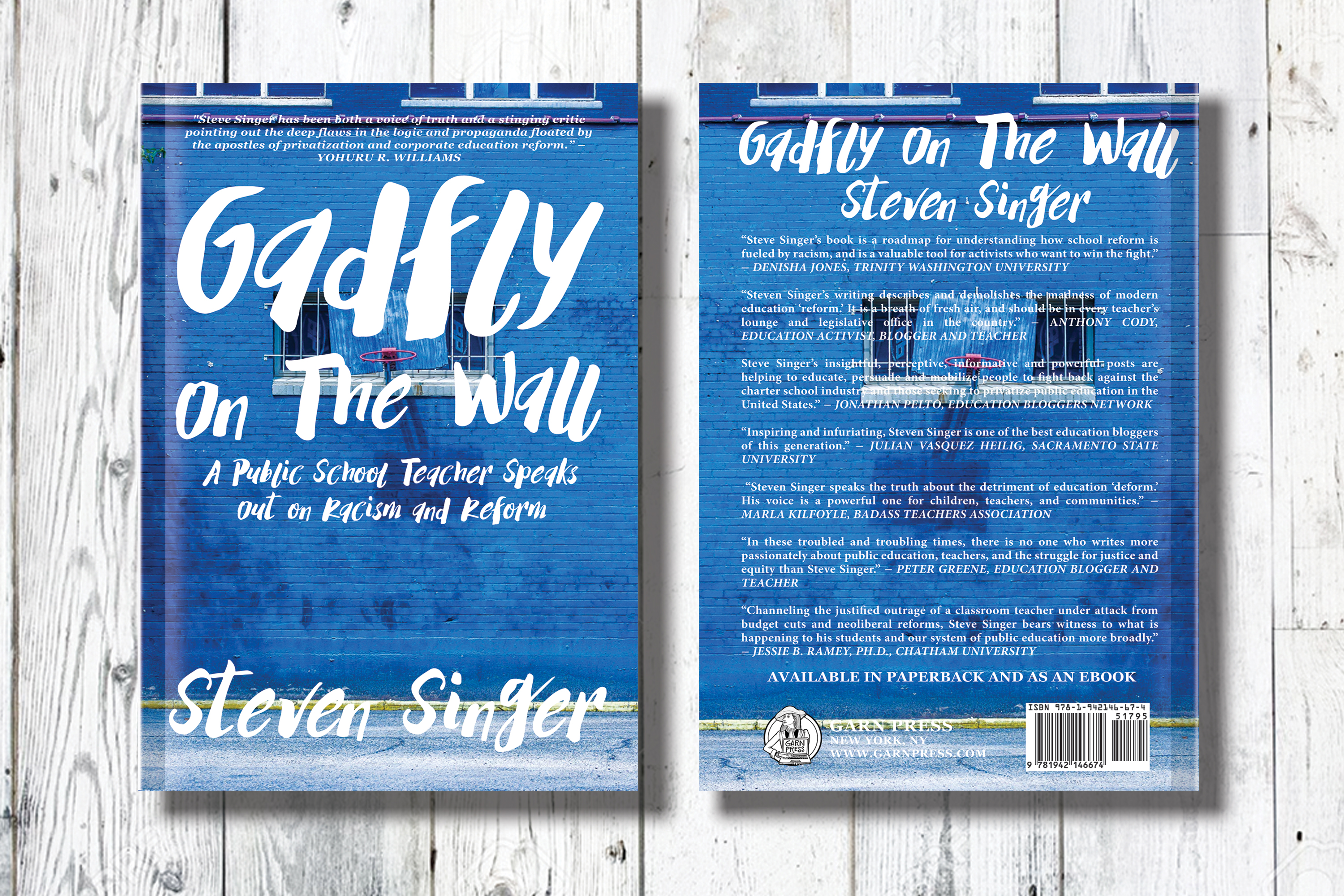
I’ve also written a book, “Gadfly on the Wall: A Public School Teacher Speaks Out on Racism and Reform,” now available from Garn Press. Ten percent of the proceeds go to the Badass Teachers Association. Check it out!


 gadflyonthewallblog