
The Hidden Bias Against Male Teachers

No one wants to be the disciplinarian.

Not at the expense of being a teacher.

Often you need to do the one so you can do the other. After all, it’s difficult to teach a class that can’t listen or sit or refrain from arguing.

But that’s the role men are often given in the field of public education.

We’re the disciplinarians – especially of male students.

We’re consistently given more students with perceived behavioral issues, with more histories of suspensions, and we’re given less administrative support than female teachers.

It’s not fair at all.

Many of these kids are suffering from poverty, malnutrition and/or trauma. Putting them in a room with a male authority figure cannot solve all of their problems. Yet that’s what happens more often than not.

Male teachers are not seen as teachers first and foremost. We’re the enforcers of school rules. And it’s driving so many of us from the field or discouraging even more from entering it in the first place.

Consider this: teaching is a female dominated field.

According to the National Center for Education statistics, 77% of public school teachers were female and 23 percent were male in 2020–21 – the most recent year for which there is data.

It’s worse at the elementary school level where only about one in ten teachers (11 percent) are male. However, things are not much better at the secondary level where less than 4 out of 10 teachers (36 percent) are male.

And these statistics have remained roughly the same for at least a decade.

It’s not true just in the United States. Around the world men are underrepresented especially in the elementary school education workforce. So much so that a 2017 article in the Economics of Education Review wondered, “Are male teachers headed for extinction? The 50-year decline of male teachers in Australia.”

This has both an academic and social impact on male students who look to male teachers as role models. Without a positive male influence in the classroom, boys tend to see education as distinctly feminine and either out of reach for them or something that they should not even be trying to accomplish. Moreover, male teachers demonstrate ways that men can interact in a nonviolent way especially toward women. Their very presence can promote a new conception of masculinity that is gender equitable and solves problems through reason, agreement and team building.

Not to mention that the idea of male teachers as being primarily disciplinarians has no basis in fact. It is a gender stereotype as much as women being more nurturing and suited to childcare. In the field of education it only sets up expectations that men should be sent more students with behavioral issues and that their natural maleness will somehow bring about a solution.

Such attitudes are harmful to male teachers careers.


After all, too firm a focus on student discipline reduces teachers job satisfaction and the likelihood that educators will stay in the field until retirement.

Student misbehavior is a main source of teacher stress and burnout. When administrators give them fewer honors courses and/or fill their classes with more difficult students, it create a more hostile work environment for them and thus increases turnover.

Even expectations for male teachers’ own behaviors are different. While female teachers can be expected to have a variety of personas, men are expected to be strict, rule followers who will not let students get away with anything – and any deviation from this expectation can result in negative evaluations and lower administrative reviews.

The result is lower job satisfaction. Male teachers can feel frustrated due to so much of their time having to focus on discipline issues and so little of it being able to focus on actual instruction. This is especially true in districts where principals, deans and others do not properly support classroom disciplinary decisions.

When a classroom teacher sends a student to the office after numerous redirections and finds that the student is sent back almost immediately with only a warning, it can be incredibly demoralizing. As if the classroom teacher is incapable of a warning, himself!? Numerous steps have already been taken to correct the behavior before it was sent to the next step for higher order discipline of which the classroom teacher does not have the authority to conduct. When such support is lacking, the classroom teacher feels helpless and alone.

Then there’s the issue of being effective as a teacher. When there’s little time for anything but discipline, much instruction is lost. So many male teachers feel ineffective and are judged as being ineffective because of circumstances beyond their control. They were not set up for success but blamed for the situation they were given. And this results in higher turnover.

Corinne Moss-Racusin, an associate professor of psychology at Skidmore College and lead researcher, said: 

“There’s no evidence that men are biologically incapable of doing this work or that men and women are naturally oriented toward different careers. It’s a detriment to society if we keep slotting people into gendered roles and stay the course on gender-segregated career paths, regardless of whether those jobs are traditionally associated with women or men. That’s a powerful way of reinforcing the traditional gender status quo.”


In closing, I must admit this was a hard article for me to write.

Just broaching the subject feels like whining. Black teachers – especially black male teachers – experience the same problem to an even greater degree. And women teachers experience their own types of bias and sexism. However, none of that erases the unfairness male teachers endure often in silence until they’ve had enough and slink away from a career they once cherished like the sun, itself.


Like this post?  You might want to consider becoming a Patreon subscriber. This helps me continue to keep the blog going and get on with this difficult and challenging work.

Plus you get subscriber only extras!

Just CLICK HERE.

Patreon+Circle

I’ve also written a book, “Gadfly on the Wall: A Public School Teacher Speaks Out on Racism and Reform,” now available from Garn Press. Ten percent of the proceeds go to the Badass Teachers Association. Check it out!

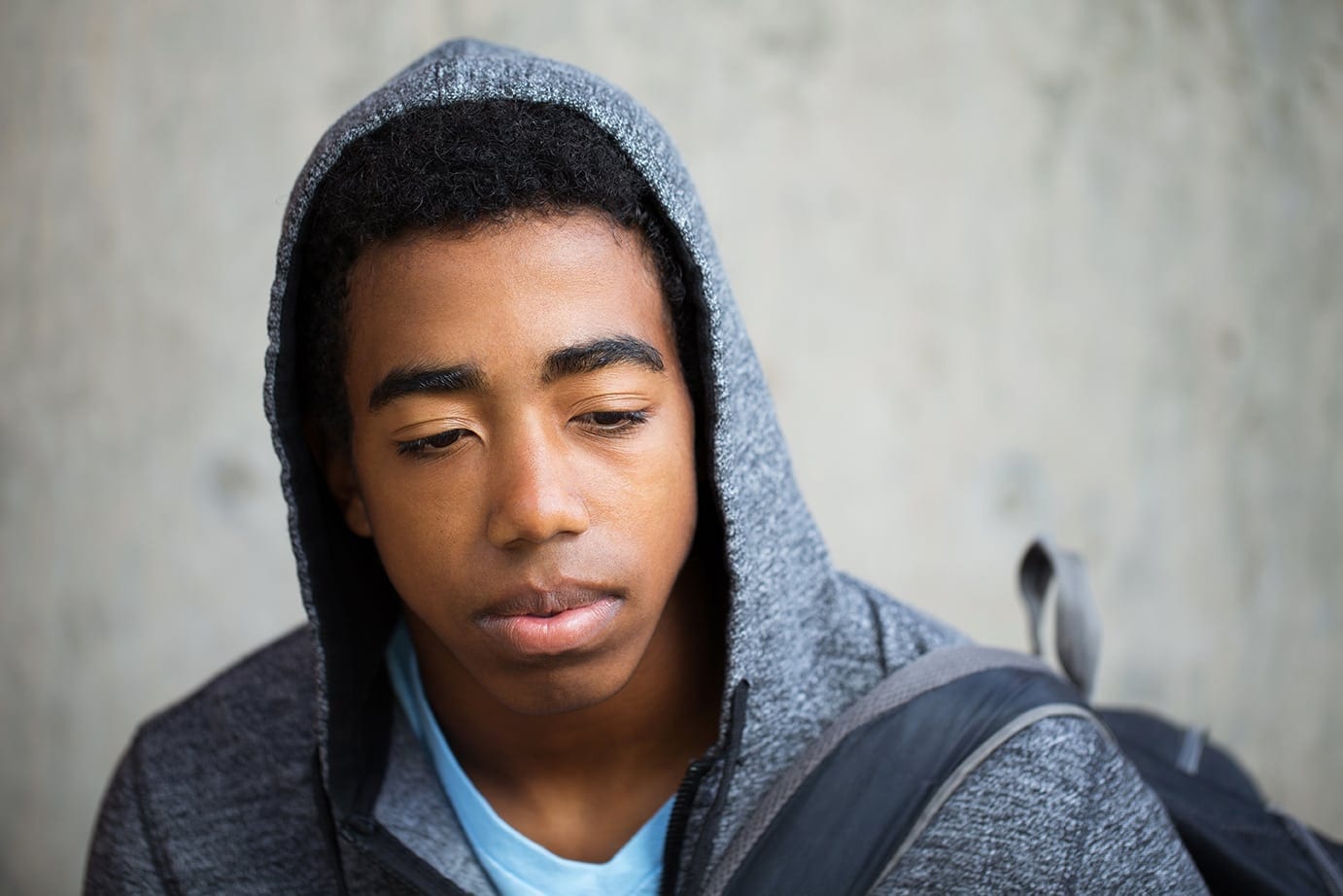
 

Racial Disparity in Student Discipline Isn’t All About Race

black-male-student_sm


Black students are suspended from school at substantially higher rates than white ones.


That’s indisputable.


When teachers send kids to the office, when principals issue detentions and suspensions, the faces of those students are disproportionately black or brown.


So what does that mean?


Are minority children more badly behaved than white ones?


Or is it an indication that our public schools are overrun with racist teachers and principals?


Those appear to be the only choices in Trump’s America.


There’s either something desperately wrong with children of color or the majority of white staff at public schools can’t handle them.


But the reality is far more complex, and no matter who you are, it will probably make you uncomfortable.


The problem is that there are variables the binary choice above doesn’t even begin to explain, and chief among them is child poverty.


In short, there are an awful lot of poor kids in America. And children living in poverty act out more than those living in middle or upper income brackets.


It’s not that these kids are inherently bad. They’re just coping with the stress of an impoverished life style by claiming whatever attention they can – even negative attention.


And since children of color are disproportionately more impoverished than white kids, it just makes sense that more of them would act up.


It should come as no surprise that living with economic deprivations translates into behavioral problems.


I’m not saying poverty is the only factor. I’m not saying that white teachers and administrators don’t engage in bias and racism. But it isn’t all one or the other.


Both are factors in this equation. And others variables as well.


To truly understand the problem, we have to give up the easy answers and the blame game and come together to find real, workable solutions.


SUSPENSIONS


About 15.5 percent of American school children are black, yet they make up 39 percent of students who are suspended from school, according to the Government Accountability Office’s (GAO) first study on the issue.


The study used data from 95,000 schools compiled from the federal Civil Rights Collection.


Particularly alarming is the fact that almost the same disparity exists in our prison system, where nearly 38 percent of inmates are black.


Researchers concluded that this disparity persists in both rich and poor schools, so the primary cause is racial bias.


However, the study was also used by the GAO as a means to put pressure on Education Secretary Betsy DeVos as she considered whether to rescind 2014 civil rights guidelines from the Obama Administration. The report was part of a political move to force DeVos to keep using guidelines meant to ensure that students are not discriminated against when punishments are handed out or schools would risk being found in violation of civil rights laws.


The problem is that the study is undeniably partisan and politically motivated.


Don’t get me wrong. I sympathize with its motivation. It’s just that we can’t let a single well-intentioned political action falsely impugn the nation’s teachers and public schools.


It IS important to keep the Obama era guidelines on civil rights violations. We DO need to be aware of possible incidents of discrimination against minorities in our schools and work to rectify these issues.


However, we can’t let this change the facts. The issue is whether poverty or race has a greater impact on racial discrepancies in student discipline. Are a greater percentage of black kids suspended mainly because of prejudice or is it more a symptom of their poverty?


And the answer can’t depend on whether it makes an odious person like DeVos squirm or smile.


POVERTY


The problem with answering this question comes from the various definitions of poverty we employ.


If we define poverty for students as those eligible for free or reduced lunch programs (a determination based on household income), then more than half – 51% – of public school children are poor.


But if we take the more conservative formula developed in the 1960s based on food expenses as a part of a family budget, poverty estimates shrink.


According to the Center for Children in Poverty (NCCP) which uses the more conservative definition, childhood poverty in the U.S. breaks down as follows: 10% of white kids (4.2 million), 27% of Latino children (4 million), 33% of Black students (3.6 million), 12% of Asian children (400,000) and 40% of Native American children (200,000).


And those figures are rising. There are 1.2 million more poor children in the U.S. today than there were in 2000.


However, there is real reason to assume these figures don’t capture the whole picture. After all, in just the last 30 years, food expenses (up 100%) have not risen as dramatically as other costs such as health care (up 500%), housing (up 250%) and college tuition (up 1,000%). So any real-world definition of poverty would include substantially more children than just those who qualify under these out-of-date federal guidelines.


A report by the Congressional Research Service (CRS) concludes, “If the same basic methodology developed in the early 1960s was applied today, the poverty thresholds would be over three times higher than the current thresholds.”


And the GAO study used the conservative 1960s threshold.


It underestimated how poor our nation, families and children have become.


Consider: in the past 20 years as wages have stagnated, median household expenses increased by 25 to 30 percent. As a result, 3 out of 5 Americans today spend more than they earn – not on useless frivolities – but on essential needs.


It’s estimated that over three-quarters of Americans are living paycheck to paycheck.


People are working more hours for decreasing wages and benefits. A Princeton study concluded that 94 percent of the nine million new jobs created in the past decade were temporary or contract-based instead of traditional full-time positions.


In 2016, the poorest 50% of American adults had an average net worth (home and financial assets minus debt) of just $7,500. To make matters worse, only a year previously it was $9,000. The difference all went to the top 1% who gained an average of $1.5 million during that same year.


These facts have real world consequences for every level of society – especially how our children behave in school.


CONSEQUENCES


It seems clear then that the scope and effects of poverty have been underestimated by the GAO report and others who wish to emphasize the effect of racism and bias.


Again this is not to say that racism and bias are misrepresented or unimportant. It’s a question of how much – not an either/or situation.


The fact of the matter is that poverty has a more pervasive impact on student discipline because students of color experience it at greater rates than white kids.


This is mainly because of the way poverty affects students’ home lives – an area that has a much greater influence on education than what goes on in the school, itself.


For instance, children who don’t know how to “play school” – to navigate the expectations, routines, social situations and academic demands – don’t learn as much as those who do. In fact, this may be a partial reason why children of color don’t do as well academically as kids from other groups. Certainly biased standardized assessments and the high stakes decisions made based on these tests play an even larger role. But at least some of the gap may be caused by lost opportunities due to behavioral issues.


Sadly, children who act out in class usually do the same at home. We must ask then: are parents present when this happens? Do they have similar standards of misbehavior? Do they know how to correct misbehavior when it happens?


Unfortunately, there is significant evidence that many parents aren’t able to be present for their kids.


They are working two or three jobs just to make ends meet and don’t have the time to do the groundwork necessary to eliminate behavior problems before their children go to class. They don’t have the time to set up routines, expectations, rewards and punishments, etc. And even when they do attempt to do these things, they have less ability to get it right because their attention is focused on putting food on the table, providing clothing and shelter, etc.


This is not because these people are bad parents. In fact, they are good parents who are doing the best they can. But this is a symptom of a deformed society that requires a disproportionate investment of time from the poor for the essentials that is not required of those in higher income brackets.


This is not something unique to black and brown families, either. It is a feature of millions of white households as well – but the demographics of poverty cluster these impacts disproportionately on children of color.


HOME LIFE


There is also a change in the sociological makeup and values of poor and minority families.


Some would put blame squarely on the increasing prevalence of one-parent households. I think this is deceptive, though, because many one-parent households are stronger and more stable than two parent ones. It really depends. But it makes sense that households with two parents – where one adult can lean on the other for support – are often more stable than those without this feature.


This may be an area where black children have a disadvantage since according to census data the percentage of white children under 18 who live with both parents almost doubles that of black children. While 74.3 percent of all white children below the age of 18 live with both parents, only 38.7 percent of African-American minors do the same.


There is also the issue of parents who aren’t just absent during the workday but absent altogether. People of color also are incarcerated at disproportionate rates to white people – even when convicted for the same crimes. This is not to say that black people commit more crimes, but that they are more harshly punished for them than whites – they have higher conviction rates and serve longer sentences.


This has consequences for children of color. It adds to the prevalence of grandparents and/or other siblings or foster caregivers filling that parental role. Again, these households can be exceptionally strong and stable. But there is less support, more struggles and the increased possibility that children’s behavioral home foundations may be less robust.


RACIAL TRAUMA


People of color also experience racial trauma compounded from our national history of slavery, racism and prejudice. Black and brown people today are still dealing with the effects of generational slavery. This is one of the reasons they are disproportionately poor – they did not have the chance to gather wealth over successive generations as white families did.


Moreover, the culture of black people was disrupted by the slave trade. Genealogies, legacies, traditions, faiths, etc. were stolen from them by the slave industry. Parenthood, as we know it today, was forbidden to black people. Is it any wonder that they have struggled to regain what was taken from them by white society?


Finally, there are the effects of Jim Crow and racial discrimination after the end of slavery. Black people have continually been told they had the same rights and opportunities as white people but when they went to claim these alleged boons, they were beaten back. This has had the effect of turning some of them against the very idea of many of the behaviors they see exemplified by white people.


Some students of color don’t want to behave like the white kids because they want to assert their blackness. There is among some of them an internalization of negative behaviors as black and positive ones as white. This misdirected self-determination results in racial pride for acting up regardless of the academic consequences.


RACISM AT SCHOOL


Of course by the same token there is certainly bias, prejudice and racism among white teachers, administrators, faculty and staff.


The fact that our public schools are mostly staffed with non-black and non-brown people, itself, ensures that bias will be prevalent in our schools. It is vital that we increase the percentage of black staff – especially teachers – in our classrooms. Though this will require the elevation of the profession of educator to attract teachers of all backgrounds.


The problem is that white people often don’t understand black culture or even recognize how much white people have been enculturated to accept stereotypes and bias as the norm.


This has a direct impact on school discipline. Many discipline policies are written to unduly target students of color. I’m not saying this is necessarily intentional – though it may be in some cases – but that these policies result in discipline discrepancies.


Many of these are dress code policies. How many schools criminalize the wearing of black hair in certain ways or the simple hooded sweatshirt? Hoodies, for example, are a preferred manner of dress for many students of color and really cause no harm to academics or social interactions. But administrators and/or school boards ban them – why? It’s just another way to police black bodies and minds.


These sorts of practices are everywhere in our schools and take reflection to undo. For instance, I found myself guilty of this same thing for years in my classroom when some of my black students started compulsively brushing their hair at their desks. These were mainly boys with short hair who were trying to get a wave effect their peers considered stylish.


At first, I found this incredibly annoying – the sound of constant brushing as students were doing their work. But then I realized that these students WERE doing their work. The brushing in no way interfered with academics. It didn’t bother anyone except for me and perhaps some of the white students.


Simply allowing cultures to express themselves should not result in disciplinary action. And since I’ve permitted the behavior, I’ve had less reason to discipline my students and no negative impact on academics.


SOLUTIONS


Most analyses of this problem stop with blame.


Who’s responsible for this? And once we have an answer – and it’s usually one very simple answer – then we’ve done all we set out to do.


In the case of the GAO report, once again the blame was put on everyone’s favorite scapegoat, public schools and teachers. But this is not earned given how much poverty was overlooked. The reality is that the responsibility for the problem is multifaceted with much of it stemming from cruel economics.


The solutions to the issue, if we are ever to really try to do more than just point fingers, must address a variety of ills.


First, we need to monitor and help public school staff to be less biased.


We need more teachers of color without a doubt, but this will never happen until all teachers are better paid, have stronger labor protections, autonomy and prestige. On top of that, there should be additional incentives to attract teachers of color. It’s hard for white teachers to notice their own biases unless there is someone in the building who can see them more clearly and offer advice. Just making the staff more multicultural will make white teachers more reflective of their own practices.


Of course actively pointing out prejudice is extremely difficult for co-workers to do by themselves. In addition, white teachers need cultural sensitivity training. And not just them. Since no educator comes from all cultures, everyone could use frequent reminders of how to be more inclusive, impartial and fair to students from various backgrounds.


Next, we need to broaden our idea of what discipline is. Every infraction doesn’t need a detention or suspension. We can enact interventions like restorative justice practices, conflict resolution and other positive procedures that actively teach kids how to deal with their emotions and better behave.


In short, we’re teaching kids what they should have learned at home, but like so many things in our society, it’s left to the schools to get it done. I bring this up not to shame anyone but to remind society that any expectation that schools can fix this problem by themselves is laughably naïve – but someone has to try.


At the macro level, we need to take steps to reduce and eliminate poverty.


This is one of the richest countries in the history of the world. Surely we can find ways to better share that wealth to the benefit of all. If parents don’t have to work multiple jobs to survive, they are more able to teach, model and discipline their own kids. And when parents are present in children’s lives, those kids don’t have as great a need for attention. It would certainly cut down on negative attention seeking behaviors.


In addition, with schools at the center of neighborhoods, we can have more adult education classes for parents. This would be not just courses on how to effectively raise children but on job skills and lifelong learning. After all, parents who value learning raise kids who do, too.


Finally, we need to enact antiracist policies at the local, state and federal level to reduce (and hopefully eliminate) prejudice of all kinds. We need integrated schools and neighborhoods. We need more antidiscrimination policies. We need to end mass incarceration and selective enforcement of the law. And we need some form of reparations to black people for the generations of racism they have had to endure.


I know these are big goals. But they are the only way to make a just society for everyone.


We cannot continue to blame our school system for reproducing the society that created it. Education is aspirational and strives to better itself. But it cannot reach that goal alone.


Like this post? I’ve written a book, “Gadfly on the Wall: A Public School Teacher Speaks Out on Racism and Reform,” now available from Garn Press. Ten percent of the proceeds go to the Badass Teachers Association. Check it out!

thumbnail_IMG_8249