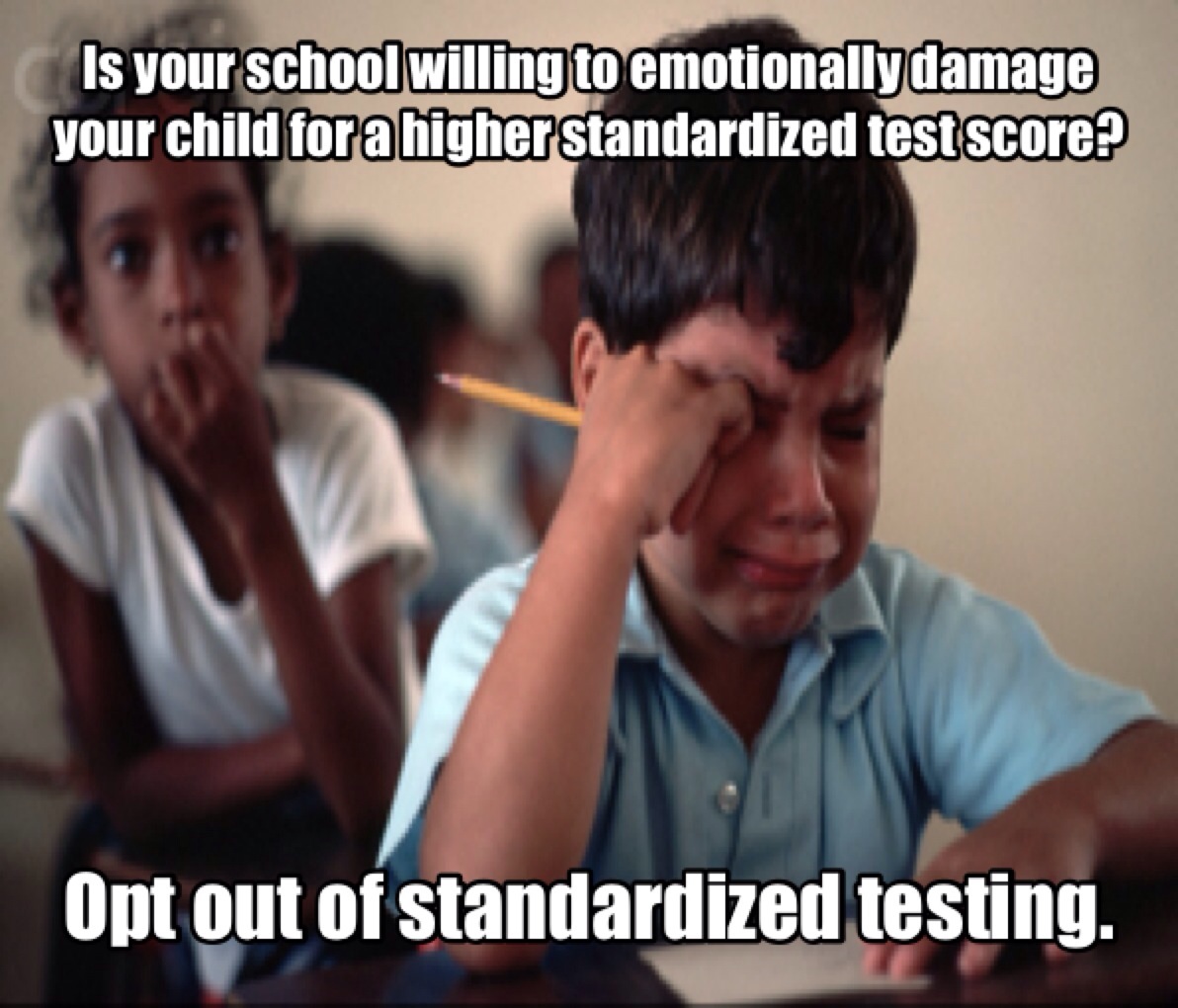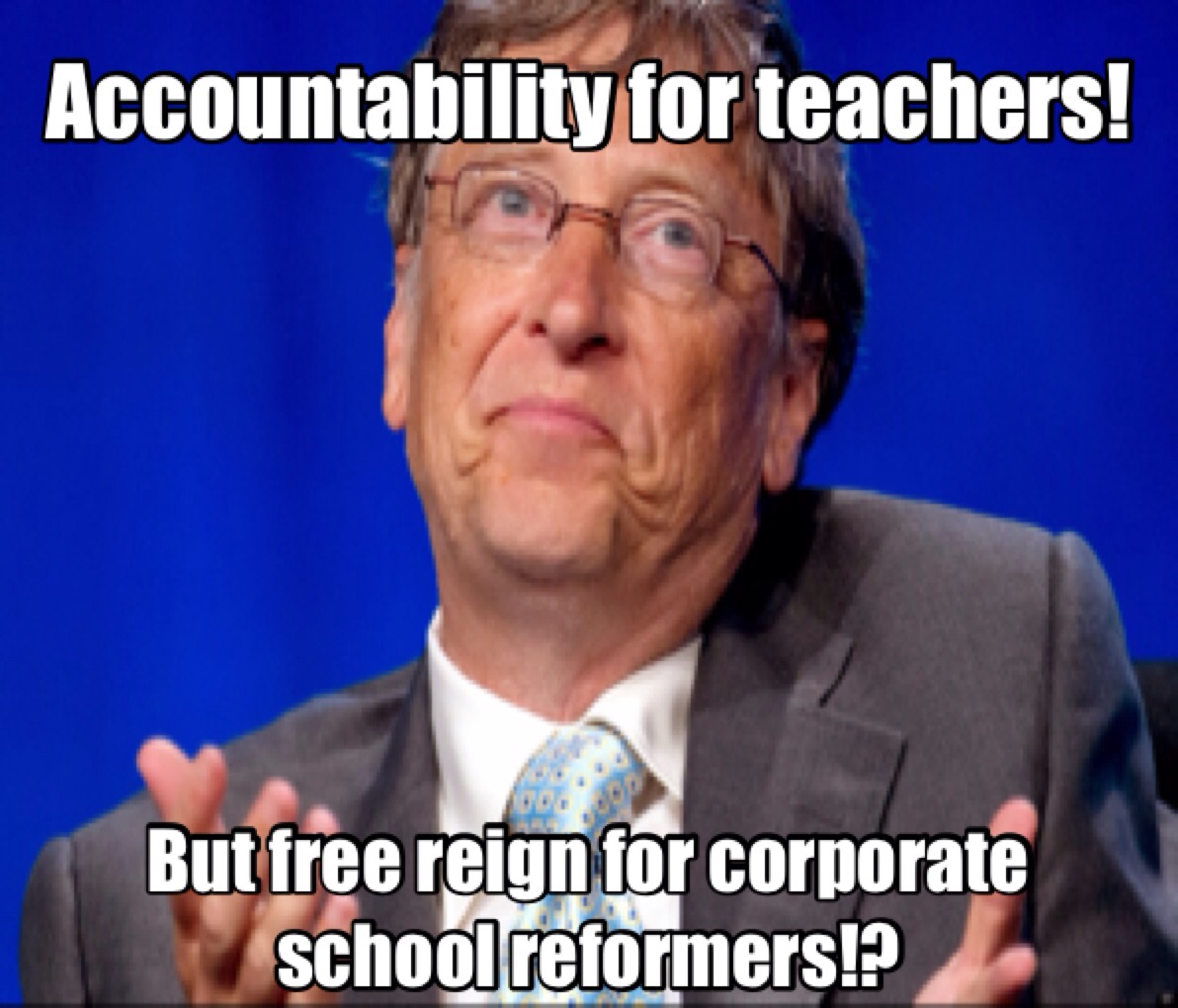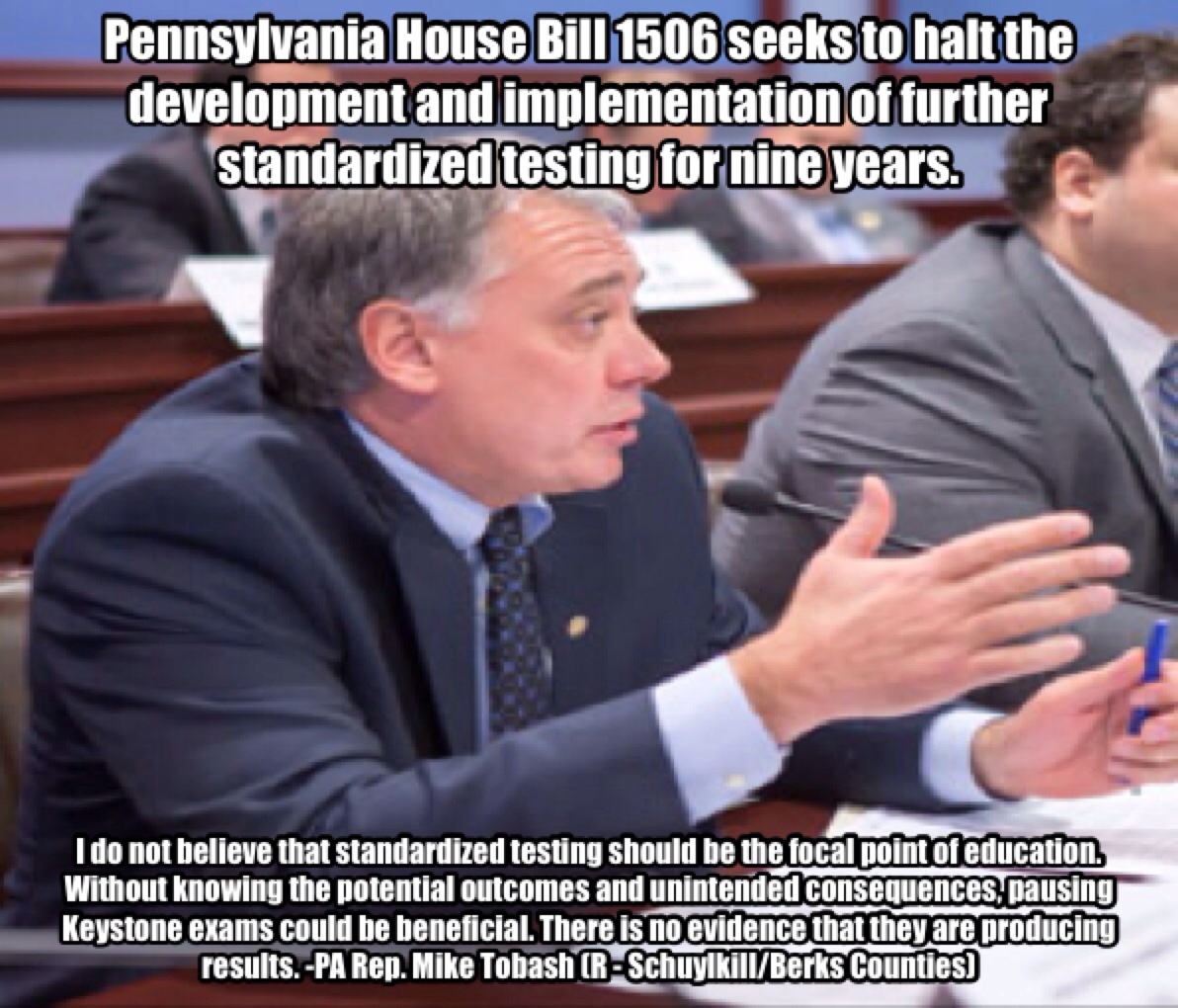
Why We Should Have ZERO Standardized Tests in Public Schools


Screen shot 2015-01-30 at 4.35.10 PM

Zero.

That’s the number.

No annual testing. No grade span testing. Not even one measly graduation requirement.

Zero.

We need exactly ZERO standardized tests in our public schools.

I know that sounds extreme. We’ve been testing our children like it was the only thing of academic value for more than a decade. When the question finally arises – how many tests do we need? – it can sound radical to say “none.”

But that’s the right answer.

And finally Congress is asking the right question.

The U.S. Senate is holding hearings to rewrite the Elementary and Secondary Education Act (ESEA) – the federal law that governs K-12 schools. One of the biggest issues at stake is exactly this – how many standardized tests should we give students?

Sen. Lamar Alexander – head of the Senate Education Committee – is asking the public to email testimony to FixingNCLB@help.senate.gov. Parents, teachers and concerned citizens are writing in with their concerns about testing.

But will they have the courage to tell the whole truth in this – our moment of truth?

We’ve fought so long just to get someone to recognize there is a problem. Will we be able to honestly assess the solution?

We’re like a lifetime smoker who’s been diagnosed with lung cancer being asked how many packs he needs.

Or an alcoholic waking in a puddle of vomit being asked how many drinks he needs.

Or a junkie after a near-death overdose being asked how many crack pipes he needs.

We all know the right answer in those situations – and it’s the same for us about standardized testing.

We need None. Nada. Negatory.

But our hands shake. We get cold sweats. Withdrawal sets in.

Will we face our national addiction? Or again double down in denial?

Remember there is no positive benefit for forcing our children to go through this mess. It is not for them that we mandate these policies. It is for us – so that we can pretend we have control over something that is uncontrollable.

Learning is not something measurable in the same way as water being poured into a glass. It defies the precision of our instruments.

Don’t think so? Then answer me this: which unit of measurement should we use to determine how much learning has been accomplished? Pounds? Grams? Liters? Hectares?

Billy got hisself 20 pounds of book learnin‘ at the school today?

Not really.

We use grades like A, B, C – but there’s nothing precise about them. They’re just a percentage of assignments completed to the teacher’s satisfaction.

I don’t mean to say that you can’t tell if learning has taken place. But how much? That’s difficult to gauge – especially as the complexity of the skill in question increases.

You can tell if your dog knows how to sit by commanding it to sit and observing what it does. It’s a much different matter to ask someone to evaluate the themes of a novel and determine how much literary analysis that person understands based on his answer.

Of course teachers do it every day, but that determination is, itself, subjective. You’re required to trust the judgment of the educator. You have to believe the instructor knows what she’s talking about.

That’s the best you can get in the humanities – and teaching is a humanity – more an art than a science.

Perhaps some day neuroscientists will allow us to determine the relationship between firing synapses and brain events to internal states like learning. At such time, perhaps the very act of comprehension will be closer to loading a program onto your hard drive. But until that day, education is a social science.

The push for increased standardized testing, however, is an attempt to hide this fact. And the results are less – not more – valid than a teacher’s classroom grades.

Why?

Cut scores.

Most people don’t know how you score a standardized test. If they did, they wouldn’t automatically trust the results.

Fact: standardized tests are graded by temporary workers – many of whom have no education background – determining at will what counts as passing and failing in any given year. In fact, they have an incentive to fail as many people as possible to increase the market for their employer’s test prep material.

That is NOT objective. In fact, it is LESS objective than the grade provided by the classroom teacher. After all, what is the educator’s incentive to pass or fail a student other than successful completion of the work?

In fact, statistics back this up. Taken as a whole, standardized test scores do NOT demonstrate mastery of skills. They show a students’ parental income. In general, poor kids score badly and rich kids score well.

Moreover, the high stakes nature of testing distorts the curriculum students receive. Instead of a well-rounded course of study focusing on higher order thinking skills, high stakes testing narrows what is taught to that which can most easily be tested. This creates a market for the test prep materials that are often created and distributed by the same corporations who create, distribute and grade the standardized tests. It’s a conflict of interests, a feedback loop, a Ponzi scheme – in short, fraud perpetrated on the public as if it were education reform.

Honestly, we know all this at heart. Every teacher, politician, statistician, and student. But as a society, instead of devising a better method, we continually reach for the same failing solutions.

When No Child Left Behind failed to produce results, we doubled down with Race to the Top. When a focus on state standards didn’t help, we created Common Core.

That’s an addiction.

Likewise calls to reduce testing without ending it are just cries from the junkie for another fix.

Yes, grade span testing (three exams spaced out over elementary, middle and high school) is better than annual testing (once in each grade from 3-8th and once in high school). So is a single graduation test. But why do it at all?

The burden of proof is on those defending tests. If these assessments really are as toxic as we’ve shown, why would less of them be more beneficial than none?

I see no reason to suppose that even limited testing would avoid these criticisms. Grade span testing would still be appraised with cut scores, still assess socioeconomics – not academics, still deform the curriculum… Why keep it – even in smaller quantities?

But what’s the alternative, naysayers will complain. If we don’t standardize test our children to death, what do we do?

Answer: focus on the problem – poverty.

More than half of all US public school students live below the poverty line. These children have increased needs for tutoring, counseling, nutrition, and wraparound services. Moreover, these are exactly the children who go to the most underfunded schools. They have the largest class sizes and the smallest offerings of arts, music, foreign languages and extra-curricular activities. The equipment and often buildings which serve these kids are overwhelmingly out-of-date and in need of repair, remodeling or replacement.

If you really wanted to improve the US education system, you’d address this glaring problem.

Equally, you need to elevate the profession of teaching, not denigrate it. Return the creation and execution of education policy to the experts – educators. Provide them with the resources they need to get the job done. Equip them with professional development that helps instruction, not testing. Help them individualize students’ educational experience, not standardize it. And offer racial sensitivity training to maximize cultural understanding between teachers and students.

How would we tell if any of this worked?

Easy. First, stop pretending that our current system of accountability works. It’s a sham.

Despite a media narrative of failing schools, comparisons with international education systems put American students at the very top – not the bottom – if you take poverty into account. Of course, no one wants to do that because we’d have to admit these comparisons are based on – you guessed it – standardized test scores, which AGAIN show economic disparity not intellectual achievement!

So we deify testing as the only thing that can hold schools accountable, then ignore data that disproves our findings and pretend like we have some hard-nosed system that keeps educators responsible. It doesn’t. It’s just a story like The Three Little Pigs, Little Red Riding Hood or Climate Change Denial.

So how do we start to actually tell if our education system works? Easy. Trust our nations parents, students and teachers to tell us. And actually listen to what they say!

Now is the time.

Speak or forever hold your peace.

Whether our policymakers will even listen to us is a separate question. If WE’RE strung out on testing, they’re at least as dependent on the lobbying dollars of the assessment industry.

But we have to try.

Our collective hands may shake. A quaver may creep into our voices. We may get hot and cold sweats.

But the truth must come out.

How many standardized tests do we need?

NONE.


This article was also published on the Education Bloggers Network page and the Badass Teachers Association blog.

Confession of a Standardized Test Proctor

A boy receiving a failing test score

Hello. My name is Steven.

HI, STEVEN!


And I’m a standardized test proctor.

(Clapping!)

I’ve been a proctor for over 10 years now. I used to be a teacher. Some days I still get to be one, but most of the time… I’m just a proctor.

(Clapping. Shouts of “YEAH!”)


I give my students standardized tests.

WOO-HOO!


And I make them do test prep.

(Cheers!)

But…

(Breaks down. Someone walks up behind him, claps him on the back and whispers in his ear. Encouraging noises from the crowd of people sitting in folding chairs around the room.)


Let me start with the box.

(Laughter)


The box came to my middle school classroom right before Christmas break. You know the one. Like a cinder block made of cardboard. 

A high school student brought it down from administration. She shook it like a huge maraca and asked, “Mr. Singer, where do you want it?”

For a second I had no idea what it was. Then I remembered – it was almost time again to take the GRADE Test. And I knew what it was – a box full of those black and green test booklets, Scantron sheets wrapped in plastic, a box of No. 2 pencils, a monitor’s booklet, scratch paper, student rosters and ID numbers… Everything I wanted for Christmas.

(Laughter)


So I put it on the shelf, went on teaching and forgot about it until December was over, until after the holiday break.

I didn’t want to even think about it.

But when I came back to school in January all rested and raring to go, I saw it there like some sinister Elf on the Shelf.

So I put it off for another week. No rush. I had until the end of the month to make my students take it.

I just…

I couldn’t have them come into my classroom and first thing take a standardized test. That would have been heartless. They didn’t come back to school to fill in bubbles. They wanted to do something interesting, something that they really cared about.

They wouldn’t admit it, but they wanted to learn Goddammit!

And I wanted to teach!

(Grumbling) TELL US ABOUT IT!


What?

TELL US ABOUT THE WEEK BEFORE YOU TESTED!


Okay. I…

It was great. We read S. E. Hinton’s The Outsiders. Or at least a few chapters of it. 

The kids couldn’t put it down. If there were only a few minutes left in class, they didn’t want to stop reading – they wanted to keep going. 

We wrote journal entries about what we might have done in the characters’ places, examined the use of slang and how it has evolved over time.

We participated in a Socratic Seminar discussion where we made connections between the novel and our own lives, explored gender issues, the role of socioeconomic status and race – it was higher level thinking all around. You know? The stuff they tells us we’re supposed to teach – the stuff all the research tells us helps learners grow.

But it didn’t last. The week ended. And I had to give the GRADE Test.

OOOH! (a few claps)

You know, it’s funny. Working in a poor school district like mine, you hear a lot about accountability. If administrators don’t enact this reform, or teachers don’t do that paperwork or students don’t score this high – they’ll close us down. But no one talks about holding politicians accountable for making sure we have the resources we need.

Case in point: when I came back from break, the fan in my room’s cooling system had broken down. I have no windows and the air wasn’t circulating. It was hot and muggy and miserable. Yes, in January with arctic temperatures outside!

I asked the grounds keeper and administrators to do something about it, but was told repeatedly “the part is on order.” Nothing happened.

The first week wasn’t too bad. We managed. But it wasn’t until the second week – when I gave out the test – that it went from annoying to miserable!

(He pauses, shaking his head.)

I don’t know. Maybe it wouldn’t be so bad if it was a different test, but the GRADE…

…. is such a waste of time!


(good natured laughter. Mumbling.)


They call it a reading diagnostic test because it’s supposed to diagnose the kids’ deficiencies in reading. But it doesn’t do that for a host of reasons – chief among them the fact that kids take the same exact test over-and-over again for at least three years!

That’s right! No variation! The same questions in the same order three times a year – year-after-year. Heck! This was the second time they were taking this same test just this year alone!

Sure there’s one alternative version we COULD give to mix things up, but administration rarely lets us do that. And even if we did, it wouldn’t help that much.

(Snickers!)


What’s worse, it isn’t even aligned with the high-stakes tests kids have to take in March and April!

Yeah! They stick a gun to our heads and say if your students don’t score well on the all-or-nothing, win-or-lose state tests, we’ll label you a “failure,” cut your funding or close you down.

So you’d think we’d practice – try to do look-alikes and get comfortable with the format and everything.

But the rehearsal we’re forced to do is the GRADE test! That’s like practicing a layup when you’re getting ready for the chess tournament!

The preparation doesn’t reflect what students will be asked to do when it comes to the make-or-break exams!

It wasn’t always like this.

We used to have kids take a diagnostic test called the 4SIGHT. It wasn’t perfect. Kids took it on computers, but there was an essay section they’d write on paper, too, that I was actually allowed to grade, myself!

I thought there were better uses of class time, but at least the 4SIGHT was actually a good dry run for the kind of high-stakes tests they were going to take later in the year. And sections they took on the computer gave you a score immediately. 

It was something you could look at as a rehearsal, as reducing test anxiety, as providing you data you could use to make decisions about the students.

(Laughter)


Yeah! As if you’d need it! Any teacher who knows his students so poorly that he needs standardized tests to tell their strengths and weaknesses is a pretty poor teacher.

The only reason we changed to the GRADE Test in the first place is because the district got a grant from the state. 

First, the governor and legislature slashed our budget, then they offered to give us back a small portion of it if we enacted certain reforms – one of which was to replace our somewhat helpful diagnostic test with a totally useless Pearson product.

(clapping. A few catcalls of “PEARSON! OOOH! OOOH!”)

Come to think of it – 4SIGHT was also made by Pearson.

(Laughter)


And the time it takes to give this thing! There are only four sections – Vocabulary, Sentence Completion, Listening Comprehension and Passage Comprehension. But it takes a minimum of two days – and I have double periods! That’s two 80-minute sections – actually more like three so I can give the make-ups!


(unhappy noise from crowd)


That’s right! If a student is absent, I have to somehow proctor the whole thing over again just for him. Administration says it’s too hard for them to pull students out of class and give the make-ups, themselves. So I’m forced to give busy work to students who completed the assessment so they have something to do while the stragglers catch up.

(grumbles)

So to review: today was day three of testing. Day six if you count the first time I proctored this darn thing. And three more days will be coming in May.

This is day seven of no air flow. Kids sitting at their desks like they’re half dead. Sad, bored looks on their faces, and I completely sympathize but I’m the one who’s forced to do this to them!

Every now and then one of them asks, “Why are we doing this, Mr. Singer? Will this affect my grade?” 

And I find the lies hard to get out. Because, no, it won’t affect your grade. There’s really no good reason you’re taking this, except that some of those books on the shelf you enjoy during sustained silent reading were bought with money we get for making you go through this nonsense.

I used to believe in standardized testing. I did!

When I first started teaching it made a certain kind of sense. We had the Pennsylvania System of School Assessment (PSSA) tests then. My 8th grade kids took one in Reading and one in Writing.

It was challenging but at least the expectations were clear. I knew exactly what kinds of things they would be tested on and what they were expected to do. 

There were reams of remediation material available, and I could have my pick of the best – the clearest and most engaging – as test prep materials go.

But then Pennsylvania adopted Common Core – or at least it adopted the look-a-like PA Core – and had to develop new tests! 

Today, high school students take a test called the Keystone and middle schoolers still take the PSSA. But they’re both just different versions of the PARCC test with a Pennsylvania-sounding name on it. We just pretend it’s something new and ground breaking.

That might be acceptable if the PARCC was a valid assessment. However, it’s notorious throughout the country for being designed to fail students – not fairly evaluate them. 

Moreover, the state Department of Education is extremely stingy with examples teachers can look at so we know what’s on the test. I doubt even they know what’s on it because they keep changing it from year-to-year.

So all of my remediation material is almost useless. I can’t even buy something new because it takes several years after a test is developed for the preparatory material to appear, and we’re still chasing a moving target!

And on top of all that – the state is forcing all schools to use the scores from these tests to evaluate teachers performance!

We use incomplete test prep and unaligned pretests to prepare for more tests that don’t fairly assess student learning – and then use these invalid scores to blame teachers and bemoan the state of education!

WHAT THE HELL!?

Yeah! So…

(Someone walks up behind him and whispers in his ear. Hands him something.)

I get this… chip?

(Cheers! He looks it over.)

One week. I’m a one week man!

(Clapping. People standing.)

I’ve accepted my lot for one week?

(Volume gets louder on applause.)

I’m a test proctor.

(Catcalls. ONE OF US! ONE OF US!)

I’m a test proctor!

(Insane yelling!)

I’M A PROCTOR! A PROCTOR! A TESTING PROCTOR!

(The crowd rushes to the stage and engulfs the speaker. More and more approach. They just keep coming – more than could possibly fit in this room. The clamor continues to gain in volume until its unclear whether its celebratory cheering or out of control insanity. One word is heard through it all until even it cannot be made out in any distinctness.)

PROCTOR!

(curtain.)


This article also appeared in the LA Progressive, Education Bloggers Network, Public School Shakedown and the Badass Teachers Association blog.
Top 10 Education Blog Posts (By Me) You Should Be Reading Right Now!

computer-people-png-300x202

Chill the champagne, call the babysitter and get out those funky illuminated 2015 party glasses! It’s New Year’s!

What a year it’s been!

Good ol’ 2014 was a rough one in many ways. National news was bloodier and more violent than usual.

But in response, social activism was on the rise. People were taking to the streets to protest in numbers not seen since the Civil Rights movement. Corporate Education Reform was on the wane. National teachers unions were calling for the resignation of Arne Duncan, our U.S. Secretary of Education. Pennsylvania lost its worst governor in my lifetime – Tom Corbett. And they’re making a new Star Wars movie!

But perhaps most important of all, Gadflyonthewallblog was born!

I never thought I’d be a teacher-blogger. But here I am.

I used to just read the amazing work of people like Jessie Ramey, Peter Green, Jersey Jazzman, Anthony Cody, Diane Ravich and so many more.

They gave me ideas, made me want to speak out. I’d start posting things on Facebook. A status update here, a meme there. Until one day I starting writing something that was so long, I couldn’t fool myself anymore.

I had written a blog post. There was nothing for it, then, but to start a blog.

I promised myself if I took that step I would publish at least once a week as long as people were reading what I wrote.

At first, I’d get 50-100 page views. That quickly turned to 1,000 – 2,000 and then sometimes much more.

Now, more than 40,000 hits later, with 5,785 followers, I’m flattered beyond words that people seem to like what I’ve been writing. I hope I’m helping add to the conversation about education, social justice and anything else I write about.

To celebrate my half year as a blogger – I started all this in July – I’ve compiled a Top 10 List of my posts.

I hate to use data to rank my students, but I found it very helpful here in selecting which articles to include.

Like all data, it has its limitations. For instance, many of these articles were reblogged or published in many different venues – the Washington Post, LA Progressive, Diane Ravich’s blog, Public School Shakedown, the Badass Teachers Association blog, etc. Since I don’t have access to their statistics, I couldn’t include them in my calculations. As a result, a post may be lower on my list but it actually received more views overall if you include everywhere it was published. I suspect this is true in some cases but can’t prove it.

What I ended up with – in ascending order – are the most viewed posts on my blog site.

I hope you’ll find something interesting you haven’t read before or perhaps an old favorite to read again. Or maybe you can just share this list with a friend to let them know how totally super awesome my blog is!

Anyway, here we go – the Top 10 Posts of 2014 from Gadflyonthewallblog:


10) LIFE OR DEATH PROFESSIONAL DEVELOPMENT

Published: Aug. 2312184861-standard
Views: 1,022

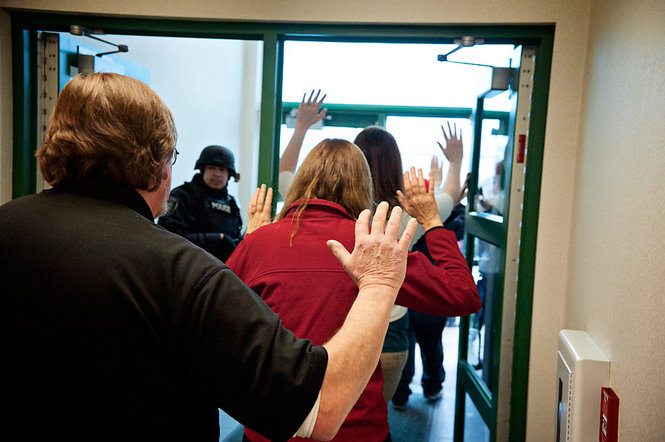
Description: Before the first day with students, my school had an active shooter drill. This is how it went down.

Fun Fact: This piece was chosen for a Freshly Pressed award by WordPress.com. It has the most likes (145) and the most comments (31) of any article I have published so far.


9) FIGHT CORPORATE EDUCATION REFORM AND MEME IT

Published: Oct. 19 20-beach-sea-photography
Views: 1,053

Description: Just a bunch of education memes I made – most of them before I started the blog.

Fun Fact: This was meant to be a toss off – somewhere for me to keep track of my memes. It was unexpectedly popular and many of these memes keep popping up in unexpected places to this day.


8) TOXIC TESTING MY KINDERGARTEN TOT – OR DADDY DON’T PLAY THAT

Published: Dec. 15  76754238
Views: 1,071

Description: It’s a surreal experience for a teacher to attend a parent-teacher night for the first time as a parent. From a daddy’s eyes, there’s no choice but to question the value of standardized testing in Kindergarten.

Fun Fact: This was so personal it was very hard to write. I didn’t think anyone would care. I was wrong. It’s been published widely beyond my blog.


7) TRACKING, TESTING AND THE MYTH OF MERITOCRACY

Published: Sept. 7  sad student
Views: 1,316

Description: When one of my students earned outstanding grades in my class last year but was denied a place in this year’s advanced class because of low standardized test scores, I took action.

Fun Fact: This piece really angered people on Facebook for the injustice this student faced. I received a plethora of comments and messages from others who had gone through similar situations.


6) A MOMENT OF SILENCE FOR MICHAEL BROWN

Published: Nov. 26  140824-michael-brown-4p_98a645e4e00131864161045b0edd09e7
Views: 2,052

Description: My students were so depressed by the Grand Jury decision not to hold a trial for the police officer who killed Michael Brown, I had to address it in class.

Fun Fact: I received more hate mail for this article than any other. It was widely published – even in the Washington Post. I had to stop reading the comments after a while. Many thanks to those who don’t want my head for doing this.


5) THE REAL AMERICAN EDUCATION CRISIS

Published: Aug. 3  Arne Duncan
Views: 2,131

Description: I got so sick of hearing corporate education reformers go on TV and talk about our failing schools. Yes, they’re failing because of education policies that don’t work that we refuse to replace.

Fun Fact: This was something of a slow burn. At first, it didn’t receive much attention, but I was surprised to see that views continue to trickle in daily.


4) MERRY CHRISTMAS. WE’RE STEALING YOUR SCHOOLS

Published: Dec. 27  feb5a53244c611e48eca12313d21419c
Views: 2,949

Description: My continuing coverage and outrage at the Commonwealth of Pennsylvania’s overreach to steal York City Schools away from taxpayers and give it to a failed charter school operator.

Fun Fact: My most recent post, widely published. I have been one of very few writers sounding the alarm for months. Finally, the nation seems to be paying attention.


3) THE BEST EVIDENCE AGAINST COMMON CORE

Published: Oct.4  Classroom-Management2
Views: 3,121

Description: Common Core is nonsense. To see that all you have to do is step in a classroom. Unfortunately that’s one thing the authors of CCSS have never done.

Fun Fact: I knew I had a winner from the second I posted this. It took off like a rocket. It has also been widely published and debated – one of the most popular pieces on the Badass Teachers Association blog. This is the only article I know of to inspire another blogger to write a complete piece attempting to debunk it.


2) CHECK YOUR WALLET – YOU TOO CAN BE AN EXPERT ON TEACHER TENURE

Published: Oct. 24  0714_wallet-open-money_485x340
Views: 6,070

Description: When Time Magazine promoted tech millionaires’ plan to improve education by attacking teachers, I exploded in fury. The result is this angry diatribe taking them to task point-by-point.

Fun Fact: Hugely, popular, widely published and almost universally praised by teachers and teachers groups. This lead to my involvement helping craft a response to the Time article published in the magazine along with my fellows at the Badass Teachers Association.


1) THE FINAL STRAW: CANCEL OUR LABOR CONTRACTS, WE CANCEL YOUR TESTS

Published: Oct. 11  the-straw-that-broke-the-ca1-300x273
Views: 10,910

Description: When Pennsylvania cancelled its contract with Philadelphia teachers, I saw the writing on the wall. If they can do that, teachers need to stop giving them the ammunition. They need to refuse to proctor the standardized tests being used to unjustly label our schools failures and justify the elimination of our collective bargaining rights.

Fun Fact: This is easily my most popular article yet. For a few weeks I was something of a folk hero. I saw my words memed by others and this piece appeared almost everywhere. Originally, I had debated publishing it at all thinking, “Who am I to tell teachers what they should do?” But my advice turned out to really hit a nerve. Teachers are dying to opt out of standardized testing. All it will take is one spark. One tiny spark.


Merry Christmas. We’re Stealing Your Schools.

feb5a53244c611e48eca12313d21419c

Merry Christmas. We’re stealing your schools.

That’s the message from the Commonwealth of Pennsylvania to York City School residents Friday.

Gimme’ that local control!

A judge ruled the district is now under direction of its Chief Recovery Officer David Meckley instead of its duly elected school board.

Why?

Meckley wanted the board to approve a plan to convert all district schools into charters run by Florida-based operator Charter Schools USA. This would make York the only all charter district in the entire state.

The agreement was made in secret by Meckley and details weren’t forthcoming before the board was asked to make a decision.

The board just couldn’t make up its mind fast enough. Members tabled it – they might even have refused it if given enough time to think!

So now Meckley will just make the conversion, himself. Dictatorship is so much easier than Democracy!

What else?

The school board reached an agreement with the teachers union that was simply too fair. How dare school directors agree to pay educators a fair wage when the recovery plan clearly indicated slave wages! Sure, district finances had improved, but… UNIONS!

The district could spend some of its $3 million surplus on teachers or engage in a possible $120 million contract with Charter Schools USA. Fiscal responsibility, people!

The district went back and rescinded its controversial teachers contract when the state initiated a petition to take over the district, but it was too late. School directors were acting like they were actually in control. We can’t have that. It might give people the idea that they are in charge! Hilarious!

How’d we get here?

Simple.

Back in 2012, Gov. Tom Corbett decided to slash public school budgets by $1 billion. Most of this came from the poorest schools since they relied more on state funding to keep operations going.

For York Schools that was an $8.4 million cut – over 15% of the district’s budget. To cope, the district cut the arts, student services, increased class sizes, etc. So it was labeled a “failure” simply because it couldn’t survive the funding cuts deemed necessary by the state.

Enter Meckley.

The state declared York City School District in “moderate financial recovery” in 2012 and appointed Meckley to create a financial recovery plan. That plan, adopted in summer 2013, laid out a path for internal reform but called for city schools to be turned into charters, run by an outside operator, if internal reform didn’t work out.

What’s that have to do with Friday’s ruling?

Plenty.

York County Judge Stephen Linebaugh tried to preserve the veneer of Democracy by defining the issue as narrowly as possible. He said it didn’t matter what the state would do once it had control of the district. He could only rule against a state takeover if it could be proven to be “arbitrary, capricious and wholly irrelevant to restoring the district to financial stability.”

In other words, if the district was in financial recovery and it agreed to a recovery plan (as it did), the only issue was whether it was following that plan – not whether the plan was any good or not, and not if the district had a right to refine that plan.

So apparently it is perfectly legal in Pennsylvania to beat someone up and demand a week’s worth of their lunch money – and if they don’t pay, you can sue them in court for welching on a contract!

Judge Linebaugh’s decision is expected to be appealed. This would cause an automatic stay to be put in place. But the state department of education would almost definitely try to have that stay lifted. So that issue will ultimately be up to the courts again.

Is the recovery plan any good?

Of course not!

If you’re problem is you don’t have enough funding, how do you improve that by giving over control of your district to someone whose goal is to make it turn a profit!?

They’ll reduce spending on services for children and increase administrative costs while earmarking a large portion of taxpayer money to boost the bottom line. That’s what for-profit charter operators do! It’s no secret!

Charter Schools USA – the operator waiting to take over York – is no exception.

A Florida League of Women Voters report found that a charter school operated by the company in the Sunshine State spent almost as much on fees and leases to itself and an affiliated company as it did on classroom instruction in 2011.

Another Charter Schools USA school in Indiana came under fire for keeping more than $6 million of “misappropriated” Indiana state funds for 1,800 students who never enrolled in its schools, according to an Indiana Public Media report.

CEO of Charter Schools USA Jonathan Hage has made himself filthy rich by doing the same thing to district-after-district throughout the country.

He even brags about it!

Take for instance his yacht. Yes, I said yacht. He brazenly named it “‘Fishin’ 4 Schools” after where he gets his cash.

To pay for it, he found a new revenue stream that’s just this side of legal. Charter Schools USA is the largest seller of charter school debt in the country. “It will sell $100 million worth of bonds this year, Hage says. … The bonds come with tax-exempt status because they are technically held by the nonprofit founding boards that oversee the schools.” Over a three-year period, the company made closer to $200 million.

So if you believe Meckley – the guy tasked with writing a recovery plan for York City Schools – bettering the district’s financial predicament means giving it to a company engaging in the same kinds of risky monetary practices that crashed our economy not even a decade ago. Run up debt, then sell it to others tax free! That’s not exactly a prescription for sound fiscal management.

Wait a minute. This takeover is being orchestrated by the Corbett administration. Isn’t he a lame duck? Won’t he be out of office in a few weeks? What about incoming Gov. Tom Wolf? Is there anything he can do about it?

Good questions.

Wolf has come out against turning York into an all-charter district. He even asked the Corbett administration to hold off until the governor elect takes office on Jan. 20.

While no comment was made to the press from Corbett, actions speak louder than words. Once again, he could give a crap about what’s best for schools.

Wolf has yet to comment on the takeover, himself, but his spokesman Jeff Sheridan had this to say:

“Gov.-elect Wolf knows that schools across Pennsylvania have been starved for resources over the last four years and our children are being put at a disadvantage. As a result, districts like York have been forced to the brink of financial collapse. Gov.-elect Wolf will make education his top priority by working to restore funding cuts and providing adequate resources so school districts can deliver on the promise of a high-quality public education for all Pennsylvanians.”

It’s unclear at this time exactly what Wolf will be able to do once he takes office if the takeover is complete.

Hopefully, the matter can stay tied up in the courts for a few weeks. Then Wolf may be able to direct the state to drop the matter and take a more logical course.

Cynics often say there’s no difference between Democrats and Republicans when it comes to educational matters. And history has done a lot to justify that position.

Gov. Wolf may have a chance to demonstrate exactly what that ideological difference is – if it exists at all – in coming weeks.

Right now, it’s all up to the speed and fairness of our courts.

In the meantime, Christmas cards in York, Pennsylvania, should contain the following resolution:

Goodnight and good luck.


This article has also been published in the LA Progressive and Badass Teachers Association Blog.

Toxic Testing My Kindergarten Tot – or Daddy Don’t Play That

76754238

We were late.

At least it felt that way as my wife dragged me through elementary school hallways.

Racing past me were walls of multicolored palm print turkeys. Was it my imagination or did their googly eyes seem somewhat disapproving of my lateness and attire?

It’s my first parent-teacher night, I almost protested.

At least, it was my first as a parent and not as a teacher.

I was used to sitting on the other side of the table, notes organized in a neat little pile.


“Oh, you’re Jimmy’s father? So GLAAAD you could make it.”


But tonight I wasn’t Mr. Singer, teacher extraordinaire.

I was just a daddy. And Mommy was pulling my arm free from its socket trying to get us to the classroom on time.

There was just so much to see, frankly. I had never realized before how little of the school parents usually get to observe. At the district where I teach, I know my building like a second skin. But we don’t live where I work.

As parents, we’re invited into the auditorium, gymnasium, offices, and athletic fields. But we rarely get a peek at the inside of a classroom. You know? The place where our children spend most of their days!

“Oh my God! Is that her music lab? It looks amazing! Honey, take a look at all the instruments…”

But she just gave me the Eyes of Death. It was time to go.

We arrived at my daughter’s classroom exactly on time, thank you very much.

The teacher met us at the door wearing a Disney print dress beneath a wide smile. Hands shaken, greeting given, she immediately ushered us into seats.

They were miniature toddler seats – perfect for Kindergarten butts, a bit condensed for mine. But they held up heroically.

I already had met the teacher during an open house at the beginning of the year. She seemed an excellent educator and my little sweetheart loved her.

However, being in the parent’s seat listening to her presentation was both enlightening and bizarre.

It was surreal to sit there and listen to a report about this child’s academic life as if I had no idea what she was like. After all, I was her first teacher. I taught her to walk and use the potty. Even today she refuses to touch her homework unless I’m there to help.

Yes, she has homework almost every night. In Kindergarten, yes. After a full day in school, too.

When I was in her grade, my mother would usually walk me home at noon for a nice lunch and an afternoon of play. My daughter, on the other hand, eats in the cafeteria. For free! All the students get free lunches regardless of parental income. And then they return to class for a full afternoon of study.

She loves it, though. One of her favorite parts of the day is lunch. She might not tell me what story the teacher read to the class, but she’ll always tell me what she ate for lunch.

Spoiler: it’s usually chicken.

Anyway, her teacher was sitting across the table from us giving a full report on our daughter’s daily activities. It was mostly positive but being a teacher, myself, I could pick up on a few euphemisms.

“Oh! You’re daughter is very vocal!”

Translation: she won’t shut up.

“She is so independent!”

Read: defiant.

But I know my little girl. The teacher wasn’t telling me anything new.

I really enjoyed the personal stories. 

Apparently my little one sometimes uses her feminine whiles to get the boys to take out her pencil or open her book for her.

Little scamp!

I loved the story where my sweetheart darling child asked the teacher to take her home after school. Not home to my house, either. Home to the teacher’s house.

“Mommy and Daddy won’t mind,” she allegedly said.

We all had a good laugh about that one.

And then out came the standardized test scores.

That’s right. In Kindergarten!

I guess I should have expected it. Somewhere in my thick brain I knew standardized testing had trickled down all the way to Kindergarten. But it was so early in the year. I hadn’t expected it to happen yet. I had vague thoughts about opting her out of all that nonsense.

Many schools try to keep it a secret but your kids don’t have to participate in standardized testing. You can choose to opt them out under a religious exemption. All it takes usually is a visit to the principal and a request in writing.

But it was too late. My daughter’s scores were here already.

So I looked at them.

In my mind, my little girl is pretty advanced. After all, she’s literate. And, yes, I’m proud of that fact.

While most of her classmates are still fine-tuning the alphabet, my baby can already read a “Biscuit the Puppy” book from start to finish. And she can write, too. Just the other day she wrote me a note saying that she “LOVES DADDA.” The A’s looked a bit like H’s but I got the message.

However, when we looked at the test sheet, most of her scores were in the proficient range – a few advanced. The teacher said that unless my girl was reading chapter books at this age, she couldn’t score much above proficient.

That’s Common Core for you. They call it “rigor.” You’re at the head of the class and you’re only okay. This girl has had three years of preschool, we read with her everyday, practice writing, math, arts and crafts, etc. But the standardized test scores say, “Eh. You’re alright. Nothing special.”

It’s a good thing she’s too young to get these scores, herself. She’d be crushed.

Don’t mistake any of this for objectivity. I’m not a teacher here. I’m a daddy and daddy’s aren’t objective at all.

The teacher must have seen the look on my face. She conspiratorially let us in on her doubts about testing kids at this young age. She told us how she split up the testing period to fit the kids’ attention spans, and how it just sapped their energy and bored them, anyway.

I felt horrible. Here I am, Mr. Anti-Corporate Education Reform Blogger Guy, but my precious baby is losing time with blocks and “Clifford: the Big Red Dog” in favor of fill-in-the-bubble testing designed to make her prestigious achievements look small and mundane.

I should have known. While she was testing in her school, I was probably in my own classroom proctoring the middle school version of the same darn test. It’s one of many practice tests kids take before the real thing.

I wanted to ask the teacher to tell me more, to tell me if she supported opting my daughter out of future tests. But the look on her face didn’t invite further questions.

It’s a difficult situation. Most teachers hate the toxic testing regime. They know that multiple choice bubble tests are a terrible indicator of content knowledge – not to mention developmentally inappropriate for children my daughter’s age. But Wall Street hedge fund managers seeking to make a quick buck lobby politicians who put pressure on superintendents who order administrators to force teachers to do things under the guise of education that are really just about corporate profits. And if teachers in the workplace are too vocally against this scheme, they put a target on their backs.

I didn’t want to do that to my daughter’s teacher. I trust her. I know she’s a good teacher, I know my daughter loves her and I know where she’s coming from even without her vocalizing it.

Anyway, the meeting was quickly over. With a laugh and a smile, the teacher ushered us out the door so she could begin her next conference.

How many times have I been on that side of things – talking to parents about their kids? At least several hundred times. Almost definitely more.

But I left that meeting with a new sense of purpose.  I would opt my daughter out of her next standardized test. I would not allow the testing machine to feed on my precious child’s data.

I would listen to her teacher and my own misgivings.

Parent-teacher conferences were over. But it’s way past time to arrange a conference with the principal.

I grabbed my wife’s hand and pulled her after me.


This article has also been published on Public School Shakedown, LA Progressive and Badass Teachers Association blog.

A Moment of Silence for Michael Brown

140824-michael-brown-4p_98a645e4e00131864161045b0edd09e7

Michael Brown has been dead for more than 100 days.

Yet he was in my classroom this morning.

He stared up at me from 22 sets of eyes, out of 22 faces with 22 pairs of mostly Black and Brown childish cheeks.

The day after it was announced Missouri police Officer Darren Wilson would not be indicted in the shooting death of the unarmed Black teen my class was eerily quiet.

There was no yelling.

No singing or humming or tapping either.

No one played keep away with anyone else’s pencil or laughed about something someone had said or done the night before.

No conversation about what so-and-so was wearing or arguments about the football game.

My first period class filed into the room and collapsed into their seats like they’d been up all night.

Perhaps they had been.

By the time the morning announcements ended and I had finished taking the 8th graders attendance, I had come to a decision.

I had to address it.

There was simply no way to ignore what we were all thinking and feeling. No way to ignore the ghost haunting our hearts and minds.

“May I ask you something?” I said turning to the class.

They just stared.

“Would you mind if we had a moment of silence for Michael Brown?”

I’ve never seen relief on so many faces all at once.

It was like I had pulled a splinter from out of 22 pairs of hands with a single tug.

The White teacher was going to acknowledge Black pain. In here, they wouldn’t have to hide it. They could be themselves.

Some mumbled affirmatives but most had already begun memorializing. There had been silence in their hearts since last night. Silence after the rage.

How else to deal with a reality like ours? Young men of color can be gunned down in the street and our justice system rules it isn’t even worth investigating in a formal trial. The police are free to use deadly force with impunity so long as they tell a grand jury they felt threatened by their unarmed alleged assailant. And if a community can’t control its anger and frustration, it’s the oppressed people’s fault.

These are bitter pills to swallow for adults. How much harder for the young ones just starting out?

So we bowed our heads in silence.

I’ve never heard a sound quit like this emptiness. Footsteps pattered in the hall, an adult’s voice could be heard far away giving directions. But in our room you could almost hear your own heart beating. What a lonely sound, more like a rhythm than any particular note of the scale.

But as we stood there together it was somehow less lonely. All those solitary hearts beating with a single purpose.

I made sure to do this in all of my classes today.

The first thing I did was make this same request: “Do you mind if we have a moment of silence for Michael Brown?”

They all agreed.

In most classes this became a springboard for discussion. No grades, no lesson plans, just talk.

We talked about who Brown was and what had happened to him. We talked about the grand jury and the evidence it had considered. We talked about what their parents had told them.

And as you might expect, speaking about Brown was like a séance inviting a long line of specters into our classroom – Trayvon Martin, Eric Garner, Emmett Till, Dr. Martin Luther King, Jr. – fathers, brothers, classmates.

Some groups talked more than others. Some students spoke softly and with an eloquence beyond their years. Many only shook their heads.

One boy asked me, “Why does this keep happening, Mr. Singer?”

It was the question of which I had been most afraid. As a teacher, it’s always uncomfortable to admit the limits of your knowledge. But I tried to be completely honest with him.

“I really don’t know,” I said, “But let’s not forget that question. It’s a really good one.”

Every class was different. In some we spent a long time on it. In others, we moved on more quickly.

But in each one, I made sure to look into their eyes – each and every one – before the moment ended.

I didn’t say it aloud, but I wanted them to know something.

We live in an uncertain world. There are people out there who will hate you just because of the color of your skin. They will hate you because of your religion or your parents or whom you love.

But in this room, I want you to know you are safe, you are cherished and you are loved.

I hope they understand.

For me this is not just an academic concern. It’s personal.

I have devoted my life to those children.

Some of my colleagues say that I’ve gone too far. That what happened to Michael Brown and issues of racism aren’t education issues, they aren’t things that should concern teachers.

If not, I don’t know what is.

Our society segregates public schools into Black and White. It defunds the Black schools, closes them and funnels the wastrels into privatized for-profit charters while leaving the best facilities and Cadillac funding for the elite and privileged.

And we allow it. Our deformed society leads to deformed citizens and a deformed parody of justice.

My room may be haunted. I teach among the ghosts of oppression. But that’s the thing about phantoms. They demand their due – honesty.

It’s all I have to give.


This article has also been published in the Washington Post, Diane Ravich’s blog, Yinzercation blog and the Badass Teachers Association blog.

Our Martyred Brothers: What 43 Missing Mexican Student Teachers Share with US Educators Fighting Factory School Reform

A-young-woman-takes-part-in-a-demonstration-demanding-information-on-the-whereabouts-of-the-43-missing-students-in-Mexico-City-on-Nov.-5-2014-AFP-800x430

Death is the ultimate exclamation point.

We walk through life blissfully unaware until someone dies.

Such is the case for 43 someones in Mexico. These rural first-year teaching students were kidnapped on Sept. 26 by police and allegedly handed over to a drug cartel who tortured and killed them.

Why such violence against a group of young men from one of the poorest states in the country who had dedicated their lives to care for the needs of Mexican children?

They opposed the country’s education reform policy.

That’s right. They were just like us.

Just like the 53,000 members of the Badass Teachers Association or the 99,000 people who follow Diane Ravich on Twitter or all the parents who stand in the back of a school board meeting holding a sign against toxic testing.

They had come from rural Ayotzinapa to the city of Iguala to peacefully protest but were fired on by police. Six died on the scene and 43 more were taken into custody and are presumed dead. Students who survived the attack but escaped capture said army personnel were in the area and aware of what was happening, yet did nothing to stop the massacre.

Mexican school reform is apparently a bloody business. But reading the background of this tragedy is like looking in a mirror.

In February 2013, Mexican President Enrique Peña Nieto signed an education reform bill with the support of the three main political parties. The bill reads like it was plagiarized from the United States federal Race To The Top program. In fact, it’s much worse.

It includes hiring and promotion based solely on “merit,” new allegedly more rigorous educational standards, and reappraisal of teachers deserving tenure. Local control of public education is almost completely negated in favor of a new federal National Institute for Education Evaluation.

Like it’s American counterpart, it ignores the realities of poverty in favor of vilifying teachers.

Millions of Mexican school children suffer from a dismal lack of funding and infrastructure. Many schools lack floors, bathrooms, Internet, or even telephone access, and in rural areas roads to schools often are non-existent.

At least a third of schools face severe infrastructure problems, according to an April 2014 census report on pre- through middle schools. A total of 41% lack sewage systems and 31% have no drinkable water. Fixing the problem would cost at least $4 billion.

Just like in the United States, the Mexican reform agenda was created and pushed through by big business. In this case, the right-wing business group “Mexicans First” is hoping to undo much of the liberal reforms associated with the Mexican Revolution. The goal is to subordinate education to the profit needs of big business.

The strategy includes singling out and slandering educators in the mass media for the supposed failures of public education. As in the US, the position of the teachers unions has been not to reject the reactionary plan, but to demand that they be included as partners.

Public outcry against the massacre has been massive. Students have called for a general strike on Nov. 20. On Saturday, Nov. 8, demonstrators set fire to the door of Mexico City’s ceremonial presidential palace. Protestors chanted “it was the state” and called for the resignation of President Nieto and the Attorney General.

The most popular rallying cry seems to be “Ya Me Cansé.” It means: “Enough. I’m tired” or “I’m already tired.”

Would it take similar bloodshed for the American public finally to be fed up with our own factory schools movement?

Our own government pushes these same counter-reforms.

Just like in Mexico, US privatizers drool all over the prospect of de-professionalizing teaching, and raking in education funding as profits. The only difference is we haven’t started murdering protestors yet.

I’ll admit it’s a big difference, and I’m thankful for it. Otherwise, my body would have been tossed on the rubbish heap long ago.

But after investigating this tragedy, I can no longer look at our own self-proclaimed reformers the same way. They look like Mexican gangsters.

There is very little to distinguish them from the corrupt Mexican government and its drug cartels. If you put Bill Gates, Barrack Obama, Arne Duncan, Michelle Rhee and Campbell Brown in a room with their Mexican counterparts, there is much they’d agree on.

Common Core State Standards? YES!

Merit Pay? YES!

Abolishing teacher tenure? YES!

Murdering dissidents?

No?

I hope so.

But before we let them off the hook, it’s best to look at the blood on their hands.

Oh, yes, they are dripping with blood.

Our American government is complicit in this tragedy because of our never wavering faith in the drug war that feeds it – American demand, Mexican supply, American guns, Mexican bloodbath.

As we ponder how far our own politicians and corporate leaders are willing to go to ensure their agenda, let us pause to remember our brothers who died in Mexico.

They were someone’s sons. They had been born, loved, cherished and wanted to make a difference.

They didn’t want to be martyrs. They wanted to be teachers.

Sometimes that means the same thing.

Ya Me Cansé!

Ya Me Cansé!

Ya Me Cansé!

YA ME CANSE!

mexico-missing-students


This article has also been published on the Badass Teachers Association blog.

Fight Corporate Education Reform and Meme It!

20-beach-sea-photography

Sometimes words alone aren’t enough.

Has this ever happened to you? You’re arguing with someone and just not able to get your point across. You know if you could just show them the picture in your brain, they’d understand what you meant with the force of a bullet. But lacking psychic abilities, you’re reduced to the efforts of your poor twisted, tangled tongue.

That’s where memes make all the difference.

A meme is “an idea, behavior, or style that spreads from person to person within a culture.” Though originally coined as a term to describe genes, the expression has expanded to encompass anything that can carry ideas from one mind to another with a mimicked theme.

I know that sounds daunting, but you’ve probably seen hundreds or thousands of memes already. At least half of the images on Facebook and Twitter are memes – Grumpy Cat, Condescending Wonka, One Does Not Simply, Conspiracy Keanu and enough facepalms to break your jaw.

As a meme-maker, myself, I’ve been surprised that some of my efforts have taken on lives of their own. By no means am I a master at the art, but a few of my 50 plus memes have been surfing the Internet on their own for a year or more. I’ll go on a nationwide education organization’s Facebook page and see my little meme staring back at me. “Hi, Daddy!”

I leave you with an experiment. Here is a collection of some of my favorite creations. I’ve limited myself here to memes on the subject of education. I’ve also organized them to some degree based on subtopics.

Please feel free to browse. If you see a meme that you like – that helps make your point about the errors of corporate education reform – you have my blessing to take it. Post it on your Facebook page, in a tweet, on Tumbler, whatever you please. Send my little message off again into the great sea of interconnected webs and communication nets. Maybe one day it’ll return to me.

Happy shopping!


STANDARDIZED TESTING
1
IMG_0975.JPG

2
IMG_2013.JPG

3
IMG_1262.JPG

4
IMG_1782.JPG

5
IMG_1903.JPG

BUDGETS
6
IMG_1764.JPG

7

IMG_2040.JPG

8
IMG_0559.JPG

COMMON CORE
9
IMG_1972.JPG

10
IMG_1295.JPG

11
IMG_1710.JPG

TENURE

12
IMG_1800.JPG

13
IMG_1696.JPG
14
IMG_1603.JPG

VALUE-ADDED MEASURES (VAM)

15
IMG_1489.JPG

16
IMG_1106.JPG

17
IMG_0476.JPG

CORPORATE EDUCATION REFORM

18
IMG_1817.JPG

19
IMG_1492.JPG

20
IMG_0901.JPG

ACCOUNTABILITY

21
IMG_2023.JPG

22
IMG_2101.JPG

23
IMG_1072.JPG

PENNSYLVANIA ISSUES
24
IMG_1793.JPG

25
IMG_1776.JPG

26
IMG_1222.JPG
27
IMG_0919.JPG
28
IMG_1420.JPG

MISCELLANEOUS

29
IMG_1927.JPG

30
IMG_1891.JPG

31
IMG_1950.JPG

32
IMG_1392.JPG

33
IMG_1446.JPG

34
IMG_1912.JPG

The Final Straw: Cancel Our Labor Contracts, We Cancel Your Tests

the-straw-that-broke-the-ca1-300x273

You can’t do that.

All the fear, frustration and mounting rage of public school teachers amounts to that short declarative sentence.

You can’t take away our autonomy in the classroom.

You can’t take away our input into academic decisions.

You can’t take away our job protections and collective bargaining rights.

You can’t do that.

But the state and federal government has repeatedly replied in the affirmative – oh, yes, we can.

For at least two decades, federal and state education policy has been a sometimes slow and incremental chipping away at teachers’ power and authority – or at others a blitzkrieg wiping away decades of long-standing best practices.

The latest and greatest of these has been in Philadelphia, Pennsylvania.

Earlier this week, the state-led School Reform Commission simply refused to continue bargaining with teachers over a new labor agreement. Instead, members unilaterally cancelled Philadelphia teachers contract and dictated their own terms – take them or get out.

The move was made at a meeting called with minimal notice to hide the action from the public. Moreover, the legality of the decision is deeply in doubt. The courts will have to decide if the SRC even has the legal authority to bypass negotiations and impose terms.

One doesn’t have to live or work in the City of Brotherly Love to feel the sting of the state SRC. For many educators across the nation this may be the last straw.

For a long time now, we have watched in stunned silence as all the problems of society are heaped at our feet.

Nearly half of all public school children in the United States live in abject poverty. This is not our fault. We did not pass the laws that allowed this to happen.

We did not crash the economy and then allow the guilty parties to get away Scott free – in most cases to continue the same risky financial practices all over again.

We did not cut funding to programs designed to help the poor – public assistance, childcare, counseling , job placement, etc.

We did not slash state and federal taxes for the wealthiest Americans, corporations and big businesses resulting in less public money to do the jobs we give the government.

We didn’t even get to provide more than the most minimal input into the dominant education policies of the land. School Choice, No Child Left Behind, Common Core, Race to the Top – those were written and enacted by bureaucrats, politicians and billionaire philanthropists.

But somehow we’re to blame.

Teachers dedicate their lives to fight the ignorance and poverty of the next generation and are found guilty of the very problem they came to help alleviate. It’s like blaming a doctor when a patient gets sick, blaming a lawyer because his client committed a crime or blaming a firefighter because an arsonist threw a match.

The Philadelphia decision makes clear the paranoid conspiracy theories about school privatization are neither paranoid nor mere theories. We see them enacted in our local newspapers and media in the full light of day.

Step 1: Poor schools lose state and federal funding.

Step 2: Schools can’t cope with the loss, further reduce services, quality of education suffers.

Step 3: Blame teachers, privatize, cancel union contracts, reduce quality of education further.

Ask yourself this: why does this only happen at poor schools?

You never see a rich school dissolve its contract with its teachers. You never see a rich school declare it will become a charter to increase educational outcomes.

Why is that? Is it because rich schools are so poorly managed they can’t see the benefits of these excellent strategies – or is it because no one cares about the poor?

Poverty has been the driving factor behind the Philadelphia Schools tragedy for decades.  Approximately 70% of district students are at or near the poverty line.

To meet this need, the state has bravely chipped away at its share of public school funding. In 1975, Pennsylvania provided 55% of school funding statewide; in 2014 it provides only 36%. Nationally, Pennsylvania is 45th out of 50 for lowest state funding for public education.

Such chronic neglect by the state left poorer Philadelphia neighborhoods unable to make up the difference financially. In 1998, exasperated school administrators threatened to close the district unless the state paid its fair share.

The matter went to the courts with the district suing the state for not providing “thorough and efficient” funding and discriminating against the district’s largely non-White population. After a long series of negotiations, in 2001 lawmakers quickly created contentious legislation to take over management of the district.

Since the schools were in distress (read: poor), the state decided it could do the following: put the district under the control of a School Reform Commission; hire a CEO; enable the CEO to hire non-certified staff, reassign or fire staff; allow the commission to hire for-profit firms to manage some schools; convert others to charters; and move around district resources.

And now after 13 years of state management with little to no improvement, the problem is once again the teachers. It’s not mismanagement by the SRC. It’s not the chronic underfunding. It’s not crippling, generational poverty. It’s these greedy people who volunteer to work with the children most in need.

We could try increasing services for those students. We could give management of the district back to the people who care most: the citizens of Philadelphia. We could increase the districts portion of the budget so students could get more arts and humanities, tutoring, wraparound services, etc. That might actually improve the educational quality those children receive.

Nah! It’s the teachers! Let’s rip up their labor contract!

Take my word for it. Educators have had it.

There will come a time – that time may have come already – when teachers refuse to be the scapegoats for poor policies made by poor decision-makers to fleece and rob the poor.

It all comes down to standardized tests. Bureaucrats don’t know how to measure educational achievements without them. After all, they’re not, themselves, educators. That’s why every major educational “reform” of recent years requires more-and-more of these fill-in-the-bubble falsely objective, poorly written and cheaply graded tests.

In fact, standardized test scores are used to determine whether a school is “failing” or not. It was, after all, one of the chief justifications used for the state takeover of Philly schools.

However, educators know the emperor has no clothes. We know the best predictor of high test scores is a student’s parental income. Rich kids score well, poor kids score badly. Standardized tests don’t measure knowledge. They measure economics.

That’s why parents across the nation are increasingly refusing to let their children take them. It’s why colleges are increasingly lifting the requirement that applicants even take the SAT.

Teachers, too, have begun refusing to administer the tests. However, this is risky because in doing so they are in jeopardy of being fired for insubordination.

But times are changing. The two biggest teachers unions in the country recently came out in favor of protecting educators who take this principled stance.

Alice O’Brien, head of the NEA Office of the General Counsel:

“NEA supports parents who chose to exercise their legal right to opt their children out of standardized tests. When educators determine that a standardized test serves no legitimate educational purpose, and stand in solidarity with their local and state association to call for an end to the administration of that test in their schools, NEA will support those educators just as it did in the case of the teachers who protested the administration of the MAP test at Garfield High School.”

AFT President Randi Weingarten:

“We supported teachers at Garfield High School in Seattle when they refused to give redundant tests. We supported early childhood teachers in New York when they shined the light on how abusive it is to give bubble tests to 5-year-olds. On the testing madness that’s sapping the joy from our classrooms, teachers are the canaries in the coal mines, and we support their advocacy. Ultimately, though, it’s up to parents to make the decision whether to opt out.”

It follows then that educators should refuse to administer standardized tests across the country – especially at poor schools.

What do we have to lose? The state already is using these deeply flawed scores to label our districts a failure, take us over and then do with us as they please.

Refuse to give them the tools to make that determination. Refuse to give the tests. How else will they decide if a school is succeeding or failing? They can’t come out and blame the lack of funding. That would place the blame where it belongs – on the same politicians, bureaucrats and billionaire philanthropists who pushed for these factory school reforms in the first place.

This would have happened much sooner if not for fear teachers would lose their jobs. The Philadelphia decision shows that this may be inevitable. The state is committed to giving us the option of working under sweatshop conditions or finding employment elsewhere. By unanimously dissolving the union contract for teachers working in the 8th largest district in the country, they have removed the last obstacle to massive resistance.

Teachers want to opt out. They’ve been chomping at the bit to do this for years. We know how destructive this is to our students. But we’ve tried to compromise – I’ll do a little test prep here and try to balance it with a real lesson the next day. Testing is an unfortunate part of life and I’m helping my students by teaching them to jump through these useless hoops.

But now we no longer need to engage in these half measures. In fact, continuing as before would go against our interests.

Any Title 1 district – any school that serves a largely impoverished population – would be best served now if teachers refused to give the powers that be the tools needed to demoralize kids, degrade teachers and dissolve their work contracts. And as the poorer districts go, more affluent schools should follow suit to reclaim the ability to do what’s best for their students. The standardized testing machine would ground to a halt offering an opportunity for real school reform. The only option left would be real, substantial work to relieve the poverty holding back our nation’s school children.

In short, teachers need to engage in a mass refusal to administer standardized tests.

“But you can’t do that,” say the politicians, bureaucrats and billionaire philanthropists.

Oh, yes, we can.


This article was published on Diane Ravich’s blog and the Badass Teachers Association blog.

The Best Evidence Against Common Core

Classroom-Management2

There were hands in the air. Lots of them.

It wasn’t just the same one or two I was used to seeing, either. It was almost all of them.

My classroom of 8th grade Language Arts students had something to say, and they could barely contain it.

We sat together in a circle, the desks piled in the center and forgotten. We peered across that distance at each other’s faces and waited for someone to be called on.

It wasn’t me who did it.

The student who had just spoken picked a girl across the room from him. A smile cracked her face wide open as she began to speak.

This wasn’t the norm in my room. At least not yet.

We had only been together a few weeks. In that short time, this group of children from impoverished families – many of whom had criminal records, behavior contracts and folders full of write up slips in the office – had really been putting me through my paces.

If you left them in a room alone, there would probably be a fist fight in 5 minutes. If you peeked at their IEPS, you’d see a host of pharmaceuticals needed just to get them through the day. And if you only looked at their standardized test scores, you’d assume they’d need help to tie their own shoes.

But here they were sitting comfortably, discussing societal racism, gender roles, and how we treat the disabled.

If you closed your eyes and just listened, you’d think it was a class of college freshmen.

That’s what a Socratic Seminar does to a class full of troubled teens.

For the uninitiated, Elfie Israel succinctly defines Socratic Seminars as follows:

The Socratic Seminar is a formal discussion, based on a text, in which the leader asks open-ended questions.  Within the context of the discussion, students listen closely to the comments of others, thinking critically for themselves, and articulate their own thoughts and their responses to the thoughts of others.  They learn to work cooperatively and to question intelligently and civilly. (89)1

Socratic Seminars acknowledge the highly social nature of learning and align with the work of John Dewey, Lev Vygotsky, Jean Piaget, and Paulo Friere.

In short, it’s the kind of thing teachers used to do all the time before No Child Left Behind, Common Core and Race to the Top replaced it with something more rigorous – test prep.

The text we were discussing was “Raymond’s Run” by Toni Cade Bambera. The story centers around Squeaky, an African American girl tasked with looking after her mentally challenged brother, Raymond. At first this is just a chore assigned by her parents. Her real goal is to defeat all comers in various track and field events. However, by the end of the story, she discovers that helping others is its own reward.

But hush. Destiny is speaking.

“Squeaky is kind of a Tomboy,” she read from the question sheet I provided. “Should girls do girly things like being ‘flowers or fairies or strawberries’ or should they be allowed to do more masculine things like play sports? Why or why not?”

“Girls should be allowed to do whatever they want,” she answered. “If they want to play sports or do things that we usually think of as boy things, no one should stop them.”

“In fact,” she went on, “boys should be able to do girl things if they want, too. It’s just like in the story when Squeaky says girls can’t be real friends with other girls because they’re too busy being something other people expect them to be. If people were allowed to be themselves, there’d be less fights.”

Destiny was a girl who only last week sullenly sat with her head down refusing to answer any of my classroom questions with a suck of the teeth. Now she sounded like Gloria Steinem.

And she wasn’t alone. She chose Pablo to continue answering the question about gender roles. He brought up how people in our school treat gay kids.

Pablo said it made him sad that other boys were afraid to be seen hanging around with some kids because they thought their friends would call them gay. “Two girls can hug and hold hands and no one says anything, but if boys did that – they’re gay.”

This from a child who is often absent from school and still had the remains of a black eye that the guidance councilor would only explain by saying the school was aware of it.

Serina took the floor next and had to actually calm herself down before speaking. She told us about her brother, who is gay, and how it makes her cry when people make fun of him. In fact, there may have been a tear or two she calmly rubbed out of her eye with her palm.

At this point – had he been there – David Coleman would put a halt to our discussion.

The co-author of the Common Core famously said, “People don’t really give a shit about what you feel or think.

So shut up, kids. No one cares what you have to say.

Drawing from his deep zero years of training in the field of education, Coleman said:

Do you know the two most popular forms of writing in the American high school today?…It is either the exposition of a personal opinion or the presentation of a personal matter. The only problem, forgive me for saying this so bluntly, the only problem with these two forms of writing is as you grow up in this world you realize people don’t really give a shit about what you feel or think. What they instead care about is can you make an argument with evidence, is there something verifiable behind what you’re saying or what you think or feel that you can demonstrate to me. It is a rare working environment that someone says, “Johnson, I need a market analysis by Friday but before that I need a compelling account of your childhood.”

This attitude is reflected in the standards Coleman helped write and Bill Gates coerced state and federal governments to force on our public schools.

It’s embodied in an emphasis on close reading – going over a text multiple times to squeeze every drop of intention from the author. It’s a fine way of understanding what the author may have meant. It’s not a fine way of teaching or even understanding the full scope of a literary text.

To be honest, this isn’t exactly cutting edge stuff. It comes from the New Criticism of literary theory of the 1940s. Most schools of education replaced this outdated orthodoxy with Reader-Response theory thirty or forty years ago. Reader-Response sees the author as merely one of many factors making meaning in a text. Of equal importance is the world in which the author lived and the particular point of view of the reader.

Think about it. To Kill a Mockingbird is a very different book written during the Civil Rights Movement than had it been written in the 1990s. It’s important to know that many of the characters are based on real people in the author’s life. It’s important to know about the violence and civil unrest that came to a head at the time of the book’s publication. Moreover, an inner city African American boy has a different experience reading it than a privileged white suburbanite.

Reader-Response criticism opens up the act of reading and allows for classroom activities like the Socratic Seminar. But Coleman wouldn’t know anything about that. He was an English Literature major, and when given the chance to write education standards, he paid no attention to what was most pedagogically significant. He simply favored his pet literary theory over those of more modern thinkers.

But if Coleman and the architects of Common Core could be in my classroom, they might see the error of their ways.

Allowing students ownership of the text – allowing them to take their proper place as part of a complex relationship between the text, author and the world – is so much more engaging an experience than just being an authorial archeologist.

When we insist on strict adherence to the author’s message – and only that – we create a false objectivity. Language Arts is a subject that is at most times open to interpretation. But Coleman makes it a guessing game to get the “right answer.”

Literature is not math. We shouldn’t try to turn it into something it isn’t.

This is why at the beginning of the year, my students take my innocent questions about the meaning of a text as an affront. They see me as just another adult trying to trick them. They assume I’m trying to get them to guess what I’m thinking – about what the author was thinking. There has to be only one true answer, they suppose, and if they haven’t been good at guessing it in the past, why try now?

It takes a while, but through lessons like the Socratic Seminar, I try to broaden their horizons, to show them that they have a vital place in this dynamic. Without a reader, a text is nothing but words on paper. Without a larger societal context, those words lack their full meaning.

Moreover, not all texts are created equal. By this I don’t mean that some aren’t rigorous enough. I mean that literary texts are richer and deeper if they come from a multitude of cultural points of view.

We used to know this. Schools used to encourage students to read works by the full spectrum of Americans – African Americans, Latino-Americans, Asian Americans, Jewish Americans, Muslim Americans, etc. Now we shove all that under the carpet in favor of “rigorous” works by the same safe vanilla European Caucasian males.

Common Core doesn’t stop schools from using multicultural texts, but it doesn’t value them, either. There is no standard about the importance of reading diverse authors. In fact, the only diversity I see valued is that students should view diverse kinds of media!

Great! Read an essay, watch a video, play a song. But what about being exposed to diverse cultures and points of view?

Oh! I almost forgot. Coleman says no one gives a shit about that stuff.

My students do. When they read a work by an African American woman like Toni Cade Bambera, they can see themselves in her work. I’ve taught an awful lot of Squeakies in my years as a teacher. (I’ve even taught a few David Colemans.)

When you can open a book and see yourself looking back, what a motivation to read! But how unfair that we only value providing this experience for the white kids!

If we had truly high standards, we’d recognize this. We wouldn’t ignore the value of multiculturalism. We wouldn’t dumb down Language Arts to a simplistic and anachronistic formula designed to fail and humiliate.

Coleman and the Common Core designers would know that if they had ever led a classroom of students. But hardly any of them are educators. They’re bureaucrats, politicians and millionaire philanthropists.

They’re missing the true picture.

Because the best evidence against Common Core is denied them.

Because the best evidence against Common Core is in the classroom.


NOTES:

1 – Israel, Elfie.  “Examining Multiple Perspectives in Literature.”  In Inquiry and the Literary Text: Constructing Discussions n the English Classroom.  James Holden and John S. Schmit, eds.  Urbana, IL: NCTE, 2002.

-For more information about Socratic Seminars, professional development and even ideas about how to extoll their Common Core benefits (lesson plans, people!) please visit Socratic Seminars International.

This article was also published on Diane Ravich’s blog and the Badass Teachers Association blog.