The Worst Sort of Violence Against Children

school_and_TBI_iStock_000007171993XSmall

She was smiling and laughing, but her eyes were terrified.

Sitting in class among her fellow middle school students, her words were all bravado. But her gestures were wild and frightened. Tears were close.

So as the morning bell rang and the conversation continued unabated, I held myself in check. I stopped the loud rebuke forming in my teacher’s throat and just listened.

“You know that shooting at Monroeville Mall Saturday night, Mr. Singer? I was there!”

I swallowed. “My gosh, Paulette. Are you okay?”

She acts street smart and unbreakable, but I can still see the little girl in her. She’s only 13.

She slowed down and told us what happened; a story framed as bragging but really a desperate plea for safety and love.

She went to the mall with her mother. When they separated so she could go to the restroom, the gunfire began. She ran out and Mom was gone. She was ushered into a nearby store where the customers were kept in lockdown. She stayed there until the police cleared the mall, and it was safe to find her mother and go home.

A 17-year-old boy had gunned down three people. One was his target. The others were bystanders – parents who had gotten in the way. Now they were all in the hospital, two in critical condition.

And my student – my beautiful, precious, pain-in-the-butt, braggadocious, darling little child – was stuck in the mix.

I could imagine how scared she must have been separated from her mother, hiding with strangers as police swept the shops, food court and children’s play center.

Here she was telling the class her story and getting more upset with each word.

I gave her a meaningful look and told her we’d talk more later. Then I began class.

But I kept my eye on her. Was that relief I saw as the talk turned from bullets and bloodshed to similes and metaphors? Did the flush leave her cheeks as we crafted multi-paragraph theses? I hope so.

I think I know her pretty well by now. She’s been mine for two years – in both 7th and 8th grades. I even taught her older brother when he was in middle school.

I know she’s rarely going to do her homework – and if she does, it will be finished in the last 20 minutes. I know she’d rather be out playing volleyball or cheerleading than in school writing or reading. I know when she’s secure and when she’s scared.

And I know that today’s lesson will be a breeze for her. So why not put her in her comfort zone, show her things haven’t changed, she’s still the same person, she can still do this – nothing is different?

At least, that was the plan.

As any experienced public school teacher knows, you have to satisfy a person’s basic needs before you have any chance at teaching them something new. Psychologist Abraham Maslow’s Hierarchy of Needs is always at the back of mind.

Students must have their physical needs met first – be fed, have a full night’s rest, etc. Then they have to feel safe, loved, and esteemed before they can reach their potentials.

But meeting these needs is a daily challenge. Our students come to us with a wealth of traumas and we’re given a poverty of resources to deal with them.

How many times have I given a child breakfast or bought a lunch? How many kids were given second-hand clothes or books? How many hours have I spent before or after school just listening to a tearful child pour out his heart?

Let me be clear. I don’t mind.

Not one bit.

It’s one of the reasons I became a teacher. I WANT to be there for these kids. I want to be someone they can come to when they need help. It’s important to me.

But what I do mind is doing this alone. And then being blamed for not healing all the years of accumulated hurt.

Because that’s exactly what’s expected of teachers these days. Fix this insurmountable problem with few tools and if you can’t, it’s your fault.

I didn’t shoot up the mall. I didn’t pass the laws that make it so easy for kids to get a hold of a gun. I didn’t pass the laws that allow such rampant income inequality and the perpetuation of crippling poverty that more than half of our nation’s public school children live with every day. And I sure didn’t slash public school budgets while wealthy corporations got a tax holiday.

But when society’s evils are visited on our innocent children, I’m expected to handle it alone. And if I can’t solve it all by myself, I should be fired.

That is where I take umbrage.

The issue is violence but not all of it comes at the end of a gun.

Keeping public schools defunded and dysfunctional is also a form of violence. Promoting privatization and competition when kids really just need resources is also cruelty. Pretending that standardized curriculum and tests are a Civil Right is also savagery.

It’s called class warfare. Its most prominent victims are children. Its most active soldiers are teachers. And we’re on the front lines every day.

When the bell rang to end class, Paulette stopped by my desk.

I looked up at her ready to give whatever support I could. It was my lunch break, but I was willing to skip it and just talk. I’d get the guidance counselor. I’d call home. Whatever she needed.

But none of it was necessary.

“Are you okay?” I asked.

“Yeah.” She gave me a big smile and a deep breath.

I returned it.

Today would be alright. Tomorrow? We’ll meet that together.

But we sure could use some help.


NOTE: Names and other minor details may have been changed to preserve anonymity.

This Article was also published in The Progressive, Portside Navigator, Common Dreams, Public School Shakedown and the Badass Teachers Association blog.

Saturday Night Lame – Sucker Punching Teachers for a Laugh No One Made

Screen shot 2015-02-03 at 5.20.57 PM

Go ahead.

Make jokes about teachers.

Please.

But make them fair. No sucker punches.

And – goddammit – make them funny!

However, all we got on Saturday Night Live this week during the “Teacher Snow Day” segment were unconvincing lame low blows.

In the rap video parody, we see educators boasting of all the money they’re making for doing nothing, telling their students to “go to Hell,” having sex on school property, using meth they made in the science lab, and bragging that there’s nothing you can do about it because they have tenure so can’t be fired – all while students have the day off because of snow.

Are you freakin’ kidding me?

As a public school teacher of more than a decade, I wasn’t laughing. Nor was I alone. Ratings plummeted yet again from an already dismal viewership.

I hesitated writing this article at all because so few people saw the segment the first time, and I certainly don’t want to encourage anyone to go back and view this groan-fest.

But address it I must, because it’s part of a larger problem: the idea that teachers are fair game as a target for just about any dishonest criticism you can imagine.

And that’s the problem – dishonesty.

Jokes work best when they attack the powerful, not the powerless.

That’s the whole point of satire – to allow an attack on the dominant from below. When a mighty person attacks someone less powerful, that’s not satire and it’s not funny. It’s bullying.

We all remember teachers from school. When we were students, they were authority figures and – as such – fair targets of criticism.

But in a larger social context, teachers are one of the most vulnerable and disenfranchised groups in our society.

Educators are under constant onslaught from all sides.

Every problem of our public school system is heaped on top of them. No matter what’s wrong, it’s always their fault. And we’re quick to prove it by stacking the cards against them.

Just look at how we evaluate them. Our federal and state governments mandate we base teachers’ effectiveness substantially on their students’ standardized test scores. Statisticians call this approach “junk science” because it uses a test created to evaluate students as an assessment for something it was never meant to assess – their instructors. But that doesn’t stop the continued use of these value-added measures to “prove” how crappy teachers are at their jobs. And when educators gather together in a union to demand real proof of wrongdoing before they can be fired, they’re accused of insisting we give them a job for life.

Teachers don’t even have control over their own curriculum anymore. In many schools, educators can’t choose which books to use, which skills to teach or how to assess student learning. Often they’re even denied the choice of their own words since they’re forced to read from scripted lessons provided by multinational for-profit testing corporations.

Education policy doesn’t come from teachers. Do you think educators came up with Common Core? Of course not! That was a billionaire philanthropist’s pet project created with the help of think tanks and policy wonks. But teachers are expected to follow it regardless of their years of classroom experience that tell them it’s nonsense – at best – and developmentally inappropriate – at worst!

And if a teacher wants to speak up, the venues open to him are few and far between. Turn on any media program about education and you’ll see half a dozen talking heads offering their opinions but not one of them will be a teacher! Heck! Congress just held hearings on the federal law that governs K-12 schools (ESEA) and only let a handful of teachers testify.

Why?

Because if they don’t blame teachers, they’d have to face the facts of income inequality and child poverty.

More than half of all public school students are impoverished. Instead of providing extra resources to help those students, budgets have been slashed. Less tutoring. Less arts and music. Less extra curricular activities. Less social services. But instead larger class sizes! And we expect teachers to magically make our uncaring budgetary priorities work!

Yet, the “not ready for prime time” crew at SNL thought it was funny to target one of the only groups to stand up for these children.

You’d never see them make jokes at the expense of our troops, but teachers are soldiers on the front line of the war on poverty.

Yes! Soldiers!

When troubled teens denied the proper mental health services use our lax gun laws to take a semi-automatic with them in their book bags to school, it’s these same teachers who literally give their lives to save our children!

And these unsung heroes, these public punching bags, these scapegoats for all of society’s ills were your choice of target for feeble clowning?

I expect that from dark money fueled privatizers and corporate backed union busters. I don’t expect it from someone who’s supposed to help me get through another week with a few good laughs.

Snow day? You should have called it snow job because the only ones laughing were the Koch Brothers!

Sure, if you want to joke that teachers are too stuffy, fine! We deserve that criticism. As a whole, we are unhip, mostly white, sometimes pedantic and give too much homework.

But don’t you dare criticize us for being uncaring or lazy or criminal.

While you’re making jokes, our nations children are forced to go without – unless a teacher somehow manages to help.

That’s no joke, and the punchline may well be the future of this nation.

So while I’m out using my own money to buy supplies for my students…

While I’m staying hours late at school almost every day…

While I’m counseling a student with severe emotional problems…

While I’m doing my job, why don’t you do yours, SNL?

Make me laugh.


This article was also published in the LA Progressive.

Why We Should Have ZERO Standardized Tests in Public Schools


Screen shot 2015-01-30 at 4.35.10 PM

Zero.

That’s the number.

No annual testing. No grade span testing. Not even one measly graduation requirement.

Zero.

We need exactly ZERO standardized tests in our public schools.

I know that sounds extreme. We’ve been testing our children like it was the only thing of academic value for more than a decade. When the question finally arises – how many tests do we need? – it can sound radical to say “none.”

But that’s the right answer.

And finally Congress is asking the right question.

The U.S. Senate is holding hearings to rewrite the Elementary and Secondary Education Act (ESEA) – the federal law that governs K-12 schools. One of the biggest issues at stake is exactly this – how many standardized tests should we give students?

Sen. Lamar Alexander – head of the Senate Education Committee – is asking the public to email testimony to FixingNCLB@help.senate.gov. Parents, teachers and concerned citizens are writing in with their concerns about testing.

But will they have the courage to tell the whole truth in this – our moment of truth?

We’ve fought so long just to get someone to recognize there is a problem. Will we be able to honestly assess the solution?

We’re like a lifetime smoker who’s been diagnosed with lung cancer being asked how many packs he needs.

Or an alcoholic waking in a puddle of vomit being asked how many drinks he needs.

Or a junkie after a near-death overdose being asked how many crack pipes he needs.

We all know the right answer in those situations – and it’s the same for us about standardized testing.

We need None. Nada. Negatory.

But our hands shake. We get cold sweats. Withdrawal sets in.

Will we face our national addiction? Or again double down in denial?

Remember there is no positive benefit for forcing our children to go through this mess. It is not for them that we mandate these policies. It is for us – so that we can pretend we have control over something that is uncontrollable.

Learning is not something measurable in the same way as water being poured into a glass. It defies the precision of our instruments.

Don’t think so? Then answer me this: which unit of measurement should we use to determine how much learning has been accomplished? Pounds? Grams? Liters? Hectares?

Billy got hisself 20 pounds of book learnin‘ at the school today?

Not really.

We use grades like A, B, C – but there’s nothing precise about them. They’re just a percentage of assignments completed to the teacher’s satisfaction.

I don’t mean to say that you can’t tell if learning has taken place. But how much? That’s difficult to gauge – especially as the complexity of the skill in question increases.

You can tell if your dog knows how to sit by commanding it to sit and observing what it does. It’s a much different matter to ask someone to evaluate the themes of a novel and determine how much literary analysis that person understands based on his answer.

Of course teachers do it every day, but that determination is, itself, subjective. You’re required to trust the judgment of the educator. You have to believe the instructor knows what she’s talking about.

That’s the best you can get in the humanities – and teaching is a humanity – more an art than a science.

Perhaps some day neuroscientists will allow us to determine the relationship between firing synapses and brain events to internal states like learning. At such time, perhaps the very act of comprehension will be closer to loading a program onto your hard drive. But until that day, education is a social science.

The push for increased standardized testing, however, is an attempt to hide this fact. And the results are less – not more – valid than a teacher’s classroom grades.

Why?

Cut scores.

Most people don’t know how you score a standardized test. If they did, they wouldn’t automatically trust the results.

Fact: standardized tests are graded by temporary workers – many of whom have no education background – determining at will what counts as passing and failing in any given year. In fact, they have an incentive to fail as many people as possible to increase the market for their employer’s test prep material.

That is NOT objective. In fact, it is LESS objective than the grade provided by the classroom teacher. After all, what is the educator’s incentive to pass or fail a student other than successful completion of the work?

In fact, statistics back this up. Taken as a whole, standardized test scores do NOT demonstrate mastery of skills. They show a students’ parental income. In general, poor kids score badly and rich kids score well.

Moreover, the high stakes nature of testing distorts the curriculum students receive. Instead of a well-rounded course of study focusing on higher order thinking skills, high stakes testing narrows what is taught to that which can most easily be tested. This creates a market for the test prep materials that are often created and distributed by the same corporations who create, distribute and grade the standardized tests. It’s a conflict of interests, a feedback loop, a Ponzi scheme – in short, fraud perpetrated on the public as if it were education reform.

Honestly, we know all this at heart. Every teacher, politician, statistician, and student. But as a society, instead of devising a better method, we continually reach for the same failing solutions.

When No Child Left Behind failed to produce results, we doubled down with Race to the Top. When a focus on state standards didn’t help, we created Common Core.

That’s an addiction.

Likewise calls to reduce testing without ending it are just cries from the junkie for another fix.

Yes, grade span testing (three exams spaced out over elementary, middle and high school) is better than annual testing (once in each grade from 3-8th and once in high school). So is a single graduation test. But why do it at all?

The burden of proof is on those defending tests. If these assessments really are as toxic as we’ve shown, why would less of them be more beneficial than none?

I see no reason to suppose that even limited testing would avoid these criticisms. Grade span testing would still be appraised with cut scores, still assess socioeconomics – not academics, still deform the curriculum… Why keep it – even in smaller quantities?

But what’s the alternative, naysayers will complain. If we don’t standardize test our children to death, what do we do?

Answer: focus on the problem – poverty.

More than half of all US public school students live below the poverty line. These children have increased needs for tutoring, counseling, nutrition, and wraparound services. Moreover, these are exactly the children who go to the most underfunded schools. They have the largest class sizes and the smallest offerings of arts, music, foreign languages and extra-curricular activities. The equipment and often buildings which serve these kids are overwhelmingly out-of-date and in need of repair, remodeling or replacement.

If you really wanted to improve the US education system, you’d address this glaring problem.

Equally, you need to elevate the profession of teaching, not denigrate it. Return the creation and execution of education policy to the experts – educators. Provide them with the resources they need to get the job done. Equip them with professional development that helps instruction, not testing. Help them individualize students’ educational experience, not standardize it. And offer racial sensitivity training to maximize cultural understanding between teachers and students.

How would we tell if any of this worked?

Easy. First, stop pretending that our current system of accountability works. It’s a sham.

Despite a media narrative of failing schools, comparisons with international education systems put American students at the very top – not the bottom – if you take poverty into account. Of course, no one wants to do that because we’d have to admit these comparisons are based on – you guessed it – standardized test scores, which AGAIN show economic disparity not intellectual achievement!

So we deify testing as the only thing that can hold schools accountable, then ignore data that disproves our findings and pretend like we have some hard-nosed system that keeps educators responsible. It doesn’t. It’s just a story like The Three Little Pigs, Little Red Riding Hood or Climate Change Denial.

So how do we start to actually tell if our education system works? Easy. Trust our nations parents, students and teachers to tell us. And actually listen to what they say!

Now is the time.

Speak or forever hold your peace.

Whether our policymakers will even listen to us is a separate question. If WE’RE strung out on testing, they’re at least as dependent on the lobbying dollars of the assessment industry.

But we have to try.

Our collective hands may shake. A quaver may creep into our voices. We may get hot and cold sweats.

But the truth must come out.

How many standardized tests do we need?

NONE.


This article was also published on the Education Bloggers Network page and the Badass Teachers Association blog.

Confession of a Standardized Test Proctor

A boy receiving a failing test score

Hello. My name is Steven.

HI, STEVEN!


And I’m a standardized test proctor.

(Clapping!)

I’ve been a proctor for over 10 years now. I used to be a teacher. Some days I still get to be one, but most of the time… I’m just a proctor.

(Clapping. Shouts of “YEAH!”)


I give my students standardized tests.

WOO-HOO!


And I make them do test prep.

(Cheers!)

But…

(Breaks down. Someone walks up behind him, claps him on the back and whispers in his ear. Encouraging noises from the crowd of people sitting in folding chairs around the room.)


Let me start with the box.

(Laughter)


The box came to my middle school classroom right before Christmas break. You know the one. Like a cinder block made of cardboard. 

A high school student brought it down from administration. She shook it like a huge maraca and asked, “Mr. Singer, where do you want it?”

For a second I had no idea what it was. Then I remembered – it was almost time again to take the GRADE Test. And I knew what it was – a box full of those black and green test booklets, Scantron sheets wrapped in plastic, a box of No. 2 pencils, a monitor’s booklet, scratch paper, student rosters and ID numbers… Everything I wanted for Christmas.

(Laughter)


So I put it on the shelf, went on teaching and forgot about it until December was over, until after the holiday break.

I didn’t want to even think about it.

But when I came back to school in January all rested and raring to go, I saw it there like some sinister Elf on the Shelf.

So I put it off for another week. No rush. I had until the end of the month to make my students take it.

I just…

I couldn’t have them come into my classroom and first thing take a standardized test. That would have been heartless. They didn’t come back to school to fill in bubbles. They wanted to do something interesting, something that they really cared about.

They wouldn’t admit it, but they wanted to learn Goddammit!

And I wanted to teach!

(Grumbling) TELL US ABOUT IT!


What?

TELL US ABOUT THE WEEK BEFORE YOU TESTED!


Okay. I…

It was great. We read S. E. Hinton’s The Outsiders. Or at least a few chapters of it. 

The kids couldn’t put it down. If there were only a few minutes left in class, they didn’t want to stop reading – they wanted to keep going. 

We wrote journal entries about what we might have done in the characters’ places, examined the use of slang and how it has evolved over time.

We participated in a Socratic Seminar discussion where we made connections between the novel and our own lives, explored gender issues, the role of socioeconomic status and race – it was higher level thinking all around. You know? The stuff they tells us we’re supposed to teach – the stuff all the research tells us helps learners grow.

But it didn’t last. The week ended. And I had to give the GRADE Test.

OOOH! (a few claps)

You know, it’s funny. Working in a poor school district like mine, you hear a lot about accountability. If administrators don’t enact this reform, or teachers don’t do that paperwork or students don’t score this high – they’ll close us down. But no one talks about holding politicians accountable for making sure we have the resources we need.

Case in point: when I came back from break, the fan in my room’s cooling system had broken down. I have no windows and the air wasn’t circulating. It was hot and muggy and miserable. Yes, in January with arctic temperatures outside!

I asked the grounds keeper and administrators to do something about it, but was told repeatedly “the part is on order.” Nothing happened.

The first week wasn’t too bad. We managed. But it wasn’t until the second week – when I gave out the test – that it went from annoying to miserable!

(He pauses, shaking his head.)

I don’t know. Maybe it wouldn’t be so bad if it was a different test, but the GRADE…

…. is such a waste of time!


(good natured laughter. Mumbling.)


They call it a reading diagnostic test because it’s supposed to diagnose the kids’ deficiencies in reading. But it doesn’t do that for a host of reasons – chief among them the fact that kids take the same exact test over-and-over again for at least three years!

That’s right! No variation! The same questions in the same order three times a year – year-after-year. Heck! This was the second time they were taking this same test just this year alone!

Sure there’s one alternative version we COULD give to mix things up, but administration rarely lets us do that. And even if we did, it wouldn’t help that much.

(Snickers!)


What’s worse, it isn’t even aligned with the high-stakes tests kids have to take in March and April!

Yeah! They stick a gun to our heads and say if your students don’t score well on the all-or-nothing, win-or-lose state tests, we’ll label you a “failure,” cut your funding or close you down.

So you’d think we’d practice – try to do look-alikes and get comfortable with the format and everything.

But the rehearsal we’re forced to do is the GRADE test! That’s like practicing a layup when you’re getting ready for the chess tournament!

The preparation doesn’t reflect what students will be asked to do when it comes to the make-or-break exams!

It wasn’t always like this.

We used to have kids take a diagnostic test called the 4SIGHT. It wasn’t perfect. Kids took it on computers, but there was an essay section they’d write on paper, too, that I was actually allowed to grade, myself!

I thought there were better uses of class time, but at least the 4SIGHT was actually a good dry run for the kind of high-stakes tests they were going to take later in the year. And sections they took on the computer gave you a score immediately. 

It was something you could look at as a rehearsal, as reducing test anxiety, as providing you data you could use to make decisions about the students.

(Laughter)


Yeah! As if you’d need it! Any teacher who knows his students so poorly that he needs standardized tests to tell their strengths and weaknesses is a pretty poor teacher.

The only reason we changed to the GRADE Test in the first place is because the district got a grant from the state. 

First, the governor and legislature slashed our budget, then they offered to give us back a small portion of it if we enacted certain reforms – one of which was to replace our somewhat helpful diagnostic test with a totally useless Pearson product.

(clapping. A few catcalls of “PEARSON! OOOH! OOOH!”)

Come to think of it – 4SIGHT was also made by Pearson.

(Laughter)


And the time it takes to give this thing! There are only four sections – Vocabulary, Sentence Completion, Listening Comprehension and Passage Comprehension. But it takes a minimum of two days – and I have double periods! That’s two 80-minute sections – actually more like three so I can give the make-ups!


(unhappy noise from crowd)


That’s right! If a student is absent, I have to somehow proctor the whole thing over again just for him. Administration says it’s too hard for them to pull students out of class and give the make-ups, themselves. So I’m forced to give busy work to students who completed the assessment so they have something to do while the stragglers catch up.

(grumbles)

So to review: today was day three of testing. Day six if you count the first time I proctored this darn thing. And three more days will be coming in May.

This is day seven of no air flow. Kids sitting at their desks like they’re half dead. Sad, bored looks on their faces, and I completely sympathize but I’m the one who’s forced to do this to them!

Every now and then one of them asks, “Why are we doing this, Mr. Singer? Will this affect my grade?” 

And I find the lies hard to get out. Because, no, it won’t affect your grade. There’s really no good reason you’re taking this, except that some of those books on the shelf you enjoy during sustained silent reading were bought with money we get for making you go through this nonsense.

I used to believe in standardized testing. I did!

When I first started teaching it made a certain kind of sense. We had the Pennsylvania System of School Assessment (PSSA) tests then. My 8th grade kids took one in Reading and one in Writing.

It was challenging but at least the expectations were clear. I knew exactly what kinds of things they would be tested on and what they were expected to do. 

There were reams of remediation material available, and I could have my pick of the best – the clearest and most engaging – as test prep materials go.

But then Pennsylvania adopted Common Core – or at least it adopted the look-a-like PA Core – and had to develop new tests! 

Today, high school students take a test called the Keystone and middle schoolers still take the PSSA. But they’re both just different versions of the PARCC test with a Pennsylvania-sounding name on it. We just pretend it’s something new and ground breaking.

That might be acceptable if the PARCC was a valid assessment. However, it’s notorious throughout the country for being designed to fail students – not fairly evaluate them. 

Moreover, the state Department of Education is extremely stingy with examples teachers can look at so we know what’s on the test. I doubt even they know what’s on it because they keep changing it from year-to-year.

So all of my remediation material is almost useless. I can’t even buy something new because it takes several years after a test is developed for the preparatory material to appear, and we’re still chasing a moving target!

And on top of all that – the state is forcing all schools to use the scores from these tests to evaluate teachers performance!

We use incomplete test prep and unaligned pretests to prepare for more tests that don’t fairly assess student learning – and then use these invalid scores to blame teachers and bemoan the state of education!

WHAT THE HELL!?

Yeah! So…

(Someone walks up behind him and whispers in his ear. Hands him something.)

I get this… chip?

(Cheers! He looks it over.)

One week. I’m a one week man!

(Clapping. People standing.)

I’ve accepted my lot for one week?

(Volume gets louder on applause.)

I’m a test proctor.

(Catcalls. ONE OF US! ONE OF US!)

I’m a test proctor!

(Insane yelling!)

I’M A PROCTOR! A PROCTOR! A TESTING PROCTOR!

(The crowd rushes to the stage and engulfs the speaker. More and more approach. They just keep coming – more than could possibly fit in this room. The clamor continues to gain in volume until its unclear whether its celebratory cheering or out of control insanity. One word is heard through it all until even it cannot be made out in any distinctness.)

PROCTOR!

(curtain.)


This article also appeared in the LA Progressive, Education Bloggers Network, Public School Shakedown and the Badass Teachers Association blog.

Dear Gov. Wolf – 10 Ways to Help Pennsylvania’s Schools

wolf-edu-infographic-blog-photo

Dear Gov. Tom Wolf:

It’s so nice to hear your name. Wolf. Wolf. Wolf.

I could write it all day. It’s so much better than Corbett.

As one of millions who voted for you, campaigned for you and even posted a yard sign for you – I want to offer my most cordial congratulations and welcome to office.

I know it may take a few weeks to get used to the new job. Heck! It could take a month just cleaning out all the skeletons left by your predecessor. It’s no coincidence that most of them are child sized.

Your forerunner treated public education like his own private piggy bank. He slashed education budgets with glee blaming it on federal stimulus dollars, Gov. Rendell or anyone but himself. Moreover, he trashed a newly created funding formula designed to ensure needy districts received adequate support. He stopped partially reimbursing poverty-stricken districts for the extra costs of having charter schools drain their coffers. And for a candidate who campaigned on limited government, he dramatically expanded the state role in education policy.

In short, it was a disaster. As a public school teacher, those were the four longest years of my life. I dearly hope we can expect better from you. One could easily make the case that you owe your position as governor to your stance against all these policies and the expectation that you would reverse course.

So let me offer some help. This is what I’d like to see you do as governor. I know it won’t be easy. I know you’ll probably have to compromise to work with a Republican legislature that enabled all these disasters to take place.

But you play a vital role – to set the agenda. And I fully expect you to do that for the children of Pennsylvania.

These are the top 10 ways to Help Pennsylvania’s schools:

1) Reverse Course in York

Talk about an American tragedy! York City Schools is a victim of your predecessor’s Draconian budget cuts. But instead of actually helping the district recover from years of underfunding, it was further hobbled by ideologues and profiteers.

First, Pennsylvania underfunds the already impoverished York Schools. Then when the district can’t cope with the lack of support, it’s labeled a “failure” and forced into a ridiculous recovery program. How does this make sense: tighten your belt, try a few targeted reforms and if that doesn’t work, give control of the district to a for-profit charter operator with a record of failure!?

And when the duly-elected school board has second thoughts, the state snatches control away from them and sends the school into receivership so this ridiculous privatization scheme can be instituted unmolested by Democracy!?

No. You need to listen to the taxpayers. Give control of the district back to the school board. Give the so-called Chief Recovery Officer his walking papers, throw his “Recovery Plan” into the trash and properly fund the district. No charters. Just common sense reform.

2) Return All Schools to Local Control

Public schools should be exactly that – public. Their actions should be governed by the community – not the state. Within certain Constitutionally mandated limits, the state has no business deciding what schools should be doing. The state’s main job is to ensure schools have what they need to function.

Yet Pennsylvania is running a handful of districts. Philadelphia Schools have been under control of the School Recovery Commission and appointed CEO for almost two decades with no improvement. Likewise, Duquesne and Chester Upland districts have struggled through receivership with nothing to show for it but misery and lack of services.

That’s why these schools were taken over in the first place. New leadership was never the problem. It was lack of funds.

Restore all Pennsylvania districts to the taxpayers and democratically elected school boards. Fund properly and stand back. Watch them flourish.

3) Increase the Education Budget

You campaigned on it. It’s time to do it. Bring funding back to pre-Corbett levels. In fact, increase it to reflect the increased costs of services. And bring back the charter school reimbursement.

A small increase will not be enough. Our schools have suffered through too much neglect. We need to lower class sizes and restore arts and music, extra-curricular activities, school nurses, librarians – everything we lost under your forerunner.

Critics will say this is throwing money at the problem. The rest of us call it an investment. We need to put more money toward educating children than locking up high school dropouts. We need to put all the strength and power of the Commonwealth into ensuring the next generation will have a better chance at succeeding than the current one.

That takes money. It takes taxes – especially on the wealthy and corporations that have had a tax holiday for the past four years. It’s time to pay up.

4) Institute a Fair Funding Formula

This is another of your campaign promises. Even your predecessor eventually came around to supporting it – after he trashed the one that had already been in place.

We need to make sure schools get the money they need to operate. This means the state has to provide more funding to cash-strapped schools than rich ones. After all, wealthy districts can rely more on local taxes. Poor districts cannot.

Start by re-instituting the funding formula the legislature created in 2008.

5) Halt Charter School Expansion

Speaking of money, it makes no sense to have two separate educational systems. It’s unnecessary and wasteful. We don’t need traditional public schools AND charters.

It’s all about performance. Traditional public schools often do much better or as well as charters – especially cyber charters.

So put a moratorium on new charter schools. Then make the ones we have transparent and accountable. You know? Like we already do for public schools!

No more holding board meetings in private, keeping budgets secret and discouraging difficult students from enrolling. Otherwise, the potential for malfeasance is huge – especially at those organized for-profit.

Direct the state Department of Education to investigate all existent charter schools to determine which are exemplary and which substandard. Close the bad, keep the good.

We simply can’t afford letting profiteers suckle on Pennsylvania’s school budgets.

6) Divest from Common Core. Return to PA Standards

Technically Pennsylvania never adopted Common Core State Standards. It just plagiarized them. We pretend our wonderful PA Core Standards are something new and innovative. They’re not. They’re just Common Core with Pennsylvania in the name.

What a waste of time and money! We don’t need the state telling districts what to do. There’s nothing wrong with benchmarks – suggested goals to which districts can aim. But unfunded mandates? No, thank you.

The Pennsylvania Standards that preceded PA Core were closer to the benchmark ideal. They were a guide – not a high-stakes mandated gun-to-your-head de facto curriculum.

Every teacher knows you don’t help children by simply changing the bar. But you do help textbook publishers by making them uniform. You create a market.

It’s time to do what’s best for children, not corporations. Throw out Common Core. Return to PA State Standards.

7) Cut Back on Standardized Testing

Everyone is sick of standardized tests. Teachers are sick of them. The kids and parents are sick of them. Even politicians are sick of them.

It’s time to do something about it.

Pennsylvania’s standardized test system is a joke. We took our own Pennsylvania System of School Assessments (PSSAs) – flawed as they were – and threw them away in favor of copying the horrific PARCC tests. The PSSAs weren’t exactly fair, nor did they accurately evaluate student learning. But at least they held reasonable goals.

The new state tests are so much like the PARCC, they expect students to be far above what is developmentally appropriate. Kids just aren’t ready for certain concepts until they’re older. These new tests ignore everything we know about how the growing mind works in favor of a scheme to fail more kids and sell more remedial textbooks.

We need to scrap these new tests and – in fact – dramatically reduce the number of standardized tests we give. In a perfect world, we’d give only one standardized test in high school and call it a day. Let kids in elementary and middle school learn their basic skills without the sword of Damocles hanging over their heads.

Moreover, don’t attach high-stakes to any test. That corrupts the score. Use it as a tool. It’s a way of checking the oil on a school’s educational engine. But you don’t throw a temper tantrum and blame the car when it’s low on oil. You add more oil. (See increase school funding.)

8) Abolish VAM Teacher Evaluations. Let Districts Design Their Own Evaluations.

When experts like those in the American Statistical Association are complaining that you’re using statistics incorrectly, you need to listen. Value-Added Measures are a horrible way to evaluate teachers. You simply can’t use student test scores to judge the effectiveness of teachers. It’s like measuring the size of the potholes on your work route to determine if you’re a good driver.

Moreover, the evaluation system now in place is a gothic, baroque mess. It’s cumbersome, takes way too much time from teachers and administrators and ultimately doesn’t provide a fair evaluation.

Let each school district come up with its own evaluation system. Yes, this probably means going back to relying on principals to actually observe their own teachers in their own ways.

Critics will complain this system is flawed because too many teachers get positive evaluations. So what? Most principals, parents and students are well satisfied with the quality of the teachers in their districts. Who are these corporate bureaucrats to tell them they’re wrong?

9) Appoint a Teacher as Secretary of Education

The state should have a limited role in setting education policy. You’d think your predecessor would agree seeing how he downsized the state Department of Education. But those employees he did keep – especially at the highest levels – had little to no education background.

In the rare case when an educator was hired, that background was almost completely in management positions – hardly any time in the classroom.

The Secretary of Education and the majority of staff running the Department of Education should be teachers – not CEOs, political advocacy nuts with an agenda – not even principals, superintendents, or academics. They should have real world experience doing the job recently. No more corporate shills. If you want the state to do what’s right for children, you need to employ their best advocates, people who know what’s needed and how to achieve it – teachers.

10) Kick Out TFA

Speaking of teachers – that’s who should be running our classrooms – Not lightly trained temps who have no intention of staying in the field.

It is a sad joke that our politicians have valued Teach for America recruits equally or more than educators. Teachers graduate from intensive education programs at our best colleges. TFA recruits go through a few weeks of training.

It is ridiculous and insulting to accept TFA as a substitute for well-trained staff – especially at our poorest schools. As governor, you should push for a moratorium on any new TFA recruits at our public schools. Every student matters. Every student deserves a real teacher.

In closing, thank you for your time. I hope you will consider enacting these reforms. You would be doing what’s truly in the best interests of the citizens, parents, teachers and children of the Commonwealth.

But be warned. We have had enough of politicians who come into office on a promise and a smile but don’t back it up with real action. We gave you our overwhelming support in the last election. Now it’s up to you to keep it.

Yours,

Steven Singer


This article appeared in its entirety on the Badass Teachers Association blog, and a shortened version was published in the York Daily Record. I also did a radio interview on the Rick Smith Show where I went over all 10 points. 

Off the Beaten Gadfly – the Best Education Blog Pieces You Never Read in 2014

Wonderfull illusion art painting
So you’re interested in education.

You’ve read your Diane Ravich. You peruse Peter Greene’s blog with your morning coffee. You have a Badass Teachers Association jersey on under your button down work shirt and tie.

But you need something more.

Well, friend, have I got a treat for you!

Please to enjoy Gadflyonthewallblog! This is the site where all the cool intellectuals go – the folks who want an edge to fight corporate school reform.

You probably already read Gadfly’s Top 10 Posts of 2014. That wouldn’t get by a discerning customer like you. But have you seen this – Gadfly Deep Tracks?

That’s right! These are the five posts selected by the author that maybe didn’t get the page views of the popular articles but are really worth your time.

Take a look. There’s some really good stuff here!

So for your continued edification, elucidation and just plain old enjoyment, I present to you the Top 5 Gadfly Rarities:


5) RAIDERS OF YOUR LOST PENSION

Views: 50  shutterstock_pickpocket
Publication: July 22

Description: Have you ever wished you could be a fly on the wall and listen to a secret meeting of corporate education reformers to hear what they REALLY think? Well, here’s your chance. I came across a conservative think tank paper that outlines ways to manipulate school boards to reduce teachers pension benefits. It’s all right here: Teach for America, Disaster Capitalism, Reducing School Budgets, etc. This is a smoking gun.

Fun Facts: My first post. It’s where I got the name for my blog. I thought this was really important, but not many people saw it. Here’s my attempt to change that.


4) FORGET CORPORATIONS… UNIONS REALLY ARE PEOPLE

Views: 152  Labor-Unions
Publication: Nov. 1

Description: Why do some people hate labor unions so much? Maybe it’s because they don’t understand them. In this article I outline the philosophy behind unions and debunk many common criticisms.

Fun Facts: Strong union folks loved this. Randi Weingarten was a fan. But it never gained the audience I feel it deserves. This is important. At best, it’s a way to convince reasonable people that unions are relevant and in fact indispensable to our economy. At worst, it’s at least a good tool to use to help explain your support of unions. It’s worth noting that this article is about unions in general – not any particular union.


3) THE MULTIPLE CHOICE MIND

Views: 356  Scanning of a human brain by X-rays
Publication: July 29

Description: What’s the problem with standardized tests? What do they do to growing minds? This article answers those questions and more. The basic thesis is that bubble tests are horrible ways to help create thinkers, but excellent for creating consumers.

Fun Facts: Standardized testing is central to all corporate education reform. But few people question its purpose. I think it’s important the public understand that none of this is about education. It’s about creating a permanent underclass just smart enough to be customers at Walmart but not smart enough to question the status quo.


2) A CURRICULUM OF COMPASSION

Views: 623  05_A1CP_t400
Publication: Nov. 8

Description: This is just a simple story about a poor, damaged student who entered my class needing so much more than just an education. I got her to smile. That’s it.

Fun Facts: This girl was in my class about a third of the time last year, and only two days this year. I hope she returns someday soon. It just breaks my heart. Wherever she is I send this article out to her as a virtual hug so my readers might love her as much as I do. Sometimes that’s more important than lesson plans, etc.


1) FRANZ KAFKA AND THE METAMORPHOSIS OF TEACHER EVALUATIONS  kafka-drawing-251x300

Views: 775
Publication: Aug. 30

Description: Value-Added Measures of teachers are absurd. So I mixed them up with the master of absurdity – Franz Kafka. Thrill as a teacher wakes up in class transformed into a giant insect about to be evaluated by a reformy principal.

Fun Facts: This is one of my own personal favorites. I think if more people actually saw it, they’d feel the same. I hope you enjoy it, too.


P.S. – I stole the idea for this Top 5 list from the excellent blogger Russ Walsh. He came up with the concept of writing a list of hidden gems – not a typical Top 10 list. His Russ on Reading is well worth your time.


P.S.S. – Diane Ravich gave this article a shout out on her blog.

Top 10 Education Blog Posts (By Me) You Should Be Reading Right Now!

computer-people-png-300x202

Chill the champagne, call the babysitter and get out those funky illuminated 2015 party glasses! It’s New Year’s!

What a year it’s been!

Good ol’ 2014 was a rough one in many ways. National news was bloodier and more violent than usual.

But in response, social activism was on the rise. People were taking to the streets to protest in numbers not seen since the Civil Rights movement. Corporate Education Reform was on the wane. National teachers unions were calling for the resignation of Arne Duncan, our U.S. Secretary of Education. Pennsylvania lost its worst governor in my lifetime – Tom Corbett. And they’re making a new Star Wars movie!

But perhaps most important of all, Gadflyonthewallblog was born!

I never thought I’d be a teacher-blogger. But here I am.

I used to just read the amazing work of people like Jessie Ramey, Peter Green, Jersey Jazzman, Anthony Cody, Diane Ravich and so many more.

They gave me ideas, made me want to speak out. I’d start posting things on Facebook. A status update here, a meme there. Until one day I starting writing something that was so long, I couldn’t fool myself anymore.

I had written a blog post. There was nothing for it, then, but to start a blog.

I promised myself if I took that step I would publish at least once a week as long as people were reading what I wrote.

At first, I’d get 50-100 page views. That quickly turned to 1,000 – 2,000 and then sometimes much more.

Now, more than 40,000 hits later, with 5,785 followers, I’m flattered beyond words that people seem to like what I’ve been writing. I hope I’m helping add to the conversation about education, social justice and anything else I write about.

To celebrate my half year as a blogger – I started all this in July – I’ve compiled a Top 10 List of my posts.

I hate to use data to rank my students, but I found it very helpful here in selecting which articles to include.

Like all data, it has its limitations. For instance, many of these articles were reblogged or published in many different venues – the Washington Post, LA Progressive, Diane Ravich’s blog, Public School Shakedown, the Badass Teachers Association blog, etc. Since I don’t have access to their statistics, I couldn’t include them in my calculations. As a result, a post may be lower on my list but it actually received more views overall if you include everywhere it was published. I suspect this is true in some cases but can’t prove it.

What I ended up with – in ascending order – are the most viewed posts on my blog site.

I hope you’ll find something interesting you haven’t read before or perhaps an old favorite to read again. Or maybe you can just share this list with a friend to let them know how totally super awesome my blog is!

Anyway, here we go – the Top 10 Posts of 2014 from Gadflyonthewallblog:


10) LIFE OR DEATH PROFESSIONAL DEVELOPMENT

Published: Aug. 2312184861-standard
Views: 1,022

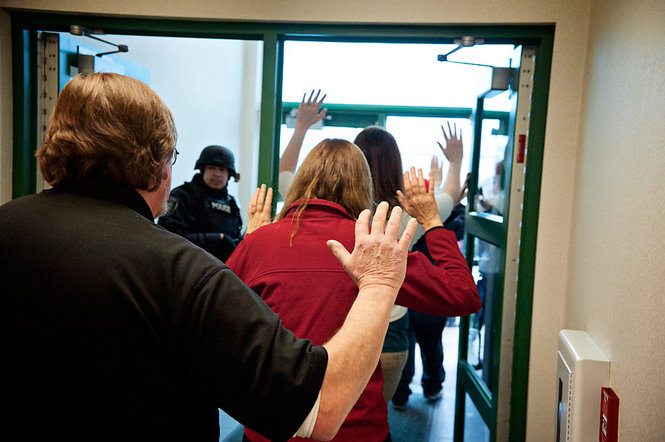
Description: Before the first day with students, my school had an active shooter drill. This is how it went down.

Fun Fact: This piece was chosen for a Freshly Pressed award by WordPress.com. It has the most likes (145) and the most comments (31) of any article I have published so far.


9) FIGHT CORPORATE EDUCATION REFORM AND MEME IT

Published: Oct. 19 20-beach-sea-photography
Views: 1,053

Description: Just a bunch of education memes I made – most of them before I started the blog.

Fun Fact: This was meant to be a toss off – somewhere for me to keep track of my memes. It was unexpectedly popular and many of these memes keep popping up in unexpected places to this day.


8) TOXIC TESTING MY KINDERGARTEN TOT – OR DADDY DON’T PLAY THAT

Published: Dec. 15  76754238
Views: 1,071

Description: It’s a surreal experience for a teacher to attend a parent-teacher night for the first time as a parent. From a daddy’s eyes, there’s no choice but to question the value of standardized testing in Kindergarten.

Fun Fact: This was so personal it was very hard to write. I didn’t think anyone would care. I was wrong. It’s been published widely beyond my blog.


7) TRACKING, TESTING AND THE MYTH OF MERITOCRACY

Published: Sept. 7  sad student
Views: 1,316

Description: When one of my students earned outstanding grades in my class last year but was denied a place in this year’s advanced class because of low standardized test scores, I took action.

Fun Fact: This piece really angered people on Facebook for the injustice this student faced. I received a plethora of comments and messages from others who had gone through similar situations.


6) A MOMENT OF SILENCE FOR MICHAEL BROWN

Published: Nov. 26  140824-michael-brown-4p_98a645e4e00131864161045b0edd09e7
Views: 2,052

Description: My students were so depressed by the Grand Jury decision not to hold a trial for the police officer who killed Michael Brown, I had to address it in class.

Fun Fact: I received more hate mail for this article than any other. It was widely published – even in the Washington Post. I had to stop reading the comments after a while. Many thanks to those who don’t want my head for doing this.


5) THE REAL AMERICAN EDUCATION CRISIS

Published: Aug. 3  Arne Duncan
Views: 2,131

Description: I got so sick of hearing corporate education reformers go on TV and talk about our failing schools. Yes, they’re failing because of education policies that don’t work that we refuse to replace.

Fun Fact: This was something of a slow burn. At first, it didn’t receive much attention, but I was surprised to see that views continue to trickle in daily.


4) MERRY CHRISTMAS. WE’RE STEALING YOUR SCHOOLS

Published: Dec. 27  feb5a53244c611e48eca12313d21419c
Views: 2,949

Description: My continuing coverage and outrage at the Commonwealth of Pennsylvania’s overreach to steal York City Schools away from taxpayers and give it to a failed charter school operator.

Fun Fact: My most recent post, widely published. I have been one of very few writers sounding the alarm for months. Finally, the nation seems to be paying attention.


3) THE BEST EVIDENCE AGAINST COMMON CORE

Published: Oct.4  Classroom-Management2
Views: 3,121

Description: Common Core is nonsense. To see that all you have to do is step in a classroom. Unfortunately that’s one thing the authors of CCSS have never done.

Fun Fact: I knew I had a winner from the second I posted this. It took off like a rocket. It has also been widely published and debated – one of the most popular pieces on the Badass Teachers Association blog. This is the only article I know of to inspire another blogger to write a complete piece attempting to debunk it.


2) CHECK YOUR WALLET – YOU TOO CAN BE AN EXPERT ON TEACHER TENURE

Published: Oct. 24  0714_wallet-open-money_485x340
Views: 6,070

Description: When Time Magazine promoted tech millionaires’ plan to improve education by attacking teachers, I exploded in fury. The result is this angry diatribe taking them to task point-by-point.

Fun Fact: Hugely, popular, widely published and almost universally praised by teachers and teachers groups. This lead to my involvement helping craft a response to the Time article published in the magazine along with my fellows at the Badass Teachers Association.


1) THE FINAL STRAW: CANCEL OUR LABOR CONTRACTS, WE CANCEL YOUR TESTS

Published: Oct. 11  the-straw-that-broke-the-ca1-300x273
Views: 10,910

Description: When Pennsylvania cancelled its contract with Philadelphia teachers, I saw the writing on the wall. If they can do that, teachers need to stop giving them the ammunition. They need to refuse to proctor the standardized tests being used to unjustly label our schools failures and justify the elimination of our collective bargaining rights.

Fun Fact: This is easily my most popular article yet. For a few weeks I was something of a folk hero. I saw my words memed by others and this piece appeared almost everywhere. Originally, I had debated publishing it at all thinking, “Who am I to tell teachers what they should do?” But my advice turned out to really hit a nerve. Teachers are dying to opt out of standardized testing. All it will take is one spark. One tiny spark.


Toxic Testing My Kindergarten Tot – or Daddy Don’t Play That

76754238

We were late.

At least it felt that way as my wife dragged me through elementary school hallways.

Racing past me were walls of multicolored palm print turkeys. Was it my imagination or did their googly eyes seem somewhat disapproving of my lateness and attire?

It’s my first parent-teacher night, I almost protested.

At least, it was my first as a parent and not as a teacher.

I was used to sitting on the other side of the table, notes organized in a neat little pile.


“Oh, you’re Jimmy’s father? So GLAAAD you could make it.”


But tonight I wasn’t Mr. Singer, teacher extraordinaire.

I was just a daddy. And Mommy was pulling my arm free from its socket trying to get us to the classroom on time.

There was just so much to see, frankly. I had never realized before how little of the school parents usually get to observe. At the district where I teach, I know my building like a second skin. But we don’t live where I work.

As parents, we’re invited into the auditorium, gymnasium, offices, and athletic fields. But we rarely get a peek at the inside of a classroom. You know? The place where our children spend most of their days!

“Oh my God! Is that her music lab? It looks amazing! Honey, take a look at all the instruments…”

But she just gave me the Eyes of Death. It was time to go.

We arrived at my daughter’s classroom exactly on time, thank you very much.

The teacher met us at the door wearing a Disney print dress beneath a wide smile. Hands shaken, greeting given, she immediately ushered us into seats.

They were miniature toddler seats – perfect for Kindergarten butts, a bit condensed for mine. But they held up heroically.

I already had met the teacher during an open house at the beginning of the year. She seemed an excellent educator and my little sweetheart loved her.

However, being in the parent’s seat listening to her presentation was both enlightening and bizarre.

It was surreal to sit there and listen to a report about this child’s academic life as if I had no idea what she was like. After all, I was her first teacher. I taught her to walk and use the potty. Even today she refuses to touch her homework unless I’m there to help.

Yes, she has homework almost every night. In Kindergarten, yes. After a full day in school, too.

When I was in her grade, my mother would usually walk me home at noon for a nice lunch and an afternoon of play. My daughter, on the other hand, eats in the cafeteria. For free! All the students get free lunches regardless of parental income. And then they return to class for a full afternoon of study.

She loves it, though. One of her favorite parts of the day is lunch. She might not tell me what story the teacher read to the class, but she’ll always tell me what she ate for lunch.

Spoiler: it’s usually chicken.

Anyway, her teacher was sitting across the table from us giving a full report on our daughter’s daily activities. It was mostly positive but being a teacher, myself, I could pick up on a few euphemisms.

“Oh! You’re daughter is very vocal!”

Translation: she won’t shut up.

“She is so independent!”

Read: defiant.

But I know my little girl. The teacher wasn’t telling me anything new.

I really enjoyed the personal stories. 

Apparently my little one sometimes uses her feminine whiles to get the boys to take out her pencil or open her book for her.

Little scamp!

I loved the story where my sweetheart darling child asked the teacher to take her home after school. Not home to my house, either. Home to the teacher’s house.

“Mommy and Daddy won’t mind,” she allegedly said.

We all had a good laugh about that one.

And then out came the standardized test scores.

That’s right. In Kindergarten!

I guess I should have expected it. Somewhere in my thick brain I knew standardized testing had trickled down all the way to Kindergarten. But it was so early in the year. I hadn’t expected it to happen yet. I had vague thoughts about opting her out of all that nonsense.

Many schools try to keep it a secret but your kids don’t have to participate in standardized testing. You can choose to opt them out under a religious exemption. All it takes usually is a visit to the principal and a request in writing.

But it was too late. My daughter’s scores were here already.

So I looked at them.

In my mind, my little girl is pretty advanced. After all, she’s literate. And, yes, I’m proud of that fact.

While most of her classmates are still fine-tuning the alphabet, my baby can already read a “Biscuit the Puppy” book from start to finish. And she can write, too. Just the other day she wrote me a note saying that she “LOVES DADDA.” The A’s looked a bit like H’s but I got the message.

However, when we looked at the test sheet, most of her scores were in the proficient range – a few advanced. The teacher said that unless my girl was reading chapter books at this age, she couldn’t score much above proficient.

That’s Common Core for you. They call it “rigor.” You’re at the head of the class and you’re only okay. This girl has had three years of preschool, we read with her everyday, practice writing, math, arts and crafts, etc. But the standardized test scores say, “Eh. You’re alright. Nothing special.”

It’s a good thing she’s too young to get these scores, herself. She’d be crushed.

Don’t mistake any of this for objectivity. I’m not a teacher here. I’m a daddy and daddy’s aren’t objective at all.

The teacher must have seen the look on my face. She conspiratorially let us in on her doubts about testing kids at this young age. She told us how she split up the testing period to fit the kids’ attention spans, and how it just sapped their energy and bored them, anyway.

I felt horrible. Here I am, Mr. Anti-Corporate Education Reform Blogger Guy, but my precious baby is losing time with blocks and “Clifford: the Big Red Dog” in favor of fill-in-the-bubble testing designed to make her prestigious achievements look small and mundane.

I should have known. While she was testing in her school, I was probably in my own classroom proctoring the middle school version of the same darn test. It’s one of many practice tests kids take before the real thing.

I wanted to ask the teacher to tell me more, to tell me if she supported opting my daughter out of future tests. But the look on her face didn’t invite further questions.

It’s a difficult situation. Most teachers hate the toxic testing regime. They know that multiple choice bubble tests are a terrible indicator of content knowledge – not to mention developmentally inappropriate for children my daughter’s age. But Wall Street hedge fund managers seeking to make a quick buck lobby politicians who put pressure on superintendents who order administrators to force teachers to do things under the guise of education that are really just about corporate profits. And if teachers in the workplace are too vocally against this scheme, they put a target on their backs.

I didn’t want to do that to my daughter’s teacher. I trust her. I know she’s a good teacher, I know my daughter loves her and I know where she’s coming from even without her vocalizing it.

Anyway, the meeting was quickly over. With a laugh and a smile, the teacher ushered us out the door so she could begin her next conference.

How many times have I been on that side of things – talking to parents about their kids? At least several hundred times. Almost definitely more.

But I left that meeting with a new sense of purpose.  I would opt my daughter out of her next standardized test. I would not allow the testing machine to feed on my precious child’s data.

I would listen to her teacher and my own misgivings.

Parent-teacher conferences were over. But it’s way past time to arrange a conference with the principal.

I grabbed my wife’s hand and pulled her after me.


This article has also been published on Public School Shakedown, LA Progressive and Badass Teachers Association blog.

Our Martyred Brothers: What 43 Missing Mexican Student Teachers Share with US Educators Fighting Factory School Reform

A-young-woman-takes-part-in-a-demonstration-demanding-information-on-the-whereabouts-of-the-43-missing-students-in-Mexico-City-on-Nov.-5-2014-AFP-800x430

Death is the ultimate exclamation point.

We walk through life blissfully unaware until someone dies.

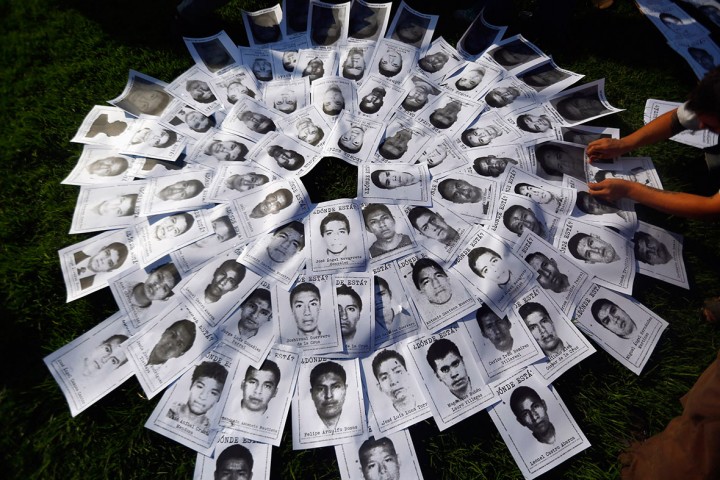
Such is the case for 43 someones in Mexico. These rural first-year teaching students were kidnapped on Sept. 26 by police and allegedly handed over to a drug cartel who tortured and killed them.

Why such violence against a group of young men from one of the poorest states in the country who had dedicated their lives to care for the needs of Mexican children?

They opposed the country’s education reform policy.

That’s right. They were just like us.

Just like the 53,000 members of the Badass Teachers Association or the 99,000 people who follow Diane Ravich on Twitter or all the parents who stand in the back of a school board meeting holding a sign against toxic testing.

They had come from rural Ayotzinapa to the city of Iguala to peacefully protest but were fired on by police. Six died on the scene and 43 more were taken into custody and are presumed dead. Students who survived the attack but escaped capture said army personnel were in the area and aware of what was happening, yet did nothing to stop the massacre.

Mexican school reform is apparently a bloody business. But reading the background of this tragedy is like looking in a mirror.

In February 2013, Mexican President Enrique Peña Nieto signed an education reform bill with the support of the three main political parties. The bill reads like it was plagiarized from the United States federal Race To The Top program. In fact, it’s much worse.

It includes hiring and promotion based solely on “merit,” new allegedly more rigorous educational standards, and reappraisal of teachers deserving tenure. Local control of public education is almost completely negated in favor of a new federal National Institute for Education Evaluation.

Like it’s American counterpart, it ignores the realities of poverty in favor of vilifying teachers.

Millions of Mexican school children suffer from a dismal lack of funding and infrastructure. Many schools lack floors, bathrooms, Internet, or even telephone access, and in rural areas roads to schools often are non-existent.

At least a third of schools face severe infrastructure problems, according to an April 2014 census report on pre- through middle schools. A total of 41% lack sewage systems and 31% have no drinkable water. Fixing the problem would cost at least $4 billion.

Just like in the United States, the Mexican reform agenda was created and pushed through by big business. In this case, the right-wing business group “Mexicans First” is hoping to undo much of the liberal reforms associated with the Mexican Revolution. The goal is to subordinate education to the profit needs of big business.

The strategy includes singling out and slandering educators in the mass media for the supposed failures of public education. As in the US, the position of the teachers unions has been not to reject the reactionary plan, but to demand that they be included as partners.

Public outcry against the massacre has been massive. Students have called for a general strike on Nov. 20. On Saturday, Nov. 8, demonstrators set fire to the door of Mexico City’s ceremonial presidential palace. Protestors chanted “it was the state” and called for the resignation of President Nieto and the Attorney General.

The most popular rallying cry seems to be “Ya Me Cansé.” It means: “Enough. I’m tired” or “I’m already tired.”

Would it take similar bloodshed for the American public finally to be fed up with our own factory schools movement?

Our own government pushes these same counter-reforms.

Just like in Mexico, US privatizers drool all over the prospect of de-professionalizing teaching, and raking in education funding as profits. The only difference is we haven’t started murdering protestors yet.

I’ll admit it’s a big difference, and I’m thankful for it. Otherwise, my body would have been tossed on the rubbish heap long ago.

But after investigating this tragedy, I can no longer look at our own self-proclaimed reformers the same way. They look like Mexican gangsters.

There is very little to distinguish them from the corrupt Mexican government and its drug cartels. If you put Bill Gates, Barrack Obama, Arne Duncan, Michelle Rhee and Campbell Brown in a room with their Mexican counterparts, there is much they’d agree on.

Common Core State Standards? YES!

Merit Pay? YES!

Abolishing teacher tenure? YES!

Murdering dissidents?

No?

I hope so.

But before we let them off the hook, it’s best to look at the blood on their hands.

Oh, yes, they are dripping with blood.

Our American government is complicit in this tragedy because of our never wavering faith in the drug war that feeds it – American demand, Mexican supply, American guns, Mexican bloodbath.

As we ponder how far our own politicians and corporate leaders are willing to go to ensure their agenda, let us pause to remember our brothers who died in Mexico.

They were someone’s sons. They had been born, loved, cherished and wanted to make a difference.

They didn’t want to be martyrs. They wanted to be teachers.

Sometimes that means the same thing.

Ya Me Cansé!

Ya Me Cansé!

Ya Me Cansé!

YA ME CANSE!

mexico-missing-students


This article has also been published on the Badass Teachers Association blog.

American Public Schools Could Defeat Racism by Confronting Our Dark Past

x_2163_801502570_0_0_2044_300

We’re a country of dreamers.

High ideals of democracy, fair play, and freedom are nothing more than our nighttime reveries forced into the light of day.

We look about us at a world of what could be and believe with our whole hearts that it will be so.

But we’re such good dreamers that we often don’t see the reality in front of us. We walk through the day with half closed eyes and never see the shadow and dirt in which we live. Our bodies lay in the mud while our heads are forever in the clouds.

That’s our problem. If you don’t also recognize what is, your dream will never be more than that – a mirage.

And so our greatest strength is also our greatest weakness. The American dream has become the American delusion.

Nowhere is this more apparent than with race.

So many of us – mostly Caucasians – don’t even think it’s an issue anymore.

“Hate crimes are a thing of the past,” says the police departments blaming Black teens for getting in the way of officers’ bullets.

“Everyone’s treated equally,” says a court system that disproportionately locks away people of color for the same crimes it practices leniency on for Whites.

“Racism is over,” says the US Supreme Court as it strips away much of the teeth of the Voting Rights Act.

“There’s nothing wrong with naming your sports team after a racial epithet,” says the Washington football franchise as it sues Native Americans with the temerity to be offended.

These are not issues of mere prejudice. This is out-and-out institutionalized racism.

Howard Prof. Denisha Jones explains the difference between the two:

“Using derogatory terms about a person’s race, attributing negative behaviors to a person because of their race, and treating someone poorly because of their race, are all examples of prejudice. Anyone can be prejudiced towards another person based on race. Black people can harbor racial prejudice towards White people. Latino people can harbor racial prejudice towards Black people. White people can exhibit racial prejudice toward people of color.

Now racism is more than just racial prejudice. To understand the difference you can define racism as prejudice + power. See racism is a system that confers advantages on one group while systematically disadvantaging another group (for every advantage there is disadvantage). In America, racism is a system of White supremacy that advantages White people over people of color.”

This is an issue that Americans, frankly, don’t want to deal with – in fact, most of us refuse to see it at all.

We’re finally a color blind society, I suppose.

No, we don’t treat people of color equally because we can’t see any reason to discriminate against them.

We treat them unequally because we refuse to acknowledge how our privileged actions and power affect them.

This willful blindness is so pervasive we don’t even see it under the most extreme circumstances – brutality and genocide.

Compare our attitude with that of the country most associated in the American mind with mass murder of ethnic groups – Germany.

Deutschland, or the Federal Republic of Germany, has a history of civil rights abuses and factory murder.

During WWII, Germany committed some of the worst atrocities against humankind in a century know for atrocity. As Hitler and the Nazi regime conquered much of Europe, his government was responsible for the systematic extermination of 6 million Jewish people and 5 million non-Jewish people. Taken together, we call this dark period the Holocaust.

We all know that. But, the United States has a similar history of racism and murder.

In the 18th and 19th centuries, the US allowed legal chattel slavery of human beings stolen from Africa. These people were taken from their homes and families and sold into generational servitude. Of the 12 million enslaved people brought from Africa to the Americas, only about 600,000 were taken to the 13 Colonies and (later) the United States. The great majority of slaves were taken to sugar colonies in the Caribbean and Brazil where they were often worked to death and had to be replenished with new arrivals. Life expectancy was higher in the US and slaves often reproduced their numbers. By 1860, there were 4 million slaves in the country.

Treatment, however, was severe. Beatings and rapes were commonplace. Punishments often included whipping, shackling, hanging, burning, mutilation, branding, and imprisonment. It was most often meted out in response to disobedience or perceived infractions, but sometimes abuse was carried out simply to re-assert the dominance of the master or overseer over the slave. Most captive laborers weren’t allowed literacy or to congregate in large groups – except for church services – for fear these things would inspire thoughts of rebellion or escape. The economic prosperity of a large section of our country was built upon the blooded and beaten backs of these people.

But that’s not all.

Furthermore, the United States and its precursor British government practiced outright genocide against Native American peoples living here before the arrival of European settlers. The extent of this brutality is hard to calculate. Estimates of the pre-Columbian population for what today constitutes the U.S. vary significantly. More recent efforts put the number at approximately 18 million. As of 2010, only 5.2 million US citizens claim Native American ancestry. Of that, 2.9 million claim to be descended solely from indigenous peoples, while 2.3 million claim some combined heritage.

Arguments explaining this drastic plunge in population are numerous and heated. Certainly Native Americans weren’t able to cope with European diseases such as Smallpox. To what extent this was exacerbated by purposeful attempts to murder First Peoples with primitive biological warfare (“gifting” them smallpox infected blankets, etc.) is hard to determine. But since 1830, the national policy turned from assimilation to outright displacement. The Indian Removal Act authorized the government to forcibly deport tribes west of the Mississippi. But as Europeans encroached even further, this resulted in the genocide or near-genocide of many tribes, with brutal, forced marches including the infamous Trail of Tears, which alone caused 4,000 casualties.

Over time, the United States forced indigenous peoples into smaller plots of land until they were on reservations where they were coerced to change their hunter-gatherer life-style to a more agrarian culture which neither they nor the lands they were forced to live on were suited. Mass starvation was common. It wasn’t even until 1924 that all Native Americans were even granted US citizenship.

The point is this – no matter how much the depopulation of Native Americans can be attributed to natural causes, there was certainly a large factor of purposeful, government-sanctioned racism, and murder involved.

The bottom line? Both Germany and the United States have a history of brutality and genocide. It is not important to determine which atrocity is worse – American Slavery, Native American Genocide or the Holocaust. That’s irrelevant. Murder is murder. Genocide is genocide.

The crux of the matter is that both countries have a dark history of aggression and inhumanity to face. But each chose a much different path to do so.

In Germany, there is a policy of education and acceptance. They don’t hide from their past. They teach it.

The Holocaust is a mandatory, binding subject in all schools.

Students begin studying the Nazi persecution of the Jews between ages 12 and 15. At that point all students study the history of the 20th century – in general – and National Socialism – in particular. The Holocaust is a central topic of this instruction. So much so that students who who pass the Abitur exam (prerequisite for university) take it up again at age 18.

German-sanctioned genocide pervades the entire curriculum – not just history and civics, where it is central. It is also frequently taught in classes on German literature, religion, ethics, biology, art and music. It’s not uncommon for science classes to disprove racist theories, art classes to study works produced by Holocaust survivors, etc. Students engage in long-term educational projects that often focus on these issues, as well.

Finally, students continue to learn about the Holocaust outside the classroom. Numerous class trips are scheduled to the nearly 100 memorial museums every year. Dachau, Bergen-Belsen, Buchenwald, and Sachsenhausen have several hundred thousand visitors – most of whom participate in guided tours for students and teachers.

But that’s Germany.

Q: How does the United States deal with its dark past?

A: Haphazardly.

In the USA, there is no such systematic educational approach to either American Slavery or Native American Genocide. While neither subject is completely ignored, there is no national push to ensure anything but a superficial knowledge of these events.

American school children know that we used to have slaves; they may even know that we didn’t treat the Native Americans so nicely. But they don’t know nearly the scope and fallout of these events.

Slavery is one thing. The Civil Rights movement is another. They may have some vague connection, but little is taught about the generations of nationally-endorsed racist laws that kept African Americans from voting or exercising the same freedoms available to White people. And after the Civil Rights movement!? It must have been all good, because there’s little else you’ll learn about it in most schools.

Likewise, students learn there used to be a whole civilization of Native Americans before Columbus arrived. They might learn a bit about a few of the skirmishes and disagreements between the US government and the indigenous peoples. But genocide!? That concept is usually reserved for WWII and European history when it could equally be applied to events at home.

You’d think the Common Core State Standards – our ill-conceived de facto national norms – would have solved this problem. However, they are exceedingly general when it comes to social studies and history. Criterion focus on “conflict and cooperation,” “evaluating patterns of change” and “interpreting historical events.” No emphasis is placed on particular historical occurrences.

It’s ironic that when it comes to skills such as Language Arts, the standards are – in fact – too specific. They prescribe things like close reading, an emphasis on nonfiction texts, comprehension without context, and the New Criticism literary point of view of the 1940s. But when it comes to fact-based pursuits like Social Studies, the standards are as watered down as weak tea. How else could they pass political muster for all concerned?

None of this stops individual teachers, schools or states from being comprehensive and specific. In fact, some states such as Virginia have their own state standards that emphasize local history and norms. For instance, one Virginia benchmark prescribes studying “the effects of segregation and ‘Jim Crow’ on life in Virginia for Whites, African Americans, and American Indians.” That’s a far cry from “evaluating patterns of change!”

Let me be clear. I am not advocating a rigid national curriculum. But I am in favor of a national desire to have some specific social studies standards at some level. Those standards should definitely be fleshed out by states and school districts, but the national emphasis should be on confronting our past, not ignoring it. Otherwise, our students will continue to be left with a vague idea of these events and their importance.

So I’d like to make a suggestion.

If the United States is serious about its ideals – if we really want to achieve our dreams of freedom and equal opportunity – we need to be more like Germany.

We need a comprehensive educational program that teaches our history – all of our history – even the nasty parts.

We need to emphasize American Slavery and Native American Genocide the same way Germany emphasizes the Holocaust.

Starting in middle school, students should learn about the events leading up to both tragedies.

Lessons should be plentiful and multidisciplinary. It shouldn’t be something that’s only the prerogative of the social studies classes. Literature courses should teach texts such as Beloved, Native Son and Bury My Heart at Wounded Knee in this context. Biology classes should do experiments to discredit racist theories of eugenics. Music and art classes should examine the rich heritage produced by these two peoples.

Schools should institute field trips to former slave markets, plantations, reservations, battle sites and massacres. This, in turn, would necessitate turning some of the historical sites into museums of equal quality to those explicating the Holocaust in Europe. No more fond reminiscences on life in the Antebellum South. They would show in stark detail what it meant to be a slave, how these people were housed, worked, penalized, etc. Battle grounds, in so much as they exist, wouldn’t just be about numbers killed and instruments of war, but instead show in detail the inhumanity practiced by our forebears.

The point is not to rub our children’s noses in the brutalities of the past. The truth of history should be inescapable, yes, but we must also teach the value of tolerance and acceptance of those different than us. To do this, we need a comprehensive program of ethnic studies. We need to teach the stories, histories, struggles and triumphs of people of color on their own terms.

For this to have any lasting effect, it is essential that such courses occur at all of our schools – not just those made up of mostly minority students. Our children need to know that it’s okay to be who they are. There’s nothing wrong with being non-White just as there’s nothing particularly special about being Caucasian. We’re all people. We all deserve respect, acceptance and love.

Isn’t that really one of our most cherished ideals?

We hold these truths to be self evident – that all men are created equal.

They are endowed with certain unalienable rights.

That among these are life, liberty, and the pursuit of happiness.

If our actions matched our words, maybe then we’d finally realize the American Dream.


NOTE: A shorter version of this article appeared in the LA Progressive.

My heartfelt THANK YOU to the following people without whom I could not have written this piece: Dr. Mark Naison (Fordham Univeristy), Dr. Yohuru Williams (Fairfield University), Dr. Denisha Jones (Howard University) and Traci Churilla. Any faults are my own.