It’s Not Nothing: Why I Support the ‘Every Child Achieves Act’

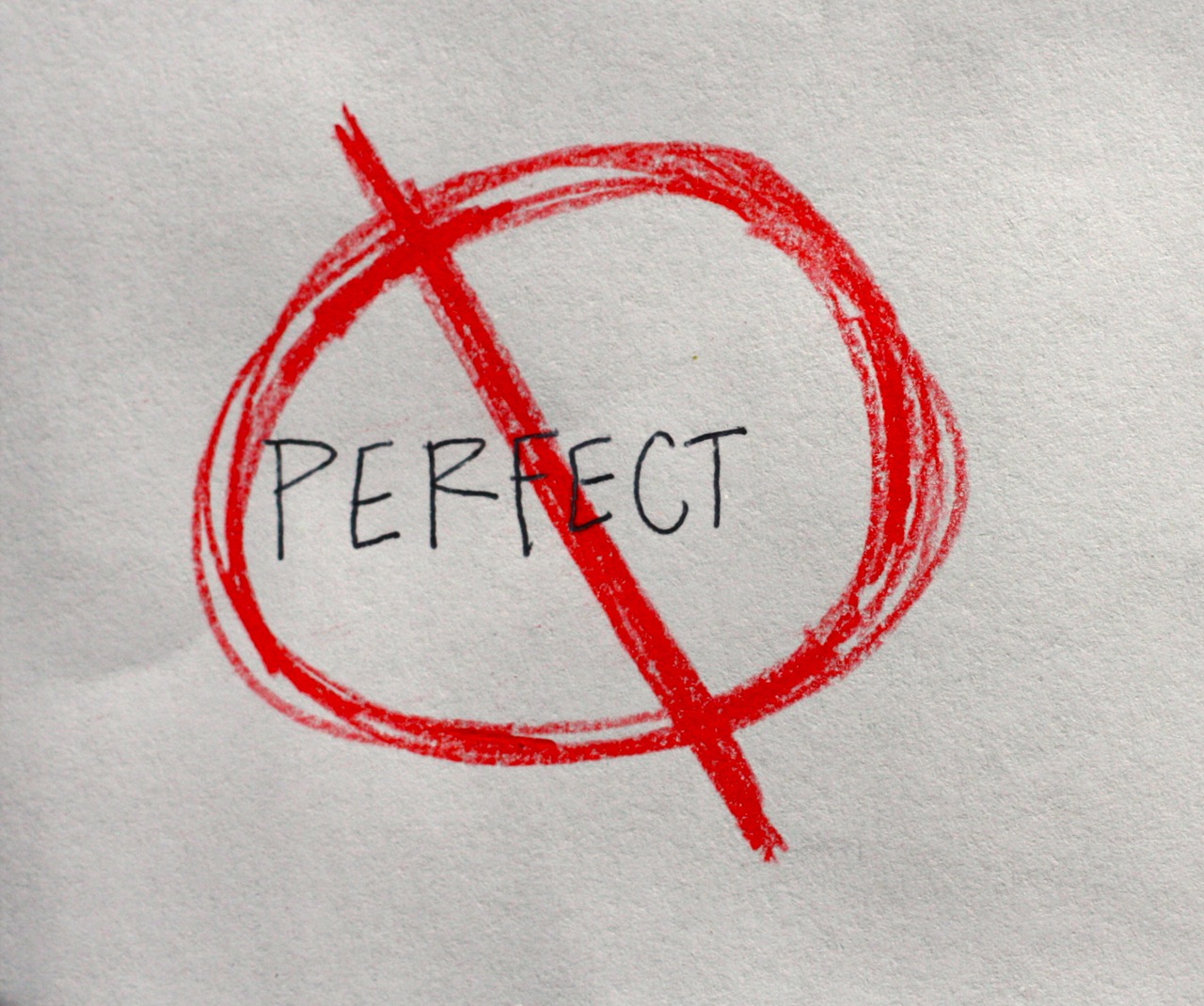
not-perfect1

No more federal intervention.

No more reducing schools to a number.

That’s the promise of the Every Child Achieves Act (ECAA).

Sure, it’s not perfect. But this Senate proposed rewrite of the Elementary and Secondary Education Act (ESEA) could do a lot of good – even if it includes some bad.

Imagine it.

States would be in control of their own public schools. The U.S. Department of Education and its appointed Secretary would lose much of their power to impose unfunded federal mandates.

For example, the federal government could no longer force states to tie teacher evaluations to student test scores. It could no longer force states to adopt Common Core or Common Core look-a-like standards. It could no longer label high poverty schools “Failing” and then demand they be closed.

That’s not nothing.

But to realize these goals, we may have to compromise.

This federal law (currently known as No Child Left Behind) governs K-12 public schools. It has to be reauthorized.

We tried in 2007, but no one could agree. So the Obama administration took over – offering states a waiver from the worst consequences of the current disastrous law if they just doubled down on those same failing policies.

The result? Seven years of continued educational failure. Policies to privatize, punish the poor and enrich profiteers.

And now we have another chance to reauthorize the law!

We can change course! We can right the ship! We can get our heads out of our collective asses and actually do what’s right for our children!

But this is politics. It’s never that simple.

We have a divided Congress. We have a President who never met a corporate school reform scheme he didn’t like.

But we also have a citizenry who is fed up with all the bullshit. People are demanding change.

We have a real opportunity. If we can seal the deal, a generation of children will be the better for it. If not, the current calamitous law will stay in place for at least 7 more years.

That’s just unacceptable.

The biggest flaw in this proposed act is that it keeps annual testing in place. If approved in its current form, public schools would still have to give standardized tests to children in grades 3-8 and once in high school.

If you’re like me, you just threw up in your mouth a little bit.

However, supporting ECAA doesn’t have to mean supporting testing. There is an amendment proposed by Senator Jon Tester (D-Montana) that would replace annual testing with assessments only once at the elementary, middle and high school levels.

Yes. It’s not enough. We really should have zero standardized tests in our schools. If we have to accept Grade Span Testing – as Tester’s proposal is called – it should be done by a random sample. Don’t test all kids. Just test some small group and extrapolate their scores to the whole.

But Tester’s amendment is not nothing.

Even if it weren’t approved – even if all schools are mandated to continue annual testing as is – the ECAA requires no minimum length for those tests.

How many questions do we need to have on our exams? How many sections? Right now, most states have three sections in both Reading and Math of around 30-40 questions each.

If I’m reading this correctly, it’s conceivable that states that disagree with standardized testing could give assessments of only one section with only one question.

Talk about opting out!

That’s not nothing.

Moreover, the proposed law does not require states to continue evaluating teachers based on student test scores. States are free to stop using the same junk science evaluations currently championed by U.S. Secretary of Education Arne Duncan or not. It’s totally up to the states.

That’s not nothing.

If the proposed act were passed, Common Core State Standards (CCSS) would lose much of their backing.

We all know the sad story of how these supposedly “state” standards were pushed on states from the federal government. We know how states were bribed with federal money to enact these standards before many of them had even finished being written. We know how the U.S. Department of Education has required states to either adopt CCSS or come up with their own academic standards. Moreover, any state that decides to go its own way and write its own standards must then have these standards approved by the federal government, thereby ensuring that regardless of the name you slap on them, they are usually Common Core lite.

However, the ACAA removes the requirement that state standards need federal approval. Therefore, it allows states to actually lead their own quest for real, consequential standards. They no longer have to follow in the footsteps of CCSS. They can set their own agenda.

That’s not nothing.

The proposed act also improves the situation for at risk students. It would establish appropriate class size, specifically in low-income areas. It would give clear/expanded rights to homeless children so they could continue attending their original schools. It would allow English Language Learners to appropriately remain in their classes longer. It would continue Head Start and Early Start programs. It would provide adequate support for gifted and talented students. It would add early intervention services and support early childhood programs.

That’s not nothing.

But the ACAA isn’t the only version of the rewrite being considered. The House has it’s own version called HR 5 or the Student Success Act (SSA).

The biggest difference between the two is Title I Portability – the House version allows it, the Senate one does not.

Currently Title I funds are allocated by the federal government to states each year based on the numbers of children living in poverty in each district. The goal is to provide billions of dollars to poor schools to help them meet students’ needs often left neglected because of lack of local tax revenue.

Title I portability found in the SSA would mandate this money follow the students instead of going to districts. That would be a budgetary and economic nightmare. It would decrease money going to poor schools and increase funds going to rich districts. It would pave the way for nefarious and misnamed “school choice” measures.

That’s why the Senate ECAA is better. It doesn’t allow this wrongheaded scheme.

That’s not nothing.

But – I know – you’re still pinning for that one pristine act that would right all the wrongs of the current law.

Me, too.

In dreams, we can get everything we want.

In waking life, we sometimes have to compromise and accept less.

But at least here you get SOMETHING!

Quite a lot actually.

And as we support the general outline of the ACAA, we can push to make it better by adopting the Tester Amendment and other improvements that may come along the way.

We have to be realistic. A perfect law probably wouldn’t get through Congress. Our lawmakers just wouldn’t vote for it. They couldn’t agree.

We’d be where we were in 2007.

And that would mean more of the status quo.

I can accept the problems with the ACAA, but I cannot accept that.


Please consider joining the Badass Teachers Association in writing your Congresspeople to approve the ACAA with the Tester Amendment.

NOTE: This article also has appeared in the La Progressive, the Badass Teachers Association Blog and was written about on Diane Ravich’s blog.

Clash of the Titans – Unionism at the Network for Public Education

Screen shot 2015-04-27 at 1.03.47 AM

It was billed as the fight of the century.

Or at very least – the weekend.

Lily Eskelsen Garcia vs. Randi Weingarten.

National Education Association vs. American Federation of Teachers.

Union president vs. union president.

All moderated by education historian Diane Ravich.

“Oh snap!” cried six hundred voices in tandem at the Network for Public Education conference in Chicago.

“It’s goin’ down!”

No soft pitches coming from Diane, either. These were going to be tough questions. No politicking. Only candid truth.

And the interview actually seemed to live up to its hype in one shinning moment.

Will you both commit to no longer taking any money from the Gates, Broad and Walton Foundations?

Ravich’s question hung in the air a second before the crowd erupted into a standing ovation.

We cheered so loudly at the question, we didn’t hear the answers – two quick short yeses.

When it quieted down somewhat, Lily nodded and Randi cupped her hands around her mouth and shouted “YES!”

At the time, I was overjoyed. But in retrospect something keeps bugging me.

That wasn’t as candid and organic as it appeared.

There’s no way the heads of the two largest labor unions in the country could commit to something like that off the cuff. They were expecting that question and they had already agreed in private on the answer.

Does it matter?

Maybe not. If the NEA and AFT actually follow through with this promise, who cares if the presentation was staged?

But there were other cracks in the facade along the way.

It started well enough. Both women said some really supportive things about teachers and our unions.

ROUND 1: LOVEFEST

Randi:

-Teachers are first responders to poverty. Never say I’m just a teacher. (NOTE: activist parent Rosemary Vega says she used almost the exact same words to Randi in a private conversation.)

-All middle class workers have to realize we’re all in it together.

-The other side lives in an evidence free zone. We need to keep pushing the truth.

Lily:

-Privatizers have to get people to distrust teachers. This is hard because most people naturally trust our profession.

-It’s strange that some celebrities want to make the world a better place by making it easier to fire more teachers.

-People who say teachers go into this profession for a cushy job are “idiots.” (Randi then countered that these folks are “morons.”)

-Teachers need tenure so they won’t be fired for helping kids.

-We talk about the progress gap – what about the resource gap?

-They say if kids had better teachers, they wouldn’t need resources!

-There are three pillars of corporate school reform:
1) privatize
2) standardize
3) delegitimize (teachers)

RESULT: Lily takes it. She came off more eloquent and genuine than Randi who seemed a bit strident and defensive. Judging by the mediocre applause and even outright hissing Randi earned from the audience, New York teachers may still blame her for Gov. Cuomo who she supported in the last election.

ROUND 2: STANDARDIZED TESTING

Randi:

-We need to get rid of high stakes tests. We need tests that are diagnostic. I took tests when I was a child, but they were about ME – not my teacher.

-We wanted three things from the Elementary and Secondary Education Act (ESEA) rewrite – no federalization of teacher evaluations, school closings or Common Core.

Lily:

-If we have standardized testing at all – and I’m not sure we should – we should use them for general trends. Not to fire teachers, close schools, etc.

-The NEA is against annual testing in the ESEA rewrite. Instead we want informational grade span testing at the state level. That means testing reading and math once in elementary school, once in the middle school and once in the high school.

-Lawmakers say you need to test kids every year. They think we need the data. However, the NEA told them that we don’t test that much even now! We only test kids in grades 3-8 every year. We test high school students only once. So we already have grade span testing in the high school. If that’s working, why not do the same in the elementary and middle schools?

RESULT: Yuck and yuck. Are these really the same rabble rousers from Round 1? They both agree on grade span testing. Yes, it’s clearly better than annual testing but it leaves so many unanswered questions:

1) If we had grade span testing, would our test-obsessed country really only test once at each academic level? Right now, standardized tests aren’t required in Kindergarten, first or second grade – yet in most schools WE HAVE THEM! To paraphrase Lily – we already have literally annual testing through 8th grade! Prove to me that grade span testing won’t be that!

2) How can you be sure grade span testing will actually remove high stakes? Just because you say something doesn’t have high stakes doesn’t mean it isn’t actually de facto high stakes. I can call a cat a “dog,” but it still won’t use the litter box.

3) Do we really need any of this “demographic”, “purely informational,” nothing-to-see-here-folks data? Do we? Why? To prove kids are learning? We give them grades for that. To prove kids are getting the proper resources? We do audits for that.

So let’s call this one a sloppy and ugly draw with few punches thrown.

ROUND 3: COMMON CORE

Randi: Standardized testing is ruining the potential of the Common Core. (Ravich responded that it is an outrage that so few kids pass Common Core tests who passed the tests they replaced.)

Lily: Many Common Core standards can’t be evaluated on standardized tests. They ignore the best parts. Organize a project, give an opinion, do a multi-media presentation. You can’t assess that with a multiple choice fill-in-the-bubble test.

RESULT: They agree again. The rank and file hate Common Core. The majority of teachers are against it or uncertain, but our largest union leaders think it’s just swell. It’s so gosh darn great, but toxic testing is ruining it. Are you freaking kidding me!? Why are the leaders of our biggest unions – who are supposed to represent us – defending standards that were not developed by educators, are developmentally inappropriate and have never been proven to work!?

Standardized tests are bad, but standardized curriculum is good!?

Once again light starts to shine through the cracks here. Somewhere, sometime ago, a decision was reached between these two ladies and parties unknown to make a compromise. Save Common Core by lightly ribbing standardized tests. Champion a slight decrease in testing (that may not actually reduce testing at all) in exchange for saving standardized curriculum.

I’m sorry. I’m calling the fight. No winners here.

BUT WAIT!

OFF THE TOP ROPES COMES RANK AND FILE UNIONISTS FROM THE BREAKOUT SESSION ON SOCIAL JUSTICE UNIONISM!

Michelle Gunderson chaired an incredible session about the need to transform our labor unions around the issues of social justice.

Remarks included:

-Get Up! Get down! Chicago is a union town!

-After Gov. Walker, there weren’t supposed to be any unions. But WE’RE STILL HERE!

Rosemary Vega: true leaders don’t make more followers. They make more leaders.

-Everyone is a worker. Everyone deserves rights – whether you’re in a union or not.

-Fighting for social justice is key to building strong unions.

-Do you want a service union or an activist one? Associations shouldn’t just be about salary and benefits. They need to be about Justice.

-People of color used to be banned from joining unions. Now they’re leaders.

-You’d never know how much our unions had to fight for the rights we have today. We don’t pass that on to the next generation. We should.

Michelle: Union members aren’t friends. They’re brothers and sisters.

RESULT: Randi and Lily are teetering on their feet! They’re almost down! Somehow they’re still standing! How can they still be standing!?

OH! IS THAT KAREN LEWIS ENTERING THE RING!? NO WAY!

Diane had a brief talk with the Chicago Teachers Union president to end the entire NPE conference. Karen didn’t say anything revolutionary.

In fact, she deflected any kind of praise back to someone else. When Diane said Karen was her hero, Karen said she felt the same way about Diane. When Diane asked her about being attacked in the media, Karen thanked the Badass Teachers Association for coming to her aide on Twitter.

She was poise, finesse and grace.

The strength she demonstrated! The power! The integrity!

RESULT: Boom! It’s all over! It’s all over! Ring the bell! Ring the Bell!

Unions still have an important place in our fight as teachers. But it’s not top down. Unions work best when they’re bottom up – just like any Democracy.

Lily and Randi seem like very nice ladies. In many ways they DO stand up for teachers and students. But there is more to their stories. They have seats at the table in the smoke filled rooms where decisions are made at the highest level about how our country will be lead. And to keep those seats, they have to make compromises. They have to sell these compromises to you and me as if these were their own ideas. They want to convince us that these are really OUR ideas.

But it’s not true. It’s showmanship.

We have to be smart enough to see through it and call them out on the bullshit when it comes.

Unions have always been about people power – and what powerful people we have on our side!

The audience at NPE was full of these courageous, big hearted activists and organizers. I’m so honored to have been included in this tremendous event.

Power to the people!


11162512_10152937234238860_7518395441325908836_n11156203_10152936787818860_1648857924322277718_n

NOTE: This article also was published on the Badass Teachers Association blog.

This Article May Be Illegal – Lifting the Veil of Silence on Standardized Testing

whistle

Warning!

What you are about to read may be a criminal act.

I may have broken the law by putting this information out there.

Edward Snowden leaked data about civilian surveillance. Chelsea Manning released top secret military documents.

And me? I’m leaking legal threats and intimidation students and teachers are subject to during standardized testing.

Not exactly a federal crime is it?

No. I’m asking. Is it?

Because teachers are being fired and jailed. Students are being threatened with litigation.

All because they talked about standardized tests.

The US government mandates public school children be subjected to standardized assessments in reading and math in grades 3-8 and once in high school. Most schools test much more than that – even as early as kindergarten.

And since all of these assessments are purchased from private corporations, the testing material is ideological property. The students taking these exams – regardless of age – are no longer treated as children. They are clients entering into a contract.

At the start of these tests, students are warned of the legal consequences of violating the terms of this agreement.

In particular, the Pennsylvania System of School Assessment (PSSA) tests require students to read the following warning on the first day of the assessment:

DO NOT PHOTOGRAPH, COPY OR REPRODUCE MATERIALS FROM THIS ASSESSMENT IN ANY MANNER. All material contained in this assessment is secure and copyrighted material owned by the Pennsylvania Department of Education. Copying of material in any manner, including the taking of a photograph, is a violation of the federal Copyright Act. Penalties for violations of the Copyright Act may include the cost of replacing the compromised test item(s) or a fine of no less than $750 up to $30,000 for a single violation. 17 U.S.C. $ 101 et seq

So the first act of testing is a threat of legal consequences and possible fines.

There are no such warnings on my own teacher-created tests. Sure I don’t want students to cheat, but I don’t threaten to take them to court if they do.

The school has a plagiarism policy in place – as almost every public school does – which was created and approved by the local school board and administration. The first infraction merits a warning. The second one results in a zero on the assignment, and so on.

Moreover, this is something we go over once at the beginning of the year. We do not reiterate it with every test. It would be counterproductive to remind students of the dire consequences of misbehavior right before you’re asking them to perform at their peak ability.


Okay, Brady! Go out there and win us a football game! By the way, if you deflate that football, you will spend the rest of your life in jail. Go get ‘em!

But that’s not all.

In Pennsylvania, we also force kids to abide by a specific code of conduct for test takers. They must enter a quasi-legal relationship before they are even permitted to begin the tests we’re forcing them to take.

Much of this code is common sense. Get a good night’s sleep. Fill in bubbles completely using a number two pencil.

But some of it is deeply disturbing.

For example, students are told to “report any suspected cheating to your teacher or principal.”

They have to agree to be an informer or snitch to a government agency. My students aren’t old enough to vote or even drive a car, but they are directed to collaborate with the government against their classmates.

In addition, they are told NOT to:

-talk with others about questions on the test during or after the test.

-take notes about the test to share with others.

Sure kids shouldn’t talk about the test with classmates DURING the testing session. Obviously! But why can’t they discuss it after the test is over!?

Kids aren’t allowed to say to their friends, “Hey! Did you get the essay question about ‘The Tell-Tale Heart’?”

They aren’t allowed to discuss how difficult it was or compare how each of them answered the questions?

These are children. If you think they aren’t talking, then you just don’t know kids. You don’t know people!

And why shouldn’t they talk about it? They just shared a stressful, common experience. Who wouldn’t want to compare it to what others went through so as to decide how your experience rates? Did you answer the questions well or not? Did you get a more difficult question than others? Did the thing that struck you as odd also hit others the same way?

Personally, I do not consider talking like this to be cheating. It’s just human nature.

But we force kids into a legalistic vow they won’t do it. On the test, we make them fill in a bubble next to the following statement:

By marking this bubble I verify that I understand the “Code of Conduct for Test Takers” that my Test Administrator went over with me.

As a test administrator, I am not allowed to move on until all students have filled in that bubble. I wonder what would happen if one of them refused.

Technically, we aren’t making them promise TO ABIDE by the code of test takers. Perhaps we lack that legal authority. We are, however, making them swear they understand it. Thus we remove ignorance as an excuse for not following it.

But there is a veiled threat here. We imply that not following this code will have harsh legal consequences.

And I’m not sure it should.

Kids certainly ignore it. They almost definitely discuss the exam with their peers after the testing session. But we’ve given them a sense of guilt, fear and anxiety just for being normal human beings.

That’s wrong.

Teachers are forced to do it, too.

Just as there is a code for test takers, there is a code for test proctors.

I have to sign that I understand the “Ethical Standards of Test Administration.” Again, much of this is common sense, but it includes such statements as:

DO NOT:

-Discuss, disseminate or otherwise reveal contents of the test to anyone.

-Assist in, direct, aid, counsel, encourage, or fail to report any of the actions prohibited in this section.

So even teachers technically are not allowed to discuss the test and should report students or colleagues seen doing so.

If I walk into the faculty room, and one of my co-workers describes a question on the test and asks my opinion, I’m supposed to report this person to the authorities.

What kind of Orwellian nightmare are we living in?

If we see a question that is badly worded, misleading, has no correct answer, contains misspelled words – anything out of the ordinary – we’re supposed to remain silent. In fact, we’re not supposed to read anything on the test other than the instructions.

I can’t talk about it to my colleagues, my principal, my spouse, my priest – ANYONE.

What are the consequences of breaking this code?

Ask those teachers in Atlanta who were convicted of cheating. Obviously they did more than just talk about the test and they deserve to be punished. But there is a specific threat to teachers if they violate this code.

According to the “Pennsylvania System of School Assessment Directions for Administration Manuel”:

Those individuals who divulge test questions, falsify student scores, or compromise the integrity of the state assessment system in any manner will be subject to professional disciplinary action under the Professional Educator Discipline Act, 24 P.S. $ 2070. 1a et seq, including a private reprimand, a public reprimand, a suspension of their teaching certificate(s), a revocation of their teaching certificate(s), and/or a suspension or prohibition from being employed by a charter school. [emphasis added]

So teachers may lose our certifications, livelihoods, etc. Heck! We could be charged with racketeering like the Gambino Family and face up to 20 years in jail!

And all just for talking!

I thought speech was protected by law. Doesn’t the First Amendment protect me from prosecution for speaking except under extreme and unusual circumstances?

If my colleagues and I were to discuss the appropriateness of certain test questions, would that really be such a bad thing? If we compared the questions being asked with how we prepared our students for the test, wouldn’t that – in fact – be the responsible thing to do?

I never give my students one of my own teacher-created tests without knowing exactly what’s on it. I’ve read the test from top to bottom. Heck! I made it!

One shouldn’t feel like a whistle-blower for talking about a standardized test. Discussing the appropriateness of specific test questions does not make me Julian Assange.

Therefore, I must ask an important question of you, dear reader: Did I violate these rules by writing this very article? Is the piece you are reading right now illegal?

I contend that it isn’t. The code of conduct for both test takers and test administrators is freely available on-line from the Pennsylvania Department of Education. The legal threat at the beginning of the test is reproduced almost word-for-word in a sample letter the state Department of Education suggests schools send to parents before testing begins.

I haven’t included anything here that is not freely available on the Internet or elsewhere.

But the need I feel to stop and answer this question is kind of scary.

There is a veil of secrecy over these tests and the way they are administered. And it’s no accident. The testing companies don’t want all of this to become public knowledge. They don’t want the quality or inferiority of the actual exams to be known.

And our state and federal governments are protecting them. From whom? Our teachers, parents, and students.

Shouldn’t our legislators be looking out for our rights and not just those of private contractors who were hired to provide a service? Obviously we have to allow test manufacturers the freedom to do their jobs – but some of this seems to go beyond that requirement.

We’re being silenced and intimidated to protect an industry that is of dubious quality and obscene profitability.

Every day more people are asking questions about the validity of standardized testing. Everything from the frequency of the tests to the value of cut scores has been the subject of criticism. Thousands of parents are refusing to let their children take these assessments at all.

Isn’t it time to throw back the Iron Curtain of standardization and look at these tests in the cleansing light of day? Isn’t it time to evaluate this process as well as the product? Do we really want to support a system that encourages silence and snitching from our children and educators?

Isn’t it time to move beyond standardization and toward a system of teacher-created curriculum and testing instead of relying on capitalist profiteers.

Big Corporation is watching.

Let’s poke him in the eye.


NOTE: This article also has appeared on Diane Ravich’s blog, Commondreams.org and the Badass Teachers Association blog.

WANTED: Progressive Candidate With the Guts to Stand Up For Public Education

weird-help-wanted-9

Wanted:

Progressive presidential candidate.

MUST SUPPORT PUBLIC EDUCATION.

No. Not just the words. Not as a soundbite. Must actually support policies that help public schools – not tear them apart and sell them away piece-by-piece while you smile and brag about how much you support education.

This means you must:

1) Repudiate and Vow to Repeal Common Core State Standards

-Must know how they were created by unqualified partisans with little input from real educators.

-Cash strapped states were coerced into accepting them – in many cases even before they were done being written – as a condition for increased funding.

-They have never been proven to help kids learn and are in fact a massive social experiment at taxpayers’ expense and students’ peril.

-They are a huge payday for the testing and test prep industry who provide the new standardized assessments and new textbooks necessary for their implementation.

-They are developmentally inappropriate, demanding all students to learn at the same rate and at a time frame that is inconsistent with the way children cognitively develop.

2) End Annual Standardized Testing

-Must promise to end policies forcing public schools to give standardized tests in reading and math to all students in grades 3-8 and once in high school. Ideally, standardized tests should be completely eliminated.

-Must understand that standardized tests are poor assessments that have never been proven to measure academic achievement. However, they do an excellent job of demonstrating a student’s parental income – rich kids do well, poor kids less so.

-Must realize these tests are nothing but a money-maker for private industry and are used as an excuse to close under-funded schools predominantly serving children of color.

MUST REPUDIATE THE MEDIA NARRATIVE OF FAILING SCHOOLS, which is not supported by facts and merely the propaganda of an industry feeding off of our public taxes and children’s misery.

3) Stop the Expansion of Charter Schools

-Must understand how for-profit charters siphon away public money for use as private profits. Charters reduce services for children to increase the bottom line.

-Must vow to protect funding meant for traditional public schools that is lost when charters open in the district.

-Must know that no research has ever shown charters to be better than public schools, and many studies have shown them to be drastically worse.

-Must appreciate the lack of transparency charters are afforded feeds the growing plague of national charter financial scandals.

4) Work to Stop School Segregation

-Our public schools are more segregated now than they were before Brown vs. Board of Education 60 years ago. This is intolerable and makes it easy to disenfranchise students of color.

-Must not only recognize this, but have a plan to solve the problem.

5) Promise to Increase Public School Funding – Especially to the Poorest Districts

-Must understand that nationwide, rich schools spend on average 15.6% more than high poverty schools. Being born poor should not mean you get a worse education. In fact, impoverished students have greater needs than wealthy ones. It costs MORE to educate them.

-Must champion an effective plan to address funding inequalities with an emphasis an equity.

6) Have a Plan to Address Child Poverty

-Must understand that more than half of public school students live below the poverty line.

-Must have an effective plan to help children, parents and families rise out of poverty.

7) Allow Teachers Autonomy and Recognize Them as Professionals

-Must support letting teachers run their own classrooms, champion teacher-created tests over standardized ones – in short, LET TEACHERS TEACH.

-Must vow to eliminate any so-called teacher accountability programs that evaluate educators based on student test scores. Let teachers be evaluated by their own administrators based on classroom observations.

8) Stop Supporting Teach For America

-Must admit six weeks training for college graduates without education degrees is not good preparation to become classroom teachers. All students deserve a teacher with a 4-year degree specializing in education.

-Must condemn valuing TFA recruits who have only promised to be in the classroom for two years over teachers who have devoted their whole lives to their students.

9) Repudiate Any So-called School Choice or Voucher Programs

-Must understand that these policies are often backdoor support for the unconstitutional practice of spending public money on religious or parochial schools.

-Must recognize these policies are another attempt by private industry to convert public taxes into profits. Private schools are not subject to the same regulations as public entities and as such can freely use tax money in more nefarious ways.

-Must acknowledge that school choice is a sham – sending children to schools without public school boards paradoxically reduces the choice parents have over how the school is run.

-Public schools must remain public. Policies allowing for choice among schools – if done fairly – would increase the cost of public education exponentially. It is a much more efficient policy and less open to fraud if we instead ensure every student has a quality education. We need one excellent education system – not multiple ones.

10) Support the Right of Workers to Unionize

-Must support policies to make it easier for private citizens to exercise their collective bargaining rights. Period.


I would be willing to vote for any candidate who met all of these requirements regardless of race, gender, sexual orientation, background or party affiliation.

That’s right. This job need not be filled by a Democrat. Any party will do. I am sick of being offered false progressives under a Democratic banner.

And Hillary Clinton coming right out of the gate praising Common Core may have been the last straw.

Why vote for her over Jeb Bush when they support THE SAME THING!?

No. I will not vote Democrat just because. Never, never again.

If they want my vote, they will have to meet my job application. I will vote to hire the best candidate. Whoever that is.

And I bet I’m not alone.

The education vote is no longer a gimme for the Democrats.

Progressive education candidates? Are you out there?


NOTE: This article was additionally published on the Badass Teachers Association blog.

No TEST Left Behind – Why the Senate ESEA Reauthorization is Unacceptable

student_reading_ap_img_0
Testing.

Testing.

One, two, three…

How about four? Maybe more.

There’s never enough testing for you and me!

And that’s exactly the problem with the Senate reauthorization of the Elementary and Secondary Education Act (ESEA) – the federal law that governs K-12 schools.

The Senate draft of the law (currently called No Child Left Behind) doesn’t do a single thing to limit or reduce standardized testing.

It keeps annual testing in place, untouched.

The legislation needs reauhorized every five years. After epochs of political stalling, the House and Senate are both hammering out versions of the law.

If this Senate version were enacted, public school students across the country would still be subjected to standardized tests in grades 3-8 and once in high school.

And legislators have the gall to call this the “Every Child Achieves Act of 2015.”

Ha! They should call it what it really is – No TEST Left Behind.

Now is the perfect moment to rein in our nationwide addiction to fill-in-the-bubble multiple choice tests. There is a national consensus that these sorts of assessments do more damage than good. Legislators should listen.

The Senate even asked concerned parents, teachers and people of conscience to write in with suggestions to improve the law. But instead of actually doing the most important thing on everyone’s list – the one thing that almost everyone who isn’t profiting off of the testing industry wants – they chickened out.

Why?

Education historian Diane Ravich has an interesting theory. In a comment on her blog, she says, “I have spoken to people directly involved in the negotiations who told me that President Obama made known that he would veto any bill that does not include annual testing.”

It wouldn’t be the first time the President’s threatened to veto this legislation. Just a few months ago he promised to return the House’s version of the ESEA if it left open the Title I piggy bank to privatizers.

That much-publicized threat was a sane response to an insane suggestion by partisans. But veto the ESEA if it didn’t have enough testing? That would be highly controversial.

Can I prove he said it? No, but Ravich is a reputable source. After all, she was U.S. Assistant Secretary of Education under President George H. W. Bush. She served under Lamar Alexander – then Secretary of Education and now one of the U.S. Senators chairing this reauthorization project. She’s in a unique position to know.

Moreover, this alleged threat is right in line with comments made by Obama’s own Secretary of Education, Arne Duncan.

“I believe parents, teachers, and students have both the right and the need to know how much progress all students are making each year towards college-and career-readiness.” Duncan said in a January speech.

“That means all students need to take annual, statewide assessments that are aligned with their teacher’s classroom instruction in reading and math in grades 3-8, and once in high school.”

Duncan’s assertion – clearly supported by President Obama – is that annual testing is necessary to show if kids are learning. Without it, we wouldn’t know if schools were teaching them.

This is absurd.

The ONLY way to tell if a child can read is a standardized test? The ONLY way to tell if a child can add and subtract is if they can choose between A, B, C or D?

Such an assertion is not only a slap in the face of every classroom teacher who grades their students on actual work done in the classroom, it’s also an insult to the intelligence of the American people.

Students do a variety of assignments throughout the year to demonstrate their learning – book reports, essays, group projects, reading aloud, homework, power point presentations – heck – even just walking up to the blackboard and solving a problem with a piece of old fashioned white chalk!

All of these things show nothing!? They provide no significant data with which to determine if a child is learning!?

I guess teachers just wander around all year saying “I’ll find out if my students learned anything when they take their state assessments. In the meantime I’ll just throw darts at the wall to determine the grades to put on their report cards.”

Moreover, where is the proof that standardized tests are such good indicators? Which peer-reviewed studies have ever proven that the results of these tests are – in fact – valid?

The answer: there are no such studies. In fact, there is a mountain of evidence that proves just the opposite. Standardized test scores are highly correlated with a child’s parental income. Rich kids generally score highly and poor kids score lower.

That’s what these tests measure – not academic achievement.

And it should be no surprise considering how they’re scored. Go on Craig’sList and find yourself an advertisement seeking test scorers. You need have no experience or degree in education. What counts as a passing score changes from year-to-year based on the whim of the scorers.

The whole system is set up to fail as many kids as possible in order to justify the need for more test prep materials which are often provided by the same giant corporations that make the tests in the first place.

And THIS is what Obama is demanding we keep in our public schools or else he’ll veto the legislation?

I say, “Fine! Veto it!”

Obama is already the testing president. He hides behind his lap dog, Duncan, but it is and always has been his policy to double down on George W. Bush’s bad educational ideas.

So I say we force him to own up. Make him admit it to the world, shout it to the heavens – I am President Barrack Obama, and I will do anything for standardized testing!

Then for once critics could actually blame him for something he really did.

Annual testing!? Thanks, Obama!

The President and Duncan claim to hear these testing criticisms, but they’re talking out of both sides of their mouths.

Duncan says he’ll ask Congress to include language in the ESEA to call on states to set limits on how much time can be spent on testing.

They demand we keep it, but let’s spend less time doing it!?

So we’ll still take all those math and reading tests, but maybe there will be less questions? We’ll force schools to spend less time on test prep by timing them and punishing those who don’t comply?

Which brings me to the best thing about the Senate version of the ESEA. It puts a stop to this kind of federal meddling. No more top down we-know-better-than-you federal mandates.

Annual testing is still in there, but the act leaves it up to states how to use the scores. No more Adequate Yearly Progress (AYP). The act forbids the federal government from dictating to states and districts how to help improve schools where kids are struggling.

Moreover, it no longer requires states to create new teacher evaluation systems, though it allows them to do so if they wish. And the fed cannot mandate or incentivize states to adopt particular standards such as Common Core. States are required to have standards but are free to determine their content.

These – at least – are positive revisions. They demonstrate why some education advocates are expressing cautious optimism about this Senate version of the ESEA.

But it’s just not enough. Sorry.

I could be political and say “It’s a good first step,” but that’s all it would be. A first step on a long and treacherous journey. Don’t start patting yourself on the back just yet. There’s a long way to go.

There’s no mystery what needs to be done to improve public education – fund it.

Stop wasting tax dollars trying to determine where the problem is. That’s obvious! It would be like a fire department spending all it’s money on a high tech machine to scan the city in infrared to determine where the maximum heat sources are and thus where they should dispatch the fire truck. But all they have to do is take the call and follow the smoke, screams and flames!

The high poverty schools are the ones that are struggling the most. More than half of our public school students live below the poverty line. They need help!

And stop offering funding with strings attached! We’ll let you buy books for your students if you use these fancy new standards that have never been tried or proven to work.

It’s time for action.

We must be bold. No more chasing after scraps. We must demand Congress get this right – regardless of presidential threats.

And please no grade span testing!

Even organizations like Fair Test – who rightly criticize the Senate ESEA for similar reasons outlined here – don’t go far enough in their demands of Congress.

Instead of asking for an end to standardized testing, they request a reduction. Not tests yearly in grades 3-8 and once in high school, but once in elementary, middle and high school.

Yes, it’s better than annual testing, but have some courage.

There is no need for our children to take even one standardized test. That should be our demand.

Zero standardized tests. Not six, not three, not one. ZERO.

We might not get it, but we’ll get a whole lot more than if we start from a compromise position.

The time is now. Write your Congresspeople. Write the President. Tell them in no uncertain terms – NO MORE STANDARDIZED TESTING!

PUT CHILDREN FIRST! LEAVE ALL TESTS BEHIND!


NOTE: This article also appeared in the LA Progressive and the Badass Teachers Association blog.

Atlanta Teacher RICO Conviction is Blood Sacrifice to the Testocracy

aztecshumansacrifice

Make no mistake.

The conviction of 11 former Atlanta public school teachers for cheating on students standardized tests has little to do with what these people actually did or didn’t do.

It is meant as a message for the entire education profession: if you cheat on standardized tests, you will be given the harshest possible punishment!

Don’t get me wrong. These people deserve punishment. They easily deserve to be stripped of their teaching certifications  and to return the bonuses they received for engaging in this activity.

However, they are each looking at a potential 20 year jail sentence for essentially making copies, erasing pencil marks on paper and filling in different bubbles.

This is absurd.

It’s only possible because they were charged with and found guilty of racketeering. You know, the same charge we use against organized crime!

The justification given was that bonuses and raises were awarded to the former educators based on test scores. Prosecutors characterized this behavior as participation in a massive criminal conspiracy and charged the former teachers with violating the state’s RICO (Racketeer Influenced and Corrupt Organizations) Act.

I’m not surprised that the state of Georgia tried to use this statute against these people. I am shocked, however, that it held up in court.

These defendants have been charged and found guilty of the same crime as the Hells Angels Motorcycle Club and the Gambino Crime Family.

Changing standardized test answers to make it appear students are doing better than they really are is certainly a crime, but is it really on the same level as the mafia!? Is it the same as extortion, money laundering, loan sharking, obstruction of justice and bribery?

Because those are the crimes usually prosecuted with a RICO charge!

One thing is certain: it’s worse than murder.

According to Georgia law, actually killing somebody will get you a less severe sentence than cheating on standardized tests!

The mandatory sentence for second degree murder and voluntary manslaughter in the state is only 10 years in prison. Involuntary manslaughter and assisted suicide will get you 5 years.

Heck! Even a first degree murder charge leaves you eligible for parole in 30 years! That’s only 10 years more than cheating on a bubble test!

Again, this has nothing to do with what these defendants did. It’s a message to the rest of us.

These people – all of whom are people of color – are being offered as a blood sacrifice on the altar of the testing gods.

Those of a reflective nature have already suggested that what this scandal really shows isn’t the danger of cheating so much as the problems of high stakes testing.

When you hold educators and schools responsible for student test scores, you create an environment rife for cheating. When you threaten to close schools and/or fire educators and/or withhold pay based on factors out of an individual’s control, you are inviting cheating.

People think, “why shouldn’t I cheat? I’m being held to an impossible standard anyway!”

The simple fact is that teachers can’t control how well their students do on standardized tests. Educators do their best to ensure their students are prepared, but it is up to the student to actually take the steps necessary to learn.

We all accept the axiom that you can lead a horse to water but can’t make him drink. We accept it everywhere except in the school room.

Corporations and their proxies making billions off of standardized testing will tout the importance of the teacher in the classroom. And, yes, the teacher is very important – the most important in-school factor. But out-of-school factors are even more vital.

Parental income, child nutrition, the number of books in the home, exposure to violence – all these have a greater impact than the teacher.

We continually refuse to accept this fact.

More than half of all public school students live below the poverty line, but we refuse to offer any real help. We instead offer nothing but standardization – in the form of tests and canned curriculum – and the magic bullet of increased privatization.

No wonder there are some teachers cheating on their students standardized tests!

We’re forcing them to march calmly over a cliff or take extreme measures!

What these teachers did is not excusable. They did the wrong thing. They cheated. They tried to game the system.

What they should have done is expose it.

They should have refused to give these tests in the first place. They should have made their case in the public square. They should have lobbied their politicians, educated parents and organized a coalition committed to ending this reign of terror.

And there are tens of thousands of people out there right now doing just that!

Every year the anti-standardization movement gets bigger. Every year more teachers and parents refuse the tests.

This court decision is but one more hysterical reaction from our corporate masters to turn the tide. To shut us up.

But we shall not be moved.

You can offer these people up as a blood sacrifice to your dark god, but it is a false deity and we will continue to refuse to worship at its feet.

The days of the Testocracy are numbered. And every day passed is one less in its reign!


NOTE: The article also was published in the LA Progressive, on Education Bloggers Network Website and the Badass Teachers Association blog.

APTOPIX Atlanta Schools Cheating

Not My Daughter – One Dad’s Journey to Protect His Little Girl from Toxic Testing

FATHERS-AND-DAUGHTERS

I’ll admit it – I was scared.

I’m a nationally board certified teacher with a masters degree in education. I’ve taught public school for over a dozen years. But I’ve only been a daddy for half that time.

Would making this call get my little girl in trouble?

I didn’t want to rock the boat. I didn’t want my daughter to suffer because her old man is making a fuss. I didn’t want her teachers and principal giving her a hard time because of something I did.

But I couldn’t deny what I know.

Standardized testing is destroying public education. It’s stressing kids out by demanding they perform at levels they aren’t developmentally ready to reach. And its using these false measures of proficiency to “prove” how bad public schools are so they can be replaced by for-profit charters that will reduce the quality of kids’ educations to generate profits.

No. There was no doubt about it. I had to make this phone call.

I used my most professional voice on the line with the principal.

“Hi, Mr. Smith. This is Steven Singer. I’m Amy’s father. I know she’s just in kindergarten but it’s come to my attention she’s taking standardized tests, and I’d like to opt her out.”

Before my little girl started school, I hadn’t even realized there were standardized tests in kindergarten. She takes both the DIBELS and the GRADE test.

He seemed surprised, even a bit fearful, but he quickly suggested a meeting with me, my daughter’s teacher, the councilor and a few others to get it done.

It was my turn to be surprised. I had expected to be asked to review the tests before writing a formal letter citing my “religious” reason for refusal. But I guess things are different before students reach third grade. Without legislation mandating a formal process, we needed to meet and discuss like adults.

And a few weeks later, here I was waiting for that meeting to begin.

It wasn’t long before my daughter’s teacher arrived. We chatted briefly about a fire drill and how my sweetheart hadn’t been afraid. Then the councilor, principal and others came in and ushered us into the conference room.

Most of the space was taken up by a long rectangular table surrounded by black leather chairs on wheels. It looked like the kind of place where important decisions are made – a bit imposing really.

We sat down and Mr. Smith introduced me to the team and told them I had some concerns about standardized testing.

He paused letting me know it was my turn to speak. I took out my little notebook, swallowed and began.

“Let me start by saying I think the education my daughter is receiving here is top notch,” I said.

“Her teacher is fabulous, the support staff do a wonderful job, and I could not be happier with the services she’s receiving here.

“My ONLY concern is standardized tests. In general, I’m against them. I have no problem with teacher-created tests, just not the standardized ones.

“It’s come to my attention that my daughter takes the DIBELS and GRADE test. Is that correct?”

They nodded.

“As you know, I teach at the secondary level and proctor the GRADE test to my own students. I’m sure the version given to elementary children is somewhat different, but I know first hand how flawed this assessment is.

“Put simply, it’s not a good test. It doesn’t assess academic learning. It has no research behind it to prove its effectiveness and it’s a huge waste of time where kids could be learning.”

I paused to see them all nodding in agreement.

In many ways, the GRADE is your typical standardized test. Vocabulary, sentence completion, passage comprehension – fill-in-the-bubble nonsense.

Mr. Smith blushed in agreement. He admitted that he probably shouldn’t be so candid but the district probably wouldn’t give the GRADE test if it didn’t receive a Keystone to Opportunity Grant for doing so. When and if the grant runs out, the district probably would stop giving the test, he said.

It’s an old story – the same as at my own district. Two school systems serving high poverty populations bribed with extra money if they spend a large chunk of it on Pearson testing and remediation.

“As to the DIBELS,” I went on, “I had to really do some research. As something that’s only given at the elementary level, it’s not something I knew much about.

“However, after reading numerous scholarly articles on the subject, I decided it wasn’t good for my daughter either.”

When taking the DIBELS, the teacher meets with a student one-on-one while the child reads aloud and is timed with a stopwatch. Some of the words the child is asked to read make sense. Some are just nonsense words. The test is graded by how many words the child pronounces correctly in a given time period.

“My concern is that the test doesn’t assess comprehension,” I said. “It rewards someone who reads quickly but not someone who understands what she’s reading.

“Moreover, there is a political side to the test since it’s owned by Rupert Murdoch. Cut scores are being artificially raised to make it look like more students are failing and thus our schools aren’t doing a good job.

“Finally, focusing on pronunciation separate from comprehension narrows the curriculum and takes away time from proven strategies that actually would help my daughter become a better reader.”

I closed my notebook and looked around the table.

Silence.

I thought that maybe I hadn’t done enough research. I had been too quick and simple.

But the team quickly agreed with me. And when Mr. Smith saw that, I noticed his cheeks darkening.

He stuttered a few words before giving up. “I’ve never had a parent ask to opt out of the DIBELS before,” he said.

He said the DIBELS is a piece of the data teachers use to make academic decisions about their students. Without it, how would they know if their children could read, were hitting certain benchmarks?

“I know I teach secondary and that’s different than elementary,” I said, “but there is not a single standardized test that I give my kids that returns any useful information.

“I don’t need a test to tell me if my students can read. I don’t need a test to know if they can write or spell. I know just by interacting with them in the classroom.”

The fear was still in his eyes. He turned to my daughter’s teacher. “I don’t mean to put you on the spot here, but what do you think? Does the DIBELS provide you with useful information?” he asked.

The look on her face was priceless. It was like someone had finally asked her a question she had been waiting years to answer.

“No,” she said. “I don’t need the DIBELS to know if my kids can read.”

It was all down hill from there.

I agreed to revisit the situation if a problem arose but teacher recommendation will take the place of the DIBELS in the meantime.

Conversation quickly turned to hilarious anecdotes of my daughter’s school antics. What she said to get in trouble last week. How she tries to get adults to put on her coat when she’s perfectly capable of doing it herself.

I left the building feeling really good. This is the way it’s supposed to be.

Before we signed up my little girl for school, I had been nervous about her attending my home district. I wasn’t sure it was good enough for her. The papers said it was a failing school. I wanted so much to ensure my baby would have the best of everything – the best I could provide.

My district may not have the most up-to-date facilities. It may not have the smallest classes. But it has a team of dedicated educators and administrators who are committed to meeting the needs of their students.

Even Mr. Smith’s hesitancy is understandable. I don’t blame him one bit. He probably thinks DIBELS scores make an elementary principal like him look good. Kids starting from scratch only can go up. The scores can only improve.

Moreover, he sat down with me and heard me out. He may not have entirely agreed with me – in fact at times he looked at me like I had a third arm growing out of my forehead – but he respected my parental rights.

It wasn’t until then that I realized the power parents truly have. Mr. Smith might have refused a TEACHER who brought up all of the concerns I had. He’s their boss. He trusts his own judgment.

But I don’t work for him. In fact, he works for me. And – to his credit – he knows that.

I know everyone isn’t as lucky as me. Some people live in districts that aren’t as receptive. But if parents rose up en masse and spoke out against toxic testing, it would end tomorrow.

If regular everyday Dads and Moms stood up for their children and asked questions, there would be no more Race to the Top, Common Core or annual standardized testing.

Because while teachers have years of experience, knowledge and love – parents have the power.

Imagine if we all worked together! What a world we could build for our children!


NOTE: Small details may have been changed to protect the innocent.

ADDITIONAL NOTE: This article also was published in the Washington Post, Diane Ravich’s blog and the Badass Teachers Association blog.

It’s a Badass Film Festival! Closeup on Corporate School Reform!

11025643_1787964744761514_7757764095588311307_n

I blog.

I write.

I look at the devastation, the hopes and promise of our public school system, and I report it to the world.

It seems a futile pursuit some days. Does anyone actually read this stuff? Or am I just talking to myself?

The hit counter tells me that, yes, indeed, there are people out there clicking on my humble little gadflyonthewallblog. Comments appear under my Facebook posts. My tweets get retweeted. Followers and friends multiply.

But I wonder sometimes about all the sets of eyes that see a block of text under my name and just keep on scrolling.

Would the minds connected to those eyes have understood? Would they have been spurred to action? Might they have been just the people we need to turn the tide and take back our education system?

And I answer: maybe.

So today’s entry is an attempt to get those roving, impatient orbs to stop, look and see.

Because today I bring not just words but pictures. Movies, in fact.

But first some background.

This whole enterprise began by accident. My school district received a $360,000 donation from Apple and Bill Campbell so every student could have an iPad for use in class.

The program will be rolled out next year, but teachers have already been given devices and some minimal training.

We were encouraged to play around with the devices to find applications for our students next year. One such app we were told to explore was iMovie.

I made a brief preview trailer for S.E. Hinton’s “The Outsiders” – one of the novels my students read. I thought it might make a good lesson on theme for next year’s kids.

However, in doing the assignment, I wondered what it might look like if I made a similar short movie about corporate education reform. After all, I spend a lot of my off hours writing about it. Why not try another medium?

Let me be clear. I did NOT use school equipment. I have my own personal iPad at home. It’s not nearly as nice as the ones the students will be using. In fact, I had to pay for a few upgrades to get it up to similar specs.

But once I did, it was a simple matter to make the “OPT OUT OF STANDARDIZED TESTING” movie you see here:

The newest version of the program provides several short preview templates in various movie genres. All you have to do is insert pictures or video and change the text to suit your purposes. In some cases, I had to extend the templates so they’d fit the topic I was tackling.

I was kind of tickled by the result so I shared it with my fellows at the Badass Teachers Association. I serve on the Leadership Team. And in a moment of whimsy I had designated my film a production of “Badass Films.”

They seemed really taken with it. They loved the idea of having our own film studio – even if it was just a hand-held Apple device.

With the power of an organization representing more than 54,000 people, they promoted my first little film on their YouTube channel. They pushed it out on twitter and facebook. Even Education Historian Diane Ravich gave it a push and a very kind review.

They asked me to make more. I did.

My fellow BATS helped me decide on topics, made suggestions for revisions, helped provide photos and even made a kick ass mock movie poster for each film!

And every day they’d send out into the ether a reminder that Badass Films is coming soon!

I hope you enjoy them.

Without further ado, here are the remaining 12 Badass Films:


COMMON CORE

On YouTube


CHARTER SCHOOL TREASURE HUNT

On YouTube


V.A.M. SHAM

On YouTube


SCHOOL TO PRISON PIPELINE

On YouTube


SOCIAL JUSTICE

On YouTube


TEACH FOR AMERICA

On YouTube


TEACHERS UNIONS

On YouTube


TEACHER TENURE

On YouTube


PENSION THEFT

On YouTube


SCHOOL “CHOICE”?

On YouTube


BADASS TEACHERS ASSOCIATION

On YouTube


G.E.R.M. – Global Education Reform Movement

On YouTube


So there you have it. Badass Films.

I’m hoping these short videos can serve as a primer for our fight against the standardization and privatization movement.

People who wouldn’t sit to read an entire blog entry might stop long enough to watch a less than 2 minute film. And – hey – videos are like potato chips – you can’t stop at just one!

Some might criticize this project as being shallow. How can you really explain a topic like the School to Prison Pipeline or even Common Core in such a short span?

Well, you can’t. But these are meant to be attention-getters. I only hope they’ll spark interest. There are so many sources for more information – many of them previous articles published on this very blog!

I’d love to hear your thoughts. How did I do? Are these films successful? Will they help the fight against factory schools?

Feel free to leave a comment and certainly to share this blog or any of the individual videos.

Special thanks to all the BATS who helped bring this project to completion. You earn the name “Badass” every day!

As for me? I will continue to write.

To blog.

And – when possible – make movies.


This article was also published on the Badass Teachers Association blog.

Coming Soon – Badass Films!

11025643_1787964744761514_7757764095588311307_n

Quick! Somebody microwave Bill Gates a bag of popcorn!

Fluff up Arne Duncan’s favorite pillow!

Get Chris Christie some Sour Patch Kids!

A lot of Sour Patch Kids!

Because the show is about to begin!

Coming Friday, March 6, I’ll be launching Badass Films.

This new venture is a division of the Badass Teachers Association (BATs). Your humble blogger is a member of the leadership team.

I’ve made 12 very short films about corporate school reform and the grassroots movement that fights against it.

They’re nothing fancy – just something I whipped up with imovie. But I hope they’ll help spread the message and get people up to speed on the damage being done to our school system by standardization and privatization. I also hope to shine a light on some of the amazing people out there – parents, teachers, students, and people of conscience – who are fighting against factory schools with all their might.

I already released this film called “Opt Out of Standardized testing:

Friday I’ll release the remaining 11.

Here are the working titles and a few mock movie posters made by our incredible BAT Meme Team:

COMMON CORE

11025657_10203268816873981_1262629182399128973_n

(Meme by Lisa Smith)

CHARTER SCHOOL TREASURE HUNT

11018333_1787967094761279_1927574463641915875_n

(Meme by Deb Escobar)

V.A.M. SHAM

10407708_1787964788094843_6197962986326075342_n

(Meme by Lisa Smith)

SCHOOL TO PRISON PIPELINE

11041805_1787967058094616_9048113339296113831_n

(Meme by Lisa Smith)

SOCIAL JUSTICE

11021256_10203265686555725_803665120896316326_n

(Meme by Lisa Smith)

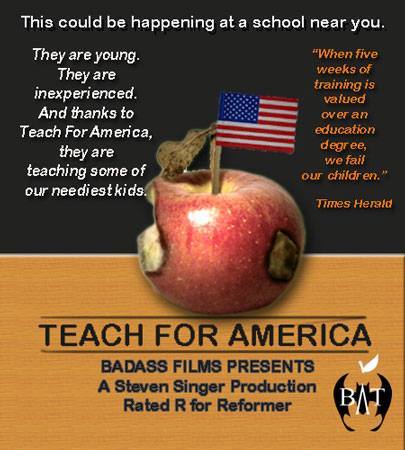
TEACH FOR AMERICA

13153_1787964821428173_6920343151965987041_n

(Meme by Deb Escobar)

TEACHERS UNIONS

11038394_1004294866247425_5874150282235233581_n

(Meme by Deb Escobar)

TEACHER TENURE

11024651_1787967144761274_6689401375953386379_n

(Meme by Deb Escobar)

PENSION THEFT

11021097_1004792002864378_1669790349007334121_n

(Meme by Deb Escobar)

SCHOOL “CHOICE!?”

11050259_1787967254761263_453569343639332923_n

(Meme by Lisa Smith)

BADASS TEACHERS ASSOCIATION

11025643_1787964744761514_7757764095588311307_n

(Meme by Lisa Smith)

I hope you’re as excited as I am! I always wanted to be in the movies! Move over, Orson Welles! Here comes a BAT with an ipad!

See you Friday at the movies! ^O^


This article also was published on the Badass Teachers Association blog.

Why We Should Have ZERO Standardized Tests in Public Schools


Screen shot 2015-01-30 at 4.35.10 PM

Zero.

That’s the number.

No annual testing. No grade span testing. Not even one measly graduation requirement.

Zero.

We need exactly ZERO standardized tests in our public schools.

I know that sounds extreme. We’ve been testing our children like it was the only thing of academic value for more than a decade. When the question finally arises – how many tests do we need? – it can sound radical to say “none.”

But that’s the right answer.

And finally Congress is asking the right question.

The U.S. Senate is holding hearings to rewrite the Elementary and Secondary Education Act (ESEA) – the federal law that governs K-12 schools. One of the biggest issues at stake is exactly this – how many standardized tests should we give students?

Sen. Lamar Alexander – head of the Senate Education Committee – is asking the public to email testimony to FixingNCLB@help.senate.gov. Parents, teachers and concerned citizens are writing in with their concerns about testing.

But will they have the courage to tell the whole truth in this – our moment of truth?

We’ve fought so long just to get someone to recognize there is a problem. Will we be able to honestly assess the solution?

We’re like a lifetime smoker who’s been diagnosed with lung cancer being asked how many packs he needs.

Or an alcoholic waking in a puddle of vomit being asked how many drinks he needs.

Or a junkie after a near-death overdose being asked how many crack pipes he needs.

We all know the right answer in those situations – and it’s the same for us about standardized testing.

We need None. Nada. Negatory.

But our hands shake. We get cold sweats. Withdrawal sets in.

Will we face our national addiction? Or again double down in denial?

Remember there is no positive benefit for forcing our children to go through this mess. It is not for them that we mandate these policies. It is for us – so that we can pretend we have control over something that is uncontrollable.

Learning is not something measurable in the same way as water being poured into a glass. It defies the precision of our instruments.

Don’t think so? Then answer me this: which unit of measurement should we use to determine how much learning has been accomplished? Pounds? Grams? Liters? Hectares?

Billy got hisself 20 pounds of book learnin‘ at the school today?

Not really.

We use grades like A, B, C – but there’s nothing precise about them. They’re just a percentage of assignments completed to the teacher’s satisfaction.

I don’t mean to say that you can’t tell if learning has taken place. But how much? That’s difficult to gauge – especially as the complexity of the skill in question increases.

You can tell if your dog knows how to sit by commanding it to sit and observing what it does. It’s a much different matter to ask someone to evaluate the themes of a novel and determine how much literary analysis that person understands based on his answer.

Of course teachers do it every day, but that determination is, itself, subjective. You’re required to trust the judgment of the educator. You have to believe the instructor knows what she’s talking about.

That’s the best you can get in the humanities – and teaching is a humanity – more an art than a science.

Perhaps some day neuroscientists will allow us to determine the relationship between firing synapses and brain events to internal states like learning. At such time, perhaps the very act of comprehension will be closer to loading a program onto your hard drive. But until that day, education is a social science.

The push for increased standardized testing, however, is an attempt to hide this fact. And the results are less – not more – valid than a teacher’s classroom grades.

Why?

Cut scores.

Most people don’t know how you score a standardized test. If they did, they wouldn’t automatically trust the results.

Fact: standardized tests are graded by temporary workers – many of whom have no education background – determining at will what counts as passing and failing in any given year. In fact, they have an incentive to fail as many people as possible to increase the market for their employer’s test prep material.

That is NOT objective. In fact, it is LESS objective than the grade provided by the classroom teacher. After all, what is the educator’s incentive to pass or fail a student other than successful completion of the work?

In fact, statistics back this up. Taken as a whole, standardized test scores do NOT demonstrate mastery of skills. They show a students’ parental income. In general, poor kids score badly and rich kids score well.

Moreover, the high stakes nature of testing distorts the curriculum students receive. Instead of a well-rounded course of study focusing on higher order thinking skills, high stakes testing narrows what is taught to that which can most easily be tested. This creates a market for the test prep materials that are often created and distributed by the same corporations who create, distribute and grade the standardized tests. It’s a conflict of interests, a feedback loop, a Ponzi scheme – in short, fraud perpetrated on the public as if it were education reform.

Honestly, we know all this at heart. Every teacher, politician, statistician, and student. But as a society, instead of devising a better method, we continually reach for the same failing solutions.

When No Child Left Behind failed to produce results, we doubled down with Race to the Top. When a focus on state standards didn’t help, we created Common Core.

That’s an addiction.

Likewise calls to reduce testing without ending it are just cries from the junkie for another fix.

Yes, grade span testing (three exams spaced out over elementary, middle and high school) is better than annual testing (once in each grade from 3-8th and once in high school). So is a single graduation test. But why do it at all?

The burden of proof is on those defending tests. If these assessments really are as toxic as we’ve shown, why would less of them be more beneficial than none?

I see no reason to suppose that even limited testing would avoid these criticisms. Grade span testing would still be appraised with cut scores, still assess socioeconomics – not academics, still deform the curriculum… Why keep it – even in smaller quantities?

But what’s the alternative, naysayers will complain. If we don’t standardize test our children to death, what do we do?

Answer: focus on the problem – poverty.

More than half of all US public school students live below the poverty line. These children have increased needs for tutoring, counseling, nutrition, and wraparound services. Moreover, these are exactly the children who go to the most underfunded schools. They have the largest class sizes and the smallest offerings of arts, music, foreign languages and extra-curricular activities. The equipment and often buildings which serve these kids are overwhelmingly out-of-date and in need of repair, remodeling or replacement.

If you really wanted to improve the US education system, you’d address this glaring problem.

Equally, you need to elevate the profession of teaching, not denigrate it. Return the creation and execution of education policy to the experts – educators. Provide them with the resources they need to get the job done. Equip them with professional development that helps instruction, not testing. Help them individualize students’ educational experience, not standardize it. And offer racial sensitivity training to maximize cultural understanding between teachers and students.

How would we tell if any of this worked?

Easy. First, stop pretending that our current system of accountability works. It’s a sham.

Despite a media narrative of failing schools, comparisons with international education systems put American students at the very top – not the bottom – if you take poverty into account. Of course, no one wants to do that because we’d have to admit these comparisons are based on – you guessed it – standardized test scores, which AGAIN show economic disparity not intellectual achievement!

So we deify testing as the only thing that can hold schools accountable, then ignore data that disproves our findings and pretend like we have some hard-nosed system that keeps educators responsible. It doesn’t. It’s just a story like The Three Little Pigs, Little Red Riding Hood or Climate Change Denial.

So how do we start to actually tell if our education system works? Easy. Trust our nations parents, students and teachers to tell us. And actually listen to what they say!

Now is the time.

Speak or forever hold your peace.

Whether our policymakers will even listen to us is a separate question. If WE’RE strung out on testing, they’re at least as dependent on the lobbying dollars of the assessment industry.

But we have to try.

Our collective hands may shake. A quaver may creep into our voices. We may get hot and cold sweats.

But the truth must come out.

How many standardized tests do we need?

NONE.


This article was also published on the Education Bloggers Network page and the Badass Teachers Association blog.