Killed for Being a Teacher – Mexico’s Corporate Education Reform

mexico-protests

In Mexico, you can be killed for being a teacher.

Correction: you can be killed for being a teacher who opens her mouth and speaks her mind.

You can be killed, kidnapped, imprisoned – disappeared.

That’s what happened to approximately six people a week ago at a protest conducted by a teachers union in the southern state of Oaxaca.

The six (some of whom were teachers) were gunned down by police and as many as 100 more people were injured near the town of Nochixtlan, about 50 miles northwest of Oaxaca City.

Conflict between teachers and governments has become commonplace across the globe as austerity and neoliberalism have become the policies du jour. Tax cuts for the rich lead to shrinking public services. And investment in the next generation through public education becomes a thing of the past.

Even here in the United States, educators are taking to the streets to protest a system that refuses to help students – especially poor and minority students – while blaming all deficiencies on one of the only groups that actually show up to help: teachers.

Though in America educators have been ignored, unjustly fired and even arrested for such protests, the Mexican government has resorted to all out murder.

How did it come to this? Follow the trail backwards to its source.

The activists in Oaxaca were protesting because several union officials had been kidnapped by the government and unjustly imprisoned the previous weekend.

Those union officials were asking questions about the 2014 disappearance and alleged murder of 43 protesting student teachers by agents of the government.

These student teachers, in turn, were fighting incoming President Enrique Peña Nieto’s education reforms.

Specifically, Nieto threatened to fire tens of thousands of teachers by using their impoverished, neglected and under-resourced students’ test scores against them.

The government provides next to nothing to educate these kids. And just like officials in the U.S., Nieto wants to blame a situation he created on the people who volunteered to help fix it. It’s like an arsonist blaming a blaze on the fire department.

Why’s he doing it? Power. Pure power.

Poverty in Mexico is more widespread than it is even in its northern neighbor. This is because the most populace Spanish-speaking country in the world also has one of the most corrupt governments on the face of the Earth: A government in bed with the drug cartels. A government that has no interest in serving the people whom it pretends are its constituents.

Since before the Mexican Revolution in 1810, teachers have been the center of communities in impoverished neighborhoods empowering citizens to fight for their rights. These teachers learned how to fight for social justice at national teacher training schools, which Nieto proposes to shut down and allow anyone with a college degree in any subject to be a teacher.

Not only would this drastically reduce the quality of the nation’s educators, it would effectively silence the single largest political force against the President.

In short, this has nothing to do with fixing Mexico’s defunct public education system. It’s all about destroying a political foe.

The government does not have the best interests of the citizens at heart – especially the poor. The teachers do.

Though more violent than the conflict in the United States, the battle in Mexico is emblematic of the same fight teachers face here.

It remains to be seen how this southern conflict will affect us up north.

People have died – literally died – fighting against standardized testing, value added measures, school privatization and the deprofessionalization of teaching. Will this make Bill Gates, John King, Campbell Brown and other U.S. corporate education reformers more squeamish about pushing their own education agenda? After all, they are trying to sell stratagems that look almost exactly alike to Nieto’s. How long can they advocate for clearly fascist practices without acknowledging the blood on their own hands, too?

For our part, U.S. teachers, parents, students, and activists see the similarities. We see them here, in Puerto Rico, in Britain, in much of Europe, in Africa and throughout the world.

We see the violence in Mexico, and we stand with you. From sea to shinning sea, we’re calling for an end to the bloodshed.

The Network for Public Education has issued an urgent appeal to the Mexican government to stop the violence. Members of the Chicago Teachers Union have taken to the streets to protest in solidarity with their brothers and sisters south of the border.

https://www.facebook.com/plugins/video.php?href=https%3A%2F%2Fwww.facebook.com%2Ftelesurenglish%2Fvideos%2F864024527074284%2F&show_text=0&width=560


We stand with you, Mexico.

We fight with you.

We bleed with you.

We are the same.

Peace and solidarity.
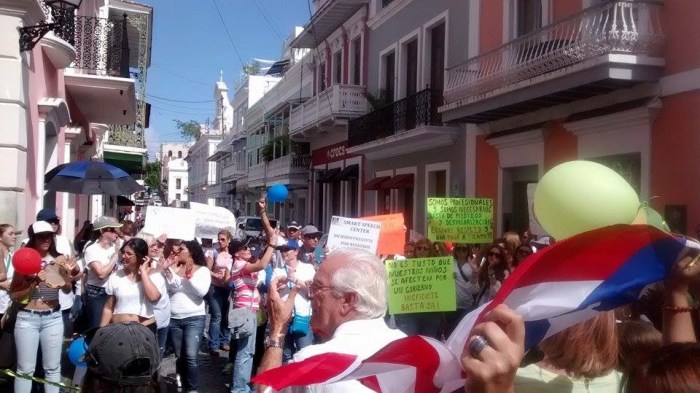
‘Pay Our Special Education Teachers Before Vulture Capitalists’ Demand Puerto Rican Protesters

GetFileAttachment-4

Every student with special needs in the United States is guaranteed a Free and Appropriate Public Education under national law.


So why has the U.S. territory of Puerto Rico stopped paying its special education teachers?


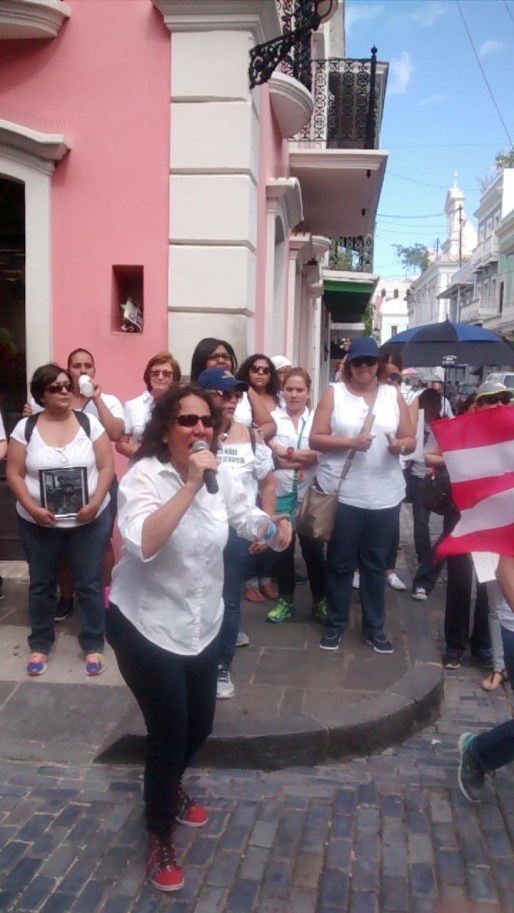
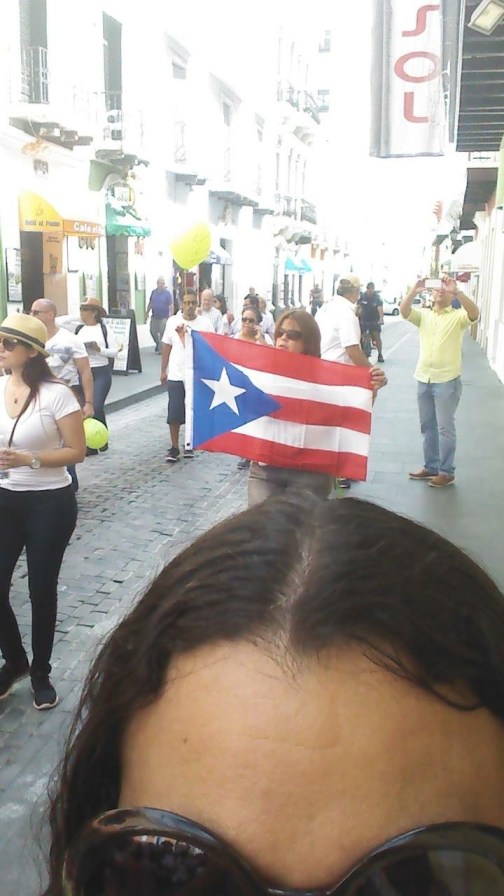
More than 100 parents, therapists, psychologist, occupational therapists, students and teachers marched on Monday to the capital in San Juan to find out.


The rally began in front of the legislature at 9 before protesters marched to the governor’s mansion at 10:30 am. Demonstrators then met with representatives of Governor Alejandro García-Padilla.

GetFileAttachment-3

The answer may be a crippling $72 billion debt. Puerto Rico is besieged by vulture capitalists encouraging damaging rewrites to the tax code while buying and selling the territory’s debt.


The Commonwealth government has been prioritizing payments to American private equity moguls instead of services for communities such as public schools.


“Our Children Before Vulture Capitalists,” proclaims one protestor’s sign.

GetFileAttachment-6

Jinnette Morales agrees with the sentiment. Morales organized the protest.


“No credit line would back up this lack of payment,” says the mother of a child with Down Syndrome.


“These therapists have been working for months without pay and if Secretary of Education Rafael Román says that he has paid them, I want to hear him say that when we take him to court.”


GetFileAttachment-5

Though the Commonwealth Department of Education hasn’t paid these professionals in up to six months, students still have been receiving services. Special education employees have been working without pay. However, that can’t continue indefinitely.


The therapists, psychologists and teachers have had enough. They simply can’t continue without an income.


So starting this week, roughly 1,200 students are without services they are guaranteed by law.

IMG_4819

“We are talking about children’s humans rights to receive an appropriate and quality education,” says Mercedes Martinez, president of the Federación de Maestros de Puerto Rico (FMPR) – the teachers union.


“Children need these therapies to progress in their development. Therefore, we stand with the workers, parents, and students and demand action from the governor of our country.”


Protesters are demanding special education employees be paid immediately so child services can continue with as little interruption as possible.


After arriving at the governor’s mansion, activists met with the governor’s attorneys.


They were told the government will eventually pay the special education teachers, says Martinez. In the meantime, officials suggested improving billing for services. Instead of having all invoices be digitized and go through corporate channels, special education teachers can provide manual bills. This will shorten the amount of time between billing and payment.


Protesters are scheduled to meet again with government officials on Thursday to pin down an exact date when payments will begin.


Until then, many demonstrators are camping out in front of the governor’s mansion vowing not to leave until the government makes good on its fiscal responsibilities to teachers and students.

GetFileAttachment

“The government needs to pay the debt with these professionals before our country’s debt,” says Martinez.


“Our children should come first.”


This monetary crisis is imported from the mainland. Legislation is being manipulated by corporate interests profiting off the chaos. Moreover, hundreds of American bankers and entrepreneurs are using the Commonwealth as a tax haven.


As a result, tax revenues are drying up while the super rich rake in profits.


Officials warn the government may be out of money to pay its bills sometime this year. Over the next five years, it may have to close nearly 600 more schools – almost half of the remaining facilities!


Of the 135 schools closed in just the last two years, Román had originally proposed shuttering 200. The remaining 65 were only kept alive because communities occupied the buildings and refused to let the government step in.


Despite Wall Street manipulation, Puerto Rican communities aren’t letting their government sell their children short. The fight goes on.


MORE ON PUERTO RICO:

Hundreds Gather in Puerto Rico on Martin Luther King Day Demanding Arts Education


Puerto Rico Teachers Plan One-Day Strike to Protest Corporate Education Reform


In Puerto Rico, Students Go On Strike to Stop Teacher Relocations


Parents and Children Occupy Puerto Rican School Refusing to Let Corporate Vultures Raid Its Contents

Hundreds Gather in Puerto Rico on Martin Luther King Day Demanding Arts Education

12576302_10153529451238152_1250187250_n

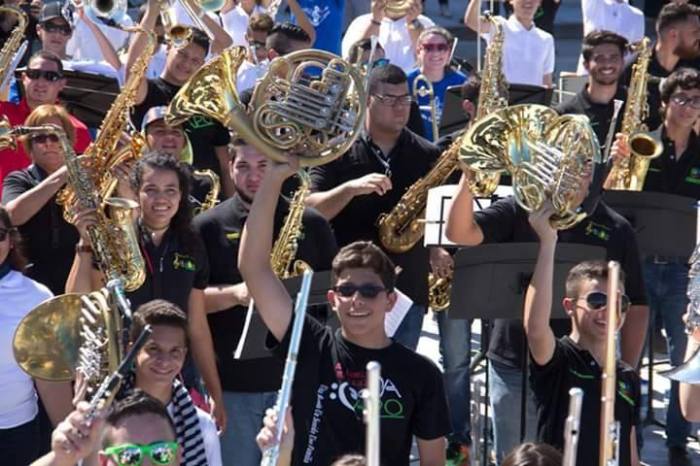
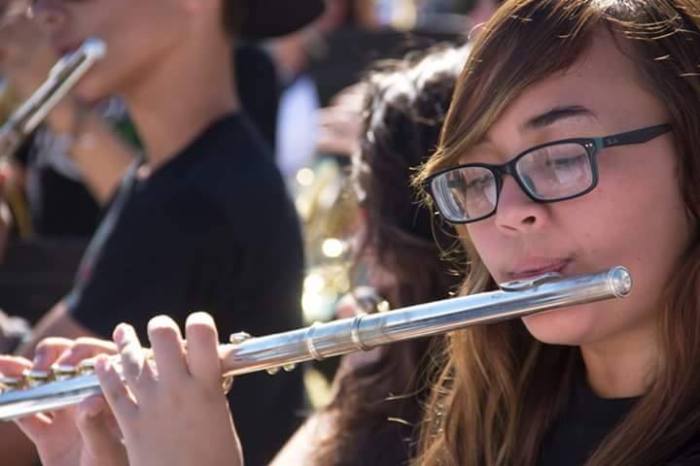
They came with trumpets, tubas, bongos and acoustic guitars.

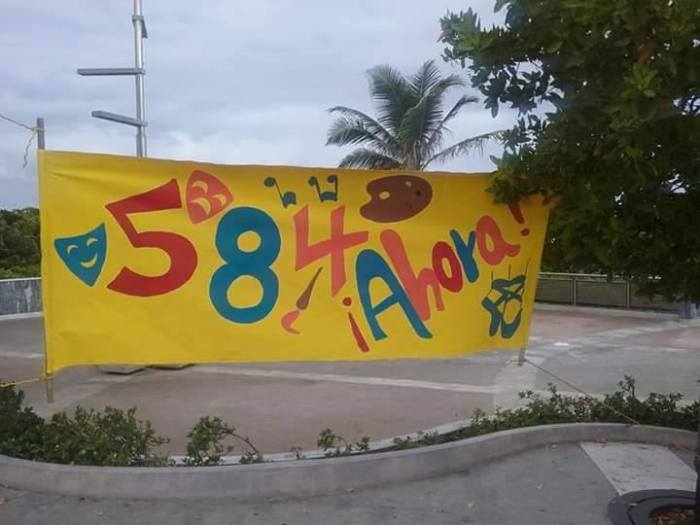
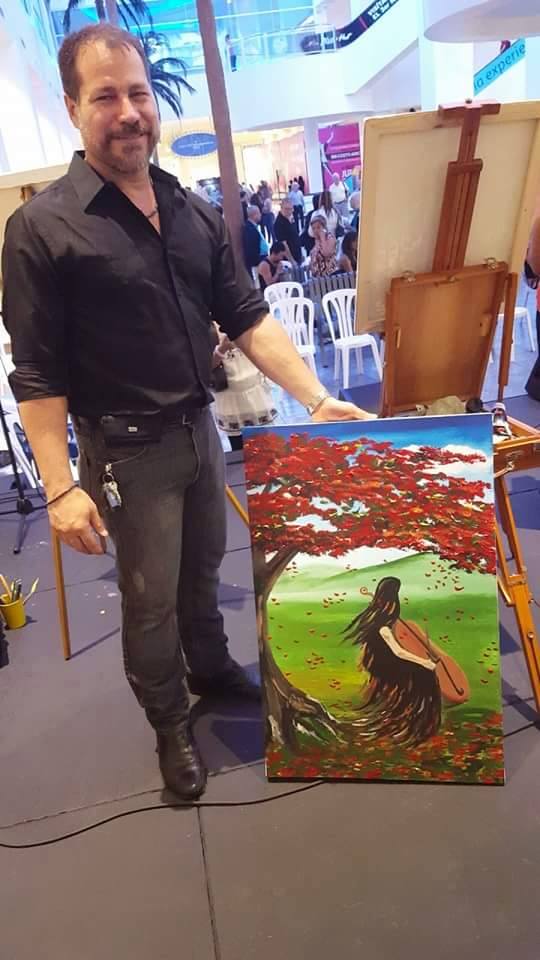
They came with brightly colored banners and freshly painted posters.

They came armed with songs, dances and slogans.

More than 500 teachers, students and college professors marched to the Puerto Rican capital of San Juan to demand the island government bring back public school arts classes.

The group of activists calling itself Let’s Save the Arts has been fighting against the narrowing of curriculum for the last three years.

At that time, the island Department of Education changed the length of class periods at all public schools in the U.S. territory.

Students used to have seven class periods of 50 minutes each. Now students have six class periods of 60 minutes each. In effect, officials eliminated one class.

Students still receive Spanish, Math, Science, Social Studies, and English instruction. However, now they have to choose between Physical Education or Arts where they used to be able to do both.

Secretary of Education Rafael Román approved the measure to save money. More than 3,000 half time teaching positions were lost.

12606925_10153529451103152_557288241_n

“It was an austerity measure,” says Mercedes Martinez, president of the Federación de Maestros de Puerto Rico (FMPR) – the  teachers union.

“They’re saying these teachers are not needed.”

Senator Rossana Lopez has proposed a solution. She introduced Bill 584 – legislation that would require all Commonwealth schools to include arts courses as a graduation requirement.

Arts teachers across the island formed the collective group to help pass the measure.

“Having a holistic  education is a right and not a privilege,” said Carlos Vélez, an art teacher from Ángel Sandín Martinez Middle School in the Vega Baja region.

“The study of the arts benefits all students – especially those living under poverty that can’t pay for art courses elsewhere.”

The teachers union issued a strong statement of support.

12596229_10153529493163152_1705645538_n

“Students were off school Monday,” Martinez says. “In symbolism to MLK’s holiday celebration, they protested the best way they know: performing.”

During those performances, Román, the architect of the plan to eliminate the arts, changed his tune. While at the rally, he said he supports the bill.

However, the Secretary of Education could make most of these changes, himself, without legislative action. He could return the alignment of class periods to their previous configuration tomorrow.

“We’re waiting for him to put words into action,” Martinez says.

12606903_10153529451063152_1511355704_n

Meanwhile, supporters hope Bill 584 will pass before this Congressional session ends in June.

Corporate education reform measures like this one limiting arts classes are a consequence  of financial woes imported from the mainland. Puerto Rico is besieged by vulture capitalists encouraging damaging rewrites to the tax code while buying and selling the territory’s debt.

Hundreds of American private equity moguls and entrepreneurs are using the Commonwealth as a tax haven.

As a result, tax revenues to fund public goods like education are drying up while the super rich rake in profits.

Officials warn the government may be out of money to pay its bills this year. Over the next five years, it may have to close nearly 600 more schools – almost half of the remaining facilities!

Of the 135 schools closed in just the last two years,  Román had originally proposed shuttering 200. The remaining 65 were only kept alive because communities occupied the buildings and refused to let the government step in.

The people of Puerto Rico aren’t letting their government defund and defraud their public schools without a fight. Monday’s musical and artistic protest was just another note in the battle hymn of the people.

12575817_10153529451308152_75105760_n

702853_10153529492758152_589523556_n

In Puerto Rico, Students Go On Strike to Stop Teacher Relocations

12050457_10153301043793152_183452142_o

Students streamed out of their classrooms chanting in unison in the mountainous Utuado region of Puerto Rico earlier this month.

They took over the halls and doorways of Luis Muñoz Rivera High School on Thursday, Sept. 10, locking their arms together to create a human chain.

They paralyzed their school, shut it down, and allowed no one in or out.

The reason? Not too much homework. Not lack of choice in the cafeteria. Not an unfair dress code.

These roughly 100 teenagers were protesting the loss of their teachers. And they vowed to occupy their own school until the government gave them back.

Six educators had been ordered to other schools, which would have ballooned classes at the Rivera School to 35-40 students per classroom.

Government officials claimed the high school had too few students to justify the cost. However, with more than 500 young people enrolled, the school has more than double the island average.

“These teachers provide education to almost 140 students,” said Sharymel Montalvo Vélez, a senior at the school. “Do you think this is not enough (to justify the) tuition?”

“Those teachers are excellent. I was their student. I learned with them. I’m grateful for it. Their teaching quality is amazing. I can prove that.”

The students including Vélez, 17, called an assembly to discuss the situation where they voted unanimously to take action. They blocked two gates and wrote a document demanding the Puerto Rican Department of Education revoke the decision to remove their teachers.

Later that day, Sonia González, a representative of the Secretary of Education, met with students and signed the document promising to keep the teachers at the Rivera School. Three parents and one student also signed.

11998478_10153281370523152_505102187_n

The affected teachers are Alex Natal, a 10th grade physical education instructor; Naixa Maldonado, an 11th grade Math educator; José Cruz, a 10th and 11th grade History teacher; María Medina, a 12th grade Physics instructor; Damaris Figueroa, an 11th grade Spanish educator; and an 11th grade English teacher.

Vélez said she’s surprised the government agreed to students’ demands. “ I was willing to keep the strike all the time necessary to solve our problem and get our teachers back,” she said.

“I experienced a large class size some years back, and it was hard on both teacher and students. It’s not that easy to make 30 students understand something and go explaining it chair by chair. Every student likes to show his/her ideas and in a large class there is not enough time for everyone.”

What happened in the Rivera School is not an isolated incident. All across the island, communities are fighting government mandates to relocate teachers, increase class size and shutter more schools.

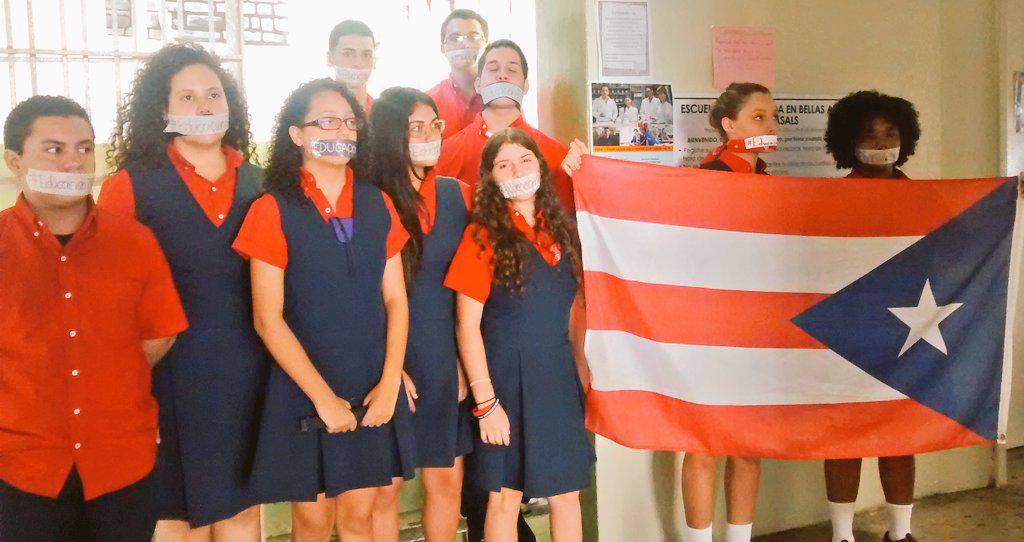
This Tuesday at Pablo Casals School, an arts institution in Bayamon along the north coast, students protested the government decision to relocate their theater teacher, Heyda Salaman.

About 100 students hung the Puerto Rican flag upside down and taped their mouths shut to represent the state of the government and the silence officials expect from the community.

Young people at the specialized arts school which offers visual arts, theater, music and dance as well as academic classes, protested with music and chants of “injustice!”

https://www.youtube.com/watch?v=pITIkdiHoMQ&feature=youtu.be

Just like in the case of the Rivera School, the government eventually relented and agreed to keep the teacher with her students.

The teachers union – the Federación de Maestros de Puerto Rico (FMPR) – has supported student protesters throughout the island.

“The Teachers Federation from Puerto Rico is proud of the actions these students performed,” said union president Mercedes Martinez about student actions at both facilities.

“Schools belong to our communities according to the law, so the communities have every right to fight for the school they deserve. No more cutting funds to create over-sized classrooms.”

Vélez echoes that statement.

“We have a good education and excellent teachers but the administration is failing their workers,” she said.

“The government is cutting rights and benefits to the teachers and employees and soon there will be no teachers. Maybe our schools get privatized and then only people with money will send their children to (public) school.”

11997060_10153278954588152_587899672_n

The Commonwealth government has closed 150 schools in the past 5 years in the U.S. Territory.

Officials warn the government may be out of money to pay its bills by as early as 2016. Over the next five years, it may have to close nearly 600 more schools – almost half of the remaining facilities!

The island is besieged by vulture capitalists encouraging damaging rewrites to the tax code while buying and selling Puerto Rican debt.

Hundreds of American private equity moguls and entrepreneurs are using the Commonwealth as a tax haven.

As a result, tax revenues to fund public goods like education are drying up while the super rich rake in profits.

The indigenous population has suffered at the hands of western conquerors since Columbus, but the newest fruit of Colonialism may be these corporate education reform policies.

Young people like Vélez aren’t revolutionaries. They look just like any ordinary teenage boys and girls wearing t-shirts and blue jeans, baseball caps turned backwards, backpacks slung across their shoulders.

But they have had enough. They aren’t going to accept the low expectations of the corporate world about what constitutes a fair education.

Viva Puerto Rico!


NOTE: This article also was quoted extensively on Diane Ravitch’s blog and published in full on the Badass Teachers Association blog.