
Teaching Blind Obedience is Child Abuse

My daughter is not a little soldier.

She does not jump at my orders.

She can be rude, crude and badly behaved.

But I wouldn’t want her any other way – because the alternative is worse.

The same goes for my middle school students.

If you enter my classroom, you may find some children questioning my assignments.

“Mr. Singer, why can’t we chew gum in class?”

“Mr. Singer, why do you give so much homework?”

“Mr. Singer, why do we have to write a rough draft? Why can’t we just write a final copy?”

But you’ll notice my students almost always call me “Mr. Singer.” The reason is trust and respect.

Over time we’ve formed a relationship with each other where they’ve learned to respect me as their teacher and I have tried to earn that trust by treating them kindly and giving good reason for the things I tell them to do.

They are obedient (for the most part), but not BLINDLY obedient.

That may sound like splitting hairs but it’s one of the most important distinctions in education.

When someone knows WHY they’re doing something, they are an agent – they are responsible for their own actions. They are self-disciplined – not drones acting without thinking solely because they were told to do so.

That is incredibly important.

Think of what blind obedience does to adults.

American historian Howard Zinn famously put it this way:

“Civil disobedience is not our problem. Our problem is civil obedience. Our problem is that people all over the world have obeyed the dictates of leaders… and millions have been killed because of this obedience… Our problem is that people are obedient all over the world in the face of poverty and starvation and stupidity, and war, and cruelty. Our problem is that people are obedient while the jails are full of petty thieves… [and] the grand thieves are running the country. That’s our problem.”  

When I was a college undergraduate, I was unsure what to major in and I began my undergraduate work in psychology. Of all the things I learned in those early survey classes before changing course to writing, philosophy and (after a career in journalism) education, the lesson I’ll never forget is the groundbreaking 1961 study by Stanley Milgram, a Yale University psychologist.

Milford famously wondered how many people would willingly comply if a person in a position of authority told university students to deliver a 400-volt electrical shock to another person. His students predicted that no more than 3% of participants would deliver the maximum shocks. However, when he actually conducted the experiment, 65% delivered the maximum shocks.

During the experiment, each subject was asked to press a button that they believed gave increasingly high voltage electric shocks to the student on the other side of a wall if the student gave the wrong answer to a teacher’s questions. It should be noted that the students on the other side of the wall did not actually receive shocks, but the participants BELIEVED that they truly were shocking their fellow students by pressing the button.

Many of the subjects, while believing that the student was actually receiving shocks and hearing their protests and cries for mercy – including complaints of a heart condition – became increasingly agitated and even angry at the experimenter. Yet 36 out of 40 people, in turn, continued to do what they were instructed to do all the way to the end. Even when the student became silent when apparently receiving a shock from a switch labeled “danger: severe shock”, the subject continued based on the instruction that silence is to be read as a wrong answer.

This experiment (which would be highly unethical today) has become a classic in psychology, demonstrating the dangers of obedience.

Milgram wrote in 1974:

“Ordinary people, simply doing their jobs, and without any particular hostility on their part, can become agents in a terrible destructive process. Moreover, even when the destructive effects of their work become patently clear, and they are asked to carry out actions incompatible with fundamental standards of morality, relatively few people have the resources needed to resist authority.”

In fact, these experiments were inspired by history – specifically by the Nazi, Adolph Eichmann, who defended himself at the Nuremberg Trials by saying that he was simply following orders when he commanded the deaths of millions of Jews during the Holocaust.

This is what blind obedience gets us – a society of Nazis willing to do anything if told to do so by the proper authorities.

Parents and teachers are in a delicate situation then.

We’re responsible for guiding children into adulthood, and that often does require a measure of obedience. The question is how to get there without stripping away a child’s agency? How to get children to do generally what is necessary for their learning while still leaving their independence intact?

Let’s be honest – schools play an essential role in teaching obedience. It’s a critical life skill that helps children learn to follow rules and directions. Without obedience, adolescents would have difficulty following rules at home, at school, and in society.

One of the ways schools teach obedience is through rules and consequences. When children break rules, they face consequences such as being sent to the principal’s office, getting detention or being suspended. Such consequences help children learn that there are repercussions for their actions.

Schools also teach obedience through modeling. Teachers and administrators try to set good examples for children by obeying rules, themselves. When children see adults following the rules, they are more likely to do so themselves.

Finally, schools teach obedience through positive reinforcement. When children do the right thing, they are rewarded with praise, stickers, or other incentives. This positive reinforcement helps children learn that obedience is a good thing and that it is something that should be rewarded.

However, as children grow older, it is just as vital that teachers and parents not only foster obedience but also critical thinking about that obedience.

When a child questions a rule (and they will question it), we should not instantly meet that questioning with negativity or shock. We should calmly and rationally answer.

We should not get angry at questions, we should welcome them. Questioning should be a part of instruction because as educators and parents we should not want blind obedience. We should want trust and understanding.

As Albert Einstein said, “Peace cannot be kept by force. It can only be achieved by understanding.”

I was reminded of this when watching the recent documentary “Shiny Happy People” about the Duggar family. The brood of religious fundamentalist Christians made their TV debut in 2004, going on to become a household name with their TLC show “19 Kids and Counting,” presenting Jim Bob and Michelle Duggar and their ever-expanding household as a seemingly “perfect” family. 

However, behind the scenes, the family’s theocratic hierarchy led to sexual, emotional, and physical abuse, which was allegedly brushed aside by their church.

In 2015, it was revealed that the Duggars’ eldest son, Josh James, had molested numerous underage girls, including four of his siblings, when he was aged 14 to 15. These revelations led to the cancellation of “19 Kids and Counting.” In 2021, Josh was arrested after police discovered he had been receiving and was in possession of child pornography.

The family belongs to the Institute in Basic Life Principles (IBLP), a nondenominational Christian sect that serves as an umbrella organization for several ministries founded by minister Bill Gothard in 1961. 

According to the documentary, IBLP teachings require absolute obedience. Authority is distributed in various circles – God being the highest authority, followed by the family’s father, etc. Women are considered to be among the lowest forms of authority. In fact, two of Josh’s sisters who he had abused were even made to go on TV to speak in defense of their abuser. 

We hear a lot of propaganda from religious fundamentalists about how public schools groom students into being politically liberal. However, teaching blind obedience is the true grooming. It is setting people up to become victims of anyone who they perceive as having authority over them.

This is what made the Duggar children ready made victims for their own brother. It sets children up to be easily abused, gaslit, fooled and dominated.

And in doing research on this topic, I found many articles defending absolute obedience by reference to the Bible. The idea that authority is a hierarchy and we should simply follow the instructions of those above us in that hierarchy is as rampant as it is perverted.

Any discipline adults give to children should be in service of them eventually becoming independent and self-disciplined. That means being able to make independent choices about their own behavior without prompting from an adult.

There is a difference between being self-disciplined and being obedient.

A self-disciplined child will complete an action, regardless of who is watching. She will do the behavior because it is the right thing to do. In contrast, an obedient child may follow directions to please a parent, to avoid a consequence or to receive a reward. Being obedient is following directions or commands from an adult. It is exhibiting “good behavior” when an adult is present. Meanwhile, having self-discipline is making those choices without the presence or reminders from adults.

It may be tempting to see children marching in line or sitting calmly with their hands in their laps and consider that an ideal. But as children grow, we must learn to tolerate more frequent independence.

In fact, we must do more than tolerate it. We must cherish it.

The opposite is so much worse.


Like this post?  You might want to consider becoming a Patreon subscriber. This helps me continue to keep the blog going and get on with this difficult and challenging work.

Plus you get subscriber only extras!

Just CLICK HERE.

Patreon+Circle

I’ve also written a book, “Gadfly on the Wall: A Public School Teacher Speaks Out on Racism and Reform,” now available from Garn Press. Ten percent of the proceeds go to the Badass Teachers Association. Check it out!

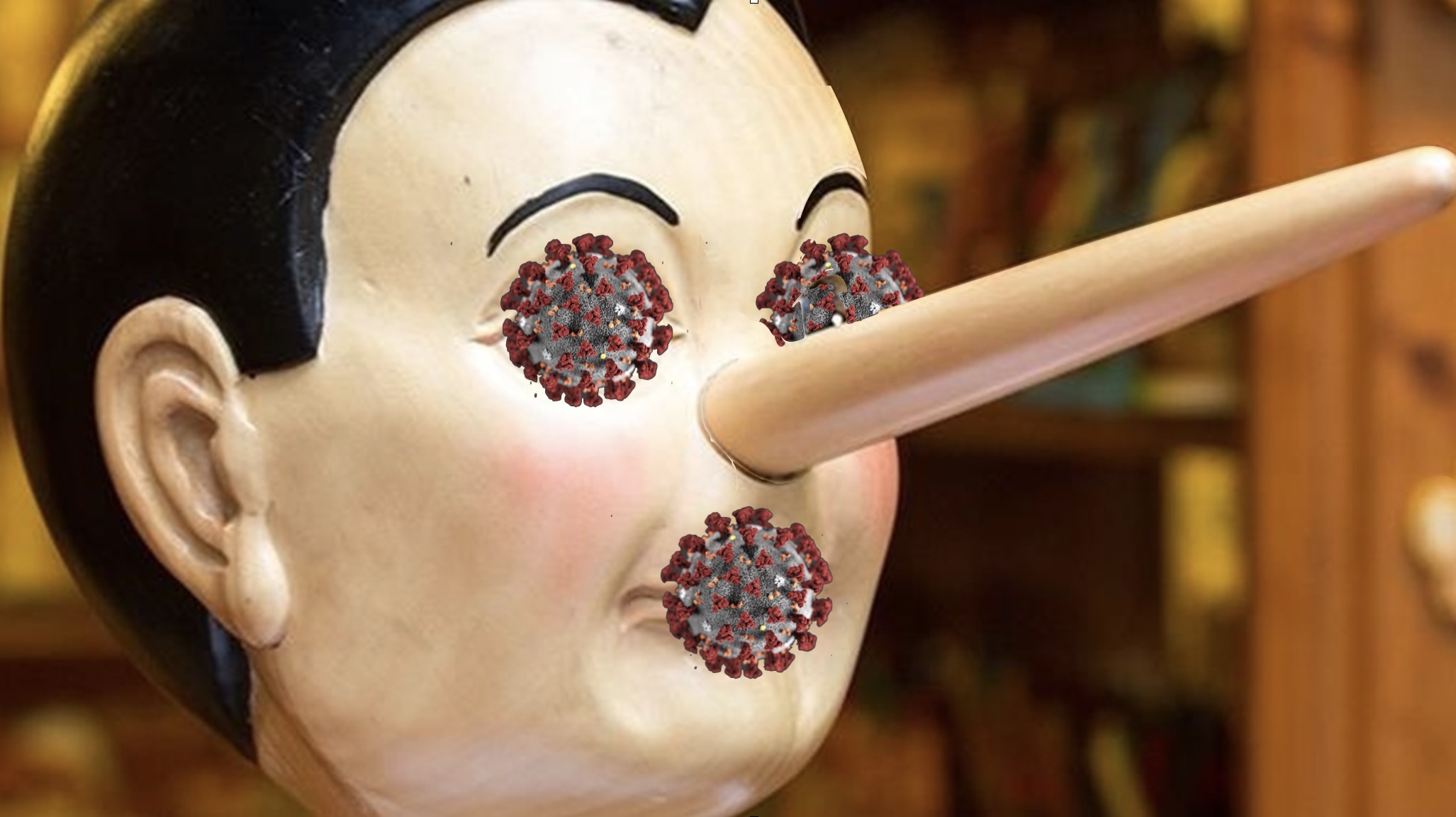
Lack of Trusted Authority is Why Covid-19 is Kicking Our Butts

We have faced tough times before.

World wars, famines, pandemics, economic ruin.

But in each of these disasters, the majority of people thought they had somewhere to turn for knowledge and advice.

We had trusted authorities to tell us what to do, to counsel us how to handle these seemingly insurmountable disasters.

Today many of us face the Covid-19 pandemic feeling there are few sources to believe in – and that more than anything else – is why we are having such a difficult time coming together to overcome this crisis.

The media, government, science, religion – none hold a central place of confidence in most people’s lives. So when tough decisions about health and safety come into play, many of us aren’t sure what to do.

This wasn’t always the case.

Look back to World War II.

Not only did we defeat fascism but new vaccines put a wallop on illness and disease.

When we entered the fray, the US government organized new research initiatives targeting influenza, bacterial meningitis, bacterial pneumonia, measles, mumps, neurotropic diseases, tropical diseases and acute respiratory diseases.

And because there was an immense trust in government – after all, as a nation we had been attacked together as one at Pearl Harbor – there was enormous trust in these initiatives.

Before World War II, soldiers died more often of disease than of battle injuries. The ratio of disease-to-battle casualties was approximately 5-to-1 in the Spanish-American War and 2-to-1 in the Civil War. In World War I, we were able to reduce casualties due to disease through better sanitation efforts, but we could not protect troops from the 1918 influenza pandemic. During that outbreak, flu accounted for roughly half of US military casualties in Europe.

Much of the groundwork for innovation in vaccinations had already been laid before WWII. However, it was the organization of the war effort and the trust both the civilian and military population had in government that catapulted us ahead.

I’m not ignoring that some of this trust was misplaced. The US government has never been fully trustworthy – just ask the Asian American population forced into internment camps. However, the general feeling at the time that the government was a force for good, that we were all in this together and we all had to do our part had a vast effect on how we handled this crisis.

Today that kind of trust is gone.

In some ways that’s a good thing. It could be argued that “The Greatest Generation” put too much faith in government and the following years showed why too credulous belief in the good will of our leaders was unearned and unhealthy.

From Richard Nixon’s Watergate scandal to Bill Clinton’s sexual misconduct to George W. Bush lying us into a war of choice to Barack Obama’s neoliberalism to Donald Trump’s gross mismanagement and blatant racism – we can never go back to a WWII mentality.

Skepticism of government is kind of like seasoning. A certain amount is a good thing, but the inability to trust even government’s most basic ability to take care of its citizens and function in any meaningful way is hugely detrimental.

And this earned distrust has seeped into just about every source of possible certitude that might have helped us survive the current crisis.

The media used to be considered the fourth estate – one of the most important pillars of our society. After all, the freedom of information is essential to the free exercise of democracy.

However, the erosion of impartiality has been going on since at least the 1980s when the FCC under President Ronald Reagan abolished the Fairness Doctrine. Since 1949 this had required the media to present both sides’ of opinions. In 1987 a Democratic Congress passed a bill to reinstate the Fairness Doctrine but it was vetoed by Reagan.

This, along with the rise of talk radio and the insistence that news departments turn a profit, lead directly to the creation of more biased reporting skewed to a particular audience – Fox News and Sinclair Broadcast Group being the most prominent.

The fact that just six corporations own 90% of the media outlets in the country skew coverage to what’s in the best interests of big business. These corporations are GE, Newscorp, Disney, Viacom, Time Warner and CBS.


Finally, the loss of local newspapers and the purchase of those few that do exist by large media conglomerates further increase bias.

Few people feel they can trust the news anymore. They turn to the Internet, social media, Twitter and other sources that often are just echo chambers for what they already believe.

The irony is not lost on me that you are reading a blog by a public school teacher, not a professional journalist. But my aim is to use my experience in education to inform the debate.

It’s just too bad that I’m often forced to report the news when traditional news sources drops the ball.

Again skepticism of mass media is a good thing, but we should at least be able to count on the press as a reliable source of facts. However, these days few facts are free from bias, spin and editorial comment.

Even science is not immune.

The Centers for Disease Control (CDC) made several blunders handling this pandemic which hurt the organization’s credibility.

At the beginning of the pandemic, the organization refused to acknowledge and later emphasize the airborne spread of the virus. It took until May 2021 for the organization to fully recognize that fact.

Another blunder was the guidelines on what counts as “close contact.” It went from “within 6 feet” to “within 3 feet”, and the duration went from 30 minutes consecutively to 30 minutes cumulatively. It’s not so much that the evidence changed, but that political pressure forced the CDC to lower its standards.

World scientific consensus now is that the coronavirus is capable of airborne spread without close contact between two people. Airborne droplets can linger in the air indoors and infect any number of people from one superspreading host subject.

The CDC’s advice on close contact is based on old scientific research that just isn’t as good as modern experiments.

And the organization has misjudged so much more from the importance of masking (at first they said it wasn’t important, now they say it is important), whether children can catch the virus (at first they said this was unlikely and now they admit it happens but is often asymptomatic), whether Covid spreads in schools (they used to say the limited protections in place at schools made this unlikely and now they admit it is happening), etc.

One could argue that these were simple mistakes that have changed as better science comes in. However, in each case they appear to have initially been politically motivated and justified with limited or flawed studies that could not continue to be supported as new data came in.

At first the CDC told us that masking wasn’t important not because it was true, but to hide a shortage of masks that needed to be prioritized for medical staff. These needs are understandable, but hiding the truth and then changing your messaging doesn’t engender trust.

Misinformation about the impact of Covid on children was an attempt to keep schools open and stop the economy from shutting down as parents were unable to work. Not only did this put children at risk for economic gain, it has contributed to the current refusal of so many people to follow CDC guidelines about reopening schools.

Why do so many people refuse to have their children wear masks at school? Why is there so much vaccine hesitancy? Why anxiety about reopening plans that focus on close contacts?

The CDC owns a lot of the responsibility because it has repeatedly earned our distrust.

This isn’t to say everything coming from them is dubious. I think the guidelines the CDC has put in place for the current school year are supported by the facts.

I think there is evidence that people need to wear masks in schools. I think we need to vaccinate as many people as possible.

But these are just bare minimums.

I think the CDC is still focusing too much on the economic impact of its guidelines when it should be solely focused on the health and safety of students, staff and the community.

This is not a time for scientists to be playing politics.

We need them to be as transparent as possible – as trustworthy as they can be.

Unfortunately, the erosion of institutional credibility at so many levels has become a cycle to itself.

At multiple levels, sources that should be bedrock have become wet sand.

The federal government has not taken enough action to keep people safe. State governments have not taken enough action – and some have even taken action to prevent safety.

Even at the local level, many school boards have cowardly refused to put in place mask or vaccine mandates.

It is the systematic breakdown of a society.

We have few places left we can trust.

And that is why we are fractured and scared.

We don’t know what to do to keep our loved ones safe.

People seem forced to choose between taking the virus seriously and ignoring it.

Many refuse to admit that it could hurt them. They think it’s just the sniffles. Few healthy people die and they discount the potential longterm effects of catching it.

The US has only 4% of the world population but nearly a quarter of all Covid cases.

That’s not a coincidence.

In large part, it’s because we don’t know how to combat the virus because we don’t know who to trust.

And the resulting credibility vacuum has enabled unscrupulous politicians, agents of chaos and other charlatans to position themselves as experts.

When all information is equal, disinformation is king.

The solution to the pandemic may end up being easier than this riddle.

How our institutions can regain their credibility.

Especially when our politics doesn’t allow them to be honest, and fewer people are even listening to them every day.


Like this post?  You might want to consider becoming a Patreon subscriber. This helps me continue to keep the blog going and get on with this difficult and challenging work.

Plus you get subscriber only extras!

Just CLICK HERE.

Patreon+Circle

I’ve also written a book, “Gadfly on the Wall: A Public School Teacher Speaks Out on Racism and Reform,” now available from Garn Press. Ten percent of the proceeds go to the Badass Teachers Association. Check it out!