Do Americans “Throw Money” At Their Schools? A Fair Funding Primer

Screen shot 2015-07-06 at 11.05.59 PM

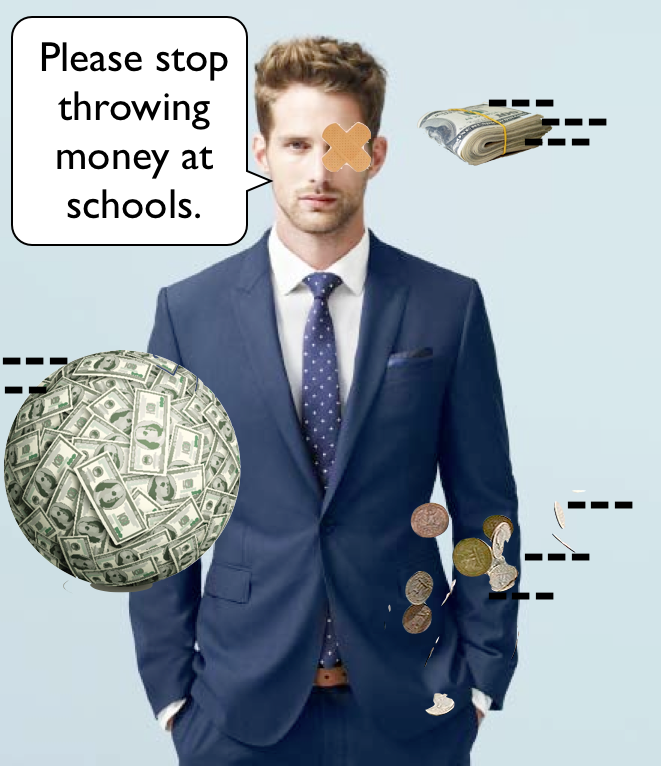
“Don’t throw money at schools.”

It’s a common rejoinder when lobbying for an increase in public education budgets.

You offer facts why schools need it: both the state and federal government continue to reduce K-12 funds, class sizes are increasing, the curriculum is being narrowed, buildings are crumbling – real world consequences to spending deficits.

And some guy (it’s often a dude) stands up with a cock-eyed grin and says, “You know, we really need to stop throwing money at schools.”

And he pauses as if we all need a moment to take that in.

Is there anything to this? We hear it often enough, but does he have a point?

Let’s see.

“Don’t throw money at schools.”

First, is it true? Is anyone actually throwing money at our schools?

I’ve worked as a public school teacher for over a decade. To my great disappointment never once has anyone hurled greenbacks through a window in my building. I have never had to dodge, duck or otherwise exercise gymnastics to avoid being thunked in the head by a stack of airborne bills.

Origami ninja stars made out of $100 notes do not routinely fly through the air in my classroom. No government representative has ever shown up in the auditorium during a professional development and said, “Yeah baby! Let’s make it rain!” before showering my coworkers and myself in Benjamin’s.

No. This has never happened. Not even coins. More change is thrown at the fountain in my local mall than at any public school where I’ve ever worked.

At this point, you’re probably saying, but, Steven, that’s not what this guy meant. He wasn’t implying someone literally tossed bills at foundations of learning. He was just being colorful.

To which I respond: was he? Because there are lots of ways to phrase that idea. He simply could have said, “We shouldn’t increase education funding.”

He could have said, “We need to spend school money more wisely before increasing it.”

He could have said, “Additional learning revenues are a waste because schools do such a bad job.”

He could have said, “We spend too much on education already.”

He could have said, “Kids don’t deserve more of my cash.”

But he didn’t say any of those things. Instead he conjured an image out of a Roman orgy or a rap video. He purposefully tried to frame this as a ridiculous situation. He wasn’t just trying to make an argument. He wanted to paint anyone who could possibly disagree with him as a fool.

“Can you believe these guys crying about public school funding?” he implied. “They’re having money thrown at them and they actually want more!?”

So before we even start to study the content of his phrase, we must remember it’s coated in bias and malicious intent. He is not really calling for a rational argument. He is appealing to emotions – most probably the emotions of those listening to the debate.

But we cannot sink to his level. We need reasons.

This is difficult because it’s not entirely clear what exactly he was getting at. Let’s examine what his statement might mean in plain English and try to determine if – underneath all this spin – he has a point or not.

Here are some possibilities.

1) “We need to spend education money more wisely before increasing it.”

This might be what he intended to say. And if so, he does have a bit of a point.

There is a problem with how school funding is spent. There is waste and misappropriation. At the local level, school boards and administrators do not always do things in the most efficient manner. But you could say the same thing at every level of democratic government. Fascist states have much less waste. Shall we just burn up the Constitution, then?

At the state and federal level, the problem is compounded by the ignorance of those allowed to write our laws. Education policy is rarely made by those who know what they’re talking about, thus funding often is wasted on useless initiatives. Common Core, standardized testing, punitive accountability systems – these were all created by business interests without regard to educational validity or efficacy and – as such – waste taxpayer money that could be better spent on things that would actually help children learn.

And speaking of waste, may I introduce you to charter schools? Favored by lawmakers yet rocked by fiscal scandals, charters are legal means of sucking up tax dollars for a profit. While public schools have to account for every penny spent and prove funds went to better the educations of real live students, charters are not just permitted but encouraged to withhold some tax money from going to student services and instead bolstering administrators’ bank accounts. Anyone who speaks of fiscal accountability in education yet is in favor of its further privatization is either disingenuous or in need of a basic math course!

The solution, however, is not to withhold additional funding. The solution is more oversight. And I don’t mean only government oversight and regulations. I mean oversight by the public.

Democracy only works if people participate. People need to push for transparency and less wasteful policies. They need to educate themselves about what’s going on. They need to investigate. They need to lobby, protest, and criticize. They need to vote. And they need a free and interested media to give them the facts to make smart decisions.

Clearly we’re lacking some of these things today. But that’s a national problem not limited to education funding.

In the meantime, we can’t wait for a perfect government before increasing school spending. Our children need help now!

If we do nothing, we doom another generation to getting less than they deserve, less than what we could have provided. Why? Because we were afraid some of it wouldn’t reach them!?

A deep sea diver with a kink in his air hose, doesn’t shrug and turn off his oxygen. He turns it up!

2) “Additional learning revenues are a waste because schools do such a bad job.”

This might have been his criticism. Let’s look at the facts.

International comparisons of national school systems are all the rage in political circles. And raw data suggests that children from the United States are not at the top. We are somewhere in the middle.

That’s all true. But what pundits refrain from admitting is that it’s been true for a long time – in fact, for as long as we’ve been making these types of comparisons. Our schools have not gotten worse. They have stayed the same.

This brings up an important issue. How does one compare national school systems to each other, anyway? What do we use to make these comparisons? Income prospects? Student portfolios? Measures of critical thinking? Classroom grades?

No. We use standardized test scores – the PISA test to be exact.

However, we’ve known for decades that standardized tests are poor measures of academic success. Bubble tests can assess simple things but nothing complex. After all, they’re scored based on answers to multiple choice questions. In fact, the only thing they seem to measure with any degree of accuracy is the parental income of the test-taker. Kids from rich families score well, and poor kids score badly.

So these comparisons are suspect.

But even if we accept them, we are leaving out a very important factor: Poverty.

Virtually all of the top scoring countries taking the PISA exam have much less child poverty than the U.S. As we’ve seen, this will boost their scores. If we adjust our scores for poverty, our students jump to the top of the list.

Let me repeat that: U.S. students do the best in the world on international tests – IF THEY ARE NOT POOR.

Moreover, the U.S. education system does something that many international systems do not. We educate everyone! Foreign systems often weed children out by high school. They don’t let every child get 13 years of grade school (counting kindergarten). They only school their highest achievers.

So when we compare ourselves to these countries, we’re comparing ALL of our students to only SOME theirs – their best academic pupils, to be exact. Yet we still hold our own given these handicaps!

In short, U.S. public schools do an excellent job educating children. They overcome incredible obstacles to achieve near miraculous ends often with very few resources.

Imagine what they could achieve if our schools were properly funded.

3) “We spend too much on education already.”

This one is a favorite of politicians of both parties. We already spend a lot on education. Some lawmakers and media personalities go so far as to claim that we spend more than any other country in the world.

Is that true? No.

We are near the top, but according to the most recent OECD study, four countries – Austria, Luxembourg, Norway and Switzerland – spend more.

Additionally, the study was released in 2014 but used data from 2011. Since that time, the U.S. has cut its school spending by leaps and bounds while most other advanced nations have been increasing it. Look for many more countries to pass us up when the next study is released.

But even using current figures, there are troubling social, economic and political differences between nations that impact how school funding needs to be spent. While most advanced countries spend their education budgets on actual instruction, the United States mandates public schools use a larger portion of their budgets on things outside the classroom.

For example, many international schools don’t have metal detectors or security staff. Given the U.S. problem with mass shootings and gun violence, our schools need to spend a significant portion of their monies in this way. I’m not suggesting we stop. Clearly we need to continue these practices, but that’s less money to help kids learn.

In addition, unfunded legislative mandates and court decisions have made U.S. public schools responsible for many things that international schools are not. About one third of all budget increases in recent years has gone to support special education students; 8 percent went to dropout prevention programs, alternative instruction, and counseling aimed at keeping students in school; another 8 percent went to expand school lunch programs; and so forth. Very few additional dollars were provided for needs associated with basic instruction.

Again, I’m not saying we should stop. Given our national epidemic of child poverty – an epidemic not shared by other advanced nations – we have to address these adjacent issues. But without additional funding, we’re letting the very heart of our schools – the classroom – go to waste while other countries are providing significantly more support.

Unfortunately, the problem doesn’t end there. Not only does the U.S. have unique problems that other nations do not share, we also are unique in how we allocate the funding we already have. And this difference only worsens the problem and increases the need for more money.

While most advanced countries divide their education dollars evenly between students, the United States does not. Some students get more, some get less. It all depends on local wealth.

The average per pupil expenditure for U.S. secondary students is $12,731. But that figure is deceiving. It is an average. Some kids get much more. Many get much less. It all depends on where you live. If your home is in a rich neighborhood, more money is spent on your education than if you live in a poor neighborhood.

The U.S. is one of the only countries in the world – if not probably the ONLY country – that funds schools based largely on local taxes. Other developed nations either equalize funding or provide extra money for kids in need. In the Netherlands, for example, national funding is provided to all schools based on the number of pupils enrolled. But for every guilder allocated to a middle-class Dutch child, 1.25 guilders are allocated for a lower-class child and 1.9 guilders for a minority child – exactly the opposite of the situation in the U.S.

So even though we spend more than many countries, we spend it so unevenly that poor and minority children are being left out.

Therefore, we have a choice: either do away with funding based on local property taxes or increase funding to poor school districts – or both.

4) “Kids don’t deserve more of my cash.”

Dollars to doughnuts, this is probably what he really means.

The United States has a moral failing. And we’re proud of it. We call it libertarianism. It means – Screw you! I’ve got mine.

We don’t care about helping others, we don’t care about the common good, we only look out for ourselves and our immediate friends and families. Everyone else can eat crap and die.

It’s ethical immaturity and, frankly, there’s not much you can say to someone who feels this way except that you disagree.

At most you can try to appeal to his self interest. Do you really want to live in a society full of uneducated people? Do you really want your kids to grow up in a world like that?

But that’s as far as it goes. You can’t help emotionally and intellectually stunted people – especially adults. Most children go through this phase. Some never grow out of it.

The good news is that most of us aren’t so far gone. If you can show that our interlocutor’s statement really comes down to this, you may be able to convince some people to agree with you simply because no one wants to be such an odious troll.

You need to pull back the curtain and show the truth.

How do we best spend these education dollars? How do we raise the money? Those are valid questions, but only a truly horrible person simply refuses to help children learn.

Because we’re not “throwing money” at schools. We’re throwing certain kids away.


NOTE: This article also was published in the LA Progressive, Commondreams.org and on the Badass Teachers Association blog.

The Killer in my Classroom

Screen Shot 2015-05-20 at 2.29.49 PM

Some nights sleep just won’t come.

I toss and turn, crumpling the blankets until I have to get up and read or pour myself a glass of water.

Sitting up in the pre-morning gloom, that’s when they come back to me.

A parade of faces. No names. Words are all lost in the haze of time.

But the faces remain.

Kids I’ve taught and wondered about.

What ever happened to Jason? Did Rayvin ever get into dance school? I wonder if the army took Tyler…

But there’s one face that always comes last.

A strong straight lip. Soft nose. Brooding eyes.

Terance… Terrell… TYRELL.

Yes. That’s his name.

One of my first students. One of my biggest failures.

And I don’t have to wonder what happened to him. I know with a dread of certainty.

He never got to play professional basketball like he wanted. He never even made it out of high school.

No, not dead – though I do have I gaggle of ghosts on my class roster.

He’s a murderer. Life in prison.

I was his 8th grade language arts teacher. It was my first year teaching in the district.

I had a reputation for being able to relate with hard to reach kids so they put me in the alternative education classroom.

I had a bunch of students from grades 6-8 who simply couldn’t make it in the regular school setting.

These were kids with undiagnosed learning disabilities, appalling home environments, and/or chips on their shoulders that could cut iron.

But I loved it.

I taught the Read 180 curriculum – a plan designed for students just like mine. We had three stations: silent reading, computer remediation and small group instruction.

The class was divided in three – students rotated through each group. Though I somehow monitored the whole thing, I spent most of my time meeting with kids in small group instruction.

I had an aide who helped the whole thing run smoothly, too. Lots of planning time, support and resources.

Everyday was exhausting. I could barely stay awake on the ride home. But it was worth it, because I felt like I was making a difference.

And there was Tyrell.

Few days went by without at least one of the children having to be disciplined. Sometimes it was just a simple redirection or even standing in close proximity to kids who seemed set to explode. Other times it was a brief one-on-one counseling session to find out why someone was misbehaving. And sometimes it was so bad kids had to be sent to the office. Once we even had a child escorted out of the building in handcuffs because he brought a weapon to class.

If you’d told me one of those children would end up killing someone, I wouldn’t have blinked. If you told me it would be Tyrell, I wouldn’t have believed you.

He was a gentle giant.

Almost always calm and in control. He was well above the others academically. When one of the others lost his cool, Tyrell would help talk him down.

I wondered why he was there. Turns out he was involved in a bloody fight on the way home from school the year before.

But that rarely made its way into the classroom. It was like he was already doing time – serving out his sentence with these misfits until he could be placed back with the rest of the student population.

I remember when Carlos got caught with the knife, Tyrell’s back had stiffened but he hadn’t moved.

The knife had fallen from Carlos’ pocket across the table and slid to the floor.

Tyrell watched it slide across his desk but said nothing.

“Is that a knife, Carlos?” I asked.

“No!” he said picking it up and putting it back in his pocket.

“Why do you have a knife, Carlos?” I asked.

He shrugged and refused to say anything.

Then Tyrell spoke up.

“It’s for the walk home, Mr. Singer.”

“What?” I asked.

“He needs it,” Tyrell said.

And the look in both of their eyes said it was true.

But what could I do? If he used that knife, I’d be liable.

I had to report it, and I did.

Would I still do that? Was it a mistake?

I don’t know.

But I went to the administration and told them the truth – that I BELIEVED the knife was for self-defense. That something had to be done to protect these kids on the walk home.

Nothing changed. Our district saves a ton of money by forgoing buses. Richer kids get a ride to school. Poorer kids walk.

And Carlos got charged.

Tyrell never said anything about it. But I wondered what we’d find if we searched HIM.

We have metal detectors, but they are far from 100% effective.

I remember one day Tyrell stayed after class to talk to me. Talk quickly turned from grades and assignments to what he wanted to do with his life.

Tyrell loved B-ball. Often wore a Kobe jersey to school. And always the cleanest, brightest Jordans on his feet.

He was going to play ball, he said. No doubt about it.

I tried to convince him to have a backup plan, but he just shook his head.

“What kind of options you think there is out there for a guy like me, Mr. Singer?”

I’ll never forget it. Me trying to convince him he could do anything he wanted, and he just smiling.

“Guy like me only do one of two things,” he said, “He plays some ball or he runs out on the streets.”

I asked him to explain, and he told me about his brothers – how they sold drugs, bought fancy cars, took care of the family.

I kept insisting there was another way – a better way. And finally he agreed but said that his way was easier, safer, more of a sure thing.

“Why should I work my ass off on all this?” he said pointing to his books, “I can make a stack on the street.”

Was there anything I could have said to change his mind?

I don’t know. But I tried.

And that was it, really. I never had another chance. They moved him back to regular ed. a few weeks later.

He finished the year with a different teacher in a different part of the building.

I saw him occasionally, and he’d dap me up, but that was about it.

The next year there was an opening for me in regular ed., too.

Eighth grade with the academic track population.

I had to really think about it. My colleagues thought I was crazy not jumping on it at the first opportunity.

But it was no easy decision.

What finally pushed me over the edge was the rumor that alternative ed. was being downsized.

They would no longer pay for the Read 180 curriculum. No more aides. No more resources and extra planning time.

So I put in for the move and have been there ever since.

Of course, with a much reduced alternative ed. most of the students I would have taught had moved up with me to the regular ed. classroom. Now they’re just bunched in with the regular population.

But I don’t regret it. I love these kids. I love being there for them.

And Tyrell? About a year later, I read about him in the newspaper.

Police think it was a drug related hit. Tyrell was in the backseat. He put his gun to the driver’s head and pulled the trigger.

Bam.

No more future for either of them.

Except on restless nights when Tyrell’s face keeps coming back to me.

Is there something I could have done? Do the words exist for me to have convinced him to change his path? Would he have listened if I hadn’t reported Carlos?

And most importantly – why am I the only one who seems to care?


NOTE: A slightly condensed version of this article was published on Nancy Flanagan’s blog “Teacher in a Strange Land” in Education Week. The expanded version seen here also was published on the Badass Teachers Association blog.

Saturday Night Lame – Sucker Punching Teachers for a Laugh No One Made

Screen shot 2015-02-03 at 5.20.57 PM

Go ahead.

Make jokes about teachers.

Please.

But make them fair. No sucker punches.

And – goddammit – make them funny!

However, all we got on Saturday Night Live this week during the “Teacher Snow Day” segment were unconvincing lame low blows.

In the rap video parody, we see educators boasting of all the money they’re making for doing nothing, telling their students to “go to Hell,” having sex on school property, using meth they made in the science lab, and bragging that there’s nothing you can do about it because they have tenure so can’t be fired – all while students have the day off because of snow.

Are you freakin’ kidding me?

As a public school teacher of more than a decade, I wasn’t laughing. Nor was I alone. Ratings plummeted yet again from an already dismal viewership.

I hesitated writing this article at all because so few people saw the segment the first time, and I certainly don’t want to encourage anyone to go back and view this groan-fest.

But address it I must, because it’s part of a larger problem: the idea that teachers are fair game as a target for just about any dishonest criticism you can imagine.

And that’s the problem – dishonesty.

Jokes work best when they attack the powerful, not the powerless.

That’s the whole point of satire – to allow an attack on the dominant from below. When a mighty person attacks someone less powerful, that’s not satire and it’s not funny. It’s bullying.

We all remember teachers from school. When we were students, they were authority figures and – as such – fair targets of criticism.

But in a larger social context, teachers are one of the most vulnerable and disenfranchised groups in our society.

Educators are under constant onslaught from all sides.

Every problem of our public school system is heaped on top of them. No matter what’s wrong, it’s always their fault. And we’re quick to prove it by stacking the cards against them.

Just look at how we evaluate them. Our federal and state governments mandate we base teachers’ effectiveness substantially on their students’ standardized test scores. Statisticians call this approach “junk science” because it uses a test created to evaluate students as an assessment for something it was never meant to assess – their instructors. But that doesn’t stop the continued use of these value-added measures to “prove” how crappy teachers are at their jobs. And when educators gather together in a union to demand real proof of wrongdoing before they can be fired, they’re accused of insisting we give them a job for life.

Teachers don’t even have control over their own curriculum anymore. In many schools, educators can’t choose which books to use, which skills to teach or how to assess student learning. Often they’re even denied the choice of their own words since they’re forced to read from scripted lessons provided by multinational for-profit testing corporations.

Education policy doesn’t come from teachers. Do you think educators came up with Common Core? Of course not! That was a billionaire philanthropist’s pet project created with the help of think tanks and policy wonks. But teachers are expected to follow it regardless of their years of classroom experience that tell them it’s nonsense – at best – and developmentally inappropriate – at worst!

And if a teacher wants to speak up, the venues open to him are few and far between. Turn on any media program about education and you’ll see half a dozen talking heads offering their opinions but not one of them will be a teacher! Heck! Congress just held hearings on the federal law that governs K-12 schools (ESEA) and only let a handful of teachers testify.

Why?

Because if they don’t blame teachers, they’d have to face the facts of income inequality and child poverty.

More than half of all public school students are impoverished. Instead of providing extra resources to help those students, budgets have been slashed. Less tutoring. Less arts and music. Less extra curricular activities. Less social services. But instead larger class sizes! And we expect teachers to magically make our uncaring budgetary priorities work!

Yet, the “not ready for prime time” crew at SNL thought it was funny to target one of the only groups to stand up for these children.

You’d never see them make jokes at the expense of our troops, but teachers are soldiers on the front line of the war on poverty.

Yes! Soldiers!

When troubled teens denied the proper mental health services use our lax gun laws to take a semi-automatic with them in their book bags to school, it’s these same teachers who literally give their lives to save our children!

And these unsung heroes, these public punching bags, these scapegoats for all of society’s ills were your choice of target for feeble clowning?

I expect that from dark money fueled privatizers and corporate backed union busters. I don’t expect it from someone who’s supposed to help me get through another week with a few good laughs.

Snow day? You should have called it snow job because the only ones laughing were the Koch Brothers!

Sure, if you want to joke that teachers are too stuffy, fine! We deserve that criticism. As a whole, we are unhip, mostly white, sometimes pedantic and give too much homework.

But don’t you dare criticize us for being uncaring or lazy or criminal.

While you’re making jokes, our nations children are forced to go without – unless a teacher somehow manages to help.

That’s no joke, and the punchline may well be the future of this nation.

So while I’m out using my own money to buy supplies for my students…

While I’m staying hours late at school almost every day…

While I’m counseling a student with severe emotional problems…

While I’m doing my job, why don’t you do yours, SNL?

Make me laugh.


This article was also published in the LA Progressive.

Top 10 Education Blog Posts (By Me) You Should Be Reading Right Now!

computer-people-png-300x202

Chill the champagne, call the babysitter and get out those funky illuminated 2015 party glasses! It’s New Year’s!

What a year it’s been!

Good ol’ 2014 was a rough one in many ways. National news was bloodier and more violent than usual.

But in response, social activism was on the rise. People were taking to the streets to protest in numbers not seen since the Civil Rights movement. Corporate Education Reform was on the wane. National teachers unions were calling for the resignation of Arne Duncan, our U.S. Secretary of Education. Pennsylvania lost its worst governor in my lifetime – Tom Corbett. And they’re making a new Star Wars movie!

But perhaps most important of all, Gadflyonthewallblog was born!

I never thought I’d be a teacher-blogger. But here I am.

I used to just read the amazing work of people like Jessie Ramey, Peter Green, Jersey Jazzman, Anthony Cody, Diane Ravich and so many more.

They gave me ideas, made me want to speak out. I’d start posting things on Facebook. A status update here, a meme there. Until one day I starting writing something that was so long, I couldn’t fool myself anymore.

I had written a blog post. There was nothing for it, then, but to start a blog.

I promised myself if I took that step I would publish at least once a week as long as people were reading what I wrote.

At first, I’d get 50-100 page views. That quickly turned to 1,000 – 2,000 and then sometimes much more.

Now, more than 40,000 hits later, with 5,785 followers, I’m flattered beyond words that people seem to like what I’ve been writing. I hope I’m helping add to the conversation about education, social justice and anything else I write about.

To celebrate my half year as a blogger – I started all this in July – I’ve compiled a Top 10 List of my posts.

I hate to use data to rank my students, but I found it very helpful here in selecting which articles to include.

Like all data, it has its limitations. For instance, many of these articles were reblogged or published in many different venues – the Washington Post, LA Progressive, Diane Ravich’s blog, Public School Shakedown, the Badass Teachers Association blog, etc. Since I don’t have access to their statistics, I couldn’t include them in my calculations. As a result, a post may be lower on my list but it actually received more views overall if you include everywhere it was published. I suspect this is true in some cases but can’t prove it.

What I ended up with – in ascending order – are the most viewed posts on my blog site.

I hope you’ll find something interesting you haven’t read before or perhaps an old favorite to read again. Or maybe you can just share this list with a friend to let them know how totally super awesome my blog is!

Anyway, here we go – the Top 10 Posts of 2014 from Gadflyonthewallblog:


10) LIFE OR DEATH PROFESSIONAL DEVELOPMENT

Published: Aug. 2312184861-standard
Views: 1,022

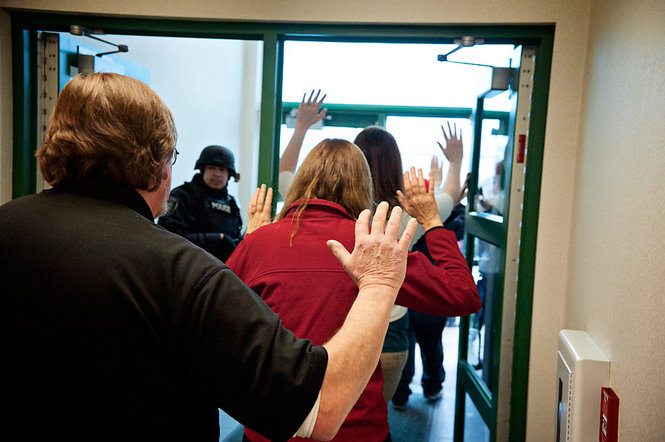
Description: Before the first day with students, my school had an active shooter drill. This is how it went down.

Fun Fact: This piece was chosen for a Freshly Pressed award by WordPress.com. It has the most likes (145) and the most comments (31) of any article I have published so far.


9) FIGHT CORPORATE EDUCATION REFORM AND MEME IT

Published: Oct. 19 20-beach-sea-photography
Views: 1,053

Description: Just a bunch of education memes I made – most of them before I started the blog.

Fun Fact: This was meant to be a toss off – somewhere for me to keep track of my memes. It was unexpectedly popular and many of these memes keep popping up in unexpected places to this day.


8) TOXIC TESTING MY KINDERGARTEN TOT – OR DADDY DON’T PLAY THAT

Published: Dec. 15  76754238
Views: 1,071

Description: It’s a surreal experience for a teacher to attend a parent-teacher night for the first time as a parent. From a daddy’s eyes, there’s no choice but to question the value of standardized testing in Kindergarten.

Fun Fact: This was so personal it was very hard to write. I didn’t think anyone would care. I was wrong. It’s been published widely beyond my blog.


7) TRACKING, TESTING AND THE MYTH OF MERITOCRACY

Published: Sept. 7  sad student
Views: 1,316

Description: When one of my students earned outstanding grades in my class last year but was denied a place in this year’s advanced class because of low standardized test scores, I took action.

Fun Fact: This piece really angered people on Facebook for the injustice this student faced. I received a plethora of comments and messages from others who had gone through similar situations.


6) A MOMENT OF SILENCE FOR MICHAEL BROWN

Published: Nov. 26  140824-michael-brown-4p_98a645e4e00131864161045b0edd09e7
Views: 2,052

Description: My students were so depressed by the Grand Jury decision not to hold a trial for the police officer who killed Michael Brown, I had to address it in class.

Fun Fact: I received more hate mail for this article than any other. It was widely published – even in the Washington Post. I had to stop reading the comments after a while. Many thanks to those who don’t want my head for doing this.


5) THE REAL AMERICAN EDUCATION CRISIS

Published: Aug. 3  Arne Duncan
Views: 2,131

Description: I got so sick of hearing corporate education reformers go on TV and talk about our failing schools. Yes, they’re failing because of education policies that don’t work that we refuse to replace.

Fun Fact: This was something of a slow burn. At first, it didn’t receive much attention, but I was surprised to see that views continue to trickle in daily.


4) MERRY CHRISTMAS. WE’RE STEALING YOUR SCHOOLS

Published: Dec. 27  feb5a53244c611e48eca12313d21419c
Views: 2,949

Description: My continuing coverage and outrage at the Commonwealth of Pennsylvania’s overreach to steal York City Schools away from taxpayers and give it to a failed charter school operator.

Fun Fact: My most recent post, widely published. I have been one of very few writers sounding the alarm for months. Finally, the nation seems to be paying attention.


3) THE BEST EVIDENCE AGAINST COMMON CORE

Published: Oct.4  Classroom-Management2
Views: 3,121

Description: Common Core is nonsense. To see that all you have to do is step in a classroom. Unfortunately that’s one thing the authors of CCSS have never done.

Fun Fact: I knew I had a winner from the second I posted this. It took off like a rocket. It has also been widely published and debated – one of the most popular pieces on the Badass Teachers Association blog. This is the only article I know of to inspire another blogger to write a complete piece attempting to debunk it.

2) CHECK YOUR WALLET – YOU TOO CAN BE AN EXPERT ON TEACHER TENURE

Published: Oct. 24  0714_wallet-open-money_485x340
Views: 6,070

Description: When Time Magazine promoted tech millionaires’ plan to improve education by attacking teachers, I exploded in fury. The result is this angry diatribe taking them to task point-by-point.

Fun Fact: Hugely, popular, widely published and almost universally praised by teachers and teachers groups. This lead to my involvement helping craft a response to the Time article published in the magazine along with my fellows at the Badass Teachers Association.


1) THE FINAL STRAW: CANCEL OUR LABOR CONTRACTS, WE CANCEL YOUR TESTS

Published: Oct. 11  the-straw-that-broke-the-ca1-300x273
Views: 10,910

Description: When Pennsylvania cancelled its contract with Philadelphia teachers, I saw the writing on the wall. If they can do that, teachers need to stop giving them the ammunition. They need to refuse to proctor the standardized tests being used to unjustly label our schools failures and justify the elimination of our collective bargaining rights.

Fun Fact: This is easily my most popular article yet. For a few weeks I was something of a folk hero. I saw my words memed by others and this piece appeared almost everywhere. Originally, I had debated publishing it at all thinking, “Who am I to tell teachers what they should do?” But my advice turned out to really hit a nerve. Teachers are dying to opt out of standardized testing. All it will take is one spark. One tiny spark.


Life or Death Professional Development

12184861-standard

You know what’s funny about school shootings?

It’s the only time the public still universally loves teachers.

We don’t trust them with collective bargaining rights. We don’t think they deserve a decent salary. Heck! We don’t even trust their judgement to design their own teaching standards, lead their own classrooms or be evaluated by their own principals!

But when armed assailants show up at school, then we think teachers are just great.

When angry teens arrive rifles strapped to their trench-coated backs, carrying duffel bags full of ammunition – then teachers are heroes.

I guess you can’t standardize your way past a bullet.

My school district had an outstanding training today. Administration brought in current and retired FBI agents, local law enforcement and EMTs to practice active shooter drills with the teachers.

We spent the morning learning about common factors between various school shootings, what to look for to stop the violence before it even begins and what strategies we should consider if we’re ever in such a situation.

This may sound a bit vague but the trainers asked us specifically not to give away the details. They fear if too much of this becomes common knowledge, mass shooters will better be able to prepare for their killings. So in deference to law enforcement, I’m not going to get into any specifics that might help a shooter increase his body count.

The afternoon was taken up with various scenarios. We were split into groups and given roles to play as a law enforcement officer took on the role of a school shooter.

The officer had a gun filled with blanks. We were given the opportunity to hear what it sounds like to have a gun go off in our building at various distances. It certainly wasn’t what I expected but gave us an excellent point of reference in case the real thing ever happened.

Probably the most frightening scenarios were in our own classrooms. I was sent to the room where I teach with a group of teachers who would play the role of students. Then we practiced locking down.

When the announcement was made, I locked my door, had the “students” turn over the desks for cover and turned off the light. One of the “students” was an army veteran so he tied his leather belt to the doorknob making it harder to open.

We heard the shooter walking the halls, screaming at others, even knocking on our door and trying unsuccessfully to get inside.

However, in the very next room, he broke in causing real damage to the door. He made the teachers kneel on the ground and asked them if they had children, if they wanted to live before shooting them with blanks.

When it was over, their faces were bloodless and scared.

During another scenario, I was only able to save one student in my room before the shooter arrived. I looked right at the shooter before slamming my door shut. There was just no time to do more.

The two of us hid along the wall with the lights out. We even tried our army friend’s belt trick but it did no good. The shooter broke through the door breaking the belt. I had my chair raised above my head and brought it down gently on his gun arm as he entered the room.

He turned to me and said “that was a good idea,” before shooting me. In my defense, had this been real and not practice, I would have brought the chair down with much more force. But dead I remained until police swept the room and the scenario ended.

A friend of mine in another room said the shooter entered her classroom and asked, “Who’s the teacher!?” My friend rose from the floor and said it was her. He took her outside of the room at gun point, turned her around and told her to run. She said she tried to follow his directions but her legs barely obeyed her. She doesn’t remember if he shot her.

Others froze in the halls against lockers or on the floor becoming easy targets as the shooter approached.

At one point he yelled, “Where’s the principal!?” Another friend calmly gave him directions how to get to the office. “Just go out these doors, make a left…” But by then the principal had already run from the building. She admitted to feeling horrible after she was safe.

We did a few other scenarios where the shooter approached us in areas where there was much less cover and you had to decide immediately what to do, where to go. It became something of a mad dash. One of the teachers even fell and broke her nose. She was treated on the scene by EMTs and taken to the hospital.

All-in-all, it was a thoughtful and fascinating training. It’s unfortunate we need to take the time away from academic concerns, but it is necessary. Our trainers called it “fear inoculation.” They said it would help us be less frightened, more able to act if the real thing ever were to happen.

The irony is that our public schools ARE safe – safer even than our homes. You have a better chance of being struck by lightening than you do being involved in a mass shooting. But these things do happen and it’s best to be prepared.

It certainly brought home the experience for me. I know what I’d do. I’d protect my students with my last breath. I think most teachers would. It’s who we are.

We don’t get into teaching for the salary or tenure. We certainly don’t do it for the standardization, dwindling autonomy, and fading professional regard.

We do it for the children.


I was honored to have this article featured on Freshly Pressed.