A Lesson in Resistance – The Baltimore Uprising Comes to my Classroom

Black_Lives_Matter


There was anger in the air.

You could almost taste it.

The children filing into the classroom were mumbling to each other, gesticulating violently, pointing fingers.

And out of all that jumbled noise – like a TV showing a scrambled channel – only one word came through clearly.

Baltimore.

The bell rang its muffled cry – just another dissonant note lost in the chatter.

I held up my hands and began to quiet them.

But then stopped.

Exercises about vocabulary, analogies, sentence construction and figurative language waited patiently on the board. They’d have to wait until tomorrow.

There was something going on here more than just teenage drama. My middle school kids were shaken and upset. As a white teacher who presides over classes of mostly minority students, I shouldn’t have been surprised that the events in Baltimore would weigh heavily on their minds. They were on mine, too.

So I quieted my 8th graders with a question: “Are you talking about Baltimore?”

A collective shout of various disconnected assents.

“Who can tell me what’s happening there?” I asked.

They quieted and raised their hands.

We were back in school again.

They told me what they knew, which was surprisingly little. They knew people of color were rioting in Baltimore. They thought a black man had been shot.

I said, “He wasn’t shot. Does anyone know his name?”

No one did.

“Has anyone heard of Freddie Gray?” I asked.

None of them had. So I told them.

I told them that Gray was a 26-year-old black man in Baltimore who died under mysterious circumstances while in police custody. I told them he was arrested because he met an officer’s eye, got scared and ran. The police arrested him and found a knife on him.

I told them there was a cell phone video of Gray being arrested. He was being dragged to the police car screaming in pain. After about 30-45 minutes he was taken to the hospital. His spine was 80% severed from his neck. He had a bruised larynx and broken vertebrae. He eventually died from his injuries.

They wanted to see the video. At first I refused because I clung to some optimistic hope we might get back to my lesson plans. But one look at their eager faces and I gave in.

I have never heard them so silent. Never. They watched the video and an accompanying news report as if they were the about life and death. I guess they were.

Then we went around the room discussing what we’d seen and what it meant.

More than anything, I just let my kids talk.

You’d be amazed at what they had to say. Some highlights:

  • It’s really hard to be a black person in America. Black people – especially boys – are being murdered by the police. They assume if you’re sagging your pants, you have a gun on you.


  • White people can put their hair in cornrows and dress “ghetto” but when they change their hair back and put on different clothes, they’re still white. I can’t change my face. The police still look at me like I’m an animal and a criminal.


  • Lot of boys I know sell drugs so they can support their mommas. It’s not for them. They want their mommas to have it easier. They do it out of respect for all their mommas have sacrificed to bring them up and feed them.


  • There’s no such thing as race. It’s just a color. We’re all the same.


When it came to the riots, the class was sharply divided – and not on racial lines.

Some kids said that people rioting in Baltimore are being “trashy” and “ghetto.” They’re making black people look bad. “How does stealing the new Jordan’s help Freddie Gray?”

Others thought the violence was completely justified.

In fact, some of my girls were so angry they wanted to go to Baltimore and join the tumult. They were so mad, they wanted to ditch school and riot right here in Pennsylvania.

“This didn’t start with riots,” I told them. “It started with protests. Can someone tell me the difference?”

They calmed again and tried to answer the question.

We started to define both terms. We decide that a riot was chaos, unorganized and had no purpose. A protest was just the opposite – organized and purposeful.

The anger resurfaced.

“I don’t care, Mr. Singer!” a big girl in the back shouted. “They always be out to get us, and when it goes to court no one does nothing!”

I pointed in her direction and nodded. We talked about it. Many felt the same way. If you can’t trust the police and the courts, who can you trust?

I moved forward into the middle of the room.

Dr. Martin Luther King said, ‘The arc of the moral universe is long, but it bends toward justice.’ Does anyone know what that means?”

We decoded it. We decided it meant that it might take a long time, but justice usually wins in the end.

I nodded. 

I asked them if Dr. King ever rioted. They said no. I asked them if Dr. King ever protested. They smiled and said yes.

We talked about the Civil Rights movement. We talked about how organized, peaceful protests won us many of the rights we have today. We talked about Mahatma Gandhi and how passive resistance won the country of India.

And then the talk changed.

No more talk of riots.

We talked about protests – what they looked like today and how they worked.

“I’m going to go down Main Street and protest this Sunday,” another girl said with tears in her eyes. “I have the right to think my thoughts and no one can stop me thinking them.”

Others mumbled agreement and said they’d go with her.

I asked her what she’d do – just march back and forth. She didn’t know. I told her about die-ins – how people would just drop to the ground and stay there to represent the people being murdered.

The class took it from there. They planned to do a die-in. They’d do it at the exact time Freddie Gray died. They’d bring signs that said “Black Lives Matter.”

I asked the girl who originated the idea if she went to church. She said she did. I told her she might want to tell them what she was planning. She should tell her parents. Maybe they’d join her.

She beamed. Her grandfather is a retired police officer and she thought he’d come along. She said she’d talk with her pastor Saturday.

All this in the space of 45 minutes. 

By the time the bell rang again, they were literally marching and singing “Protest!” as they walked off to lunch.

We never got to the planned lesson, but I’m not sure that matters.

Did I overstep my bounds as teacher?

I don’t think so. Something had to be done. These kids were hot. They wanted to tear something apart. But after our discussion they had an outlet, a plan.

Will they go through with it? I don’t know.

Frankly, that wasn’t the point. In the classroom, I’m not an organizer. I’m a teacher.

I’ve lost too many kids to the streets. Drugs, violence, neglect, juvenile detention.

“Promise me something,” I said in the middle of our discussion.

“Mr. Singer, it looks like your going to start crying,” one of them said awed and frightened.

“Please. Whatever you do, be safe,” I said.

“If a cop asks you to do something, you do it. Don’t run. Don’t yell and scream.”

“But, Mr. Singer!”

“Honey,” I interrupted, “I’m not saying to give up fighting for your rights. But you have to live long enough to tell your story. Freddie Gray isn’t around to have his day in court. Neither is Trayvon, Michael or Eric. You know what I mean?”

They nodded.

Teachers can’t make anyone to do anything.

The only thing they can do is get you to think.

I did that. I just hope it’s enough.


NOTE: This article also was published on Commondreams.org, ConversationED, the Badass Teachers Association blog and I talked about it at length during an interview on the Rick Smith Show.


Oooh! Scary! What Would Happen if Pennsylvania Passed the Wolf Budget?

campfirestorrd

Gather round the campfire, children, and hear a story to chill the very marrow in your bones!

Let me turn off the lights and point this yellow flashlight beam on my face as I share a tale of terror straight from the Pennsylvania legislature!

Imagine – if you will – a Commonwealth that has invested in public education.

The schools are pristine palaces to learning and self-actualization.

Class sizes are down. We’ve rehired the 25,000 teachers we sacked four years ago to balance the books. All children get arts, music, science labs, foreign languages, sports and extra-curricular activities. Even amenities like school nurses and guidance counselors have been restored.

Children from all walks of life enter those hallowed halls and no matter their family background, parental education, income, race or social class, they leave fully functioning adult citizens ready to lead our state into a brighter future.

But!

Oh the horrendous but!

No one can afford toilet paper!

I know, children! It’s enough to shrink your sphincter with dread!

We’d pay for this educational utopia with an anal Armageddon!

Even the name of our fair state would have to change to Poopsylvania!

Educated urchins would roam the streets hunting for any scrap of angel softness. It would be bathroom chaos from the City of Phila-dookie-ah to the streets of Shittsburgh!

Because… TAXES!

Such is the horror story being told by Pennsylvania Republicans about Gov. Tom Wolf’s budget proposal.

They softly intone the words, “tax hike,” while squeezing the Charmin tightly to their chests.

Fortunately, they’re just talking out of their butts.

Gov. Wolf’s proposed budget WOULD increase education funding. In fact, it would heal the $1 billion in annual education cuts made by the previous administration.

To do so, the freshman governor has proposed an ambitious new tax plan.

Much income would be generated from a proposed severance tax on natural gas extraction, closing tax loopholes and other cost savings. However, the sticking point for fiscal conservatives is a plan to reduce local property taxes while increasing income and sales taxes.

“Tax hike!” they scream tearing out fistfuls of grey hair. But if you’re raising taxes on one thing and reducing them on something else, at the end of the day are you really raising taxes?

It depends.

In short, homeowner’s property tax bills will go down, but grocery bills will go up.

Some consumer analysts are projecting toilet paper, for example, to go up a whole six cents on the dollar!

This is where conservatives offer us a Sophie’s Choice: will your kids learn how to read and write or will you get to wipe your butt?

Apparently there is no middle ground.

But this isn’t a matter of opinion. It’s a simple question of math. Would most people save enough from the property tax reduction to come out ahead of the increased sales and income taxes?

The answer? According to the Wolf administration, the poor and middle class will end up paying less, while the rich will end up paying more. The average family would receive a net tax decrease of about 13%.

Tax savings would depend on several factors – income, whether you own or rent your home, which school district you live in, and how much you spend on taxable items each year.

If this seems too complex to you, far right think tanks have simplified the matter to a pure “The Sky is Falling” scenario.

The Heritage Foundation estimates Wolf’s budget would cost families an additional $1,400 a year. However, this estimate is highly contested. No one seems to be able to show where it comes from, how it was calculated or to prove that it truly takes into account the cost savings from reduced property taxes.

It’s an amorphous number, floated in obscurity in great need of being flushed away.

More over, these gloom and doom calculations are clearly politically motivated. A few years ago, Republicans proposed a similar plan, themselves!

That’s right! Conservatives had no problem offsetting property taxes with increased sales taxes when it was the GOP proposing it! However, when almost-the-same-plan comes out of the mouths of Democrats, it’s suddenly a three-ply catastrophe!

Property tax relief has been a major issue for both Democrats and Republicans in the Commonwealth for decades.

Pennsylvania has one of the worst tax codes in the country. Currently, the less income you bring home, the higher percent you pay in taxes.

This is true for taxpayers nationwide, but in the Keystone state we take it to a whole new level.

This is largely due to unequal property taxes. The Commonwealth’s poorest households pay nearly 4% of their total income on their homes, while the wealthiest pay just 1.6%. This is a much larger difference than in most states. Wolf’s new tax plan would address this inequality directly making for a fairer distribution of costs for the average resident.

The problem is even worse for our public schools that are forced to rely far too heavily on property taxes. The Commonwealth only pays 36.1% of the cost of education. This is far below the national average of 45.5%, and ranks 45th in the nation. Wolf’s budget would bring state spending up to 50% – more in line with what the rest of the country invests in its children.

Add to this a funding formula that would ensure poorer schools get a fair distribution of the pie, and you get a whole mess of education equity. A whole mess that Republicans want to wipe away.

It is a sad commentary on our right-leaning legislators that they’re pissing and moaning about putting back the funds this year that they had no problem stripping away four years ago.

After one term of a Republican governor, Pennsylvania is the laughing stock of the country in terms of education. We spend less on our poor students compared to our rich ones than ANY OTHER STATE!

That’s right! When it comes to cheating impoverished kids out of an education, we’re number one!

Nationwide, rich schools already spend on average 15.6% more than high poverty schools. But in Pennsylvania, the difference is 33%!

We are systematically short-changing our neediest children year-after-year, and there are actually people out there who can look at you with a straight face and complain about toilet paper!?

But you know what? Let’s entertain this criticism for a moment.

Let’s say that the Commonwealth Foundation, Americans for Prosperity and a host of other far right think tanks are correct. Wolf’s budget taxes things it shouldn’t.

Does that mean you scrap the whole education funding plan? Or does it mean you find the money elsewhere?

Do we just shrug, clutch the bathroom tissue to our chests and walk away? Or do we make education a statewide priority?

Even Wolf’s budget reduces taxes for corporations and big business. Perhaps we could generate some revenue there instead of in the toiletry aisle.

It’s funny how you never hear that offered as a solution.

The reason? They don’t give a shit about poor kids. Even if they had reams of toilet paper!

So the next time you hear someone try to sell you on this bogus bathroom Catch 22 – turn up your nose.

It’s not a question of toilet paper or education.

It’s not a question of the butt or the brain.

It’s a question of conscience.


NOTE: This article also appeared in the Badass Teachers Association blog.

The Worst Sort of Violence Against Children

school_and_TBI_iStock_000007171993XSmall

She was smiling and laughing, but her eyes were terrified.

Sitting in class among her fellow middle school students, her words were all bravado. But her gestures were wild and frightened. Tears were close.

So as the morning bell rang and the conversation continued unabated, I held myself in check. I stopped the loud rebuke forming in my teacher’s throat and just listened.

“You know that shooting at Monroeville Mall Saturday night, Mr. Singer? I was there!”

I swallowed. “My gosh, Paulette. Are you okay?”

She acts street smart and unbreakable, but I can still see the little girl in her. She’s only 13.

She slowed down and told us what happened; a story framed as bragging but really a desperate plea for safety and love.

She went to the mall with her mother. When they separated so she could go to the restroom, the gunfire began. She ran out and Mom was gone. She was ushered into a nearby store where the customers were kept in lockdown. She stayed there until the police cleared the mall, and it was safe to find her mother and go home.

A 17-year-old boy had gunned down three people. One was his target. The others were bystanders – parents who had gotten in the way. Now they were all in the hospital, two in critical condition.

And my student – my beautiful, precious, pain-in-the-butt, braggadocious, darling little child – was stuck in the mix.

I could imagine how scared she must have been separated from her mother, hiding with strangers as police swept the shops, food court and children’s play center.

Here she was telling the class her story and getting more upset with each word.

I gave her a meaningful look and told her we’d talk more later. Then I began class.

But I kept my eye on her. Was that relief I saw as the talk turned from bullets and bloodshed to similes and metaphors? Did the flush leave her cheeks as we crafted multi-paragraph theses? I hope so.

I think I know her pretty well by now. She’s been mine for two years – in both 7th and 8th grades. I even taught her older brother when he was in middle school.

I know she’s rarely going to do her homework – and if she does, it will be finished in the last 20 minutes. I know she’d rather be out playing volleyball or cheerleading than in school writing or reading. I know when she’s secure and when she’s scared.

And I know that today’s lesson will be a breeze for her. So why not put her in her comfort zone, show her things haven’t changed, she’s still the same person, she can still do this – nothing is different?

At least, that was the plan.

As any experienced public school teacher knows, you have to satisfy a person’s basic needs before you have any chance at teaching them something new. Psychologist Abraham Maslow’s Hierarchy of Needs is always at the back of mind.

Students must have their physical needs met first – be fed, have a full night’s rest, etc. Then they have to feel safe, loved, and esteemed before they can reach their potentials.

But meeting these needs is a daily challenge. Our students come to us with a wealth of traumas and we’re given a poverty of resources to deal with them.

How many times have I given a child breakfast or bought a lunch? How many kids were given second-hand clothes or books? How many hours have I spent before or after school just listening to a tearful child pour out his heart?

Let me be clear. I don’t mind.

Not one bit.

It’s one of the reasons I became a teacher. I WANT to be there for these kids. I want to be someone they can come to when they need help. It’s important to me.

But what I do mind is doing this alone. And then being blamed for not healing all the years of accumulated hurt.

Because that’s exactly what’s expected of teachers these days. Fix this insurmountable problem with few tools and if you can’t, it’s your fault.

I didn’t shoot up the mall. I didn’t pass the laws that make it so easy for kids to get a hold of a gun. I didn’t pass the laws that allow such rampant income inequality and the perpetuation of crippling poverty that more than half of our nation’s public school children live with every day. And I sure didn’t slash public school budgets while wealthy corporations got a tax holiday.

But when society’s evils are visited on our innocent children, I’m expected to handle it alone. And if I can’t solve it all by myself, I should be fired.

That is where I take umbrage.

The issue is violence but not all of it comes at the end of a gun.

Keeping public schools defunded and dysfunctional is also a form of violence. Promoting privatization and competition when kids really just need resources is also cruelty. Pretending that standardized curriculum and tests are a Civil Right is also savagery.

It’s called class warfare. Its most prominent victims are children. Its most active soldiers are teachers. And we’re on the front lines every day.

When the bell rang to end class, Paulette stopped by my desk.

I looked up at her ready to give whatever support I could. It was my lunch break, but I was willing to skip it and just talk. I’d get the guidance counselor. I’d call home. Whatever she needed.

But none of it was necessary.

“Are you okay?” I asked.

“Yeah.” She gave me a big smile and a deep breath.

I returned it.

Today would be alright. Tomorrow? We’ll meet that together.

But we sure could use some help.


NOTE: Names and other minor details may have been changed to preserve anonymity.

This Article was also published in The Progressive, Portside Navigator, Common Dreams, Public School Shakedown and the Badass Teachers Association blog.

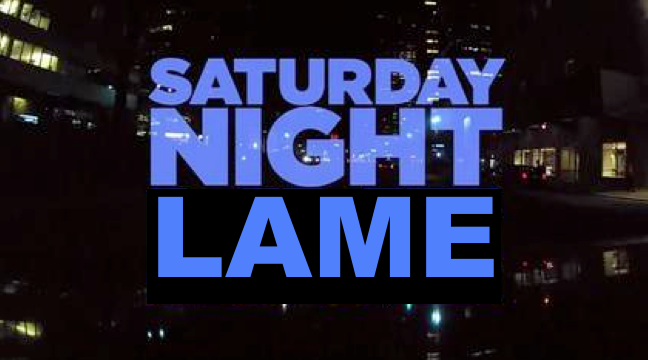
Saturday Night Lame – Sucker Punching Teachers for a Laugh No One Made

Screen shot 2015-02-03 at 5.20.57 PM

Go ahead.

Make jokes about teachers.

Please.

But make them fair. No sucker punches.

And – goddammit – make them funny!

However, all we got on Saturday Night Live this week during the “Teacher Snow Day” segment were unconvincing lame low blows.

In the rap video parody, we see educators boasting of all the money they’re making for doing nothing, telling their students to “go to Hell,” having sex on school property, using meth they made in the science lab, and bragging that there’s nothing you can do about it because they have tenure so can’t be fired – all while students have the day off because of snow.

Are you freakin’ kidding me?

As a public school teacher of more than a decade, I wasn’t laughing. Nor was I alone. Ratings plummeted yet again from an already dismal viewership.

I hesitated writing this article at all because so few people saw the segment the first time, and I certainly don’t want to encourage anyone to go back and view this groan-fest.

But address it I must, because it’s part of a larger problem: the idea that teachers are fair game as a target for just about any dishonest criticism you can imagine.

And that’s the problem – dishonesty.

Jokes work best when they attack the powerful, not the powerless.

That’s the whole point of satire – to allow an attack on the dominant from below. When a mighty person attacks someone less powerful, that’s not satire and it’s not funny. It’s bullying.

We all remember teachers from school. When we were students, they were authority figures and – as such – fair targets of criticism.

But in a larger social context, teachers are one of the most vulnerable and disenfranchised groups in our society.

Educators are under constant onslaught from all sides.

Every problem of our public school system is heaped on top of them. No matter what’s wrong, it’s always their fault. And we’re quick to prove it by stacking the cards against them.

Just look at how we evaluate them. Our federal and state governments mandate we base teachers’ effectiveness substantially on their students’ standardized test scores. Statisticians call this approach “junk science” because it uses a test created to evaluate students as an assessment for something it was never meant to assess – their instructors. But that doesn’t stop the continued use of these value-added measures to “prove” how crappy teachers are at their jobs. And when educators gather together in a union to demand real proof of wrongdoing before they can be fired, they’re accused of insisting we give them a job for life.

Teachers don’t even have control over their own curriculum anymore. In many schools, educators can’t choose which books to use, which skills to teach or how to assess student learning. Often they’re even denied the choice of their own words since they’re forced to read from scripted lessons provided by multinational for-profit testing corporations.

Education policy doesn’t come from teachers. Do you think educators came up with Common Core? Of course not! That was a billionaire philanthropist’s pet project created with the help of think tanks and policy wonks. But teachers are expected to follow it regardless of their years of classroom experience that tell them it’s nonsense – at best – and developmentally inappropriate – at worst!

And if a teacher wants to speak up, the venues open to him are few and far between. Turn on any media program about education and you’ll see half a dozen talking heads offering their opinions but not one of them will be a teacher! Heck! Congress just held hearings on the federal law that governs K-12 schools (ESEA) and only let a handful of teachers testify.

Why?

Because if they don’t blame teachers, they’d have to face the facts of income inequality and child poverty.

More than half of all public school students are impoverished. Instead of providing extra resources to help those students, budgets have been slashed. Less tutoring. Less arts and music. Less extra curricular activities. Less social services. But instead larger class sizes! And we expect teachers to magically make our uncaring budgetary priorities work!

Yet, the “not ready for prime time” crew at SNL thought it was funny to target one of the only groups to stand up for these children.

You’d never see them make jokes at the expense of our troops, but teachers are soldiers on the front line of the war on poverty.

Yes! Soldiers!

When troubled teens denied the proper mental health services use our lax gun laws to take a semi-automatic with them in their book bags to school, it’s these same teachers who literally give their lives to save our children!

And these unsung heroes, these public punching bags, these scapegoats for all of society’s ills were your choice of target for feeble clowning?

I expect that from dark money fueled privatizers and corporate backed union busters. I don’t expect it from someone who’s supposed to help me get through another week with a few good laughs.

Snow day? You should have called it snow job because the only ones laughing were the Koch Brothers!

Sure, if you want to joke that teachers are too stuffy, fine! We deserve that criticism. As a whole, we are unhip, mostly white, sometimes pedantic and give too much homework.

But don’t you dare criticize us for being uncaring or lazy or criminal.

While you’re making jokes, our nations children are forced to go without – unless a teacher somehow manages to help.

That’s no joke, and the punchline may well be the future of this nation.

So while I’m out using my own money to buy supplies for my students…

While I’m staying hours late at school almost every day…

While I’m counseling a student with severe emotional problems…

While I’m doing my job, why don’t you do yours, SNL?

Make me laugh.


This article was also published in the LA Progressive.

Dissent – The Most “Un-American” American Value

Michael-Brown-Protest-Police

Shut up!

Don’t you know that what you’ve just said has caused this horrible tragedy!?

It’s ironic that in a country born from dissent, the most popular message the powerful have for the powerless is “shut up.”

When two NYPD officers were ambushed and murdered by a madman on Saturday, the media was quick to point out his motive. Allegedly, the “execution style” shootings of Officers Rafael Ramos and Wenijan Lui were in retaliation for the deaths of Eric Garner and Michael Brown – unarmed black men killed by police.

When Mayor Bill de Blasio entered a press conference to speak about the murders, police turned their back on him. The reason? The mayor had been outspoken against a grand jury decision that Garner’s death didn’t need to be investigated with a full criminal trial of the officer who killed him.

Criticism was even worse in an internal department memo which accuses de Blasio of having his hands “literally dripping with our [NYPD’s] blood because of his actions and policies” and that the NYPD is now “a ‘wartime’ police department”  that will “act accordingly”.

It’s beyond ludicrous.

What does that even mean? Who exactly is the NYPD at war with – the people its officers swore to protect and serve?

But perhaps more troubling is the insinuation of guilt – that the mayor caused this tragedy because of his criticisms of police brutality.

Across the country, on social media, between friends and family the same pattern emerges. People complain the death of these police officers is because of the nationwide protests against a wave of police killings of unarmed black men.

If only people hadn’t spoken up, Ramos and Lui would still be alive!?

America has a history of crazy people doing all kinds of crazy things for just as many crazy reasons.

When Ted Kaczynski, the “Unabomber,” killed 3 people and injured 23 with home-made bombs because of his hatred of modern technology, no one blamed Apple computers.

When John Hinckley shot President Reagan to get the attention of Jodie Foster, no one blamed the Academy Award winning actress.

When Brenda Spencer fatally shot a principal and custodian and injured eight children and a police officer from her home across the street from a school because she “didn’t like Mondays”… Well, we still have Mondays.

But suddenly when a lunatic’s motives are politically expedient, they’re justified.

Millions of people all across the country have taken to the streets to protest a racist system of justice that doesn’t hold police accountable for killing unarmed black men. We could confront that system and change it, or we could try to shush those calling for reform.

What’s worse, protestors are shamed into silence. Before they can continue to air their grievances, they’re told they must stop and recognize the tragedy of Ramos and Lui’s death. Of course these murders were despicable! But what does that have to do with us?

Once again the powerless have to repeatedly condemn violence while the powerful have no such mandate put on them. Ex-Ferguson Police Officer Darren Wilson hasn’t offered any regret over his fatal shooting of Michael Brown. He went on national television and said he’d do the same thing again.

If people are worried about the negative image of police instilled by these protests, perhaps the cause isn’t the protests. Perhaps the cause is the negative actions of some police.

Before this story broke, the nation was reeling from the Senate Intelligence Committee report on CIA torture. The report details actions by CIA officials including torturing prisoners, lying to government officials and the media, harsher treatment than was previously disclosed, and the failure of the program to obtain accurate information.

Senator Dianne Feinstein made the rounds explaining the report to congress and the media. CNN’s Wolf Blitzer echoed many pundits when he asked her if the release of the report made America less safe.

What a stupid question!? The report didn’t make America less safe. The fact that America tortured people made us less safe!

But again we have attempts to squash dissent with appeals to shame and fear.

Why did you speak up, Sen. Feinstein? If you had remained silent about the heinous actions done in our name, we would remain safe and secure.

We used to hold freedom of speech as one of our most cherished values. It was a point of pride. Now it’s a dusty trophy on the mantle that we rarely practice in public. It’s just not worth the effort.

That’s a lesson North Korea learned this week. After hacking Sony Pictures and making threats against movie theaters that showed the Seth Rogan comedy “The Interview,” the film company pulled the picture from distribution. After all, the movie made fun of Kim Jong-un in a plot where the American government fictitiously planned to assassinate him with late night talk show hosts.

There was a time when the United States would not abide by such terrorism and threats.

That time has passed.

We not only bow down to foreign powers, we attempt the same kind of coercion for our own people.

How dare you say THAT! You are causing harm by speaking THIS WAY.

Imagine if we thought that way in 1776.

How dare you speak out against Great Britain! Sure, we have no say in our own government, but speaking out will only bring on more tragedy.

Dissent has truly become the most “Un-American” American value.


This article was also published in the LA Progressive and Badass Teachers Association Blog.

A Curriculum of Compassion

05_A1CP_t400

Rayvin was back.

I had been told to expect her today. She’d been on my class roster since the beginning of the year but this was the first time I had seen her in person.

Such sad eyes. Such a defeated look on such a young, beautiful face.

“Welcome back!” I said smiling and picking up her loose hand to give it a silly shake.

“I thought we might see you today!” I said ushering her to a choice seat in a front corner.

She said nothing.

Rayvin had been in my class last year when I taught 7th grade. She had disappeared about halfway through the year – sucked into a mire of horrific circumstances, homeless shelters and life experiences no one should have to endure.

Now that I was teaching 8th grade and she had come back to the district, she had been returned to me like a dead letter.

The poor thing slumped into the seat I had given her. But I wasn’t about to give up.

I gave her an assignment I knew she’d enjoy. I remembered she liked to read horror stories so I put a book under her nose and opened it to Edgar Allan Poe.

She obeyed with no comment. But I wasn’t about to give up.

As the class discussed the story, I offered her a chance to participate. After every question I’d ask, I let me eyes casually fall on her face to see if she was interested in commenting before giving someone else a chance. She met my gaze but said nothing.

When class was over, she crumpled her papers in her hand like a tube.

Just as she got up, I asked, “Would you like a folder?”

She stopped as if she had heard me for the first time.

“Yes,” she almost whispered.

“Would you like a three-ring binder?” I asked and reached under a desk to a pile of supplies I collected for just such occasions.

Her face lit up into a smile.

I don’t remember what she said after that. I gave her the binder and she left.

It was the best moment of my day. The best moment of my whole week.

I had gotten through to her. She knew that someone – SOMEONE – cared.

THAT’S why I teach.

We waste a lot of talk in academic circles on curriculum and standards and lesson plans. But in the classroom, most of the time it’s all empty words.

Teachers have to make lightning fast decisions in real time. They can’t refer to a workbook, their notes or government-sanctioned benchmarks.

They have to appraise the situation and act.

If a student is misbehaving, the teacher has to quickly make a judgement why it’s happening, who it’s affecting and what’s the best course to correct it before it spreads out of control.

If a student isn’t acting like his-or-herself, the teacher has to mentally take note of the situation, compare it to past knowledge of the child’s history and then decide how best to help the young person without bringing down undue attention.

If a student doesn’t understand something, the teacher has to find out where the misunderstanding comes from, explain away the troubled spot and then gauge to see if his action has solved the problem.

And all in the blink of an eye.

It’s one of the things I love about teaching. It’s also why not everyone can do it.

You have to not only live in the moment but persevere. You have to be there for all 20-or-30-something students as well as you can, as quickly as you can, at the same time.

It’s a rush, let me tell you.

It’s also draining and frustrating and painful.

But it’s so worth it.

You get to help people – people who really need it. Not at a remove. You get to stand in front of those in need and help them up – even if they don’t know they’re on the ground.

There is such joy in what I do.

I wouldn’t trade it for the world.

I’ll keep doing it even though my state and local government are determined to evaluate me to death with mountains of paperwork and statistics that would make even a statistician weep.

I’ll keep doing it even though my duly-elected school board publicly bad mouths their staff and refuses to even negotiate with us in person so we can afford to keep our own families.

I’ll keep doing it as long as I can.

One day I may not be able to do it anymore.

My health suffers. Time with my wife and daughter gets sacrificed.

But no matter what happens, I helped Billy express himself in writing. I made shy Kelcey feel safe enough to share her journal with the class. I showed Shaun that sometimes stories are about people just like him.

And I made Rayvin smile.

That’s so much more than enough!


NOTE: In an effort to preserve students’ anonymity, names and unimportant details may have been changed.

This article has been published in Public School Shakedown and the Badass Teachers Association blog.