Taking Back Your Name – The Pros and Cons of Political Correctness

introduction


“What I think the political correctness debate is really about is the power to be able to define. The definers want the power to name. And the defined are now taking that power away from them.”
Toni Morrison

“Never trust anyone who says they do not see color. This means to them, you are invisible.”
Nayhyirah Waheed


Call me Steve.

Not Steven. Not Stephen. Certainly not Steveareno.

It’s a preference. My preference. My choice. And if people want to be in my good graces, they’ll comply with my wishes.

There’s nothing strange or unreasonable about this. We do it all the time – usually when we’re being introduced to someone.

“Hi. I’m Steve.”

“Nice to meet you, Steve. I’m Elisha.”

“Elisha? What a beautiful name!”

“Thank you, Steven.”

“Please. Call me Steve.”

Is there anything wrong with that? Does that stifle conversation? Does it stop people from talking freely to each other?

No. Certainly some names are hard to pronounce or – in my case – remember. But overcoming those hurdles is just common decency. It’s not too much to ask – especially if you’re going to be dealing with this person for an extended length of time.

The idea that allowing people to define themselves somehow shuts down conversation is rather strange. But it’s the essence of opposition to political correctness.

“Political correctness is tyranny with manners,” said conservative icon Charlton Heston.

I wonder if he would have felt the same if we’d called him Charlie Hessywessytone.

A more fleshed out criticism comes from President George H. W. Bush who said, “The notion of political correctness declares certain topics, certain expressions, even certain gestures off-limits. What began as a crusade for civility has soured into a cause of conflict and even censorship.”

Is that true? Is political correctness really censorship? That’s the conflation made by many conservatives and even some liberals. After all, popular Left-wing comedian Bill Maher sarcastically calls his HBO show “Politically Incorrect,” and he often rails against the practice.

There’s a kernel of truth to it. We are asked to change the way we speak. We’re asked to self-censor, but we already do this frequently without wailing against a loss of free speech.

Human beings are subject to various impulses, but as adults, we learn which ones we can act on and which we shouldn’t. I may think it would be hilarious to run into a crowded movie theater and yell, “FIRE!” However, I know that doing so – while possibly funny to a certain kind of person – would result in injuries and trauma as moviegoers stampede out of the theater. So I don’t do it. Is that censorship? Maybe. But it’s censorship with a small c.

The Hestons, Bushes and Mahers of the world seem to think political correctness is more like Capital C Censorship. But this is demonstrably false.

That kind of Censorship is the act of officials, possibly agents of the government, a corporation or some other formal bureaucracy. But political correctness has nothing to do with officials. There are no censors. There are only people who ask to be named a certain way.

A censor looks at a news report of military operations in Iraq and deletes material that would give away the army’s location. Political correctness is nothing like that. It involves someone asking others to refer to themselves THIS WAY and not THAT WAY.

The penalties for violating Censorship are official. Ask Chelsea Manning who is serving a 35-year prison sentence for doing just that. The penalties for violating political correctness are social. You may be criticized, condemned or disliked.

If you criticize Manning for releasing classified documents to Wikileaks, you’re not violating political correctness. That’s your opinion, and you’re entitled to it. However, Manning is a trans woman who is going through hormone replacement therapy. If you refer to her as “him” you are violating political correctness. You’re naming her in a way that violates her wishes. The penalty is not a prison sentence. It’s a sour look.

So political correctness is not Censorship. In some ways, the confusion comes from the term “political correctness,” itself.

Though its origins are hard to pin down, it appears to have been coined by the Soviets to mean judging “the degree of compatibility of one’s ideas or political analysis with the official party line in Moscow.” At least that’s what the International Encyclopedia of Social Studies says.

The term came to prominence in the United States in conservative writer Dinesh D’Souza’s book “Illiberal Education.” He disparaged affirmative action as a kind of political correctness that gave preference to (what he saw as) unqualified minority students over whites in college admissions.

So the first mention of the term in the USA was simply to disparage liberal political policies. It was a ham-handed way of comparing the Left with the Soviets. Yet somehow this term has become the handle by which we know simple civility. It’s kind of hard to feel positively about a concept that begins with a mountain of unearned negative connotations.

Conservatives know the power of getting to name something. It’s their go-to propaganda tactic and lets them control much of the debate. For instance, that’s why the Right loves to call Social Security an “entitlement.” There’s truth to it because you’re entitled to getting back the money you pay in, but it’s full of unearned negative connotations as if these people were somehow demanding things they don’t deserve.

In essence, political correctness shouldn’t be political at all. It’s just kindness. It’s just being a decent human being. Don’t purposefully call someone by a name they wouldn’t appreciate. Respect a person’s ownership of their own identity.

And for some people that’s hard to do. Their conceptions of things like gender, sexuality, race and religion are extremely rigid. The only way to be a man is THIS WAY. The only way to be spiritual is THAT WAY. But if they give voice to these ideas in the public square – especially in the presence of people who think differently – they will be frowned upon.

But is this really so dissimilar to the crowded movie theater? Refusing to acknowledge someone else’s identity is harmful to that person. It tramples the soul similarly to the way their body would be trampled in a stampeded exit. So you shouldn’t do it.

The result is an apparently much more tolerant society. It’s no longer okay to use racial, cultural, gender and sexual stereotypes in public. You’re forced to give other people consideration – or else face the consequences of being disliked. And on the surface, that’s a much more inviting world to live in.

However, there is a glaring problem. In some ways, this has made public discourse more antiseptic. People don’t always say what they mean in the public square. It’s not that they’ve changed the way they think about the world. They’ve just learned to keep it to themselves until they’re around like-minded individuals. They reserve their racist, classist, sexist language for use behind closed doors.

This is why when I’m at a party peopled exclusively by white folks, some partygoers may let racial epithets slip out. And we all laugh nervously to be polite. Or maybe it’s more than politeness. Maybe for some it’s to relieve the tension of such refreshing candor like taking off a girdle. Fwew! Here, at least, I can say what I really think without having to worry about people looking down on me for it!

Since such reactions occur mostly in homogeneous groups, it makes the world look much more enlightened than it really is. Pundits and policymakers look around and cheer the end of these social ills when they haven’t ended at all. They’ve merely gone underground.

And so we have an epidemic of colorblind white people who can’t see racism because of the gains of political correctness. Somehow they forget those unguarded moments. Somehow they haven’t the courage to examine their own souls. Or perhaps they don’t care.

And so we have the conundrum: which is better – to live in a world where all individuals have the right to name themselves or to live in a world where our most basic prejudices are on display for all to see?

Personally, I pick political correctness, and here’s why.

Words are important. We think in words. We use them to put together our thoughts. If we continue to respect individuals’ names in word, eventually we’ll begin to do so in thought and deed.

This isn’t mind control. It’s habit. It’s recognizing an ideal and working toward it. As Aristotle taught, the way to become a good person is to act like one. Eventually, your preferences will catch up with your habits.

I think that’s what’s happening today. Look at the children. They’re so much less prejudiced and racist than we, adults. This is because they’ve learned political correctness first. They didn’t have to unlearn some archaic white-cisgender-centrism. This is normal to them, and I think that’s a good thing.

Obviously some people will balk at this idea. They will look at this ideal as reprehensible. They want to return to a world where women were little more than property, a world where black people knew their place, where sexual identity was as simple as A or B.

But I think most of us recognize that this is not a world where we’d want to live. Modern society can be scary and confusing but trying to respect everyone as a person isn’t a bad thing. It’s consideration, concern, warmth.

Perhaps the best way to love your fellow humans is to call them by their proper names.

The Best Way To Honor Tamir Rice is by Reforming Our Broken Justice System

Memorial for Tamir Rice, 12-year-old shot dead by Police in Cleveland

Michael Brown – no indictment.

Eric Garner – no indictment.

Sandra Bland – no indictment.

And now Tamir Rice.

How many times will our justice system refuse to charge police with killing unarmed black people?

What will it take for our courts to accept the responsibility for at least attempting to seek justice?

When will our judicial system deem the death of people of color at the hands of law enforcement to at least be worthy of a trial?

Brown had no weapon but was shot to death by law enforcement.

Garner had no weapon but was choked to death by police.

Bland had no weapon but was found hanged in her jail cell after being assaulted by police during a traffic stop.

Rice had a legal pellet gun that was not pointed at anyone yet he was shot to death two seconds after police arrived.

This is not justice. This is a national travesty that continues to be played out daily. How many more human beings will be ground under the boot of a system that finds no value in their lives?

And don’t give me any of your excuses! Police were just doing there job! These people should have listened to law enforcement! Rice shouldn’t have had a pellet gun!

Listen to yourself. Lethal force is the only option!? Police have no tasers anymore, no pepper spray? Their guns only fire death strokes? They can’t hit non-vital areas meant to incapacitate but not kill?

What a bunch of cowards we are if we don’t demand police publicly explain themselves when they kill another human being – especially someone who posed them no bodily harm! How morally and spiritually bankrupt a nation we are not to weigh the evidence and decide guilt or innocence! “Freedom and justice for all!?” What a sham! What a lie! What a farce!

I don’t know about you, but I am sick of it. I refuse to put up with it for even one more day.

But what can we do?

No. Really.

When reading about these government sanctioned murders, I feel helpless. I’m just one person. What can I do to stop it?

Here are a few suggestions:

1) Ban Grand Juries in Fatal Shootings by Police

Connecticut and – most recently – California already have laws to this effect. District attorneys should have to decide whether officers face criminal charges when they kill people in the line of duty. This decision should be made in the light of day in full view of the public and not behind the closed doors of a grand jury hearing. These hearings involve no judges or defense attorneys and the transcripts of these proceedings are almost always sealed.

The problem is that district attorneys work closely with police and depend on them for political support. Sending cases like these to a grand jury gets the DA off the hook so he or she doesn’t offend the officers.

If the decision had to be made in public, voters could hold DAs accountable. With the grand jury system, there are no consequences because we have no concrete evidence about what happened during the proceedings, what arguments were made, by whom and who made what decisions. That’s a poor breeding ground for justice.

2) Construct a National Database on Police Killings

Right now there is no way to tell exactly how many people are killed by law enforcement in this country every year. Moreover, there is no way to tell if officers involved in these killings were ever charged.

Information can be compiled state-by-state, often through unofficial and anecdotal sources. However, this does not nearly give the full picture of what is going on. The people of this country deserve to know the full scope of the issue. That’s why apologists often claim these sorts of incidents are relatively rare and blown out of proportion by the media. But are they? A national database would prove the matter one way or the other.

Federal law from 1994 already calls for just such a database, yet it has not been funded. This may be due in part to the cost. A pilot study found that it would take a decade and cost $1 billion.

Certainly this is not a quick fix. But don’t we deserve to know this information? And isn’t it suspicious that nothing is being done to compile this data now?

3) Overturn Graham v. Connor

Perhaps the biggest obstacle to seeking justice for those unnecessarily killed by police is a precedent set by the U.S. Supreme Court 25 years ago. Graham v. Connor effectively ruled that police can kill you if they feel you present a “reasonable” threat to their own lives.

The problem is the word “reasonable.” What does that mean? In court, it can be almost anything. It’s a “Get Out of Jail Free” card to police for wanton murder. Justice Sonia Sotomayor calls this a “Shoot first, think later” approach to policing. She says this violates the Fourth Amendment which stipulates what counts as “probable cause” for police actions including arrests. However, Sotomayor is the only sitting justice publicly to take this stance.

This is why without more robust protections for citizens and more realistic expectations for law enforcement, even when cases like these go to court, they rarely result in police convictions.

But courts change. Public opinion can move mountains if given enough time. We need to start putting on the pressure.

Organize, people. Start writing letters. Write petitions. Hold rallies. Meet with your Congress-people. Make some noise.

In the meantime, let us grieve for all the Browns, Garners, Blands and Rices.

Their lives matter. And the best way to prove that is to get off our collective asses and do something about it.


NOTE: This article also was published on Commondreams.org.


Prejudice of Poverty: Why Americans Hate the Poor and Worship the Rich

2children


Take a breath.

Take a deep breath. Let your lungs expand. Let the air collect inside you.

Hold it.

Now exhale slowly. Feels good doesn’t it? You’d never realize there are hundreds of contaminates floating invisible in that air. Dirt, germs, pollution – all entering your body unnoticed but stopped by your immune system.

If only we had such a natural defense against prejudice. Racism, classism, xenophobia, sexism, homophobia – we take all that in with every breath, too.

It may not seem like it, but all these value judgments are inherent in American culture. They’re as much a part of life in the United States as the flag, football and apple pie. And to a greater or lesser extent, you have subconsciously accepted them to help construct your ideas of normality.

What does it mean to be a man? What does it mean to be a woman? How should black people be treated? To whom is it appropriate to be sexually attracted? What makes a person poor and why? All of these questions and so many more have been answered one way or another for us by the dominant culture. Not everyone accepts this perceived wisdom, but most of us have swallowed these solutions whole without thought, logic or criticism – and we don’t even know it’s happened.

Take our preconceptions about wealth and poverty.

Well paying jobs are drying up. Minimum wage work is becoming more common. Salaries are shrinking while productivity is increasing. Meanwhile the cost of living continues to rise as does the cost of getting an education.

Yet we still cling to the belief that all rich people deserve their wealth and all poor people deserve their poverty.

When we hear about someone on Welfare or food stamps, we sneer. The average conception is that this person is probably faking it. He or she could have earned enough to avoid public assistance, but he or she isn’t trying hard enough.

Moreover, we KNOW with a certainty that goes beyond mere empiricism that many of the poor still manage to buy the newest sneakers, have flat screen TVs and eat nothing but Porterhouse steaks.

You can hear this kind of story uttered with perfect certainty from the mouths of white, middle class people everywhere. They don’t mind helping people who are really in need, they say, but most poor folks are gaming the system.

Never once do they stop to consider that this story about impoverished individuals living better than middle class Americans is, itself, one of the most pervasive myths in our society. We know it the same way we know all Polish people are dumb, all Asians are smart and all Black people love fried chicken and watermelon.

However, none of this “knowledge” is supported by the facts. Look at the Supplemental Nutrition Assistance Program (SNAP). According to the New York Times:

Allegations of fraud, including an informal economy in which food stamps are turned into cash or used to buy liquor, gasoline or other items besides food have been used to argue that the program is out of control. In fact, the black market accounts for just over 1 percent of the total food stamp program, which is far less than fraud in other government programs like Medicare and Medicaid.

If you include erroneous payments because of mistakes on applications, overall loss to the food stamp program comes to 4%, according to the Department of Agriculture. Compare that to the 10% lost to Medicare and Medicaid – programs no one is calling to be cut or eliminated.

But figures like these don’t convince the average American. We’re so certain that all or most poor people are just lazy parasites. Everyone “knows” some low-income person they deem to be living too high for their circumstances.

And, yes, sometimes you do see an impoverished individual not wearing rags. Sometimes you do peek into an indigent person’s hovel and see new electronics or game systems.

How does this happen?

Debt.

Credit card companies are waiting in the shadows to extend a line of credit to just about anybody. It’s a safe bet for these businesses. If they give you money today, they can charge exorbitant rates of interest – even more so with the highest risk clientele. But there isn’t much risk to these corporations these days when almost anyone can take a job as a state constable or bail recovery agent to hunt down debtors and bring them to economic justice.

When you see a destitute child with new sneakers, his parents probably bought them with plastic. When you see an X-Box in a needy person’s house, chances are that wasn’t paid for in cash. They used the charge plate and will end up paying for that game system many times what it’s worth.

It’s a problem not limited to the poor. Even middle class folks are drowning up to their eyeballs in debt. As wages have decreased, people have used their credit cards to keep a standard of living they expect. But they’re paying for it with huge portions of their paychecks going to these credit card companies. Yet even though we all do this, middle class folks look down their noses at people lower down the economic ladder for doing the same thing.

In fact, they refuse to even see that obvious truth. Instead they cling to the lie that poor folks are social parasites. We even begrudge them food. Those are my tax dollars going to pay for that penurious person’s free ride, they say.

Unfortunately, we don’t stop to consider how much of our taxes are actually going to help the less fortunate.

Let’s say you make $50,000 a year. That means, you pay $36 toward food stamps. That’s ten cents a day – the same amount many charities ask to help feed starving children in Africa.

If you add all safety net programs, the cost only goes up an additional $6 a year. That doesn’t seem like a huge chunk of my taxes. Honestly, do you begrudge needy people less than the price of a meal for a family of four at Bennigan’s?

By and large, your tax bill isn’t going to the poverty-stricken. It’s going to the wealthy. Over the course of a year, you pay $6,000 for corporate welfare.

You read that right. Six K. Six grand. Six thou. Those are your tax dollars at work, too. And it’s a much larger burden on your bank account than the $42 you shell out for the poor.

What do you get for that $6,000 outlay? It includes at least $870 to direct subsidies and grants for corporations. An additional $870 goes to offset corporate taxes. Another $1,231 goes to plug holes in the federal budget from revenue lost to corporate tax havens. Oh! And don’t forget a sizable chunk for subsidies to Big Oil companies that are polluting our skies and fueling climate change and global warming.

Most of your money isn’t going to feed hungry children. It’s going to recoup losses for giant transnational corporations like Apple and GE that hide their money overseas to boost profits and avoid paying taxes for things we all need like schools, police and fire departments.

This money subsidizes giant multi-national corporations that are already making billions and billions of dollars in profit each year. In the past decade alone, corporations have doubled their profits – all while reducing their American workforces and sending jobs overseas. Yet we only complain about poor folks using food stamps and buying new sneakers on credit.

Why is that? Why does it only bother us when poor people get help and not when huge corporations do?

Part of it is the media. We’ve been convinced that big business deserves its money and poor people don’t. Another part of it is that these facts often go underreported. Movies and TV shows love portraying the parasite poor person but rarely portray the corporate leech. Outside of “It’s a Wonderful Life” and “A Christmas Carol,” the wealthy are usually portrayed in the most positive light possible and not as addicts hoarding cash they don’t need to compete with each other in a childish game of one-upmanship.

Finally, there is the racial and sexual element. By and large, corporations are run by white males. The poor are mostly black, brown and though women make up a slightly higher percentage than men, it is often conceptualized as uniquely female. Take the term Welfare Queen. Why is there no Welfare King? How telling that our conception only allows for one gender in this role!

The reality is much different. The true Welfare Queens are Big Businesses. They make unprecedented profits and avoid paying taxes on them. They have tons of cash on hand but never can seem to get enough. And if we increased the corporate tax rate to what it was in the 1950s when the Unite States was more prosperous than it has ever been, these same corporations would still be Filthy. Stinking. Rich.

So the next time you hear someone blaming the poor for gobbling up your taxes, remember the facts. First, it’s simply not true. There is no widespread fraud by the poor. They are not gaming the system. They are not putting an undue burden on the middle class. However, big business IS – in fact – cheating you out of income. Business people are getting fabulously wealthy on your dime – and even if we stopped subsidizing them, they’d still be fabulously wealthy!

Finally, don’t ignore the racial component. Would middle class Caucasians still complain so vehemently about the poor if they weren’t mostly talking about Black people, Latinos and women? I doubt it.

We may breath in these prejudices but we’re not helpless. It’s up to all of us to dispel these myths, not to let them stand, to confront them every time they come up. And, yes, I mean EVERY. TIME.

The only immune system we have as a society is education, knowledge, wisdom. And once you know the truth, don’t let anyone get away with this kind of racist, classist bullshit.


NOTE: This article also was published in the LA Progressive and on the Badass Teachers Association blog.


Blame the Victim – America’s Favorite Pastime

officer-ben-fields

I watched a little girl at school refuse to get out of her seat and get pounded by the police.

I watched a teenager in his car try to zoom away from a cop and get shot dead through the driver’s side window.

I watched all of these things and more from the safety of my cell phone. I wasn’t there in person, but I felt like I was.

And I am not alone.

It seems these two events were on everyone’s lips yesterday.

This is one of the fruits of self surveillance – the selfie, the dashcam, the youtube video. Events that would have been shrouded in the haze of he-said-she said are now public domain. The shadowy corners and back alleys are now just as flooded with spotlights as the most crowded theater on Broadway.

In some ways, that’s a really good thing. So many events that only a decade ago would have been hidden forever are now open to public view.

You’d think that would solve a lot of our society’s problems. No more secrets. No more lies. Just objective facts. THIS is what happened. No denying it. We’ll need context, but facts are facts. Now we can come together and decide with clarity what really happened, why it happened and who’s to blame.

However, things don’t always work out as you’d expect.

We can – in fact – agree on the facts but not necessarily on their meaning.

We all see the same images but we somehow don’t see the same things. The same light enters our eyes and forms the same images, but our brains process those images very differently.

We all see a little girl forcibly removed by an officer of the law. We all see a victim and a perpetrator. But which is which?

We all see a police officer exit his car, approach another vehicle which flees from him before he draws his gun and shoots. But who is to blame – the cop or the driver?

We come to different conclusions. And I think the reasons why depend on deep human truths about each of us.

Which side you take says something about you. It shows what kind of person you are, what you value, what assumptions you make about human nature.

When I watch that South Carolina police officer violently grab the little girl and throw her from the room, I focus on the child. Here is a 16-year-old black teen. She apparently was told to leave the room and refused to do so. She was wrong. But my heart won’t let me side against her.

Maybe she hit the officer. Maybe she was verbally abusive. It doesn’t matter. I don’t think a police officer – or any adult – should manhandle a child. If she had a gun, a knife or some weapon, that would be different. But she was just sitting peacefully in her seat. She probably deserved some sort of punishment for insubordination – but not one that would cause her physical harm. I’d be furious if someone treated my daughter that way. And so I am angry at this police officer and all the bystanders who took pains to ignore what was going on.

In a similar manner, when I watch another South Carolina officer approach 19-year-old Zachary Hammond’s car, I begin on the adult’s side. When the teen starts to drive away, I’m with the police officer. The teen is breaking the law. He should listen to the cop who is reasonably asking to question him. However, when the officer draws his gun, things get muddy for me. As the car drives away and the officer shoots into the window, I demand answers. All ambiguity disappears when I discover the teen was unarmed. He wasn’t pointing a gun at the officer. As you can clearly see, the car was not pointed at the cop. The adult was obviously in no danger.

The officer overstepped his bounds. Despite his claims of self defense, despite prosecutors siding with him, I cannot. It seems to me this 19-year-old boy out on a first date was victimized. Yes, he may have had drugs in his system. Yes, he may have possessed drugs with the intention of selling them. None of that justifies murder by a public servant who is charged with protecting and serving society. It may justify arrest, but it does not give the officer the right to be judge, jury and executioner. Imagine if death was the consequence for your own 19-year-old misdeeds! Far too high a price.

However, there are many who disagree. They side in both cases with the adult, with the police. And I see their point to an extent. Police have very difficult and dangerous jobs. They put their lives on the line to uphold laws that are sometimes ambiguous and of dubious value. But there needs to be limits to their authority.

What I find even more troubling is the dynamic between adults and children. Too often grown ups act as if they can do whatever they want to young people. They can touch, hit, belittle. And all in the name of discipline and order.

But maybe this says more about me than anything else. I care deeply about children. Not only am I a parent, I’m a public school teacher. I’ve devoted my life to helping young people get a good start in life. As such, I think violence against children is the most heinous thing anyone can do. It is despicable beyond words. Harming or killing an adult is bad. But do the same thing to a child and it is much worse.

This should be a shared value. It should be a tenet upon which our society is built. But instead too many of us blame the child or the parents. We’re presented with facts but lapse into assumptions about the child’s upbringing and the parents shortcomings. If the youngsters parents had done this or that, things would have been different. And – heck! – that may even be true! However, unlike our infinite surveillance of moments, the facts are not there. We have no record of mass parental neglect. We have just the opposite. In so many cases parents work multiple jobs to feed and clothe these children. They work night shifts. They take classes to improve themselves. So they can’t be present to the degree they’d like. But here we are passing the blame with nothing to support our assumptions but a feeling in our bellies. And we’re so deadly certain about it.

It’s sad really. We all can see the same events but remain unclear about the blame. We share the same senses and most of the same values. But our life experiences and prejudices make all the difference.

When an adult looks at these situations and sides against the child, I think it shows a terrible blindness. When some people look at the student roughed up in the classroom, they automatically side against her for a variety of reasons – race, gender, age, etc. among them. They have preconceptions about how black people act. Preconceptions about little girls. Preconceptions about poor children and their parents. And frankly it shows their moral judgment to be sick, diseased and untrustworthy.

Likewise, when some people see the teen gunned down in his car, they have preconceptions about the police and young people. Anyone on the other side of a police officer’s barrel is wrong simply by virtue of the direction in which he is pointing his gun, they might say. Police are defined as right. Suspects are defined as wrong. This is deeply troubling. It’s counterfactual. It’s untrue. Police are just humans, too. They can be wrong. They have been wrong. If we always assume they are correct in every situation, we are being morally lazy and willfully blind. We’re refusing to look at the facts and then judge accordingly. We stop at who is involved and not at what they did.

It’s so easy to blame the victim. It’s reassuring and safe. It means nothing is out of sorts with the world. Everything is just as it should be. Only this one person who was beaten by the police or shot dead – only that person is to blame. The social order remains intact and proper and good and justified.

It takes a kind of intellectual and moral honesty to look the world in the face and accept that which is uncomfortable but true. Sometimes those charged with protecting us actually do harm. Sometimes adults know less than children. Sometimes actions are racially motivated.

Because when we watch the world, the world looks back. We reveal ourselves. And sometimes we show the world exactly how ugly and depraved we can be as a nation.


NOTE: This article also was published on the Badass Teachers Association blog.


White Fragility Frames the Media Narrative of the Million Man March Forward

12139070_1233888909971346_1493116541_n

White people will go a long way to avoid talking about racism.

Not only does it seem invisible to most melanin deficient folks like myself, but we refuse to acknowledge it when someone tries to bring it to our attention.

That’s not racism. There is no racism. Stop stirring up trouble.

Unless someone is wearing a white sheet and burning a cross on a black person’s lawn, most Caucasians close their eyes, stick their fingers in their ears and stay willfully blind.

Sociologists call this White Fragility, and it was on full display in the media response to the Million Man March Forward on Saturday.

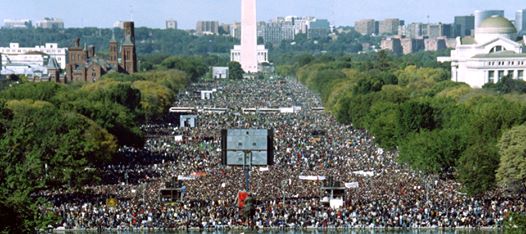
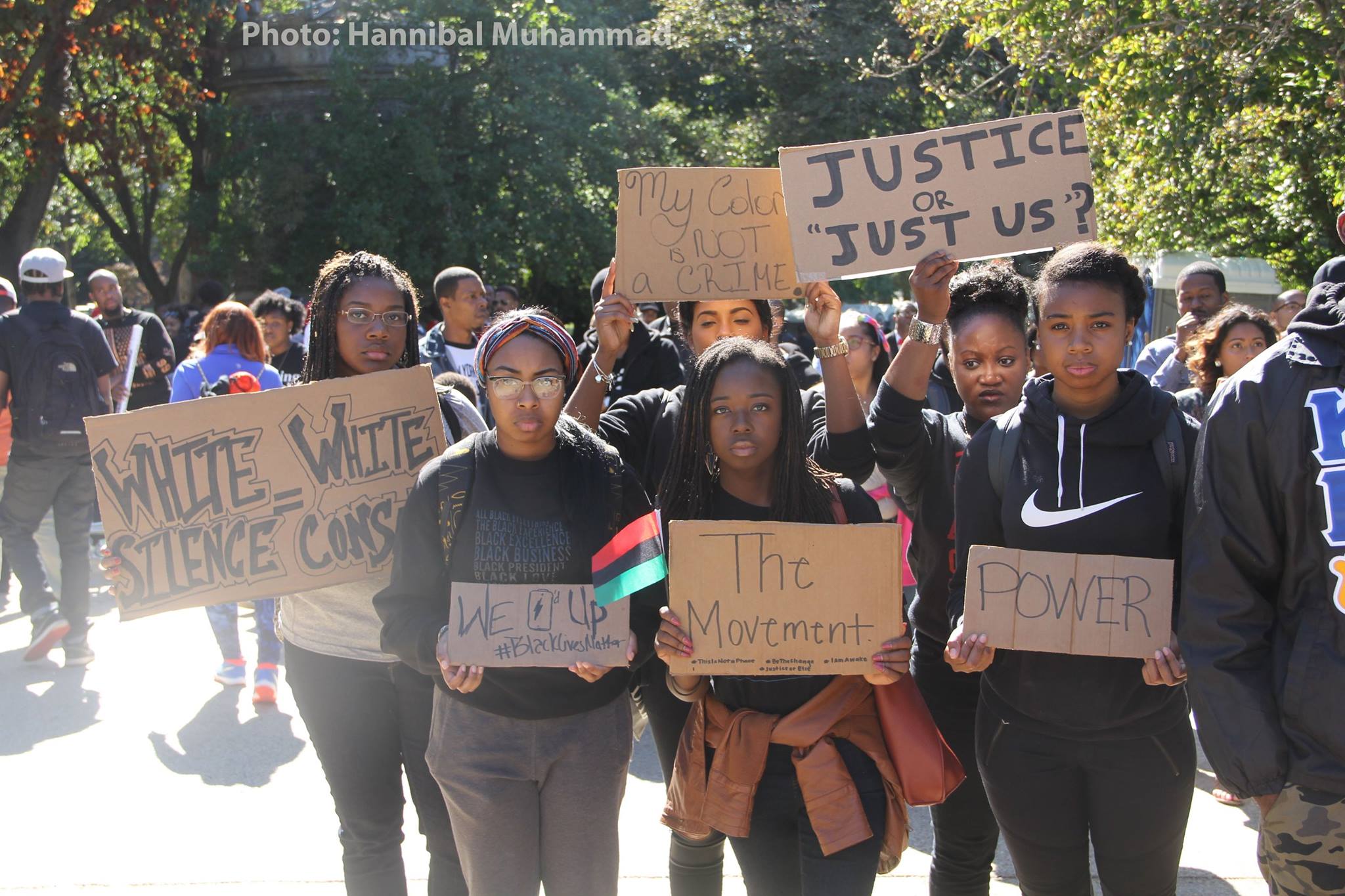
Thousands of African Americans and a smattering of people of other races and ethnicities gathered in the National Mall in Washington, D.C., to demand “Justice or Else” and commemorate the 20th anniversary of the original Million Man March.

Like during that 1995 gathering, today’s media was quick to frame the narrative in a way that silenced legitimate black concerns while benefiting White America.

First, most media outlets refused to cover the event at all. I guess to them there was nothing newsworthy going on. Just tens of thousands of black folks gathering in the nation’s capital. No saggy pants. No guns. Nothing to see here.

When the mainstream news covered it at all, it was to minimized its importance. Short articles basically saying – Here were some black people. Remember that time they did this before? In other news…

I remember the first march back in the 90s. I wasn’t there, but I remember how white folks talked about it. At first there was a genuine fear – black people with a united purpose coming together to better their social standing!? But we quickly found a way to negate everything they were doing.

How? Math.

Har! Har! Look at all those black folks gathered in front of the Capital steps. They held a Million Man March and didn’t even get a million men!

And therefore by the logic of white fragility we can ignore everything they did and said.

Institutionalized racism? Sorry not a million people!

Racial prejudice in hiring and firing employees? Not a million. Can’t hear you!

Police brutality? Come back when you’ve got more people!

12087324_1675832909318901_8512279402781528158_o

Of course it’s still a major point of contention exactly how many bodies showed up that first time. Estimates of the original rally put between 400,000 to 2 million folks on the scene. Unsurprisingly white people almost always go with the smaller number. I guess they don’t think black people can count that high.

But what if the lower estimation is true? Is there some racial math that bestows relevance on a moral crusade based only on sheer numbers? Is it okay to deny a handful of people their rights, a thousand or even a hundred thousand – but somehow a million is the tipping point where I have to say “No more”?

Even if only hundreds of thousands of people showed up, that’s something. Quite a lot, really. Doesn’t that demonstrate an attempt at racial unity, at addressing a shared list of problems? After all, how many people need to attend for White America to take them seriously?

This weekend journalists were careful not to make estimates of the number of attendees at the March Forward. But they’d subtly state that it was less well attended than the previous rally which – given the pictures I’ve seen of both events and the above mentioned disparity – seems somewhat hard to corroborate.

Still the media didn’t stop there. They found other ways to invalidate the event.

For instance, who is leading these marches? The Nation of Islam? Louis Farrakhan? Oh my! White people don’t approve of that! Therefore the whole gathering is unjustified. Poof!

Funny how that works. Black leaders must be perfect. White leaders? Not so much. George W. Bush was a C-student. Bill Clinton had extramarital affairs. Both men served as two-term presidents, and somehow the Republicans and Democrats go on.

Finally there was the rhetoric. This rally was subtitled “Justice or Else.”

That just won’t do. Angry black people demanding justice? No, white people simply will not respond to that kind of tone. If only they had been more polite about it, we might listen, but “Justice or else”!? Nope.

Any rational human being should be able to comprehend why black folks are demanding justice; They aren’t getting much of it from our courts. Unarmed black people are increasingly being murdered by the police and white citizens which prompts the debate of whether a crime has even been committed – a debate in which the answer is often, “No.”

The Black Lives Matter movement has grown because of just such concerns and the group was even represented at the rally.

But white folks – in the guise of analysis – ask what that phrase means “justice or else.” Are black people threatening to attack white people if they don’t get justice? What justice is there beyond a court of law? Do they really expect us to change our laws and hold our courts accountable?

No. Nothing to see here, folks. This throng of humanity peacefully assembling clearly has no valid points to make. Turn the cameras off. Let’s go home.

But had these thousands suddenly thrown bottles, overturned cars or started fires, the spot light would have been turned on full force.

“Another black riot,” newscasters would have proclaimed with glee. CNN would have devoted 24-hour news coverage. Expensive graphics would show the exact extent of the damage between interviews with scared white folks wondering why black people were allowed to misbehave so!

But a peaceful rally of African Americans coming together to share their pain, commemorate their history of struggle and commit to solutions?

Who cares about that? It doesn’t fit the media narrative. It doesn’t help white people ignore their black brothers and sisters problems. It doesn’t help our system of white supremacy remain invisible.

As a representative of the white race, may I make a suggestion? Could we possibly consider listening to what these people have to say? And before rejecting it out of hand, might we look at it objectively and even find a valid point or two? Could we then try to offer our black brothers and sisters a hand?

But the answer is always the same from white folks. Excuse after excuse to ignore, reject, repulse and keep our fragile white eyes firmly shut.

12105954_10106301025970309_961760835270051441_n


NOTE: This article also was published in the LA Progressive and on the Badass Teachers Association blog.


White People Need to Stop Snickering at Black Names

baby-and-parents

As a public school teacher, few things give me as much anxiety as getting my student rosters for the first time.

I look over the list of names for my incoming children and cringe.

How do I pronounce that?

Every year it never fails – there’s always at least four or five names I’ve never seen before – or at least never spelled quite like THAT!

As a white teacher in a district with a majority of black students but very few black teachers, there’s not really many people to turn to for guidance.

And if I don’t figure it out soon, I’ll be making a pretty terrible first impression. No one likes to have their name butchered, especially children, especially if an adult is doing it, especially if that adult is white.

The only solution I’ve found is to soldier on with the first day’s attendance and just try my best:

Me: Shah-NEE-Qwa?

Child: Shah-NAY-Qwa.

Me: JAY-Marcus?

Child: JAH-Marcus.

It’s uncomfortable, but I get through it and eventually learn.

However, one thing I’ve stopped doing is going to other white people for help. That’s a recipe for disaster.

It almost always turns into an exercise in subtle racism and white supremacy. No matter who the person is, no matter how kind, caring or empathetic, the reaction to unique black names is most often derision.

White people snicker and use the situation as the impetus for telling stories about other black names that they thought were even more outrageous.

It’s not that we’re trying to be hateful. I don’t think we even recognize it as racist, but it is.

We use the situation as an opportunity for bonding. THOSE people who are not like you and me – THEY name their children things like THIS! Not like you and me who name our children more respectably.

Make no mistake. This is racist behavior. We are emphasizing the otherness of an entire group of people to put ourselves over and above them.

It’s bigoted, discriminatory, prejudicial and just plain dumb.

What’s wrong with black names anyway? What about them is so unacceptable?

We act as if only European and Anglicized names are reasonable. But I don’t have to go far down my rosters to find white kids with names like Braelyn, Declyn, Jaydon, Jaxon, Gunner or Hunter. I’ve never heard white folks yucking it up over those names.

I can’t imagine why white people even expect people of color to have the same sorts of names as we do. When you pick the label by which your child will be known, you often resort to a shared cultural history. My great-great-grandfather was David, so I’ll honor his memory by calling my firstborn son the same. Jennifer is a name that’s been in my family for generations so I’ll reconnect with that history by calling my daughter by the same name.

Few black people in America share this same culture with white people. If a black man’s great-great-grandfather’s name was David, that might not be the name he was born with – it may have been chosen for him – forced upon him – by his slave master. It should be obvious why African Americans may be uncomfortable reconnecting with that history.

Many modern black names are, in fact, an attempt to reconnect with the history that was stolen from them. Names like Ashanti, Imani and Kenya have African origins. Others are religious. Names like Aaliyah, Tanisha and Aisha are traditionally Muslim. Some come from other languages such as Monique, Chantal, and Andre come from French. I can’t understand why any of that is seen as worthy of ridicule.

Still other names don’t attempt to reconnect with a lost past – they try to forge ahead and create a new future. The creativity and invention of black names is seldom recognized by White America. We pretend that creating names anew shows a lack of imagination when in reality, it shows just the opposite!

Creating something new can be as simple as taking an Anglicized name and spelling it in inventive ways. Punctuation marks also can be utilized in unusual positions to add even more distinctiveness such as in the names Mo’nique and D’Andre.

At other times, they follow a cultural pattern to signify as uniquely African American using prefixes such as La/Le, Da/De, Ra/Re, or Ja/Je and suffixes such as -ique/iqua, -isha, and -aun/-awn.

And for the ultimate in creativity, try mixing and matching various influences and techniques. For instance, LaKeisha has elements from both French and African roots. Other names like LaTanisha, DeShawn, JaMarcus, DeAndre, and Shaniqua were created in the same way.

This is something all cultures do. They evolve to meet the needs of people in a given time and place. Yet when it comes to people of color, we, white folks, whoop and guffaw at it. Heck! When we can’t find black names far enough out of our mainstream, we even make them up!

Don’t believe me? Have you heard of La-a? The story goes that a black girl was given that name and a white person asked how it was pronounced. The black woman said her name was La-DASH-ah. This is often followed by a punchline of black vernacular.

Har! Har! Har!

But it’s not even true! According to Snopes, this is a made up story. It’s the American version of a Polish joke and demonstrates how far white people will go to laugh at black culture.

The great comedy duo Key and Peele tried to call attention to this in their outstanding substitute teacher sketches. In a series of short routines, an almost exclusively white classroom gets a black substitute teacher from the inner city schools. Mr. Garvey is expecting black names, so he pronounces the students’ middle class white names as if they were African American.

Almost everyone loves this sketch. It gets universal laughs, but wait until it’s over. Too many white folks try to continue the giggles by then talking about crazy black names they’ve encountered. But that’s not at all the point Key and Peel were trying to make! They were trying to show how cultural context shapes our expectations of proper names. Mr. Garvey is worthy of our laughter because his expectations are out-of-sync with his surroundings. When we expect all African Americans to have European or Anglicized names, we’re just as out of touch as Mr. Garvey. But like Dave Chapelle’s comedy, sometimes the person laughing the loudest is getting something the comedian didn’t intend at all.

Maybe it wouldn’t be so bad if black names just generated snickers. However, white culture actually selects against people with black sounding names.

Countless studies have shown how much more difficult it is for someone with a black sounding name to get a job, a loan or an apartment than it is for someone with a white sounding name. It’s one of the most obvious features of white supremacy. You may not like black names, personally, but do these people deserve to suffer for embracing their own culture?

Moreover, having a European or Anglicized name is no guarantee of fair treatment. It certainly didn’t help Michael Brown or Freddie Gray.

If we’re really going to treat people equitably, an easy place to begin is with black names. White people, stop the laughter and giggles. I used to do it, myself, until I thought about it. Yes, I’m guilty of the same thing. But I stopped. You can, too.

It’s not the biggest thing in the world. It’s not even the most pressing thing. It’s not a matter of guilt. It’s a matter of fairness.

Because when the final role is taken of all America’s racists and bigots, do you really want your name to be on it?


NOTE: This article also was published on Everyday Feminism and the Badass Teachers Association blog.

Why are Black Lives Matter Activists Targeting Bernie Sanders? Because He Gets It – Almost

bernie-sanders-black-lives-matter-seattle

Why?

Why would two Black Lives Matter protestors disrupt Bernie Sanders’ campaign speech on Saturday?

It’s the question everyone seems to be trying to answer.

Marissa Johnson and Mara Willaford, two women of color fighting for the destruction of white privilege.

Sanders, a 73-year-old Jewish former Civil Rights activist-cum-Presidential candidate.

You’d think they’d have plenty in common. You’d think they’d be on the same side.

And even after this weekend’s confrontation, you might still be right.

But the questions remain: Why shout down Bernie’s speech on social security? And why did they do almost the same thing to him and fellow Democratic presidential candidate Martin O’Malley at Netroots Nation a few weeks ago? Why haven’t they targeted the Democratic frontrunner Hillary Clinton? Why not Republicans? What do they hope to accomplish? Is someone putting them up to this?

Frankly, I don’t know the answers to most of these questions. But I can make some educated guesses.

So here goes.

Is someone putting Black Lives Matter up to this?

No. I don’t think so. All you have to do is watch the video of this weekend’s action to see these two women weren’t playing at anything. They weren’t following anyone’s orders. They’re either really good actors or they believe in what they’re doing.

What do they hope to accomplish?

Here I don’t need to guess. Black Lives Matter’s Seattle chapter put out a press release explaining this very thing. In short:

“BLM Seattle… held Bernie Sanders publicly accountable for his lack of support for the Black Lives Matter movement and his blatantly silencing response to the ‪#‎SayHerName‬ ‪#‎IfIDieInPoliceCustody‬ action that took place at Netroots this year.”

The activists are protesting Sanders because they think he isn’t supportive enough of their cause.

However, the U.S. Senator from Vermont probably has spoken more on this topic than any other Presidential candidate of either major political party.

For instance, he specifically addressed physical violence against people of color, saying:

“Sandra Bland, Michael Brown, Rekia Boyd, Eric Garner, Walter Scott, Freddie Gray, Tamir Rice, Samuel DuBose. We know their names. Each of them died unarmed at the hands of police officers or in police custody. The chants are growing louder. People are angry and they have a right to be angry. We should not fool ourselves into thinking that this violence only affects those whose names have appeared on TV or in the newspaper.”

Why haven’t they targeted Hillary Clinton?

I don’t know. My guess is access. As a former First Lady, Hillary is protected by the secret service. Sanders isn’t. Moreover, both events where activists shouted down candidates had minimal security. They weren’t even individual candidates’ events. They were rallies with multiple speakers.

I don’t think they’re ignoring Hillary. It’s simply that they can’t get to her.

Some people, however, are inferring from this that her campaign may be behind these disruptions. Black Lives Matter is aligned with the Clintons and she’s using them to take out her biggest rival, they say. There are even a slew of articles accusing BLM of taking money from liberal billionaire George Soros, a long-time Clinton backer.

Here’s the problem with this theory: it’s completely unsubstantiated. There is not a shred of evidence linking BLM and Soros or Clinton.

I don’t doubt that Hillary would like to get BLM’s support. She’s clearly made overtures to them, changed her campaign rhetoric and otherwise tried to get them on her side. However, all the changes she’s made don’t amount to the degree BLM is already in line with Sanders. All Hillary really did was stop saying “All lives matter.” That’s not exactly a lot.

Moreover, BLM is not a political party. It is not nearly as organized as some people seem to believe. There are many chapters claiming to be part of BLM. There are many activists who consider themselves part of BLM. But there does not appear to be any major central organization sending out formal marching orders to these chapters.

I know it would be comforting to believe this is a political power grab by Clinton, but that just doesn’t appear to be the case.

Why not target Republicans?

This would make political sense, wouldn’t it? If you watched the GOP Presidential debate last week, you saw plenty of targets. There was lots of white privilege on display but very little talk about it. Dr. Ben Carson, the only African American candidate, even rhapsodized about how much society is over all that racial disparity nonsense these days. In an interview with Meet the Press, he called BLM “Silly.” You might expect activists to go after him or his colleagues.

Here’s why I think they haven’t done that so far. They know Republicans don’t care. Seriously. Why would they waste their time going after people who won’t listen, never have listened and never will? Unless you were doing it to make a bigger political point. Unless you were trying to contrast the Republican view with another one. But what other view is there to contrast it against?

Which brings me to…

Why target Bernie Sanders?

I think the answer is that Bernie almost gets it. He’s accessible, he’s mentioned these issues before and he seems willing to listen and evolve.

Think about it. When activists took the microphone this weekend, he could have called the police. He could have had them forcibly removed. But he didn’t. He gave them the podium and when it looked like they weren’t going to give it back, he left.

Do you think Chris Christie would have done that? Heck No!

So What’s Going on?

I think it comes down to this: the Obama Presidency is ending.

When he ran for office the first time, his campaign was transformative. It was a moment of incredible optimism. He wasn’t promising some tired old party agenda. He was promising Hope and Change. And his very candidacy and people’s reaction to it were proof that change really was coming.

For a few months there it seemed like White America actually cared about black people’s problems. We were all going to walk hand-in-hand into the promised land together.

But it didn’t actually work out that way. Though Obama has been a good president in many ways, he isn’t the transformative figure we thought he would be. When push comes to shove, he didn’t really do all that much for black people, either. And his very presence in the White House stirred up long repressed racist feelings from low class whites.

There’s a great moment in Richard Wright’s Native Son where the main character looks at a plane flying in the sky and can’t imagine how a black person could ever be up there at that height. For many people, Obama’s highest function has been a symbol. The most powerful man in the world is black. He shows that, yes, black folks actually can attain those heights undreamed of by past generations.

But it’s coming to an end. The next President will almost certainly not be African American. And those who do have a chance don’t even seem to be talking about issues that are important to the black community.

It’s as if American society is getting ready to sweep black folks back under the rug for another 200 years.

So yeah. I can understand why Black Lives Matter protestors are angry. People of color are still locked away in prison much more frequently and with much harsher sentences than white folks. That’s if they even make it to prison. Too many are being gunned down in the street and their killers are left to walk away free and clear. They’re even murdered in their own churches.

And we’re doing next to nothing to help.

Everywhere you look white privilege cages them in, and all these smiling, well meaning white faces don’t seem to care enough to do anything about it.

So here comes Bernie Sanders. Is he a man who seems to kinda get it? Does that make him more attractive or more infuriating?

Because though Bernie will talk about these issues, his main focus is not racial equality, it’s economic. He’s most concerned with balancing the scales monetarily.

Certainly this is important, but it’s not the same as destroying white privilege. You could reform the tax code and make sure everyone pays their fair share, but there would still be police officers barrel rolling on top of black teenage girls with the audacity to go to a mostly white swim party.

These are related issues, certainly, but not identical. In fact, if American society were a wall, the bricks might be income inequality, but the mortar would be racism. Why do poor white folks put up with the 1% trampling on them? Because the powers that be have given those poor whites someone they can trample – black folks. If you’re a white person working three jobs just to make ends meet, at least you can look at a black man and know you’ve probably got it better than him. You don’t have any money, but at least if the police pull you over, you’re probably going to survive the encounter.

That’s why I think Black Lives Matter activists are angry. That’s why they’re targeting Bernie.

It’s not that they hate him or want him to fail. He represents the one thing in which it is most painful to believe – hope.

I know people are angry on both sides. I know we can argue about tactics and timing, but we’re missing a real opportunity here.

Imagine if Bernie worked WITH Black Lives Matter. Imagine if he made dismantling white privilege a major plank of his campaign. Imagine if we were all united again.

And this time, imagine if we stayed that way well past election day.


NOTE: This article also was published in the LA Progressive and on the Badass Teachers Association Blog.

You Can’t Solve Prejudice With a Cookie-Cutter: Celebrate Diversity

057 soft chocolate chip cookies for blog

If America was a cookie, it would probably be chocolate chip.

Sure it’s mostly dough, but the chips are what give it flavor!

I mean, come on! Who wants a plain sugar cookie!? Yuck!

Maybe that’s what they meant all those years ago when they described us as a melting pot. All these different races and nationalities blending together to form a delicious whole.

However, some flavors just don’t mix – or at very least are slow to come together.

In fact, since the very beginning, much of America has been obsessed with ensuring we DON’T mix! Chips and dough can’t melt together! We must preserve the purity of the batter. In fact, let’s send those chips back to Belgium!

But times have changed. We’ve tried to legislate our way to equality. Voting Rights Acts. Anti-Segregation Acts. Non-Discrimination Laws. But the legal system is far from perfect, and it can only do so much. If we’re really going to become one big tasty treat, we’ve got to do something about it – each and every one of us.

So how do we all come together? What should be our goal?

For some people, the answer is silence. We shouldn’t talk about this stuff at all.

There’s very little scientific justification for categorizing ourselves into different races, anyway. Just button your lip and it will all go away.

To which I say, yeah, many things such as race, nationality, even sexuality are to a large extent man-made. They’re the product of culture and society, but that doesn’t make them unreal. They’re totems, archetypes, symbols we use to navigate the social universe. If you think a social constraint is unreal, try violating it.

Moreover, ignoring inequality won’t solve it. That only ensures that the status quo continues to reproduce itself.

In short, if we don’t talk about prejudice, we’ll never get over it. Our biases will never go away.

Other folks – many with the best of intentions – think not that our differences are unreal, but that we should ignore them. Don’t talk about us and them. It’s all just us.

No more twitter campaigns proclaiming #AllChipsMatter. We should instead join hands and proclaim #AllIngredientsMatter.

And I do see your point. We are all important regardless of race, nationality, gender, religion, sexual orientation, etc. But is this really the best way to come together as a nation? If all of us taste the same, we’ll certainly be one – one bland and lousy confection sitting in the bakery that no one in their right mind would really want to eat.

Homogenization has its strengths. Look at white folks. We used to be very different. Czech, Slovak, German, Russian, etc. Now we’re one indistinguishable whole. Sometimes we venture outside of that label for a few hours to celebrate some ethnic festival, but most of the time we’re just white, White, WHITE. Having a beer and a Wiener Schnitzel during Oktoberfest doesn’t change how you usually identify and how you are identified in the world.

But something has been lost here. You can only be blind to the differences in people if you wipe away the rough edges. People become less distinct, more similar. That’s not the best way to be.

There’s another way.

Instead of ignoring the differences between people, we should embrace them. Don’t hide your nationality, your race, etc. Celebrate them!

I am the proud product of this culture! I am the son or daughter of this type of person! I love this! I believe that! I am not just anyone – I am ME!

There is a danger when anyone suggests conformity as a way to fight racism, sexism or any form of prejudice. It puts the responsibility on those who are different. If you don’t want to be discriminated against, YOU need to conform.

I think this is wrong. You have the right to be yourself. Instead it is the responsibility of those who would discriminate to STOP.

If you’re racist, YOU need to stop.

If you’re sexist, YOU need to stop.

If you’re homophobic, YOU need to stop.

And so on.

This isn’t as easy as it sounds. You can’t just walk it off. Prejudice is the result of years of enculturation, socialization and bigotry. It takes time. It takes a loving heart. But most of all it takes two very important things that few people in America have truly achieved:

1) Willingness to try.

2) Acknowledging that there is a problem in the first place.

That’s where we are today.

Very few people exist in the United States without some prejudice. People feel uncomfortable around those unlike themselves. We have preconceptions about how certain people will act. We think we know better how other people should live their lives.

These are all prejudices. And what’s worse, many of them are actually unconscious. I didn’t even recognize that I got nervous around black people – and now that I do, I don’t want to feel that way. I know it’s not justified, but I still can’t help the feeling!

So there is much to be done here in the USA to make us the best we could be. And it is our job to do that work.

Because the cookie of America has lots of cracks in it and more than a few nuts.

I am Racist and (If You’re White) You Probably Are, Too

Screen shot 2015-06-02 at 1.42.34 PM

I am a white man.

I am racist.

But that’s kind of redundant.

It’s like saying, “I am a fish, and I am soaking wet.

In some ways, I can’t help it. I don’t even notice it. I live my life immersed in a world of white privilege that most of the time I frankly can’t even see.

That doesn’t excuse me. It doesn’t mean I should just shrug and say, “What are you gonna’ do?”

But it does mean that the first step in removing that racism – in undoing the systematic subjugation of people of color – is recognizing my own culpability in that system.

It’s like being an alcoholic. The first step is admitting the truth.

I know I’ve pissed off a lot of people with what I’ve just written. This article isn’t about gaining new friends. But I’m sure I’ll have a lot of death threats to delete from the comments section tomorrow.

The initial reaction white people usually have to being called racist is – Who? Me? I can’t be racist! I have a black friend! I dated a black girl once! I listen to rap music!

Or a whole host of other excuses.

First of all, relax. I don’t know you. For all I know you’re that one white guy out there who has somehow escaped the pervasive societal attitudes that the rest of us unknowingly took in with our baby formula.

But chances are – yeah, you’re a racist, too.

Second of all, I’m not talking to people of color. None of you are racist. Congratulations!

You might be a hate-filled bigoted, misogynistic, xenophobic, homophobic, prejudiced asshole.

Again, I don’t know you. But racist? No. You can’t really be that.

Here’s why. Racism doesn’t mean hating someone because of their race. That’s a kind of prejudice. And anyone can be prejudiced.

Racism is hate plus power. If a black person says, “I hate white people,” he is prejudiced. However, there is no system that then backs up his hatred. The police don’t arrest white people more than black people for the same crimes. The judicial system doesn’t give harsher sentences to white people than it does black people for the same crimes. Public schools serving a majority of white students aren’t chronically underfunded. It isn’t harder to get a loan or a job if you have a white-sounding name. If it did, THAT would be racism!

Get it?

So I’m sorry, white people. This means there is no such thing as reverse racism. Despite what you may see on Fox News, the only racists in America have white skin.

Don’t get me wrong. There are degrees of racism. If you have a Confederate flag prominently displayed in your home in front of your personally autographed picture with David Duke, well you’re probably a bit more racist than most Caucasians. But no matter what, if you’re white, you’ve probably benefited from white supremacy and are de facto racist.

Maybe your folks gave you a middle class upbringing in a quiet suburb. Maybe you went to a well-funded public school in a wealthy neighborhood. Maybe your dad was convicted of white collar crime and got little to no jail time. Heck! Maybe you just walked down the street once and the police didn’t follow you through a convenience store or reached for their guns.

If your upbringing was in any way favored due to wealth amassed over a few generations, you benefited from white privilege. If the judicial system let you or a loved one go with a lighter sentence, you benefited. If you were not harassed by law enforcement because of your complexion, you benefited. And when you benefit from a system, you’re part of it.

For every white person in America, it is almost certain that something like this happened to you at some point in your life. And you probably had no idea it was even occurring.

Good fortune becomes a self-fulfilling prophecy. People start to think they deserve it. And maybe they do, maybe they don’t. But people of color who don’t have such privileges certainly don’t deserve their inequitable treatment.

When we fail to acknowledge that white supremacy exists or that it benefits us, white folks, we’re just perpetuating that same system.

Some of you will say I’m putting too much emphasis on race. We’re all the same under the skin. We shouldn’t bring up the topic of racism. It just makes things worse.

Easy for you to say! You’re on top of the social food chain! If we don’t talk about the inherent inequalities entrenched in the system, nothing will change. Us, white folks, will continue to benefit, and black folks will continue to get the short end of the stick.

One of the biggest obstacles to solving racism is its invisibility – to white folks.

We’re shielded from it because its negative effects don’t reach us, and its positive effects to us are either shrugged off or we assume we deserve them.

Being racist rarely involves overt action anymore. It’s become covert, an entrenched sickness in all our social systems. And the only way to cure it is to make it visible – to recognize, isolate and destroy it.

I know. Some of you will say you had it tough, too. And you probably did. Few people live charmed lives. There are poor white folks. There are white people who are discriminated against because of their gender, nationality, sexual preference and/or religion. But this doesn’t mean you didn’t benefit. There is a crossroads of American prejudice and racism is only one of many intersecting avenues.

Maybe you were the victim sometimes, but you were probably the victor in others, and you never even saw it coming.

The point isn’t to say which malady is worse. They’re all bad and all deserving of a cure. But if you really don’t want to be a racist, you have to look it straight in the eye and call it by its rightful name.

You probably didn’t ask to be treated differently. Most of us just want fairness. But to be on that side we have to proclaim our allegiance. We have to take a stand.

Whenever you see injustice against people of color, you must call it out. You must make yourself a part of the solution and not the problem. You must be a voice demanding the citadel of white privilege be burned to the ground.

It’s not easy. You’ll be called all sorts of names: bleeding heart, libtard, self-hating white, maybe even cracka. Because even people of color may not understand what you’re trying to do. After so many years of racial oppression by people with melanin deficiency, they may not trust an open hand when they’ve been so used to expecting a fist.

But that’s okay. It’s understandable. The only thing to do is press on. Understanding will come – eventually.

Racism is a problem for black folks, but the solution is mostly in the hands of white people. We’re the ones doing – or allowing – racism. It’s our job to fix it.

And much of that work will not be in the public sphere. It will be in our own hearts.

Many of us have been socialized to be afraid of black folks. We get this from the news, movies, television, the internet, often even our own relatives and friends. We’re constantly told how dangerous black people are, how untrustworthy, how violent. But the facts don’t bare this out. Given the degree of aggression – both overt and covert – black people have endured from white people over time, they have been incredibly non-violent. It is us, white people, who have been violent and inhuman. That is the legacy we hide under our fear of dark skin. We’re really afraid that one day our black brothers and sisters will have had enough and give back to us all the accumulated hate of centuries.

No. We aren’t responsible for slavery or Jim Crow or lynchings or a host of other horrible things. But we still benefit from them.

So it is up to us to even the scales, to treat black folks fairly and equitably with a loving heart.

That is why I make this confession. That is why I write this article that will probably be roundly criticized or maybe just ignored.

That’s why I admit I’m a racist.

It’s the only way to stop being one.


NOTE: This article also was published on commondreams.org.