Prejudice of Poverty: Why Americans Hate the Poor and Worship the Rich

2children


Take a breath.

Take a deep breath. Let your lungs expand. Let the air collect inside you.

Hold it.

Now exhale slowly. Feels good doesn’t it? You’d never realize there are hundreds of contaminates floating invisible in that air. Dirt, germs, pollution – all entering your body unnoticed but stopped by your immune system.

If only we had such a natural defense against prejudice. Racism, classism, xenophobia, sexism, homophobia – we take all that in with every breath, too.

It may not seem like it, but all these value judgments are inherent in American culture. They’re as much a part of life in the United States as the flag, football and apple pie. And to a greater or lesser extent, you have subconsciously accepted them to help construct your ideas of normality.

What does it mean to be a man? What does it mean to be a woman? How should black people be treated? To whom is it appropriate to be sexually attracted? What makes a person poor and why? All of these questions and so many more have been answered one way or another for us by the dominant culture. Not everyone accepts this perceived wisdom, but most of us have swallowed these solutions whole without thought, logic or criticism – and we don’t even know it’s happened.

Take our preconceptions about wealth and poverty.

Well paying jobs are drying up. Minimum wage work is becoming more common. Salaries are shrinking while productivity is increasing. Meanwhile the cost of living continues to rise as does the cost of getting an education.

Yet we still cling to the belief that all rich people deserve their wealth and all poor people deserve their poverty.

When we hear about someone on Welfare or food stamps, we sneer. The average conception is that this person is probably faking it. He or she could have earned enough to avoid public assistance, but he or she isn’t trying hard enough.

Moreover, we KNOW with a certainty that goes beyond mere empiricism that many of the poor still manage to buy the newest sneakers, have flat screen TVs and eat nothing but Porterhouse steaks.

You can hear this kind of story uttered with perfect certainty from the mouths of white, middle class people everywhere. They don’t mind helping people who are really in need, they say, but most poor folks are gaming the system.

Never once do they stop to consider that this story about impoverished individuals living better than middle class Americans is, itself, one of the most pervasive myths in our society. We know it the same way we know all Polish people are dumb, all Asians are smart and all Black people love fried chicken and watermelon.

However, none of this “knowledge” is supported by the facts. Look at the Supplemental Nutrition Assistance Program (SNAP). According to the New York Times:

Allegations of fraud, including an informal economy in which food stamps are turned into cash or used to buy liquor, gasoline or other items besides food have been used to argue that the program is out of control. In fact, the black market accounts for just over 1 percent of the total food stamp program, which is far less than fraud in other government programs like Medicare and Medicaid.

If you include erroneous payments because of mistakes on applications, overall loss to the food stamp program comes to 4%, according to the Department of Agriculture. Compare that to the 10% lost to Medicare and Medicaid – programs no one is calling to be cut or eliminated.

But figures like these don’t convince the average American. We’re so certain that all or most poor people are just lazy parasites. Everyone “knows” some low-income person they deem to be living too high for their circumstances.

And, yes, sometimes you do see an impoverished individual not wearing rags. Sometimes you do peek into an indigent person’s hovel and see new electronics or game systems.

How does this happen?

Debt.

Credit card companies are waiting in the shadows to extend a line of credit to just about anybody. It’s a safe bet for these businesses. If they give you money today, they can charge exorbitant rates of interest – even more so with the highest risk clientele. But there isn’t much risk to these corporations these days when almost anyone can take a job as a state constable or bail recovery agent to hunt down debtors and bring them to economic justice.

When you see a destitute child with new sneakers, his parents probably bought them with plastic. When you see an X-Box in a needy person’s house, chances are that wasn’t paid for in cash. They used the charge plate and will end up paying for that game system many times what it’s worth.

It’s a problem not limited to the poor. Even middle class folks are drowning up to their eyeballs in debt. As wages have decreased, people have used their credit cards to keep a standard of living they expect. But they’re paying for it with huge portions of their paychecks going to these credit card companies. Yet even though we all do this, middle class folks look down their noses at people lower down the economic ladder for doing the same thing.

In fact, they refuse to even see that obvious truth. Instead they cling to the lie that poor folks are social parasites. We even begrudge them food. Those are my tax dollars going to pay for that penurious person’s free ride, they say.

Unfortunately, we don’t stop to consider how much of our taxes are actually going to help the less fortunate.

Let’s say you make $50,000 a year. That means, you pay $36 toward food stamps. That’s ten cents a day – the same amount many charities ask to help feed starving children in Africa.

If you add all safety net programs, the cost only goes up an additional $6 a year. That doesn’t seem like a huge chunk of my taxes. Honestly, do you begrudge needy people less than the price of a meal for a family of four at Bennigan’s?

By and large, your tax bill isn’t going to the poverty-stricken. It’s going to the wealthy. Over the course of a year, you pay $6,000 for corporate welfare.

You read that right. Six K. Six grand. Six thou. Those are your tax dollars at work, too. And it’s a much larger burden on your bank account than the $42 you shell out for the poor.

What do you get for that $6,000 outlay? It includes at least $870 to direct subsidies and grants for corporations. An additional $870 goes to offset corporate taxes. Another $1,231 goes to plug holes in the federal budget from revenue lost to corporate tax havens. Oh! And don’t forget a sizable chunk for subsidies to Big Oil companies that are polluting our skies and fueling climate change and global warming.

Most of your money isn’t going to feed hungry children. It’s going to recoup losses for giant transnational corporations like Apple and GE that hide their money overseas to boost profits and avoid paying taxes for things we all need like schools, police and fire departments.

This money subsidizes giant multi-national corporations that are already making billions and billions of dollars in profit each year. In the past decade alone, corporations have doubled their profits – all while reducing their American workforces and sending jobs overseas. Yet we only complain about poor folks using food stamps and buying new sneakers on credit.

Why is that? Why does it only bother us when poor people get help and not when huge corporations do?

Part of it is the media. We’ve been convinced that big business deserves its money and poor people don’t. Another part of it is that these facts often go underreported. Movies and TV shows love portraying the parasite poor person but rarely portray the corporate leech. Outside of “It’s a Wonderful Life” and “A Christmas Carol,” the wealthy are usually portrayed in the most positive light possible and not as addicts hoarding cash they don’t need to compete with each other in a childish game of one-upmanship.

Finally, there is the racial and sexual element. By and large, corporations are run by white males. The poor are mostly black, brown and though women make up a slightly higher percentage than men, it is often conceptualized as uniquely female. Take the term Welfare Queen. Why is there no Welfare King? How telling that our conception only allows for one gender in this role!

The reality is much different. The true Welfare Queens are Big Businesses. They make unprecedented profits and avoid paying taxes on them. They have tons of cash on hand but never can seem to get enough. And if we increased the corporate tax rate to what it was in the 1950s when the Unite States was more prosperous than it has ever been, these same corporations would still be Filthy. Stinking. Rich.

So the next time you hear someone blaming the poor for gobbling up your taxes, remember the facts. First, it’s simply not true. There is no widespread fraud by the poor. They are not gaming the system. They are not putting an undue burden on the middle class. However, big business IS – in fact – cheating you out of income. Business people are getting fabulously wealthy on your dime – and even if we stopped subsidizing them, they’d still be fabulously wealthy!

Finally, don’t ignore the racial component. Would middle class Caucasians still complain so vehemently about the poor if they weren’t mostly talking about Black people, Latinos and women? I doubt it.

We may breath in these prejudices but we’re not helpless. It’s up to all of us to dispel these myths, not to let them stand, to confront them every time they come up. And, yes, I mean EVERY. TIME.

The only immune system we have as a society is education, knowledge, wisdom. And once you know the truth, don’t let anyone get away with this kind of racist, classist bullshit.


NOTE: This article also was published in the LA Progressive and on the Badass Teachers Association blog.

 

“Talking Crap” Focus on Teacher Bathroom Breaks Misses the Point on Problems Impacting Teachers

stressed-teacher

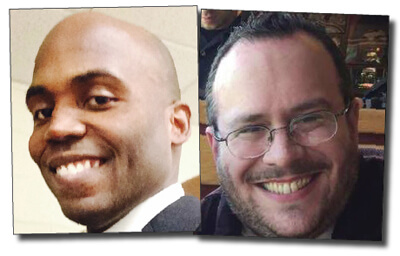
By Yohuru Williams and Steven Singer

Nearly 18 years ago in his 1997 State of the Union address, President Bill Clinton urged Americans to prioritize education. He suggested beginning with building respect for the teaching profession. To “have the best schools,” he observed, “we must have the best teachers.” He continued, “most of us in this chamber would not be here tonight without the help of those teachers.”

Despite Clinton’s eloquence, respect for the teaching profession steadily declined due primarily to a narrative of failure constructed by the proponents of corporate education reform. They consistently blame the power of teachers’ unions and teacher tenure for society’s woes. They use both as a justification to construct a multi-billion dollar industry to standardize and privatize our public schools.

For the most part, the mainstream media has been reluctant to challenge this narrative and point to the real obstacles that exist for teachers. Such is the case with a recent article in The Atlantic by Alia Wong entitled “Using the Restroom – a Privilege If You’re a Teacher” that completely misses the point of a recent survey highlighting some of the substantive issues facing the nation’s teachers.

Tens of thousands of professionals responded to the 2015 survey. The survey was conducted collaboratively by two groups: the Badass Teachers Association, a grassroots network of more than 55,000 educators, parents and students and the American Federation of Teachers, the nation’s second largest teachers union. The survey yielded shocking results that powerfully illustrate the collateral damage of the “test and punish” environment engulfing public education. This includes such serious allegations regarding workplace conditions that it prompted a meeting between the authors and the U.S. Department of Education. A team of educators working with both BATS and the AFT launched the 80 plus question survey in April. Some 91,000 public school teachers responded and 31,000 completed the survey. The unprecedented response revealed that there are indeed major problems with our current education policy and its impact on education practitioners.

Perhaps, the most startling revelation from the survey is what prompted it to be conducted in the first place – the increasing incidence of teachers and administrators who committed suicide due to bullying and abuses stemming from national school policy and other work place stressors. These are often the hidden casualties in the war on public education.

In October of 2010, for example, a California elementary school teacher named Rigoberto Ruelas, Jr. took his own life after the Los Angeles Times published a report labeling him a “less effective teacher.” Despite the fact that students and parents praised Ruelas, who taught in one of poorest schools in his district and who also was born, raised and continued to live in area where his school was located, the Times targeted him among other so-called “less effective” teachers as part of a major propaganda campaign. Publishing their names and ranking them according to their students’ test scores was supposed to encourage “reform”.

The Ruelas case is far from an isolated incident. Just last month, a New York City principal under investigation for altering Common Core test scores, killed herself by jumping in front of a subway car.

If U.S. teachers are the proverbial canary in the coalmine, then we may already be too late. Pressures related to high stakes testing are not the only stresses educators face. Teachers also reported significant bullying and hostility from city officials and administrators. Equally disturbing were reports concerning the infamous teacher jails where educators can languish for months under conditions, leaving them “broken, depressed,” and “suicidal, according to one California teacher observer. Statements recently made by New Jersey Governor and Republican Presidential Candidate Chris Christie reveals the scope of the problem. He said he would like to punch the national teachers union in the face. Rather than enjoying esteem as valued members of the communities they serve, educators have become convenient scapegoats. They fight on multiple fronts to provide their students a superior education and make a stable living.

It’s no wonder 73 percent of teachers in the Quality of Work Life Survey said they often find themselves stressed at work.

More than half of those surveyed, 55%, highlighted the “negative portrayal of teachers and school employees in the media” as a source of stress. The pejorative portrayal of teachers in a publication like The Atlantic is especially problematic. That a national periodical elected to do a piece on the survey but limit its scope to toilet restrictions trivializes other results. It’s not that this isn’t an important factor, but Wong’s coverage of other pertinent issues get short shrift. In her words educators tend to be, “known for their tendency to complain about and perhaps over-exaggerate their stress levels.”

To be fair, Wong eventually deleted that remark from subsequent editions of the article. However, she cautioned her readers to be skeptical of the survey because of potential bias. It’s a survey of teachers conducted by teachers. This is an odd critique however given the survey takers expressed intent to use the data collected as a means to spur the Department of Education to conduct a full scientific survey of the profession and then take appropriate action to rectify these concerns.

Rather than reporting squarely on the survey, Wong picked over the evidence. Rather than heeding the call that there is a real need for a much larger and more focused study of these problems, she either ignored or debunked its claims. Rather than treat educators as professionals, she belittled them.

Wong is not a bad journalist. Like most people, she has bought into the notion that teachers don’t know how good they have it. The public still doesn’t understand why teachers have “summers off.” They still misunderstand tenure to mean “a job for life” when it’s really only a guarantee of due process. Instead of helping the public better understand these issues, Wong and other representatives of the media often become entangled in the snare of the same myths.

Once again those entrusted with the most important job of preparing the next generation through our system of public education are losing a public relations campaign that can’t or won’t distinguish truth from falsity.

In short, our problems are much worse than inadequate bathroom time. We’re turning our public schools into factories and blaming teachers when it doesn’t work. We’re allowing billionaire philanthropists to set education policy but holding educators accountable for the results. We’re segregating our schools, providing Cadillac funding for the rich and bicycle funding for the poor and minorities but expecting teachers to somehow make up the difference. We’re letting corporate raiders run charter schools with no transparency or accountability and when that proves a disaster, we point our fingers at teachers. The result is a nation of frustrated educators who are increasingly leaving the profession in droves. “The average teacher,” writer Robert Brault once observed, “explains complexity” while “the gifted teacher reveals simplicity.” The data collected from the teacher survey reveals the complexity of the issues facing public education but they also highlight a simple truth. For if the survey is indeed accurate in illustrating just how debilitating these issues are to adults, we can only imagine what it’s doing to our children.


Yohuru Williams is an author, Dean, Professor of History and Black Studies, and education activist. Steven Singer is a husband, father, teacher, and blogger, education advocate. Both are members of the Badass Teachers Association.

williams-singer


NOTE: This article also was published in the LA Progressive and on the Badass Teachers Association Blog.

Down and Out and Lobbying for Public Education

 image

Let’s get one thing straight right from the start.

I’m no lobbyist.

I’m just a private citizen who’s sick of seeing his tax dollars swallowed up by big corporations under the guise of educational accountability.

I’m just a public school teacher who’s tired of his profession being demonized by policymakers and media talking heads alike.

And I’m just a father who’s worried that his daughter won’t get the same comprehensive public education he received as a child.

No one paid me. In fact, I bankrolled myself.

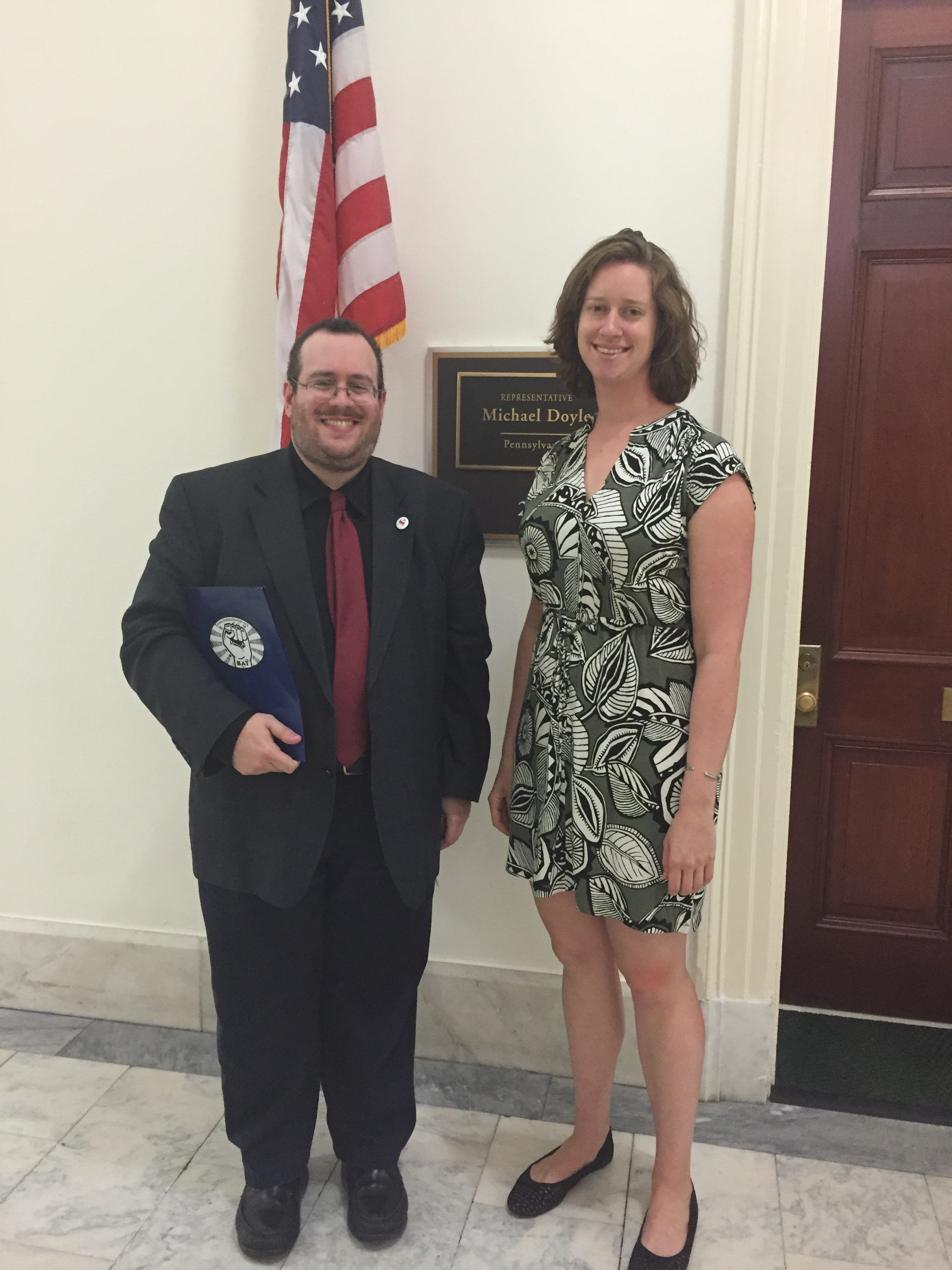
So like more than 300 members of the Badass Teachers Association (BATS), I came to Washington, D.C., to speak with my Congresspeople.

And what a day it was!

I met with Senators Pat Toomey (R-PA), Bob Casey (D-PA) and Corey Booker (D-NJ). I met with U.S. Reps Mike Doyle (D-PA) and Chris Smith (R-NJ).

Well, actually I met with their legislative aides.

None of the actual lawmakers made time to sit down with a flesh and blood teacher.

In one case, a legislator seemingly went out of his way to avoid me.

image

While sitting on the couch in Doyle’s office, he came out of a room to the left of me, asked his secretary for packing tape and then told her he was leaving for the day. It was 2:47 p.m. on Friday.

And they say teachers have easy hours!

I can’t say whether he was actively avoiding me. I made an appointment to see him, but it was never specified if I’d be meeting with him in person or if I’d be with his aide.

For all I know his staff never let him know I was a constituent sitting there on his couch in a suit and tie with a folder perched on my lap. But it didn’t feel good.

Maybe I should have said something. “Congressman Doyle! May I have a moment?”

But I frankly couldn’t believe this was happening. Moreover, he looks a lot different in a purple Hawaiian shirt than he does in all his press photos wearing a suit. I had to check his picture on my phone to make sure I was really seeing this correctly.

I was.

Still the meetings I had with these kids helping my legislators decide public policy were actually quite productive.

Without exception these youngsters were friendly, polite and knowledgeable. They seemed receptive to new ideas, were eager to hear my point of view, asked intelligent questions and were honest about where their bosses sometimes disagreed with me.

In Sen. Toomey’s office his assistants even asked if I was THAT Steven Singer.

“Who?” I said.

And they told me about a famous advertising campaign in eastern PA where a jeweler’s competitors are seen to complain “I HATE STEVEN SINGER.”

I laughed and told them it wasn’t me, but inside I wondered if that might explain the difficulty I had in some circumstances making these appointments. Maybe congressional staff thought I was pranking them. “Steven Singer wants an appointment!? Yeah! I’ll schedule it right after we see Mickey Mouse!”

image

I first met with Devorah Goldman, Toomey’s legislative correspondent on education and other issues. She’d only been on the job for about a year, but her qualifications included a degree in social work and she had worked in a public school resource center.

She was a very good listener. She heard me out as I spoke about a homeless student in my classes this year. She listened as I explained why Common Core is bad policy, why we need equitable school funding, an end to high stakes standardized tests, reigning in charter schools and voucher systems, and an end to judging teachers based on their students’ test scores.

Her boss isn’t exactly known as an education advocate. But she said he would agree with most of what I had said.

The main area of dispute would be charter schools. Toomey is in favor of expanding them so students can escape “failing schools.”

I explained that it was bad policy to try to save some students and let others fall behind. We need to make sure ALL our schools do an excellent job. Moreover, the Senator’s metric for determining which schools are failing is faulty at best.

I explained that traditional public schools often outperformed charter schools, which lack transparency and accountability and are wasting taxpayers dollars.

“We’ll just have to disagree on that point,” she said without explanation.

But she agreed to continue to take input from me and the BATS in the future.

image

At Doyle’s office, I eventually sat down with Hannah Malvin, a political science major who, at least, is from the Pittsburgh area – her boss’ legislative district.

She listened intently to my tales of education woe, even asking follow up questions. But she was surprised I supported the reauthorization of the Elementary and Secondary Education Act (ESEA).

Even the strongest supporters of the rewrite of the federal law that governs K-12 schools would admit it isn’t perfect. However, I would contend that the new version being cobbled together by the House and the Senate appears to be a slight improvement over what we have now – No Child Left Behind (NCLB).

Some educators think even this rewrite doesn’t go far enough to scale back standardized testing (and I sympathize but do not agree with that position). However, Malvin said Doyle had issues with it because it scaled back too much.

This was the issue I heard from Democrats all day. There isn’t enough accountability in the ESEA rewrite. How will we know which schools need extra help, they asked again-and-again.

I tried to explain that all they had to do was look at per-pupil spending. It’s no mystery which kids aren’t getting enough resources. It’s all right there on a ledger.

To her credit she heard me out and agreed to continue to dialogue with me on this subject in the future.

Next, I met up with some fellow teacher lobbyists from New Jersey and we dropped in unannounced on Booker’s office.

It’s not that we didn’t try to make an appointment. His staff never returned our calls and emails.

In fact, last week a fellow teacher not with us on Capitol Hill, Michele Miller,  even got into a scuffle with Booker on Twitter about elementary school funding. He told her to call his office and he would talk to her in detail.

To my knowledge, he never did. However, she was connected by phone to one of his aides. I’m told this is just modus operandi for Booker – strong talk in a public forum but shying away when the cameras aren’t rolling.

In any case, Booker’s senior education and health policy adviser Ashley Eden agreed to talk with us when we showed up to the office. Though her background isn’t in education, I can’t recall exactly what it is in. I do remember she has been doing this sort of legislative work for lawmakers for about 4 years – longer than any other aide we met.

She immediately made us feel welcome and found many areas of agreement. Bookers’ major point of contention – like fellow Democrat Doyle – was accountability.

How do we know which kids need help without giving them standardized tests?

Groan. But at least I had reinforcements: BATS Assistant Manager Melissa Tomlinson and retired NJ teacher extraordinaire Elizabeth DeMarco.

image

Perhaps the most telling moment of the entire conversation was when Eden said Booker just had to back standardized testing because every Civil Rights organization wanted it. She even criticized the New Jersey Education Association (NJEA) for not supporting black and brown students.

We stopped her right there. No. Every Civil Rights organization does NOT support testing. Journey for Justice – a coalition of 38 such organizations, in conjunction with 175 additional likeminded groups wrote to both the House and Senate asking to eliminate testing. Didn’t Sen. Booker see the letter?

Suddenly she remembered it.

She said she read it real quickly and didn’t like one sentence in it so she ignored it.

Which sentence?

Something about expecting poor and minority students to do badly on tests.

I explained that it has nothing to do with thinking these children can’t achieve at the same level as other children. It’s a matter of resources. If Sen. Booker was in a foot race against someone in a Monster Truck, I’d vote on the truck. Doesn’t mean Booker can’t run or that he might not even win. But the smart money is on Big Foot.

I joined the two ladies for their meeting with Smith as well.

His legislative assistant, Katherine Talalas, was perhaps the most knowledgeable aide with whom we talked. Her mother is a special education teacher, her brother is a paraprofessional working in a public school and she went to law school focusing on education issues.

She also took more written notes than any other assistant. With her nothing seemed canned. It was a real conversation about what her boss had done to help special education students and how he might continue to help in the future.

image

I was on my own again to meet with Sen. Casey’s aide, Jared Solomon.

This was one of the most fascinating and perplexing conversations I had all day.

He was warm, friendly, and had a depth of knowledge that was a bit more political than school-centered.

He agreed with almost everything I said. Casey supports 95% of the things that are important to me in education.

I could have smiled and walked away happy, but Solomon was so gregarious he kept talking. We shared our backgrounds.

He proudly admitted that he had been a Teach for America (TFA) recruit. He worked two years in a Baltimore public school and then left. He knew it wasn’t going to be his permanent job. He was emulating his parents who had joined the Peace Corps. He did TFA because he wanted the experience.

Then he moved to the administrative offices of Michelle Rhee’s Washington, D.C., Public Schools.

He only worked there two years – only one of which was under Rhee’s administration – but he respected what they had done. He said he disagreed with 80% of their policies and even quit because he was tired of being blamed for practices with which he didn’t agree. But, he added, the people in Rhee’s administration worked harder than anyone he knew, and he thought they really had the best interests of the kids at heart.

I’m tempted to chalk it up to the same feeling the incredible blogger Jennifer Berkshire (a.k.a. Edushyster) says she gets when she interviews many corporate school reformers. We may disagree with them, but they really do believe this stuff.

But something happened that doesn’t sit well with me. In an unguarded moment of a more than hour-long conversation, Solomon pulled the same stunt Eden did for Sen. Booker. He said all the Civil Rights groups were crying out for testing. But when I called him out on it, he immediately took it back. It was like he, too, knew this was untrue. It was a talking point, quickly to be conceded if called out and then move on to another argument.

I frankly don’t know what to make of it. The arguments are too similar among Democrats and Republicans to shrug off. Each is speaking from a party line script. That can’t just be a coincidence.

And why would Casey, a legislator who supposedly agrees with me 95% of the time on education, hire as his education expert someone who was actively involved in many of the practices that go directly against his beliefs? Why would someone like Solomon, who was part of the corporate education reform movement, really be on my side against these policies?

It’s befuddling to say the least.

Now that it’s all over, I’m so glad I did this.

Will this change the nation’s education policies? Probably not.

But I am only one of hundreds of people who climbed Capitol Hill in the last two days and met with more than 52 federal legislators to fight against the standardization and privatization of education.

And tomorrow we, BATS, will hold a Teachers Congress to further solidify our goals and decide where the great ship of real positive school change should go.

I am so looking forward to it.

But this teacher, soon-to-be BAT Congressman, needs to go to bed.

Here’s to a brilliant tomorrow for our children.


NOTE: This article also was published on the Badass Teachers Association blog.

Selling the Big Lies About Schools and Teachers on Sci-Fi Fantasy TV

Screen shot 2015-06-18 at 10.58.36 AM

“The media’s the most powerful entity on earth. They have the power to make the innocent guilty and to make the guilty innocent, and that’s power. Because they control the minds of the masses.”
Malcolm X

I’m with Brother Malcolm on this.

The media matters. And not just the news.

We learn what is real from the stories we tell ourselves and allow to be told about us. We construct our view of reality based on fairy tales, soap operas, rap lyrics and energy drink commercials.

There are cultural truths left unspoken that govern the very way we think. When the media speaks, we listen.

How dangerous, then, that we allow money to write the script. We let the 1% define who is an enemy and who is a friend. It’s no surprise that this almost always aligns with their interests.

As a public school teacher, I am an enemy of the plutocracy. I dare to teach children – even poor children, especially poor children – that knowledge is free. I stand in the way of the monetization of our schools. So I am a frequent target of attack.

It happened most recently in such a subtle way you might not even notice it. Wall Street bankers and hedge fund managers briefly shifting the narrative of science fiction/fantasy to increase the bottom line.

Marvel Studios is often concerned with escapism. But this season, two of its television shows – Marvel’s Agents of Shield and Daredevil – offered brief propaganda amid the comic book action.

Agents of Shield is a superhero/spy drama that connects the production company’s big budget blockbuster films – Iron Man, Thor, The Avengers, etc. It follows the escapades of a well-meaning intelligence agency made up of folks without super powers trying to deal with a world where super heroes are becoming more common.

This season on the ABC drama, one of the major arcs focused on Skye, a young woman just getting used to her super powers, and her quest to find her mother and father both of whom had abandoned her as a baby.

When she finally meets her dad, Cal, he is a mentally unbalanced enemy of Shield . However, as time goes on, Skye begins to see a nicer side to him.

In episode 2X18 “Frenemy of my Enemy,” the two spend the day together walking around Milwaukie and have a conversation about why she had been deserted as an infant. It was all rather interesting until they walked through a puddle of stinking corporate school reform.

Cal talks about how he and Skye’s mom had planned to raise her before they were thwarted by the evil Hydra organization. He talks about the nice middle class suburb where he had bought a home. He talks about the cute local businesses. And to show what an awe shucks great dad he might have been, he rhapsodizes about a really good local charter school where they were going to send her.

Skye: So, you had a … you had a practice here?

Cal: Yeah, before I met your mother.

Skye: She was a doctor, too?

Cal: Studying to be one. She had a natural gift for it … compassionate, beyond intelligent, wise … always five steps ahead of me. She wanted to finish med school here. Oh, and there was this great, little charter school just around the corner.

Skye: A charter school for medicine?

Cal: What? [Chuckling] Oh, no, not for her … for you. Oh, it was gonna’ be perfect. I was gonna’ drop you off every morning and pick you up, help you with your science fair project … the volcano, because who doesn’t love a volcano, right? We’d go to the father-daughter dances together, get ice cream. Ah, the life we could have had … should have had…

A charter school!?

Are you freaking kidding me!?

First of all, let’s talk continuity error. The first charter school law wasn’t even passed until 1991 in Minnesota. Skye was born in 1988. There were no charter schools in existence when Cal was musing about sending his infant daughter to one. Moreover, Wisconsin didn’t allow charter schools until 1993, long after Skye was separated from her parents!

But putting aside issues of believability (This is a show where people have super powers, after all) the charter school reference is hardly organic. It’s used as an emotional shorthand to show that Cal was a good father once. And you know what else is all warm and fuzzy? Those plucky charter schools. Shouldn’t you consider enrolling your child in one today?

However, charter schools have a terrible academic record. They either do no better than traditional public schools or – in most cases – much worse. In fact, for-profit charters are notorious because – unlike public schools – they don’t have to spend all of their budgets on kids. They’re big business producing huge profits for investors at the expense of student learning. Just google “charter school scandals.”

I guess it shouldn’t be a surprise that some of that lucrative taxpayer money may be finding its way into Marvel’s coffers to buy advertising space on Agents of Shield.

Product placement: drinking a Coke, driving a Toyota and – now – if only daddy could have sent me to a charter school.

Instead Skye had to deal with a life in an orphanage, at foster homes and – yuck! – the public school system!

Even worse, though, is the outright libel on Daredevil, a show delivered streaming on Netflix.

Most of the time it’s a pretty good action thriller about a blind lawyer who moonlights as a vigilante superhero fighting crime. (Yeah. He has superpowers, too, kinda.)

One of the supporting characters is Ben Urich, a grizzled seen-it-all investigative reporter. While New York’s Hell’s Kitchen is being taken over by the evil businessman, Wilson Fisk, some of Daredevil’s friends try to convince Urich to write about Fisk in the newspaper.

In episode 1X04 “In The Blood,” Urich warns feisty secretary Karen Page about how dangerous it is to go after nefarious evil organizations – like the mob, corporate polluters, the VA and – gasp – the teachers union!

Karen goads him by saying, “I read every big story with your byline. The VA kickbacks, toxic runoff, the Teachers Union scandal. Hell, you pretty much brought down the Italian mob back when I was in diapers. What ever happened to that reporter, Mr. Urich?”

(Later)

Ben Urich: You said you read a bunch of my articles. Remember the one about the, uh the runoff? What that company was dumping into the river?

Karen Page: Yeah, sure.

Ben Urich: Fished the guy that tipped me off out of that same river a month later. And that fella trying to clean up the Teachers Union? Moved out of state after flyers went up saying he was a pedophile. They underestimated what people in power will do to stay there.

So in the Marvel Universe, the ultimate evils are Red Skull, Loki, Thanos and public school teachers.

I’ve got to tell you my union must really be slacking. We never seem to get to world domination at our meetings.

I pay my dues. How come I’ve never gotten to whack anyone? Why haven’t any of our members – who by law can’t have a criminal record to work with children – why haven’t any of us ever slandered each other as pedophiles? All we do is talk about how to make our school better for both the students and our members.

But those big corporations drooling all over themselves at the prospect of privatizing public education dollars sure do hate us. We’re the last line of defense stopping them from stealing from the piggy bank of tax money put aside to educate your child.

So it’s no wonder some of their shadowy money donated by multi-billionaires like the Koch Brothers and the Walton family probably made its way into Marvel’s bank account.

I can’t prove that Marvel Studios took a cent to write either of those episodes. The Daredevil script was written by Joe Pokaski, a television writer for other genre shows like Heroes and also a Marvel comic book author. The Shield episode was written by Monica Owusu-Breen, one of the show’s co-executive producers. She also has a long career writing for television.

Maybe they each just have personal axes to grind.

Or maybe vampire organizations trying to bleed public money into their bank books might use some of that blood money to soften their image and take down their enemies.

Hey, Daredevil! Hey, Agents of Shield! Maybe if you really want to root out evil, your next mission should be at Marvel Studios! Because making nefarious charter schools look just swell and attacking school teachers – that’s not something heroes do.


NOTES:

“The mass media serve as a system for communicating messages and symbols to the general populace. It is their function to amuse, entertain, and inform, and to inculcate individuals with the values, beliefs, and codes of behavior that will integrate them into the institutional structures of the larger society. In a world of concentrated wealth and major conflicts of class interest, to fulfill this role requires systematic propaganda.”
Noam Chomsky & Edward S. Herman
Manufacturing Consent

“Make the lie big, make it simple, keep saying it, and eventually they will believe it.”
Adolph Hitler


-This article also was published on the Badass Teacher Association Blog.

-The article inspired fellow blogger Peter Greene to write a post, “Privatizer Product Placement,” asking readers to contact Marvel Studios and ask the company to stop putting anti-school propaganda in its TV shows.