Check Your Wallet! You Too Can Be An Expert on Teacher Tenure!

0714_wallet-open-money_485x340

It is IMPOSSIBLE to fire a bad teacher.

Unless of course you document how that teacher is bad.

You know? Due process. Rights. All that liberal bullshit.

Thank goodness we have tech millionaires to stand up for the rights of totalitarians everywhere!

A slew of Microsoft wannabes is taking up the mantle of the bored rich to once again attack teacher tenure.

They claim it’s almost impossible to fire bad teachers because of worker’s rights.

You know who actually is impossible to fire!? Self-appointed policy experts!

No one hired them to govern our public schools. In fact, they have zero background in education. But they have oodles of cash and insufferable ennui. Somehow that makes them experts!

I wonder why no one wants to hear my pet theories on how we should organize computer systems and pay programmers. Somehow the change in my pocket doesn’t qualify me to make policy at IBM, Apple or Microsoft. Strange!

But that doesn’t stop millionaires and billionaires with nothing better to do than try to increase their already skyrocketing profits.

It’s disgusting. They’re nothing but wealth addicts looking for a new score by stealing whatever crumbs have fallen to the floor that the rest of us need just to survive.

Time Magazine, which decided to put this non-story on the cover for Nov. 3, should be ashamed. But something tells me the editors could care less about things like facts, truth, integrity…

These are the same folks, after all, who propelled Michelle Rhee to fame on their infamous cover with the then-DC-schools chief holding a broom to sweep out all the bad teachers. Oh! That worked out so well! Cheating scandals, anyone!?

But instead of any apology or retraction for their faulty journalism, one can imagine the following conversation at Time’s last editorial meeting:

Editor 1: I’ve got a great idea for the cover! How about a bunch of know-nothing idle rich talking out of their asses!?

Editor 2: Brilliant!

I know I’m just a teacher and I don’t have millions in the bank, a bulging wallet or even a platinum credit card – but let me try to draw on my poor more-than-a-decade of experience in the classroom to explain.

1) Tenure does not mean a job for life. It just means you have to follow due process before firing a teacher. Many other jobs have similar due process rights for their workers that they don’t call tenure. Unfortunately that leads to the belief that teacher tenure is special or unique. It isn’t.

2) Teachers are Evaluated Based on Student Test Scores. This is ridiculously inaccurate and unfair. Standardized tests do NOT effectively measure student learning. They measure family income. So teachers who have richer students have generally more favorable evaluations than those who teach the poorest and most difficult children. Value-Added Measures, as these are often called, have been labeled junk science by national statistical organizations. They violate a basic principle of the field that you cannot use a test designed to evaluate one factor as a way to evaluate an entirely different factor. Removing due process would make the teachers who serve the most at-risk students, themselves, unfairly at risk of losing their jobs.

3) Firing the “least effective” teachers doesn’t improve education.
I know this goes against common sense, but facts are facts. If you fire someone, you have to find a replacement. Ideally, you want a replacement who will do a better job than the person being removed. However, this is incredibly difficult and expensive. Half of teachers who enter the field leave in 5 years. It’s a tough job that many people just can’t handle. Moreover, it takes a long time to get good at it. A much more cost-effective approach is providing high-quality professional development. You can’t fire yourself to the top. Yes, if a teacher has no interest and doesn’t improve after multiple attempts to help, then it may be best for that person to seek employment elsewhere. But it’s not step 1!

4) Tenure Protects the Most Experienced Teachers. Without it, veteran teachers could not compete with new hires who enter the field at a lower salary. In the long run, it costs less to keep and train veteran teachers than hire new ones. But administrators and school directors often only see short-term gain. Without due process, veterans would be in danger of unfair firing to increase the short-term bottom line. This would reduce the quality of education kids receive because they’d be denied a wealth of experience and talent. Moreover, who would enter a field that only values new hires? There’s no future in such a job and it would just be a repository for a series of temps with no other choice than to teach for a few years before moving on. Teach for America, anyone?

5) Tenure Allows Teachers to Innovate. With due process, teachers can more easily make decisions based on what’s best for their students and not what’s politically acceptable. They don’t have to give the school board director’s son an A just because of his patronage. Kids actually have to earn their grades. And if a student doesn’t like a teacher, he can’t destroy the adult’s career by making a baseless accusation.

But to know any of this, one would have to possess some actual information about the field. That takes experience, not big money.

For some reason, the same people who are investing heavily in privatization just can’t see it. The people who champion for-profit charter schools, toxic testing and Common Core can’t wrap their heads around the concept. All they see are dollar signs of public money meant to pay for the public good being diverted into their private bank accounts.

Human suffering? Educational outcomes? Struggling students?

Who gives a shit?

Teachers do. That’s why they’re trying so hard to get rid of us.


This article was also published on Diane Ravich’s blog and the Badass Teachers Association blog.

As a member of the Badass Teachers Association, I subsequently helped craft a response that was published in Time Magazine.

Fight Corporate Education Reform and Meme It!

20-beach-sea-photography

Sometimes words alone aren’t enough.

Has this ever happened to you? You’re arguing with someone and just not able to get your point across. You know if you could just show them the picture in your brain, they’d understand what you meant with the force of a bullet. But lacking psychic abilities, you’re reduced to the efforts of your poor twisted, tangled tongue.

That’s where memes make all the difference.

A meme is “an idea, behavior, or style that spreads from person to person within a culture.” Though originally coined as a term to describe genes, the expression has expanded to encompass anything that can carry ideas from one mind to another with a mimicked theme.

I know that sounds daunting, but you’ve probably seen hundreds or thousands of memes already. At least half of the images on Facebook and Twitter are memes – Grumpy Cat, Condescending Wonka, One Does Not Simply, Conspiracy Keanu and enough facepalms to break your jaw.

As a meme-maker, myself, I’ve been surprised that some of my efforts have taken on lives of their own. By no means am I a master at the art, but a few of my 50 plus memes have been surfing the Internet on their own for a year or more. I’ll go on a nationwide education organization’s Facebook page and see my little meme staring back at me. “Hi, Daddy!”

I leave you with an experiment. Here is a collection of some of my favorite creations. I’ve limited myself here to memes on the subject of education. I’ve also organized them to some degree based on subtopics.

Please feel free to browse. If you see a meme that you like – that helps make your point about the errors of corporate education reform – you have my blessing to take it. Post it on your Facebook page, in a tweet, on Tumbler, whatever you please. Send my little message off again into the great sea of interconnected webs and communication nets. Maybe one day it’ll return to me.

Happy shopping!


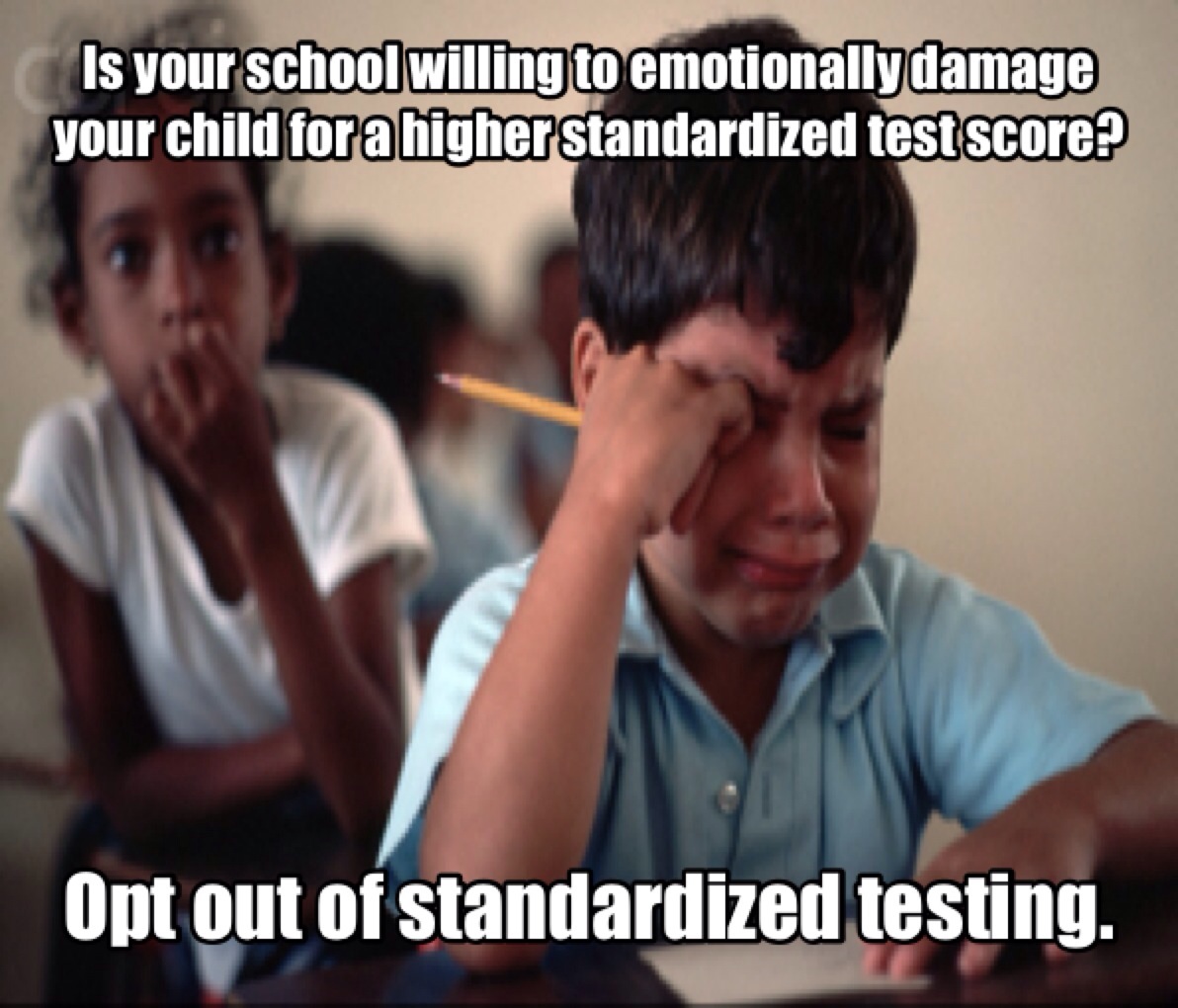
STANDARDIZED TESTING
1
IMG_0975.JPG

2
IMG_2013.JPG

3
IMG_1262.JPG

4
IMG_1782.JPG

5
IMG_1903.JPG

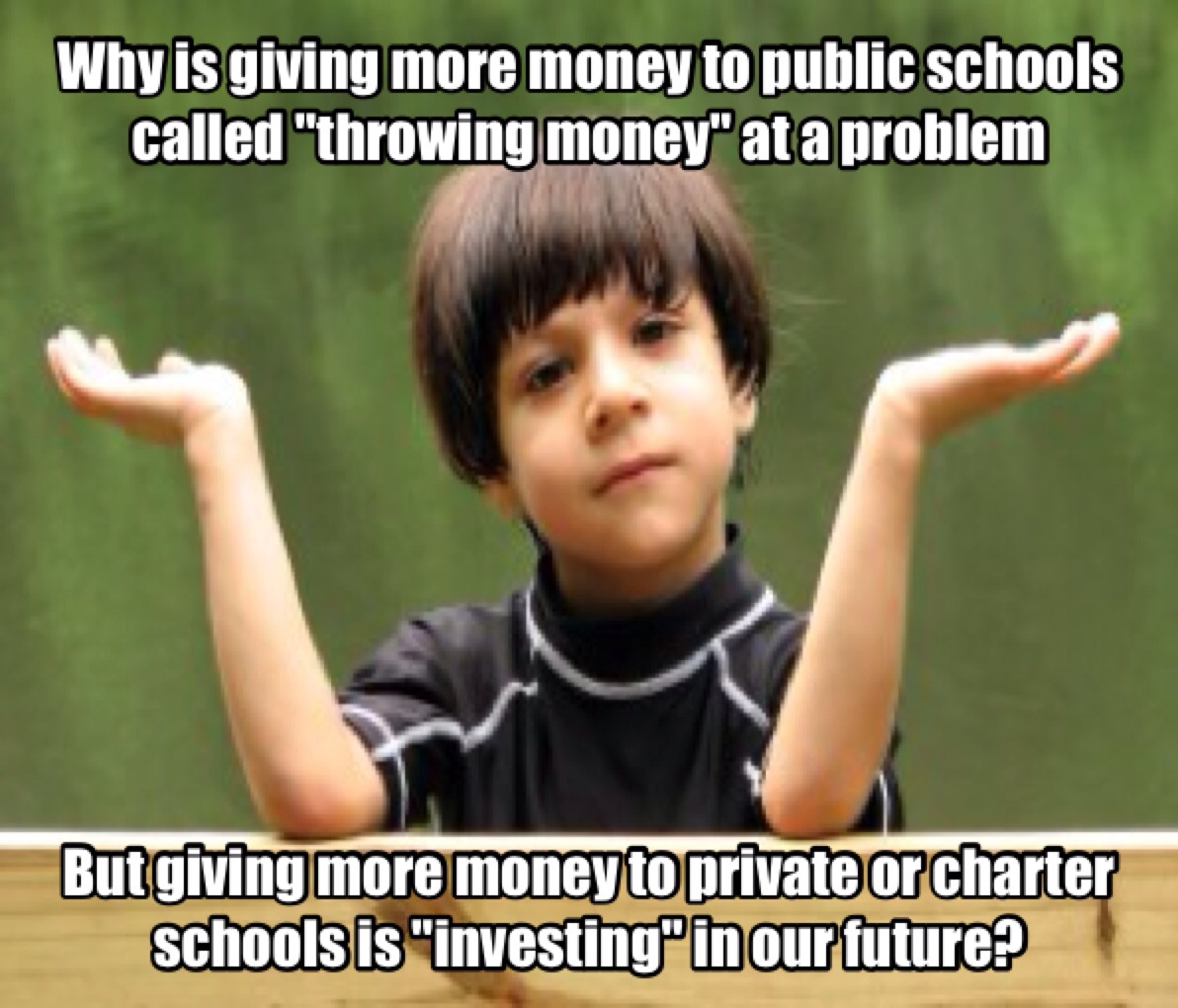
BUDGETS
6
IMG_1764.JPG

7

IMG_2040.JPG

8
IMG_0559.JPG

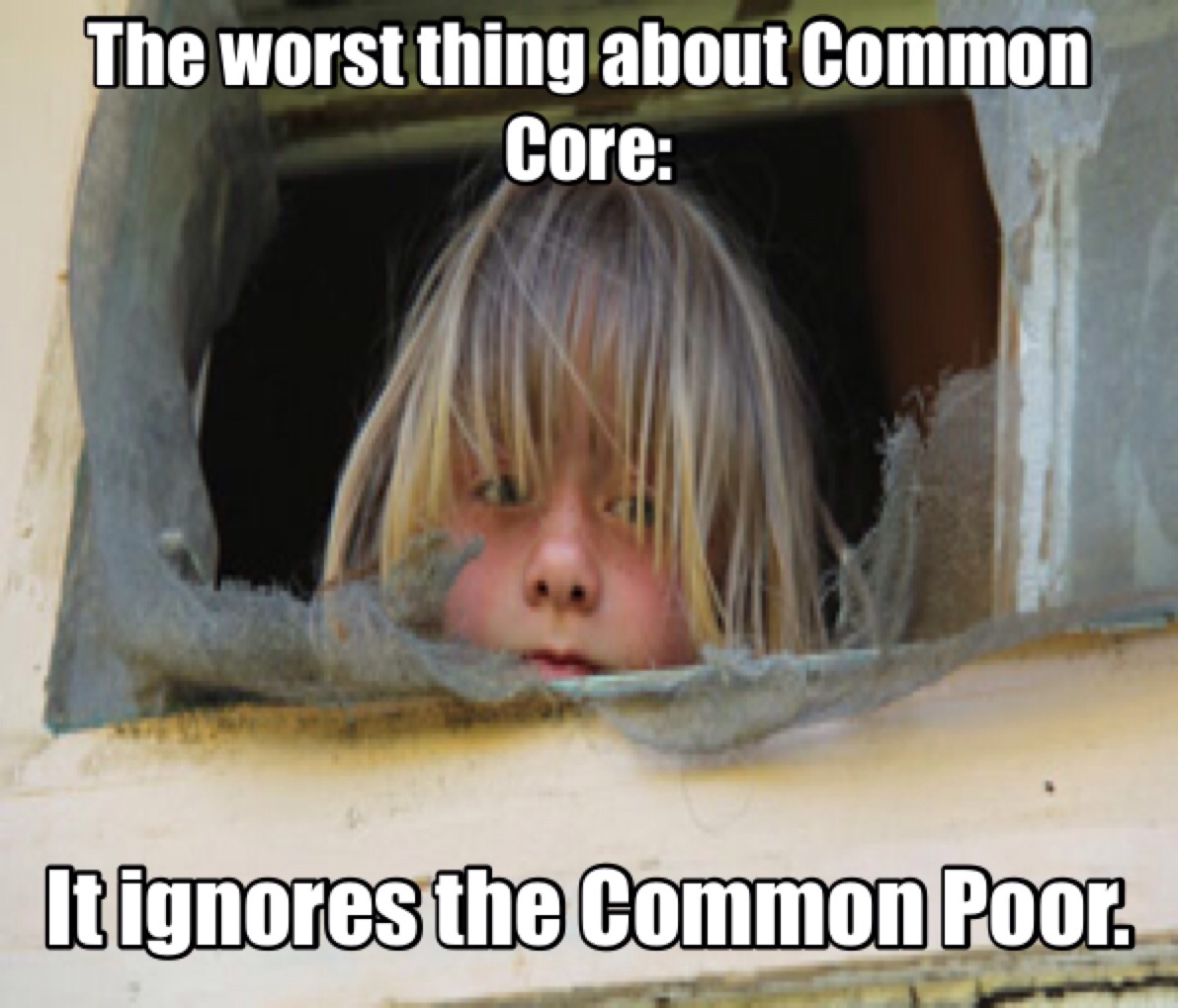
COMMON CORE
9
IMG_1972.JPG

10
IMG_1295.JPG

11
IMG_1710.JPG

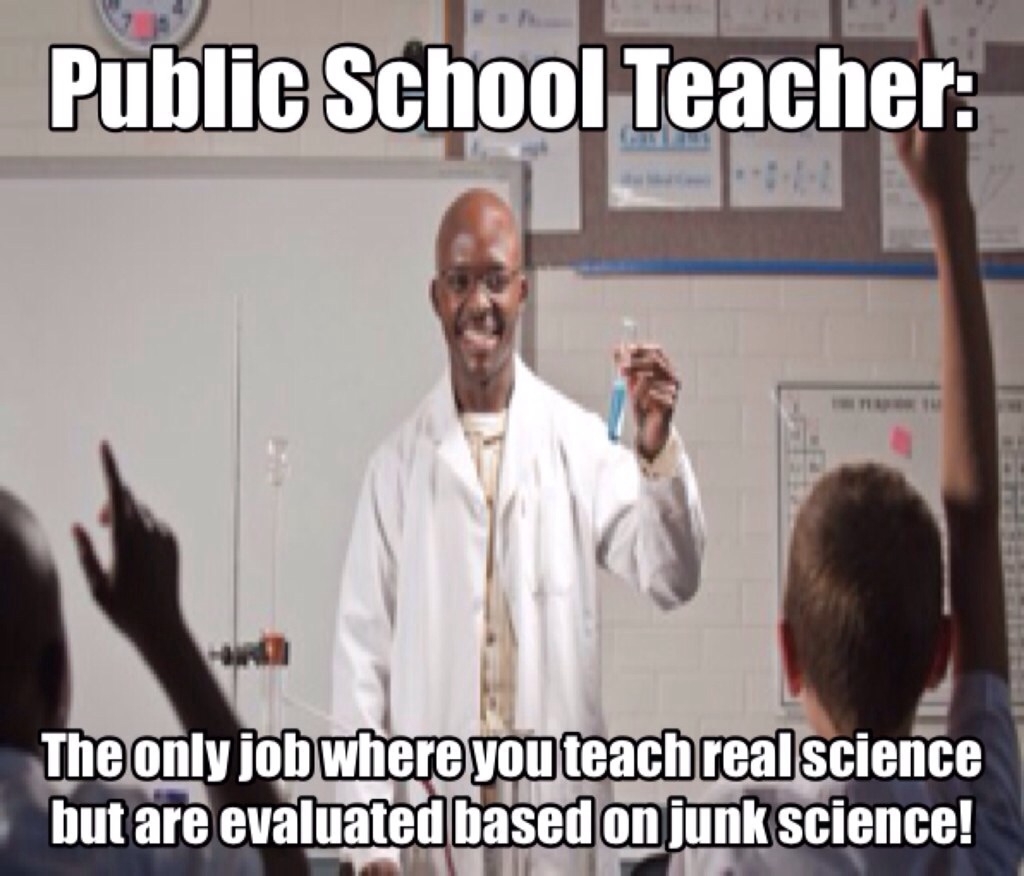
TENURE

12
IMG_1800.JPG

13
IMG_1696.JPG
14
IMG_1603.JPG

VALUE-ADDED MEASURES (VAM)

15
IMG_1489.JPG

16
IMG_1106.JPG

17
IMG_0476.JPG

CORPORATE EDUCATION REFORM

18
IMG_1817.JPG

19
IMG_1492.JPG

20
IMG_0901.JPG

ACCOUNTABILITY

21
IMG_2023.JPG

22
IMG_2101.JPG

23
IMG_1072.JPG

PENNSYLVANIA ISSUES
24
IMG_1793.JPG

25
IMG_1776.JPG

26
IMG_1222.JPG
27
IMG_0919.JPG
28
IMG_1420.JPG

MISCELLANEOUS

29
IMG_1927.JPG

30
IMG_1891.JPG

31
IMG_1950.JPG

32
IMG_1392.JPG

33
IMG_1446.JPG

34
IMG_1912.JPG

The Final Straw: Cancel Our Labor Contracts, We Cancel Your Tests

the-straw-that-broke-the-ca1-300x273

You can’t do that.

All the fear, frustration and mounting rage of public school teachers amounts to that short declarative sentence.

You can’t take away our autonomy in the classroom.

You can’t take away our input into academic decisions.

You can’t take away our job protections and collective bargaining rights.

You can’t do that.

But the state and federal government has repeatedly replied in the affirmative – oh, yes, we can.

For at least two decades, federal and state education policy has been a sometimes slow and incremental chipping away at teachers’ power and authority – or at others a blitzkrieg wiping away decades of long-standing best practices.

The latest and greatest of these has been in Philadelphia, Pennsylvania.

Earlier this week, the state-led School Reform Commission simply refused to continue bargaining with teachers over a new labor agreement. Instead, members unilaterally cancelled Philadelphia teachers contract and dictated their own terms – take them or get out.

The move was made at a meeting called with minimal notice to hide the action from the public. Moreover, the legality of the decision is deeply in doubt. The courts will have to decide if the SRC even has the legal authority to bypass negotiations and impose terms.

One doesn’t have to live or work in the City of Brotherly Love to feel the sting of the state SRC. For many educators across the nation this may be the last straw.

For a long time now, we have watched in stunned silence as all the problems of society are heaped at our feet.

Nearly half of all public school children in the United States live in abject poverty. This is not our fault. We did not pass the laws that allowed this to happen.

We did not crash the economy and then allow the guilty parties to get away Scott free – in most cases to continue the same risky financial practices all over again.

We did not cut funding to programs designed to help the poor – public assistance, childcare, counseling , job placement, etc.

We did not slash state and federal taxes for the wealthiest Americans, corporations and big businesses resulting in less public money to do the jobs we give the government.

We didn’t even get to provide more than the most minimal input into the dominant education policies of the land. School Choice, No Child Left Behind, Common Core, Race to the Top – those were written and enacted by bureaucrats, politicians and billionaire philanthropists.

But somehow we’re to blame.

Teachers dedicate their lives to fight the ignorance and poverty of the next generation and are found guilty of the very problem they came to help alleviate. It’s like blaming a doctor when a patient gets sick, blaming a lawyer because his client committed a crime or blaming a firefighter because an arsonist threw a match.

The Philadelphia decision makes clear the paranoid conspiracy theories about school privatization are neither paranoid nor mere theories. We see them enacted in our local newspapers and media in the full light of day.

Step 1: Poor schools lose state and federal funding.

Step 2: Schools can’t cope with the loss, further reduce services, quality of education suffers.

Step 3: Blame teachers, privatize, cancel union contracts, reduce quality of education further.

Ask yourself this: why does this only happen at poor schools?

You never see a rich school dissolve its contract with its teachers. You never see a rich school declare it will become a charter to increase educational outcomes.

Why is that? Is it because rich schools are so poorly managed they can’t see the benefits of these excellent strategies – or is it because no one cares about the poor?

Poverty has been the driving factor behind the Philadelphia Schools tragedy for decades.  Approximately 70% of district students are at or near the poverty line.

To meet this need, the state has bravely chipped away at its share of public school funding. In 1975, Pennsylvania provided 55% of school funding statewide; in 2014 it provides only 36%. Nationally, Pennsylvania is 45th out of 50 for lowest state funding for public education.

Such chronic neglect by the state left poorer Philadelphia neighborhoods unable to make up the difference financially. In 1998, exasperated school administrators threatened to close the district unless the state paid its fair share.

The matter went to the courts with the district suing the state for not providing “thorough and efficient” funding and discriminating against the district’s largely non-White population. After a long series of negotiations, in 2001 lawmakers quickly created contentious legislation to take over management of the district.

Since the schools were in distress (read: poor), the state decided it could do the following: put the district under the control of a School Reform Commission; hire a CEO; enable the CEO to hire non-certified staff, reassign or fire staff; allow the commission to hire for-profit firms to manage some schools; convert others to charters; and move around district resources.

And now after 13 years of state management with little to no improvement, the problem is once again the teachers. It’s not mismanagement by the SRC. It’s not the chronic underfunding. It’s not crippling, generational poverty. It’s these greedy people who volunteer to work with the children most in need.

We could try increasing services for those students. We could give management of the district back to the people who care most: the citizens of Philadelphia. We could increase the districts portion of the budget so students could get more arts and humanities, tutoring, wraparound services, etc. That might actually improve the educational quality those children receive.

Nah! It’s the teachers! Let’s rip up their labor contract!

Take my word for it. Educators have had it.

There will come a time – that time may have come already – when teachers refuse to be the scapegoats for poor policies made by poor decision-makers to fleece and rob the poor.

It all comes down to standardized tests. Bureaucrats don’t know how to measure educational achievements without them. After all, they’re not, themselves, educators. That’s why every major educational “reform” of recent years requires more-and-more of these fill-in-the-bubble falsely objective, poorly written and cheaply graded tests.

In fact, standardized test scores are used to determine whether a school is “failing” or not. It was, after all, one of the chief justifications used for the state takeover of Philly schools.

However, educators know the emperor has no clothes. We know the best predictor of high test scores is a student’s parental income. Rich kids score well, poor kids score badly. Standardized tests don’t measure knowledge. They measure economics.

That’s why parents across the nation are increasingly refusing to let their children take them. It’s why colleges are increasingly lifting the requirement that applicants even take the SAT.

Teachers, too, have begun refusing to administer the tests. However, this is risky because in doing so they are in jeopardy of being fired for insubordination.

But times are changing. The two biggest teachers unions in the country recently came out in favor of protecting educators who take this principled stance.

Alice O’Brien, head of the NEA Office of the General Counsel:

“NEA supports parents who chose to exercise their legal right to opt their children out of standardized tests. When educators determine that a standardized test serves no legitimate educational purpose, and stand in solidarity with their local and state association to call for an end to the administration of that test in their schools, NEA will support those educators just as it did in the case of the teachers who protested the administration of the MAP test at Garfield High School.”

AFT President Randi Weingarten:

“We supported teachers at Garfield High School in Seattle when they refused to give redundant tests. We supported early childhood teachers in New York when they shined the light on how abusive it is to give bubble tests to 5-year-olds. On the testing madness that’s sapping the joy from our classrooms, teachers are the canaries in the coal mines, and we support their advocacy. Ultimately, though, it’s up to parents to make the decision whether to opt out.”

It follows then that educators should refuse to administer standardized tests across the country – especially at poor schools.

What do we have to lose? The state already is using these deeply flawed scores to label our districts a failure, take us over and then do with us as they please.

Refuse to give them the tools to make that determination. Refuse to give the tests. How else will they decide if a school is succeeding or failing? They can’t come out and blame the lack of funding. That would place the blame where it belongs – on the same politicians, bureaucrats and billionaire philanthropists who pushed for these factory school reforms in the first place.

This would have happened much sooner if not for fear teachers would lose their jobs. The Philadelphia decision shows that this may be inevitable. The state is committed to giving us the option of working under sweatshop conditions or finding employment elsewhere. By unanimously dissolving the union contract for teachers working in the 8th largest district in the country, they have removed the last obstacle to massive resistance.

Teachers want to opt out. They’ve been chomping at the bit to do this for years. We know how destructive this is to our students. But we’ve tried to compromise – I’ll do a little test prep here and try to balance it with a real lesson the next day. Testing is an unfortunate part of life and I’m helping my students by teaching them to jump through these useless hoops.

But now we no longer need to engage in these half measures. In fact, continuing as before would go against our interests.

Any Title 1 district – any school that serves a largely impoverished population – would be best served now if teachers refused to give the powers that be the tools needed to demoralize kids, degrade teachers and dissolve their work contracts. And as the poorer districts go, more affluent schools should follow suit to reclaim the ability to do what’s best for their students. The standardized testing machine would ground to a halt offering an opportunity for real school reform. The only option left would be real, substantial work to relieve the poverty holding back our nation’s school children.

In short, teachers need to engage in a mass refusal to administer standardized tests.

“But you can’t do that,” say the politicians, bureaucrats and billionaire philanthropists.

Oh, yes, we can.


This article was published on Diane Ravich’s blog and the Badass Teachers Association blog.

The Best Evidence Against Common Core

Classroom-Management2

There were hands in the air. Lots of them.

It wasn’t just the same one or two I was used to seeing, either. It was almost all of them.

My classroom of 8th grade Language Arts students had something to say, and they could barely contain it.

We sat together in a circle, the desks piled in the center and forgotten. We peered across that distance at each other’s faces and waited for someone to be called on.

It wasn’t me who did it.

The student who had just spoken picked a girl across the room from him. A smile cracked her face wide open as she began to speak.

This wasn’t the norm in my room. At least not yet.

We had only been together a few weeks. In that short time, this group of children from impoverished families – many of whom had criminal records, behavior contracts and folders full of write up slips in the office – had really been putting me through my paces.

If you left them in a room alone, there would probably be a fist fight in 5 minutes. If you peeked at their IEPS, you’d see a host of pharmaceuticals needed just to get them through the day. And if you only looked at their standardized test scores, you’d assume they’d need help to tie their own shoes.

But here they were sitting comfortably, discussing societal racism, gender roles, and how we treat the disabled.

If you closed your eyes and just listened, you’d think it was a class of college freshmen.

That’s what a Socratic Seminar does to a class full of troubled teens.

For the uninitiated, Elfie Israel succinctly defines Socratic Seminars as follows:

The Socratic Seminar is a formal discussion, based on a text, in which the leader asks open-ended questions.  Within the context of the discussion, students listen closely to the comments of others, thinking critically for themselves, and articulate their own thoughts and their responses to the thoughts of others.  They learn to work cooperatively and to question intelligently and civilly. (89)1

Socratic Seminars acknowledge the highly social nature of learning and align with the work of John Dewey, Lev Vygotsky, Jean Piaget, and Paulo Friere.

In short, it’s the kind of thing teachers used to do all the time before No Child Left Behind, Common Core and Race to the Top replaced it with something more rigorous – test prep.

The text we were discussing was “Raymond’s Run” by Toni Cade Bambera. The story centers around Squeaky, an African American girl tasked with looking after her mentally challenged brother, Raymond. At first this is just a chore assigned by her parents. Her real goal is to defeat all comers in various track and field events. However, by the end of the story, she discovers that helping others is its own reward.

But hush. Destiny is speaking.

“Squeaky is kind of a Tomboy,” she read from the question sheet I provided. “Should girls do girly things like being ‘flowers or fairies or strawberries’ or should they be allowed to do more masculine things like play sports? Why or why not?”

“Girls should be allowed to do whatever they want,” she answered. “If they want to play sports or do things that we usually think of as boy things, no one should stop them.”

“In fact,” she went on, “boys should be able to do girl things if they want, too. It’s just like in the story when Squeaky says girls can’t be real friends with other girls because they’re too busy being something other people expect them to be. If people were allowed to be themselves, there’d be less fights.”

Destiny was a girl who only last week sullenly sat with her head down refusing to answer any of my classroom questions with a suck of the teeth. Now she sounded like Gloria Steinem.

And she wasn’t alone. She chose Pablo to continue answering the question about gender roles. He brought up how people in our school treat gay kids.

Pablo said it made him sad that other boys were afraid to be seen hanging around with some kids because they thought their friends would call them gay. “Two girls can hug and hold hands and no one says anything, but if boys did that – they’re gay.”

This from a child who is often absent from school and still had the remains of a black eye that the guidance councilor would only explain by saying the school was aware of it.

Serina took the floor next and had to actually calm herself down before speaking. She told us about her brother, who is gay, and how it makes her cry when people make fun of him. In fact, there may have been a tear or two she calmly rubbed out of her eye with her palm.

At this point – had he been there – David Coleman would put a halt to our discussion.

The co-author of the Common Core famously said, “People don’t really give a shit about what you feel or think.

So shut up, kids. No one cares what you have to say.

Drawing from his deep zero years of training in the field of education, Coleman said:

Do you know the two most popular forms of writing in the American high school today?…It is either the exposition of a personal opinion or the presentation of a personal matter. The only problem, forgive me for saying this so bluntly, the only problem with these two forms of writing is as you grow up in this world you realize people don’t really give a shit about what you feel or think. What they instead care about is can you make an argument with evidence, is there something verifiable behind what you’re saying or what you think or feel that you can demonstrate to me. It is a rare working environment that someone says, “Johnson, I need a market analysis by Friday but before that I need a compelling account of your childhood.”

This attitude is reflected in the standards Coleman helped write and Bill Gates coerced state and federal governments to force on our public schools.

It’s embodied in an emphasis on close reading – going over a text multiple times to squeeze every drop of intention from the author. It’s a fine way of understanding what the author may have meant. It’s not a fine way of teaching or even understanding the full scope of a literary text.

To be honest, this isn’t exactly cutting edge stuff. It comes from the New Criticism of literary theory of the 1940s. Most schools of education replaced this outdated orthodoxy with Reader-Response theory thirty or forty years ago. Reader-Response sees the author as merely one of many factors making meaning in a text. Of equal importance is the world in which the author lived and the particular point of view of the reader.

Think about it. To Kill a Mockingbird is a very different book written during the Civil Rights Movement than had it been written in the 1990s. It’s important to know that many of the characters are based on real people in the author’s life. It’s important to know about the violence and civil unrest that came to a head at the time of the book’s publication. Moreover, an inner city African American boy has a different experience reading it than a privileged white suburbanite.

Reader-Response criticism opens up the act of reading and allows for classroom activities like the Socratic Seminar. But Coleman wouldn’t know anything about that. He was an English Literature major, and when given the chance to write education standards, he paid no attention to what was most pedagogically significant. He simply favored his pet literary theory over those of more modern thinkers.

But if Coleman and the architects of Common Core could be in my classroom, they might see the error of their ways.

Allowing students ownership of the text – allowing them to take their proper place as part of a complex relationship between the text, author and the world – is so much more engaging an experience than just being an authorial archeologist.

When we insist on strict adherence to the author’s message – and only that – we create a false objectivity. Language Arts is a subject that is at most times open to interpretation. But Coleman makes it a guessing game to get the “right answer.”

Literature is not math. We shouldn’t try to turn it into something it isn’t.

This is why at the beginning of the year, my students take my innocent questions about the meaning of a text as an affront. They see me as just another adult trying to trick them. They assume I’m trying to get them to guess what I’m thinking – about what the author was thinking. There has to be only one true answer, they suppose, and if they haven’t been good at guessing it in the past, why try now?

It takes a while, but through lessons like the Socratic Seminar, I try to broaden their horizons, to show them that they have a vital place in this dynamic. Without a reader, a text is nothing but words on paper. Without a larger societal context, those words lack their full meaning.

Moreover, not all texts are created equal. By this I don’t mean that some aren’t rigorous enough. I mean that literary texts are richer and deeper if they come from a multitude of cultural points of view.

We used to know this. Schools used to encourage students to read works by the full spectrum of Americans – African Americans, Latino-Americans, Asian Americans, Jewish Americans, Muslim Americans, etc. Now we shove all that under the carpet in favor of “rigorous” works by the same safe vanilla European Caucasian males.

Common Core doesn’t stop schools from using multicultural texts, but it doesn’t value them, either. There is no standard about the importance of reading diverse authors. In fact, the only diversity I see valued is that students should view diverse kinds of media!

Great! Read an essay, watch a video, play a song. But what about being exposed to diverse cultures and points of view?

Oh! I almost forgot. Coleman says no one gives a shit about that stuff.

My students do. When they read a work by an African American woman like Toni Cade Bambera, they can see themselves in her work. I’ve taught an awful lot of Squeakies in my years as a teacher. (I’ve even taught a few David Colemans.)

When you can open a book and see yourself looking back, what a motivation to read! But how unfair that we only value providing this experience for the white kids!

If we had truly high standards, we’d recognize this. We wouldn’t ignore the value of multiculturalism. We wouldn’t dumb down Language Arts to a simplistic and anachronistic formula designed to fail and humiliate.

Coleman and the Common Core designers would know that if they had ever led a classroom of students. But hardly any of them are educators. They’re bureaucrats, politicians and millionaire philanthropists.

They’re missing the true picture.

Because the best evidence against Common Core is denied them.

Because the best evidence against Common Core is in the classroom.


NOTES:

1 – Israel, Elfie.  “Examining Multiple Perspectives in Literature.”  In Inquiry and the Literary Text: Constructing Discussions n the English Classroom.  James Holden and John S. Schmit, eds.  Urbana, IL: NCTE, 2002.

-For more information about Socratic Seminars, professional development and even ideas about how to extoll their Common Core benefits (lesson plans, people!) please visit Socratic Seminars International.

This article was also published on Diane Ravich’s blog and the Badass Teachers Association blog.

No Pineapple left Behind – the Consolation of Satire and Video Games

altersplash3

Q: What’s the difference between a pineapple and a human child?

A: Pineapples are more profitable.

Let’s face it – kids have.. yuck … needs! Maslow even came up with a hierarchy of needs that must be met before you can get the little tykes to do anything. Physical well-being, safety, emotional… Argh! It’s just so much work!

Pineapples, however, are money-makers from the get go.

Chop them up, and you’ve got a tropical fruit salad.

Juice them, and you can make about a hundred different premium cocktails.

Heck! Just plop one in a hat and you’ve got an island-themed mascot!

But kids!? You can’t even get them to take a lucrative standardized test without… bleugh … educating them first.

Imagine if you could make pineapples take tests and get grades instead. Schooling would be like a gardening contest. Who has the best recipe for success? There would be no intangibles like the effects of poverty, home-life, special needs. It would all be neat, measurable and objective.

Yes, sir. Pineapples would be great for business – especially if your business is education.

That’s the premise of Subaltern Games current project No Pineapple Left Behind.

The satirical fantasy video game is the brainchild of former teacher, Seth Alter.

Alter taught at a Boston middle school before giving up the classroom for the programmer’s chair. According to his blog, he “became fed up with the callous administration” and decided he could teach more effectively through video games.

His first game, Neocolonialism, was inspired by world history and economics. The goal is to extract as much wealth as possible from the world through any means necessary. While many video games invite the player to engage in senseless violence, Neocolonialism inevitably forces players to consider the consequences of their actions. In fact, the game’s tagline is “Ruin Everything.”

The project was completed through a $10K Kickstarter campaign in January 2013 and released in November of the same year.

Now Alter and his 4-person team are writing No Pineapple Left Behind (NPLB) – a game he calls his “response to his old teaching job.”

While still in the early stages, the company has provided some video of what the game may look like when completed:

A Kickstarter campaign is anticipated to help the company finish this ambitious project.

Even in its early stages, NPLB confronts us with a host of essential questions about education:

1) WHO ARE PUBLIC SCHOOLS DESIGNED FOR – CHILDREN OR WIDGETS?

2) WHAT IS THE PURPOSE OF OUR SCHOOLS – EDUCATING KIDS OR MAKING MONEY?

Examine the state and federal education policies of the last dozen years and you’ll be forgiven for thinking we’re servicing widgets.

Federal programs like No Child Left Behind and Race to the Top increase high-stakes standardized testing to absurd lengths. Public schools are repeatedly defunded at the state and federal level, forcing them to rely on local taxes to survive. This is fine for affluent districts that can just raise property taxes, but it is unsustainable for the 99%.

To make up the difference, poorer schools are forced to compete for the remaining funds by enacting reforms that don’t benefit children but enrich the special interests that lobbied for them. Test companies like Pearson rake in the cash creating and scoring the tests on the one hand, and then earn even more profit providing the inevitable remedial test prep materials districts are forced to buy on the other.

Microsoft billionaire Bill Gates poses as a disinterested philanthropist funding Common Core, but then increases his company’s market share by providing the computers and technology necessary to take the standardized tests required by Common Core.

Moreover, for-profit companies entice away students to charter schools in order to garnish their per student funding. Then just before it comes time to take their standardized tests and thus be judged as effective or not based on these scores, charters boot the lowest achievers back to the public schools. The money, however, they keep. And they get to boast of how well they teach kids since the only ones left are the cream of the crop!

Children then become little more than a means to school funding. Schools are forced to use children to earn money for the district to remain open.

But schools are supposed to be places where funding is used to educate kids – not places where kids are used to earn funding.

3) IS COMPETITION THE BEST MOTIVE FOR A PUBLIC SERVICE?

No. Emphatically not. When you have competition, you by necessity have winners and losers. The goal of public schooling is to educate EVERYONE. Didn’t we call this nonsense No Child Left Behind? How can it be about doing that, if the goal is to see who wins the Race to the Top? In a race, the objective is to leave everyone else behind!

4) WHAT IS THE ROLE OF THE CLASSROOM TEACHER – GUIDE OR SORCERER?

In the early draft of NPLB, teachers will cast spells on their pineapple classes to get them to learn. This works well, apparently, for fruit. However, if classes are left unattended, the pineapples will turn back into children who are much harder to educate in this manner.

Go to any school of education in any university in the country and you’ll learn this simple fact: Education is not something someone does to you. No one can put a finger to your head and make you learn. There are no mystical words to engender wholesale epiphanies. Learning is a complex process that requires a relationship between the teacher and student. It happens gradually over time. There is no magic here.

However, our national education policy acts as if all children go to Hogwarts. Teachers are evaluated on how much their students learn. That’s only looking at one part of this complex relationship. What about the children? Aren’t they part of this equation, too?

Moreover, the metric administrators are being forced to use to determine if this learning has actually taken place is… standardized test scores! These are tests graded by temps who may or may not have an education degree working for corporations that make more money if more kids fail the tests! That’s a classic case of conflict of interests.

So we have a faulty evaluation method that is using faulty data to come up with faulty conclusions that will determine whether a teacher gets to keep his job or not. The ONLY way that works is through magic!

And so we’re left with the consolation of satire and video games. Will No Pineapple Left Behind be a big hit on the market? It’s still to early to tell.

However, the concept shows tremendous promise.

Perhaps players will recognize their own schools in the game.

Perhaps policy-makers will become embarrassed and discredited as the objects of virtual ridicule.

Perhaps encountering such everyday absurdism in video game form will serve as a wakeup call to the slumbering masses.

Otherwise, it may be game over for American Education.

UPDATE: No Pineapple Left Behind is now on Kickstarter looking to raise $35,000 to finish the project. New pictures, promos and information is available on the site.

Burning Questions From Lee Schools Opt Out Reversal

burning-question-mark

There are two burning questions that come out of the Lee Schools Opt Out drama:


1) Why must our schools give standardized tests?

2) Who is in charge of our public schools?


To recap, the democratically-elected Board of Education for Lee Schools in Florida voted last week to opt out of all state standardized tests. Then fearing the consequences, the board voted again on Tuesday to reverse its original decision.


Why? A decision had been made due to a massive public outcry against standardized tests. Though it certainly wasn’t unanimous, the people had spoken. The voting public did not want this for their children. Why reverse the decision?


The only response we get from the superintendent, some school directors and other pro-testing advocates is that there are too many negative consequences for opting out. They fear the loss of state education funding and grant money. They fear students who haven’t taken state standardized tests will not be able to graduate. They fear that even if students do graduate, they won’t be able to get into good colleges or universities.


There is some truth to the worry about loss of funding. However, these other fears are baseless.


Opting out of standardized testing – whether individually or at the district level – cannot legally stop a senior from graduating. While rules vary from state to state, schools generally are required to allow senior projects and alternative assignments to count for whatever portion of their high school education is being displaced by opting out. At the very least, students can escape the endless multitude of state standardized testing given throughout elementary, middle and grade school and replace it with a single high school evaluation. A concordant score on SAT, ACT, PERT, or PSAT, can be used instead.


Moreover, this won’t hurt student’s chances of getting into college. Tests like the SAT originally were required by higher learning institutions as a way of predicting whether students would do well in college. However, studies continually show high school GPA is a better indicator of collegiate performance than standardized tests. As such, more than 800 colleges and universities no longer even require applicants to take the SAT.


What’s missing is any argument for the intrinsic value of the tests, themselves. Judging from the glaring absence of such arguments, one would be forgiven for concluding that standardized tests have no value in themselves. They only have value in what they can get you from the political system.


That, in itself, is very troubling. Why are we giving these tests in the first place? We have no pedagogical reason. In fact, much academic research has concluded that these tests at best serve no useful function and at worst actually cause harm. However, there is an entire cottage industry built around the manufacture, grading and preparation for these tests. Corporations are lobbying the state and federal government to continue this practice of increasing standardized testing.


So the reason our public schools are continually giving these tests is purely financial. People are making a pile of money off of it. Tax money. Your money.


Which brings us to the second question – who is in charge of our public schools?


On first glance, one would assume local school boards have this distinction. Voters decide who they want to represent them to run the public schools effectively. After all, school boards hire all the teachers, custodians, administrators and superintendent. They decide which extra-curricular activities to have and at what cost. They decide salary, bids for construction and repair of school buildings, etc. However, the role of the state and federal government has increased dramatically.


This is in large part due to budget crises at the state and federal level. While public schools are funded in part by local property taxes, a large portion of their budgets come from the state and federal government. This is especially true for districts that serve an impoverished population that cannot afford the same tax rates as more wealthy districts.


Meanwhile state and federal tax revenues are shrinking – partially due to a stagnant economy, but in large part because business taxes are continually forgiven, waived and incentivized. Public services like schools are left wanting. To garnish the shrinking pot of state and federal tax dollars, schools have had to sing for their supper.


Schools are told that if they want to continue operating, school directors must decide to enact certain education policies – chief among them are adopting Common Core State Standards and high stakes standardized testing.


So who’s really in charge here? Local school directors ostensibly have the right to make the decision but only with the gun of school funding held to their heads. Is that really a choice? Vote for standardized testing or we’ll take away your ability to operate?


It’s not much of a choice. I’d argue a forced choice is no choice at all. Therefore, even though it looks like we, the taxpayers and voters, are in control of our public schools, this is not the case. The major decisions affecting our children are made by bureaucrats at the state and federal level who have in turn sold their power to the testing industry.


You don’t have to be far left or far right to find that troubling. No matter where you fall on the political spectrum, you probably value democratic rule. And this is something we’ve lost in our public schools.


Our children are forced to sit through weeks of standardized testing for no benefit except it will needlessly impoverish taxpayers and increase the wealth of the testing industry.


But there is hope. While school directors like those in Lee County often find their hands tied by these political shenanagans, individual parents are not thus encumbered. They are free to make decisions about their own children based not on corporate profits but on what’s truly best for their kids. Parents can individually and in groups opt their children out of standardized testing.


Parents have the power. If enough of them utilize it, they’ll force their schools to confront the state and federal government huddled defensively around the testing industry. The government can’t withhold funding from everyone.


It just takes an act of civil disobedience. Do Mom and Dad have it in them?


You can find out more about opting out from the Web site for the National Center for Fair and Open Testing.


Franz Kafka and the Metamorphosis of Teacher Evaluations

kafka-drawing-251x300

One morning, when Mr. K woke from troubled dreams, he found himself transformed in his classroom into a horrible insect.


He lay on his segmented brown belly propped against his teachers desk. He had fallen asleep trying to grade English papers again.


His armor-like back ached and wiry thin antennae kept bobbing into view like stray hairs. If he lifted his head a little, he could see his many tiny legs waving about helplessly each holding a pen or pencil.


“What’s happened to me?” he thought.


It wasn’t a dream.


“Oh well.” he shrugged, “I have papers to grade,” and he began to attack the pile of high school essays on literary surrealism.


But before he could even finish the first one, the Commandant sauntered in. At least she liked to call herself that. She was really just a first year principal. Last year she had taught in a classroom right down the hall.


“Mr. K! What is this!?” she demanded.


“You used to call me Franz…”


He was shocked when he heard his own voice answering, it could hardly be recognized as the voice he had had before. As if from deep inside him, there was a painful and uncontrollable squeaking mixed in with it. Mr. K had wanted to give a full answer and explain everything, but before he could finish, the Commandant said, “You haven’t turned in your pre-observation report for your value-added evaluation.”


“Um, yes, I did. I emailed it to you yesterday.”


“You haven’t made references to Danielson’s framework or which Common Core State Standards you’ll be teaching to… How am I going to fairly evaluate your teaching if you don’t make explicit reference to pedagogues like Danielson… and Gates?”


“Half of my evaluation is supposed to come from observation. Couldn’t you just observe me? I told you what I was going to be teaching. Isn’t that enough? I have papers to grade.”


“Of course not, Mr. K! This is a teaching evaluation! Not a grading evaluation!”


“But my students worked all week on these papers. I need to make comments so they can revise them.”


“Do students get a chance to revise their essays on our state mandated standardized writing test?”


“Not really…”


“Then just give them an Advanced, Proficient, Basic or Below Basic and move on to the important work – your evaluation.”


“I thought teaching was the important work.”


“Certainly not. We’re in the evaluation business. We evaluate the students work on their standardized tests so we can tell how well their teachers are performing. That’s the other half of your evaluation, Mr. K – your students’ test scores.”


“But that doesn’t make sense. You can’t evaluate teachers based on a test made to evaluate students. That’s like judging the sturdiness of your shoes based on the sturdiness of your socks.”


“Sure we can! It’s a practice championed by US Secretary of Education Arne Duncan, himself!”


“But he has no education background. He’s just a CEO. And even he said schools could put the brakes on it for another year.”


“Time is money, Mr. K.”


“No it isn’t. Look. Most VAM studies have shown that teachers account for only about 1% to 14% of variability in test scores.”


“Come, come, Mr. K! You sell yourself short. Having an effective teacher is the most important factor in a child’s academic success!”


“Yes, having a good teacher is the most important factor IN THE SCHOOL BUILDING. But variation in test scores is attributable to factors outside of the teacher’s control such as student and family background, poverty, curriculum, resources, class size, motivation, attendance, health… Shall I go on?”


“Nonsense!”


“Really? You want to evaluate me based on test scores for students some of whom I may not even teach?”


“Yes.”


“I teach the lower level Language Arts students. I have more children with disabilities and English Language Learners so my students scores – even their progress – will be lower than their peers because they face greater learning challenges. That’s fair?”


“Maybe next year we’ll give you the gifted classes.”


“That’s worse! How can you judge me on progress when the gifted children have already reached an academic ceiling?”


“You’ve got nothing but excuses, Mr. K, and as they say at my old alma mater, Teach for America, ‘There are no shortcuts. There are no excuses.’”


“That’s rich coming from an organization that trains teachers in 5 weeks. Let me ask you a question, Ms. Commandant. Has VAM ever been shown to accurately evaluate teacher performance?”


“Uh. No, but…”


“Has its use ever been shown to increase student learning?”


“No, but…”


“Is it endorsed by the nation’s leading scholarly organizations like, say, The American Statistical Association?”


“No, I think the words ‘junk science’ were even thrown about…”


“And you think that you can determine whether I get to keep my job or not based on this deeply flawed methodology? Do you want to be sued for wrongful termination?”


“Sued!? Oh goodie! We get to hold a trial!”


“What?”


“All done. Let’s bring in the machine from the penal colony.”


“Wait, but… What did I do wrong?”


“You’ll see. The nature of your crime will be slowly carved into your back over a period of 12 hours.”


“Won’t that be excruciatingly painful?”


“Blame tenure. If it wasn’t for due process rights I wouldn’t even have to do that much.”


“Great. Didn’t you notice I’ve turned into a giant insect and have a thick layer of chitin across my shoulders?”


“Mr. K, I’m an administrator! I notice everything!”


And the moral of the story is… No one knows. Common Core requires us to read more nonfiction texts.


(rim shot)


FIN

Perfect Strangers: Racial Injustice as a Symptom of Continuing School Segregation

Teenager-Sad-Depressed_t580

I remember faces.


Names fade over time, but after more than a decade of teaching in impoverished Western Pennsylvania schools, I still remember all my students’ faces. I remember the smiles, the mischievous looks, the winks, the fronting, the brows knit in concentration and the rare honest smiles when they surprised themselves that they really can do the impossible.


Most of those faces are brown though mine is white.


Does that matter? Sometimes I lie to myself and say it doesn’t. We’re all just people, after all. Sure we have different stories, different cultures. What does it matter how much melanin we have in our skins?


But it does matter.


All those brown-skinned faces walking in-and-out of my life everyday are in real danger. I’ve seen their pictures in the newspaper – gunned down, wounded by a stray bullet, sometimes even pulling the trigger. These aren’t strangers. They were my students. They came to my class almost every day and sat right there in those desks. I may still have their writing journals locked away in a drawer and I can read about what they wanted from life. I can read my pen-marked critiques on their papers – a beautiful image here, bad spelling and grammar there, did that really happen to you, excellent creativity…


And in a week there will be a whole new group. They’ll take those same seats and look up to me with the fear of the future shinning in their eyes. As time goes on, it’ll get easier to hide, but on that first day it will be piercing like a knife. It’ll be my job to calm them, to let them know it’ll be alright – at least for a while.


I love my students, but I don’t know what they go through. Even when they tell me. The only gun I ever saw as a child was a BB gun. The only dead body I saw was on TV or in the movies. The police never followed me through a department store. I never knew what it was like to go hungry, to wonder who my father is, to wonder when he’s coming back from prison, to wonder what he did to end up there so far away from me.


Michael Brown, Trayvon Martin – they could have been my students. Eric Garner could have been any of their fathers. And they were murdered – each and all – for no reason except they had brown faces. Meanwhile, white lips strained, white cheeks filled with blood and white foreheads creased with furrows as they killed these boys and men. But it didn’t matter. The White World – my world – would let their murderers go. They had only shut the eyes on black faces. A misdemeanor at most.


It’s a shock to me, but not to my students. It just reaffirms the fear I’ve seen in their eyes. And no matter what I do, I will always be a part of that White World where they can be gunned down for nothing. Will I rise my voice in protest once their bodies lie cold in the ground? Is that what I’m doing now? Does it matter?


In the adult world, black and white keep so apart, so distinct. We live in different areas of the city, work at different jobs, go to different entertainments. Separation breeds fear. Maybe if we knew each other better, maybe if we saw each other every day, maybe it would make a difference.


It used to be the job of the public schools to introduce us to each other. We used to go to class together side-by-side. Many of us even ate lunch together, played sports together, even got in trouble together.


Maybe it wasn’t such a big deal but it taught us something important: we couldn’t know what it was like to BE each other – you have to live a life to really know what that’s like – but at least we knew the other person was human, too.


Among all the educational “advances” of increased standardized testing, ipads and data walls, we’ve lost one of the most important lessons we could teach each other: each other.


Some schools – not all schools – still teach that. Certain schools that are given the most oversight, squeezed financially and bad mouthed in the press – the kind that serve impoverished populations. They’re the only kind that still mix. My kind.


But our educational policy of the past few decades has been to segregate public schools of all stripes – encouraging charter schools and private schools and taking the remaining public schools and making sure they serve mostly one race or another.


Charter schools have always been about segregation. They were invented in The South after Brown v. Board of Education as a means to facilitate white flight. Now these mostly for-profit ventures are set up in impoverished neighborhoods to suck out the black kids and bleach the public schools a more respectable color. Or sometimes they do just the opposite – enticing away the white kids. Remember charters can accept whoever they want. They don’t have to take everyone. The bottom line is profit.


School vouchers are just the same. What’s a school voucher but a free ticket to get away from all those brown faces? Marketers claim they want to help the black kids go to private schools, yet those same vouchers never provide enough money to completely cover tuition. They end up being a boast for more affluent white kids to get away from all those stifling black faces.


For those left behind in public schools, we have Common Core. It’s job is to feed the School-to-Prison Pipeline by sucking the life out of education. For instance, imagine being told to constantly read every text three times looking for different things each time. A poem – three times. A short story – three times. A nonfiction piece – three times. That will kill any love of reading for sure – especially if you didn’t have much to begin with! Policymakers like Bill Gates decry low graduation rates but then make huge dividends from the for-profit prisons that sweep up these same dropouts.


For a country that prides itself on being a melting pot, we certainly work hard to keep the various ingredients separate. I wonder if changing our education policies would make a difference. After all, it’s harder to fear the known. It’s harder to kill someone when you see them as a person. It’s harder to ignore the injustices of lost opportunity, unfair funding, senseless murder.


I live my professional life among brown faces. Most days I give my time, my strength, my thoughts to helping them, loving them. I don’t want to keep losing them. I want to be able to do more than just dim the fear in their eyes. I want to do more than just give them platitudes. I want more than to dry their tears after the violence is done. I want to stop if from happening in the first place.


Please help. Fight segregating education policies. Or else be haunted by the faces of all colors we fail.