Fight Corporate Education Reform and Meme It!

20-beach-sea-photography

Sometimes words alone aren’t enough.

Has this ever happened to you? You’re arguing with someone and just not able to get your point across. You know if you could just show them the picture in your brain, they’d understand what you meant with the force of a bullet. But lacking psychic abilities, you’re reduced to the efforts of your poor twisted, tangled tongue.

That’s where memes make all the difference.

A meme is “an idea, behavior, or style that spreads from person to person within a culture.” Though originally coined as a term to describe genes, the expression has expanded to encompass anything that can carry ideas from one mind to another with a mimicked theme.

I know that sounds daunting, but you’ve probably seen hundreds or thousands of memes already. At least half of the images on Facebook and Twitter are memes – Grumpy Cat, Condescending Wonka, One Does Not Simply, Conspiracy Keanu and enough facepalms to break your jaw.

As a meme-maker, myself, I’ve been surprised that some of my efforts have taken on lives of their own. By no means am I a master at the art, but a few of my 50 plus memes have been surfing the Internet on their own for a year or more. I’ll go on a nationwide education organization’s Facebook page and see my little meme staring back at me. “Hi, Daddy!”

I leave you with an experiment. Here is a collection of some of my favorite creations. I’ve limited myself here to memes on the subject of education. I’ve also organized them to some degree based on subtopics.

Please feel free to browse. If you see a meme that you like – that helps make your point about the errors of corporate education reform – you have my blessing to take it. Post it on your Facebook page, in a tweet, on Tumbler, whatever you please. Send my little message off again into the great sea of interconnected webs and communication nets. Maybe one day it’ll return to me.

Happy shopping!


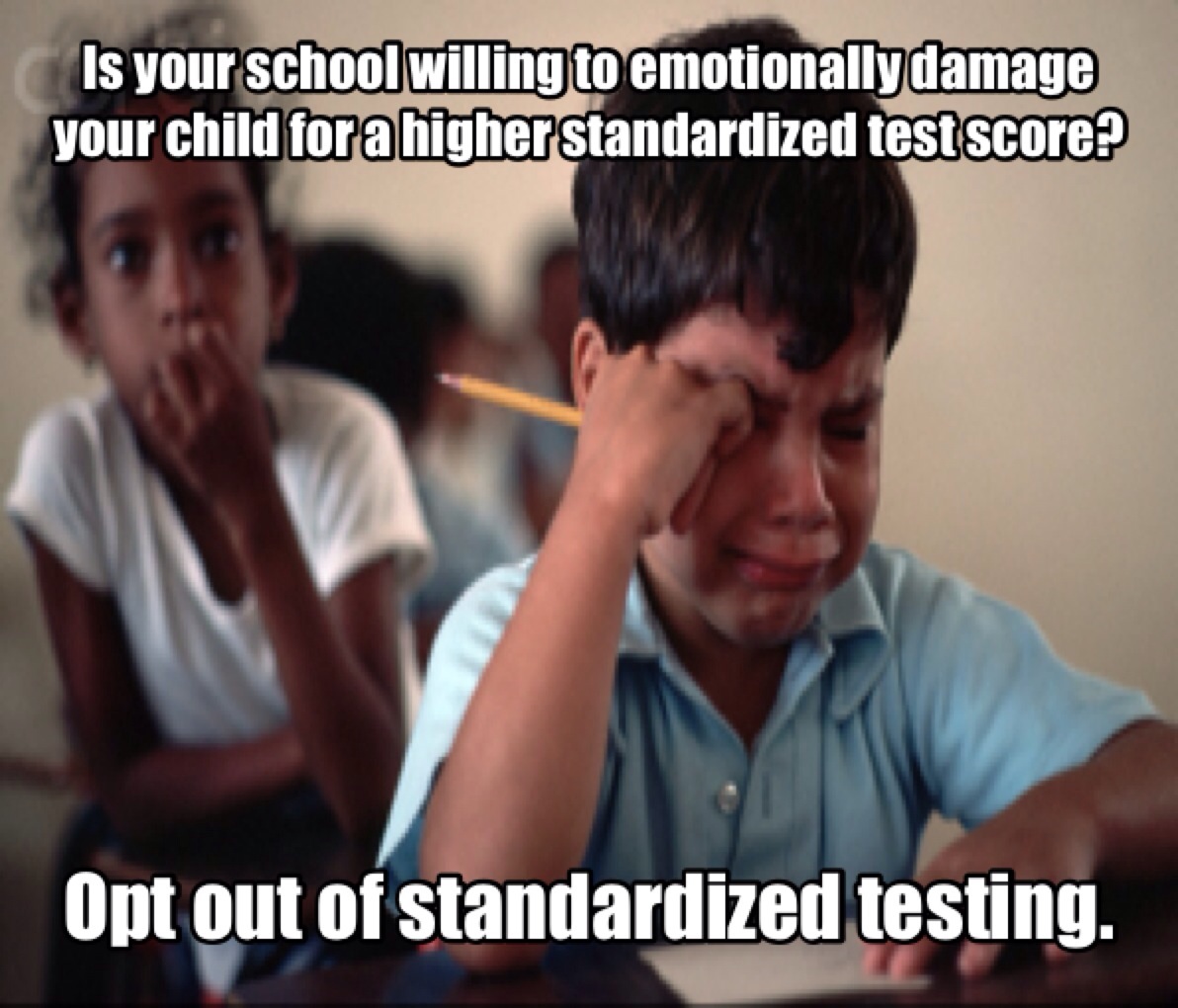
STANDARDIZED TESTING
1
IMG_0975.JPG

2
IMG_2013.JPG

3
IMG_1262.JPG

4
IMG_1782.JPG

5
IMG_1903.JPG

BUDGETS
6
IMG_1764.JPG

7

IMG_2040.JPG

8
IMG_0559.JPG

COMMON CORE
9
IMG_1972.JPG

10
IMG_1295.JPG

11
IMG_1710.JPG

TENURE

12
IMG_1800.JPG

13
IMG_1696.JPG
14
IMG_1603.JPG

VALUE-ADDED MEASURES (VAM)

15
IMG_1489.JPG

16
IMG_1106.JPG

17
IMG_0476.JPG

CORPORATE EDUCATION REFORM

18
IMG_1817.JPG

19
IMG_1492.JPG

20
IMG_0901.JPG

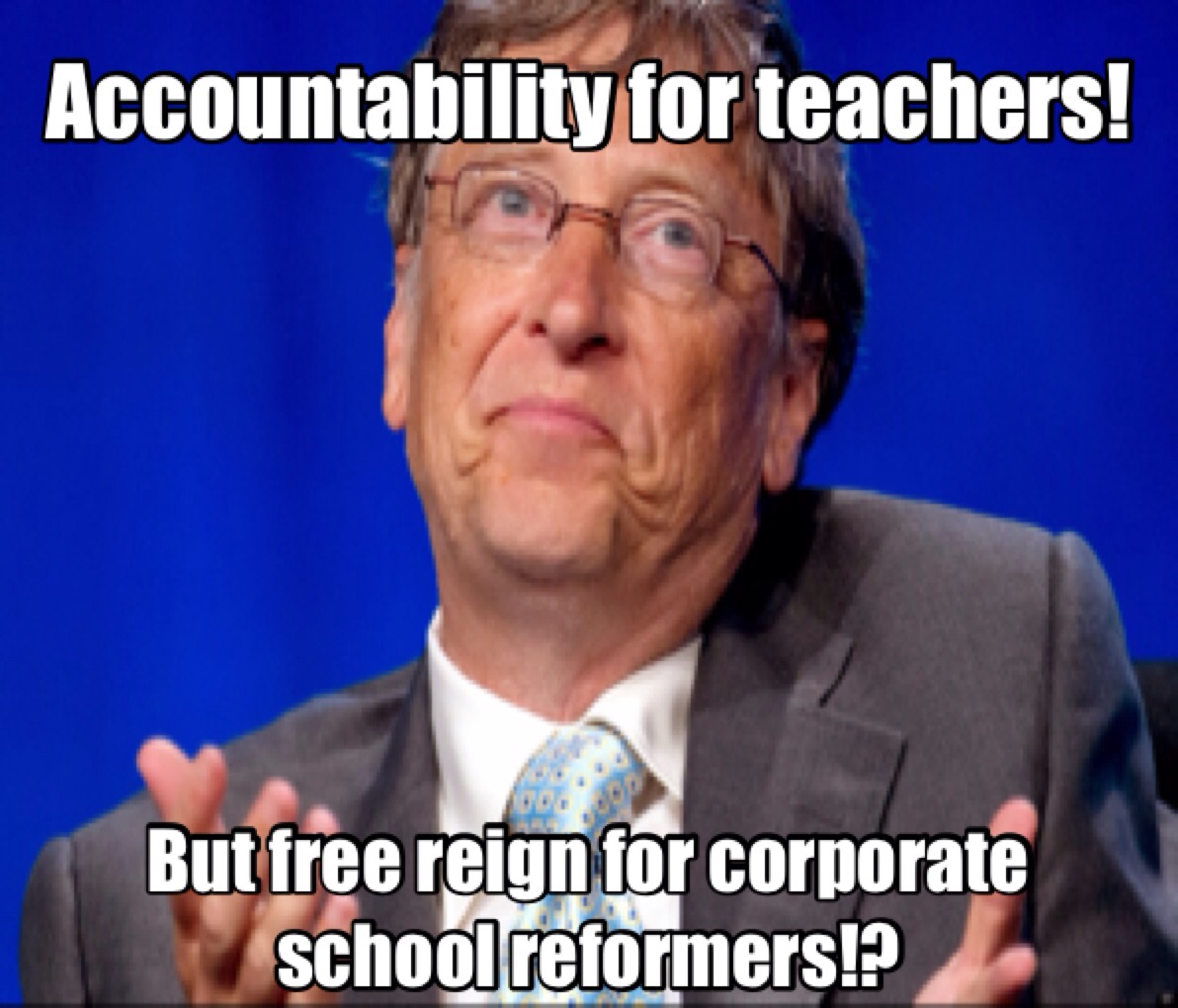
ACCOUNTABILITY

21
IMG_2023.JPG

22
IMG_2101.JPG

23
IMG_1072.JPG

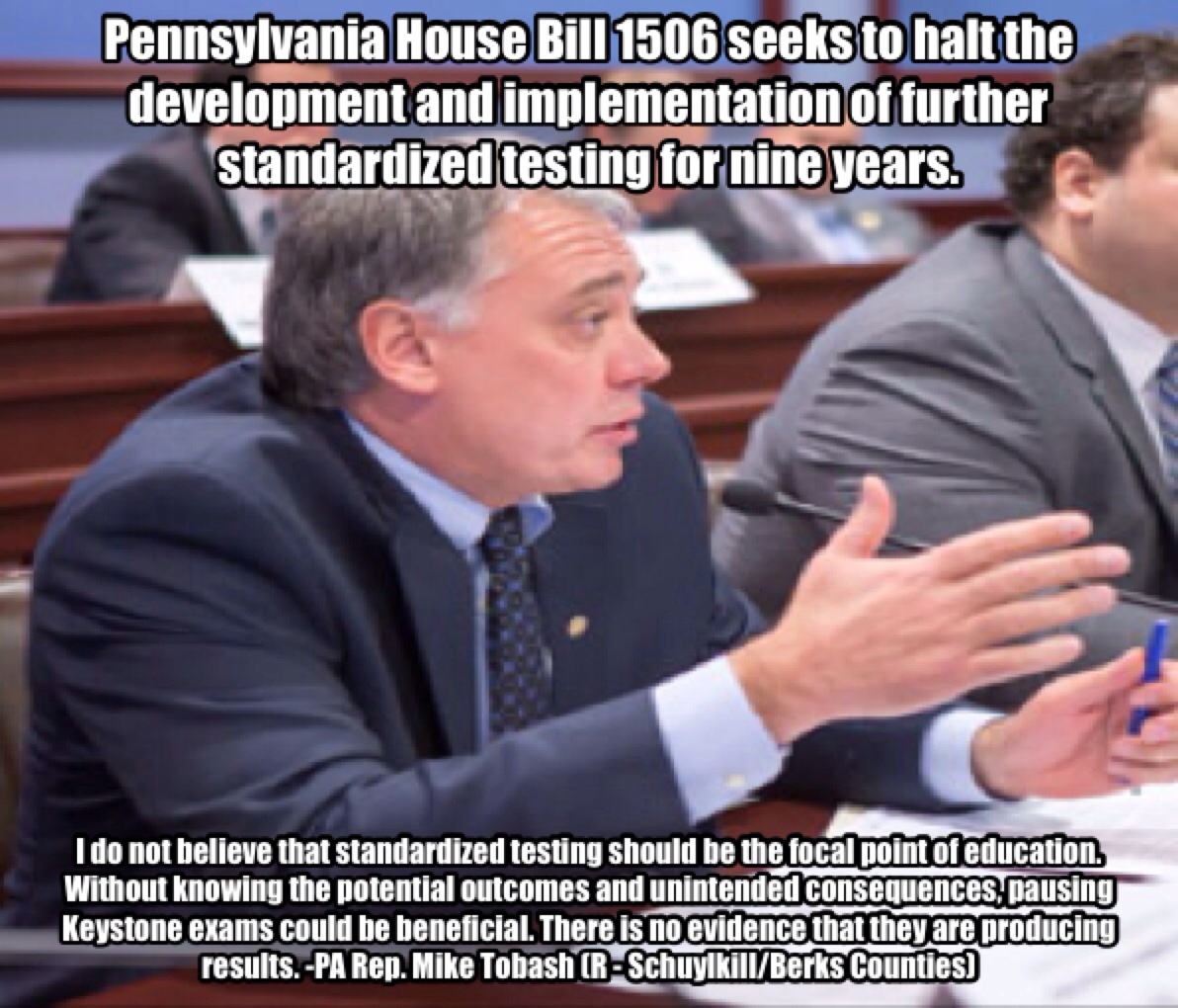
PENNSYLVANIA ISSUES
24
IMG_1793.JPG

25
IMG_1776.JPG

26
IMG_1222.JPG
27
IMG_0919.JPG
28
IMG_1420.JPG

MISCELLANEOUS

29
IMG_1927.JPG

30
IMG_1891.JPG

31
IMG_1950.JPG

32
IMG_1392.JPG

33
IMG_1446.JPG

34
IMG_1912.JPG

Burning Questions From Lee Schools Opt Out Reversal

burning-question-mark

There are two burning questions that come out of the Lee Schools Opt Out drama:


1) Why must our schools give standardized tests?

2) Who is in charge of our public schools?


To recap, the democratically-elected Board of Education for Lee Schools in Florida voted last week to opt out of all state standardized tests. Then fearing the consequences, the board voted again on Tuesday to reverse its original decision.


Why? A decision had been made due to a massive public outcry against standardized tests. Though it certainly wasn’t unanimous, the people had spoken. The voting public did not want this for their children. Why reverse the decision?


The only response we get from the superintendent, some school directors and other pro-testing advocates is that there are too many negative consequences for opting out. They fear the loss of state education funding and grant money. They fear students who haven’t taken state standardized tests will not be able to graduate. They fear that even if students do graduate, they won’t be able to get into good colleges or universities.


There is some truth to the worry about loss of funding. However, these other fears are baseless.


Opting out of standardized testing – whether individually or at the district level – cannot legally stop a senior from graduating. While rules vary from state to state, schools generally are required to allow senior projects and alternative assignments to count for whatever portion of their high school education is being displaced by opting out. At the very least, students can escape the endless multitude of state standardized testing given throughout elementary, middle and grade school and replace it with a single high school evaluation. A concordant score on SAT, ACT, PERT, or PSAT, can be used instead.


Moreover, this won’t hurt student’s chances of getting into college. Tests like the SAT originally were required by higher learning institutions as a way of predicting whether students would do well in college. However, studies continually show high school GPA is a better indicator of collegiate performance than standardized tests. As such, more than 800 colleges and universities no longer even require applicants to take the SAT.


What’s missing is any argument for the intrinsic value of the tests, themselves. Judging from the glaring absence of such arguments, one would be forgiven for concluding that standardized tests have no value in themselves. They only have value in what they can get you from the political system.


That, in itself, is very troubling. Why are we giving these tests in the first place? We have no pedagogical reason. In fact, much academic research has concluded that these tests at best serve no useful function and at worst actually cause harm. However, there is an entire cottage industry built around the manufacture, grading and preparation for these tests. Corporations are lobbying the state and federal government to continue this practice of increasing standardized testing.


So the reason our public schools are continually giving these tests is purely financial. People are making a pile of money off of it. Tax money. Your money.


Which brings us to the second question – who is in charge of our public schools?


On first glance, one would assume local school boards have this distinction. Voters decide who they want to represent them to run the public schools effectively. After all, school boards hire all the teachers, custodians, administrators and superintendent. They decide which extra-curricular activities to have and at what cost. They decide salary, bids for construction and repair of school buildings, etc. However, the role of the state and federal government has increased dramatically.


This is in large part due to budget crises at the state and federal level. While public schools are funded in part by local property taxes, a large portion of their budgets come from the state and federal government. This is especially true for districts that serve an impoverished population that cannot afford the same tax rates as more wealthy districts.


Meanwhile state and federal tax revenues are shrinking – partially due to a stagnant economy, but in large part because business taxes are continually forgiven, waived and incentivized. Public services like schools are left wanting. To garnish the shrinking pot of state and federal tax dollars, schools have had to sing for their supper.


Schools are told that if they want to continue operating, school directors must decide to enact certain education policies – chief among them are adopting Common Core State Standards and high stakes standardized testing.


So who’s really in charge here? Local school directors ostensibly have the right to make the decision but only with the gun of school funding held to their heads. Is that really a choice? Vote for standardized testing or we’ll take away your ability to operate?


It’s not much of a choice. I’d argue a forced choice is no choice at all. Therefore, even though it looks like we, the taxpayers and voters, are in control of our public schools, this is not the case. The major decisions affecting our children are made by bureaucrats at the state and federal level who have in turn sold their power to the testing industry.


You don’t have to be far left or far right to find that troubling. No matter where you fall on the political spectrum, you probably value democratic rule. And this is something we’ve lost in our public schools.


Our children are forced to sit through weeks of standardized testing for no benefit except it will needlessly impoverish taxpayers and increase the wealth of the testing industry.


But there is hope. While school directors like those in Lee County often find their hands tied by these political shenanagans, individual parents are not thus encumbered. They are free to make decisions about their own children based not on corporate profits but on what’s truly best for their kids. Parents can individually and in groups opt their children out of standardized testing.


Parents have the power. If enough of them utilize it, they’ll force their schools to confront the state and federal government huddled defensively around the testing industry. The government can’t withhold funding from everyone.


It just takes an act of civil disobedience. Do Mom and Dad have it in them?


You can find out more about opting out from the Web site for the National Center for Fair and Open Testing.


The Multiple Choice Mind

colorful-mind


What’s wrong with standardized tests?

Federal and state governments have been pushing for more multiple choice, fill-in-the-bubble tests in our public schools for decades. Districts, teachers and administrators are labeled as effective or ineffective based on how well their students score on these tests. The whole media blitz of stories about failing schools comes down to this one thing: too many kids aren’t scoring well on their many, many standardized tests.

In an effort to increase test scores, public schools that miss the mark are being stripped of their school boards and given to for-profit companies who promise to bring up those scores but never actually do.

Meanwhile test-making companies like Pearson are raking in the cash BOTH producing the tests and the remedial material schools are told they need because their students aren’t scoring well enough.

And the reason for all these failing grades is obvious to anyone who actually looks at student demographics: the rich kids score high and the poor kids score low. So poor test scores are really an indicator of the almost 1/4 of American children living in poverty. But instead of attacking the root of the problem, politicians and policymakers scream for more standardized tests.

It’s a political scam that’s easy to see. One could oppose standardized testing without even looking at a single bubble sheet. But that would be to miss a perhaps even more pernicious aspect of this whole educational fiasco. There’s something wrong with the tests, themselves, with the whole idea that standardized testing taken to this extreme is (1) a good indicator of student learning and (2) produces sound educational outcomes.

To see how this is true, please answer the following multiple choice question.

Fill in the correct answer using a number two pencil. Please fill in the bubble directly before the letter of the answer choice that best completes the following sentence:

1) A strong emphasis on standardized testing in public education systems is                          to student learning.

( ) (A) essential
( ) (B) modeled
( ) (C) the expression of a standard in relation
( ) (D) peculiar

If you picked A-D, congratulations! You’ve written on your computer screen and may need to buy a new monitor, ipad or cellphone screen, in which case Bill Gates thanks you for playing!

If you chose a different answer in your own head such as “harmful,” “destructive” or “stunting,” then you’ve just shown the biggest problem with standardized tests: you have to pick between pre-approved alternatives. In the real world, we want people to be able to make their own decisions, not just chose from the available options. If someone asks, “Coke or Pepsi?” you should be free to answer “Water.” If someone asks, “Football or Basketball?” you should be free to say “Art.” If someone asks “Democrat or Republican?” you should be free to say “Independent.” But this is not how we are preparing our public school kids for the world. Standardized testing is an effective way to create good consumers, not good thinkers.

From a business point of view, one can see the value of narrowing people’s options. After all, the world is not multiple choice, but advertising is. We are constantly bombarded by false choices and expected to accept them at face value. Turn on the TV and you’ll be deluged by commercials for various energy drinks: Red Bull, Five-Hour Energy, Monster, etc. Nowhere will you find an advertisement for getting a good nights sleep or exercising regularly – things that might actually give you real energy and not just a caffeine boost. One could put it as a multiple choice test:

2) Which is the best way to get energy?
( ) (A) Drink Red Bull
( ) (B) Drink Five-Hour Energy
( ) (C) Drink Monster
( ) (D) Drink Rockstar

The correct answer isn’t even one of the choices. If you can get the consumer to let you frame the question, you can increase your market share and boost profits. Training people to accept limited choices, to accept someone else framing the alternatives is a good business model. Big business doesn’t care how well you can think, only how much you spend and continue to spend every week.

Compare this to our mainstream media. Talking heads get to frame the narrative convincing us there are only a limited number of possible choices in any news story. (Given how much we’ve internalized these media narratives, it’s best to give my examples in the most generic ways possible to avoid political knee-jerk reactions to hot button issues.) Are you with us or against us? Do you believe in science or religion? Are you for country A or Country B? Do you think product X is harmful or do you believe in free choice? Should people be allowed to do Z or are you a bad person?

Life is more complicated than that, but everyday you hear people foaming at the mouth, screaming at each other from only two well-defined view points. Again we could see this as a multiple choice question:

3) Which country do you side with?
( ) (A) Country A
( ) (B) Country B

No middle ground allowed. Rarely do you hear someone say Country A is right about this and wrong about that, while Country B is wrong about this and right about that. And we don’t even question it. Whether intentional or not, this is the outcome of a strong emphasis on standardized testing.

Think about it. Public school students today don’t just take one or two multiple choice, fill-in-the-bubble tests. Standardized testing easily can go into the double digits every year and gobble up months of class time. When kids aren’t testing, their teachers are being forced to steer the curriculum toward more test prep. We’re teaching generations of children that the most important choices – the ones that count – are multiple choice. If something requires you to think beyond the bubbles, it’s not as important.

The result of this decades-long effort to deify the standardized test as the only valid, objective measure of student learning is a dumbed down educational system. Sure, individual teachers and administrators fight against it, but legislators now insist the only measure of teacher efficacy is student achievement on these same tests. So any educator who goes above and beyond and teaches his students to think for themselves actually does himself a disservice professionally. How can students who expect to think outside of the box be accurately judged on their ability to pick between the same canned multiple choices? And if their test scores drop, this educator will be judged “ineffective” and – if he doesn’t straighten up and teach to the test – he’ll soon be out of a job.

The bottom line is simple: we need to reign way back on standardized testing. These test have value to evaluate the most basic levels of understanding, but abused they lead to the results explicated here.

We need to teach our young people to think outside of the box, not inside the bubble. But sadly even the school reform debate is usually framed in this reductionist pattern:

4) Which statement is true?
( ) (A) Corporate reform strategies like standardized tests are the best way to evaluate student learning.
( ) (B) Not all children can learn.

5) Student learning is best stimulated by which of the following?
( ) (A) Common Core and its associated testing
( ) (B) Traditional antiquated styles of learning.

6) Who has the best interests of students at heart?
( ) (A) corporate school reformers
( ) (B) people in the pocket of the teachers unions

The real answers go beyond the multiple choice mind. Our children are being trained not to be able to tell the difference. Can you?