

Our Martyred Brothers: What 43 Missing Mexican Student Teachers Share with US Educators Fighting Factory School Reform

A-young-woman-takes-part-in-a-demonstration-demanding-information-on-the-whereabouts-of-the-43-missing-students-in-Mexico-City-on-Nov.-5-2014-AFP-800x430

Death is the ultimate exclamation point.

We walk through life blissfully unaware until someone dies.

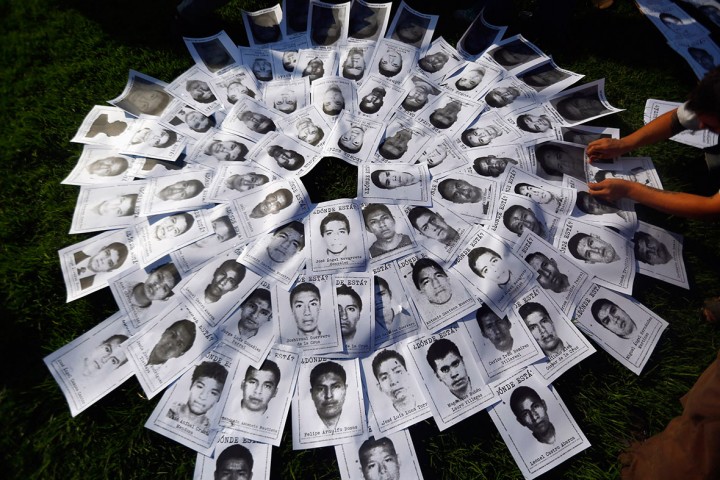
Such is the case for 43 someones in Mexico. These rural first-year teaching students were kidnapped on Sept. 26 by police and allegedly handed over to a drug cartel who tortured and killed them.

Why such violence against a group of young men from one of the poorest states in the country who had dedicated their lives to care for the needs of Mexican children?

They opposed the country’s education reform policy.

That’s right. They were just like us.

Just like the 53,000 members of the Badass Teachers Association or the 99,000 people who follow Diane Ravich on Twitter or all the parents who stand in the back of a school board meeting holding a sign against toxic testing.

They had come from rural Ayotzinapa to the city of Iguala to peacefully protest but were fired on by police. Six died on the scene and 43 more were taken into custody and are presumed dead. Students who survived the attack but escaped capture said army personnel were in the area and aware of what was happening, yet did nothing to stop the massacre.

Mexican school reform is apparently a bloody business. But reading the background of this tragedy is like looking in a mirror.

In February 2013, Mexican President Enrique Peña Nieto signed an education reform bill with the support of the three main political parties. The bill reads like it was plagiarized from the United States federal Race To The Top program. In fact, it’s much worse.

It includes hiring and promotion based solely on “merit,” new allegedly more rigorous educational standards, and reappraisal of teachers deserving tenure. Local control of public education is almost completely negated in favor of a new federal National Institute for Education Evaluation.

Like it’s American counterpart, it ignores the realities of poverty in favor of vilifying teachers.

Millions of Mexican school children suffer from a dismal lack of funding and infrastructure. Many schools lack floors, bathrooms, Internet, or even telephone access, and in rural areas roads to schools often are non-existent.

At least a third of schools face severe infrastructure problems, according to an April 2014 census report on pre- through middle schools. A total of 41% lack sewage systems and 31% have no drinkable water. Fixing the problem would cost at least $4 billion.

Just like in the United States, the Mexican reform agenda was created and pushed through by big business. In this case, the right-wing business group “Mexicans First” is hoping to undo much of the liberal reforms associated with the Mexican Revolution. The goal is to subordinate education to the profit needs of big business.

The strategy includes singling out and slandering educators in the mass media for the supposed failures of public education. As in the US, the position of the teachers unions has been not to reject the reactionary plan, but to demand that they be included as partners.

Public outcry against the massacre has been massive. Students have called for a general strike on Nov. 20. On Saturday, Nov. 8, demonstrators set fire to the door of Mexico City’s ceremonial presidential palace. Protestors chanted “it was the state” and called for the resignation of President Nieto and the Attorney General.

The most popular rallying cry seems to be “Ya Me Cansé.” It means: “Enough. I’m tired” or “I’m already tired.”

Would it take similar bloodshed for the American public finally to be fed up with our own factory schools movement?

Our own government pushes these same counter-reforms.

Just like in Mexico, US privatizers drool all over the prospect of de-professionalizing teaching, and raking in education funding as profits. The only difference is we haven’t started murdering protestors yet.

I’ll admit it’s a big difference, and I’m thankful for it. Otherwise, my body would have been tossed on the rubbish heap long ago.

But after investigating this tragedy, I can no longer look at our own self-proclaimed reformers the same way. They look like Mexican gangsters.

There is very little to distinguish them from the corrupt Mexican government and its drug cartels. If you put Bill Gates, Barrack Obama, Arne Duncan, Michelle Rhee and Campbell Brown in a room with their Mexican counterparts, there is much they’d agree on.

Common Core State Standards? YES!

Merit Pay? YES!

Abolishing teacher tenure? YES!

Murdering dissidents?

No?

I hope so.

But before we let them off the hook, it’s best to look at the blood on their hands.

Oh, yes, they are dripping with blood.

Our American government is complicit in this tragedy because of our never wavering faith in the drug war that feeds it – American demand, Mexican supply, American guns, Mexican bloodbath.

As we ponder how far our own politicians and corporate leaders are willing to go to ensure their agenda, let us pause to remember our brothers who died in Mexico.

They were someone’s sons. They had been born, loved, cherished and wanted to make a difference.

They didn’t want to be martyrs. They wanted to be teachers.

Sometimes that means the same thing.

Ya Me Cansé!

Ya Me Cansé!

Ya Me Cansé!

YA ME CANSE!
mexico-missing-students


This article has also been published on the Badass Teachers Association blog.

Reformers Standardize – Teachers Individualize

head in book
If you turn on the TV these days, you’re bound to come across a news program talking about education reform. You’ll see at least five talking heads – not one of whom is an actual school teacher.


And no one thinks there’s anything wrong with that.


You’ll find actors, sports stars, politicians, hedge fund managers, vulture capitalists, economists… anyone but a living, breathing educator. If you’re lucky, you might find someone like Michelle Rhee who taught for about three years before becoming a professional education reformer and then was embroiled in various cheating scandals.


Would we find this acceptable if it were in other fields? I wonder if a panel on medical reform held without a single doctor would have the same gravitas. Maybe a discussion on safe ways to fly an airplane without any airplane pilots would be well received. ‘Laws Without Lawyers’ would sure be an informative talk! Heck! We even hire ex-athletes and coaches to go on ESPN and talk about the games they, themselves, played and/or coached!


Only in the field of education do we find The Professional completely superfluous. Much has been made of the public’s disregard for teachers: the idea that since you’ve graduated high school, you know what it means to be a teacher. You don’t.


You don’t get a teaching certification digging around in a Crackerjack box. People earn genuine college degrees in this – many of them get masters and doctorates. Those degrees even require you to go out and do some actual teaching! Let me assure you, none of it entails reminiscing about your old high school days and all the teachers who were mean to you.


So why does the public love reformers but hate teachers so much? I think it’s because we let them define the debate and frame the narrative.


“He who frames the question wins the debate,” goes the old saying. Though erroneously attributed to Randall Terry (There is no evidence he was the first to use it), it’s true.


We’ve let the Michelle Rhee’s of the world do exactly this. To see how, ask yourself the following question: What do we call THEM?


The answer: Education reformers. Some of us try to put a disparaging “Corporate” at the front, but by then the damage is done.


They’re the “reformers,” and what do we call those who oppose them? We don’t even really have a name. Nothing except “TEACHERS!” said with a sneer! Or maybe they’ll try to stick in “UNIONS!” with that same sarcasm! Even if you don’t belong to a union, even if you aren’t a teacher, they’ll try to tie you to those pejorative terms: “You’re in the pay of the teacher’s unions!” Heaven help us!


In the court of public opinion, the facts don’t matter. This is where we’ve lost. It doesn’t matter that the state and federal government has been trying out the pet projects of these “reformers” for at least a dozen years and none of their promises have come true. No Child Left Behind, Race to the Top, Common Core, high-stakes testing, charter schools, vouchers – it’s all the same snake oil they keep selling the public again-and-again…  AND PEOPLE KEEP BUYING IT!


But what choice do they have? These are the “reformers.” If I’m against them, what am I? An obstructionist? Am I in favor of the status quo? Do I just want to keep things the way they are?


Of course not! But we’re stuck without a name to call ourselves and, to be honest, a more accurate (but polite) term to call them.


Let me offer a solution.


We’ve seen that the reformers really aren’t reformers at all. They’re “STANDARDIZERS.” Isn’t that, after all, the goal of all their botched and bungled education efforts?


Our national and state education policies push for students and teachers to be evaluated on standardized tests. Teachers must use common standards from which to design their lessons. Many times, teachers are required to read their lessons right from a standardized script. It’s all about making students and teachers march in line to the ca-ching of the cash register as public money flows into privateers’ pockets. (Who do you think pays for all those tests and test prep? You do, Mr. and Mrs. Taxpayer!)


Even the debate on teacher tenure is about standardization. The shadowy AstroTurf organizations financing these attacks want teachers to shut up and get in line. No more due process so they can fire whoever they want, whenever they want. No more talking out against these failed reforms. No more push back. Just read from the script, do your test prep, proctor your standardized tests and when you’ve either quit or your salary is too expensive, it’s time for you to go into another field.


STANDARDIZERS want our public schools to look like the educational equivalent of Walmart or McDonalds. On any given day, walk into an 8th grade class in a school in Brooklyn and walk into one in Kansas City or Los Angeles or anywhere in the country and you’ll see the same lesson being taught the same way by your easily replaceable and inexperienced teacher.


Many of us oppose this goal. We think this isn’t the best way to educate our children. But what do you call us? What term best characterizes our educational outlook and goals not just by contrast to what STANDARDIZERS do but also positively describes what we think a good educational system should look like?


I’d suggest “INDIVIDUALIZERS.” After all, that’s what good teachers do. We individualize children’s education.


We construct our lessons so that they address the various learning styles of our students. We let students make choices and hold them responsible for those choices. We talk to parents and psychologists and make decisions based on our students needs. We thoroughly read our students IEPs and abide by them (instead of just ignoring them like the STANDARDIZERS do). We meet kids where they are and help them progress from there. We don’t start at some arbitrary standard. We don’t tell them facts are all that matter. We cherish their opinions and help them make stronger arguments based on facts.


This includes school funding. STANDARDIZERS say they want every school to get equal funding! That sounds great – equality – but what we need is equity. Poorer schools require more funding than those that serve a wealthier population. Impoverished students need extra tutoring, child care, basic health programs and other wraparound services for the things that – for whatever reason – don’t get provided at home. And there are an awful lot of kids in need. A majority of all public school students in one third of America’s states now come from low-income families. Poor kids just cost more to educate.


The rest of the industrialized world knows this and funds schools accordingly. We’re one of the few countries that willfully refuses to do it. It’s like the racist who claims he “can’t see color.” STANDARDIZERS won’t see poverty. They also won’t see that many of these impoverished children are minorities, either.


A sure way to tell if you’re talking to a STANDARDIZER is if he says that we need to stop wasting money on schools that don’t work and start investing in ones that do. It just means he thinks rich kids deserve more money than poor kids. You don’t think STANDARDIZERS want all this mechanized horror for their own kids, do you?


Despite what they say, STANDARDIZERS know standardization isn’t what’s really best for children. You can tell by where they send their own kids – private and parochial schools that don’t have to abide by their own standardized policies! (Wow! Isn’t that a shock!?)


This robotic utopia isn’t for their own children. If you walk into a rich school – probably a charter, parochial or private school – you won’t see standardization. If they want public schools to be Mickey Dees, they want their kids schools to be a celebrity chef’s burger bistro selling made-to-order patties of Kobe beef topped with Foie Gras! And there’s nothing wrong with that, BUT it’s awfully telling that what they want for their own children is too good for yours and mine.


So to review, Corporate Education Reform is all about standardization. Those who oppose it are in favor of individualization.


Or to put it in a soundbite: Reformers Standardize – Teachers Individualize.


I think if we start talking about it like this, we may see a change. Every time a STANDARDIZER tries to frame it their way, correct them. Don’t let anyone characterize the status quo as “reform” without correcting them that it’s actually about standardization. We need individualization.


It will take time, and we need to continue making the arguments we’re already making about why this is true. But eventually things might change.


One day in the not-so-distant future, you might turn on a TV news program about education reform and hear from – GASP! – a teacher!


NOTE: Many Individualizers self-identify with activist groups to oppose the work of standardization. For example, some call themselves BATS or Badass Teachers since they belong to the Badass Teachers Association. (I know I do!) And there’s nothing wrong with that. However, I think we need a close synonym, a broader blanket term for the entire aggregate of people who oppose standardization. Not everyone will want to be called a Badass Teacher. But we can all be Individualizers. And, moreover, the use of that term in contrast to “standardizer” helps us frame the narrative in a more truthful way than that currently being popularized.