I am a Public School Teacher. Give Me All the Refugees You’ve Got!

syrian_refugee_schools

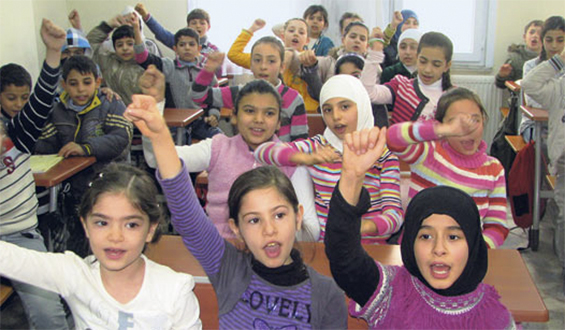
Come into my classroom any day of the week and you’ll see refugees.

That little Iraqi boy slumped over a book written in Arabic while the rest of the class reads the same story in English. Those twin girls blinking back memories of the Bosnian War as they try to underline possessive nouns on an English worksheet. That brown-skinned boy compulsively rocking back-and-forth in his seat fighting back tears wondering when his dad is going to come home from prison.

Every day, every hour, every minute our public schools are places of refuge for children seeking asylum, fugitives, emigres, exiles, the lost, the displaced, dear hearts seeking a kind word and a caring glance.

Some may shudder or sneer at the prospect of giving shelter to people in need, but that is the reality in our public schools. In the lives of many, many children we provide the only stability, the only safety, the only love they get all day.

And, yes, I do mean love. I love my students. Each and every one of them. Sometimes they are far from lovable. Sometimes they look at me with distrust. They bristle at assignments. They jump when redirected. But those are the ones I try to love the most, because they are the ones most in need.

I told a friend once that I had a student who had escaped from Iraq. His parents had collaborated with the U.S. military and received death threats for their efforts. So he and his family fled to my hometown so far away from his humid desert heartland.

I told her how difficult it was trying to communicate with a student who spoke hardly any English. I complained about budget cuts that made it next to impossible to get an English Language Learner (ELL) instructor to help me more than once a week. And her response was, “Do you feel safe teaching this kid?”

Do I feel safe? The question had never occurred to me. Why wouldn’t I feel safe? I don’t expect ISIS to track him down across the Atlantic Ocean to my class. Nor do I expect this sweet little guy is going to do anything to me except practice his English.

In one of my first classrooms, I had a dozen refugees from Yugoslavia. They had escaped from Slobadan Milosevic’s ethnic cleansing. Yet you’d never know unless they told you. They were some of the most well-behaved, thoughtful, intelligent children I’ve had the pleasure to teach. They were always smiling, so happy to be here. They approached every assignment with a seriousness well beyond their years.

But sometimes you’d see a shadow cross their faces. Rarely you’d hear them whispering among themselves. I was so new I didn’t know any better but to come down on them. But later they told me what they had been talking about, what they had been thinking about – how Henry V’s military campaign brought back memories. They taught me that day. Every year I learn so much from my children.

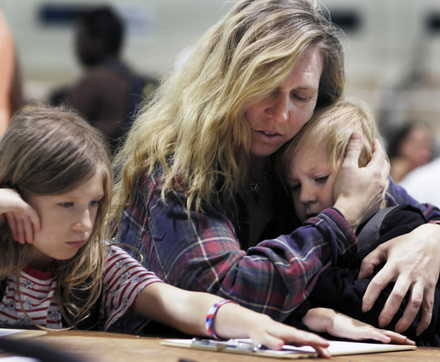
My high poverty school doesn’t get a lot of refugees from overseas these days. But we’re overwhelmed with exiles from our own neighborhood. I can’t tell you how many children I’ve had in class who start off the year at one house and then move to another. I can’t tell you how many come to school bruised and beaten. I can’t tell you how many ask a moment of my time between classes, during my planning period or after school just to talk.

Last week one of my students walked up to me and said, “I’m having a nervous breakdown.”

Class had just been dismissed. I had a desk filled to the ceiling with ungraded essays. I still had to make copies for tomorrow’s parent-teacher conferences. I had gotten to none of it earlier because I had to cover another class during my planning period. But I pushed all of that aside and talked with my student for over an hour.

And I’m not alone. On those few days I get to leave close to on time, I see other teachers doing just like me conferencing and tutoring kids after school.

It was a hard conversation. I had to show him he was worth something. I had to make him feel that he was important to other people, that people cared about him. I hope I was successful. He left with a handshake and a smile.

He may not be from far away climes, but he’s a refugee, too. He’s seeking a safe place, a willing ear, a kind word.

So you’ll forgive me if I sigh impatiently when some in the media and in the government complain about the United States accepting more refugees. What a bunch of cowards!

They act as if it’s a burden. They couldn’t be farther from the truth. It’s a privilege.

When I see that iconic picture of three-year-old Syrian boy Aylan Kurdi drowned in Turkey as his family tried to escape the conflict, I find it impossible that anyone could actually refuse these people help. Just imagine! There are a host of others just like this family seeking asylum and we can give it! We have a chance to raise them up, to provide them a place to live, to shelter them from the storm. What an honor! What a privilege! What a chance to be a beacon of light on a day of dark skies!

I’m an American middle class white male. My life hasn’t been trouble free, but I know that I’ve won the lottery of circumstances. Through none of my own doing, I sit atop the social ladder. It is my responsibility to offer a helping hand in every way I can to those on the lower rungs. It is my joy to be able to do it.

It’s what I do everyday at school. When I trudge to my car in the evening dark, I’m exhausted to the marrow of my bones. But I wouldn’t have it any other way.

It’s not uncommon for a student or two to see me on the way to my car, shout out my name with glee and give me an impromptu hug. At the end of the day, I know I’ve made a difference. I love being a teacher.

So if we’re considering letting in more refugees, don’t worry about me. Send them all my way. I’ll take all you’ve got. That’s what public schools do.


NOTE: This article also was published in Everyday Feminism, the LA Progressive and on the Badass Teachers Association blog. It was also quoted extensively in an interview the National Education Association did with the author.
 

Prejudice of Poverty: Why Americans Hate the Poor and Worship the Rich

2children


Take a breath.

Take a deep breath. Let your lungs expand. Let the air collect inside you.

Hold it.

Now exhale slowly. Feels good doesn’t it? You’d never realize there are hundreds of contaminates floating invisible in that air. Dirt, germs, pollution – all entering your body unnoticed but stopped by your immune system.

If only we had such a natural defense against prejudice. Racism, classism, xenophobia, sexism, homophobia – we take all that in with every breath, too.

It may not seem like it, but all these value judgments are inherent in American culture. They’re as much a part of life in the United States as the flag, football and apple pie. And to a greater or lesser extent, you have subconsciously accepted them to help construct your ideas of normality.

What does it mean to be a man? What does it mean to be a woman? How should black people be treated? To whom is it appropriate to be sexually attracted? What makes a person poor and why? All of these questions and so many more have been answered one way or another for us by the dominant culture. Not everyone accepts this perceived wisdom, but most of us have swallowed these solutions whole without thought, logic or criticism – and we don’t even know it’s happened.

Take our preconceptions about wealth and poverty.

Well paying jobs are drying up. Minimum wage work is becoming more common. Salaries are shrinking while productivity is increasing. Meanwhile the cost of living continues to rise as does the cost of getting an education.

Yet we still cling to the belief that all rich people deserve their wealth and all poor people deserve their poverty.

When we hear about someone on Welfare or food stamps, we sneer. The average conception is that this person is probably faking it. He or she could have earned enough to avoid public assistance, but he or she isn’t trying hard enough.

Moreover, we KNOW with a certainty that goes beyond mere empiricism that many of the poor still manage to buy the newest sneakers, have flat screen TVs and eat nothing but Porterhouse steaks.

You can hear this kind of story uttered with perfect certainty from the mouths of white, middle class people everywhere. They don’t mind helping people who are really in need, they say, but most poor folks are gaming the system.

Never once do they stop to consider that this story about impoverished individuals living better than middle class Americans is, itself, one of the most pervasive myths in our society. We know it the same way we know all Polish people are dumb, all Asians are smart and all Black people love fried chicken and watermelon.

However, none of this “knowledge” is supported by the facts. Look at the Supplemental Nutrition Assistance Program (SNAP). According to the New York Times:

Allegations of fraud, including an informal economy in which food stamps are turned into cash or used to buy liquor, gasoline or other items besides food have been used to argue that the program is out of control. In fact, the black market accounts for just over 1 percent of the total food stamp program, which is far less than fraud in other government programs like Medicare and Medicaid.

If you include erroneous payments because of mistakes on applications, overall loss to the food stamp program comes to 4%, according to the Department of Agriculture. Compare that to the 10% lost to Medicare and Medicaid – programs no one is calling to be cut or eliminated.

But figures like these don’t convince the average American. We’re so certain that all or most poor people are just lazy parasites. Everyone “knows” some low-income person they deem to be living too high for their circumstances.

And, yes, sometimes you do see an impoverished individual not wearing rags. Sometimes you do peek into an indigent person’s hovel and see new electronics or game systems.

How does this happen?

Debt.

Credit card companies are waiting in the shadows to extend a line of credit to just about anybody. It’s a safe bet for these businesses. If they give you money today, they can charge exorbitant rates of interest – even more so with the highest risk clientele. But there isn’t much risk to these corporations these days when almost anyone can take a job as a state constable or bail recovery agent to hunt down debtors and bring them to economic justice.

When you see a destitute child with new sneakers, his parents probably bought them with plastic. When you see an X-Box in a needy person’s house, chances are that wasn’t paid for in cash. They used the charge plate and will end up paying for that game system many times what it’s worth.

It’s a problem not limited to the poor. Even middle class folks are drowning up to their eyeballs in debt. As wages have decreased, people have used their credit cards to keep a standard of living they expect. But they’re paying for it with huge portions of their paychecks going to these credit card companies. Yet even though we all do this, middle class folks look down their noses at people lower down the economic ladder for doing the same thing.

In fact, they refuse to even see that obvious truth. Instead they cling to the lie that poor folks are social parasites. We even begrudge them food. Those are my tax dollars going to pay for that penurious person’s free ride, they say.

Unfortunately, we don’t stop to consider how much of our taxes are actually going to help the less fortunate.

Let’s say you make $50,000 a year. That means, you pay $36 toward food stamps. That’s ten cents a day – the same amount many charities ask to help feed starving children in Africa.

If you add all safety net programs, the cost only goes up an additional $6 a year. That doesn’t seem like a huge chunk of my taxes. Honestly, do you begrudge needy people less than the price of a meal for a family of four at Bennigan’s?

By and large, your tax bill isn’t going to the poverty-stricken. It’s going to the wealthy. Over the course of a year, you pay $6,000 for corporate welfare.

You read that right. Six K. Six grand. Six thou. Those are your tax dollars at work, too. And it’s a much larger burden on your bank account than the $42 you shell out for the poor.

What do you get for that $6,000 outlay? It includes at least $870 to direct subsidies and grants for corporations. An additional $870 goes to offset corporate taxes. Another $1,231 goes to plug holes in the federal budget from revenue lost to corporate tax havens. Oh! And don’t forget a sizable chunk for subsidies to Big Oil companies that are polluting our skies and fueling climate change and global warming.

Most of your money isn’t going to feed hungry children. It’s going to recoup losses for giant transnational corporations like Apple and GE that hide their money overseas to boost profits and avoid paying taxes for things we all need like schools, police and fire departments.

This money subsidizes giant multi-national corporations that are already making billions and billions of dollars in profit each year. In the past decade alone, corporations have doubled their profits – all while reducing their American workforces and sending jobs overseas. Yet we only complain about poor folks using food stamps and buying new sneakers on credit.

Why is that? Why does it only bother us when poor people get help and not when huge corporations do?

Part of it is the media. We’ve been convinced that big business deserves its money and poor people don’t. Another part of it is that these facts often go underreported. Movies and TV shows love portraying the parasite poor person but rarely portray the corporate leech. Outside of “It’s a Wonderful Life” and “A Christmas Carol,” the wealthy are usually portrayed in the most positive light possible and not as addicts hoarding cash they don’t need to compete with each other in a childish game of one-upmanship.

Finally, there is the racial and sexual element. By and large, corporations are run by white males. The poor are mostly black, brown and though women make up a slightly higher percentage than men, it is often conceptualized as uniquely female. Take the term Welfare Queen. Why is there no Welfare King? How telling that our conception only allows for one gender in this role!

The reality is much different. The true Welfare Queens are Big Businesses. They make unprecedented profits and avoid paying taxes on them. They have tons of cash on hand but never can seem to get enough. And if we increased the corporate tax rate to what it was in the 1950s when the Unite States was more prosperous than it has ever been, these same corporations would still be Filthy. Stinking. Rich.

So the next time you hear someone blaming the poor for gobbling up your taxes, remember the facts. First, it’s simply not true. There is no widespread fraud by the poor. They are not gaming the system. They are not putting an undue burden on the middle class. However, big business IS – in fact – cheating you out of income. Business people are getting fabulously wealthy on your dime – and even if we stopped subsidizing them, they’d still be fabulously wealthy!

Finally, don’t ignore the racial component. Would middle class Caucasians still complain so vehemently about the poor if they weren’t mostly talking about Black people, Latinos and women? I doubt it.

We may breath in these prejudices but we’re not helpless. It’s up to all of us to dispel these myths, not to let them stand, to confront them every time they come up. And, yes, I mean EVERY. TIME.

The only immune system we have as a society is education, knowledge, wisdom. And once you know the truth, don’t let anyone get away with this kind of racist, classist bullshit.


NOTE: This article also was published in the LA Progressive and on the Badass Teachers Association blog.


White Fragility Frames the Media Narrative of the Million Man March Forward

12139070_1233888909971346_1493116541_n

White people will go a long way to avoid talking about racism.

Not only does it seem invisible to most melanin deficient folks like myself, but we refuse to acknowledge it when someone tries to bring it to our attention.

That’s not racism. There is no racism. Stop stirring up trouble.

Unless someone is wearing a white sheet and burning a cross on a black person’s lawn, most Caucasians close their eyes, stick their fingers in their ears and stay willfully blind.

Sociologists call this White Fragility, and it was on full display in the media response to the Million Man March Forward on Saturday.

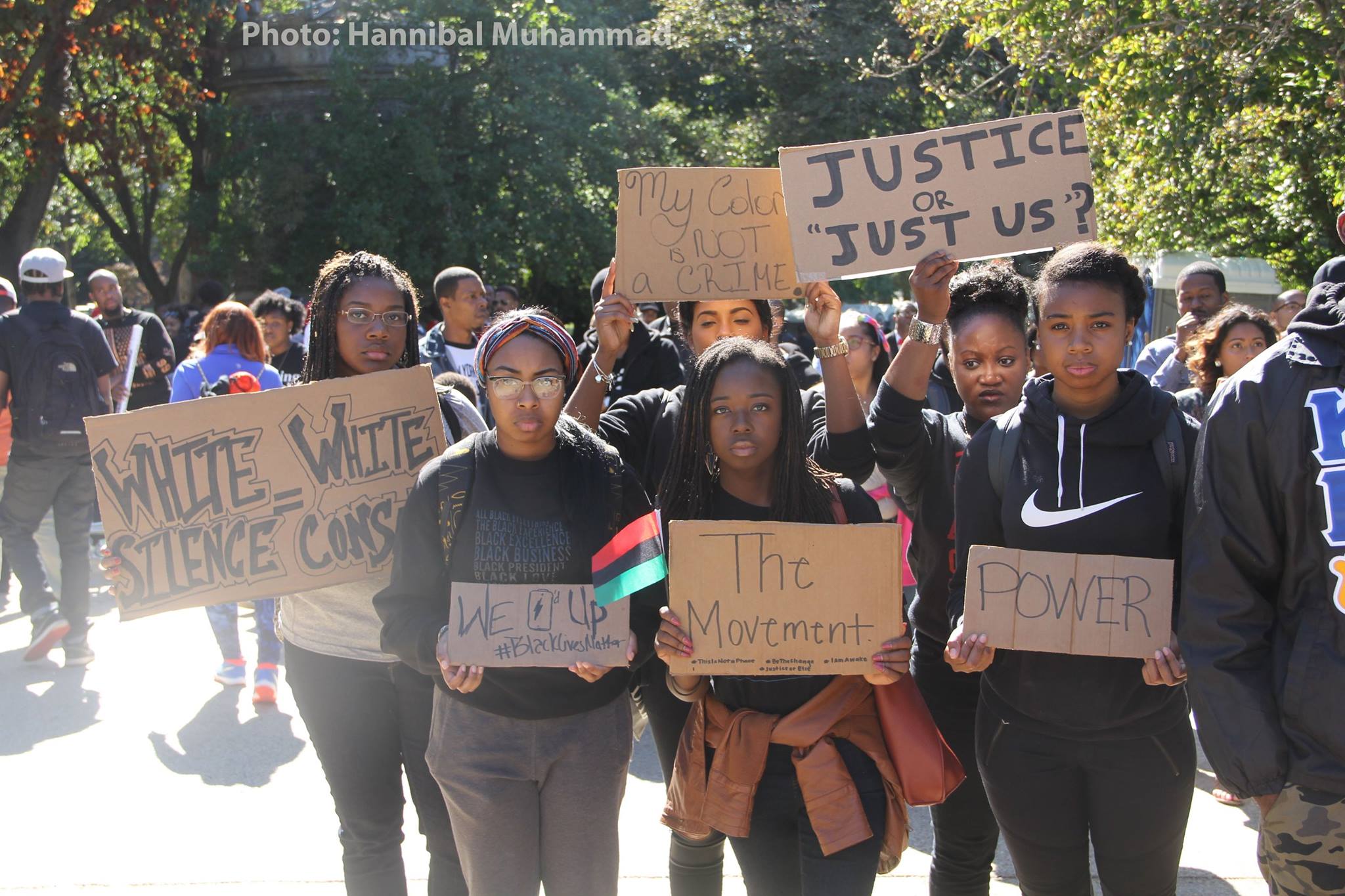
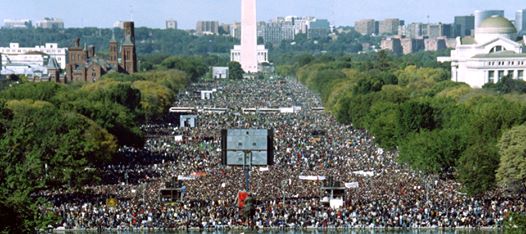
Thousands of African Americans and a smattering of people of other races and ethnicities gathered in the National Mall in Washington, D.C., to demand “Justice or Else” and commemorate the 20th anniversary of the original Million Man March.

Like during that 1995 gathering, today’s media was quick to frame the narrative in a way that silenced legitimate black concerns while benefiting White America.

First, most media outlets refused to cover the event at all. I guess to them there was nothing newsworthy going on. Just tens of thousands of black folks gathering in the nation’s capital. No saggy pants. No guns. Nothing to see here.

When the mainstream news covered it at all, it was to minimized its importance. Short articles basically saying – Here were some black people. Remember that time they did this before? In other news…

I remember the first march back in the 90s. I wasn’t there, but I remember how white folks talked about it. At first there was a genuine fear – black people with a united purpose coming together to better their social standing!? But we quickly found a way to negate everything they were doing.

How? Math.

Har! Har! Look at all those black folks gathered in front of the Capital steps. They held a Million Man March and didn’t even get a million men!

And therefore by the logic of white fragility we can ignore everything they did and said.

Institutionalized racism? Sorry not a million people!

Racial prejudice in hiring and firing employees? Not a million. Can’t hear you!

Police brutality? Come back when you’ve got more people!

12087324_1675832909318901_8512279402781528158_o

Of course it’s still a major point of contention exactly how many bodies showed up that first time. Estimates of the original rally put between 400,000 to 2 million folks on the scene. Unsurprisingly white people almost always go with the smaller number. I guess they don’t think black people can count that high.

But what if the lower estimation is true? Is there some racial math that bestows relevance on a moral crusade based only on sheer numbers? Is it okay to deny a handful of people their rights, a thousand or even a hundred thousand – but somehow a million is the tipping point where I have to say “No more”?

Even if only hundreds of thousands of people showed up, that’s something. Quite a lot, really. Doesn’t that demonstrate an attempt at racial unity, at addressing a shared list of problems? After all, how many people need to attend for White America to take them seriously?

This weekend journalists were careful not to make estimates of the number of attendees at the March Forward. But they’d subtly state that it was less well attended than the previous rally which – given the pictures I’ve seen of both events and the above mentioned disparity – seems somewhat hard to corroborate.

Still the media didn’t stop there. They found other ways to invalidate the event.

For instance, who is leading these marches? The Nation of Islam? Louis Farrakhan? Oh my! White people don’t approve of that! Therefore the whole gathering is unjustified. Poof!

Funny how that works. Black leaders must be perfect. White leaders? Not so much. George W. Bush was a C-student. Bill Clinton had extramarital affairs. Both men served as two-term presidents, and somehow the Republicans and Democrats go on.

Finally there was the rhetoric. This rally was subtitled “Justice or Else.”

That just won’t do. Angry black people demanding justice? No, white people simply will not respond to that kind of tone. If only they had been more polite about it, we might listen, but “Justice or else”!? Nope.

Any rational human being should be able to comprehend why black folks are demanding justice; They aren’t getting much of it from our courts. Unarmed black people are increasingly being murdered by the police and white citizens which prompts the debate of whether a crime has even been committed – a debate in which the answer is often, “No.”

The Black Lives Matter movement has grown because of just such concerns and the group was even represented at the rally.

But white folks – in the guise of analysis – ask what that phrase means “justice or else.” Are black people threatening to attack white people if they don’t get justice? What justice is there beyond a court of law? Do they really expect us to change our laws and hold our courts accountable?

No. Nothing to see here, folks. This throng of humanity peacefully assembling clearly has no valid points to make. Turn the cameras off. Let’s go home.

But had these thousands suddenly thrown bottles, overturned cars or started fires, the spot light would have been turned on full force.

“Another black riot,” newscasters would have proclaimed with glee. CNN would have devoted 24-hour news coverage. Expensive graphics would show the exact extent of the damage between interviews with scared white folks wondering why black people were allowed to misbehave so!

But a peaceful rally of African Americans coming together to share their pain, commemorate their history of struggle and commit to solutions?

Who cares about that? It doesn’t fit the media narrative. It doesn’t help white people ignore their black brothers and sisters problems. It doesn’t help our system of white supremacy remain invisible.

As a representative of the white race, may I make a suggestion? Could we possibly consider listening to what these people have to say? And before rejecting it out of hand, might we look at it objectively and even find a valid point or two? Could we then try to offer our black brothers and sisters a hand?

But the answer is always the same from white folks. Excuse after excuse to ignore, reject, repulse and keep our fragile white eyes firmly shut.

12105954_10106301025970309_961760835270051441_n


NOTE: This article also was published in the LA Progressive and on the Badass Teachers Association blog.